


AI Agents Identity: Essential Digital Trust for Law Firms
In a world increasingly shaped by autonomous systems, the question of identity extends beyond human beings to the digital entities that execute our commands. This fundamental shift was dramatically underscored by Cloudflare's recent announcement, where the infrastructure giant unveiled a pioneering framework to provide AI agents with stable identities and integrated digital wallets. This isn't just a technical upgrade; for the legal industry, it represents a foundational layer for unprecedented efficiency, security, and accountability in an era of rapidly expanding AI integration. The implications for law firms are profound, touching everything from automated client intake and secure billing to complex legal research and compliance. As Matthew Prince, CEO of Cloudflare, emphasized in their announcement, giving AI agents identity is crucial for building trust and enabling safe, verifiable interactions in the digital economy, a sentiment that resonates deeply within the inherently trust-based legal profession.
Historically, the legal sector has grappled with the dual challenge of embracing technological innovation while upholding rigorous standards of security, privacy, and ethical conduct. The proliferation of AI tools, from predictive analytics to document automation, has already begun reshaping law firm operations, yet the absence of a robust, verifiable identity system for these AI entities has presented a significant hurdle. How do you audit an AI's actions? How do you ensure it adheres to client confidentiality or ethical guidelines if its actions are untraceable or easily spoofed? The Cloudflare initiative, by assigning unique, stable digital identities and programmable wallets to AI agents deployed on their network, offers a compelling answer. This move, much like how digital certificates authenticated websites decades ago, could become the bedrock upon which the next generation of secure, auditable, and ethically compliant legal AI applications are built. It’s a game-changer for firms looking to leverage sophisticated AI without compromising their professional obligations or client trust. The ability for an AI agent to prove its identity and securely execute financial transactions opens up a new frontier for automated legal services and intelligent workflows.
The Dawn of Autonomous AI Agents in Legal Tech
The concept of autonomous AI agents identity with verifiable credentials represents a pivotal moment for legal technology. Until now, AI tools in law firms have largely operated as extensions or assistants, requiring human oversight for critical tasks, especially those involving financial transactions or sensitive data exchange. Cloudflare's innovation, which provides AI agents with a unique web address acting as a stable ID and the ability to link to programmable wallets, fundamentally changes this dynamic. This development empowers AI to operate with a new level of autonomy, capable of initiating and completing tasks that demand trust and verification. Learn more about Legal AI Deployment: The Ultimate Firmwide Strategy for Torys. Consider a scenario where an AI agent, deployed by a law firm, needs to file court fees, purchase legal research subscriptions, or even manage complex e-discovery vendor payments. Without a verifiable identity and secure payment mechanism, each of these actions would necessitate human intervention for authorization and execution, creating bottlenecks and increasing operational costs. The ability for these agents to have a stable, non-spoofable identity, as Matthew Prince articulated, creates a framework where AI can participate in the digital economy with accountability, a paradigm shift that will ripple across all sectors, including the highly regulated legal field.
The implications for law firm management are immediate and transformative. Firms can now envision AI agents not just as tools, but as verifiable digital employees capable of executing specific, pre-authorized functions. This extends beyond simple task automation to intelligent workflow orchestration. For instance, an AI agent could autonomously manage the client intake process: verifying new client identities, drafting initial engagement letters using document automation, and even setting up the initial billing structure, all while maintaining a transparent audit trail linked to its unique AI agents identity. This level of automation significantly reduces administrative overhead, freeing up human legal professionals to focus on higher-value, strategic work. Learn more about AI Voice Platform: Essential for Modern Legal Operations. The competitive landscape for legal services is already intense, with firms constantly seeking an edge in efficiency and client service. According to a 2024 report by Thomson Reuters, over 60% of law firms are actively exploring or implementing AI solutions to drive efficiency, but many express concerns over security and oversight. Cloudflare's solution directly addresses these concerns, providing a crucial layer of digital trust that was previously missing, allowing firms to confidently scale their AI initiatives.
Moreover, this development aligns with the broader trend of decentralization and enhanced digital security. The secure identity for AI agents isn't merely about convenience; it's about building a more resilient and trustworthy digital infrastructure for legal operations. In an era where cyber threats are increasingly sophisticated, ensuring that every digital interaction, whether human or AI-driven, is verifiable and secure is paramount. Brad Smith, President of Microsoft, has frequently spoken about the imperative of building 'responsible AI' and securing the digital commons. Learn more about Essential AI Chats Privacy: Safeguarding Client Data in Legal AI. The Cloudflare initiative contributes to this by providing a mechanism to trace the provenance and actions of AI agents, which is critical for incident response and forensic analysis in the event of a breach or error. For law firms dealing with sensitive client data, intellectual property, and financial records, this layer of verifiable identity for their deployed AI agents becomes an indispensable component of their overall cybersecurity strategy. It moves beyond traditional perimeter defenses to identity-centric security, ensuring that only authorized agents, human or artificial, can access and manipulate critical information within the firm's digital ecosystem.
The legal industry has long faced challenges in standardizing and securing digital interactions across disparate systems. The fragmented nature of legal tech, with various point solutions for case management, billing, and document handling, often creates silos and vulnerabilities. By offering a universal framework for AI agents identity and wallets, Cloudflare is paving the way for a more integrated and secure legal tech ecosystem. This approach allows for greater interoperability between different AI tools and platforms, as agents can authenticate themselves across various services. Imagine an AI agent from a client intake system seamlessly handing off a verified client profile to an AI agent in a case management system, which then triggers an AI agent in a billing system to generate an invoice, all with verifiable identities and auditable transactions. Learn more about Legal AI Funding: Essential Strategies for Law Firms. This level of seamless, secure integration is what forward-thinking law firms are striving for. Firms like Allen & Overy, through their partnership with Harvey AI, have already demonstrated the power of advanced AI in legal research. Adding identity and wallet capabilities to these sophisticated AI systems will unlock even greater potential for autonomous, end-to-end legal workflows, drastically improving efficiency and reducing the margin for human error.
Verifiable Identity: A New Paradigm for Digital Trust
The concept of verifiable identity for AI agents introduces a new paradigm for digital trust, especially critical in the legal field where trust is the ultimate currency. Just as lawyers are bound by strict ethical codes and professional identities, so too must their digital counterparts operate within a framework of accountability. This initiative by Cloudflare ensures that each AI agent deployed has a unique, cryptographically secured identity, making it virtually impossible for malicious actors to impersonate legitimate AI agents. This is a significant leap forward from generic API keys or token-based authentication, which can be vulnerable to compromise. Learn more about Voice AI: The Proven 391% ROI for Law Firms. The stable identity provided means that every action an AI agent takes – from accessing a client file to initiating a payment – can be traced back to a specific, verifiable entity. This granular level of accountability is indispensable for regulatory compliance, particularly under frameworks like the General Data Protection Regulation (GDPR) or the California Consumer Privacy Act (CCPA), where the provenance and processing of data must be meticulously documented. Firms can now demonstrate, with immutable evidence, which AI agent accessed what data, when, and for what purpose, bolstering their compliance posture and mitigating legal risks associated with AI adoption.
Securing Legal Transactions: AI Wallets and Digital Payments
Beyond mere identity, the integration of programmable wallets for AI agents marks another monumental step, particularly for securing legal transactions and enabling automated financial workflows. Cloudflare's cloudflare.pay system allows these identified AI agents to make purchases and payments online within owner-defined parameters, fundamentally altering how law firms can manage their expenditures and client billing. Imagine an AI agent responsible for managing a firm’s subscription services, autonomously renewing licenses for legal research databases like Westlaw or LexisNexis, paying for e-discovery hosting, or settling court filing fees. This system removes the need for human oversight for every single transaction, reducing administrative burden and minimizing delays. Learn more about AI Website Security: Essential Defenses for Law Firms. Crucially, these wallets can be programmed with specific spending limits, authorized vendors, and approval hierarchies, ensuring that financial autonomy for AI agents is balanced with robust internal controls. This level of automation is not only about efficiency but also about reducing the potential for human error in financial processes, a common source of discrepancies and compliance issues in busy law firms. The ability for an AI agent to make purchases securely opens up a new frontier for operational streamlining, allowing legal professionals to reallocate their time from mundane administrative tasks to high-value client work.
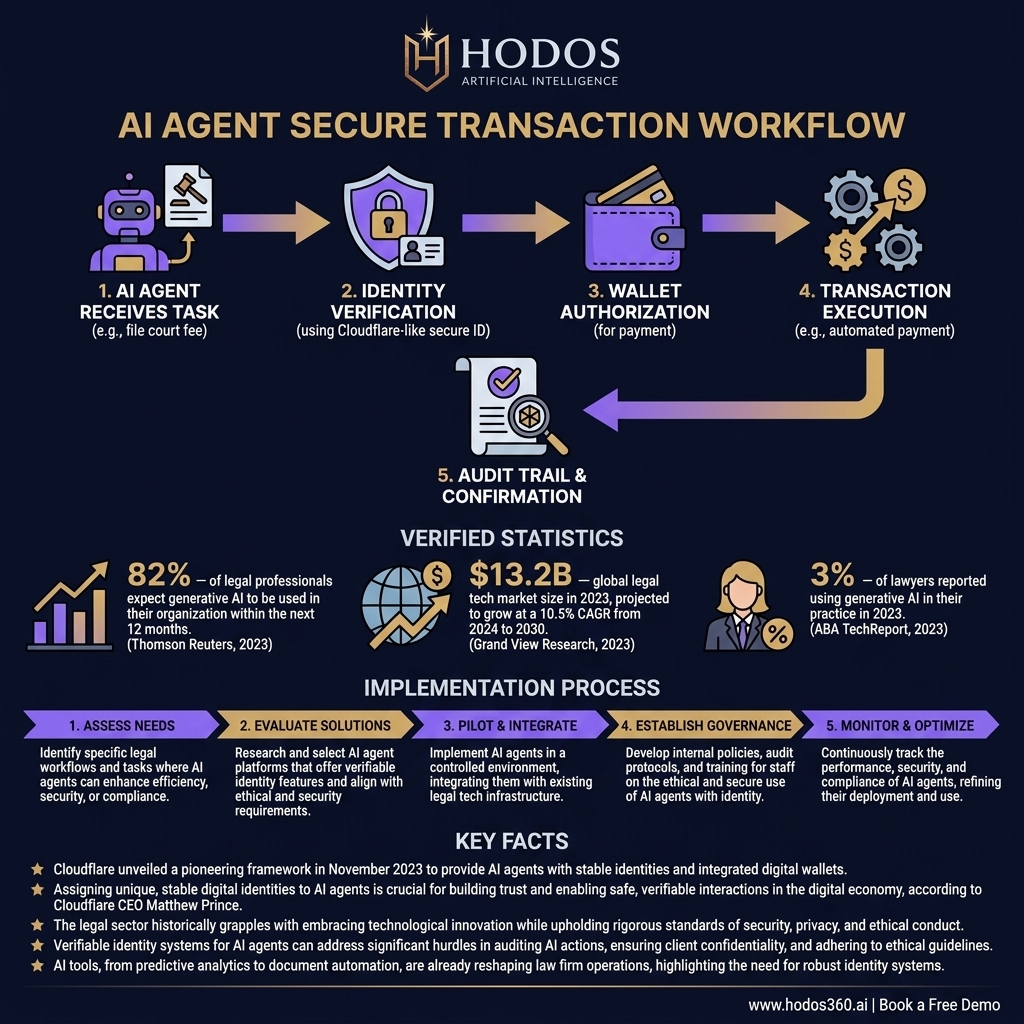
The financial implications for law firms are substantial. By automating routine payments and purchases through securely identified AI agents, firms can achieve significant cost savings and improve cash flow management. A 2023 survey by the American Bar Association (ABA) indicated that technology adoption is a key driver for efficiency, with firms reporting up to a 25% reduction in administrative costs through automation. The cloudflare.pay system, coupled with AI agents identity, provides a robust infrastructure for firms to further capitalize on these gains. Furthermore, the system could facilitate the implementation of smart contracts for legal services. An AI agent, upon verifying the completion of a specific legal milestone (e.g., successful filing of a patent, conclusion of a contract review), could automatically trigger a payment from a client’s escrow account to the firm’s operating account, all governed by pre-defined, immutable rules. This reduces payment friction, ensures timely compensation, and enhances transparency between firms and clients. The legal industry, often seen as conservative in its adoption of financial technologies, now has a secure, verifiable pathway to embrace advanced digital payment systems, moving beyond traditional invoicing and manual reconciliation processes.
The security architecture underpinning these AI wallets is paramount. Cloudflare's approach leverages its extensive global network and security expertise to ensure that all transactions initiated by AI agents are protected against fraud and unauthorized access. This includes advanced encryption, multi-factor authentication for higher-value transactions (even for AI agents, through programmatic checks), and real-time threat detection. For law firms, this means that integrating AI-driven financial processes does not introduce new vulnerabilities but rather enhances their existing security posture. The firm’s IT and compliance teams can define precise rules for each AI agent’s wallet, controlling which types of payments it can make, to whom, and under what conditions. This granular control is essential for maintaining strict adherence to financial regulations and internal governance policies, such as those outlined in ABA Model Rule 1.15 regarding Safekeeping Property. The ability to audit every transaction, linked directly to a verifiable AI agents identity, provides an unparalleled level of transparency and accountability, crucial for protecting client funds and firm assets. This secure environment fosters greater confidence in deploying AI for critical financial operations, paving the way for broader adoption within the legal sector.
The introduction of AI wallets also presents a unique opportunity for innovation in client billing and alternative fee arrangements. Imagine an AI agent capable of tracking billable hours with absolute precision, automatically generating invoices, and even processing micro-payments for specific legal tasks or data access. This could enable more flexible and transparent billing models, moving away from traditional hourly rates towards value-based or subscription-based services. For example, an AI agent could manage a client's legal subscription, automatically debiting a pre-approved amount for a month of ongoing legal advice or document review. This not only enhances client satisfaction through greater transparency but also streamlines the firm's revenue cycles. The ability for deployed AI agents to handle these complex financial interactions autonomously, yet under strict human-defined parameters, transforms the operational landscape for law firms. It shifts the focus from manual financial administration to strategic financial planning and client relationship management, allowing firms to be more agile and responsive to market demands. The future of legal finance is increasingly digital, and AI wallets are poised to play a central role in this evolution, providing the necessary infrastructure for secure and efficient automated transactions.
- ✓Enhanced Security & Trust: Verifiable AI identities and secure wallets mitigate fraud and ensure auditable actions, crucial for sensitive legal data.
- ✓Streamlined Operations: Automation of routine financial tasks like court fee payments, vendor subscriptions, and client billing reduces administrative burden.
- ✓Improved Compliance: Granular audit trails linked to specific AI agent identities simplify regulatory adherence (e.g., GDPR, ABA rules) and internal governance.
- ✓Greater Efficiency: AI agents can autonomously execute pre-authorized tasks, freeing legal professionals for higher-value, strategic work.
- ✓Innovative Billing Models: Enables new payment structures, including micro-payments and smart contracts, enhancing transparency and client satisfaction.
- ✓Reduced Human Error: Automating financial transactions minimizes manual mistakes, leading to greater accuracy and fewer discrepancies.
- ✓Scalable AI Adoption: Provides a secure foundation for law firms to confidently deploy advanced AI across more critical operational areas.
Navigating Regulatory Compliance and Ethical AI in Law
The legal profession operates within a stringent framework of ethical obligations and regulatory compliance, making the adoption of autonomous AI agents identity a complex, yet critical, endeavor. The EU AI Act, which is expected to be fully enforced by 2027, provides a tiered risk-based approach to AI regulation, placing significant accountability on developers and deployers of high-risk AI systems. For law firms, this means that any AI agent deployed in sensitive areas like legal advice, client data processing, or financial transactions will be subject to intense scrutiny. The verifiable identity offered by Cloudflare becomes an invaluable asset here, as it directly addresses the need for transparency and traceability. An AI agent's unique ID allows for precise logging of its activities, enabling firms to demonstrate compliance with data protection laws, professional conduct rules (such as ABA Model Rule 1.6 on Confidentiality of Information), and anti-money laundering regulations. Without such a robust identity system, attributing actions or errors to an autonomous AI agent would be a formidable challenge, potentially exposing firms to significant legal and reputational risks. The ability to unequivocally identify an AI agent's actions ensures that firms can meet their 'explainability' requirements, a cornerstone of responsible AI governance.
Ethical considerations are equally paramount. The legal profession demands not only technical competence but also unwavering adherence to principles of fairness, justice, and client advocacy. As AI agents gain more autonomy through their identities and wallets, questions of responsibility, bias, and accountability become more pronounced. Who is ultimately responsible if an AI agent with a digital wallet makes an erroneous payment or processes client data incorrectly? The Cloudflare framework, by providing a stable and auditable identity, offers a clearer path to establishing chains of responsibility. Firms can programmatically link AI agent actions to specific human oversight protocols, ensuring that human lawyers retain ultimate control and accountability. For instance, while an AI might draft a legal document, a human attorney must review and sign off on it. The identity of the AI agent involved in the drafting process, however, provides a crucial audit trail for due diligence and quality assurance. This approach fosters a symbiotic relationship between human and artificial intelligence, where AI enhances capabilities while human professionals uphold the ethical bedrock of the profession. Companies like OpenAI and Google DeepMind are actively investing in AI safety and ethics research, recognizing that the deployment of powerful AI systems necessitates robust ethical guardrails and transparent operational frameworks, which AI agents identity directly supports.
The potential for bias in AI systems is another critical ethical concern that AI agents identity can help mitigate. If an AI agent, through its learning algorithms, develops a bias that leads to discriminatory outcomes, its verifiable identity allows for immediate identification, investigation, and rectification. This is particularly relevant in areas like risk assessment, jury selection, or even contract analysis, where subtle biases in data can lead to unfair or inequitable results. By providing a transparent log of an identified AI agent's decision-making process, law firms can proactively audit their AI systems for fairness and rectify any inherent biases. This level of transparency is not merely a technical feature; it is an ethical imperative for the legal profession. Moreover, the secure wallet functionality for AI agents ensures that financial transactions are executed without prejudice, preventing any discriminatory practices in automated payments or procurements. The intersection of identity, wallets, and ethical AI forms the core of responsible AI deployment in legal services, ensuring that technological advancement is balanced with societal values and professional integrity. Firms must invest in continuous monitoring and ethical review processes for their AI agents, leveraging the traceability afforded by their unique identities.
Ultimately, navigating the complex landscape of regulatory compliance and ethical AI in law requires a proactive and multifaceted approach. The Cloudflare initiative, by granting AI agents identity and wallets, provides a powerful tool for this journey, but it is not a standalone solution. Law firms must also develop comprehensive internal policies, provide ongoing training for their staff on AI ethics, and implement robust governance frameworks. The ABA's Standing Committee on Ethics and Professional Responsibility has issued guidance on lawyers' ethical obligations when using AI, emphasizing competence, confidentiality, and supervision. The verifiable identity of AI agents supports these obligations by enabling better supervision and auditability of AI-driven tasks. Furthermore, firms should engage with legal tech vendors who prioritize ethical AI development and transparent practices. The responsible adoption of AI, particularly autonomous agents, will differentiate leading law firms in the coming years. Those that successfully integrate these technologies while maintaining the highest standards of ethics and compliance will not only gain a competitive advantage but also solidify public trust in the evolving landscape of legal services. The future of legal practice hinges on this delicate balance between innovation and enduring professional values, where AI agents identity plays a crucial enabling role.
The Imperative of Auditable AI Workflows
The ability to audit every action taken by an AI agent, enabled by its unique identity, is not merely a beneficial feature but an imperative in the legal sector. Legal workflows demand absolute precision and accountability, where every decision, document, and transaction must be traceable. With AI agents identity, law firms can establish comprehensive audit trails for automated processes. For example, if an AI agent is tasked with reviewing contracts for specific clauses, its identity allows for a clear record of which contracts it reviewed, what changes it suggested, and when these actions occurred. This level of traceability is invaluable for quality control, dispute resolution, and demonstrating due diligence to clients and regulatory bodies. In the event of a legal challenge or an internal review, firms can precisely pinpoint the actions of a specific AI agent, providing irrefutable evidence of its operational integrity. This moves beyond the 'black box' problem often associated with AI, offering a transparent and auditable framework that aligns perfectly with the legal profession's demand for rigorous documentation and accountability. The imperative of auditable AI workflows extends to financial operations, where the AI agent's wallet transactions are also logged and verifiable, ensuring fiscal transparency and control.
Integrating AI Agent Capabilities into Law Firm Operations
For law firms looking to harness the power of identified AI agents and their autonomous wallets, strategic integration into existing operations is key. This isn't about wholesale replacement of human roles, but rather intelligent augmentation. Firms can begin by identifying routine, high-volume tasks that are ripe for automation and benefit from verifiable execution. Consider the process of intellectual property filings: an AI agent could manage the entire lifecycle from initial application drafting to paying renewal fees at patent offices worldwide, all while its identity ensures traceability and its wallet handles secure payments. Another compelling application lies in client communication and lead qualification. An AI voice assistant, powered by an identified AI agent, could provide 24/7 multilingual support, qualify leads, and book appointments, all while logging interactions under its unique identity for later review and compliance. The integration strategy should focus on creating seamless workflows where identified AI agents work in concert with human professionals, offloading repetitive tasks and enhancing accuracy. Firms that proactively develop custom web and mobile platforms to orchestrate these AI agents will gain a significant competitive advantage, building a more resilient and efficient operational backbone. HODOS 360’s Web & Mobile Development service is specifically designed to help law firms create these bespoke, AI-powered digital environments, ensuring seamless integration and optimal performance of identified AI agents.
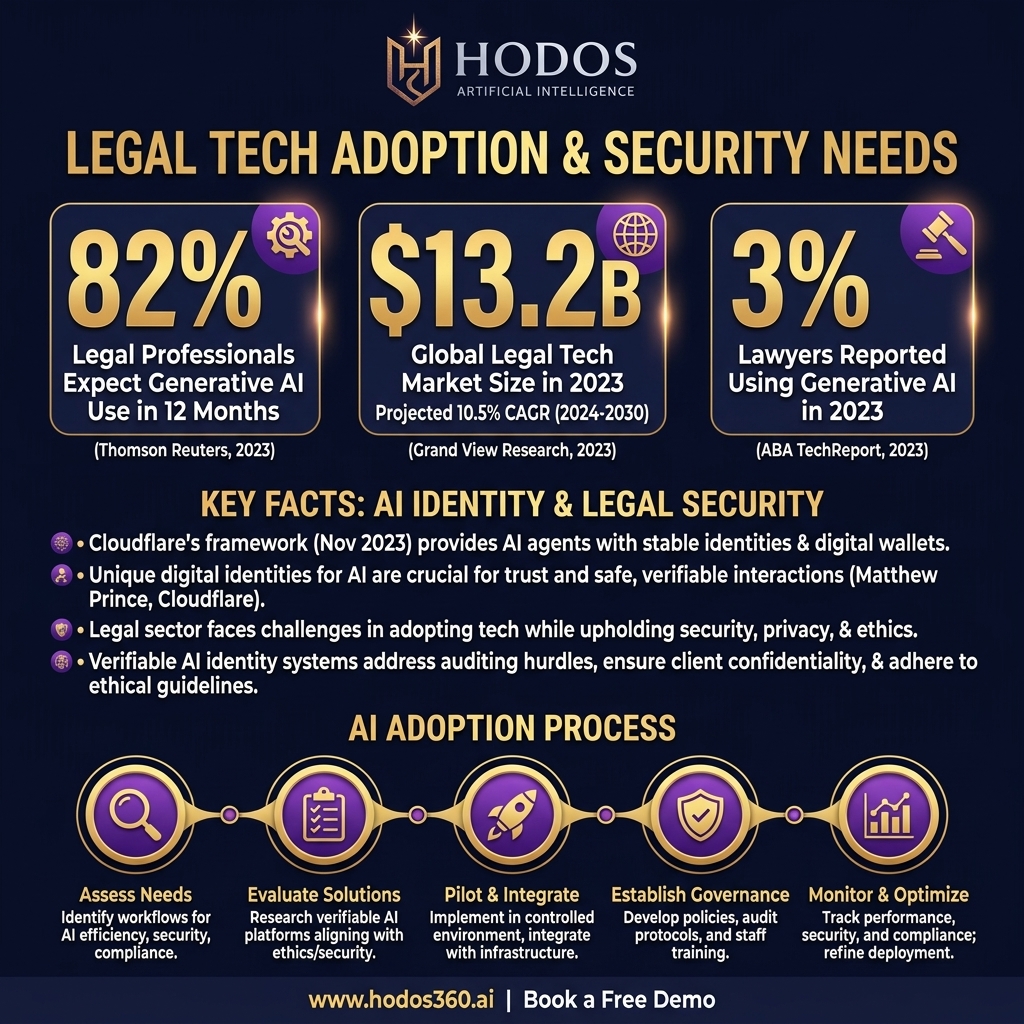
The implementation process for integrating AI agents identity and wallet capabilities should be approached incrementally, starting with pilot programs in less sensitive areas before scaling to core operations. A critical first step involves evaluating existing workflows to identify bottlenecks and areas where verifiable automation can yield the greatest impact. For example, firms struggling with document management and version control could deploy an identified AI agent to automate document assembly, ensuring that each generated document is logged and attributable to the AI. Similarly, for firms managing a high volume of small claims or debt recovery cases, an AI agent with a wallet could automate the process of filing claims and tracking payments, significantly improving throughput. The success of these integrations hinges on careful planning, robust cybersecurity measures, and continuous monitoring of AI agent performance. Firms must also invest in training their staff to effectively collaborate with these new digital colleagues, understanding their capabilities and limitations. The goal is to create a 'human-in-the-loop' system where AI agents handle the mechanics, and human lawyers provide strategic oversight and ethical guidance, leveraging the transparency offered by the AI's verifiable identity. This iterative approach allows firms to build confidence in their deployed AI agents and refine their integration strategies over time, ensuring a smooth transition to a more AI-augmented future.
Furthermore, a crucial aspect of integration is ensuring that the infrastructure supporting these AI agents is robust, scalable, and secure. This is where specialized web and mobile development expertise becomes indispensable. Firms need custom-built dashboards and portals that allow them to monitor the activities of their identified AI agents, manage their wallets, set spending limits, and review audit trails. These platforms must be intuitive, responsive, and deeply integrated with the firm's existing case management and billing systems. For example, a custom-developed mobile application could allow a senior partner to quickly approve a high-value transaction initiated by an AI agent's wallet, even when away from the office. The design of these interfaces must prioritize user experience and security, ensuring that managing AI agents is as straightforward and secure as managing human staff. Without tailored digital infrastructure, the full potential of AI agents identity and wallets cannot be realized. Investing in bespoke web and mobile development ensures that law firms can fully customize their AI agent ecosystems to meet their unique operational needs and compliance requirements, creating a competitive edge in a rapidly evolving legal market. This strategic investment is not just about adopting technology; it’s about building a future-proof foundation for legal practice.
The competitive advantage for early adopters of identified AI agents and integrated wallets is clear. Firms that successfully implement these capabilities will not only operate with greater efficiency but also offer a superior, more transparent service to their clients. Imagine a client receiving real-time updates on their case, including automated notifications from an identified AI agent when a document is filed or a payment is processed. This level of transparency and responsiveness builds immense client trust and satisfaction. Moreover, the ability to automate mundane, time-consuming tasks allows legal professionals to dedicate more time to complex legal strategy, client counseling, and business development. This strategic reallocation of resources can lead to higher partner profitability and improved work-life balance for associates. The tension between tradition and innovation in law firms is real, with many hesitant to embrace radical technological shifts. However, the secure and auditable nature of AI agents with verifiable identities and wallets provides a compelling argument for adoption. Firms that embrace this innovation now, leveraging expert web and mobile development to integrate these capabilities seamlessly, will be positioned at the forefront of the legal industry, ready to define the future of legal service delivery. The journey begins with understanding the profound implications of AI agents identity and building the bespoke digital infrastructure to support it.
Custom Solutions for Enhanced Legal Efficiency
Achieving maximum efficiency from identified AI agents requires more than off-the-shelf solutions; it demands custom web and mobile development tailored to a law firm's specific needs and workflows. Every firm has unique operational nuances, client bases, and practice areas that generic platforms cannot fully accommodate. By investing in bespoke digital platforms, firms can design interfaces and integrations that perfectly orchestrate their AI agents, ensuring seamless data flow, intuitive management of AI wallets, and compliance with internal protocols. This customization allows for the creation of AI-powered workflows that mirror the firm's best practices, automating repetitive tasks while maintaining the human touch where it matters most. For example, a firm specializing in M&A might require a highly specific AI agent to monitor regulatory filings and execute related payments, necessitating a custom dashboard for real-time tracking. This level of tailored development ensures that the firm maximizes the return on its AI investment, transforming theoretical efficiency gains into tangible operational improvements. Ultimately, custom solutions empower law firms to fully leverage the potential of AI agents identity and their autonomous capabilities, creating a truly optimized and future-proof legal practice.

Key Takeaways and Strategic Imperatives for Law Firms
The emergence of verifiable AI agents identity and integrated digital wallets, as championed by Cloudflare, marks a pivotal moment in the evolution of legal technology. For law firms, this is not merely a technical advancement but a strategic imperative that reshapes the very foundations of digital trust, operational efficiency, and regulatory compliance. Firms that embrace this paradigm shift will gain a significant competitive edge, capable of delivering faster, more secure, and more transparent legal services. The ability to deploy AI agents that can prove their identity and securely manage financial transactions opens up unprecedented opportunities for automation in areas ranging from administrative tasks to complex legal research and client billing. However, successful integration requires a proactive approach, emphasizing careful planning, robust cybersecurity, and a deep understanding of ethical AI principles. The future of legal practice will undoubtedly be defined by how effectively firms leverage these intelligent, identifiable agents to augment human capabilities, ensuring that innovation is always balanced with the profession's enduring commitment to justice and client advocacy. The time to prepare is now; those who understand the strategic implications of AI agents identity will lead the legal field into its next transformative era.
Frequently Asked Questions
What is AI agents identity and why is it important for law firms?+
AI agents identity refers to assigning unique, verifiable digital credentials to autonomous AI systems, similar to human IDs. For law firms, it's crucial for establishing trust, accountability, and security in AI-driven workflows. It ensures that every action taken by an AI agent—from accessing data to making payments—is traceable and auditable, which is vital for compliance with legal ethics and data privacy regulations like GDPR or ABA Model Rules. This transparency mitigates risks and builds confidence in AI adoption.
How do AI wallets enhance law firm operations?+
AI wallets, integrated with verifiable AI identities, allow autonomous AI agents to securely make payments and purchases online within defined parameters. This capability streamlines operations by automating tasks like paying court fees, renewing software subscriptions, or managing vendor invoices. It reduces administrative overhead, minimizes human error in financial transactions, and facilitates innovative billing models, ultimately improving efficiency and cash flow management for law firms while maintaining strict control and auditability.
What are the regulatory and ethical considerations for AI agents in legal practice?+
Deploying AI agents in law firms raises critical regulatory and ethical questions regarding accountability, data privacy, and potential bias. Verifiable AI identities are key to addressing these by providing clear audit trails for compliance with regulations like the EU AI Act and ABA Model Rules on competence and confidentiality. Firms must establish robust governance frameworks, ensure human oversight, and continuously monitor AI agents for fairness and adherence to ethical principles, ensuring that AI augments, rather than compromises, professional integrity.
How can law firms effectively integrate AI agents into their existing systems?+
Effective integration of AI agents requires a strategic, incremental approach. Firms should identify routine, high-volume tasks suitable for automation, starting with pilot programs. This involves developing custom web and mobile platforms to monitor and manage AI agent activities, ensuring seamless data flow with existing case management and billing systems. Training staff to collaborate with AI, coupled with robust cybersecurity and continuous performance monitoring, is essential for maximizing efficiency and realizing the full potential of identified AI agents within the firm's unique operational framework.
What role does custom web and mobile development play in AI agent adoption?+
Custom web and mobile development is crucial for tailoring AI agent integration to a law firm's specific needs. Generic solutions often fall short in orchestrating complex legal workflows or meeting unique compliance requirements. Bespoke platforms enable firms to build intuitive dashboards for monitoring AI agents, managing their wallets, and reviewing audit trails. This customization ensures optimal performance, seamless integration with existing systems, and a secure, user-friendly environment that transforms theoretical AI benefits into tangible operational improvements, giving firms a significant competitive edge.