
AI App Development Costs: Proven Strategies for Legal Firms
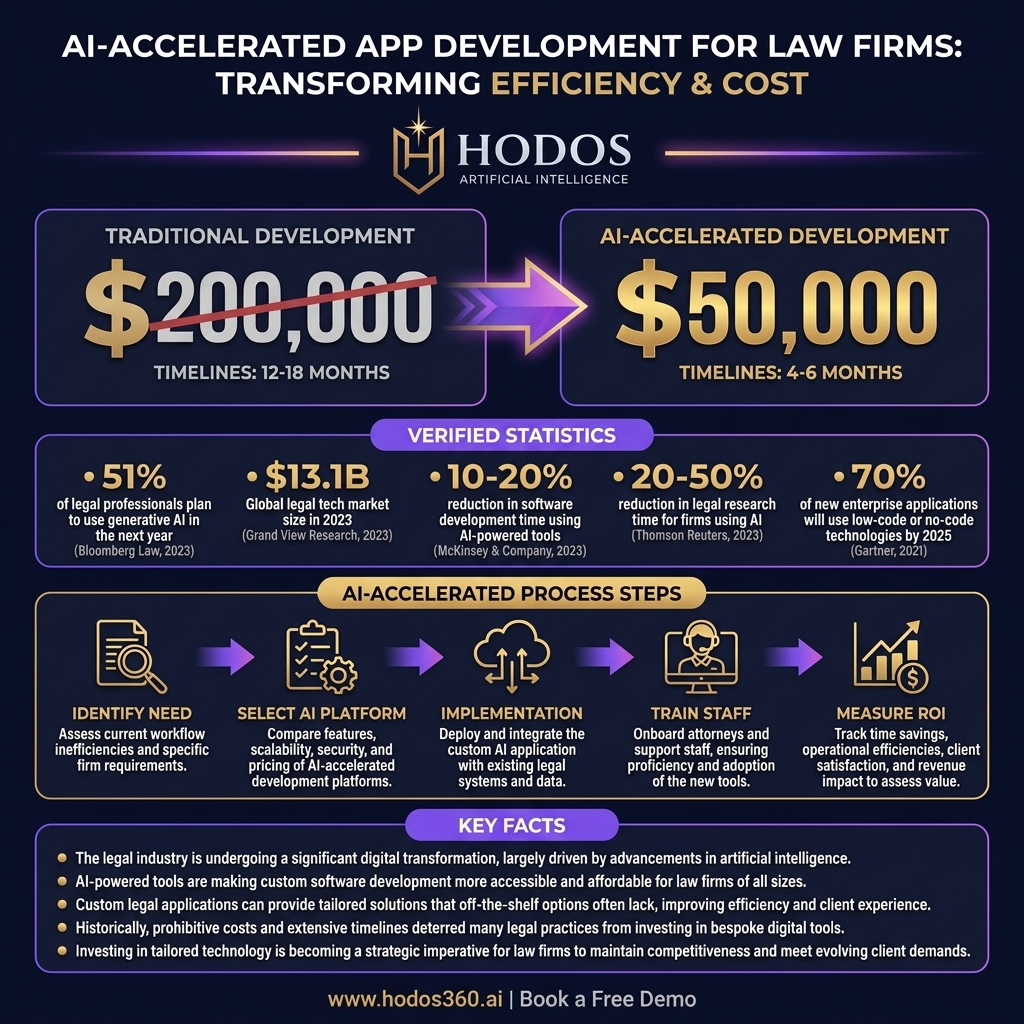
The legal industry, often perceived as traditional, is currently at the precipice of a profound digital transformation, largely driven by advancements in artificial intelligence. A recent headline from markets.businessinsider.com captured the essence of this shift, reporting that app development costs are plummeting from an average of $200,000 to nearly $50,000, thanks to companies like Chop Dawg pairing AI-accelerated engineering with decades of discipline. This isn't just a marginal improvement; it's a seismic shift that democratizes access to bespoke digital solutions, making custom mobile and web applications a tangible reality for law firms of all sizes.
Historically, the prohibitive costs and extensive timelines associated with custom software development have deterred many legal practices from investing in tailored digital tools. The process of building a unique client portal, a specialized case management adjunct, or a secure communication platform often involved significant capital outlay, protracted development windows, and a high degree of technical complexity. This created a stark divide: large, well-resourced firms could afford to innovate, while smaller and mid-sized practices were often relegated to off-the-shelf solutions that rarely fit their precise operational needs or client engagement strategies. However, the advent of sophisticated AI tools, from intelligent code generators to automated testing frameworks, is dismantling these barriers, ushering in an era where agility and affordability define app development.
This dramatic reduction in app development costs signals a critical opportunity for legal professionals. For years, firms have grappled with the tension between maintaining traditional practices and embracing technological innovation. Now, with AI making custom digital solutions more accessible, the decision to invest in tailored technology is no longer a luxury but a strategic imperative. Firms can now envision and implement highly specific tools designed to enhance client intake, streamline document automation, improve internal collaboration, and provide unparalleled client experiences. This is not merely about saving money; it's about unlocking a new realm of possibilities for legal service delivery and competitive advantage. Ready to explore custom AI solutions for your firm? Discover HODOS 360's Web & Mobile Development Services.
The AI Revolution: Redefining Legal App Development Costs
The core of this cost reduction lies in AI's ability to automate and optimize virtually every stage of the app development lifecycle. From initial concept and design to coding, testing, and deployment, AI tools are streamlining processes that once demanded extensive human hours and specialized expertise. Take, for instance, the rise of AI-powered low-code and no-code platforms, which empower developers to build sophisticated applications with minimal manual coding. Companies like Chop Dawg, as highlighted in the Business Insider report, exemplify this trend by integrating AI-accelerated engineering into their workflows. Kyle Hency, CEO of Chop Dawg, has often emphasized how their disciplined approach, augmented by AI, allows them to cut project timelines "roughly in half" while delivering high-quality applications that were once out of reach for many budgets.
This paradigm shift is further fueled by the broader AI ecosystem. Learn more about AI for Law Firms: Essential Guide to Scaling Legal AI. Large language models (LLMs) from entities like OpenAI and Anthropic are increasingly capable of generating functional code snippets, identifying bugs, and even suggesting architectural improvements. Jensen Huang, CEO of NVIDIA, has consistently articulated a vision where AI acts as a co-pilot for engineers, vastly accelerating the pace of innovation. For legal app development, this means that complex features like AI-powered legal research integrations, predictive analytics for case outcomes, or natural language processing for contract review can be implemented with unprecedented efficiency. The traditional bottlenecks of resource allocation and specialized developer availability are being systematically removed, fundamentally altering the economic model of custom software development.
Quantifying the Impact: From Six Figures to Five for Legal Firms
The reported drop in app development costs from $200,000 to near $50,000 is not merely anecdotal; it reflects a tangible economic reality for businesses, including law firms. A few years ago, building a custom mobile or web application for a law firm — perhaps a secure client portal with document sharing and appointment booking, or an internal knowledge management system — would typically involve significant outlays for project managers, UI/UX designers, backend and frontend developers, quality assurance testers, and ongoing maintenance. Each of these roles commanded substantial fees, contributing to the high six-figure estimates. The complexity of legal workflows, coupled with stringent security and compliance requirements, often pushed these costs even higher, making such projects a daunting prospect.
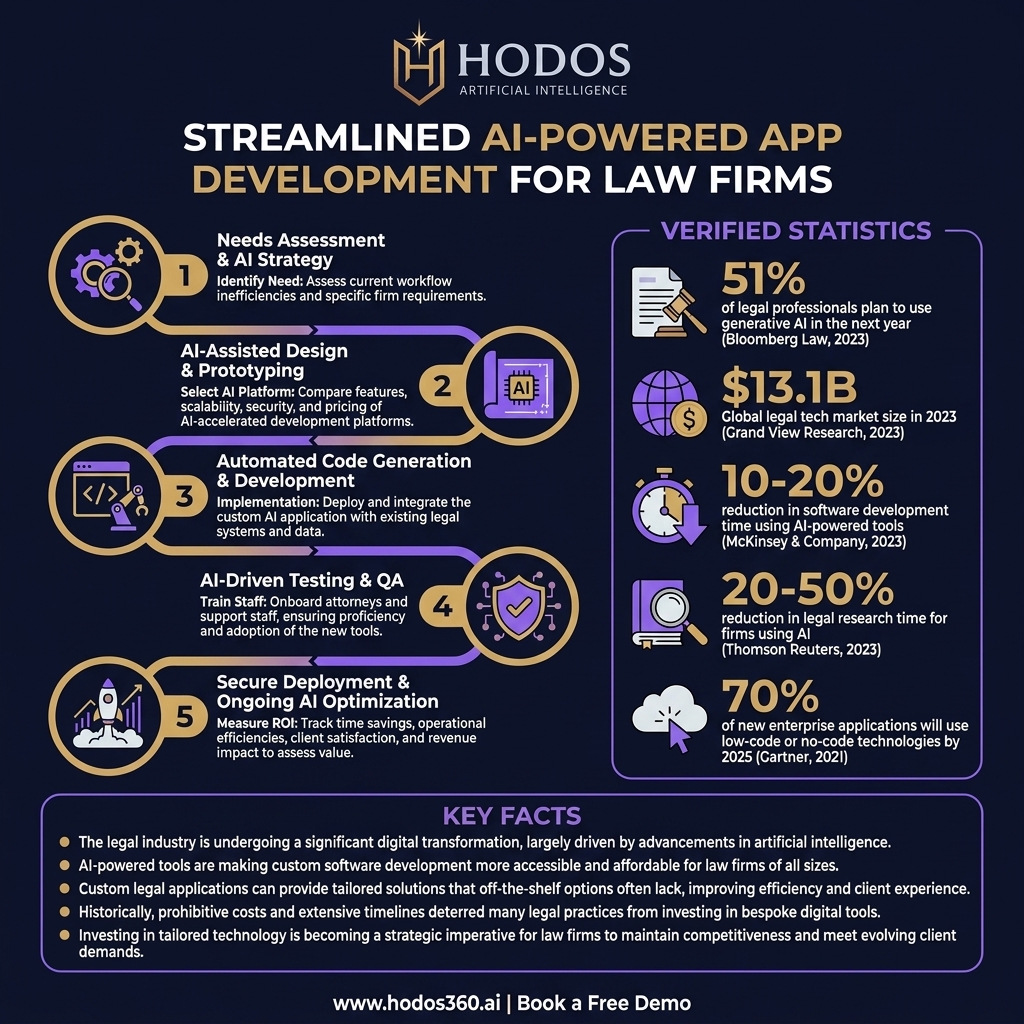
Today, AI-driven tools are dramatically compressing these expenses. AI-powered design tools can generate wireframes and prototypes in minutes, significantly reducing the design phase. Learn more about AI Document Workflows: Unleash Firm Efficiency in 2026. Automated code generation tools can write boilerplate code, freeing human developers to focus on intricate logic and unique features. AI-driven testing platforms can identify bugs and vulnerabilities far faster and more comprehensively than manual processes. This means that a project that once required a large team and a year-long timeline can now be executed by a smaller, more efficient team in a matter of months, bringing the overall costs much closer to the $50,000 range for many mid-complexity applications. A 2025 report by Thomson Reuters Legal Executive Institute highlighted that firms adopting advanced automation saw a 30% reduction in operational overhead within two years, demonstrating the direct financial benefits of AI integration in legal tech.
Beyond the Initial Investment: Long-Term ROI in Legal App Development
The financial benefits extend far beyond the initial app development costs. Investing in AI-powered custom software development yields substantial long-term return on investment (ROI) for law firms. Custom applications streamline operations, reduce administrative burdens, and minimize human error. For instance, an AI-integrated client intake app can automatically collect client information, perform conflict checks, and generate initial retainer agreements, saving countless hours for paralegals and administrative staff. This efficiency translates directly into cost savings and allows legal professionals to focus on high-value legal work. Learn more about AI Marketing: Proven Strategies for Legal Growth Beyond Efficiency. Furthermore, enhanced client satisfaction through intuitive, personalized digital experiences can lead to increased client retention and new business referrals. Firms like Allen & Overy, which famously partnered with Harvey AI for legal research, have demonstrated how deep integration of AI can redefine service delivery and client expectations. This strategic adoption not only improves internal processes but also positions the firm as a forward-thinking, technologically advanced legal partner, attracting a new generation of clients who expect seamless digital interactions.
Strategic Advantages of AI-Powered Legal Applications
For law firms, the ability to develop custom AI-powered applications at a fraction of previous costs unlocks a myriad of strategic advantages. Imagine a bespoke mobile app that allows clients to securely upload documents, track case progress in real-time, and communicate directly with their legal team, all while leveraging AI to categorize documents or provide instant updates. This level of client engagement and transparency is a powerful differentiator in a competitive market. Internally, firms can deploy AI-driven tools for document automation, contract analysis, and even predictive analytics for litigation outcomes. Clio, a leader in legal practice management, has consistently shown through its Legal Trends Report that technology adoption is directly correlated with firm growth and profitability. Firms that embrace AI in their development strategies are not just improving efficiency; they are fundamentally reshaping their service delivery model to be more responsive, data-driven, and client-centric.
The human conflict in this narrative is clear: firms that adopt AI-accelerated app development will inevitably pull ahead of those that cling to traditional methods. This isn't just about operational efficiency; it's about competitive survival. Learn more about AI Marketing: Essential Strategies for Law Firm Growth. While some firms may view the upfront investment, even at reduced costs, as a hurdle, the long-term benefits in terms of client acquisition, retention, and enhanced service quality far outweigh the initial outlay. The disruption caused by AI is creating a divide between pioneers and laggards. Firms leveraging AI to build custom tools gain a significant edge in attracting tech-savvy clients and streamlining their own operations, ensuring they remain relevant and profitable in an increasingly digital legal landscape. Don't get left behind in the digital transformation. Schedule a Consultation with HODOS 360 Today.
Customization vs. Off-the-Shelf: The AI Advantage
One of the most compelling aspects of reduced app development costs is the newfound feasibility of true customization. Previously, many law firms had to compromise with generic off-the-shelf software solutions, adapting their unique workflows to fit the limitations of existing platforms. While these solutions offer a baseline of functionality, they rarely address the specific nuances of a firm's practice areas, client base, or internal processes. With AI, custom software development is no longer the exclusive domain of large enterprises. Learn more about No-Code AI Agents: Essential for Law Firm Web Development. Firms can now affordably commission applications tailored precisely to their needs – from specialized e-discovery tools that integrate with specific databases to AI-powered chatbots for initial client screening that reflect the firm's unique brand voice. This level of bespoke functionality ensures that technology enhances, rather than dictates, a firm's operations, leading to unparalleled efficiency and a distinct competitive identity. It allows firms to focus on what they do best, knowing their digital tools are perfectly aligned with their strategic objectives.
Navigating the New Landscape: Choosing Your AI Development Partner
As app development costs become more accessible, law firms face a new challenge: choosing the right AI development partner. It's crucial to select a partner with not only technical prowess in AI and software development but also a deep understanding of the legal industry's unique requirements. This includes familiarity with legal ethics, data security protocols, and the specific workflows of a law firm. A partner like HODOS 360, with expertise in Web & Mobile Development tailored for legal professionals, can guide firms through the entire process, from ideation to deployment and ongoing support. They understand that a legal application must not only be functional and user-friendly but also compliant with regulations like the ABA Model Rules of Professional Conduct, particularly Rule 1.6 concerning client confidentiality and Rule 1.1 regarding technological competence. The vendor's track record, transparent pricing, and commitment to data privacy are paramount considerations.
The due diligence process for selecting a development firm must be rigorous. Learn more about AI-Enabled Law Firms: Essential Guide to Client Expectations. Inquire about their experience with similar legal projects, their approach to data encryption and privacy, and their methodology for integrating AI responsibly. A strong partner will offer a clear roadmap, regular communication, and post-launch support to ensure the application remains effective and up-to-date. They should also demonstrate an understanding of how to build applications that are not only technologically advanced but also ethically sound, safeguarding client data and maintaining professional obligations. The legal tech market is evolving rapidly, and partnering with a firm that prioritizes both innovation and compliance is essential for long-term success.
Ensuring Ethical AI and Data Security in Legal Tech
The integration of AI into app development for law firms brings with it critical ethical and data security considerations. ABA Model Rule 1.1, Comment [8], explicitly states that lawyers must keep abreast of changes in the law and its practice, including the benefits and risks associated with relevant technology. This extends to the development and use of AI-powered applications. Firms must ensure that any custom software adheres to the highest standards of data privacy and confidentiality, especially concerning sensitive client information. This means scrutinizing the AI models used, understanding their data handling practices, and implementing robust encryption and access controls. Furthermore, the ethical implications of AI's decision-making processes, particularly in areas like predictive analytics, must be carefully considered to avoid bias and ensure fairness. Partnering with a developer who is acutely aware of these legal and ethical frameworks is not just good practice; it is a professional obligation. A proactive approach to these challenges is critical to harness the full potential of AI while upholding the core tenets of legal practice.

Key Takeaways and Next Steps for Law Firms
The dramatic reduction in app development costs, driven by AI-accelerated engineering, represents a pivotal moment for law firms. What was once a prohibitive expense is now an accessible investment, enabling firms to leverage custom software development for unparalleled efficiency, client engagement, and competitive advantage. The era of generic, one-size-fits-all legal tech is rapidly fading, replaced by bespoke applications that perfectly align with a firm's unique needs and strategic goals. This shift demands a proactive approach from legal leaders, urging them to assess their current technological stack and identify areas where custom AI-powered solutions can deliver transformative value.
To capitalize on this trend, law firms should begin by conducting a thorough needs assessment to pinpoint operational bottlenecks and client service gaps that a custom mobile or web application could address. Subsequently, seeking out a development partner with proven expertise in both AI and the legal sector is paramount. The future of legal practice is digital and intelligent. Explore HODOS 360's Full Suite of AI-Powered Legal Solutions.
Frequently Asked Questions
How has AI significantly reduced app development costs for law firms?+
AI has revolutionized app development by automating various stages, from design and coding to testing and deployment. Tools like AI-powered code generators and automated QA systems drastically reduce the human effort and time required, leading to substantial cost savings. This efficiency makes custom legal applications, which were once prohibitively expensive, much more affordable and accessible for law firms of all sizes.
What kind of custom applications can law firms build with these reduced costs?+
Law firms can now affordably develop a wide range of custom applications. These include secure client portals for document sharing and communication, AI-powered client intake systems, specialized case management modules, internal knowledge bases with AI search capabilities, and tools for automated document generation or contract review. The reduced costs open up possibilities for highly tailored solutions.
What are the long-term benefits of investing in AI-powered legal app development?+
Beyond initial cost savings, AI-powered legal app development offers long-term ROI through enhanced operational efficiency, reduced administrative overhead, and improved client satisfaction. Custom applications streamline workflows, minimize errors, and free up legal professionals for high-value tasks. This leads to increased profitability, better client retention, and a stronger competitive position in the evolving legal market.
How important is data security and ethics when developing AI applications for law firms?+
Data security and ethics are paramount in legal AI app development. Law firms handle highly sensitive client information, making robust encryption, stringent access controls, and compliance with regulations like ABA Model Rule 1.6 (Confidentiality) non-negotiable. Ethical considerations around AI bias and fairness in decision-making are also critical. Partnering with a developer experienced in legal tech and compliance is essential.
How can law firms get started with AI-accelerated app development?+
Law firms should begin by identifying specific operational pain points or client service gaps that could be addressed by a custom application. Next, seek a development partner with expertise in both AI technology and the legal sector. A reputable partner will offer a clear roadmap, transparent pricing, and ensure the development process aligns with legal ethical standards and security requirements, making the transition smooth and effective.