


AI and Automation: The Ultimate Reshaping of Legal Operations
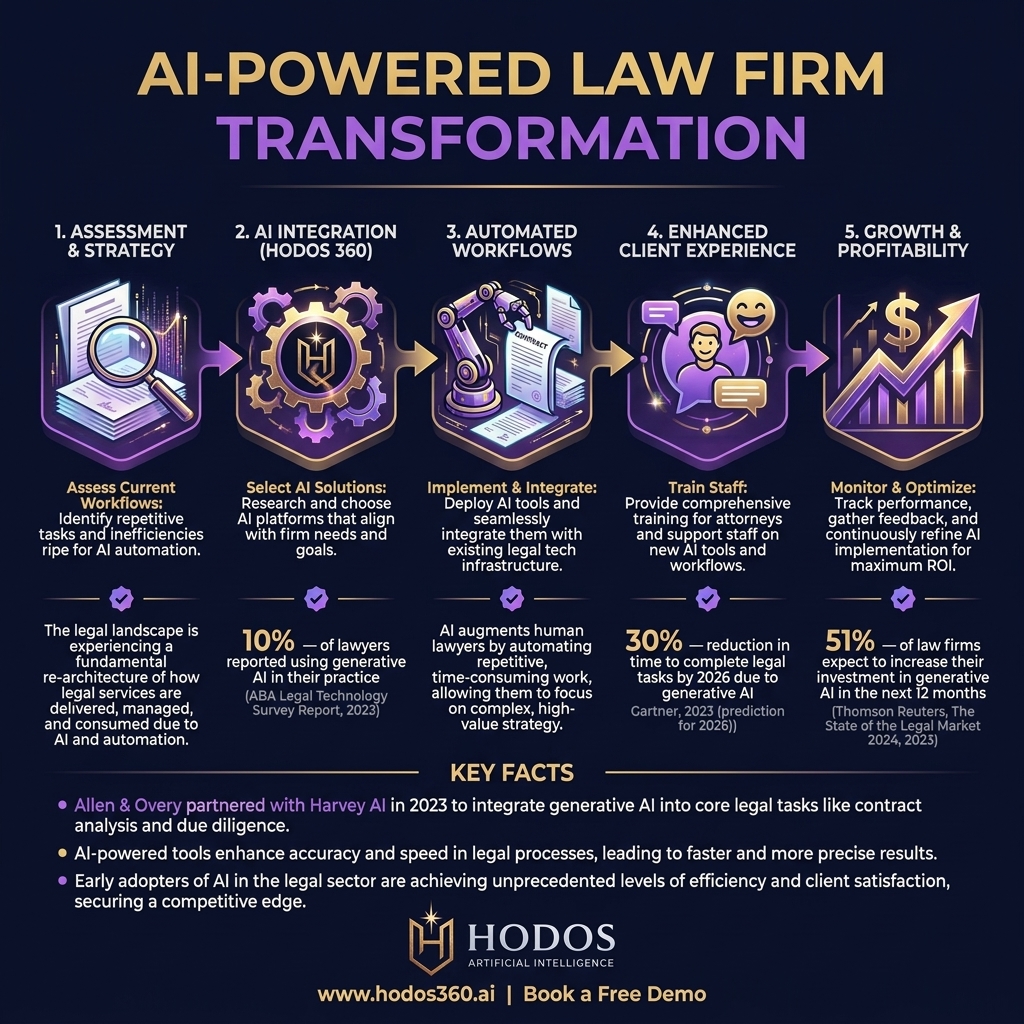
The legal landscape, long perceived as resistant to rapid technological shifts, is now experiencing a seismic transformation. A recent report by stl.news, echoing sentiments across the industry, highlights how "AI and Automation Reshape Operations Across the Legal Industry." This isn't just about incremental improvements; it's a fundamental re-architecture of how legal services are delivered, managed, and consumed. For forward-thinking law firm owners and attorneys, this inflection point presents an undeniable opportunity to redefine their practice, enhance client value, and secure a competitive edge in an increasingly digital world.
Consider the journey of firms like Allen & Overy, which, in 2023, notably partnered with Harvey AI, a generative AI platform backed by OpenAI. This collaboration wasn't merely a pilot project; it was a strategic move to integrate AI into core legal tasks, from contract analysis to due diligence. The goal, as articulated by Allen & Overy’s Global Head of Advanced Delivery, David Wakeling, was to augment human lawyers, freeing them from repetitive, time-consuming work to focus on complex, high-value strategy. This shift, from manual drudgery to AI-powered precision, has allowed these early adopters to deliver faster, more accurate results, significantly impacting their service quality and profitability. The tension between tradition and innovation is palpable, with firms either embracing this new paradigm or risking obsolescence.
For HODOS 360, this unfolding narrative is precisely why our AI-powered platform exists. We observe a clear divide: firms that strategically integrate AI are not just surviving, but thriving, achieving unprecedented levels of efficiency and client satisfaction. Those that hesitate often find themselves grappling with outdated workflows, escalating operational costs, and a diminishing competitive stance. The question is no longer *if* AI will impact your firm, but *how* you will harness its power to reshape your operations, elevate your client service, and secure your firm's future. The revolution is here, and it demands strategic engagement.
The Unstoppable Tide: How AI and Automation Redefine Legal Practice
The impact of artificial intelligence on the legal profession extends far beyond simple task automation; it's fundamentally altering the very fabric of legal work. From sophisticated legal research to predictive analytics, AI tools are empowering legal professionals to operate with unprecedented efficiency. A 2024 report by Thomson Reuters Institute indicated that law firms adopting AI for tasks like document review and contract analysis saw an average reduction in time spent by 30-50%. This isn't just about saving hours; it's about enabling lawyers to dedicate their expertise to strategic thinking, client counseling, and complex problem-solving, rather than sifting through mountains of data. The narrative of AI replacing lawyers is giving way to the reality of AI augmenting lawyers, making their work more impactful and intellectually stimulating.
Leading the charge are platforms that integrate multiple AI capabilities into a cohesive system. For example, generative AI, popularized by companies like OpenAI and Anthropic, is now being tailored for legal applications, capable of drafting initial legal documents, summarizing complex cases, and even generating marketing content. This capability, once the stuff of science fiction, is now a daily reality for firms leveraging advanced AI. Learn more about Automate Client Lead Follow-Up: Proven Strategies for Law Firms. The competition among legal tech providers is fierce, with startups like Casetext (acquired by Thomson Reuters in 2023) and LexisNexis investing heavily in AI-driven solutions. This intense market activity underscores the pervasive belief that AI is not a fad, but the undeniable future of legal service delivery. Firms that adapt quickly are positioning themselves at the forefront of this evolution, attracting top talent and high-value clients.
The widespread adoption of AI in law firms is also driven by the increasing demands of clients for faster, more cost-effective, and transparent legal services. Clients are no longer willing to pay for hours spent on manual processes that can be automated. This client-driven pressure has forced firms to re-evaluate their business models, shifting from a billable-hour-centric approach to one that values efficiency and outcome. The result is a more competitive market where firms leveraging AI for law firm efficiency can offer superior service at a more attractive price point, disrupting traditional pricing structures and winning market share from less agile competitors.
The Rise of Intelligent Case Management
At the heart of a productive law firm lies effective case management, and AI is revolutionizing this core function. Intelligent case management systems, a key component of HODOS 360's AI Law Firm Management System, go beyond simple task tracking. They employ predictive analytics to forecast potential bottlenecks, automate routine client communications, and intelligently prioritize tasks based on deadlines and case complexity. For instance, an AI system can analyze thousands of past cases to predict the likelihood of certain outcomes or identify optimal litigation strategies, providing lawyers with data-driven insights that were previously unattainable. This capability transforms case strategy from an art based on experience into a science informed by vast datasets, offering a significant advantage in litigation and transactional work.
Furthermore, AI-powered document automation within these systems streamlines the creation of contracts, pleadings, and other legal documents. Learn more about Legal AI: The Ultimate Guide to Automating Conveyancing. Instead of manual drafting, lawyers can leverage AI to generate first drafts based on specific parameters, drastically reducing preparation time and minimizing human error. This not only enhances law firm efficiency but also ensures consistency and compliance across all documentation. The time saved allows legal professionals to focus on the nuanced legal arguments and client interactions that truly require human intellect and empathy, thereby elevating the overall quality of legal service. This strategic integration of AI into case management is a cornerstone for any firm looking to modernize and scale its operations effectively.
Beyond Efficiency: AI's Transformative Impact on Client Service and Revenue
While internal efficiency gains are significant, AI's most profound impact is arguably on client service and, consequently, revenue growth. In an era where client expectations for responsiveness and personalized attention are at an all-time high, AI provides the tools to meet and exceed these demands. Firms are deploying AI-powered chatbots and virtual assistants to offer 24/7 support, answer common queries, and even qualify leads, ensuring that potential clients receive immediate attention regardless of the time zone. This always-on availability significantly enhances the client experience, building trust and demonstrating a commitment to modern service delivery. The ability to engage clients proactively and respond instantly is a critical differentiator in today's competitive legal industry.
Moreover, AI is revolutionizing how law firms acquire and retain clients. Through sophisticated AI marketing platforms, firms can leverage data analytics to identify target demographics, personalize outreach campaigns, and track marketing ROI with unprecedented accuracy. Imagine an AI system that analyzes market trends and client demographics to suggest optimal content strategies or even generate AI videos for social media. Learn more about Event Marketing: Essential Strategies for Live Events in the AI Era. This level of precision ensures that marketing efforts are not only efficient but also highly effective, leading to a consistent influx of qualified leads. Firms that embrace this data-driven approach, such as those utilizing HODOS 360's AI Marketing Platform, are seeing demonstrable increases in client acquisition rates and overall revenue, proving that AI is a powerful engine for business development.
The integration of AI Voice Assistants takes client engagement a step further, offering seamless, multilingual phone answering and appointment booking capabilities. These assistants act as an extension of the firm, handling routine inquiries, directing calls, and ensuring that no potential client interaction is missed. This level of automated, yet personalized, support frees up administrative staff, allowing them to focus on more complex tasks while simultaneously improving the firm's responsiveness. The shift towards a more client-centric model, powered by these innovative legal technology solutions, is not just a trend; it's a strategic imperative for firms aiming to thrive in the future of law.
Personalizing the Client Journey with AI
The true power of AI in client service lies in its ability to personalize every interaction. By analyzing client data—from communication preferences to case history—AI systems can tailor responses, provide relevant updates, and even anticipate future legal needs. This proactive, personalized approach fosters deeper client relationships and significantly boosts client satisfaction and retention. Firms can use AI-driven insights to create bespoke legal advice packages, offer relevant educational content, and communicate in a manner that resonates most effectively with individual clients. This moves beyond generic service to a truly client-centric model, where each client feels understood and valued. Learn more about Legal AI Deployment: The Ultimate Firmwide Strategy for Torys. For instance, AI can identify patterns in inquiries to proactively send out relevant legal updates or service offerings, creating a continuous loop of value that reinforces the client-firm relationship.
Furthermore, AI-powered web and mobile development ensures that a firm's digital presence is not only visually appealing but also highly functional and tailored to user needs. AI-powered website builders can create responsive designs and high-converting templates, optimized for SEO, ensuring that potential clients find the firm easily and have a seamless experience. This digital storefront, integrated with AI voice assistants and marketing tools, creates a holistic, personalized client journey from initial contact to ongoing service. This comprehensive approach, exemplified by platforms that offer end-to-end solutions, ensures that every touchpoint with the client is optimized, driving engagement and loyalty.
- ✓Enhanced Efficiency: AI automates repetitive tasks like document review and legal research, freeing up lawyers for high-value work, leading to significant time and cost savings.
- ✓Superior Client Service: AI Voice Assistants provide 24/7 responsiveness, multilingual support, and personalized interactions, meeting modern client expectations for immediate and tailored service.
- ✓Data-Driven Marketing: AI Marketing Platforms analyze market trends, generate targeted content (including AI video creation), and track ROI, ensuring effective client acquisition and growth.
- ✓Optimized Operations: AI Law Firm Management Systems streamline case management, billing, and client intake, creating seamless workflows and reducing administrative burdens.
- ✓Strategic Insights: Predictive analytics offer data-backed foresight into litigation outcomes and business development, enabling more informed decision-making.
- ✓Competitive Advantage: Firms adopting AI gain a significant edge by offering faster, more accurate, and cost-effective services, attracting and retaining top-tier clients.
- ✓Scalability and Growth: Integrated AI solutions allow firms to scale operations efficiently without proportional increases in overhead, supporting sustainable growth.
Navigating the New Frontier: Ethical Considerations and the Human Element in AI Law
As AI's role in the legal profession expands, so too do the ethical considerations and regulatory challenges. The deployment of AI in legal work necessitates careful attention to issues such as data privacy, algorithmic bias, and the preservation of professional judgment. The European Union's AI Act, a landmark piece of legislation, sets a global precedent for regulating AI, emphasizing transparency, risk assessment, and human oversight. Similar legislative efforts are underway in the United States, prompting bar associations to issue guidance on the responsible use of AI. For instance, the American Bar Association (ABA) Model Rules of Professional Conduct, particularly Rule 1.1 (Competence) and Rule 1.6 (Confidentiality of Information), require lawyers to understand the risks associated with technology, including AI, and to protect client data. Firms must ensure their AI tools are compliant with evolving regulations and ethical guidelines, making vendor selection a critical decision.
One of the most significant debates centers on algorithmic bias. If AI models are trained on biased datasets, they can perpetuate or even amplify existing societal inequities, leading to unfair or discriminatory outcomes in legal advice or predictive justice systems. This is a critical concern, as highlighted by legal ethicists like Professor Frank Pasquale of Brooklyn Law School, who emphasizes the need for 'explainable AI' where the decision-making process is transparent and auditable. Learn more about AI Adoption: The Ultimate Guide for Law Firm Growth. Law firms must implement robust vetting processes for AI tools, continually monitor their performance, and maintain a high degree of human oversight to mitigate these risks. The human lawyer's role evolves from execution to critical evaluation, ensuring that AI-generated outputs are ethically sound and legally defensible, reinforcing the idea that AI is a tool, not a replacement for human judgment and empathy.
Ultimately, the future of law with AI will still be profoundly human. While AI can handle vast amounts of data and automate routine tasks, it cannot replicate the nuanced understanding of human emotion, the art of negotiation, or the complex ethical reasoning that defines the legal profession. As Bryan Garner, a renowned legal writing expert, often emphasizes, clarity and persuasive communication remain paramount, skills that AI can assist with but not fully embody. Lawyers will increasingly serve as orchestrators of technology, leveraging AI to enhance their capabilities while focusing on the uniquely human aspects of their practice: building client relationships, strategic advocacy, and providing compassionate counsel. The challenge, and the opportunity, lies in finding the optimal synergy between artificial intelligence and human intelligence.
Implementing AI: A Strategic Blueprint for Modern Law Firms
For law firms ready to embrace the transformative potential of AI, a strategic implementation plan is essential. The journey begins with a thorough assessment of current workflows to identify areas where AI can deliver the most significant impact, such as client intake, document review, or billing. This isn't a one-size-fits-all solution; successful adoption requires a tailored approach that aligns AI tools with the firm's specific needs and practice areas. Early adopters, like New York-based litigation boutique Selendy Gay Elsberg, have demonstrated that starting with pilot programs in specific departments allows firms to test the waters, gather feedback, and demonstrate tangible ROI before a wider rollout. This incremental approach minimizes disruption and builds internal champions for the new technology, fostering a culture of innovation.
Investing in comprehensive, integrated platforms is another critical step. Fragmented solutions, while potentially addressing specific pain points, often create new inefficiencies through data silos and compatibility issues. This is where platforms like HODOS 360 shine, offering a unified ecosystem that combines AI Law Firm Management, AI Marketing, AI Voice Assistants, and Web & Mobile Development. This integrated approach ensures seamless data flow, consistent user experience, and maximizes the synergistic benefits of AI across all firm operations. Learn more about AI for Law Firms: Essential Guide to Scaling Legal AI. As a 2024 Gartner report on enterprise AI adoption highlighted, integrated platforms lead to 40% higher satisfaction rates and a quicker realization of ROI compared to piecemeal solutions. For firms seeking a holistic transformation, a single, powerful partner is often the most effective route.
Furthermore, successful AI implementation requires a significant investment in training and change management. Even the most advanced AI tools are only as effective as the people using them. Firms must provide ongoing education for their legal professionals, focusing not just on technical proficiency but also on understanding how AI augments their roles and contributes to overall firm success. This commitment to upskilling is vital for overcoming resistance to change and ensuring that the entire team is equipped to leverage AI effectively. Firms that prioritize their people alongside their technology investments are the ones truly transforming legal profession and building a sustainable competitive advantage in the new era of law.
Choosing the Right AI Partner for Growth
Selecting the right AI partner is paramount for any firm embarking on this technological journey. The market is saturated with solutions, but not all are created equal. Key criteria for evaluation include the vendor's legal industry expertise, the robustness of their AI models, data security protocols, integration capabilities with existing systems, and their commitment to ongoing support and innovation. Firms should prioritize partners that offer comprehensive, end-to-end solutions rather than single-point products, ensuring a seamless and scalable integration of AI across all facets of their legal operations. A vendor's track record, client testimonials, and adherence to industry standards like SOC 2 compliance for data security are also crucial indicators of reliability.
Beyond technical specifications, consider the partner's vision and how it aligns with your firm's long-term goals. A true partner will offer more than just software; they will provide strategic guidance, training, and continuous updates to ensure your firm remains at the cutting edge of legal technology. This collaborative relationship is essential for navigating the evolving landscape of AI and extracting maximum value from your investment. Choosing a partner like HODOS 360, with its deep understanding of legal workflows and commitment to integrated, AI-powered solutions, positions your firm for sustained growth and innovation, making the transition to an AI-driven practice not just possible, but highly successful.

Key Takeaways and Next Steps
The AI and Automation revolution is not a distant future for the legal industry; it is the present reality. From reshaping internal operations to fundamentally redefining client service, AI is the catalyst for unprecedented efficiency, growth, and competitive advantage. Firms that embrace this transformation are not merely adopting new tools; they are evolving their entire legal business model to meet the demands of a modern, digitally fluent clientele. The stories of early adopters like Allen & Overy demonstrate that strategic integration of AI leads to tangible benefits, from reduced operational costs to enhanced client satisfaction and increased revenue. The imperative for law firms is clear: adapt or risk being left behind in an increasingly competitive landscape.
For law firm owners and legal professionals looking to navigate this new frontier, the critical next step is to assess your firm's current technological posture and identify strategic areas for AI integration. Explore comprehensive platforms that offer integrated solutions, ensuring a cohesive and scalable approach to modernization. HODOS 360 stands ready as your partner in this transformation, offering a full suite of AI-powered services designed specifically for the legal industry. From our AI Law Firm Management System to our AI Marketing Platform, AI Voice Assistants, and Web & Mobile Development, we provide the tools and expertise to empower your firm's journey into the future. The time to act is now; the future of your firm depends on it. Book a free demo with HODOS 360 today and discover how AI can reshape your success.
Frequently Asked Questions
What specific tasks can AI automate in a law firm?+
AI can automate a wide range of tasks, including legal research, document review, contract analysis, initial drafting of legal documents, client intake processes, scheduling, and billing. It can also manage routine client communications, qualify leads, and perform data analysis for predictive insights, freeing up legal professionals for more complex, strategic work.
Is AI secure for handling sensitive client data?+
Yes, when implemented correctly, AI platforms can be highly secure. Reputable legal tech providers prioritize robust data encryption, strict access controls, and compliance with industry standards like SOC 2, HIPAA, and GDPR. Firms must carefully vet vendors to ensure their AI solutions adhere to the highest security protocols and ethical guidelines, including ABA Model Rules on client confidentiality.
Will AI replace lawyers in the legal profession?+
No, AI is not designed to replace lawyers but to augment their capabilities. AI handles repetitive, data-intensive tasks, allowing lawyers to focus on strategic thinking, complex problem-solving, client relationships, and ethical judgment—areas where human intellect remains indispensable. The role of the lawyer is evolving, becoming more focused on higher-value activities and leveraging AI as a powerful assistant.
How can small and mid-sized firms afford AI technology?+
Many AI legal tech solutions are now offered on a scalable, subscription-based model, making them accessible to firms of all sizes. The initial investment is often quickly offset by significant gains in efficiency, reduced operational costs, and increased client acquisition. Platforms like HODOS 360 provide integrated, cost-effective solutions tailored to help firms achieve a strong ROI, democratizing access to advanced AI tools.
What are the biggest challenges in implementing AI in a law firm?+
Key challenges include data security and privacy concerns, potential algorithmic bias, the need for robust human oversight, and managing internal resistance to change. Successful implementation requires a clear strategy, thorough vendor vetting, continuous training for staff, and a commitment to integrating AI thoughtfully to ensure ethical compliance and maximum benefit, transforming the legal profession effectively.