
AI Content Marketing: Ultimate SEO Strategy for Law Firms
The digital landscape for law firms is undergoing a seismic transformation, a shift vividly underscored by headlines like "Claude Mythos AI Future SEO Strategy 2026." This trending narrative isn't just about a new AI model; it's a stark reminder that the future of AI content marketing and digital growth is here, fundamentally reshaping how legal professionals connect with clients. For years, legal marketing relied on traditional tactics, but the advent of sophisticated AI tools has thrown open a new frontier, challenging firms to rethink their entire online presence. The tension between maintaining established practices and embracing disruptive innovation is palpable across the industry, with some firms like Allen & Overy making early, significant investments in legal AI, while others grapple with the pace of change.
This isn't merely a technological upgrade; it's a strategic pivot. Firms that once painstakingly crafted every piece of content by hand are now exploring how AI can augment their efforts, from drafting initial briefs to optimizing website copy for search engines. The competitive stakes are higher than ever. As Anthropic, co-founded by Dario Amodei, pushes the boundaries of large language models with initiatives like Claude, the capabilities for automated content generation and sophisticated SEO analysis become increasingly accessible. Law firm owners and attorneys are no longer asking *if* AI will impact their marketing, but *how* quickly they can integrate it to secure a competitive edge and drive sustainable digital growth. This article will explore the definitive strategies for leveraging AI to master legal SEO and client acquisition.
The Evolving Landscape of Legal SEO with AI
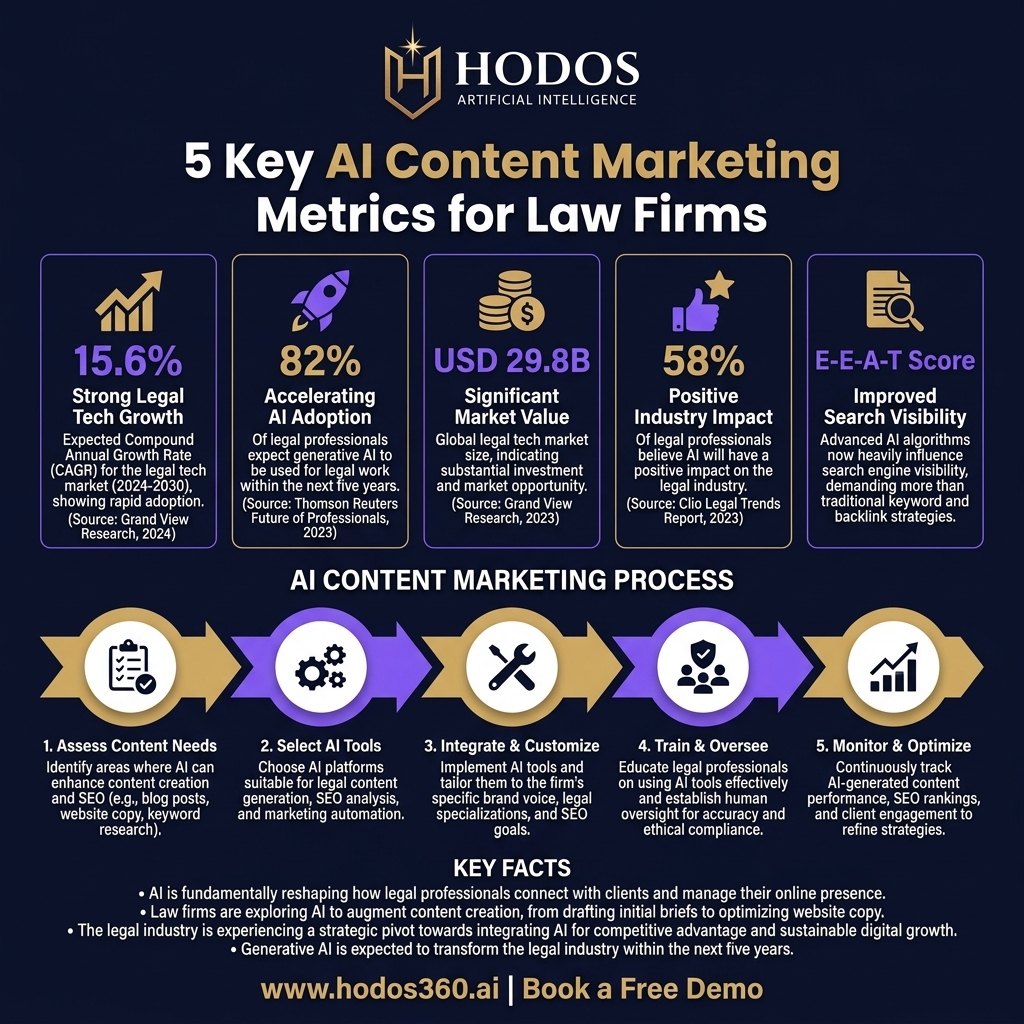
The cornerstone of any successful legal practice in the 21st century is robust online visibility, a domain now heavily influenced by artificial intelligence. Traditional legal SEO focused on keywords and backlinks, but today's search engines, powered by advanced AI algorithms, demand far more. Google's E-E-A-T (Experience, Expertise, Authoritativeness, and Trustworthiness) guidelines, for instance, have elevated the importance of high-quality, insightful content that genuinely addresses user intent. This shift has created a unique challenge for law firms: how to produce a consistent volume of expert content while navigating complex legal nuances and ethical considerations. Firms that fail to adapt risk becoming invisible in a crowded digital marketplace, a fate that many smaller practices have already begun to experience as larger, tech-forward competitors dominate search results.
Leading legal tech conferences, such as LegalTech NYC 2026, have prominently featured discussions on how AI is redefining the very fabric of search engine optimization for legal services. Panels often highlight the rapid advancements in natural language processing (NLP) and machine learning, which allow AI tools to understand context, sentiment, and user behavior with unprecedented accuracy. This means AI can identify not just *what* people are searching for, but *why*, enabling law firms to create content that resonates deeply and positions them as authoritative sources. For example, a recent ABA TechReport indicated that nearly 40% of law firms are now exploring or actively using AI in some capacity, with marketing and client intake being primary areas of interest. This growing adoption signals a clear trend: AI is becoming indispensable for effective legal SEO.
This evolving landscape presents both immense opportunities and significant challenges. Learn more about Legal AI ROI: Maximizing Law Firm Value in 2026. Firms like Hogan Lovells, known for their innovative approaches, are reportedly investing heavily in AI-driven analytics to understand market trends and client needs, allowing them to preemptively create content that answers emerging legal questions. Conversely, firms clinging to outdated SEO tactics find their organic traffic dwindling, struggling to compete with the sheer volume and precision of AI-generated or AI-optimized content from more agile competitors. The tension is clear: innovate or be outranked. The ability to harness AI for comprehensive SEO analysis, from competitive intelligence to predictive keyword research, is no longer an advantage but a fundamental requirement for sustained digital growth.
One critical aspect of this evolution is the ability of AI to analyze vast datasets of legal documents, case law, and industry publications, extracting insights that human marketers might miss. This deep analysis allows AI-powered platforms to identify content gaps, anticipate legal trends, and recommend topics that will attract high-value clients. For instance, an AI might detect a surge in queries related to "data privacy compliance for small businesses" following a new state regulation, prompting the firm to generate timely, authoritative content on that very topic. This proactive approach, driven by predictive analytics, ensures that a law firm's online presence remains relevant and responsive, positioning them at the forefront of client inquiries rather than reacting to them.
Crafting High-Impact Legal Content with AI
The promise of AI content marketing lies in its ability to streamline the creation of high-quality, legally sound, and SEO-optimized content. Imagine a world where your firm can generate detailed blog posts, insightful articles, compelling social media updates, and persuasive website copy at a fraction of the time and cost. This is the reality that AI tools are ushering in. Platforms are now capable of drafting initial content outlines, generating variations of headlines, and even composing full articles based on provided legal briefs or case summaries. For instance, a firm specializing in intellectual property could feed an AI recent patent filings and receive a draft blog post explaining the implications for startups, significantly reducing the burden on busy attorneys.
However, the ethical and professional responsibilities inherent in legal practice demand a cautious, human-centric approach to content generation with AI. While AI can draft, it cannot yet fully replicate the nuanced legal judgment, empathy, and deep understanding of client-specific situations that a human attorney possesses. This is where the tension arises: balancing efficiency with accuracy and compliance. The American Bar Association's Model Rule 1.1 (Competence) dictates that lawyers must provide competent representation, which extends to the information they disseminate publicly. Therefore, any AI-generated legal content must undergo rigorous review by a qualified attorney to ensure accuracy, avoid misleading statements, and maintain professional standards. Learn more about Law Firm AI: The Ultimate Guide to Proprietary Platforms. The goal is augmentation, not replacement.
Companies like Casetext and Harvey AI have demonstrated the potential of AI in legal content, with Harvey AI notably partnering with Allen & Overy to develop custom AI models for legal research and drafting. These collaborations highlight a future where AI acts as a sophisticated co-pilot, enhancing a lawyer's ability to produce high-value content. For marketing, this translates into being able to scale content efforts without compromising the firm's reputation or legal integrity. A firm can leverage AI to analyze competitor content, identify evergreen topics, and even suggest content formats (e.g., video scripts, infographics) that perform best for specific legal niches, ultimately bolstering their client acquisition efforts.
The real power of AI in content creation isn't just speed; it's the ability to personalize and optimize at scale. AI can analyze client demographics, past interactions, and search queries to tailor content that speaks directly to their needs and pain points. This level of personalization far exceeds what manual efforts can achieve, leading to higher engagement rates and better conversion. For example, an AI could identify that prospective clients in a particular region frequently search for "estate planning for blended families" and then help create targeted content, complete with local jurisdictional specifics, to address that precise need. This strategic application of AI content marketing is transforming how law firms connect with their target audiences.
Ensuring Accuracy and Compliance in AI-Generated Legal Content
The ethical imperative for accuracy in legal content cannot be overstated. While AI offers incredible efficiencies, it is crucial to establish robust protocols for vetting AI-generated material. Firms must implement a multi-layered review process where human attorneys, with their specialized expertise, meticulously verify every factual claim, legal interpretation, and citation. This is particularly vital given the potential for AI models to "hallucinate" or produce plausible but incorrect information. Failure to do so could lead to significant reputational damage, ethical breaches under rules like ABA Model Rule 7.1 (Communications Concerning a Lawyer's Services), and even professional liability. Learn more about AI Marketing: The Ultimate Shift for Law Firms. The commitment to human oversight ensures that the firm's integrity remains paramount, even as technology assists in content production. Establishing clear internal guidelines for AI usage, regular training for staff, and dedicated attorney review committees are essential steps for any firm adopting AI in its content generation strategy. These measures safeguard against potential pitfalls and reinforce the firm's commitment to ethical practice.
AI-Powered Digital Growth and Client Acquisition Strategies
Beyond content creation, AI is revolutionizing the broader strategies for digital growth and client acquisition in the legal sector. It's no longer just about getting found; it's about finding the right clients and engaging them effectively. AI-powered marketing platforms can analyze vast swathes of data – from website visitor behavior and social media engagement to industry trends and competitor activities – to identify high-potential leads with unparalleled precision. This allows law firms to move beyond broad-stroke marketing campaigns to highly targeted, personalized outreach. For example, an AI could pinpoint businesses in a specific industry facing new regulatory challenges and then facilitate a tailored communication strategy, presenting the firm as the ideal solution provider. This shift from reactive to proactive marketing is a game-changer.
The competitive landscape in legal services is intense, marked by firms vying for a shrinking pool of high-value clients. Those that have embraced AI are reporting significant gains. A recent report by Thomson Reuters on the State of the Legal Market highlighted that firms leveraging advanced marketing automation and AI tools are seeing an average increase of 25-35% in qualified leads compared to their traditional counterparts. This dramatic improvement isn't just about efficiency; it's about strategic advantage. While some firms continue to rely on manual lead qualification and generic email blasts, their AI-enabled counterparts are already engaging potential clients with highly relevant content and services, often before the client even realizes they need a lawyer. Learn more about AI Marketing Automation: Law Firms' 2026 Growth Catalyst. This creates a considerable tension in the market, where firms that invest in AI are outperforming those that don't.
AI also plays a critical role in optimizing the entire client journey, from initial contact to conversion. Tools like AI voice assistants can provide 24/7 client intake, qualify leads based on predefined criteria, and even book appointments, ensuring that no potential client is left unattended. This instant responsiveness significantly improves the client experience and conversion rates, especially for inquiries outside of standard business hours. Imagine a potential client searching for a personal injury attorney at 10 PM; an AI assistant can immediately engage them, gather crucial information, and schedule a consultation, capturing a lead that might otherwise have gone to a competitor. This seamless interaction is a hallmark of modern, AI-driven client acquisition.
The strategic application of predictive analytics is another area where AI is transforming digital growth. By analyzing historical data, market shifts, and even external economic indicators, AI can forecast future client needs and legal service demands. This enables law firms to anticipate market opportunities, develop new service offerings, and tailor their marketing messages to resonate with future client pain points. For instance, an AI might predict a surge in demand for cybersecurity legal services due to an increase in global data breaches, allowing a firm to proactively launch a targeted marketing campaign. This forward-looking approach, powered by AI, ensures that law firms are always a step ahead, solidifying their position as industry leaders.
Leveraging Predictive Analytics for Targeted Marketing
- ✓Identify Emerging Trends: AI analyzes vast datasets to spot subtle shifts in legal demand, allowing firms to create content and services for nascent areas of law before competitors.
- ✓Optimize Client Segmentation: Go beyond basic demographics. AI segments clients based on behavioral patterns, legal needs, and propensity to convert, enabling hyper-targeted campaigns.
- ✓Forecast Case Volume: Predict which legal areas will see increased activity, helping firms allocate marketing resources more effectively and prepare for surges in client inquiries.
- ✓Personalize Outreach: AI determines the most effective communication channels and messaging for individual prospects, increasing engagement and conversion rates.
- ✓Enhance Pricing Strategies: Analyze market data and competitor pricing to inform optimal service pricing, ensuring competitiveness while maximizing revenue.
- ✓Mitigate Marketing Spend Risk: Predictive models help allocate budgets to campaigns with the highest projected ROI, reducing wasted ad spend and improving overall efficiency.
- ✓Proactive Reputation Management: Identify potential negative sentiment online early, allowing firms to address concerns before they escalate and impact their brand image.
The Role of AI in SEO Optimization and Performance Tracking
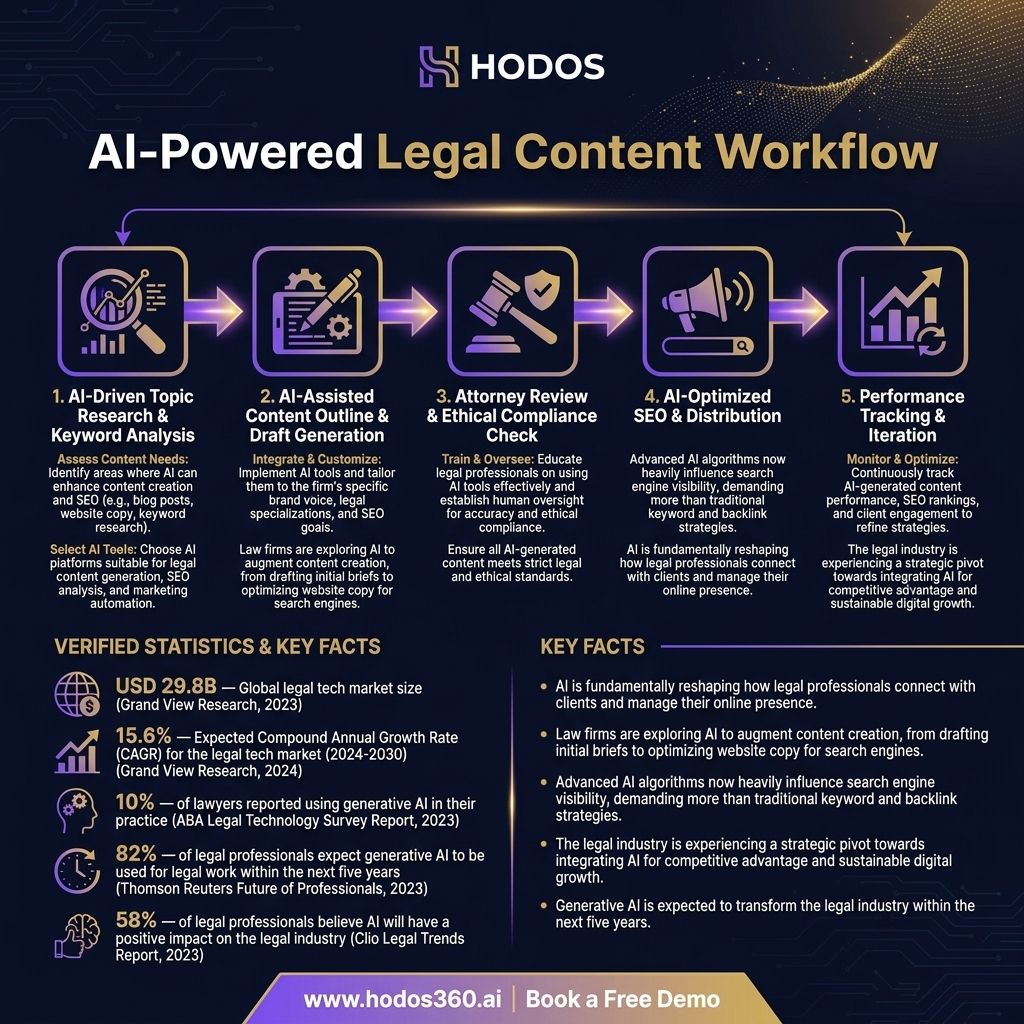
Effective legal SEO is a continuous process of optimization and adaptation, a task made significantly more powerful and efficient with AI. AI tools can perform comprehensive audits of a firm's website, identifying technical SEO issues, content gaps, and opportunities for improvement that would take human experts countless hours to uncover. This includes analyzing backlink profiles, assessing website speed, optimizing mobile responsiveness, and ensuring proper schema markup – all critical factors for search engine rankings. For instance, an AI can quickly identify broken internal links or duplicate content that is hindering a site's performance, providing actionable recommendations for immediate fixes. This meticulous approach ensures that a law firm's digital foundation is robust and fully optimized for maximum visibility.
Furthermore, AI excels at competitive intelligence, a vital component of any successful search engine optimization strategy. It can monitor competitor websites, analyze their keyword strategies, track their content performance, and even predict their next marketing moves. This level of insight allows law firms to not only keep pace with their rivals but to strategically outmaneuver them. Imagine knowing which legal topics your competitors are gaining traction with, or identifying underserved niches they're missing. AI provides this strategic foresight, enabling firms to adjust their AI content marketing and SEO efforts dynamically. This competitive tension drives innovation, pushing firms to adopt more sophisticated AI solutions to gain an edge.
Measuring the return on investment (ROI) for marketing efforts has historically been a challenge for law firms. Learn more about AI Marketing: The Essential KPI for Law Firm Growth. However, AI-powered analytics platforms are transforming this by providing granular, real-time data on campaign performance. These platforms can track everything from initial impressions and clicks to lead conversions and client acquisition costs, offering a clear picture of what's working and what isn't. According to a Gartner report on marketing technology trends, companies leveraging AI for analytics reported a 15-20% improvement in marketing ROI compared to those relying on traditional methods. This data-driven approach allows firms to optimize their marketing spend, allocate resources more effectively, and demonstrate tangible results to partners. This transparency in performance tracking is crucial for gaining buy-in for continued AI investment.
Beyond basic metrics, AI can provide deep insights into client behavior post-acquisition. By analyzing client communication patterns, case outcomes, and satisfaction levels, AI can help identify opportunities for cross-selling, improve client retention, and even refine service delivery. This holistic view of the client lifecycle, from initial search query to long-term relationship, allows law firms to continually refine their marketing and operational strategies. The integration of AI across these functions creates a synergistic effect, where marketing insights inform service delivery, and service delivery feedback informs future marketing efforts, creating a continuous loop of improvement and sustained digital growth.
Measuring and Adapting Your AI Marketing Efforts
The dynamic nature of digital marketing requires constant measurement and adaptation. AI provides the tools to do this with unprecedented efficiency and insight. Firms should establish clear Key Performance Indicators (KPIs) for their AI content marketing initiatives, such as organic traffic growth, lead conversion rates, client acquisition costs, and client lifetime value. AI analytics platforms can then continuously monitor these KPIs, flagging underperforming content or campaigns and suggesting real-time optimizations. Learn more about AI in Legal Practice: Ultimate Guide to What Comes Next. For example, if a blog post on "corporate litigation trends" isn't generating the expected engagement, the AI might recommend adjusting the title, adding specific keywords, or promoting it on different social media channels. This iterative process of data-driven refinement ensures that marketing strategies remain agile and effective in a constantly changing digital environment. Regular reporting and performance reviews are essential to capitalize on these insights and make informed strategic decisions.

Future-Proofing Your Law Firm: Navigating the AI Marketing Revolution
The AI marketing revolution is not a distant future; it is the present reality for law firms striving for sustained relevance and digital growth. As we look ahead, the firms that will thrive are those that not only adopt AI but integrate it thoughtfully and ethically into their core operations. This means moving beyond simply using AI as a novelty and embracing it as a fundamental component of their strategic marketing framework. The challenges are real – data privacy concerns, the need for human oversight, and the rapid pace of technological change – but the opportunities for enhanced visibility, efficient client acquisition, and superior service delivery are too significant to ignore. The EU AI Act, for instance, signals a global move towards regulating AI, emphasizing transparency and accountability, which legal firms must factor into their implementation strategies.
Navigating this new terrain requires a commitment to continuous learning and a willingness to invest in the right technologies. The market is flooded with AI tools, but discerning which ones truly align with a law firm's specific needs and ethical obligations is paramount. Firms need platforms that offer not just generic AI capabilities but specialized solutions tailored for the legal industry, ensuring compliance and accuracy. For instance, an effective AI marketing platform should offer features like AI-powered legal workflows for content review, robust analytics for ROI tracking, and seamless integration with existing case management systems. This holistic approach ensures that AI enhances every facet of the firm's marketing ecosystem.
The human element remains irreplaceable. While AI can automate, analyze, and even generate content, the strategic direction, ethical oversight, and personal client relationships will always be the purview of human attorneys. The most successful firms will be those that view AI as an amplifier of human intelligence, not a replacement. This means empowering legal professionals with the tools to be more efficient, more insightful, and ultimately, more effective in serving their clients. The narrative of human lawyers vs. AI is a false dichotomy; the true story is about human lawyers *with* AI, working in synergy to achieve unprecedented levels of digital growth and client satisfaction. This collaborative model is the key to unlocking the full potential of AI in legal marketing.
In conclusion, the era of AI content marketing demands a proactive and informed approach from law firms. The competition for online visibility and client acquisition will only intensify, making the strategic integration of AI an essential component of any forward-thinking firm's playbook. By embracing AI for sophisticated SEO, efficient content generation, and data-driven client engagement, law firms can not only survive but truly flourish in the digital age. The time to act is now, to ensure your firm is not just participating in the future of legal marketing, but actively shaping it. Discover how HODOS 360's AI Marketing Platform can transform your firm's digital presence and secure your competitive edge.
Frequently Asked Questions
How can AI content marketing ensure legal accuracy?+
AI content marketing tools require robust human oversight. While AI can generate drafts and optimize for SEO, a qualified attorney must review and verify all legal information, citations, and interpretations. Implementing a multi-layered review process and adhering to ethical guidelines like ABA Model Rule 1.1 ensures that content remains accurate, compliant, and maintains the firm's professional integrity. AI should augment, not replace, human legal expertise.
What ethical considerations should law firms be aware of when using AI for marketing?+
Law firms must adhere to ethical rules such as ABA Model Rule 7.1 concerning communications about legal services. This means ensuring AI-generated content is not false or misleading. Additionally, firms must be transparent about AI's role where appropriate, protect client data, and maintain confidentiality. Continuous human review and adherence to data privacy regulations like GDPR or CCPA are crucial to ethical AI marketing practices.
Can AI truly understand complex legal nuances for content creation?+
Modern AI models, particularly large language models, demonstrate impressive capabilities in understanding context and generating coherent text. However, they lack true legal judgment or consciousness. While AI can process vast amounts of legal data and identify patterns, it cannot replicate a human attorney's nuanced understanding of specific client situations or the evolving interpretations of law. It's a powerful tool for drafting, but final legal interpretation requires human intelligence.
How does AI help with client acquisition beyond content generation?+
AI significantly enhances client acquisition through predictive analytics, targeted marketing, and automated lead qualification. It analyzes data to identify high-potential leads, personalize outreach messages, and optimize communication channels. AI voice assistants can provide 24/7 client intake and appointment booking, ensuring immediate engagement. This allows firms to proactively identify and engage prospects more efficiently and effectively than traditional methods.
What is the ROI of investing in AI for legal marketing?+
Firms investing in AI for legal marketing often report substantial ROI improvements. Studies by Thomson Reuters and Gartner indicate increases of 15-35% in qualified leads and marketing ROI. AI optimizes spend by identifying high-performing campaigns, personalizing content for higher conversion, and automating routine tasks, freeing up human resources. The ability to track granular performance metrics in real-time allows for continuous optimization and demonstrable returns on investment.