


Law Firm AI: The Ultimate Guide to Proprietary Platforms
The legal landscape is undergoing a seismic shift, marked by an escalating 'AI arms race' among the world's most prestigious law firms. A recent Reuters report, making waves across the industry, revealed that Kirkland & Ellis, the highest-grossing law firm globally, is poised to invest a colossal $500 million in developing its own proprietary AI platform.
This monumental commitment isn't merely an allocation of funds; it's a strategic declaration, signaling a profound reorientation towards in-house technological prowess as the new frontier of competitive advantage. This move by a titan like Kirkland underscores a critical juncture: the transition from merely adopting off-the-shelf legal tech to actively engineering bespoke AI legal platforms tailored to a firm’s unique operational needs and vast data reservoirs.
It challenges the conventional 'buy versus build' paradigm, forcing every law firm, from boutique to global, to re-evaluate its long-term AI strategy.
This isn't an isolated incident but rather a crystallization of a broader trend. Firms are recognizing that generic AI solutions, while useful, often fall short of addressing the nuanced, high-stakes demands of complex legal work.
The drive towards proprietary systems is fueled by a desire for deeper integration, enhanced data security, and the ability to train models on decades of a firm's institutional knowledge – a distinct competitive differentiator. As industry leaders like Kirkland make such significant bets, it sends a clear message: the future of legal practice is not just AI-augmented, but AI-driven, and firms that fail to develop a robust, forward-thinking strategy risk being left behind.
The implications extend far beyond technology departments, touching every facet of a law firm's operation, from client service and talent acquisition to risk management and strategic growth. For those seeking to stay ahead, understanding the strategic underpinnings of this shift is paramount. Discover how your firm can navigate this new era of legal innovation.
The AI Arms Race: Why Elite Firms are Building In-House AI Legal Platforms
Kirkland & Ellis's decision to spend $500 million developing its own AI platform is not just an investment; it's an acknowledgment of an undeniable truth: the future of legal excellence hinges on technological autonomy and innovation. This move reflects a growing sentiment among top-tier firms that off-the-shelf AI tools, while helpful for foundational tasks, lack the bespoke precision and deep integration required to truly differentiate in a hyper-competitive market.
As Andrew Perlman, Dean of Suffolk University Law School and a prominent voice in legal tech, often emphasizes, the true power of AI in law emerges when it's finely tuned to specific legal contexts and firm-specific data. Kirkland, a firm renowned for its aggressive market strategy and impressive revenue, understands that proprietary AI provides an unparalleled advantage in areas like advanced legal research, predictive analytics for case outcomes, and highly specialized document review, allowing them to deliver superior value and efficiency to their high-profile clients.
The 'build versus buy' dilemma is evolving. While startups like Harvey AI, backed by OpenAI and partnered with firms like Allen & Overy, demonstrate the power of external collaboration, Kirkland's approach highlights a different path: full control over the AI's development, data governance, and strategic direction.
Learn more about AI Litigation Workflows: Essential for Modern Law Firms. This is particularly crucial for safeguarding sensitive client information and ensuring that AI models are trained exclusively on proprietary, high-quality legal data, free from the risks associated with shared or public datasets. This strategic imperative also extends to the ability to integrate AI seamlessly into existing workflows, creating an AI-powered legal workflows system that is intuitive and highly efficient for their attorneys.
The goal is not just automation but augmentation, empowering lawyers with tools that enhance their judgment and strategic capabilities, ultimately elevating the quality and speed of legal service delivery.
The Strategic Imperative: Beyond Off-the-Shelf Solutions
The limitations of generic AI solutions in the legal domain are becoming increasingly apparent. While many general-purpose large language models (LLMs) can generate text or summarize documents, they often lack the deep contextual understanding, factual accuracy, and legal precision critical for high-stakes legal work. This gap drives firms like Kirkland to invest heavily in developing their own AI legal platform, capable of understanding the nuances of specific jurisdictions, complex regulatory frameworks, and the firm's unique precedents.
This approach allows for the creation of 'expert systems' that are not just intelligent but *legally intelligent*, leveraging the firm's collective expertise built over decades. For instance, a proprietary system can be trained on millions of the firm's past contracts, litigation documents, and client communications, enabling it to identify patterns, predict outcomes, and draft documents with a level of accuracy and speed that generic tools cannot match.
Furthermore, the control over the AI's architecture and training data provides a significant competitive edge in terms of intellectual property and defensibility. In an era where data is the new oil, the ability to harness and refine one's own data through proprietary AI is invaluable.
Learn more about Colorado AI Act: Essential Guide for Law Firms on Automated Decisions. It transforms a firm's vast repository of legal work into an active, intelligent asset. This strategic move aligns with predictions from industry analysts like Gartner, who in their 2024 emerging technologies reports, highlighted the increasing trend of enterprises developing vertical-specific AI rather than relying solely on horizontal solutions.
For law firms, this means building an AI legal platform that understands the intricacies of, say, M&A due diligence for a specific industry, or complex patent litigation, far better than any generalized tool. This bespoke capability translates directly into improved client outcomes, reduced operational costs, and a significant boost to attorney productivity.
The Cost and Complexity: A $500 Million Bet on the Future of Law
The $500 million investment by Kirkland & Ellis is a stark reminder of the immense resources required to build a cutting-edge AI legal platform from the ground up. This figure isn't just for software licenses; it encompasses a multifaceted expenditure across talent acquisition, infrastructure, data management, and continuous research and development.
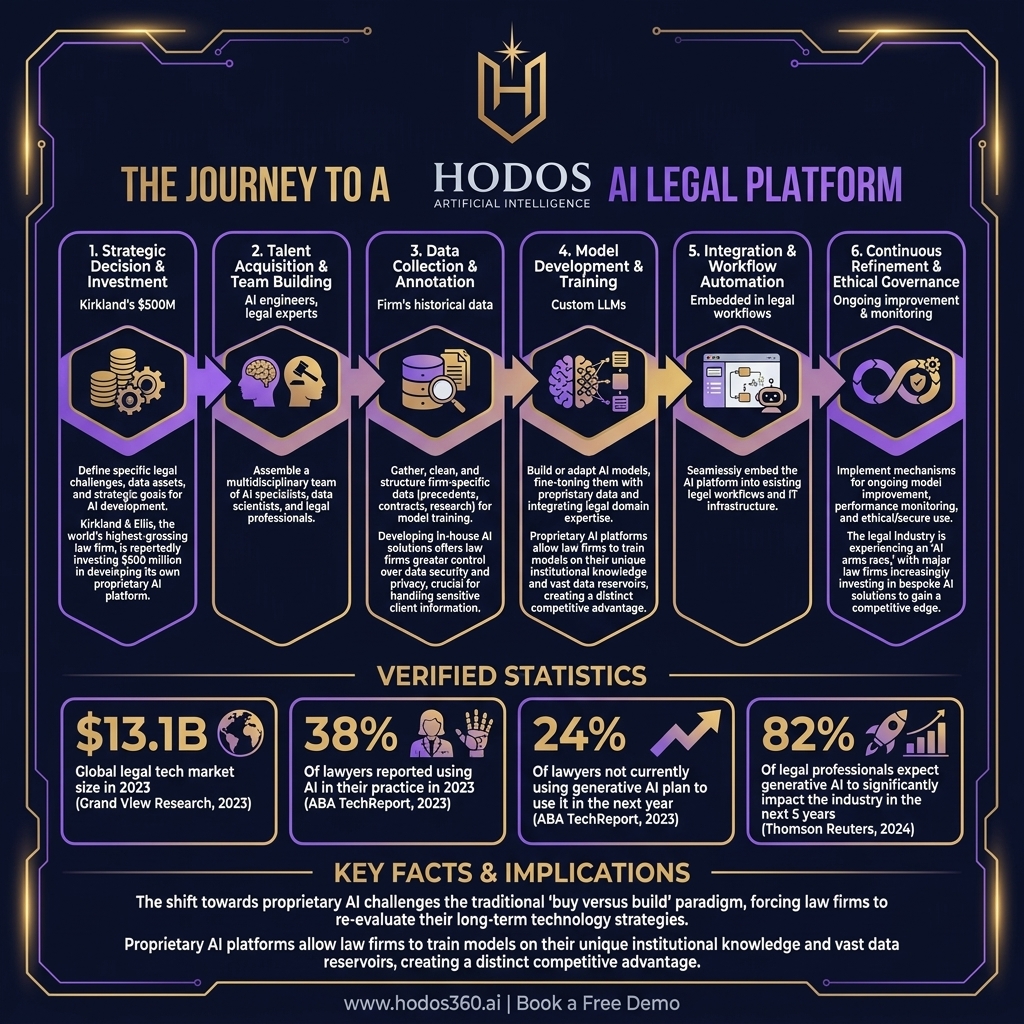
On the talent front, firms are competing with Silicon Valley giants for top-tier AI researchers, machine learning engineers, and data scientists. The demand for these specialists, particularly those with legal domain expertise, has skyrocketed, driving up salaries and benefits. Jensen Huang, CEO of NVIDIA, has often spoken about the escalating costs of AI development, from specialized hardware like GPUs to the energy consumption of training massive models.
For a law firm, this translates into building dedicated AI teams, potentially a legal tech subsidiary, to manage this complex undertaking.
Beyond human capital, the infrastructure requirements are substantial. Developing a proprietary AI platform necessitates robust cloud computing resources, secure data storage solutions, and advanced MLOps (Machine Learning Operations) frameworks to manage the lifecycle of AI models.
Learn more about Essential AI Vibe Coding: Elevate Law Firm Web Development. Data labeling and preparation, often underestimated, can consume a significant portion of the budget. Legal data is notoriously unstructured and requires extensive annotation by legal experts to make it suitable for machine learning.
This process alone can run into millions of dollars. The sheer scale of this investment highlights a growing divide in the legal industry: firms with the capital and foresight to make such bets are positioning themselves for unparalleled efficiency and competitive advantage, while others may struggle to keep pace.
This creates a compelling narrative of disruption versus tradition, where innovation is becoming a non-negotiable aspect of long-term success.
Talent Wars and Technological Hurdles in AI Development
The race to build proprietary AI legal platforms has ignited a fierce talent war within the legal and tech sectors. Law firms are no longer just competing for top legal talent; they are now actively vying for elite AI engineers and data scientists, often offering compensation packages comparable to tech behemoths.
This challenge is compounded by the need for these technical experts to understand the unique intricacies of legal data and the specific ethical and regulatory constraints of the legal profession. Integrating these new AI capabilities into existing, often legacy, law firm IT systems presents another formidable hurdle.
Many firms operate on decades-old infrastructure, making seamless integration a complex and costly endeavor. This often requires significant re-engineering of existing systems and a cultural shift within the firm to embrace new technologies.
The technical challenges extend to ensuring the accuracy, explainability, and reliability of AI models in a legal context.
Learn more about AI Web Design: Essential for Law Firms in the Agentic Era. Unlike many other industries where 'good enough' might suffice, legal applications demand near-perfect precision due to the high stakes involved. Bias in AI models, particularly those trained on historical legal data, is a critical concern, as historical data can reflect societal biases that could lead to discriminatory outcomes.
Addressing these issues requires sophisticated algorithmic design, rigorous testing, and continuous monitoring, adding layers of complexity and cost to the development process. Firms must also contend with the rapid pace of AI innovation itself; what is cutting-edge today could be obsolete tomorrow, necessitating continuous investment in R&D and model refinement.
This dynamic environment demands agility and a long-term strategic vision for sustained technological leadership.
The Transformative Power of Proprietary AI in Legal Operations
A proprietary AI legal platform has the potential to fundamentally redefine how law firms operate, moving beyond mere efficiency gains to unlock entirely new capabilities. Imagine an AI system that, having ingested decades of a firm's M&A deal documents, can instantly identify optimal clauses for a specific industry, flag potential regulatory conflicts based on real-time data feeds, and even predict the likelihood of a deal closing based on market conditions and past outcomes.
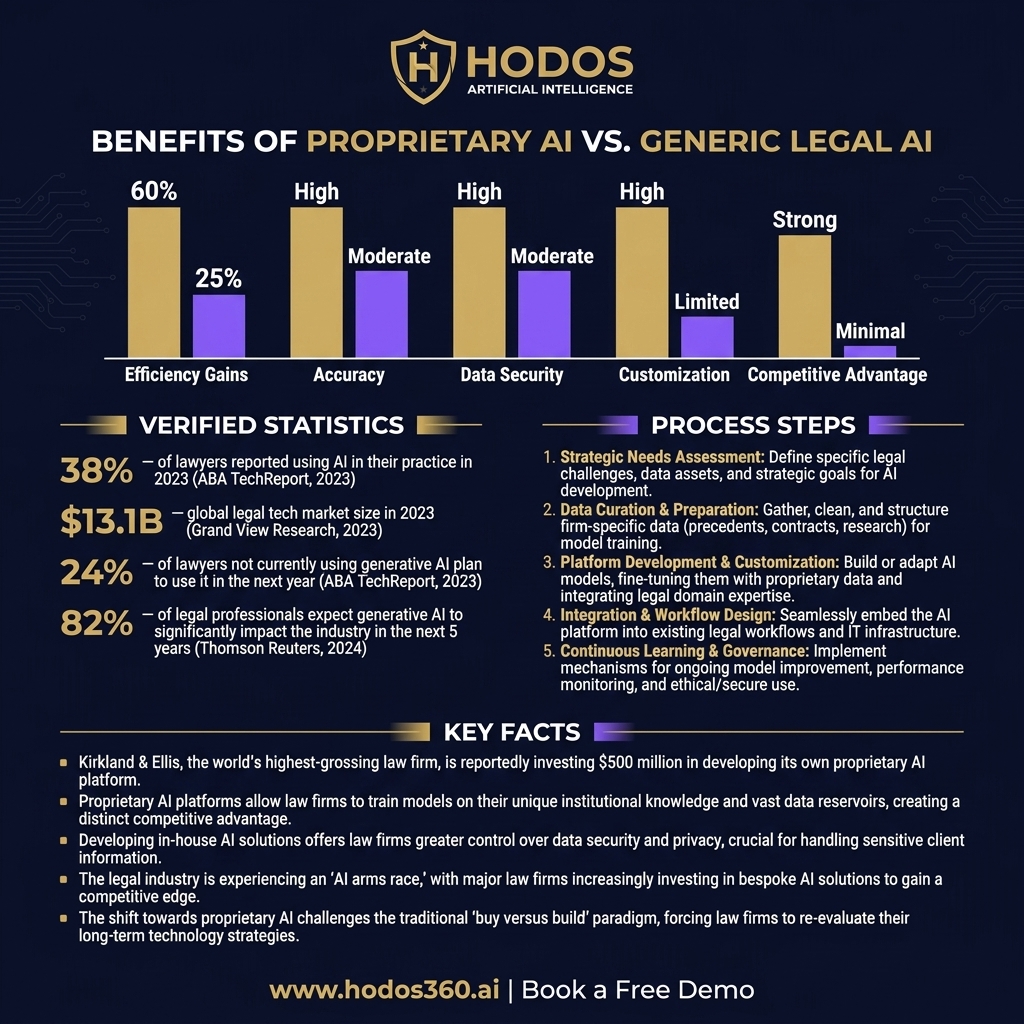
This level of predictive power and hyper-customization far exceeds what generic tools can offer. Firms can leverage these platforms for unparalleled legal research, with AI sifting through millions of documents and precedents in seconds, identifying obscure but critical case law that human researchers might miss.
This isn't just about speed; it's about uncovering deeper insights and providing more comprehensive legal advice.
Furthermore, these advanced platforms can revolutionize client intake and management. Learn more about Client Pressure: The Ultimate Driver of Law Firm AI Investment. An AI-powered system can rapidly qualify leads, perform initial conflict checks, and even draft preliminary engagement letters, significantly reducing the administrative burden on attorneys.
For example, a bespoke AI can analyze a new client's specific legal needs against the firm's historical successes, intelligently routing them to the most suitable practice group and even suggesting potential cross-service opportunities. This holistic approach to AI law firm management streamlines operations, enhances client experience, and frees up valuable attorney time to focus on complex, value-add tasks.
The ultimate goal is to create a symbiotic relationship between human expertise and machine intelligence, where the firm's institutional knowledge is amplified and made accessible at unprecedented speed and scale, providing a distinct competitive advantage in client acquisition and retention.
- ✓Enhanced Legal Research: AI sifts through vast legal databases, case law, and firm precedents in seconds, identifying relevant information and patterns far beyond human capacity.
- ✓Intelligent Contract Analysis: Proprietary AI can review, draft, and negotiate contracts, flagging risks, ensuring compliance, and suggesting optimal clauses based on firm-specific data.
- ✓Predictive Analytics for Case Strategy: Models trained on historical litigation data can forecast case outcomes, assess settlement probabilities, and inform strategic decisions, improving client results.
- ✓Automated Due Diligence: Expedites complex due diligence processes in M&A or real estate, identifying critical issues and accelerating deal closures.
- ✓Optimized Workflow Automation: Streamlines administrative tasks, document generation, and internal processes, allowing attorneys to focus on high-value legal work.
- ✓Personalized Client Insights: AI analyzes client data to identify needs, predict service requirements, and personalize communication, fostering stronger client relationships.
- ✓Compliance and Risk Management: Continuously monitors regulatory changes and internal policies, flagging potential non-compliance or risks in real-time.
Navigating the Ethical and Regulatory Landscape of AI in Law
The development and deployment of a proprietary AI legal platform, while offering immense benefits, also introduces complex ethical and regulatory considerations that law firms must meticulously navigate. The American Bar Association (ABA) Model Rules of Professional Conduct, particularly Rule 1.1 on Competence and Rule 1.6 on Confidentiality, become even more critical in an AI-driven environment.
Firms must ensure that their AI systems are used competently, meaning attorneys understand the technology's capabilities and limitations, and that client data processed by AI remains absolutely confidential and secure. The potential for AI to generate biased outcomes, particularly if trained on historical data reflecting societal inequities, is a serious concern that demands proactive mitigation strategies.
For example, an AI system used for predictive sentencing could perpetuate or even amplify existing biases in the justice system if not carefully designed and monitored.
The global regulatory landscape for AI is also rapidly evolving. The EU AI Act, for instance, represents a landmark effort to regulate AI systems based on their risk level, imposing stringent requirements for transparency, human oversight, and data governance.
Learn more about Legal AI Training: Essential Skills for Modern Law Firms. Similar legislative efforts are underway in other jurisdictions, including discussions within the U.S. Congress. Law firms developing proprietary AI must stay abreast of these developments, ensuring their platforms are compliant with current and emerging laws.
This involves not only technical safeguards but also robust internal governance frameworks, ethical review boards, and continuous auditing processes to ensure the responsible and lawful use of AI. The failure to address these ethical and regulatory challenges could lead to significant reputational damage, legal liabilities, and erosion of client trust, underscoring the importance of a holistic approach to AI implementation.
Ensuring Responsible AI: Governance and Compliance Frameworks
To effectively manage the ethical and regulatory complexities of advanced AI legal platforms, law firms must establish comprehensive governance and compliance frameworks. These frameworks should outline clear policies for data privacy, model transparency, bias detection and mitigation, and human oversight. For instance, firms should implement strict protocols for how client data is collected, stored, and used by AI systems, ensuring compliance with regulations like GDPR and CCPA.
Transparency is key; attorneys and clients alike need to understand how AI-driven recommendations are generated and the limitations of these systems. The concept of 'explainable AI' (XAI) is gaining traction, aiming to make AI decisions more interpretable to humans, which is crucial for legal applications where accountability is paramount.
Furthermore, ongoing internal auditing and external validation of AI models are essential to detect and correct biases, ensure accuracy, and adapt to evolving legal and ethical standards. This might involve establishing an internal AI ethics committee, composed of lawyers, technologists, and ethicists, to review AI applications and provide guidance.
The firm's commitment to responsible AI should be communicated clearly to both employees and clients, fostering trust and demonstrating leadership in this critical area. As the legal industry continues its rapid embrace of AI, those firms that prioritize ethical development and robust compliance will not only mitigate risks but also build stronger, more resilient practices, setting a new standard for integrity and innovation in the digital age.
This proactive stance ensures that the powerful capabilities of an AI legal platform are harnessed for good, aligning technological advancement with professional responsibility.

Key Takeaways and Next Steps for Law Firms
The $500 million investment by Kirkland & Ellis is a watershed moment, signaling that proprietary AI legal platforms are no longer a futuristic concept but a present-day strategic imperative for leading law firms. The era of passive AI adoption is over; proactive development and thoughtful integration are now defining competitive advantage.
For law firms grappling with this shift, the key takeaway is clear: an effective AI strategy is no longer optional. While not every firm possesses the resources of a Kirkland & Ellis to build from scratch, the principles driving their investment—efficiency, differentiation, and enhanced client service—are universally applicable.
Firms must assess their current technological capabilities, identify core operational pain points, and explore how AI can address them, whether through bespoke development, strategic partnerships, or leveraging advanced, integrated platforms.
For many firms, the pragmatic path forward involves partnering with specialized legal tech providers that offer comprehensive, AI-powered solutions.
Platforms like HODOS 360 provide a suite of services, from AI Law Firm Management Systems that streamline case management and document automation to AI Marketing Platforms and AI Voice Assistants, offering the benefits of advanced AI without the colossal investment and development overhead of building a proprietary system from scratch.
The journey towards an AI-driven future is complex, but the opportunity to transform legal practice, enhance client value, and secure a competitive edge is immense. Firms that embrace this challenge with a clear vision, ethical considerations, and strategic partnerships will be best positioned to thrive in the evolving legal landscape.
Frequently Asked Questions
Why are top law firms investing heavily in proprietary AI?+
Elite law firms are investing in proprietary AI to gain a distinct competitive advantage. These bespoke systems allow for deep integration with a firm's unique data and workflows, ensuring enhanced data security, superior accuracy, and the ability to develop specialized legal applications. This moves beyond generic AI tools to create highly customized solutions that leverage institutional knowledge, leading to greater efficiency and differentiated client services.
What does a $500 million investment in an AI platform entail for a law firm?+
A $500 million investment covers significant costs across talent acquisition (AI engineers, data scientists), infrastructure (cloud computing, secure data storage), and extensive R&D. It also includes data labeling, model training on vast legal datasets, and the development of MLOps frameworks. This substantial outlay reflects the complexity and resource intensity of building a cutting-edge, secure, and highly specialized AI legal platform.
What are the key benefits of a proprietary AI legal platform?+
Proprietary AI legal platforms offer numerous benefits, including unparalleled legal research capabilities, intelligent contract analysis and drafting, predictive analytics for litigation outcomes, and automated due diligence. They streamline administrative tasks, optimize AI law firm management, and enhance client intake, ultimately freeing attorneys to focus on high-value strategic work. This leads to improved efficiency, better client outcomes, and a significant competitive edge.
What ethical considerations must law firms address when using AI?+
Law firms must address critical ethical considerations, including ensuring AI competence (understanding AI's limitations), maintaining client confidentiality, and mitigating algorithmic bias. Compliance with evolving regulations like the EU AI Act is also crucial. Firms need robust governance frameworks, internal ethics committees, and continuous auditing to ensure AI systems are used responsibly, transparently, and without perpetuating historical injustices.
How can smaller law firms compete in the AI-driven legal landscape?+
Smaller law firms can compete by strategically adopting advanced AI through partnerships with specialized legal tech providers. Instead of building from scratch, they can leverage integrated AI law firm management platforms that offer a comprehensive suite of services like case management, document automation, and AI-powered marketing. This approach allows them to harness the power of AI to enhance efficiency and client service without the prohibitive costs of in-house development.