

AI Email Marketing: Essential Tools for Law Firms
The legal industry, often perceived as resistant to rapid technological shifts, is currently undergoing a profound transformation driven by artificial intelligence. While the broader tech world has embraced AI for years, its application within law firms, particularly in client acquisition and retention, marks a significant paradigm shift. Just last year, at LegalTech NYC 2026, Sarah Chen, managing partner at Chen & Associates, candidly shared her firm's initial skepticism about integrating advanced digital strategies. She recounted how traditional networking and print advertisements, once cornerstones of their marketing efforts, were yielding diminishing returns. Her firm's journey from cautious observer to an early adopter of AI-powered solutions illustrates a growing tension between legacy practices and the undeniable competitive edge offered by modern technology. This narrative is not unique; it echoes across countless firms grappling with the digital imperative.
Today, the question for law firms is no longer *if* AI will impact their operations, but *how* deeply it will reshape client interactions and business development. The recent Memeburn article, "10 Best AI Tools for Email Marketing in 2026: Tested & Compared," underscores a critical trend: AI email marketing tools are no longer a niche luxury but an essential component of a robust marketing strategy. For law firms, this translates into an unprecedented opportunity to move beyond generic outreach to deliver hyper-personalized, timely, and relevant communications. This shift is not merely about efficiency; it's about building stronger client relationships, enhancing brand reputation, and ultimately, driving sustainable growth in a fiercely competitive market.
Embracing AI in email marketing means redefining how law firms manage client intake, disseminate legal insights, and nurture prospective leads. It allows for a level of precision and scale previously unattainable, ensuring that every message resonates with its intended recipient. From automating routine follow-ups to generating bespoke content that addresses specific client needs, these tools are poised to revolutionize legal business development. HODOS 360’s AI Marketing Platform offers a comprehensive suite of tools designed to empower law firms to harness this potential, transforming their outreach into a strategic asset. Ready to transform your firm's outreach? Explore the power of AI email marketing.
The Evolving Landscape of Legal Marketing with AI
The legal marketing landscape has undergone a dramatic metamorphosis, moving far beyond the static advertisements and rudimentary mailers of yesteryear. In 2026, digital presence and sophisticated client engagement are not just advantages, but necessities. Firms like Baker McKenzie, for instance, have publicly discussed their significant investments in digital transformation, including advanced analytics and personalized client portals, recognizing that the modern client expects a seamless and tailored experience. Learn more about Legal AI Deployment: The Ultimate Firmwide Strategy for Torys. According to a 2025 report by the Thomson Reuters Institute, digital marketing spend by law firms increased by 18% year-over-year, indicating a clear shift in budgetary priorities. This move reflects a broader understanding that the 'discovery' phase for potential clients now largely occurs online, demanding a proactive and data-driven approach to outreach.
AI specifically addresses many of the inherent challenges in legal marketing: the high cost of client acquisition, the difficulty of retaining clients in a saturated market, and the continuous need for brand building within ethical parameters. Traditional methods often cast a wide net, yielding low conversion rates. AI, however, enables surgical precision, allowing firms to identify, segment, and target ideal client profiles with unparalleled accuracy. Learn more about Automate Client Lead Follow-Up: Proven Strategies for Law Firms. This capability is not just about efficiency; it's about maximizing the impact of every marketing dollar by focusing on leads with the highest potential. The human element, while still paramount in legal services, is augmented by AI's capacity to process vast datasets and identify subtle patterns in client behavior and market trends.
The conflict between disruption and tradition is palpable within the legal sector. Firms that embraced early AI adoption, such as Allen & Overy's widely publicized partnership with Harvey AI for contract review and research, are now extending this innovative mindset to their marketing efforts, gaining significant competitive advantages. Their success stories, often highlighted at industry conferences like the Legal Innovation Forum, demonstrate how early movers are setting new benchmarks for client engagement and operational efficiency. Learn more about AI Marketing: Essential Legal Safeguards for Law Firms. Conversely, many firms that hesitated are now playing catch-up, struggling to integrate fragmented technologies and overcome internal resistance, a tension that underscores the urgency of strategic AI adoption across all facets of firm operations.
Within this evolving context, AI email marketing tools emerge as a cornerstone technology. They are moving beyond basic newsletter distribution to enable hyper-personalized, multi-touch communication strategies. These tools are being continuously 'tested' in real-world scenarios, demonstrating their ability to adapt to client preferences and market dynamics. Learn more about Legal AI Funding: Essential Strategies for Law Firms. For example, rather than sending a generic update on tax law changes, an AI system can analyze a client’s portfolio and send a specific article detailing implications directly relevant to their business, alongside an invitation for a tailored consultation. This granular level of engagement transforms email from a broadcast channel into a deeply personal dialogue, fostering trust and demonstrating a proactive understanding of client needs.
Selecting the Right AI Email Marketing Tools for Your Firm
Choosing the appropriate AI email marketing tools for a law firm is a nuanced process that extends beyond simply picking a popular platform. The selection criteria must prioritize security, strict compliance with legal ethics (such as ABA Model Rule 7.1 regarding communications concerning a lawyer's services), and seamless integration with existing legal tech infrastructure. Unlike general business tools, legal-specific solutions must handle sensitive client data with the utmost confidentiality and adhere to jurisdiction-specific regulations. Learn more about AI Marketing Agents: Essential for Law Firm Growth. Firms must evaluate not just the AI's capabilities but also the vendor's commitment to data privacy, encryption standards, and their understanding of the unique regulatory landscape governing legal professionals. A superficial choice could lead to significant ethical and operational risks, undermining the very trust a firm seeks to build.
Key features to meticulously evaluate include advanced automation capabilities, such as intelligent client segmentation, trigger-based drip campaigns, and automated follow-ups tailored to specific legal inquiries. Robust content generation features, often powered by sophisticated AI writers, are crucial for drafting compelling subject lines, email bodies, and calls to action that resonate with legal clients without requiring constant manual input. Furthermore, integrated analytics for comprehensive campaign performance tracking and seamless CRM integration are non-negotiable. Learn more about Essential Marketing Automation: Law Firm Growth Strategies. While many general market tools are 'ranked' based on broad utility, law firms must assess their specific needs, looking for platforms that offer robust case management integration and client intake automation, minimizing manual data entry and ensuring a unified client record.
Beyond Basic Automation: Advanced AI Features
The true power of AI in legal email marketing lies in its advanced features that go beyond simple scheduled sends. Predictive analytics, for instance, can analyze past client interactions and engagement patterns to forecast which leads are most likely to convert, allowing firms to prioritize their efforts. Sentiment analysis can gauge client responses to communications, providing valuable feedback on messaging effectiveness. Dynamic content insertion ensures that emails adapt in real-time based on a recipient's specific case type, geographic location, or prior interactions, making every communication feel uniquely crafted. Platforms like ActiveCampaign, known for their strong AI capabilities, leverage such features to enable hyper-segmentation, delivering content so precise it often feels like a direct, personal conversation rather than a mass email. This level of sophistication transforms email from a mere broadcast channel into a strategic dialogue.
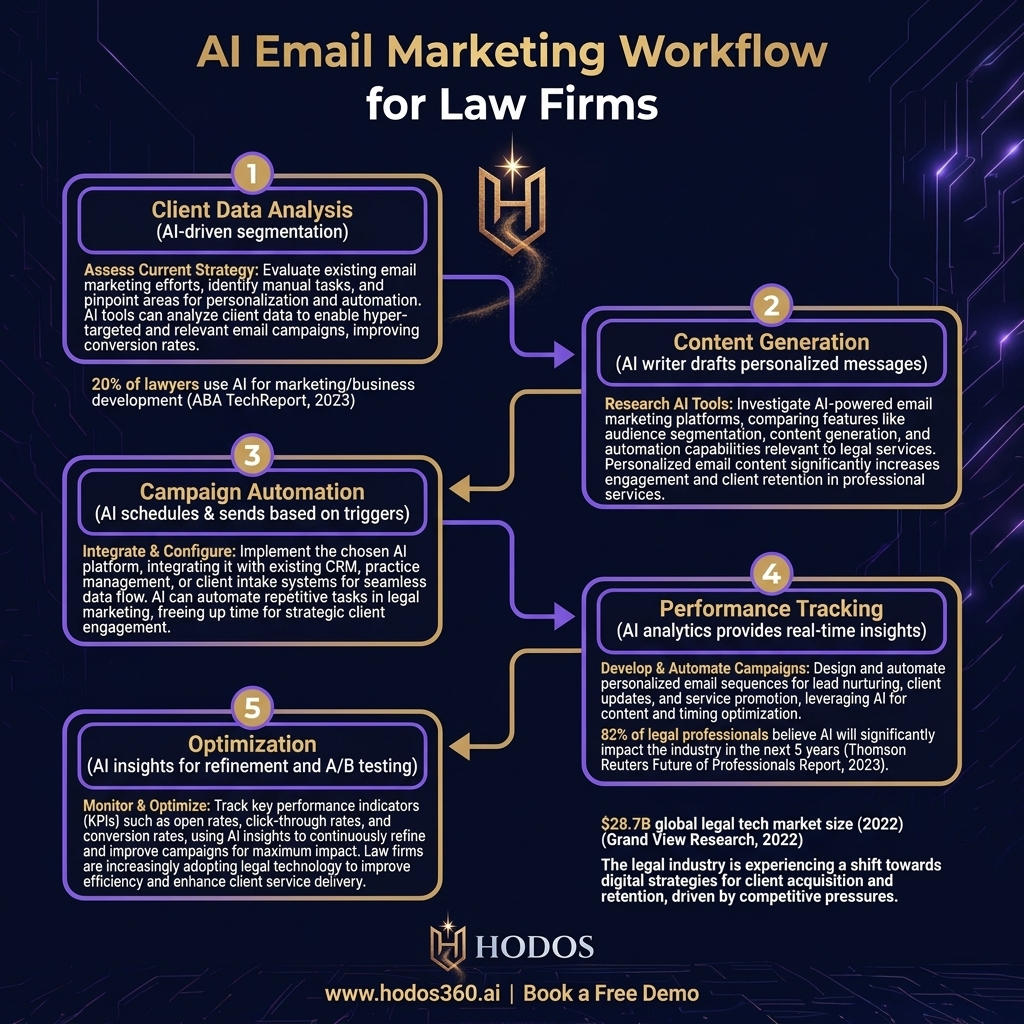
Consider the success story of Lex Mundi Law, a mid-sized firm specializing in corporate litigation, which presented its findings at a recent Legal Business World conference. By adopting an AI-powered email platform with these advanced features, the firm reported a remarkable 30% increase in qualified leads over an 18-month period, directly attributable to more targeted and timely outreach. This surge in lead quality translated into a significant boost in new client acquisitions and revenue. Their approach involved using AI to identify potential clients based on industry news and regulatory changes, then automatically enrolling them in tailored email sequences that highlighted Lex Mundi’s expertise in those specific areas. Such real-world results underscore the tangible benefits of investing in advanced AI email marketing tools that are continuously 'tested' and refined for optimal performance.
- ✓Client Segmentation & Hyper-Personalization: AI analyzes data to create precise client segments, enabling highly relevant messaging tailored to individual needs and legal matters.
- ✓Automated Campaign Workflows: Design sophisticated drip campaigns and automated follow-ups that respond dynamically to client actions, ensuring timely and consistent communication.
- ✓AI-Powered Content Generation: Utilize AI writers to draft compelling subject lines, email bodies, and calls to action, saving time and enhancing message quality while maintaining human oversight.
- ✓Predictive Lead Scoring & Nurturing: AI identifies and scores potential leads based on engagement patterns, allowing firms to prioritize high-value prospects and nurture them effectively.
- ✓Robust Compliance & Data Security Protocols: Ensure chosen tools meet stringent legal industry standards for data privacy (e.g., GDPR, CCPA) and ethical advertising (ABA Model Rule 7.1).
- ✓Seamless Integration with Legal CRM/Case Management: Integrate email marketing with existing systems to unify client data, streamline workflows, and ensure a holistic view of client interactions.
- ✓A/B Testing & Performance Analytics: Continuously optimize campaigns using AI-driven insights from open rates, click-throughs, and conversion data to refine strategies and improve ROI.
Optimize your client outreach with HODOS 360's AI Marketing Platform. Discover how our integrated solutions can elevate your firm's strategy.
Implementing AI for Hyper-Personalized Client Engagement
The power of personalization in legal services cannot be overstated. In an industry built on trust and individual relationships, generic, mass-produced emails are not only ineffective but can actively alienate potential clients. AI-driven personalization, however, allows law firms to move beyond the superficial. By ethically analyzing client data—always with explicit consent and in strict adherence to privacy regulations like GDPR and ABA Model Rule 7.3 concerning solicitation—AI can deliver highly relevant updates, case information, and legal insights. Imagine a scenario where a corporate client receives an email detailing specific regulatory changes impacting their sector, complete with an analysis from their dedicated attorney, rather than a general firm-wide newsletter. This targeted approach demonstrates a deep understanding of their unique needs, fostering confidence and loyalty.
Practical applications of AI in client engagement are diverse and impactful. For new client onboarding, AI can automate the delivery of welcome packets, essential forms, and initial consultation reminders, ensuring a smooth and professional start. For ongoing cases, AI can generate automated updates on key milestones, document requests, or court dates, keeping clients informed without consuming valuable attorney time. Furthermore, AI can nurture prospective leads by sending tailored content based on their initial inquiry, guiding them through a sales funnel that feels genuinely helpful rather than overtly promotional. For instance, if a potential client searches for 'estate planning,' AI can automatically send a series of educational emails on wills, trusts, and probate, positioning the firm as a knowledgeable resource.
Crafting Compelling Narratives with AI Writers
The rise of sophisticated AI writers has dramatically streamlined the creation of compelling email copy, subject lines, and calls to action. Tools like Jasper.ai, or even custom legal AI models, can draft initial content in a fraction of the time it would take a human. This doesn't eliminate the need for human oversight; rather, it empowers legal professionals to focus on refining and adding their unique legal expertise. AI can analyze vast amounts of successful marketing copy, identify patterns of engagement, and generate variations that are highly optimized for specific audiences. This capability significantly helps firms to 'improve' the quality and efficiency of their content creation process, ensuring that every communication is not only informative but also persuasive and compliant with legal advertising standards.
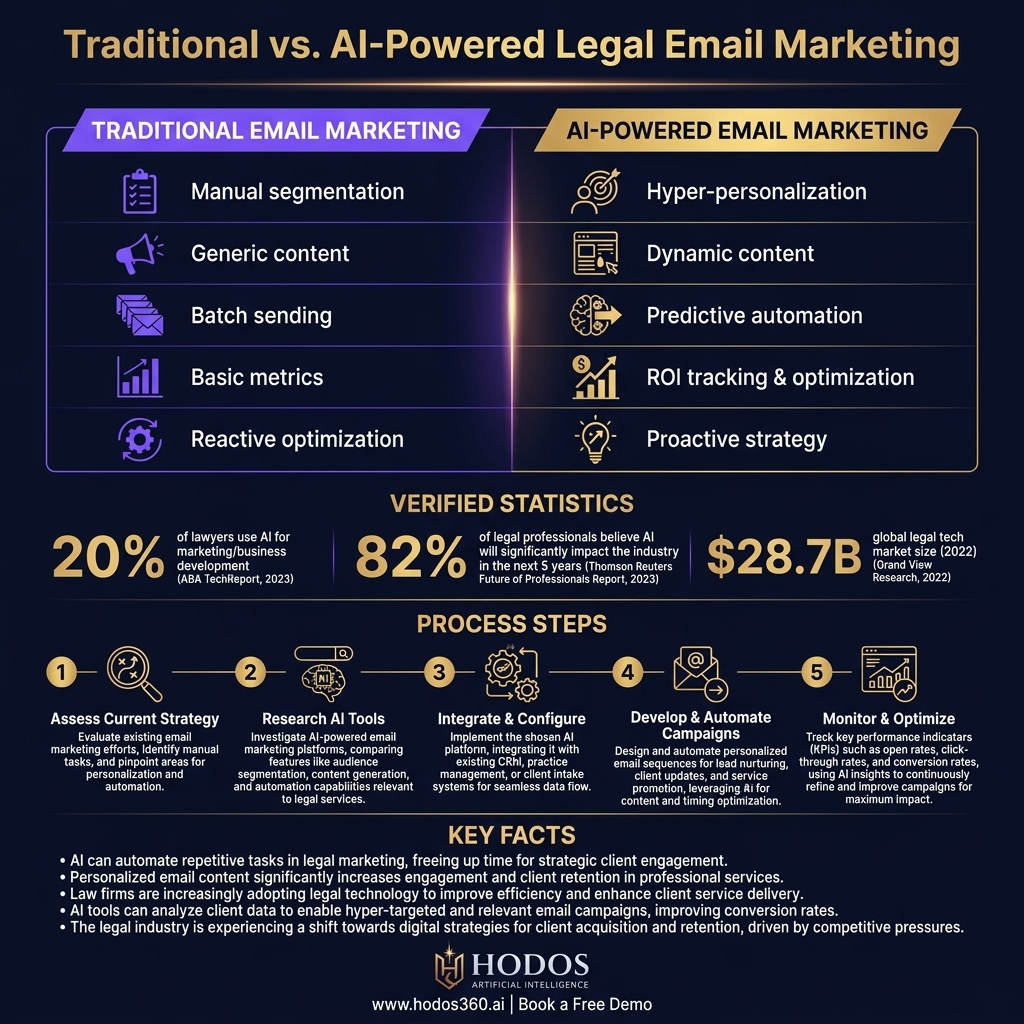
Maintaining the appropriate tone and ensuring legal accuracy are paramount when leveraging AI for content creation. While AI can generate drafts, the nuanced language of legal advice and client communication demands careful attorney review. As Ilya Sutskever, co-founder of OpenAI, has often emphasized, the future of AI lies in effective human-AI collaboration, where AI acts as a powerful co-pilot rather than a sole author. This collaboration ensures that the AI-generated content is not only grammatically correct and engaging but also legally sound and reflective of the firm’s brand voice. This collaborative approach enhances the firm's ability to consistently deliver high-quality, personalized communications that build trust and demonstrate expertise, while also integrating seamlessly with other firm operations, from generating follow-up tasks in a case management system to scheduling appointments via AI voice assistants.
Measuring ROI and Optimizing AI Email Campaigns
Measuring the return on investment (ROI) for AI email marketing tools extends far beyond vanity metrics like open rates or click-throughs. For law firms, true ROI is measured in tangible outcomes: increased qualified leads, higher client retention rates, and ultimately, a measurable impact on revenue and profitability. Modern AI platforms offer sophisticated 'ROI tracking' capabilities that link email campaign performance directly to client conversions and lifetime value. For example, a firm might track how many leads generated through a specific AI-driven email sequence ultimately became paying clients, and then compare that against the cost of the campaign. This data-driven approach allows firms to justify their technology investments and continuously refine their marketing spend for maximum impact.
The analytics and reporting features embedded within advanced AI email marketing tools are critical for this optimization process. They provide real-time insights into campaign performance, allowing firms to conduct A/B testing on different subject lines, call-to-action buttons, or content variations. Detailed reports on open rates, click-through rates, conversion rates, and even unsubscribe rates offer a granular view of what resonates with clients and what doesn't. These insights are invaluable; they 'improve' future campaigns by guiding strategic adjustments to messaging, timing, and segmentation. For instance, if an AI-driven report shows a particular email series for potential personal injury clients has a low engagement rate, the firm can use the data to refine the content or target audience, ensuring resources are allocated effectively.
Data Privacy and Compliance in AI-Driven Marketing
Navigating the complex landscape of data privacy regulations, including GDPR, CCPA, and emerging frameworks like the EU AI Act (now entering its enforcement phases), is paramount for law firms utilizing AI marketing. The ethical imperative to protect sensitive client data cannot be overstated. Firms must ensure that their chosen AI platforms have robust security features, including end-to-end encryption, secure data storage, and strict access controls. As Brad Smith, Microsoft's Vice Chair and President, frequently articulates, trust in technology hinges on its security and ethical deployment. Firms must rigorously 'test' the compliance capabilities of any AI tool, ensuring it aligns with both legal mandates and professional obligations, such as client confidentiality under ABA Model Rule 1.6.
The role of continuous optimization extends beyond mere performance metrics to include ongoing compliance checks. AI isn't a 'set it and forget it' solution; it requires regular review of performance data, privacy policies, and adjustments to ensure that campaigns remain effective, ethical, and legally compliant. This involves not only internal audits but also staying abreast of evolving data protection laws and industry best practices. Firms that proactively manage these aspects will not only avoid potential penalties but also build a stronger reputation for trustworthiness and professionalism, a critical asset in the legal profession. This proactive approach ensures that the powerful capabilities of AI are harnessed responsibly, serving to enhance client relationships rather than compromise them.

Key Takeaways and The Future of AI in Legal Marketing
The integration of AI email marketing tools represents a pivotal moment for law firms, offering an unparalleled opportunity to enhance efficiency, cultivate deeper client engagement, and achieve measurable ROI. The days of generic, one-size-fits-all marketing are rapidly fading, replaced by a data-driven paradigm that prioritizes personalization and strategic outreach. Firms that embrace this shift will find themselves better positioned to attract and retain clients in an increasingly competitive legal landscape. The benefits extend beyond mere cost savings; they encompass a fundamental transformation in how legal services are presented and perceived, fostering stronger, more enduring client relationships built on relevance and trust.
Looking ahead, the future of AI in legal marketing points towards even greater integration and sophistication. Imagine a seamless ecosystem where leads are first attracted through an AI-powered website building platform, then qualified by AI voice assistants handling initial inquiries, and subsequently nurtured through highly personalized email campaigns. All these touchpoints would be centrally managed within an AI Law Firm Management System, creating a holistic client journey from initial contact to long-term relationship. This integrated approach not only streamlines operations but also provides invaluable insights into client behavior, allowing firms to continuously adapt and optimize their services. HODOS 360 stands at the forefront of this transformation, offering an integrated suite designed to empower law firms with these advanced capabilities.
For law firm owners and legal professionals, the takeaway is clear: embracing AI is no longer optional. Start small, prioritize compliance and ethical guidelines, invest in continuous training for your team, and proactively explore how these powerful tools can be tailored to your firm's specific needs. The firms that adapt and innovate will not only survive but thrive, leading the way into a new era of legal service delivery and client engagement. Ready to lead your firm into the future of legal marketing? Book a free demo with HODOS 360 today.
Frequently Asked Questions
How do AI email marketing tools differ from traditional email platforms for law firms?+
AI email marketing tools offer advanced capabilities like hyper-personalization, predictive analytics for lead scoring, and automated content generation tailored to specific client segments. Unlike traditional platforms that primarily facilitate mass sending, AI tools analyze client data to deliver highly relevant and timely messages, optimizing engagement and conversion rates while adhering to legal compliance needs.
What are the ethical considerations when using AI for legal email marketing?+
Ethical considerations are paramount. Law firms must ensure compliance with ABA Model Rules (e.g., 7.1, 7.3) regarding advertising and solicitation, and adhere to data privacy regulations like GDPR or CCPA. AI tools must be used transparently, with client consent for data usage, and all AI-generated content must be rigorously reviewed by an attorney to ensure accuracy, confidentiality, and ethical appropriateness.
Can AI email marketing tools integrate with my existing legal CRM?+
Yes, seamless integration with existing legal CRM and case management systems is a crucial feature for effective AI email marketing tools. This integration allows for a unified view of client data, automates data synchronization, and ensures that marketing efforts are aligned with case progression and client relationship management. Many platforms offer API access or direct integrations for popular legal tech solutions.
How can I measure the ROI of AI email marketing campaigns?+
Measuring ROI involves tracking key metrics beyond open and click-through rates. Focus on qualified lead generation, client conversion rates, client retention, and the direct impact on revenue for specific practice areas. Advanced AI platforms provide detailed analytics that can link email engagement directly to client acquisitions and overall firm profitability, allowing for data-driven strategic adjustments.
What's the best way to get started with AI email marketing at my firm?+
Begin by assessing your firm's specific marketing goals and identifying pain points in your current email strategy. Research AI tools that prioritize legal compliance, data security, and integration capabilities. Start with a pilot project focusing on a specific practice area or client segment, rigorously test performance, and gather feedback. Prioritize attorney oversight and continuous training for your team to ensure ethical and effective deployment.