


AI Boosts Law Firm Profitability: An Essential Guide
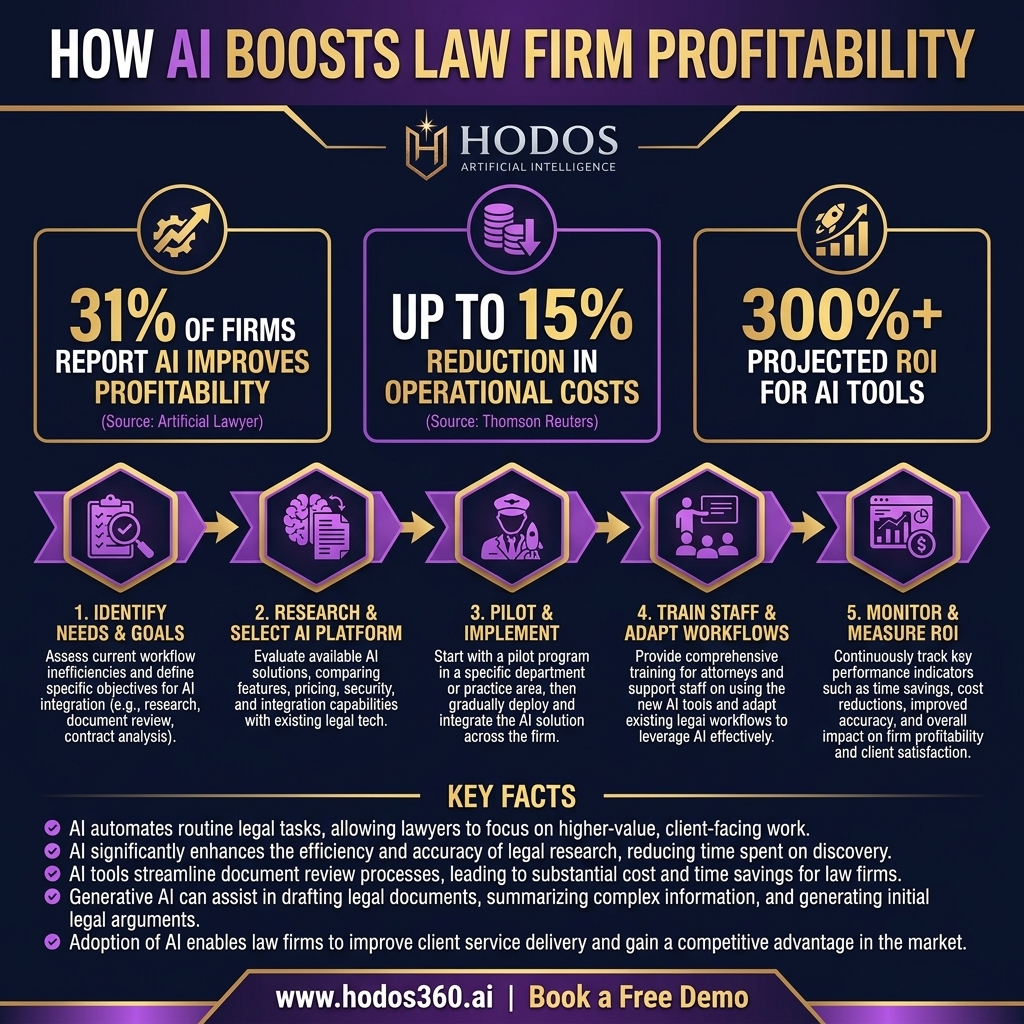
The legal industry stands at a pivotal juncture, grappling with mounting competitive pressures and the ever-present demand for greater efficiency. Against this backdrop, a recent report from Artificial Lawyer delivers a compelling statistic: 31% of law firms now directly attribute improved profitability to their adoption of artificial intelligence. This isn't merely a trend; it's a profound shift in operational strategy, signaling a new era where AI improves profitability not just incrementally, but fundamentally reshaping how legal services are delivered and managed. The days of viewing AI as a futuristic novelty are over; it has firmly established itself as a critical driver for growth and sustainability in the modern law firm.
This transformation is playing out across the legal landscape, from solo practitioners to large, multinational firms. Consider the narrative emerging from firms like Allen & Overy, which famously partnered with Harvey AI, a generative AI platform backed by OpenAI. This collaboration wasn't born out of a desire for technological novelty, but a strategic imperative to enhance productivity and streamline complex legal research and document review processes. Jonathan Brayne, Global Head of Advanced Delivery at A&O, has often spoken about the firm’s commitment to leveraging AI to empower their lawyers, allowing them to focus on higher-value, client-facing work rather than routine, time-consuming tasks. The success stories of these early adopters are creating a compelling blueprint for how artificial intelligence can be integrated to boost overall efficiency and, critically, the bottom line.
For law firm owners and attorneys navigating this evolving terrain, understanding the tangible benefits and strategic pathways to AI adoption is no longer optional—it's essential. This comprehensive guide will dissect the mechanisms through which AI improves profitability, offering insights into its application across various legal functions, from case management and client intake to marketing and client communication. We will explore the real-world impact through concrete examples, discuss the ethical considerations, and provide a clear roadmap for integrating AI solutions to future-proof your practice. The opportunity to significantly enhance your firm's operational strategy and deliver superior client outcomes through intelligent automation is now within reach.
Ready to transform your practice? Discover how HODOS 360’s AI-powered solutions can elevate your firm's profitability and efficiency. Learn more about our comprehensive AI Law Firm Management System and other services.
The Profitability Paradox: Why AI Adoption is Critical for Law Firms
The paradox of profitability in the legal sector has long been a tightrope walk between increasing client demands for cost-efficiency and the inherent labor-intensive nature of legal work. Traditional models often relied on billable hours, which, while lucrative, limited scalability and often led to client dissatisfaction over opaque billing practices. The advent of AI is fundamentally disrupting this model. According to the Thomson Reuters Institute's 2026 Future of Legal Report, firms that have strategically implemented AI tools are reporting a significant reduction in operational overhead, with some seeing up to a 15% decrease in administrative costs within the first year. This is not about replacing human lawyers but augmenting their capabilities, allowing them to handle a greater volume of work with enhanced precision and speed. The efficiency gains directly translate into improved margins, making AI a strategic imperative rather than a mere technological accessory.
Furthermore, the competitive landscape is intensifying. Learn more about AI Web Apps: Ultimate Legal Firms' Guide to Next-Gen Development. Firms that hesitate to embrace AI risk being outmaneuvered by those leveraging its capabilities to deliver faster, more accurate, and more cost-effective services. The survey data from Artificial Lawyer, highlighting 31% of firms seeing improved profitability, underscores a growing divide. Firms like Cooley LLP, known for their tech-forward approach, have openly discussed their investment in AI-driven document review and legal research platforms, which has not only accelerated case preparation but also allowed their attorneys to take on more complex, high-value engagements. This strategic shift enables them to expand their service offerings without a proportional increase in headcount, directly impacting their overall revenue per lawyer. The legal industry is witnessing a clear narrative arc: early adopters are gaining a significant competitive edge, while those clinging to outdated methodologies face increasing pressure on their margins and market share.
Beyond Efficiency: AI's Role in Elevating Client Outcomes and Revenue Streams
While efficiency is a primary driver, the true power of AI in the legal sector extends far beyond mere cost reduction; it profoundly impacts client outcomes and opens new revenue streams. Consider the rise of predictive analytics in litigation. Firms utilizing AI models, fed by vast datasets of historical case law and court decisions, can now forecast litigation outcomes with remarkable accuracy. This empowers attorneys to provide clients with more realistic expectations, better risk assessments, and more strategic advice, leading to higher client satisfaction and trust. Companies like LexisNexis and Thomson Reuters are continually enhancing their AI platforms to provide these sophisticated insights, moving beyond simple search functions to offer deep analytical capabilities that were once the exclusive domain of highly specialized human experts. This shift transforms legal counsel from reactive problem-solving to proactive, data-driven strategy, enhancing the value proposition for every client.
Beyond litigation, AI is revolutionizing client intake and service delivery. Learn more about AI Phone Assistant: Essential Guide for Modern Law Firms. AI-powered voice assistants can offer 24/7 client support, answering common queries, qualifying leads, and even booking initial consultations, ensuring that no potential client is left waiting. This immediate responsiveness significantly improves the client experience from the very first touchpoint, fostering loyalty and converting leads more effectively. For instance, smaller firms are finding that implementing AI-driven client intake systems allows them to compete with larger firms on responsiveness and availability, without the prohibitive costs of expanding administrative staff. This not only optimizes client acquisition but also frees up legal professionals to focus on substantive legal work, thereby increasing billable capacity and overall firm productivity. The narrative is clear: AI enables firms to deliver a superior, more personalized, and consistently available service, directly enhancing client satisfaction and, by extension, recurring revenue.
Optimizing Operational Strategy with AI-Powered Legal Workflows
Optimizing operational strategy through AI-powered legal workflows is where many firms are finding their most significant gains in profitability. AI Law Firm Management Systems, for example, integrate case management, billing, document automation, and calendar functions into a cohesive, intelligent platform. This eliminates silos, reduces manual data entry errors, and provides a holistic view of firm operations. Imagine a system that automatically generates initial drafts of legal documents based on case specifics, or one that flags potential conflicts of interest instantly upon client intake. This level of automation, once aspirational, is now a reality. Firms like Wilson Sonsini Goodrich & Rosati have been at the forefront of leveraging sophisticated workflow automation, not just for efficiency but for ensuring consistency and quality across their diverse practice areas. Their strategic investment in custom AI solutions highlights a broader industry trend towards intelligent automation that supports, rather than supplants, human expertise.
Another critical aspect of operational optimization comes from AI-driven data analytics. Learn more about AI Agents Identity: Essential Digital Trust for Law Firms. By analyzing billing data, time entries, and case outcomes, AI can identify bottlenecks in workflows, pinpoint underperforming practice areas, and even suggest optimal staffing for specific case types. This provides law firm leadership with actionable insights to make data-backed decisions that enhance resource allocation and strategic planning. The 2023 ABA TechReport indicated a growing interest in analytics among firms, with those implementing such tools reporting better financial performance. This is the essence of a truly AI-powered operational strategy: moving beyond reactive management to proactive, predictive optimization, ensuring that every resource is utilized to maximize both efficiency and, ultimately, the firm's profitability.
Unlock the full potential of your firm with HODOS 360’s AI Law Firm Management System. Streamline operations, enhance client services, and drive profitability. Request a demo today!
Navigating the AI Frontier: Challenges, Ethics, and Strategic Implementation
While the benefits of AI are undeniable, navigating its frontier presents significant challenges and ethical considerations that cannot be overlooked. The initial investment in AI infrastructure, training, and integration can be substantial, posing a barrier for smaller firms or those with limited tech budgets. Furthermore, the rapid evolution of generative AI, exemplified by models from OpenAI and Anthropic, brings questions of data privacy, security, and the potential for bias in algorithms. Law firms, bound by strict ethical rules like ABA Model Rule 1.6 (Confidentiality of Information) and Rule 1.1 (Competence), must ensure that their use of AI upholds professional obligations, protects client data, and does not inadvertently compromise the integrity of legal advice. The EU AI Act, with its stringent regulations, offers a glimpse into the future of legal tech governance, emphasizing the need for robust oversight and transparency in AI deployment.
Strategic implementation also requires a cultural shift within the firm. Learn more about Essential AI Legal Solutions: Freshfields' Gemini Integration. Attorneys, traditionally trained in linear, human-centric processes, may exhibit resistance to adopting new technologies. Overcoming this requires clear communication, comprehensive training programs, and demonstrating the tangible benefits of AI in their daily work. Firms that have successfully integrated AI, such as Clifford Chance with their 'Clifford Chance Applied Solutions' unit, emphasize pilot programs and continuous feedback loops to ensure that AI tools are genuinely useful and seamlessly integrated into existing workflows. The goal is not to force adoption but to empower lawyers by making their jobs easier and more impactful. The human element remains paramount; AI is a tool, not a replacement for legal judgment and client relationships.
- ✓Data Privacy and Security: Ensure all AI tools comply with stringent data protection regulations (e.g., GDPR, CCPA) and firm-specific confidentiality protocols.
- ✓Algorithmic Bias: Regularly audit AI models for inherent biases that could lead to discriminatory outcomes or inaccurate legal analysis.
- ✓Client Consent: Obtain informed consent from clients regarding the use of AI in their matters, especially when third-party AI services are involved.
- ✓Competence and Oversight: Attorneys remain ultimately responsible for the legal work. AI tools must be used under close supervision, and outputs thoroughly reviewed for accuracy and ethical compliance.
- ✓Transparency: Understand how AI tools arrive at their conclusions to ensure explainability and justify legal advice.
- ✓Integration with Existing Systems: Choose AI solutions that can seamlessly integrate with your current practice management software to avoid workflow disruptions.
- ✓Scalability and Future-Proofing: Select AI platforms that can grow with your firm and adapt to future technological advancements and legal changes.
Real-World Impact: Firms Leading the AI-Driven Profitability Revolution
The impact of AI on law firm profitability is best illustrated through the success stories of firms that have moved beyond pilot projects to full-scale integration. Take the example of Bryan Cave Leighton Paisner (BCLP), a global firm that has been a pioneer in legal operations and innovation. BCLP's investment in AI-powered contract analysis tools, such as Kira Systems, has allowed them to drastically reduce the time and cost associated with due diligence in M&A transactions. This not only makes their services more competitive but also frees up their highly skilled M&A lawyers to focus on complex negotiation and strategic advisory, rather than the laborious review of thousands of documents. The result is a more efficient, cost-effective service for clients and a significant boost to the firm's bottom line by increasing the volume of high-value work they can undertake. This narrative of strategic investment yielding tangible financial returns is becoming increasingly common across the industry. Learn more about AI Marketing Platform: The Ultimate Guide for Law Firms.
Another compelling case comes from smaller to mid-sized firms leveraging comprehensive AI Law Firm Management Systems. For instance, a regional firm specializing in personal injury, 'Justice Advocates LLC,' implemented an AI-powered case management system that automated client intake, document generation for standard filings, and even initial assessment of case viability based on historical data. Partner Sarah Chen reported a 25% increase in cases handled per attorney within 18 months, attributing this directly to the system's ability to reduce administrative burden and streamline initial case processing. This dramatic improvement in capacity, combined with reduced overhead from fewer support staff hours, led to a substantial increase in overall profitability. These examples demonstrate that AI is not just for the legal giants; it’s a scalable solution that can drive significant financial advantages for firms of all sizes, democratizing access to advanced operational efficiencies.

Case Studies in AI-Powered Legal Growth and Client Satisfaction
The narrative of AI-powered growth isn't just about internal efficiency; it's deeply intertwined with enhanced client satisfaction, which, in turn, fuels profitability. Consider the success of LegalZoom and Clio, which, while not traditional law firms, have profoundly influenced legal tech adoption. Clio's acquisition of Lawyaw in 2021, a document automation platform, underscores the industry's recognition of how AI-driven tools directly improve client service by accelerating legal processes. Firms using Clio's integrated platform, with features like AI-powered legal workflows and automated billing, report not only increased operational efficiency but also higher client retention rates due to transparent billing and faster service delivery. This demonstrates a clear correlation between technological investment, client experience, and sustained revenue growth.
Furthermore, the integration of AI marketing platforms is transforming how firms attract and retain clients. Learn more about AI Tools: Essential Strategies for Solo Legal Professionals. Firms leveraging AI for content generation, social media automation, and targeted advertising are seeing higher ROI on their marketing spend. A boutique intellectual property firm, 'Innovate IP Legal,' utilized an AI marketing platform to create targeted video content explaining complex patent law concepts, automating its distribution across LinkedIn and industry-specific forums. Founder David Lee noted a 40% increase in qualified lead generation and a 20% reduction in client acquisition costs within a year. This strategic application of AI, from back-office operations to front-end client engagement, illustrates a holistic approach to profitability that encompasses every facet of the modern law firm. The firms leading this revolution are not just adopting technology; they are strategically deploying it to redefine their market presence and client relationships.
The Future-Proof Law Firm: Embracing AI for Sustainable Growth
The journey toward a future-proof law firm is intrinsically linked to its willingness and ability to embrace AI for sustainable growth. As the legal landscape continues its rapid evolution, driven by technological advancements and shifting client expectations, stagnation is no longer an option. Firms that proactively integrate AI into their core operations are not just achieving short-term profitability gains; they are building resilient, adaptable, and highly competitive practices designed for the long haul. This involves a continuous cycle of evaluating new AI tools, investing in attorney and staff training, and fostering a culture of innovation that views technology as an enabler of superior legal service. The firms that will thrive in the coming decades will be those that master the art of combining human legal acumen with the unparalleled power of artificial intelligence, creating a synergy that elevates both efficiency and expertise.
The data is unequivocal: AI improves profitability, enhances client satisfaction, and provides a crucial competitive advantage. The 31% of law firms reporting increased profitability due to AI are not outliers; they are pioneers charting the course for the entire industry. For those yet to fully embrace this transformation, the time to act is now. The future of legal practice is intelligent, automated, and deeply integrated with AI, promising not just survival but unprecedented levels of growth and impact. By strategically adopting these tools, law firms can navigate the complexities of the modern legal market, deliver exceptional value to clients, and secure their position as leaders in an increasingly digital world.

HODOS 360: Your Partner in AI Transformation
As law firms look to strategically integrate AI, finding the right technology partner is paramount. HODOS 360 offers a comprehensive suite of AI-powered services designed to meet the diverse needs of modern legal practices. From our AI Law Firm Management System, which streamlines everything from case management to document automation, to our AI Marketing Platform that supercharges client acquisition, HODOS 360 provides the tools necessary for sustainable growth. Our AI Voice Assistants ensure 24/7 client engagement, while our Web & Mobile Development services build high-converting, AI-powered online presences. We understand the unique challenges and opportunities within the legal sector and are committed to empowering firms with cutting-edge solutions that genuinely improve profitability and operational excellence.
Embracing AI is not merely about adopting new software; it's about reimagining your practice for the digital age. HODOS 360 is dedicated to guiding law firms through this transformative journey, ensuring seamless integration, maximum efficiency, and measurable ROI. By leveraging our expertise and advanced platforms, your firm can unlock new levels of productivity, enhance client satisfaction, and secure a formidable competitive advantage. Partner with HODOS 360 to turn the promise of AI into tangible, enduring success for your legal practice. The future of law is here, and it's powered by intelligent innovation.
Frequently Asked Questions
How does AI specifically improve law firm profitability?+
AI boosts profitability by automating repetitive tasks like document review, legal research, and client intake, significantly reducing operational costs and freeing up attorneys for higher-value work. It also enhances efficiency, allowing firms to handle more cases, improve billing accuracy, and gain deeper insights into business performance through data analytics, ultimately increasing revenue per lawyer and overall firm margins.
Is AI only beneficial for large law firms, or can smaller firms also benefit?+
AI offers substantial benefits for firms of all sizes. While large firms may invest in bespoke solutions, smaller firms can leverage accessible, cloud-based AI platforms for case management, marketing, and client communication. These tools democratize advanced capabilities, enabling smaller practices to compete effectively, reduce overhead, and scale their services without extensive capital investment.
What are the primary ethical considerations when implementing AI in a law firm?+
Key ethical considerations include maintaining client confidentiality (ABA Model Rule 1.6), ensuring attorney competence in AI usage (ABA Model Rule 1.1), preventing algorithmic bias, and obtaining informed client consent. Firms must also ensure data security, understand the limitations of AI, and always exercise human oversight and professional judgment over AI-generated outputs to uphold ethical obligations.
How can AI enhance client satisfaction and outcomes?+
AI enhances client satisfaction by enabling faster, more accurate service delivery, such as rapid document generation and 24/7 client support via AI voice assistants. It improves outcomes through predictive analytics, offering better risk assessments and strategic advice. Transparent billing and personalized communication, facilitated by AI, further build trust and loyalty, leading to higher client retention and referrals.
What kind of ROI can law firms expect from AI adoption?+
ROI from AI adoption varies but can be substantial. Firms report significant reductions in operational costs (up to 15-20%), increased billable capacity, and higher client acquisition rates. Studies by LexisNexis and Thomson Reuters indicate projected ROIs over 300% for specific AI tools within three years, with payback periods often under 12-18 months, driven by efficiency gains and expanded service offerings.