


Essential AI Legal Research: Shaping the Future of Law Practice
In the bustling corridors of modern law, attorneys often find themselves buried under an avalanche of documents, statutes, and precedents. The traditional methods of legal research, while foundational, are increasingly proving to be time-consuming, resource-intensive, and sometimes, prone to human oversight. Imagine a world where the drudgery of sifting through countless pages is replaced by intelligent algorithms that pinpoint precise answers, synthesize complex information, and even anticipate legal arguments. This isn't a futuristic fantasy; it's the present reality, underscored by groundbreaking developments like Legora's recent launch of its legal research foundation for AI law, as reported by IT Brief Australia on September 22, 2026.
Legora's initiative marks a pivotal moment, signaling a definitive shift towards AI legal research as the new standard. This Swedish legal technology startup, under the leadership of CEO Karolina Löfstrand, is not merely enhancing existing tools; it's rebuilding the very foundation of legal inquiry from the ground up, with an AI-native approach. Their vision extends beyond mere keyword searches, aiming to integrate comprehensive legal data with an intuitive ontology of law, fundamentally changing how legal professionals interact with information. This evolution is not just about speed; it's about depth, accuracy, and the capacity to unlock insights previously unattainable, thereby redefining the very essence of legal strategy and client service.
The implications of such advancements are profound for law firms worldwide. The ability to conduct AI legal research with unparalleled efficiency and precision empowers attorneys to focus on higher-value tasks, strategize more effectively, and deliver superior outcomes. As the legal industry grapples with increasing demands for cost-efficiency and innovation, platforms that offer a truly AI-native research experience become indispensable. Firms that embrace these technologies will not only streamline their operations but also gain a significant competitive edge, attracting top talent and discerning clients alike. This transformative wave demands attention, adaptation, and a strategic embrace of the future of legal practice.
The Dawn of AI-Native Legal Research: Legora's Vision and Impact
Legora’s announcement of its legal research foundation for AI law is more than just a product launch; it’s a philosophical declaration for an AI-native future in legal practice. CEO Karolina Löfstrand has articulated a vision where AI is not an add-on but an intrinsic part of the research process, fundamentally reshaping how legal professionals engage with information. Unlike traditional platforms that have retrofitted AI capabilities onto legacy databases, Legora is building its system with a full ontology of law, meaning the AI understands the relationships and contexts of legal concepts from its core. This allows for a deeper, more nuanced understanding of queries and the delivery of highly relevant, context-aware results, moving beyond simple document retrieval to actual legal reasoning assistance.
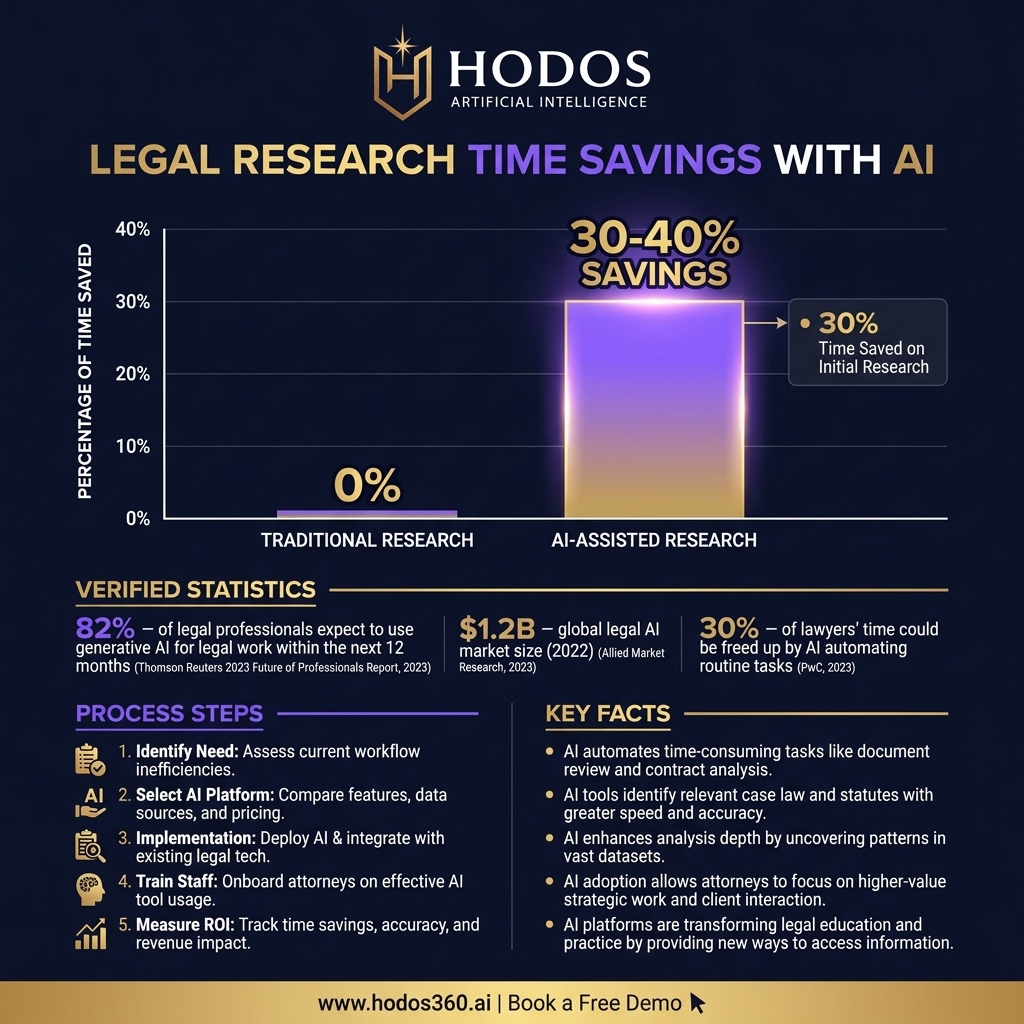
This approach directly addresses a critical pain point for many legal professionals: the sheer volume and complexity of legal data. A 2023 Thomson Reuters report on the 'Future of Legal' indicated that attorneys spend up to 30% of their time on legal research, much of which involves sifting through irrelevant material. By leveraging AI legal research, platforms like Legora promise to drastically reduce this burden. They aim to provide access to comprehensive legal data, not just case law and statutes, but also secondary sources, legislative history, and expert commentary, all interconnected and navigable through intelligent AI. This means less time searching and more time analyzing, strategizing, and advising clients.
Furthermore, Legora's commitment extends to nurturing the next generation of legal talent through its Legal AI Scholars Program. Learn more about Essential AI Vibe Coding: Elevate Law Firm Web Development. This initiative, launched in collaboration with nine prominent US law schools, aims to prepare law students for an AI-driven legal practice. By exposing students to cutting-edge AI platforms and methodologies early in their education, Legora is ensuring that future attorneys are not just users of AI, but innovators who understand its capabilities and limitations. This proactive approach is crucial, as the legal industry faces a growing skills gap in AI proficiency, a challenge highlighted by the American Bar Association’s (ABA) 2023 Legal Technology Survey Report, which found that only a minority of firms felt fully prepared for AI integration.
The impact of such initiatives is already being felt across the legal landscape. Firms that have begun piloting AI legal research tools report significant improvements in efficiency and accuracy. For instance, a partner at a mid-sized litigation firm noted a 40% reduction in initial research time for complex cases, allowing associates to dedicate more hours to drafting and client communication. This isn't just about saving time; it's about enhancing the quality of legal work, providing more thorough analysis, and ultimately, delivering better results for clients. The shift is clear: AI legal research is quickly becoming non-negotiable for competitive law firms.
Beyond Research: Integrating AI into Core Law Firm Management
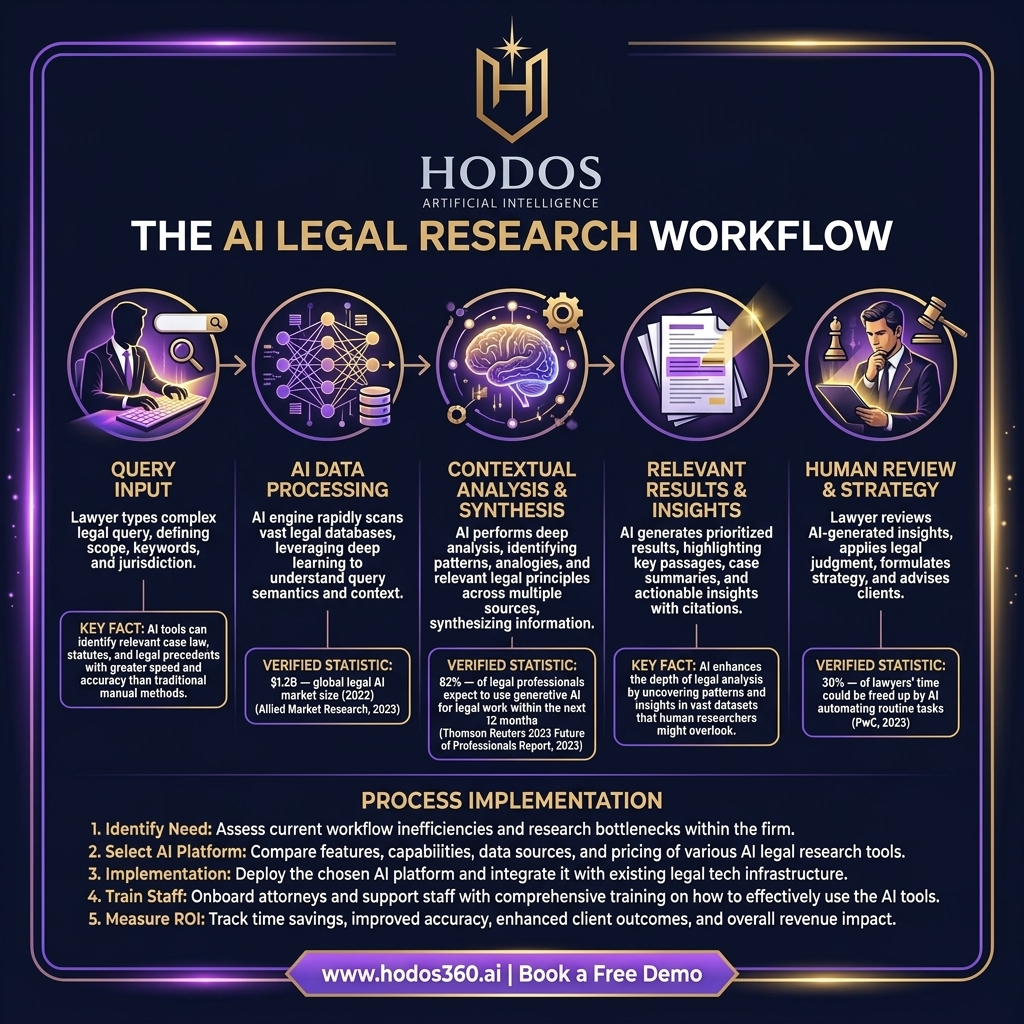
The impact of AI legal research extends far beyond the confines of the research library; it serves as a critical component in a holistic AI law firm management strategy. Modern AI platforms are designed to integrate seamlessly, ensuring that insights gleaned from advanced research tools flow directly into other essential firm operations. Imagine a scenario where a complex legal precedent identified by an AI research tool automatically populates relevant sections of a brief through document automation, or triggers specific AI-powered legal workflows within a case management system. This interconnectedness is what transforms individual AI tools into a powerful, cohesive ecosystem, driving unprecedented efficiency.
This integrated approach is vital for firms striving for operational excellence. For instance, when AI legal research identifies a novel legal argument, that insight can be immediately channeled into a firm’s client intake process to better qualify potential cases, or used to refine billing practices by accurately tracking the value of AI-assisted tasks. Companies like Harvey AI, which famously partnered with Allen & Overy to deploy its generative AI platform, demonstrate the tangible benefits of such integration. Their collaboration has shown how AI can not only assist in legal drafting and research but also streamline internal processes, reduce manual effort, and free up lawyers to focus on strategic thinking and client relationships. This synergy is a hallmark of truly innovative legal innovation.
AI-powered legal workflows are the connective tissue that binds these disparate functions. Learn more about AI Web Builder: The Ultimate Guide for Law Firms. From the moment a lead is captured, through initial client intake, to comprehensive case management and final billing, AI can automate repetitive tasks, ensure compliance, and provide predictive insights. For example, an AI could analyze research findings to identify potential risks in a contract before it’s even drafted, or forecast the likely duration of a case based on historical data. This proactive, intelligent approach reduces errors, enhances decision-making, and significantly boosts overall productivity, allowing firms to handle more cases with greater precision and consistency, without necessarily increasing headcount.
The competitive landscape in legal tech is rapidly evolving, with significant investments pouring into AI platforms. OpenAI’s continuous advancements and the rise of specialized legal AI startups are pushing the boundaries of what’s possible. Firms that fail to adopt integrated AI solutions risk being left behind, unable to match the speed, efficiency, and depth of analysis offered by their AI-enabled counterparts. The market is increasingly demanding not just legal expertise, but also technological prowess, making the strategic integration of AI across all firm operations a non-negotiable for sustained growth and profitability.
The Synergies of AI-Powered Legal Workflows
The true power of AI legal research is unleashed when it's integrated into dynamic, AI-powered legal workflows. Imagine a scenario: an attorney uses an AI research tool to uncover a critical statutory interpretation. Instead of manually copying and pasting, the AI platform can automatically flag this interpretation, suggest relevant clauses for a contract, or even generate a first draft of a memo incorporating the finding. This direct flow of information minimizes manual handoffs, reduces the risk of human error, and accelerates the entire legal process. It’s about creating an intelligent feedback loop where research informs drafting, drafting refines strategy, and strategy, in turn, influences further research, all orchestrated by AI.
Such synergies extend to every facet of law firm management. Learn more about AI Marketing Measurement Strategies Law Firms. For instance, an AI-powered calendar can automatically schedule follow-ups based on court deadlines identified during research. An AI voice assistant could answer client queries about case progress by pulling real-time data from the case management system, which was informed by earlier AI research. This level of integration ensures that every piece of information, from the most obscure legal precedent to the latest client communication, is interconnected and actionable. This isn't just about efficiency; it's about creating a more responsive, agile, and ultimately, more effective legal practice.
The Ethical Imperative and Practical Challenges of AI Adoption
While the promise of AI legal research is immense, its adoption also presents significant ethical and practical challenges that legal professionals must navigate with diligence. The ABA Model Rules of Professional Conduct, particularly Rule 1.1 on Competence, implicitly require attorneys to understand the benefits and risks associated with technology. This extends to AI: lawyers must be competent not only in using AI tools but also in understanding their limitations, such as the potential for 'hallucinations' or biased outputs. The human conflict here lies in balancing the drive for efficiency with the unwavering commitment to ethical practice and client welfare. Firms that rush into AI adoption without proper due diligence risk not only professional misconduct but also severe reputational damage.
Data privacy and security represent another major hurdle. AI platforms often require access to vast amounts of sensitive client information to function optimally. Safeguarding this data is paramount, adhering to regulations like GDPR, CCPA, and various state bar rules on client confidentiality (e.g., ABA Model Rule 1.6). Firms must ensure that their chosen AI vendors have robust security protocols and clear data governance policies. The potential for data breaches or misuse, especially with third-party AI tools, necessitates rigorous vetting and continuous monitoring. Learn more about Voice Assistant Market: An Essential Guide for Law Firms. A recent high-profile incident where a lawyer cited non-existent cases generated by a public AI chatbot serves as a stark reminder of the perils of uncritical AI reliance, emphasizing the need for human oversight and verification.
The financial investment required for integrating advanced AI legal research and law firm management systems can also be substantial. Small and mid-sized firms, in particular, may face budget constraints that make large-scale AI adoption seem daunting. This creates a tension between firms that can afford cutting-edge legal tech and those that might lag behind, potentially widening the access-to-justice gap if AI tools become exclusive to well-resourced firms. However, the market is responding with more scalable and subscription-based AI solutions, making these technologies increasingly accessible to a broader range of firms, reducing the initial barrier to entry and fostering more widespread legal innovation.
Beyond cost, the cultural shift within a law firm can be a significant challenge. Attorneys, often steeped in tradition, may be resistant to adopting new technologies, fearing job displacement or a perceived devaluation of their expertise. Overcoming this resistance requires clear communication, comprehensive training, and demonstrating the tangible benefits of AI as an augmentation, not a replacement, for human intellect. Successful AI adoption hinges on cultivating a culture of curiosity and continuous learning, where legal professionals view AI as a powerful co-pilot rather than a threat. This transition requires strong leadership and a commitment to change management, ensuring that all members of the firm understand and embrace the future of legal work.
Navigating Data Integrity and AI Hallucinations
The integrity of data feeding into AI legal research systems is paramount. AI models are only as good as the data they are trained on, and if that data is incomplete, biased, or outdated, the AI's outputs will reflect those flaws. This is where the concept of 'AI hallucination' becomes particularly concerning in a legal context; an AI generating fabricated case law or misinterpreting statutory language can have catastrophic consequences for clients and a lawyer's professional standing. The legal community, including bodies like the ABA and state bar associations, is actively discussing guidelines for responsible AI use, emphasizing the lawyer's ultimate responsibility for all work product, regardless of AI assistance.
To mitigate these risks, firms must prioritize AI platforms that provide transparency in their data sources and methodologies. Learn more about AI Marketing: The Ultimate Guide to Self-Optimizing Law Firms. Solutions that allow for easy human verification of AI-generated content are crucial. Furthermore, ongoing training for legal professionals on how to critically evaluate AI outputs, identify potential errors, and cross-reference information with traditional sources remains an indispensable part of ethical AI adoption. This dual approach—leveraging AI for speed while maintaining rigorous human oversight for accuracy—is the gold standard for navigating the complexities of AI in legal practice.
Future-Proofing Your Practice: A Strategic Blueprint for AI Integration
For law firms looking to future-proof their practice in this era of rapid legal innovation, a strategic, phased approach to AI adoption is essential. It begins with a thorough assessment of current workflows and identifying pain points where AI legal research and AI law firm management tools can deliver the most impact. Start small, perhaps by piloting a specific AI tool for a particular type of research or for automating routine client intake forms. This allows firms to learn, adapt, and demonstrate tangible ROI before scaling up. According to a 2024 Gartner report, firms that implement AI incrementally experience higher success rates and better user adoption, contrasting sharply with those attempting a 'big bang' approach.
Choosing the right AI platforms is critical. Firms should seek out solutions that are not only powerful but also user-friendly, secure, and offer robust support. Integrated platforms that combine AI legal research with case management, document automation, and AI-powered legal workflows provide the most value by creating a seamless operational environment. This is where comprehensive solutions, such as those offered by HODOS 360, become invaluable. HODOS 360’s AI Law Firm Management System, for example, is designed to bring together these disparate functions, offering a unified platform that streamlines operations from client intake to billing, all powered by intelligent AI. Learn more about AI Marketing Platform: The Ultimate Guide for Law Firms. Such systems are tailored to enhance efficiency, reduce administrative burdens, and free up legal professionals to focus on what they do best: practicing law.
Investing in continuous training and development for all legal professionals is another cornerstone of a successful AI strategy. This goes beyond basic software tutorials; it involves fostering a deeper understanding of AI principles, ethical considerations, and how to best leverage these tools to enhance legal services. Firms like Clifford Chance have invested heavily in internal AI academies, recognizing that human capital is the ultimate differentiator in an AI-powered world. This commitment to lifelong learning ensures that lawyers remain at the forefront of their profession, equipped with both legal acumen and technological fluency, driving legal innovation from within.
Finally, firms must maintain a flexible and adaptable mindset. The landscape of legal tech is constantly evolving, with new AI platforms and capabilities emerging regularly. What is cutting-edge today may be standard practice tomorrow. Regularly reviewing and updating AI strategies, engaging with the broader legal tech community, and being open to experimentation are crucial for long-term success. This proactive engagement ensures that firms not only keep pace with change but also position themselves as leaders in the intelligent, data-driven practice of law, ready to capitalize on the next wave of legal innovation.
Cultivating an AI-Ready Legal Culture
Building an AI-ready legal culture means more than just purchasing software; it involves a fundamental shift in mindset. Leaders must champion AI adoption by clearly communicating its benefits, addressing concerns, and providing resources for seamless integration. Encouraging experimentation with new AI platforms in a controlled environment, celebrating early successes, and creating internal champions for legal innovation can significantly accelerate this cultural shift. It’s about fostering an environment where curiosity is rewarded, and continuous learning is seen as an asset, not a burden, for every legal professional.
This cultural transformation also requires redefining roles and responsibilities. As AI automates routine tasks, lawyers can elevate their focus to strategic thinking, complex problem-solving, and client relationship building. Paralegals and legal support staff can transition into roles focused on AI oversight, data management, and prompt engineering. This evolution of roles ensures that the firm maximizes its human talent, augmented by AI, creating a more dynamic and rewarding work environment for everyone involved in law firm management.
- ✓Embrace AI-Native Solutions: Prioritize platforms built with AI at their core, like Legora's research foundation, for deeper, more contextual insights.
- ✓Integrate Beyond Research: Leverage AI to connect research findings directly to case management, document automation, and AI-powered legal workflows.
- ✓Prioritize Ethics and Security: Conduct thorough due diligence on AI tools, ensuring data privacy, security, and human oversight to prevent 'hallucinations' or bias, aligning with ABA Model Rules.
- ✓Invest in Continuous Learning: Equip your legal professionals with the knowledge and skills to effectively use and critically evaluate AI platforms.
- ✓Adopt a Phased Implementation: Start with pilot programs, measure ROI, and scale AI adoption incrementally across your law firm management operations.
- ✓Cultivate an Innovation Mindset: Foster a culture that encourages experimentation, adaptability, and views legal innovation as a strategic advantage.

Key Takeaways and Next Steps for Legal Innovators
The emergence of AI legal research as a foundational element of legal practice, exemplified by Legora's bold steps, marks an undeniable turning point for the industry. This is not merely an incremental improvement but a paradigm shift that demands proactive engagement from every law firm. The firms that embrace this change, integrating intelligent AI platforms across their law firm management and operational workflows, will be the ones that thrive in the coming decades, setting new benchmarks for efficiency, accuracy, and client service. The narrative is clear: innovation is no longer optional; it is essential for survival and growth in a competitive landscape.
For legal professionals, this era presents both challenges and unparalleled opportunities. By understanding the capabilities of advanced AI legal research and leveraging integrated legal tech solutions, attorneys can shed the burden of repetitive tasks and dedicate more time to complex problem-solving, strategic advice, and building stronger client relationships. This transformation elevates the role of the lawyer, making legal practice more intellectually stimulating and impactful. The goal is to create a symbiotic relationship between human expertise and artificial intelligence, where each augments the other to achieve superior outcomes.
The future of law is intelligent, integrated, and efficient. The time for deliberation is over; the era of action is here. Firms must move beyond contemplation and begin strategically implementing AI platforms that streamline operations, enhance client services, and empower their teams. Platforms like HODOS 360 offer comprehensive solutions, from AI Law Firm Management Systems to AI Voice Assistants and AI Marketing Platforms, providing the tools necessary to navigate this new legal frontier. The journey to an AI-powered practice begins with a single, decisive step towards innovation.
Frequently Asked Questions
What is AI-native legal research?+
AI-native legal research refers to platforms built from the ground up with artificial intelligence embedded in their core architecture, rather than as an add-on to existing systems. This allows the AI to understand the relationships and context of legal concepts more deeply, leading to more accurate, relevant, and comprehensive results, fundamentally reshaping how legal professionals conduct inquiries.
How does AI improve legal research efficiency?+
AI significantly improves efficiency by automating the arduous task of sifting through vast legal databases. It can quickly identify relevant statutes, case law, and secondary sources, summarize findings, and even suggest arguments, drastically reducing the time attorneys spend on initial research. This frees up legal professionals to focus on analysis, strategy, and client-facing work, enhancing overall productivity.
What are the ethical considerations for AI in law?+
Ethical considerations include ensuring AI competence (ABA Model Rule 1.1), maintaining client confidentiality (ABA Model Rule 1.6) with data security, addressing potential biases in AI outputs, and guarding against 'hallucinations' where AI generates false information. Lawyers retain ultimate responsibility for all work product, requiring diligent human oversight and verification of AI-generated content.
How can small firms adopt AI legal tech?+
Small firms can adopt AI legal tech by starting with targeted, scalable solutions that address specific pain points, such as AI-powered document review or automated client intake. Many AI platforms offer subscription models that reduce upfront costs. Prioritizing solutions that integrate with existing systems and investing in continuous staff training are also key steps for successful adoption.
What role do AI platforms play in law firm management?+
AI platforms play a transformative role in law firm management by integrating various functions like case management, billing, document automation, and client communication. They streamline workflows, automate repetitive tasks, provide data-driven insights for strategic decision-making, and enhance overall operational efficiency, allowing firms to optimize resource allocation and improve client service delivery.