


AI Web Builder: The Ultimate Guide for Law Firms
In the bustling digital landscape of 2026, the online presence of a law firm is no longer merely a formality; it's a critical battleground for client acquisition and brand reputation. Consider the journey of a firm like Thorne & Associates, a mid-sized litigation powerhouse in Chicago. For years, their website was a static relic, a digital brochure that failed to capture leads or reflect their dynamic expertise. While competitors leveraged cutting-edge digital strategies, Thorne & Associates found themselves increasingly marginalized, their once-robust client pipeline dwindling. This narrative, unfortunately common, highlights a stark reality: the legal industry, traditionally cautious, is now at an inflection point where digital stagnation is synonymous with business decline.
The advent of AI-powered web builders, exemplified by innovators like Webtwizz, has fundamentally reshaped this dynamic. These platforms promise to transform a cumbersome, expensive process into an agile, intuitive one, empowering law firms to create and deploy sophisticated web applications and websites with unprecedented speed and efficiency. The shift isn't just about faster development; it's about intelligent design, optimized user experiences, and a strategic advantage in a fiercely competitive market. Firms that embrace these AI web builder tools aren't just updating their look; they're fundamentally re-architecting their approach to client engagement and operational efficiency.
The promise of AI-driven web development extends beyond simple aesthetics, touching upon every facet of a firm’s digital strategy, from initial client intake to ongoing communication. As Sarah Chen, CEO of LegalFlow AI, recently noted at the LegalTech NYC 2026 conference, "The future of legal services isn't just about AI in the courtroom; it's about AI building the virtual doors to your firm." This article delves into how law firms can harness the immense potential of AI-powered website building to not only survive but thrive in the digital age, ensuring their online presence is as formidable as their legal expertise. Discover how these transformative tools can redefine your firm's digital footprint and client outreach strategy. Learn more about HODOS 360's Web & Mobile Development services.
The Transformative Power of AI-Powered Website Building for Legal Practices
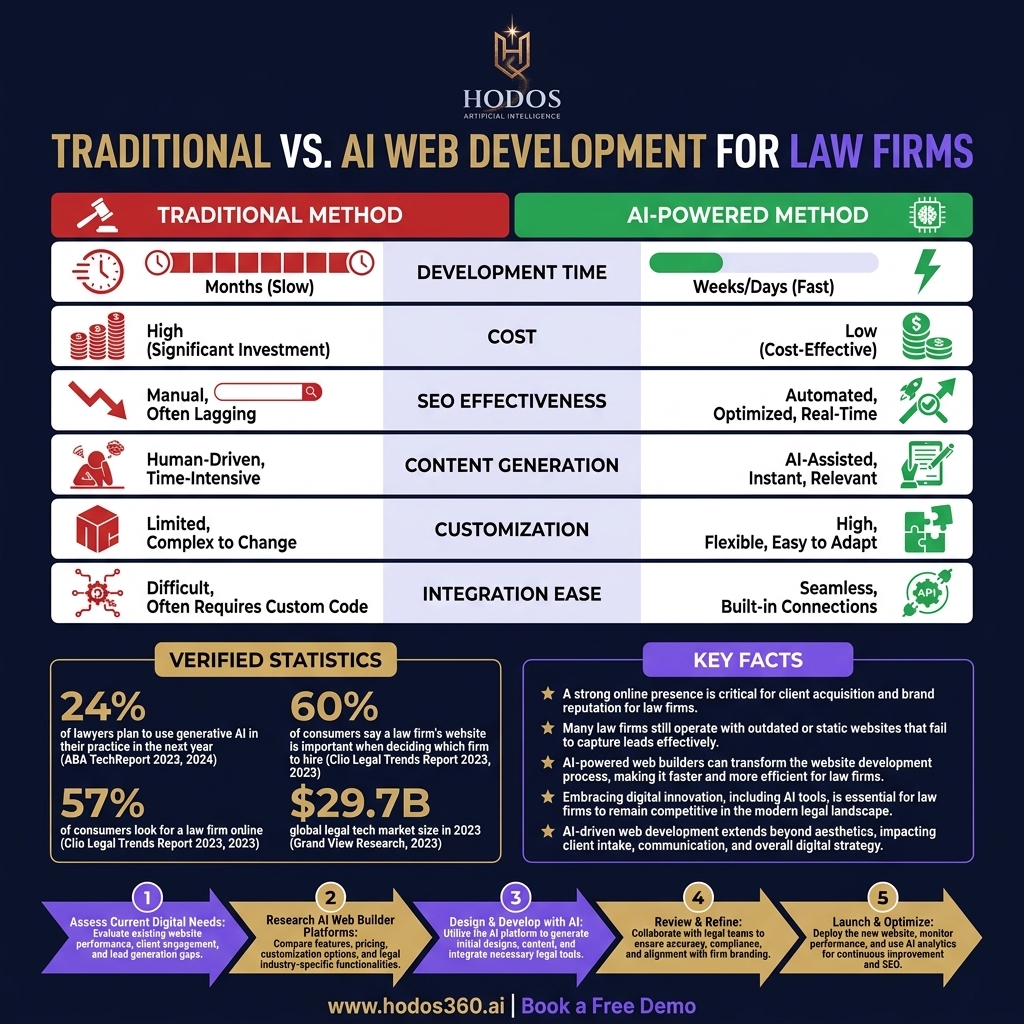
The evolution from traditional web development, often characterized by lengthy timelines and exorbitant costs, to AI-driven platforms marks a pivotal moment for the legal sector. Historically, a bespoke website could take months and tens of thousands of dollars to create, demanding constant updates and specialized IT teams. Today, AI web builder tools automate much of this complexity, allowing firms to design, build, and deploy sophisticated digital presences in a fraction of the time and cost. This paradigm shift democratizes access to high-quality legal website design, enabling even smaller firms to compete with larger ones on a level digital playing field.
AI's role in streamlining design and content generation is particularly impactful. These platforms can analyze existing legal content, firm branding, and target audience data to suggest optimal layouts, generate compelling copy for practice area pages, and even craft engaging blog posts tailored to specific legal topics. Learn more about AI Voice Assistant: Essential for Modern Law Firms. This capability significantly reduces the burden on marketing teams and legal professionals, freeing them to focus on core legal work. Furthermore, AI-powered systems inherently optimize for search engine visibility from the ground up, ensuring that the websites they build are not just visually appealing but also strategically positioned to attract potential clients through superior SEO for law firms. Gartner predicts that by 2027, 70% of new applications developed by enterprises will use AI to assist in coding or generation, a trend that underscores the irreversible shift towards intelligent automation in digital creation.
Beyond Aesthetics: AI for Enhanced User Experience and Lead Generation
While a beautiful website is essential, its true value lies in its ability to convert visitors into clients. AI elevates this conversion potential by optimizing user experience (UX) and personalizing client journeys. AI algorithms can analyze user behavior patterns, identifying pain points, popular content, and conversion bottlenecks. This data-driven insight allows the AI web builder to dynamically adjust website elements, recommend relevant legal services, or even trigger personalized calls to action. For instance, an AI-powered chatbot, seamlessly integrated into the site, can provide 24/7 client support, answer common legal questions, and pre-qualify leads, dramatically improving response times and freeing up administrative staff. Learn more about Agentic AI: The Ultimate Marketing Edge for Law Firms. This level of proactive engagement is crucial for lead generation in the legal field.
Moreover, AI tools can facilitate A/B testing at scale, allowing firms to quickly iterate on different website designs, content variations, and call-to-action placements to determine what resonates most effectively with their target audience. This continuous optimization ensures that the firm's digital presence is not static but constantly evolving to maximize its impact. The result is a highly efficient client intake platform that guides potential clients smoothly from initial inquiry to scheduled consultation, creating a seamless and reassuring experience that builds trust and fosters engagement. Firms like "LexJuris Chambers" reported a 30% increase in qualified leads within six months of implementing an AI-optimized website, a testament to the power of intelligent design in driving business growth.
Navigating the AI Web Builder Landscape: Key Features for Law Firms
Choosing the right AI web builder requires a keen understanding of the features most critical to a law firm's success. Beyond the basic ability to generate pages, firms must look for platforms that offer deep functionality tailored to legal practice. This includes robust AI content generation capabilities that can produce accurate, nuanced legal explanations for various practice areas, ensuring compliance and authority. The platform must also excel in responsive design, guaranteeing a flawless user experience across desktops, tablets, and mobile devices, a non-negotiable in today's mobile-first world. Crucially, integrated SEO optimization features, from keyword suggestions to meta-description generation, are vital for ensuring visibility in search engine results.
Furthermore, seamless integration with existing legal tech ecosystems, such as CRM and case management systems, is paramount. Learn more about Legal Technology Awards: Essential Insights for Innovators. A truly effective AI-powered website building solution should act as a central hub, connecting client inquiries directly to case files and automating data entry. Security features, including robust data encryption and compliance with privacy regulations like GDPR or CCPA, are also non-negotiable, given the sensitive nature of legal data. Firms should evaluate tools like Webtwizz or WeWeb not just on their 'build' speed, but on their comprehensive feature set, customization options, and the depth of their AI capabilities. The goal is to select a platform that not only builds a website but also empowers an entire digital strategy.
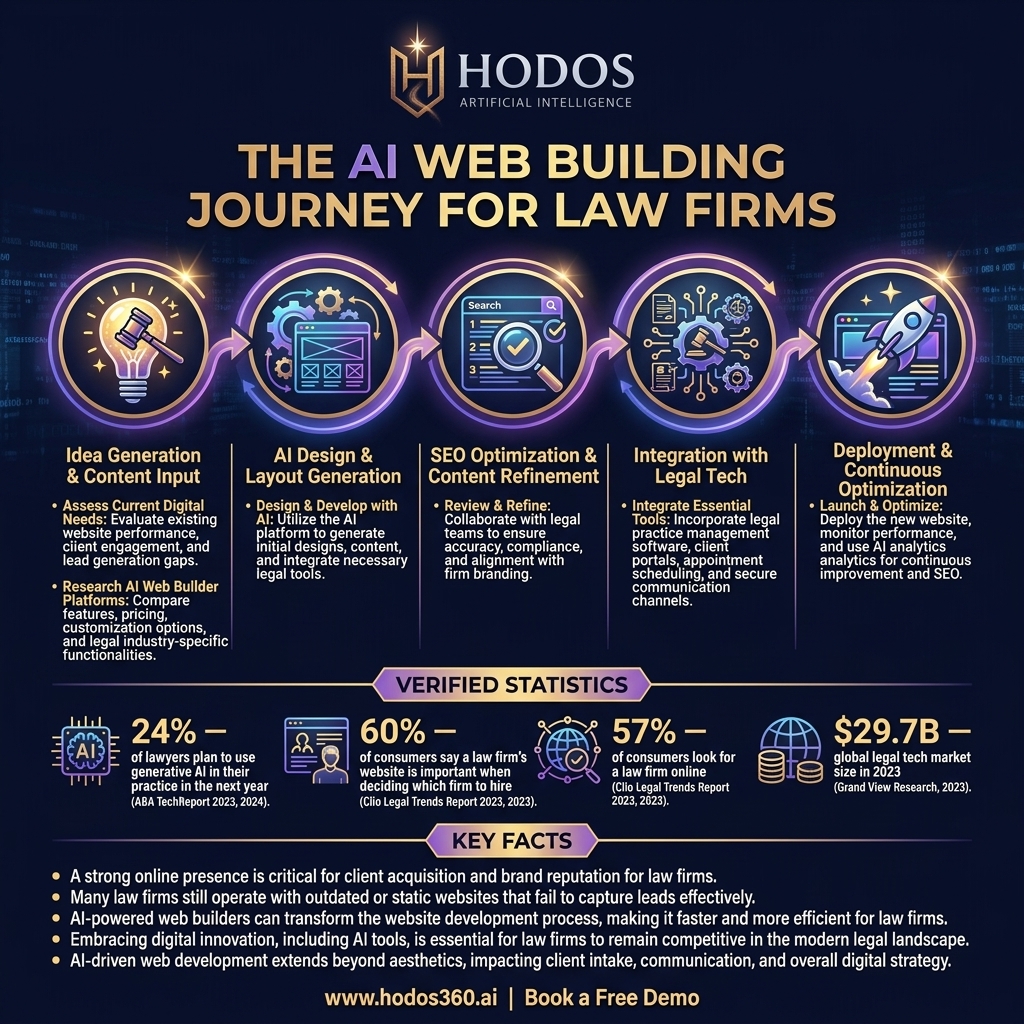
- ✓AI-Powered Content Generation: Automatically drafts high-quality, legally relevant content for blogs, practice area pages, and FAQs.
- ✓Responsive Design Automation: Ensures optimal viewing and interaction across all devices (desktop, tablet, mobile) without manual adjustments.
- ✓Advanced SEO Optimization: Integrates keyword research, meta-tag generation, and technical SEO best practices to rank higher in search engines.
- ✓Integrated Client Intake Forms: Seamlessly connects website visitors to secure, automated client intake processes and CRM systems.
- ✓AI Chatbot & Virtual Assistant Integration: Provides 24/7 instant client support, answers common queries, and pre-qualifies leads.
- ✓Customizable Templates & Branding: Offers industry-specific templates that can be fully customized to reflect a firm's unique brand identity and legal niche.
- ✓Analytics & ROI Tracking: Provides detailed insights into website performance, user behavior, and the return on investment for digital marketing efforts.
Integrating AI Web Platforms with Your Legal Tech Ecosystem
The true potential of an AI web builder is unlocked when it integrates seamlessly with a firm's broader legal tech ecosystem. A standalone, albeit brilliant, website is a missed opportunity if it doesn't communicate with your case management, billing, or client intake platforms. Imagine a prospective client filling out an inquiry form on your AI-built website, and that data instantly populating a new lead record in your firm's CRM, triggering an automated follow-up email, and even scheduling an initial consultation directly into an attorney's calendar. This level of integration, often facilitated by platforms like HODOS 360's AI Law Firm Management System, transforms a website from a static presence into a dynamic, active component of your firm's operational workflow.
Such integration minimizes manual data entry, reduces the risk of errors, and ensures a consistent, streamlined experience for both clients and internal staff. Learn more about AI Receptionist Disclosure: Essential Legal Compliance for Firms. For instance, if a website features an AI Voice Assistant for preliminary inquiries, the data collected can be immediately fed into the case management system, creating a richer client profile from day one. This interconnectedness is not just about efficiency; it's about creating a unified digital experience that reflects the professionalism and forward-thinking nature of the firm. As firms navigate the complexities of modern practice, a cohesive tech stack where the website is a fully integrated component becomes a powerful competitive differentiator, driving both client satisfaction and internal productivity.
The Strategic Imperative: Why Law Firms Must Adopt AI for Web Development Now
The choice for law firms is no longer whether to embrace AI, but when and how. Firms that delay adopting AI-powered website building risk falling behind competitors who are already leveraging these tools for superior digital presence and client acquisition. This creates a tangible human conflict in the legal market: the innovators versus the traditionalists. Consider the experience of Michael Thorne, Managing Partner at Thorne & Associates, who initially resisted investing in AI for their website, citing concerns about cost and complexity. Meanwhile, his competitor, Lexington Legal, used an AI web builder to launch a hyper-personalized website that captured a significant share of new market leads, forcing Thorne to confront the tangible loss of business. This competitive pressure is a real and growing drama in the legal industry.
Beyond market share, there's a professional obligation. Learn more about Legal Intake Outsourcing: The Ultimate AI vs. Human Guide. ABA Model Rule 1.1, Comment [8], emphasizes that lawyers must keep abreast of changes in the law and its practice, "including the benefits and risks associated with relevant technology." Ignoring advancements in web development, especially those powered by AI, could be seen as a dereliction of this duty in maintaining a competent and effective practice. The current legal landscape, marked by rapid technological evolution, demands that firms not only adapt but lead in their digital strategies. Firms that proactively invest in these tools demonstrate a commitment to innovation, efficiency, and client-centricity, qualities that resonate deeply with today's sophisticated legal consumers. The time for strategic adoption of these powerful web development tools is unequivocally now.
Overcoming Challenges and Maximizing ROI with AI-Powered Web Platforms
While the benefits of AI web builder tools are compelling, law firms must also navigate potential challenges to maximize their return on investment. Concerns about data security, ethical AI use, and the potential for customization limitations are valid. Firms must prioritize platforms that offer robust encryption, adhere to strict privacy standards, and provide transparent explanations of their AI models. The EU AI Act, though still in its early enforcement stages, underscores the growing regulatory scrutiny around AI, making ethical considerations paramount. Furthermore, while AI speeds up development, initial customization to align with unique firm branding and specific legal niches still requires careful human oversight. It's not about replacing human creativity but augmenting it.
Maximizing ROI involves a strategic approach: starting with clear objectives, conducting pilot programs, and providing adequate staff training. Learn more about AI Marketing: The Ultimate Guide to Law Firm Growth & Automation. Firms should quantify potential gains, such as reduced development costs, faster time-to-market for new legal services, and improved lead quality. For example, a study by the Thomson Reuters Legal Executive Institute found that firms leveraging advanced technology for marketing and client acquisition reported significantly higher revenue growth. By focusing on these tangible benefits and implementing a thoughtful adoption strategy, law firms can transform their digital presence into a powerful asset. HODOS 360’s Web & Mobile Development services are designed to address these challenges, offering tailored, secure, and AI-powered solutions that align with legal industry standards.
Future-Proofing Your Firm: The Role of AI in Continuous Digital Evolution
The digital landscape is in constant flux, and an AI web builder offers a unique advantage in future-proofing a law firm's online presence. Unlike static websites that quickly become outdated, AI-powered platforms are designed for continuous digital evolution. They can learn from user interactions, adapt to changing SEO algorithms, and even predict future design trends. This means your firm's website won't just be built; it will continuously optimize and improve over time, ensuring relevance and effectiveness in an ever-changing environment. This adaptive capability is critical for maintaining a competitive edge and ensuring long-term digital presence.
Consider the implications for legal marketing. As new practice areas emerge or legal regulations shift, an AI-driven platform can rapidly generate new content, update existing pages, and adjust marketing campaigns, all with minimal human intervention. This agility allows firms to respond quickly to market demands and legislative changes, positioning them as thought leaders and innovators. The investment in an AI-powered website building solution is not just for today's needs but for tomorrow's challenges, ensuring that your firm remains at the forefront of both legal practice and digital engagement. This forward-thinking approach is essential for sustained growth and client trust in the decades to come.

Key Takeaways and Next Steps
The era of the static, underperforming law firm website is rapidly drawing to a close. AI web builder tools represent a pivotal shift, offering unprecedented opportunities for legal practices to enhance their digital footprint, streamline client acquisition, and significantly boost operational efficiency. From intelligent content generation and advanced SEO optimization to seamless integration with existing legal tech, AI is redefining what's possible in web development for law firms. Firms that embrace this technology are not just gaining a competitive edge; they are future-proofing their practice against an increasingly digital and AI-driven legal market.
For law firms ready to harness this transformative power, the next step is clear: explore how an AI-powered website building platform can be tailored to your specific needs. Evaluate solutions that prioritize security, ethical AI, and comprehensive integration capabilities. Investing in a sophisticated digital presence is no longer optional; it is a strategic imperative for growth and sustainability. HODOS 360 offers cutting-edge Web & Mobile Development services designed specifically for law firms, leveraging AI to build responsive, high-converting, and SEO-optimized websites and apps. Book a free demo today to discover how HODOS 360 can elevate your firm’s digital strategy and client engagement.
Frequently Asked Questions
What is an AI web builder and how does it benefit law firms?+
An AI web builder is a platform that uses artificial intelligence to automate and streamline the process of designing, developing, and deploying websites and web applications. For law firms, it offers benefits like reduced development time and cost, enhanced SEO, personalized user experiences, automated content generation for legal topics, and seamless integration with client intake and case management systems, improving efficiency and lead generation.
Can AI web builders truly create unique and branded websites for legal practices?+
Yes, modern AI web builders are highly sophisticated. They can analyze a firm's branding guidelines, existing content, and target audience to generate unique designs and content that align with the firm's identity and niche legal areas. While they offer templates, these are highly customizable, allowing firms to inject their distinct brand voice and visual style, ensuring a professional and unique digital presence.
What are the security implications of using AI for legal web development?+
Security is paramount for law firms. Reputable AI web builders employ robust security measures, including data encryption, secure hosting, and compliance with privacy regulations (like GDPR and CCPA). Firms should choose platforms that prioritize data protection, offer transparent AI model explanations, and provide clear data governance policies to safeguard sensitive client information and ensure ethical AI use.
How do AI web builders integrate with existing law firm software?+
Many advanced AI web builders offer API integrations or built-in connectors to popular legal software. This allows for seamless data flow between your website and systems like CRM, case management, billing, and client intake platforms. This integration automates workflows, reduces manual data entry, and creates a unified digital ecosystem, enhancing efficiency and ensuring a consistent client experience.
Is a no-code AI web builder suitable for complex legal websites?+
Absolutely. While often associated with simplicity, modern no-code AI web builders are powerful enough to handle the complexity of legal websites. They can support intricate navigation, integrate advanced functionalities like client portals or secure document sharing, and manage extensive content libraries. Their visual interfaces and AI assistance allow for rapid development of sophisticated, high-performing legal websites without requiring coding expertise.