


AI Marketing Measurement Strategies Law Firms
The legal industry, much like other professional services, stands at a critical juncture in its digital evolution. As the MarTech Summit Bangkok 2026 recently highlighted, a significant 'AI marketing measurement gap' persists, particularly in emerging markets like Thailand. Yet, this challenge resonates globally, cutting across jurisdictions and firm sizes. While law firms are rapidly embracing artificial intelligence to streamline operations and enhance client service, the strategic deployment and, crucially, the accurate measurement of AI's impact on marketing efforts remain elusive for many. This paradox—investing in cutting-edge AI tools without a clear framework for quantifying their return on investment—creates a formidable hurdle for legal leaders striving for sustainable growth.
Historically, legal marketing has often been perceived as an art rather than a science, relying on reputation, referrals, and traditional advertising. However, the digital age has transformed client acquisition into a data-intensive endeavor. Law firms are now leveraging AI for everything from hyper-personalized content creation and social media automation to sophisticated lead generation and client intake. The promise of AI is precision and efficiency, but without robust measurement, these benefits can become obscured, turning significant investments into speculative ventures. As Ewan McIntyre, VP Analyst at Gartner, noted in a recent marketing trends report, "The ability to measure and attribute marketing's impact is no longer a luxury, but a necessity for survival in a data-driven world." This sentiment rings particularly true for law firms operating in an increasingly competitive landscape, where every marketing dollar must demonstrably contribute to the bottom line.
This article delves into the critical need for advanced AI marketing measurement strategies within the legal sector. We will explore how law firms can move beyond superficial metrics to truly understand and optimize their marketing performance, ensuring that their AI investments translate into tangible client growth and revenue. From leveraging integrated data platforms to fostering a culture of analytics, we will outline practical steps for legal professionals to bridge the measurement gap and harness the full potential of AI-powered marketing. The journey from AI adoption to measurable ROI requires a strategic shift, and for firms ready to make that pivot, the rewards are substantial. Ready to bridge your firm's marketing measurement gap? Discover how HODOS 360's AI Marketing Platform can transform your client acquisition strategy.
The Evolving Landscape of Legal Marketing and AI Adoption
The legal industry has undergone a profound shift, moving away from an exclusive reliance on traditional marketing channels towards a dynamic, data-driven digital ecosystem. This evolution is largely propelled by the widespread adoption of artificial intelligence. The 2025 ABA TechReport indicated a significant increase in law firm adoption of AI tools, with over 40% of firms reporting AI use in marketing activities, up from a mere 15% just three years prior. This rapid uptake is driven by AI's ability to personalize client outreach, enhance operational efficiencies, and extend a firm's digital reach far beyond conventional methods. From AI-powered content generation that crafts bespoke articles and social media updates to predictive analytics that score leads and optimize ad placements, AI offers an unprecedented level of sophistication in client engagement.
However, this enthusiastic embrace of AI often outpaces the development of mature measurement frameworks. Many law firms, eager to capitalize on AI's promise, deploy tools without a clear, integrated strategy for tracking their effectiveness. This can lead to a 'black box' scenario where marketing budgets are allocated to AI initiatives, but their true impact on client acquisition, retention, and revenue remains obscured. Progressive firms, such as Gunderson Dettmer, known for their focus on tech and startup clients, exemplify the importance of rigorous data analysis in their marketing efforts. Learn more about AI-Powered Web Development: Essential SaaS Optimization for Law Firms. As their CMO, Sarah MacDougall, articulated at a recent industry panel on legal tech, "Innovation in marketing is only valuable if you can prove its contribution to the firm's strategic objectives. Data isn't just about reporting; it's about strategic foresight."
This highlights a critical challenge: the legal sector's historical unfamiliarity with sophisticated marketing attribution models. Unlike e-commerce or B2B SaaS, where conversion funnels are often meticulously tracked, law firms have traditionally struggled with attributing specific clients to specific marketing touchpoints. The complex, often lengthy client journey in legal services, coupled with the ethical constraints on advertising (e.g., ABA Model Rule 7.1), makes precise measurement inherently difficult. Yet, without it, firms risk misallocating resources, missing opportunities for optimization, and ultimately falling behind competitors who are mastering the art and science of AI-driven marketing measurement. The imperative is clear: to truly leverage AI, law firms must commit to building robust, data-centric measurement capabilities.
Beyond Vanity Metrics: Defining True ROI in Legal Marketing
In the digital age, it's easy to get lost in a sea of 'vanity metrics'—impressions, likes, shares, or website visits—that look good on a report but offer little insight into actual business growth. For law firms, true marketing ROI is not about how many people saw an ad, but how many became paying clients, how much revenue they generated, and their lifetime value to the firm. Traditionally, legal marketing struggled with this attribution, often relying on anecdotal evidence or post-hoc surveys to gauge effectiveness. The challenge lay in connecting a specific marketing activity to a concrete client matter, especially given the multi-touch nature of most client journeys.
AI offers a powerful solution to move beyond these superficial measures. By leveraging advanced algorithms, firms can now track the entire client journey, from initial awareness to final conversion, attributing value to each touchpoint. This means understanding not just that a client came from a digital campaign, but which specific ad, social media post, blog article, or webinar played a role in their decision-making process. Learn more about AI Law Firm Expansion: An Ultimate Guide to Growth & Innovation. Defining true ROI in legal marketing requires a shift towards key performance indicators (KPIs) directly tied to firm profitability and client acquisition costs (CAC), such as the cost per qualified lead, conversion rate from lead to client, and the average revenue per new matter.
Setting clear, measurable objectives aligned with overarching business goals is paramount. As marketing guru Seth Godin has consistently argued, effective marketing is about creating value and connecting with the right audience, which can only be verified through concrete outcomes. For a law firm, this might mean setting a goal to reduce CAC by 15% for a specific practice area or increasing the conversion rate of website inquiries by 10%. AI marketing measurement platforms provide the granular data necessary to track these sophisticated KPIs, allowing firms to move from guesswork to data-backed decisions. This strategic clarity ensures that every marketing investment is not just spent, but invested wisely, yielding measurable returns that contribute directly to the firm's sustainable growth and competitive advantage.
Bridging the Measurement Gap with AI-Powered Analytics
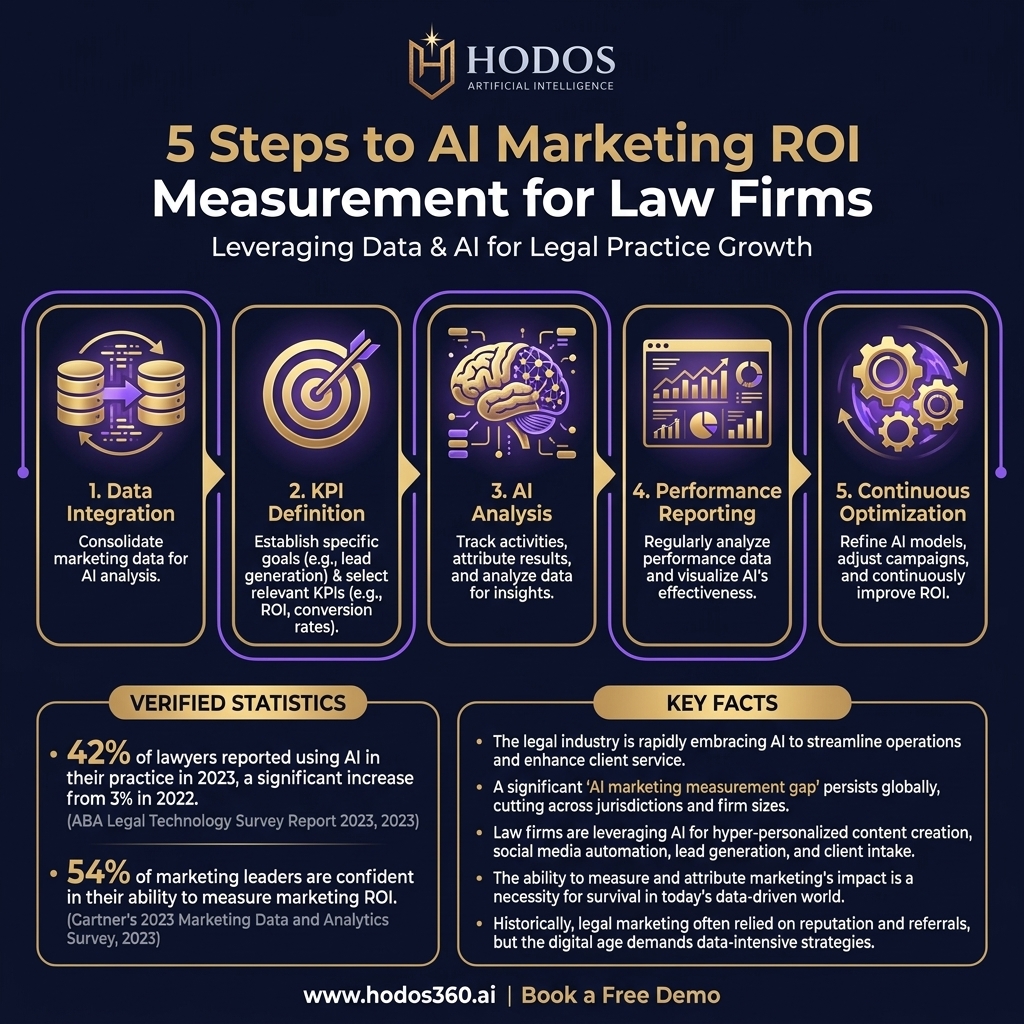
The true power of AI in marketing measurement lies in its capacity for sophisticated data integration and analysis, capabilities that are fundamentally transforming how law firms understand their client acquisition efforts. AI marketing platforms can consolidate disparate data sources—from CRM systems and website analytics to social media engagement metrics and paid advertising performance—into a unified view. This holistic approach eliminates data silos, providing a comprehensive picture of marketing effectiveness that was previously unattainable. For instance, the legal tech industry itself is seeing consolidation and integration, with events like Clio's acquisition of Lawyaw highlighting the trend towards platforms offering more integrated data analytics for practice management. This broader industry movement underscores the critical need for law firms to adopt similarly integrated solutions for marketing.
Beyond simple aggregation, AI excels in predictive analytics. By analyzing historical data and identifying patterns, AI algorithms can forecast campaign performance, identify high-value leads, and even predict client churn, allowing firms to proactively adjust their strategies. This predictive capability is invaluable for optimizing resource allocation and focusing efforts on the most promising opportunities. Furthermore, AI-driven attribution modeling moves beyond simplistic 'last-click' models to provide multi-touch attribution, giving credit to every touchpoint along the client journey. Learn more about AI Marketing: The Ultimate Guide for Law Firms to Dominate Digital. This allows firms to understand the complex interplay of their various marketing channels and make informed decisions about where to invest for maximum impact. The *Thomson Reuters 2026 State of the Legal Market Report* emphasized that firms leveraging advanced analytics for strategic decision-making consistently outperform their peers in revenue growth and client satisfaction, solidifying the competitive advantage of data-driven legal practices.
Real-time dashboards, powered by AI, offer immediate, actionable insights into campaign performance. Instead of waiting for monthly reports, legal marketing teams can monitor KPIs as they unfold, identifying underperforming campaigns or emerging opportunities for optimization within hours or even minutes. This agility allows for rapid iteration and ensures that marketing spend is always working as efficiently as possible. For example, if an AI detects that a specific ad creative is resonating particularly well with a niche audience segment, the system can automatically allocate more budget to that creative or even generate similar variations, maximizing its impact. This level of dynamic optimization is a game-changer for law firms, transforming marketing from a reactive expense into a proactive growth engine.
To summarize, key capabilities of AI-powered analytics platforms for law firms include:
- ✓Automated Data Collection & Synthesis: Seamlessly gathers and unifies marketing data from diverse sources (CRM, website, social media, ads) into a single, cohesive view.
- ✓Advanced Predictive Lead Scoring: Uses machine learning to assess lead quality, prioritizing prospects most likely to convert based on behavioral and demographic data.
- ✓Multi-Touch Attribution Modeling: Accurately credits all marketing touchpoints along the client journey, revealing which channels contribute most to conversions, not just the last one.
- ✓Real-time Performance Dashboards: Provides immediate, customizable insights into campaign performance, allowing for agile adjustments and informed decision-making.
- ✓A/B Testing & Optimization Engines: Automates the testing of different marketing elements (headlines, visuals, CTAs) and optimizes campaigns based on real-time performance data.
- ✓Personalized Client Journey Mapping: Visualizes and analyzes individual client paths, uncovering bottlenecks and opportunities for more tailored engagement strategies.
Strategic Implementation: From Data to Actionable Insights
Implementing an effective AI marketing measurement strategy requires more than just acquiring a platform; it demands a strategic roadmap and a commitment to data-driven decision-making throughout the firm. The first critical step is to Define Key Performance Indicators (KPIs) that truly matter to the firm's success. This goes beyond generic marketing metrics to focus on specific legal outcomes, such as the number of new client matters generated per practice area, the average revenue per new client, or the lead-to-engagement conversion rate for specific services. These KPIs must be aligned with the firm's overarching business objectives, ensuring that marketing efforts directly contribute to strategic growth.
The second step involves Investing in the Right Platform. A comprehensive AI marketing platform must integrate seamlessly with the firm's existing legal tech stack, including its case management system, client intake automation, and CRM. The goal is to create a unified data ecosystem where marketing performance can be linked directly to client acquisition and firm revenue. Platforms like HODOS 360’s AI Marketing Platform are designed with this integration in mind, offering not only advanced analytics but also AI video creation and social media automation to ensure a cohesive digital strategy. This investment isn't just in software, but in a foundational shift towards intelligent, measurable growth.
Crucially, firms must prioritize Data Governance and Privacy. As law firms collect and analyze more client data, adhering to ethical guidelines and legal regulations is paramount. Learn more about Essential AI Web Development: Build Legal Apps with Ease. ABA Model Rule 7.1 (Communications Concerning a Lawyer's Services) dictates that all marketing communications must be truthful and non-misleading, a principle that extends to how AI-generated content is used and how marketing performance is reported. Furthermore, compliance with data protection laws such as GDPR or CCPA is non-negotiable, requiring robust security measures and transparent data handling practices. As Casey Flaherty, a prominent voice in legal tech and operations, consistently emphasizes, "Data is a powerful asset, but its utility is directly tied to its integrity and ethical management." This necessitates careful consideration of how client data is collected, stored, and utilized for marketing analytics, ensuring both efficacy and compliance.
Finally, Continuous Optimization is key. AI marketing measurement is not a one-time setup but an ongoing process of analysis, refinement, and adaptation. The insights generated by AI platforms should inform iterative improvements to campaigns, content, and targeting strategies. This involves regularly reviewing performance dashboards, conducting A/B tests on different marketing elements, and leveraging AI's predictive capabilities to anticipate market shifts. By fostering a culture of continuous learning and data-driven experimentation, law firms can ensure their marketing efforts remain agile, effective, and consistently aligned with their growth ambitions.
Overcoming Data Silos and Adoption Challenges
Despite the clear benefits, law firms often encounter significant hurdles in fully adopting and leveraging AI marketing measurement. One of the most pervasive challenges is the existence of data silos—disparate systems that prevent a unified view of client and marketing data. A firm might have its client contact information in one CRM, website analytics in another tool, and ad campaign data spread across various platforms. Integrating these fragmented data sources requires technical expertise and a strategic commitment to breaking down internal barriers. Without a single source of truth, comprehensive AI analysis becomes impossible, leading to incomplete insights and suboptimal decision-making.
Another substantial challenge lies in data literacy and resistance to change within the firm. Many legal professionals, traditionally trained in law, may not possess the analytical skills or comfort level required to interpret complex marketing data. This can lead to skepticism about AI's capabilities or a reluctance to adopt new workflows. Overcoming this requires more than just implementing new technology; it demands a cultural shift. Learn more about AI for Real Estate Marketing: The Ultimate Legal Edge. Firms must invest in training programs for their marketing and even legal teams, educating them on the fundamentals of marketing analytics, the power of AI, and how to translate data insights into actionable strategies. This cross-functional collaboration between marketing, IT, and legal teams is essential for successful adoption.
Moreover, the initial investment in advanced AI marketing platforms and the resources required for data integration can be perceived as a significant barrier. However, the long-term benefits of optimized marketing spend, increased client acquisition, and improved ROI far outweigh these initial costs. The legal industry has a history of cautious tech adoption, but the competitive pressures of the modern market demand a proactive approach. Firms that embrace these changes, despite the initial challenges, will position themselves as leaders, attracting top talent and high-value clients. This proactive stance, coupled with a commitment to continuous learning and adaptation, is what will ultimately differentiate successful firms in the AI-driven legal landscape.
Case Studies: Law Firms Thriving with Data-Driven Marketing
The theoretical benefits of AI marketing measurement become strikingly clear when examining real-world applications. Consider the hypothetical scenario of 'LexAdept Legal,' a mid-sized firm specializing in intellectual property. Before implementing an integrated AI marketing platform, their digital ad spend was largely a black box. They invested heavily in online campaigns, but struggled to accurately attribute new client matters to specific ads or channels, leading to inefficient budget allocation and missed opportunities. Their CMO, Anjali Sharma, described it as "throwing darts in the dark, hoping to hit a bullseye." This common predicament highlights the measurement gap many firms face, where effort and expenditure don't always correlate with discernible results.
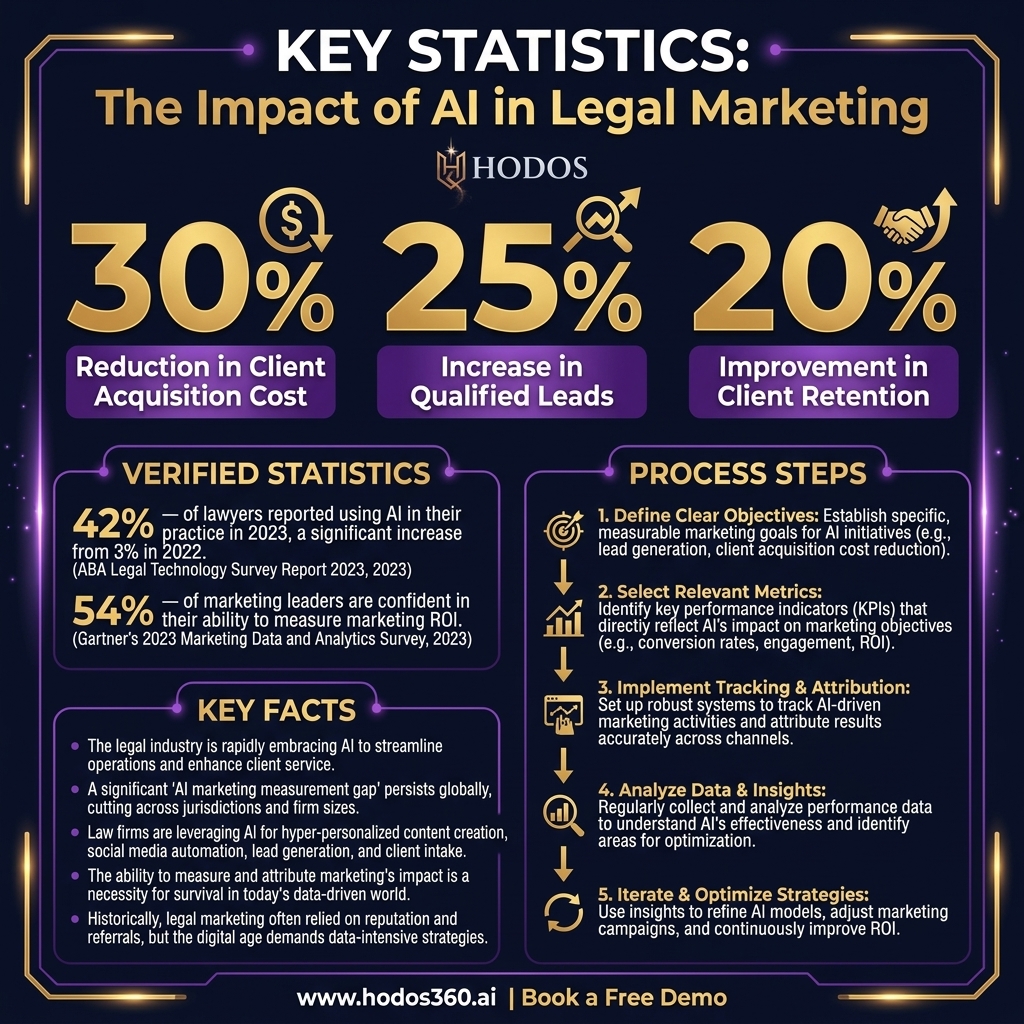
Post-implementation of a comprehensive AI marketing platform, LexAdept Legal experienced a transformative shift. The platform's ability to unify data from their ad networks, website, and CRM allowed them to track the precise client journey. AI-driven predictive analytics identified which specific patent law keywords and ad creatives generated the highest quality leads, while multi-touch attribution revealed the crucial role of their educational blog content in nurturing prospects. Within 12 months, Anjali Sharma reported a 30% reduction in client acquisition cost for their patent prosecution practice and a 25% increase in qualified leads across the board. Learn more about AI Development: The Essential Blueprint for Law Firm Innovation. This was achieved simply by optimizing ad placements and content distribution based on the granular, real-time insights provided by the AI system.
This isn't an isolated anecdote; it reflects a broader trend among forward-thinking law firms. Even smaller firms, often constrained by tighter budgets, are leveraging accessible AI tools to gain a competitive edge. A solo practitioner specializing in estate planning might use AI-powered SEO optimization to ensure their website ranks higher for local searches, then track client inquiries directly linked to specific blog posts generated by AI content tools. The competitive landscape demands this level of sophistication. Firms that continue to rely on intuition alone will find themselves outmaneuvered by those who harness data to understand client needs, predict market trends, and optimize every aspect of their marketing funnel. The ability to measure, adapt, and refine is no longer a luxury but a fundamental requirement for sustained success in the modern legal market. Ready to transform your legal marketing with measurable results? [Explore HODOS 360's AI Marketing Platform] and schedule a personalized demo to see its capabilities.

Key Takeaways and Next Steps for Legal Leaders
The discussion at the MarTech Summit Bangkok 2026 served as a poignant reminder: while AI promises unparalleled efficiency and personalization in marketing, its true value remains untapped without robust measurement. For law firms, this means moving beyond the initial excitement of AI adoption to strategically implement systems that can accurately track ROI, optimize campaigns, and provide actionable insights. The future of legal client acquisition is undeniably data-driven, and firms that embrace this paradigm shift will be better positioned to attract, convert, and retain high-value clients in an increasingly competitive market.
For legal leaders, the path forward involves several critical steps. First, prioritize a unified data strategy, breaking down internal silos to integrate all marketing and client data into a single, comprehensive platform. This foundational step is essential for any meaningful AI analysis. Second, invest in robust AI marketing analytics tools that offer predictive capabilities, multi-touch attribution, and real-time dashboards. These tools are the engine that transforms raw data into strategic intelligence. Third, foster a culture of data literacy and continuous learning within your firm, ensuring that both marketing and legal teams understand how to interpret and act upon AI-generated insights. Finally, continuously test, refine, and adapt your marketing strategies based on the measurable outcomes. The legal landscape is constantly evolving, and your marketing approach should too.
Platforms like HODOS 360's AI Marketing Platform are specifically designed to meet these complex needs, offering comprehensive analytics, AI video creation, social media automation, and content generation tools tailored for the legal sector. By integrating these services, firms can not only execute sophisticated marketing campaigns but also meticulously measure their impact, ensuring every effort contributes to tangible growth. Embracing AI marketing measurement is not just about technology; it's about strategic foresight, ethical responsibility, and a commitment to unlocking your firm's full potential in the digital age. Empower your firm with intelligent marketing. [Contact HODOS 360] today to revolutionize your client acquisition and retention.
Frequently Asked Questions
Why is AI marketing measurement crucial for law firms?+
AI marketing measurement is crucial because it allows law firms to move beyond guesswork, providing concrete data on the effectiveness of their marketing spend. It helps identify which campaigns, content, and channels are truly generating qualified leads and converting them into clients, ensuring resources are allocated efficiently and ROI is maximized in a competitive legal market.
What are the common pitfalls in measuring legal marketing ROI?+
Common pitfalls include focusing on vanity metrics (e.g., likes, impressions) instead of client acquisition and revenue, data silos preventing a holistic view, lack of sophisticated attribution models for the complex legal client journey, and insufficient data literacy within the firm to interpret analytics effectively. These can lead to misinformed marketing decisions.
How can AI help track the entire client journey?+
AI marketing platforms integrate data from all touchpoints—website visits, social media interactions, ad clicks, email engagements, CRM entries—to create a unified view of the client journey. AI algorithms then use multi-touch attribution modeling to assign credit to each interaction, providing a comprehensive understanding of how clients engage with the firm and ultimately convert.
What ethical considerations apply to AI in legal marketing?+
Ethical considerations include adhering to ABA Model Rule 7.1 regarding truthful and non-misleading communications, ensuring data privacy and compliance with regulations like GDPR/CCPA, and maintaining transparency about AI's role in content creation or client interaction. Firms must ensure AI usage upholds professional standards and client trust.
How do I choose the right AI marketing platform for my firm?+
Choose a platform that offers comprehensive analytics, integrates seamlessly with your existing legal tech (CRM, case management), provides multi-touch attribution, and supports your specific marketing needs like content generation or social media automation. Prioritize ease of use, strong data security, and features that align with your firm's growth objectives and ethical obligations.