


AI Development: The Essential Blueprint for Law Firm Innovation
The legal industry stands at a critical juncture, transitioning from cautious AI adoption to proactive, in-house AI development. This strategic pivot, exemplified by leading firms, marks a profound shift in how legal services are conceived, delivered, and managed. No longer content to be mere consumers of off-the-shelf solutions, an increasing number of legal powerhouses are recognizing the competitive advantage inherent in building bespoke AI capabilities tailored to their unique client needs and practice areas. This evolution reflects a growing understanding that true innovation often requires a deeper commitment than simple integration, demanding dedicated resources, specialized talent, and visionary leadership to fundamentally transform legal practice.
A recent landmark announcement from Akerman LLP underscores this transformative trend: the firm has hired Charles Zerner as its first Director of AI Development. Zerner, an attorney with a distinguished background including a stint at Munck Wilson Mandala and significant experience in neural network development, embodies the fusion of legal acumen and technological expertise now deemed indispensable. His appointment is not merely a personnel move; it's a declarative statement that Akerman, a firm celebrated for its forward-thinking approach, is committing to shaping the future of legal AI development rather than simply reacting to it, positioning itself at the vanguard of innovation.
This article delves into the strategic implications of Akerman's decision, exploring why AI development is becoming an essential component of a modern law firm's arsenal. We will examine the burgeoning "build vs. buy" debate, the critical role of AI governance and ethical considerations, and the practical steps firms can take to cultivate their own AI capabilities. From enhancing legal practice management to revolutionizing client engagement, the journey towards in-house AI development promises unprecedented opportunities. Discover how HODOS 360's AI solutions can empower your firm to navigate this complex terrain and achieve unparalleled efficiency and innovation.
The Strategic Imperative: Why Law Firms Are Building In-House AI
The decision by firms like Akerman to invest in dedicated AI development teams is driven by a powerful confluence of strategic imperatives. Generic, off-the-shelf AI tools, while useful, often lack the nuanced understanding required for complex legal work, failing to fully integrate with a firm's unique workflows, client base, and proprietary data. As Sam Altman, CEO of OpenAI, has emphasized, foundational models require significant fine-tuning for domain-specific application. For law firms, this means creating AI that understands intricate case precedents, client relationships, and internal knowledge bases, moving beyond simple document review to a deeper, more tailored capability.
Secondly, the competitive landscape demands differentiation. Firms offering bespoke, AI-powered efficiencies gain a significant edge, delivering superior client outcomes. Imagine an AI system trained exclusively on a firm's decades of successful litigation strategies, or one that predicts case outcomes with higher accuracy using proprietary data. Learn more about AI Deposition Prep: The Ultimate Guide to Winning Strategies. This level of customization is unattainable with external vendors alone. Companies like Harvey AI, which partnered with Allen & Overy, show the power of collaboration, but Akerman's move indicates a desire for greater autonomy and control over their technological destiny, reflecting a broader industry trend where leaders own their core innovations.
Furthermore, data privacy and security are paramount in legal. Entrusting sensitive client data to third-party AI providers introduces inherent risks. By developing AI development solutions in-house, firms maintain tighter control, ensuring compliance with regulations like GDPR and aligning with ABA Model Rules of Professional Conduct (Rule 1.6 on confidentiality, Rule 1.1 on competence). This internal control mitigates black-box algorithm risks and ensures transparency in AI's data handling, a growing concern highlighted by the EU AI Act enforcement discussions.
The Rise of Custom AI Solutions
The shift towards custom AI solutions is a natural progression as legal AI matures. Early adoption focused on general tools for e-discovery or contract review. However, firms quickly identified gaps: off-the-shelf tools struggled with specialized legal nuances, legacy system integration, or leveraging unique knowledge bases. This spurred demand for tailored applications, like an IP firm needing AI for proprietary patent analysis or a real estate firm for rapid zoning regulation assessment. Learn more about Legal AI Models: Essential for Law Firm Autonomy. Building these capabilities internally hardwires competitive advantages, making services more efficient, accurate, and valuable. Advances in LLMs from OpenAI (ChatGPT) and Anthropic (Claude) further enable this, offering foundational models adaptable to hyper-specialized legal functions.
Akerman's Bold Move: Charles Zerner and the Future of Legal Innovation
Akerman's decision to hire Charles Zerner as its first Director of AI Development is a pivotal moment, setting a new benchmark for legal innovation within the industry. Zerner's background, combining legal acumen from Munck Wilson Mandala with deep understanding of neural networks, uniquely positions him to bridge legal challenges and cutting-edge tech. As Akerman's CEO, Scott MacRae, noted, Zerner will navigate the "buy-versus-build dilemma," embedding a strategic leader to identify custom AI development opportunities and ensure alignment with business objectives.
Zerner's role extends beyond project management; he is tasked with building proprietary AI applications. This could involve advanced predictive analytics, sophisticated document automation learning from firm-specific templates, or tailored AI-powered client intake platforms. This proactive stance responds directly to the sophisticated legal tech market and client expectations for data-driven insights. As LegalTech NYC 2026 continues to highlight innovation, firms not actively shaping this future risk falling behind. Learn more about AI Legal Workflows: Essential Guide to India's Tech Leap. Akerman's move is a significant investment, positioning them among the leaders in the next wave of legal disruption.
This strategic appointment also reflects that AI development is a continuous process. Zerner's expertise will be crucial in establishing robust development pipelines, fostering collaboration between practitioners and data scientists, and integrating new technologies from giants like Microsoft (with Copilot) and Google (with Gemini). This proactive approach future-proofs the firm, ensuring quick adaptation to changes in legal practice. It underscores that investing in human capital with deep AI expertise is as critical as investing in the technology itself.
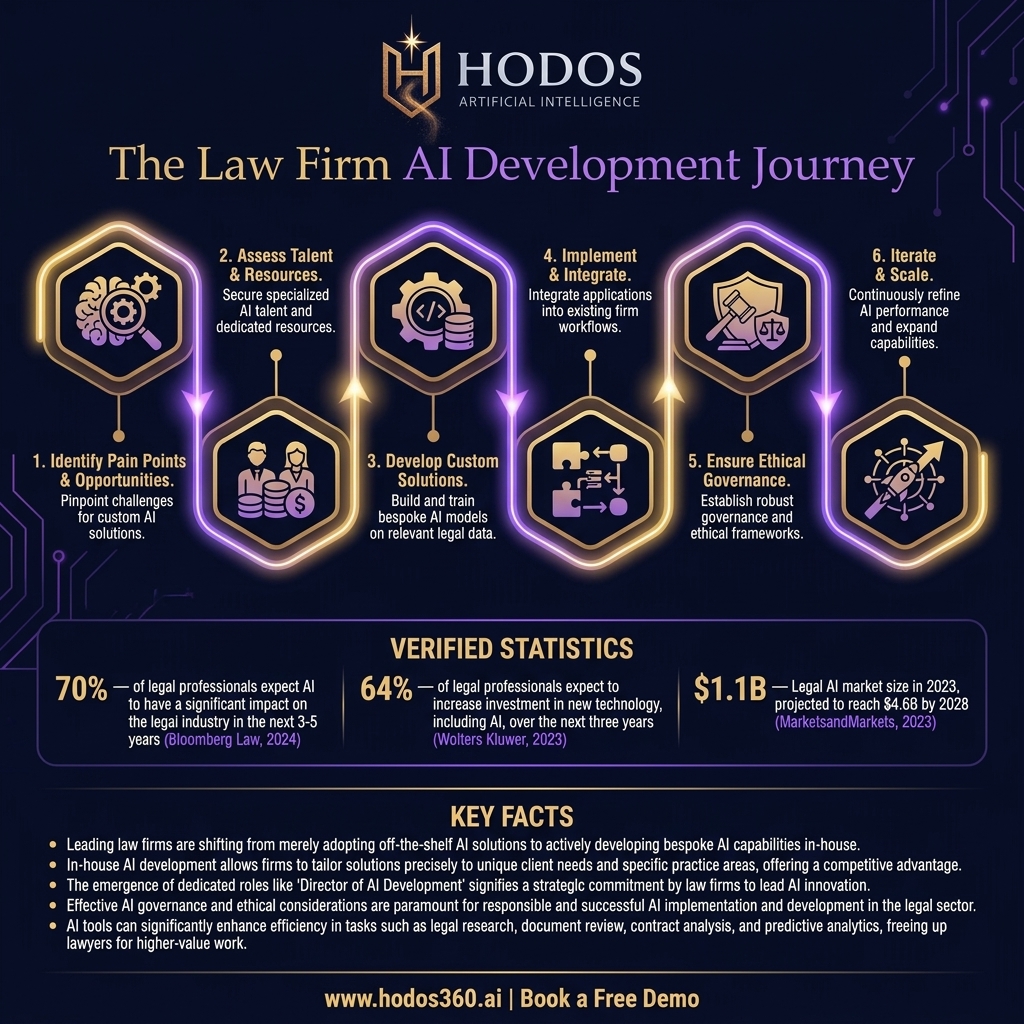
Challenges and Opportunities in AI Implementation
Implementing advanced AI presents unique challenges: significant upfront investment in talent, infrastructure, and data preparation; overcoming data silos and resistance to change; and navigating complex ethical considerations like AI bias, data privacy, and accountability under existing legal frameworks. However, opportunities are equally compelling. AI automates mundane tasks, freeing lawyers for high-value strategic work, enhances research, improves document accuracy, and provides predictive insights. Learn more about AI Marketing: The Ultimate Shift for Law Firms. Firms can create new service offerings, optimize resource allocation, and foster agile practices. Success hinges on strategic planning, a culture of experimentation, and alignment with core values, tasks Charles Zerner is uniquely positioned to lead.
Navigating the Build vs. Buy Dilemma in Legal AI
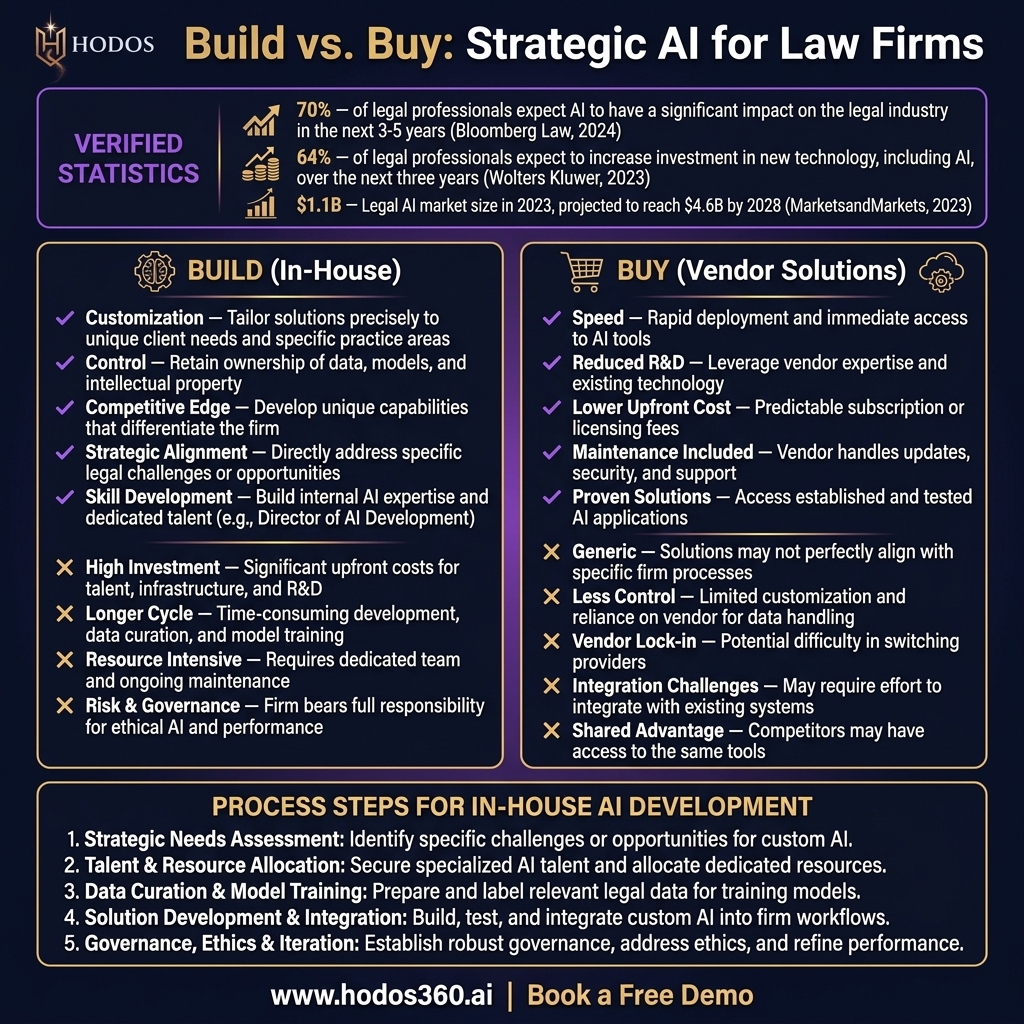
The "build vs. buy" dilemma is central for law firms contemplating deeper engagement with AI development. For years, "buy" — acquiring off-the-shelf software from vendors like Thomson Reuters or Clio — was prevalent, offering immediate solutions and reduced R&D. However, generic solutions often lack the bespoke functionality for a firm's specific competitive advantages or unique operational bottlenecks, failing to integrate seamlessly with proprietary data or complex workflows.
The "build" approach, championed by firms like Akerman, offers unparalleled customization and control. Developing AI internally creates systems precisely tailored to distinct needs, leveraging institutional knowledge and proprietary data for unique insights. This ensures tighter integration, complete data security, privacy compliance, and a difficult-to-replicate competitive advantage. Learn more about Voice Search Dominance: Essential Strategies for Law Firms. Challenges include significant upfront investment in talent (data scientists, AI engineers), infrastructure, longer development cycles, and a required cultural shift towards iterative experimentation.
The optimal strategy often lies in a hybrid approach. Firms might "buy" foundational AI components—like large language models from OpenAI or cloud AI services from Microsoft Azure—and then "build" proprietary layers on top. This leverages tech giants' R&D while retaining control over specialized, differentiating applications. For example, a firm might use a commercial e-discovery platform but develop a custom AI module for specific privileged documents based on its unique criteria. This nuanced approach balances innovation with practicality.
Fostering an AI-Ready Culture
Beyond technology, successful AI integration requires fostering an "AI-ready" culture. This involves educating all legal professionals about AI's capabilities and limitations, demystifying the technology, and encouraging adoption. Resistance often stems from fear or lack of understanding. Firms must invest in continuous training, as recommended by the ABA, to upskill their workforce and show how AI augments human expertise. Learn more about Essential Marketing Automation: Law Firm Growth Strategies. Creating cross-functional teams of lawyers, technologists, and data scientists breaks down silos, facilitating collaborative AI development. Leadership buy-in is paramount, with partners championing initiatives. An AI-ready culture embraces experimentation, views technology as a strategic asset, and understands continuous learning is key to sustained legal innovation.
The Evolving Role of AI Governance and Ethical Development
As law firms delve deeper into AI development, robust AI governance and ethical considerations come sharply into focus. The legal profession, bound by stringent ethical rules and a duty to justice, must treat AI responsibly. The ABA Model Rules of Professional Conduct (Rule 1.1 on Competence, Rule 1.6 on Confidentiality) impose obligations on lawyers using technology. Firms must ensure AI systems are developed and deployed transparently, without bias, through rigorous testing to mitigate algorithmic bias, which could lead to discriminatory outcomes or undermine due process. Debates around the EU AI Act underscore the global push for regulated, ethical AI.
Establishing comprehensive AI governance involves several key components. Firstly, clear policies on data privacy and security are needed, ensuring client information used for AI training is anonymized, secured, and compliant with regulations like CCPA or HIPAA. Secondly, accountability mechanisms are essential: who is responsible for AI errors? This demands human oversight and intervention points. As Dario Amodei, CEO of Anthropic, emphasizes, "Constitutional AI" aligns systems with human values, highly pertinent to legal.
Thirdly, transparency and explainability are paramount. Lawyers must understand how an AI reaches conclusions, especially for critical legal advice. "Black box" AI systems pose significant ethical and professional risks. Firms in AI development must prioritize explainable AI (XAI) for auditing and validating outputs, maintaining client trust and legal practice integrity. The National Law Journal has covered the scrutiny of AI in legal contexts, stressing clear ethical guidelines.

Key Takeaways and Next Steps for Law Firms
The narrative of Akerman's strategic AI development initiative, spearheaded by Charles Zerner, powerfully demonstrates the evolving priorities within the legal industry. The shift from passive AI consumption to active AI creation is a fundamental redefinition of legal innovation and competitive strategy. Firms embracing this transformation are positioning themselves not just for survival, but for leadership in the digital age. The lessons from Akerman are clear: investing in specialized talent, understanding the "build vs. buy" dilemma, and embedding robust AI governance are no longer optional but essential components of a forward-thinking legal practice.
For law firm owners and attorneys, the path forward involves actionable steps. First, audit existing workflows to identify pain points where custom AI solutions offer value. Prioritize areas where repetitive tasks consume time or data insights unlock advantages. Second, address the talent gap through strategic hires, academic partnerships, or upskilling existing staff. Third, explore hybrid models, leveraging robust commercial platforms as a foundation while developing proprietary AI layers. The future of legal services will be shaped by those who dare to build, enhancing efficiency, client outcomes, and attracting top talent.
- ✓AI-powered legal workflows: Streamline your firm's operations with intelligent automation, from case intake to document generation.
- ✓AI marketing platform: Leverage advanced analytics and content generation for targeted client acquisition and measurable ROI.
- ✓AI voice assistants for law firms: Provide 24/7 client support, qualify leads, and manage appointments seamlessly.
- ✓AI-powered website building: Create high-converting, responsive legal websites optimized for SEO and client engagement.
- ✓Case management systems: Centralize client data, track progress, and manage resources with intuitive, intelligent tools.
- ✓Document automation: Generate accurate, customized legal documents in minutes, reducing errors and saving significant time.
Frequently Asked Questions
Q1: Why are law firms moving towards in-house AI development?+
Firms are building AI in-house to gain a competitive edge through bespoke solutions. Generic tools often lack the specificity for complex legal tasks or integration with proprietary data. In-house development ensures greater control over data privacy, security, and ethical considerations, aligning AI with a firm's unique values and professional obligations. This also fosters innovation and attracts specialized talent.
Q2: What is the significance of Akerman hiring a Director of AI Development?+
Akerman's appointment of Charles Zerner signals a strategic commitment to proactive AI innovation. It moves beyond merely adopting third-party tools to actively building custom AI applications tailored to the firm's specific needs. This positions Akerman as a leader in legal tech, aiming for proprietary advantages in efficiency, client service, and data-driven insights, influencing the broader industry to follow suit.
Q3: What are the main challenges in implementing AI in a law firm?+
Key challenges include significant upfront investment in talent and infrastructure, overcoming resistance to change, integrating with legacy systems, and addressing data silos. Ethical concerns like algorithmic bias, data privacy, and accountability also present complex hurdles. Successfully navigating these requires strategic planning, a culture of experimentation, and strong leadership buy-in.
Q4: How does AI governance relate to ethical AI development in legal practice?+
AI governance provides a framework for responsible AI use, ensuring compliance with ethical rules like the ABA Model Rules of Professional Conduct. It addresses data privacy, security, accountability for AI errors, and the need for transparency (explainable AI). Robust governance mitigates bias, maintains client trust, and protects firms from liabilities, ensuring that AI development aligns with legal and professional duties.
Q5: What is the "build vs. buy" dilemma in legal AI, and what's the best approach?+
The "build vs. buy" dilemma refers to whether firms should develop AI tools internally or purchase them from vendors. "Buy" offers immediate, broad solutions, while "build" provides customization, control, and competitive advantage. A hybrid approach is often best: buying foundational AI components (like LLMs) and building proprietary layers on top. This balances leveraging external R&D with tailoring solutions to specific firm needs.