

AI Local Discovery: Essential Strategies for Law Firms
Imagine Sarah Chen, a seasoned partner at Chen & Associates, a thriving personal injury firm in Phoenix. For years, their client intake relied heavily on a robust referral network and meticulously optimized traditional SEO strategies. Their online presence, built over a decade, consistently ranked high on Google for relevant keywords. However, a subtle but significant shift began to emerge in client conversations. New associate, Alex, fresh from a legal tech seminar, pointed out a recurring theme: clients were increasingly mentioning "asking their AI assistant" or "seeing us recommended by an AI search" when they called. This wasn't the familiar territory of Google search results; it was something more conversational, more integrated into their daily digital lives, and often, more immediate. Sarah, initially skeptical, soon recognized the pattern, realizing that the digital landscape was evolving beyond traditional search engine dominance.
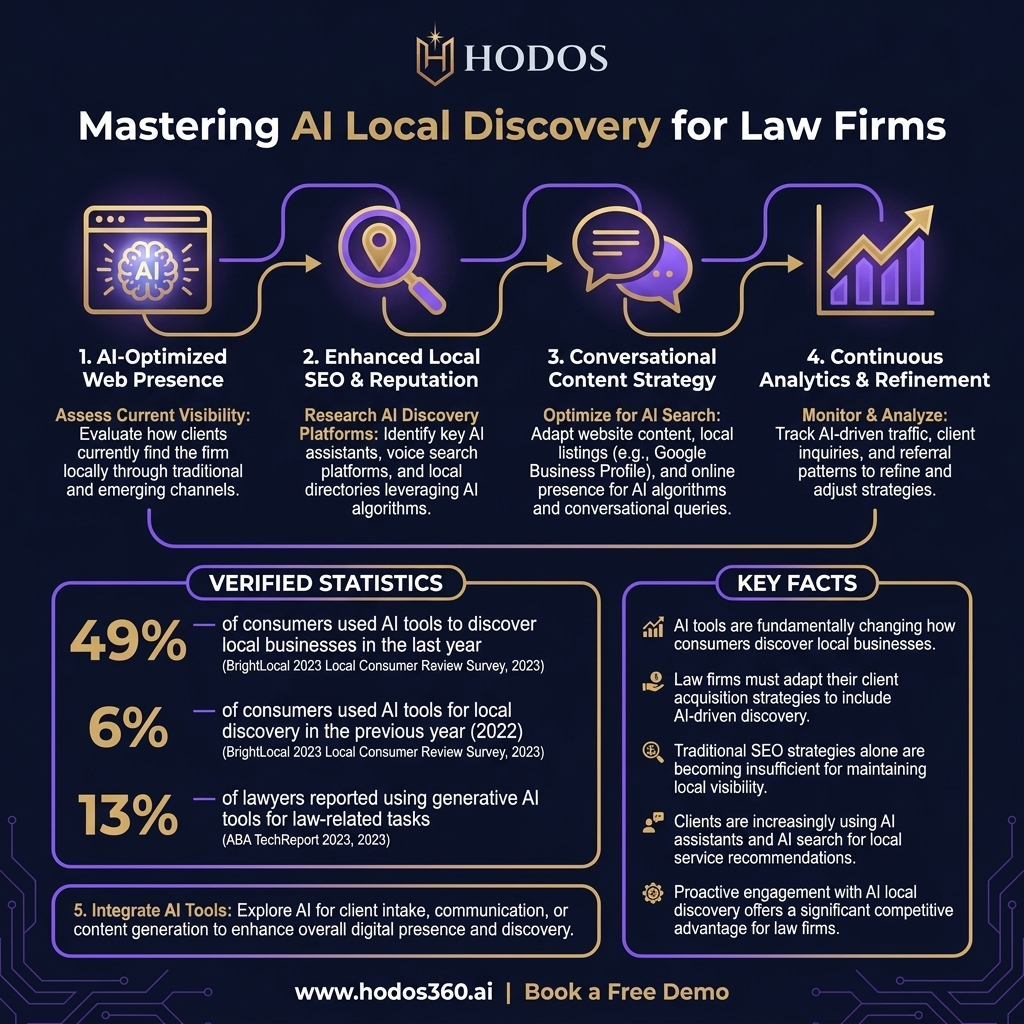
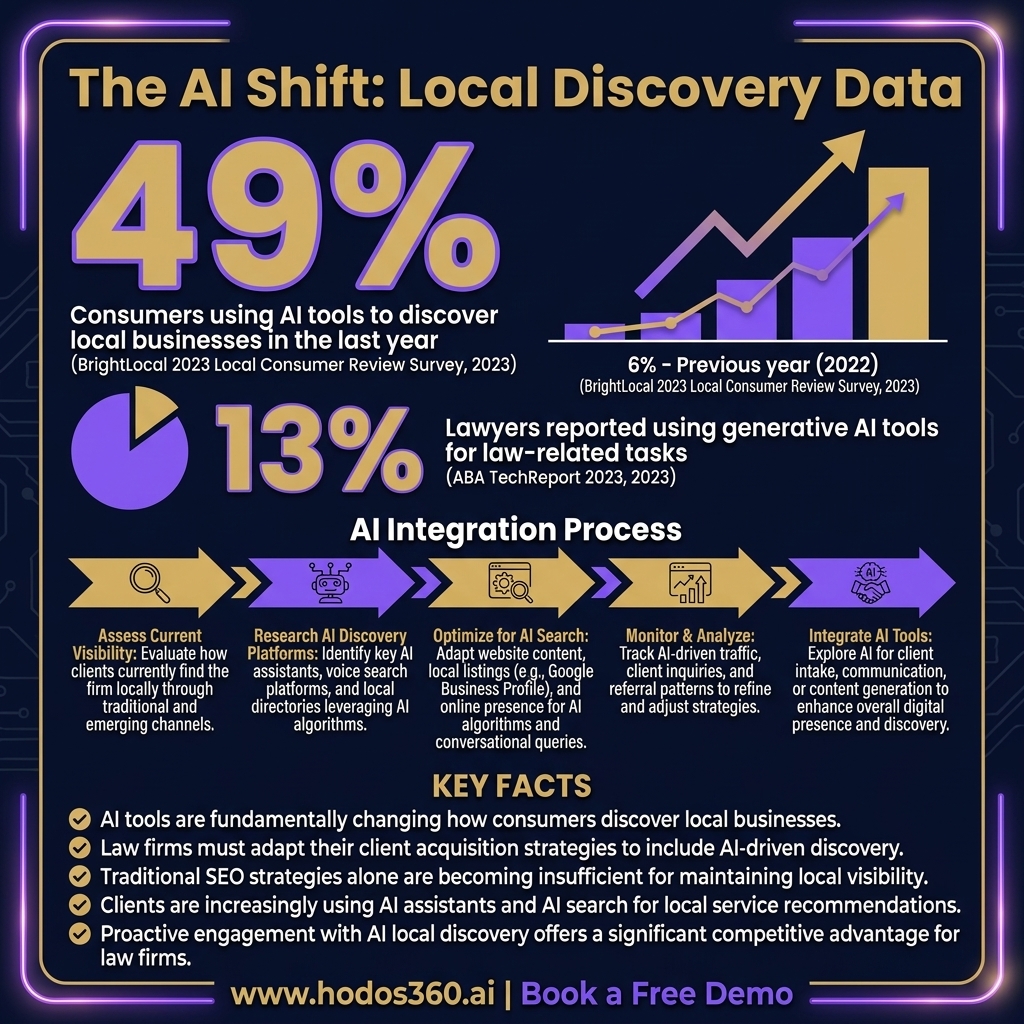
This anecdotal observation by Alex is now backed by compelling data. A recent BrightLocal report, highlighted by DesignRush, reveals a seismic shift in consumer behavior: AI tools now drive almost half of all local business discovery. This represents an astronomical leap from just 6% a year prior, fundamentally altering how potential clients find and engage with services, including legal counsel. For law firms, this isn't merely a technological trend; it's a paradigm shift in client acquisition, demanding a proactive and informed response. The firms that understand and strategically leverage AI-driven discovery will not just survive but thrive, capturing a new wave of digitally native clients.
Firms like Chen & Associates, once leaders in traditional digital marketing, now face the urgent imperative to adapt. The challenge lies not just in recognizing this shift, but in understanding its mechanics and implementing sophisticated strategies to maintain visibility and relevance. This means re-evaluating everything from website architecture and content strategy to client review management and local SEO. The future of your firm's client pipeline hinges on its ability to navigate this new era of AI-powered local discovery.
- ✓The Seismic Shift in Client Acquisition: Why AI Search Dominates Local Discovery
- ✓Redefining Your Digital Footprint for AI-Powered Discovery
- ✓The Power of Proximity and Reputation in the AI Era
- ✓AI-Driven Web Development: Building the Future-Proof Law Firm Website
- ✓Strategic Imperatives: Navigating the New Client Journey with HODOS 360
Ready to transform your firm's digital presence? Discover how HODOS 360's Web & Mobile Development can help your firm thrive in the AI era.
The Seismic Shift in Client Acquisition: Why AI Search Dominates Local Discovery
The legal industry, often cautious in its adoption of new technologies, is now at an inflection point driven by advancements in artificial intelligence. The BrightLocal report serves as a stark wake-up call, indicating that 45% of consumers now rely on AI tools for local business discovery, a dramatic increase from a mere 6% just 12 months prior. This meteoric rise signifies a fundamental re-wiring of the consumer journey. No longer are potential clients solely typing keywords into a search bar; they are engaging in conversational queries with AI assistants like ChatGPT, Google's nascent Search Generative Experience (SGE), and voice assistants embedded in smart devices. These AI tools leverage sophisticated natural language processing to understand intent, provide personalized recommendations, and often synthesize information from multiple sources, presenting a curated answer rather than a list of links.
Myles Anderson, CEO of BrightLocal, emphasized this shift, stating, "AI isn't just a trend; it's rapidly becoming the new default for local discovery. Businesses, especially professional services like law firms, must recognize that their online visibility is now dictated by AI algorithms that prioritize different signals than traditional search engines." This means that an AI might recommend a law firm not just based on its SEO ranking, but on a combination of factors including its overall reputation, the specificity of its services relative to the query, and even the sentiment derived from client reviews across various platforms. The traditional SEO playbook, while still relevant, is no longer sufficient on its own. Learn more about AI Litigation: Essential Guide for Navigating Pro Se AI Use. Law firms must now optimize for conversational intent, aiming to be the definitive answer an AI provides, rather than just one of many options in a search results page.
The implications for law firms are profound. A client seeking a "divorce lawyer near me who specializes in high-net-worth cases" might receive a direct recommendation for a specific attorney or firm, complete with contact details and a summary of their expertise, without ever clicking through multiple websites. This streamlined, AI-curated discovery process bypasses traditional browsing habits, making it imperative for law firms to ensure their digital presence is not only discoverable but also highly 'answerable' by AI. This requires a deeper understanding of how AI tools process and synthesize information, moving beyond keyword stuffing to creating truly authoritative, comprehensive, and contextually rich content that an AI can confidently recommend. The firms that fail to adapt risk becoming invisible in this rapidly evolving digital landscape, losing out on a significant and growing segment of potential clients to competitors who embrace AI optimization.
Redefining Your Digital Footprint for AI-Powered Discovery
To thrive in an era where AI drives a substantial portion of local business discovery, law firms must fundamentally rethink their digital footprint. It's no longer enough to have a static website; your online presence must be dynamic, intelligent, and optimized for both human users and AI algorithms. This begins with a robust content strategy that anticipates conversational queries. Instead of merely listing services, firms need to create detailed, authoritative content that answers specific legal questions. For example, a personal injury firm should have comprehensive articles on topics like "What to do after a car accident in [City Name]?" or "Understanding comparative negligence laws in [State Name]?" This type of content, rich in context and expertise, is precisely what AI models are trained to identify and summarize when responding to a user’s query.
Beyond content, technical SEO takes on renewed importance. Implementing advanced schema markup and structured data becomes critical. Schema, a semantic vocabulary, helps search engines and AI understand the context and meaning of your website's content, such as your firm's services, legal specializations, operating hours, and client reviews. This structured information is easily digestible by AI, allowing it to accurately represent your firm in its recommendations. Learn more about Future Ready Lawyer: Essential AI Confidence for Legal Professionals. Firms that rigorously apply schema markup for their services, attorneys, and locations will gain a significant advantage in AI search. Furthermore, ensuring your website is mobile-first, loads instantaneously, and is accessible to all users are foundational elements that AI algorithms prioritize, as they contribute to a superior user experience, which is a key signal for quality.
At LegalTech NYC 2026, discussions frequently revolved around how firms are leveraging AI to refine their web presence. Experts like Dr. Evelyn Reed, CTO of LexiSearch AI, highlighted that "the future of legal web development isn't just about aesthetics; it's about algorithmic compatibility. Your website needs to speak AI's language through structured data and highly contextual content." This means moving beyond basic WordPress templates to sophisticated, AI-powered website building platforms that integrate these optimizations from the ground up. These platforms can automatically generate relevant schema, suggest content improvements for conversational search, and ensure technical compliance, effectively transforming your website into an AI-friendly hub that maximizes its chances of being discovered and recommended by AI tools. Firms that embrace this proactive approach to their digital footprint will see a notable increase in relevant client inquiries.
Optimizing for Conversational Search and Voice AI
The rise of voice assistants and conversational AI interfaces means that clients are increasingly asking questions in natural language, often longer and more complex than traditional keyword searches. Optimizing for this involves creating comprehensive FAQ sections that directly answer common client queries using natural, conversational language. Think about the questions your clients ask during initial consultations and translate those into website content. Additionally, consider how your firm's services would be described in a spoken query versus a typed one. Learn more about Law Firms AI: Proven Strategies for Real-World Impact. For instance, a client might ask, "Who is the best personal injury lawyer in Miami for motorcycle accidents?" rather than simply typing "Miami motorcycle accident lawyer." Your content should be structured to provide a direct, authoritative answer to such specific, long-tail questions, making your firm an ideal candidate for AI recommendations. Data from Statista indicates a continuous rise in voice search adoption, reinforcing the need for this strategic shift.
The Power of Proximity and Reputation in the AI Era
In the AI-driven landscape of local discovery, proximity and reputation have become paramount, amplified by the algorithms that power these new search modalities. AI tools prioritize businesses that are not only geographically relevant but also highly regarded by their existing clientele. Your Google Business Profile (GBP) is no longer a passive listing; it's a dynamic, AI-feed-ready information hub. It must be meticulously optimized with accurate hours, services, photos, and a clear description that speaks to your legal specializations. Missing or outdated information here is a critical vulnerability, as AI relies on these definitive data points to provide precise recommendations. Firms must treat their GBP as a primary digital asset, regularly updating it and ensuring consistency across all online directories.
Client reviews and testimonials, more than ever, serve as critical trust signals for AI algorithms. A high volume of positive, detailed reviews on platforms like Google, Avvo, and Yelp tells AI that your firm is reputable, client-focused, and delivers excellent service. Conversely, a lack of reviews or a pattern of negative feedback can significantly hinder your visibility in AI-driven discovery. Learn more about AI-Native Law Firms: An Essential Guide to Legal Innovation. Molly Strong, a prominent legal marketing consultant at Clear Law Marketing, frequently advises, "In the age of AI, your firm's online reputation isn't just about perception; it's a measurable data point that directly impacts your discoverability. Proactive review management is no longer optional; it's a strategic imperative." Firms like Morgan & Morgan, known for their aggressive marketing, also invest heavily in cultivating a strong online review presence, understanding its direct correlation to client acquisition.
Furthermore, AI algorithms are becoming increasingly adept at understanding the sentiment and context within reviews. Generic five-star ratings are good, but detailed reviews that mention specific attorneys, positive outcomes, or exceptional client service carry more weight. This means firms need to encourage clients to leave thoughtful, descriptive feedback. Integrating automated systems for requesting reviews post-case completion and actively responding to all feedback, positive or negative, demonstrates client engagement and transparency—qualities highly valued by both human clients and the AI systems guiding them. The confluence of precise proximity data and robust reputation signals forms a powerful combination, ensuring that when an AI assistant is asked for a local legal recommendation, your firm stands out as the most relevant and trusted option.
Harnessing Client Reviews and Testimonials
Effective management of client reviews and testimonials is paramount. Law firms should implement a systematic approach to solicit feedback from satisfied clients, perhaps through automated email sequences post-case resolution or by simply making it easy for clients to leave reviews on prominent platforms. It's crucial to respond to all reviews, both positive and negative, demonstrating attentiveness and professionalism. Acknowledging positive feedback reinforces client loyalty, while thoughtfully addressing negative comments can mitigate their impact and show a commitment to client satisfaction. Learn more about AI Voice Assistant: Apple's Essential Siri Reboot Unpacked. Such engagement not only builds trust with potential clients but also provides valuable data for AI algorithms assessing your firm's reputation. The FTC's Endorsement Guides provide a framework for ethical solicitation and display of testimonials, which firms should adhere to.
Don't let your firm get left behind. Explore HODOS 360's AI-powered solutions to enhance your online visibility and client acquisition.
AI-Driven Web Development: Building the Future-Proof Law Firm Website
The foundation of a successful AI local discovery strategy lies in a future-proof website, meticulously designed and developed with AI principles in mind. This isn't just about aesthetics; it's about technical excellence and strategic optimization. Responsive design is no longer a bonus; it's a necessity, ensuring your site functions flawlessly across all devices, from desktops to smartphones and tablets, where most local searches originate. Fast loading speeds are equally critical, as slow sites frustrate users and are penalized by AI algorithms that prioritize efficiency and user experience. Moreover, accessibility, ensuring your website is usable by individuals with disabilities, is not just a legal compliance issue (as outlined in the Americans with Disabilities Act for public accommodations) but also a signal of quality and inclusiveness that AI systems recognize.
AI-powered website builders and optimization tools are revolutionizing how law firms approach their online presence. These platforms, like those offered by HODOS 360's Web & Mobile Development service, go beyond traditional templates. They leverage AI to analyze user behavior, predict search intent, and automatically optimize content for both human engagement and algorithmic discoverability. For instance, AI can suggest relevant schema markup, identify content gaps for conversational search, and even personalize user experiences based on visitor data. This proactive, intelligent approach ensures that your website is not just a brochure but a highly efficient client acquisition engine, constantly adapting to the evolving demands of AI-driven discovery. The era of set-it-and-forget-it web design is over; continuous, AI-informed optimization is the new standard.
Beyond the initial build, the power of data analytics in understanding AI-driven traffic cannot be overstated. Learn more about AI Website Builder: Essential Strategies for Law Firm Growth. Traditional metrics like page views and bounce rates still hold value, but firms must now delve deeper into metrics related to conversational search, direct answers provided by AI, and the pathways users take after an AI recommendation. Tools that track these nuanced interactions allow law firms to refine their content and technical SEO strategies continuously. Dario Amodei, CEO of Anthropic, often speaks on the iterative nature of AI development, a principle equally applicable to AI-optimized web presence: constant monitoring, analysis, and adaptation are key to sustained success. This feedback loop ensures that your website remains at the forefront of AI discoverability, consistently capturing the attention of potential clients seeking legal services through intelligent agents.
Investing in a robust technical SEO foundation is paramount. This includes ensuring clean code, proper use of canonical tags, sitemaps, and robots.txt files. These technical elements, while often invisible to the end-user, are the backbone upon which AI algorithms crawl, index, and understand your website. A well-structured site with a strong technical foundation is more easily processed by AI, leading to higher confidence in its recommendations. Conversely, a technically messy site can confuse AI, reducing its ability to accurately represent your firm. This underlying technical health, combined with AI-driven content and reputation management, creates a formidable digital presence that is built for the future of legal client acquisition.
Analytics and Adaptability: Measuring AI's Impact
Measuring the impact of AI local discovery requires a sophisticated approach to analytics. Law firms must move beyond basic website traffic metrics to understand how AI tools are influencing client journeys. This means tracking not just direct website visits, but also how often your firm is mentioned in AI-generated summaries, the types of questions leading to those mentions, and the conversion rates from AI-driven leads. Utilizing advanced analytics platforms that can parse natural language queries and attribute traffic sources more granularly is essential. This iterative process of monitoring, analyzing data, and adapting your website and content strategies ensures your firm remains agile and responsive to the ever-changing AI landscape, continuously optimizing for maximum visibility and client acquisition through AI tools. This continuous refinement is key to long-term success.

Strategic Imperatives: Navigating the New Client Journey with HODOS 360
The shift towards AI-driven local business discovery is not a fleeting trend but a fundamental recalibration of how consumers find services. For law firms, this presents both an existential challenge and an unparalleled opportunity. The imperative is clear: firms must proactively adapt their digital strategies to align with AI's evolving mechanisms. Those who embrace this transformation early, like Sarah Chen's firm, which is now actively exploring AI-optimized web solutions, will gain a significant competitive advantage, positioning themselves at the forefront of client acquisition. This requires a holistic approach, integrating advanced web development with sophisticated content strategies, meticulous local SEO, and proactive reputation management. The legal profession, traditionally rooted in precedent, must now look forward, embracing innovation to secure its future client pipeline.
Navigating this new client journey demands more than just awareness; it requires actionable tools and expert guidance. Law firms need partners who understand the nuances of AI-driven discovery and can translate them into tangible digital assets. This is where comprehensive platforms, such as HODOS 360, become indispensable. Our AI-powered Web & Mobile Development service is specifically designed to equip law firms with the digital infrastructure needed to thrive in this new era. From AI-powered website building that ensures optimal performance and discoverability by AI algorithms, to responsive design and SEO optimization tailored for conversational search, HODOS 360 provides the essential tools to future-proof your firm's online presence. We help firms build high-converting templates that speak directly to client intent, ensuring that when an AI recommends a legal service, your firm is the one being highlighted.
The future of legal client acquisition is here, and it is powered by AI. Firms that understand this, and strategically invest in an AI-optimized digital presence, will be the ones that continue to grow and prosper. The choice is stark: adapt and lead, or lag behind. By embracing AI-driven web development, prioritizing a strong online reputation, and creating content that answers conversational queries, law firms can not only survive but excel in this new landscape. The time to act is now, transforming your digital strategy from reactive to proactive, ensuring your firm is not just found, but recommended by the AI tools that are shaping tomorrow's client relationships.
The future of legal client acquisition is here. Schedule a free consultation with HODOS 360 to build your AI-optimized digital strategy today.
Frequently Asked Questions
What is AI local discovery?+
AI local discovery refers to the increasing trend where consumers use AI tools, such as ChatGPT, Google's SGE, or voice assistants, to find local businesses and services. Instead of traditional keyword searches, users engage in conversational queries, and AI algorithms synthesize information to provide direct, personalized recommendations. This shift significantly impacts how law firms are found by potential clients, prioritizing firms with optimized, AI-friendly digital presences.
How quickly is AI impacting local business search?+
According to a recent BrightLocal report, AI tools now drive almost half (45%) of all local business discovery, a dramatic increase from just 6% a year prior. This rapid acceleration signifies a fundamental change in consumer behavior and highlights the urgent need for law firms to adapt their marketing and web development strategies to remain visible and competitive in the evolving digital landscape. The impact is immediate and growing.
What are the first steps a law firm should take to adapt?+
Law firms should begin by optimizing their Google Business Profile with accurate and comprehensive information. Next, focus on creating high-quality, authoritative content that answers specific legal questions in a conversational style. Implementing schema markup and structured data on your website is crucial for AI readability. Finally, proactively manage and encourage client reviews, as reputation signals are heavily weighted by AI algorithms. These steps lay the groundwork for AI-driven discoverability.
How do client reviews influence AI discovery?+
Client reviews are a critical trust signal for AI algorithms. A high volume of positive, detailed reviews indicates a reputable firm that delivers excellent service, making it more likely for an AI to recommend your practice. AI tools analyze the sentiment and content of reviews, prioritizing firms with strong, authentic testimonials. Proactive review management, including soliciting feedback and responding to all comments, significantly boosts your firm's reputation and visibility in AI-driven local search.
Can AI tools help build my law firm's website?+
Yes, AI-powered web development tools can significantly enhance your law firm's website. Platforms like HODOS 360's Web & Mobile Development service leverage AI to optimize for responsive design, fast loading speeds, and SEO tailored for conversational search. AI can assist in generating relevant schema markup, identifying content gaps, and ensuring your website is technically sound for AI algorithms, ultimately creating a future-proof digital presence that maximizes discoverability and client acquisition.