


Law Firms AI: Proven Strategies for Real-World Impact
The legal landscape is rife with pronouncements about artificial intelligence. Every conference panel, industry report, and LinkedIn feed echoes the transformative power of AI. Yet, as a recent AFR article aptly titled "Law firms talk a big game on AI. Here’s how they actually use it" highlighted, there's a discernible gap between aspirational rhetoric and tangible implementation.
For many, the question remains: beyond the buzzwords, how are leading law firms AI initiatives truly making a difference on the ground? This isn't about hypothetical futures; it's about the present reality where firms are strategically integrating AI to solve real-world problems, optimize operations, and gain a competitive edge.
The narrative isn't just about 'what if,' but 'what is' and 'how it's being done.'
Consider the groundbreaking partnership between global giant Allen & Overy and legal AI startup Harvey AI, announced in early 2023. This wasn't a mere pilot program; it was a multi-year, firm-wide deployment of generative AI to support lawyers across 40 offices.
While many firms were still debating AI's role, Allen & Overy's strategy, championed by leaders like CEO Gareth Price, was to embed AI directly into daily legal work—from contract analysis to due diligence. This move underscored a pivotal shift: from viewing AI as a futuristic concept to embracing it as an essential operational tool.
The initial skepticism surrounding whether AI could truly handle lawyers' complex tasks has given way to a focused effort on augmenting human capabilities, streamlining previously arduous processes, and unlocking unprecedented levels of efficiency. This article delves into the specific, actionable ways forward-thinking firms are leveraging AI, moving beyond the talk to demonstrate actual, measurable impact.
Beyond the Hype: The Real-World Impact of Law Firms AI Adoption
The initial wave of AI adoption in the legal sector was characterized by cautious experimentation, often limited to niche applications like e-discovery. Today, however, we're witnessing a maturation. According to a 2024 report by Thomson Reuters, 65% of large law firms (500+ attorneys) have already integrated AI into their operations in some capacity, a significant jump from just 38% three years prior.
This accelerated adoption isn't driven by fear of missing out alone, but by a clear understanding of AI's capacity to deliver concrete value. Firms are no longer just talking about AI; they are actively using AI tools to reshape workflows. For instance, Linklaters, another Magic Circle firm, has openly discussed its internal AI initiatives, focusing on how AI can assist with large-scale document review and regulatory compliance, thereby freeing up associates for higher-value, client-facing work.
This strategic deployment demonstrates a nuanced understanding: AI isn't replacing lawyers but empowering them to be more effective and efficient.
The real impact is quantified. The AFR article highlighted a case where a law firm used AI to review 110,000 documents in 24 hours, a task that would have taken human lawyers weeks, if not months.
Learn more about Essential AI Safeguards: Navigating Responsible Legal Tech. This dramatic reduction in time and resources translates directly into cost savings for clients and increased profitability for firms. This isn't a hypothetical projection; it's a testament to how firms are actually leveraging technology. Furthermore, the competitive landscape is shifting.
Firms that are slow to adapt risk falling behind. Gabe Pereyra, co-founder of Harvey AI, often emphasizes that the focus should be on how AI can augment human intelligence, not replace it. He points to the critical role of legal training in ensuring lawyers understand how to effectively prompt and validate AI outputs, transforming them into 'AI-augmented attorneys' rather than simply users of a tool.
This human-AI collaboration is where the true competitive advantage lies, allowing firms to handle larger volumes of work with greater precision and speed.
Streamlining Operations with AI-Powered Law Firm Management
One of the most immediate and impactful applications of AI in law firms is within their operational backbone: practice management. Traditional case management systems, while functional, often lack the predictive analytics and automation capabilities that AI brings. Modern law firms AI solutions are transforming every aspect, from initial client intake to final billing.
Consider the sheer volume of administrative tasks that bog down legal professionals – scheduling, document drafting, data entry. AI is systematically chipping away at these inefficiencies. For example, systems integrated with AI-powered legal workflows can automatically categorize incoming emails, suggest appropriate document templates based on case type, and even flag potential conflicts of interest by cross-referencing client databases and public records.
This level of automation is not just about saving time; it's about reducing human error and ensuring consistency across all firm operations, which is crucial for compliance and client satisfaction.
Firms are seeing tangible benefits. The AFR article mentioned reducing an eight-week job down to five days, a clear indicator of AI's power in accelerating complex legal processes.
Learn more about AI Adoption: The Ultimate Guide for Law Firm Growth. This isn't limited to large firms; even solo practitioners and small to mid-sized legal company structures are adopting AI-driven platforms. Clio, a leader in cloud-based legal technology, has continually expanded its AI capabilities, demonstrating the market demand for smart automation.
Their acquisition strategies and continuous product development reflect an industry-wide push towards more intelligent, integrated practice management. For instance, AI-powered billing systems can analyze lawyer activity logs and suggest appropriate billing codes, minimizing discrepancies and accelerating the billing cycle. Client intake, traditionally a laborious process, now benefits from AI-driven forms that dynamically adapt to client responses, ensuring all necessary information is captured efficiently and accurately.
This not only improves the client experience but also provides lawyers with comprehensive data from the outset, enabling them to hit the ground running.
Automating the Case Lifecycle for Enhanced Efficiency
The lifecycle of a legal case is complex, involving numerous stages from initial consultation to resolution. AI is proving to be an invaluable asset at each step. In document automation, AI-powered tools can generate first drafts of contracts, pleadings, and motions based on natural language inputs and predefined templates, drastically cutting down the time spent on repetitive drafting.
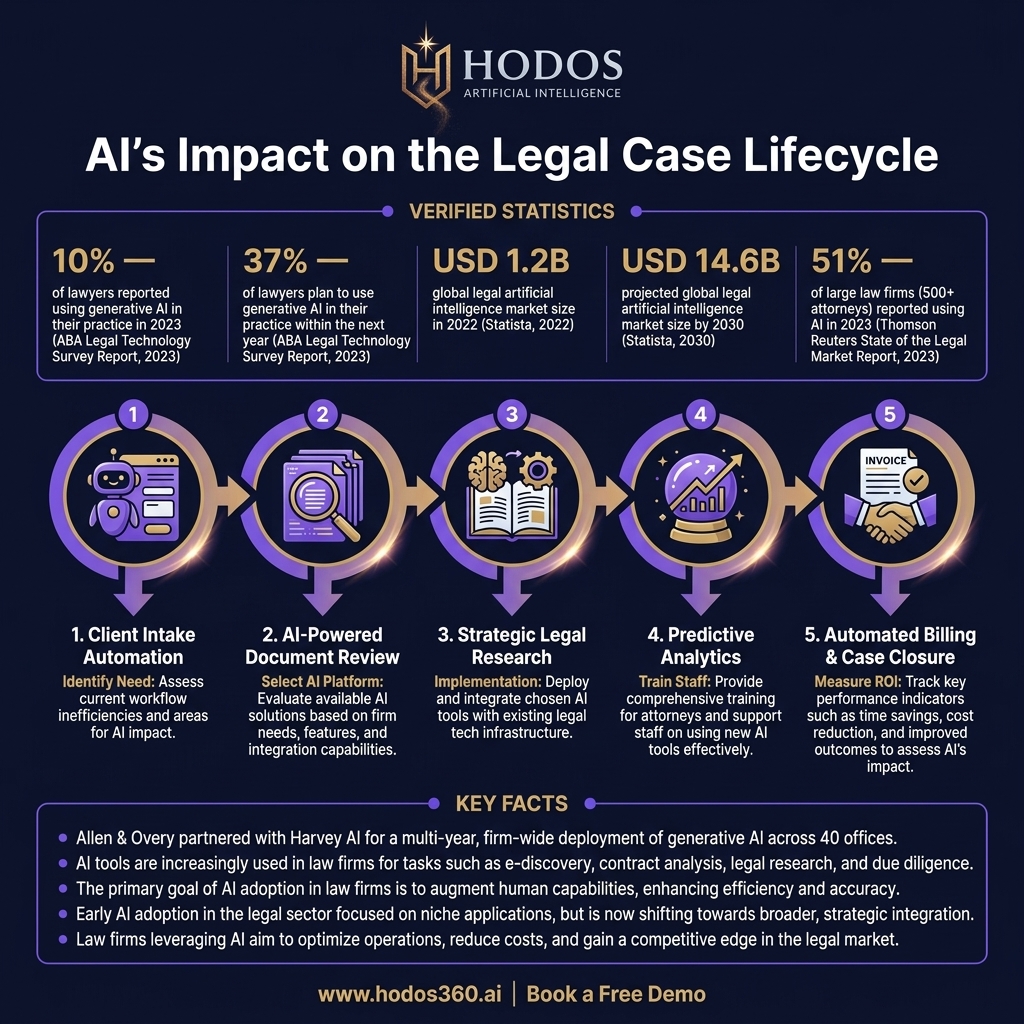
This allows lawyers to focus on refining legal arguments and strategic advice. For example, a recent survey by the ABA Journal indicated that firms using AI for document review reported a 40% reduction in review time. Learn more about AI Local Search: The Ultimate Visibility Guide for Law Firms.
Furthermore, AI-driven analytics can help predict case outcomes by analyzing vast datasets of past cases, judicial rulings, and settlement patterns, providing lawyers with data-backed insights to inform their strategy. This predictive capability is particularly valuable in litigation, where understanding potential risks and probabilities can significantly influence negotiation tactics and client advice.
The integration of AI into these core processes is not merely about speed; it's about enhancing the quality and strategic depth of legal work, ensuring that lawyers are equipped with the best possible tools.
Elevating Client Engagement and Marketing Through AI
Beyond internal operations, AI is profoundly impacting how law firms attract, engage, and retain clients. In an increasingly competitive market, effective marketing and client service are paramount. Law firms AI marketing platforms are revolutionizing outreach by enabling hyper-personalization and automation at scale. Consider the challenges of content generation: consistently producing high-quality articles, blog posts, and social media updates.
AI-powered content generation tools can assist in drafting compelling narratives, summarizing legal developments, and even creating engaging social media posts tailored to specific platforms. This frees up marketing teams and lawyers to focus on strategic content planning and relationship building, rather than the mechanics of drafting.
Firms like LegalZoom, with its robust online presence and extensive content library, demonstrate the power of digital engagement, and AI is now making such sophisticated strategies accessible to a broader range of firms.
AI also plays a critical role in social media automation and analytics.
Learn more about Legal AI: The Ultimate Guide to Transforming Law Firms. Firms can use AI to schedule posts at optimal times, analyze engagement metrics to understand what content resonates most with their target audience, and even identify trending legal topics to inform future content strategy.
The ability to track ROI on marketing efforts is another game-changer. AI platforms can attribute leads and conversions to specific marketing channels and campaigns, providing clear data on what's doing well and where to allocate resources. This eliminates guesswork and allows for data-driven optimization of marketing spend.
For instance, AI can analyze website visitor behavior to identify potential clients who are most likely to convert, enabling targeted follow-up. This sophisticated approach to marketing ensures that every dollar spent is maximized, directly contributing to firm growth and client acquisition, proving that the investment in AI for marketing is a smart one.
Personalized Legal Marketing at Scale
The era of one-size-fits-all marketing is over. Clients today expect personalized experiences, and AI is making this a reality for law firms. Through advanced data analytics, AI can segment client bases, identify specific legal needs, and tailor marketing messages accordingly. Imagine an AI system that identifies a segment of your client base experiencing specific regulatory changes and automatically drafts and sends an email outlining your firm’s expertise in that area.
Learn more about Essential Risk Management for Law Firms in the AI Era. This level of personalization not only increases conversion rates but also builds stronger client relationships by demonstrating a deep understanding of their unique challenges. Furthermore, AI video creation tools can rapidly produce professional-quality explainer videos or client testimonials, enhancing engagement and brand presence across digital channels, including platforms like LegalZoom on Instagram which leverages visual content effectively.
This capability ensures that firms can maintain a consistent, high-quality digital footprint without requiring extensive in-house production resources, making sophisticated digital marketing accessible.
The Rise of AI Voice Assistants in Legal Client Services
The client journey often begins with a phone call or an online inquiry. Here, AI voice assistants are revolutionizing the first point of contact for law firms AI initiatives. Traditional reception services, while essential, are limited by human hours and capacity. AI voice assistants offer 24/7 availability, ensuring that no potential client call goes unanswered.
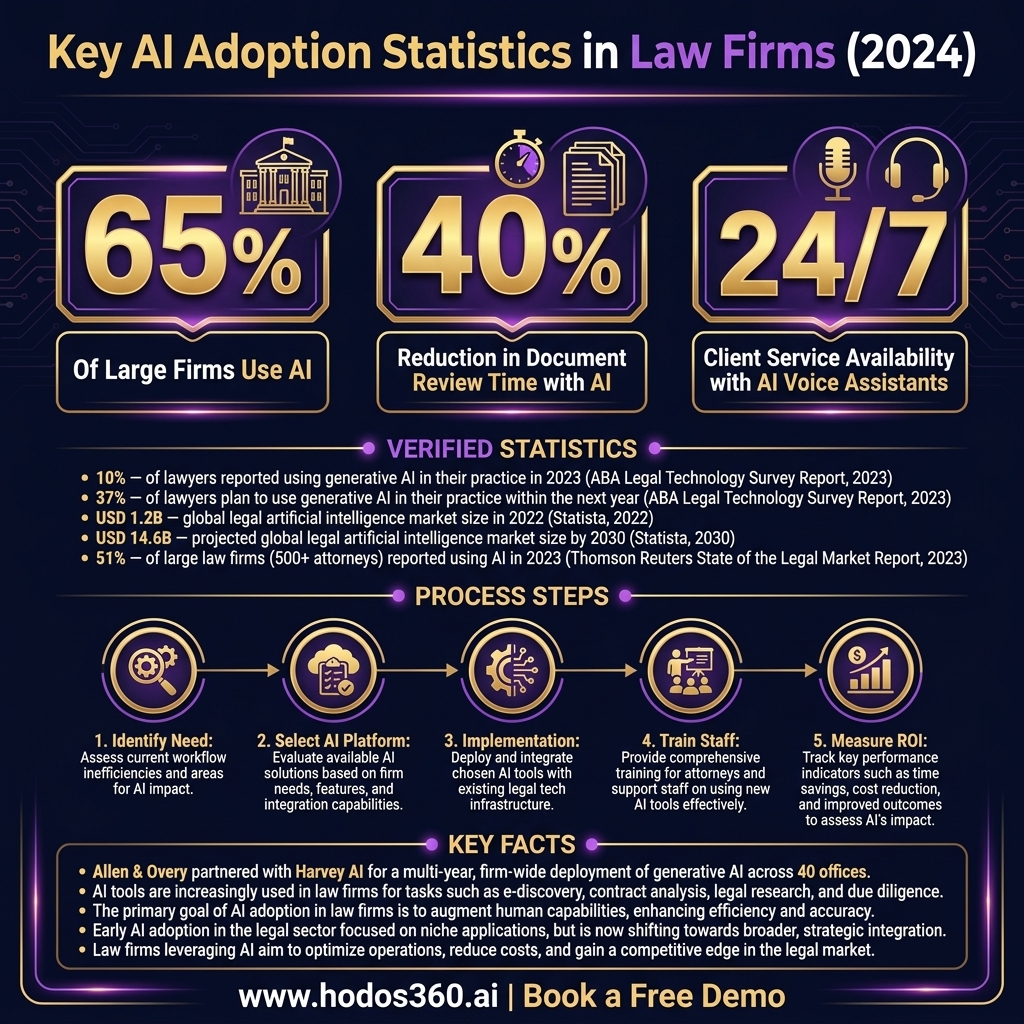
These intelligent assistants can perform initial lead qualification, gathering crucial information about the caller's legal needs, location, and urgency. This pre-screening process saves valuable lawyer time by ensuring that only genuinely qualified leads are routed to attorneys, allowing them to focus on substantive legal work rather than administrative triage.
Moreover, the ability of AI voice assistants to provide multilingual support significantly expands a firm's reach, catering to a diverse client base without the overhead of hiring multiple language-specific staff. Learn more about AI Marketing Mastery: Essential Strategies for Law Firms. This is a game-changer for accessibility and market penetration.
The benefits extend beyond simple answering services. AI voice assistants can seamlessly book appointments directly into a firm's calendar, send automated reminders, and even provide basic information about the firm's services or common legal procedures. This not only enhances client satisfaction through instant service but also optimizes the firm's operational efficiency.
Imagine a scenario where a potential client calls at 2 AM with an urgent query; an AI assistant can capture their details, schedule an appointment for the next business day, and even provide preliminary information, all without human intervention. This capability is not just about convenience; it's about creating a seamless, professional, and highly responsive client experience that distinguishes a firm in a crowded market.
Firms that have bought into this technology are seeing a marked improvement in lead capture rates and client satisfaction scores, proving the worth of this innovative approach.
AI-Powered Website Building and Digital Presence
A strong digital presence is non-negotiable for modern law firms, and AI is now instrumental in building and optimizing this foundation. AI-powered website building platforms can rapidly generate professional, responsive designs tailored to a firm's specific brand and practice areas. These tools leverage machine learning to analyze design trends, user experience best practices, and even competitor websites to suggest optimal layouts and content structures.
More importantly, AI is crucial for SEO optimization. It can analyze search query data, identify high-value keywords, and even suggest content improvements to improve a firm's ranking on search engines. This ensures that when potential clients search for legal services, your firm appears prominently. The goal is to build high-converting templates that not only look good but also effectively guide visitors towards desired actions, such as booking a consultation or downloading a resource.
This comprehensive approach to digital presence, from design to discoverability, is vital for client acquisition in the digital age.
Navigating Ethical AI Adoption and Data Security in Legal Practice
While the benefits of law firms AI are undeniable, its adoption comes with significant ethical and security considerations that cannot be overlooked. The legal profession is bound by strict rules of confidentiality, competence, and professional responsibility. As firms integrate AI, they must critically assess potential risks.
For example, ABA Model Rule 1.1 (Competence) requires lawyers to keep abreast of changes in the law and its practice, including the benefits and risks associated with relevant technology. This means understanding how AI tools work, their limitations, and ensuring that their use does not compromise client data or lead to inaccurate legal advice.
A firm must implement robust internal protocols for vetting AI tools, training staff on their appropriate use, and maintaining human oversight over AI-generated outputs. The risk isn't just about AI making errors; it's about lawyers relying on AI without proper verification, potentially leading to breaches of duty.
Data security is another paramount concern. AI systems often require access to vast amounts of sensitive client information to function effectively. Firms must ensure that any AI company or platform they partner with adheres to the highest standards of data encryption, privacy, and compliance with regulations like GDPR or CCPA.
Breaches of client confidentiality, even if accidental, can have devastating consequences for a firm's reputation and lead to severe disciplinary actions. The EU AI Act, expected to be fully enforced in the coming years, provides a comprehensive framework for regulating AI, particularly high-risk systems, and highlights the global trend towards stricter oversight.
Firms must proactively develop comprehensive data governance strategies, conduct regular security audits, and ensure that their AI tools are not merely efficient but also ethically sound and secure. This diligence is not merely a best practice; it is a professional imperative to safeguard client trust and uphold the integrity of the legal profession.
As firms embark on their AI journey, this ethical backbone is non-negotiable.

Key Takeaways and Next Steps for Law Firms
The conversation around law firms AI has decisively shifted from theoretical potential to practical application. The leading firms aren't just talking; they're strategically implementing AI across their operations, from intricate case management and document automation to sophisticated marketing and client engagement. The lesson from firms like Allen & Overy and Linklaters is clear: successful AI adoption is not about a single, revolutionary tool, but about a holistic integration that augments human capability, streamlines workflows, and delivers measurable value.
This transformation isn't an option but a strategic imperative for any firm aiming to remain competitive and relevant in an evolving legal market. The competitive advantage belongs to those who embrace this technological evolution with a clear vision and responsible implementation.
For law firms looking to move beyond the hype and into tangible AI benefits, the path involves assessing current operational bottlenecks, identifying areas where AI can deliver the most immediate impact, and investing in robust, secure solutions.
This includes leveraging platforms that offer comprehensive AI-powered legal workflows, intelligent client intake, and advanced marketing automation. The focus should always be on enhancing lawyer productivity, improving client service, and ensuring ethical compliance. By strategically adopting AI, firms can unlock unprecedented efficiencies, elevate their service delivery, and position themselves for sustained growth in the digital age.
It's about building a future-ready practice that thrives on innovation and client-centricity. Discover how HODOS 360 can empower your firm to navigate this transformation successfully.
Frequently Asked Questions
What specific areas within a law firm can AI impact most significantly?+
AI can significantly impact several key areas: case management (automating tasks, document review), client intake (lead qualification, appointment booking), marketing (content generation, social media automation), and legal research (faster information retrieval, predictive analytics). These applications streamline operations, reduce administrative burden, and enhance client interaction, freeing up lawyers for high-value work.
How can AI help law firms improve client acquisition and retention?+
AI marketing platforms enable personalized outreach, targeted content generation, and social media automation, attracting new clients more effectively. For retention, AI voice assistants provide 24/7 client support and appointment booking, improving responsiveness and satisfaction. AI also helps track marketing ROI, optimizing spend for better client acquisition and retention strategies.
What are the ethical considerations for law firms adopting AI?+
Ethical considerations include maintaining attorney competence (understanding AI's limitations), preserving client confidentiality (robust data security), and ensuring proper supervision of AI-generated outputs. Firms must vet AI tools, train staff, and comply with evolving data privacy regulations and professional conduct rules like ABA Model Rule 1.1 to uphold client trust and professional integrity.
Is AI primarily for large law firms, or can smaller practices benefit?+
While large firms have greater resources, AI benefits are increasingly accessible to smaller practices and solo attorneys. Cloud-based AI solutions and platforms offer scalable tools for document automation, client intake, and marketing, leveling the playing field. These tools help smaller firms compete by boosting efficiency and client service without requiring extensive IT infrastructure.
How does AI contribute to a law firm's overall efficiency and profitability?+
AI enhances efficiency by automating repetitive tasks like document review, data entry, and scheduling, significantly reducing time and operational costs. This allows lawyers to focus on higher-value, billable work, directly increasing profitability. AI also improves accuracy, reduces human error, and provides data-driven insights for strategic decision-making, leading to better outcomes and resource allocation.