


AI Marketing Compliance: An Essential Guide for Law Firms
In a competitive legal landscape where digital presence is paramount, law firms are increasingly turning to Artificial Intelligence to revolutionize their marketing strategies. From generating compelling website copy and social media posts to automating email campaigns and personalizing client outreach, AI offers powerful tools to enhance visibility and attract new business. Just last week, the legal tech world buzzed with news of Blee, an AI-first marketing compliance platform, securing a substantial $20 million Series A funding round. This significant investment, led by Fin Capital and SMBC, underscores a critical emerging tension: the unparalleled speed and scale of AI-driven content generation meeting the stringent, often slow-to-adapt, regulatory requirements of highly regulated industries like legal and finance. For law firms, this isn't just a fintech story; it's a stark reminder that while AI promises efficiency and innovation, it also demands rigorous oversight and a proactive approach to compliance.
The rapid evolution of AI models, from OpenAI's GPT-4 to Google's Gemini, empowers marketing teams to create content at an unprecedented pace. However, for attorneys, this innovation arrives with a heavy burden of responsibility. The ethical obligations enshrined in the ABA Model Rules of Professional Conduct, coupled with evolving data privacy regulations like the CCPA and GDPR, mean that what's technically possible isn't always legally or ethically permissible. Firms must grapple with questions of accuracy, potential bias, client confidentiality, and the very definition of attorney advertising in an AI-generated world. The stakes are high: a misstep can lead to disciplinary action, reputational damage, and loss of client trust. This article delves into the critical aspects of AI marketing compliance, offering law firms a comprehensive guide to navigating this complex, yet unavoidable, digital frontier. It's about empowering your firm to leverage AI's transformative power without compromising its integrity or professional standing.
As law firms, from ambitious mid-sized practices like Sterling & Associates to global powerhouses such as Latham & Watkins, explore the potential of AI in their marketing departments, the focus must shift from merely adopting the technology to strategically governing its output. The challenge isn't just about understanding the capabilities of AI; it's about embedding robust compliance frameworks and ethical guardrails into every AI-powered workflow. The investment in companies like Blee highlights an industry-wide recognition that technology alone isn't enough; governance is the missing piece. For legal professionals, mastering AI marketing compliance isn't an option; it's an essential component of future-proofing their practice and maintaining public trust. It’s about ensuring that the pursuit of efficiency doesn't inadvertently lead to ethical breaches or regulatory penalties. Firms that proactively address these challenges will not only innovate but also solidify their position as trusted advisors in an increasingly digital world.
The AI Marketing Revolution and Its Regulatory Crossroads
The past few years have witnessed an explosion in AI's application across industries, and the legal sector is no exception. While much attention has been paid to AI's impact on legal research and document review, its transformative potential in marketing and client acquisition is rapidly gaining traction. According to Clio's 2024 Legal Trends Report, a significant percentage of law firms are actively exploring or have already implemented AI tools for various operational aspects, with marketing emerging as a key area of interest due to its direct impact on revenue generation. Firms are using AI for everything from drafting initial blog posts and social media captions to segmenting client lists for targeted email campaigns and even generating personalized video content. This shift is driven by the promise of increased efficiency, cost reduction, and the ability to scale marketing efforts far beyond what traditional human teams could achieve.
However, this rapid adoption has introduced a complex set of regulatory and ethical challenges. The legal profession, by its nature, is heavily regulated, with strict rules governing attorney advertising and client solicitation. ABA Model Rule 7.1, for instance, mandates that "A lawyer shall not make a false or misleading communication about the lawyer or the lawyer’s services." When AI generates content, questions arise about who is ultimately responsible for its accuracy, whether it implies a lawyer’s personal endorsement, and if it inadvertently makes misleading claims. This regulatory crossroads creates a tension between the desire for innovation and the imperative to uphold professional standards. Firms like Allen & Overy, which famously partnered with Harvey AI for internal legal work, are often at the forefront of AI adoption, but even they must carefully delineate between internal process improvements and client-facing communications, where the stakes for compliance are significantly higher.
The challenge is compounded by the 'black box' nature of some advanced AI models, where the exact reasoning behind a generated output can be opaque. Learn more about Legal AI Problem: Mastering Ethical Tech in Law Firms 2026. This lack of transparency makes it difficult for law firms to fully vet and verify every piece of AI-generated marketing content, raising concerns about potential misrepresentations or even unintended biases. Consider a scenario where an AI, trained on vast datasets, generates content that inadvertently favors certain demographics or legal outcomes, thereby violating principles of fairness or even anti-discrimination laws. The responsibility for such an outcome squarely rests with the firm, regardless of the AI's role in its creation. This necessitates a profound shift in how law firms approach content creation, moving from simple oversight to a comprehensive AI content governance strategy that integrates legal and ethical review at every stage of the AI workflow.
The investment in platforms like Blee, which specifically focuses on AI marketing content governance, highlights a growing industry awareness of this regulatory tightrope. While Blee primarily targets the financial services sector, its underlying mission—to help compliance teams govern AI-generated marketing content—is directly applicable to law firms. The legal industry often lags behind finance in tech adoption, but the compliance challenges posed by AI are universal. Firms must recognize that the speed of AI content generation demands an equally agile, yet robust, compliance framework. This isn't merely about checking boxes; it's about embedding a culture of ethical AI use from the ground up, ensuring that every piece of marketing material, regardless of its origin, adheres to the highest professional and legal standards.
Navigating Ethical Minefields: AI Content Governance for Law Firms
For law firms, the ethical implications of AI-generated marketing content extend far beyond mere accuracy. The bedrock of the legal profession is trust, built on principles of candor, confidentiality, and professional responsibility. When AI is deployed for client-facing communications, these principles are immediately tested. ABA Model Rule 7.2, which governs advertising, requires that “A lawyer may advertise services through written, recorded or electronic communication, including public media.” However, the commentary emphasizes that such advertising must avoid “unjustified expectations” or “unsubstantiated comparisons.” An AI, lacking human judgment and ethical reasoning, could easily generate content that inadvertently crosses these lines. For example, an AI might create a headline promising a “guaranteed win” or implying superior results based on cherry-picked data, both of which would violate ethical guidelines and potentially deceive prospective clients.
The challenge is particularly acute when considering the nuances of attorney advertising regulations, which vary significantly by state bar. While a generic AI model might produce compelling copy for a consumer product, it lacks the specific legal training to understand the intricate rules governing legal services advertising in California, New York, or Texas. This necessitates human oversight at a level far more stringent than for traditional marketing materials. Law firms need to establish clear protocols for reviewing AI-generated content, not just for grammatical correctness, but for its adherence to specific state bar rules, the avoidance of misleading statements, and the protection of client confidences. This process requires attorneys, not just marketing specialists, to be deeply involved in the content approval workflow, acting as the ultimate ethical gatekeepers.
Furthermore, the use of AI in marketing raises questions about client data and confidentiality. If an AI marketing platform is fed client-specific information to personalize outreach, firms must ensure that such data is anonymized, encrypted, and handled in strict accordance with ethical obligations. Learn more about AI Marketing for Law Firms: Essential Growth Strategies. A breach of client confidentiality, even if unintentional through an AI system, could have devastating consequences for a firm's reputation and lead to severe disciplinary actions. The ethical minefield is not just about what the AI generates, but how it operates within the firm’s broader data ecosystem. Firms must ask: Is the AI vendor’s data security robust enough? Are there clear agreements on data usage and retention? Are we inadvertently creating a vector for data leakage or ethical breaches by integrating these tools without proper diligence?
This is where solutions focusing on AI content governance become indispensable. Firms need systems that can flag potential ethical violations, ensure disclosure where necessary, and provide an auditable trail of content creation and approval. The goal is not to stifle innovation but to channel it responsibly. By implementing robust governance frameworks, law firms can leverage AI's power to reach new clients and communicate their value effectively, all while maintaining the highest standards of professional conduct. It's about empowering marketing teams with advanced tools while simultaneously reinforcing the ethical foundations of the legal profession. Without such safeguards, the allure of AI efficiency could quickly turn into a significant liability, undermining the very trust that defines the attorney-client relationship.
The Imperative of Transparency and Accuracy in AI-Generated Content
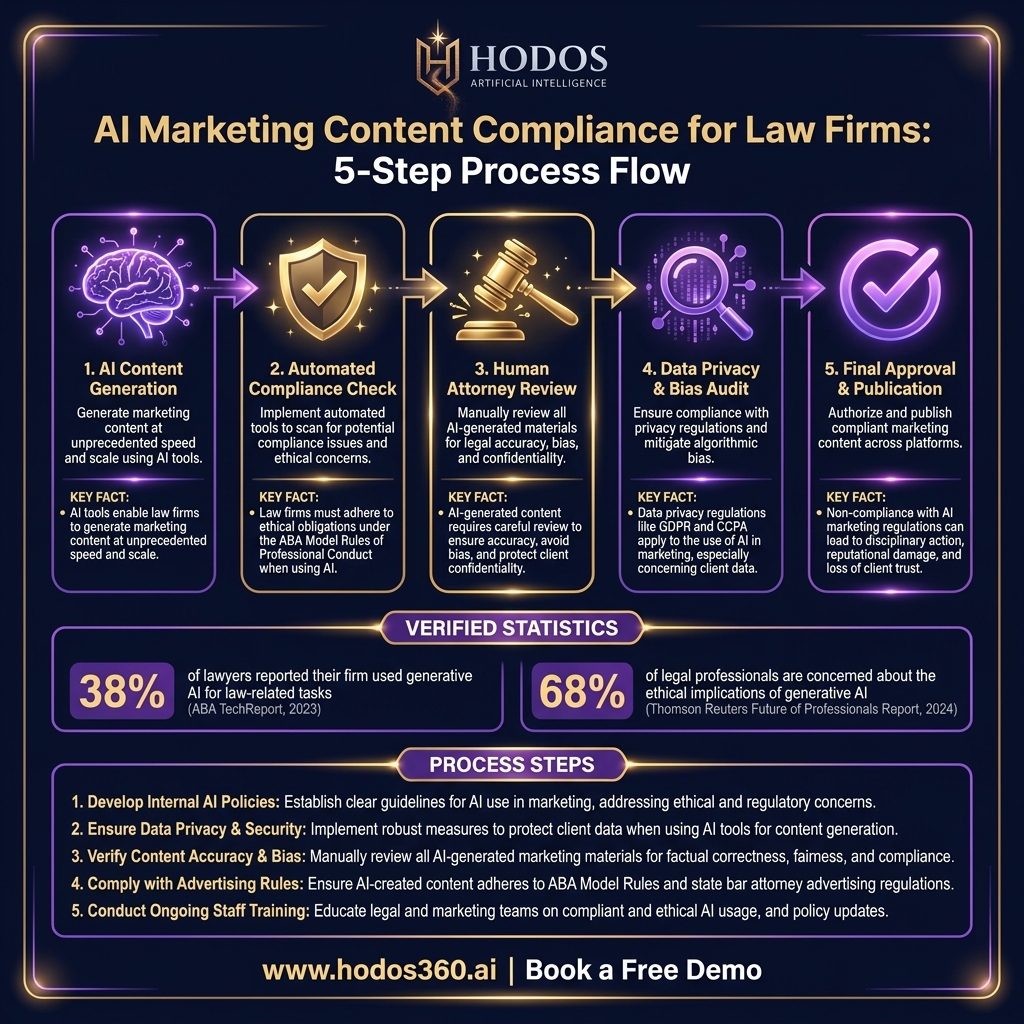
Transparency and accuracy are non-negotiable in legal marketing. For AI-generated content, this means ensuring that every claim, statistic, or implied outcome is verifiable and not misleading. The Federal Trade Commission (FTC) has long-standing guidelines against deceptive advertising, and these principles apply equally, if not more stringently, to AI-powered campaigns. An AI might inadvertently 'hallucinate' facts or create persuasive but unfounded narratives, which, if published by a law firm, could constitute deceptive practices. Firms must implement stringent fact-checking protocols, perhaps even using a separate AI for verification, before any content goes live. Learn more about Client Pressure: The Ultimate Driver of Law Firm AI Investment. This is particularly crucial for claims related to case outcomes, success rates, or areas of legal expertise. The potential for an AI to generate content that overstates a firm's capabilities or misrepresents legal precedent is a significant risk that demands constant vigilance. Firms must ensure that their AI marketing compliance framework includes robust mechanisms for human review and validation of all factual assertions.
Data Privacy, Bias, and Brand Reputation in AI-Generated Content
Beyond ethical rules, law firms must contend with the significant challenges of data privacy and algorithmic bias when deploying AI for marketing. The legal sector handles some of the most sensitive personal and corporate data, making compliance with regulations like the California Consumer Privacy Act (CCPA) and the General Data Protection Regulation (GDPR) paramount. If an AI marketing platform is used to analyze client data for personalized outreach, firms must ensure that consent is properly obtained, data is anonymized where possible, and strict security measures are in place to prevent breaches. The consequences of a data privacy violation are severe, ranging from hefty fines—as seen with numerous GDPR enforcement actions against tech giants—to irreversible damage to a firm’s brand reputation. A firm like DLA Piper, which advises clients on complex data privacy matters, would face immense scrutiny if its own marketing efforts were found to be non-compliant. This necessitates a comprehensive data governance strategy that extends to all AI tools interacting with client or prospective client data.
Algorithmic bias presents another insidious threat. AI models are trained on vast datasets, and if these datasets reflect societal biases, the AI will perpetuate and even amplify them. In legal marketing, this could manifest in various ways: an AI might inadvertently target or exclude certain demographics, use language that is discriminatory, or create content that reinforces harmful stereotypes about legal issues or client types. For example, an AI designed to identify high-value clients might, due to historical data, disproportionately exclude minority groups, leading to inequitable access to legal services. This not only violates ethical principles but can also expose the firm to legal challenges related to discrimination. The potential for such bias is a significant concern for firms committed to diversity, equity, and inclusion, and it demands proactive measures to audit AI outputs for fairness and representativeness. The repercussions of such bias extend beyond legal penalties, directly impacting a firm's standing in the community and its ability to attract diverse talent and clients.
Furthermore, the sheer volume and speed of AI-generated content can pose a risk to a firm's carefully cultivated brand reputation. Learn more about Legal AI Funding: Essential Strategies for Law Firms. If AI produces content that is inconsistent with the firm's voice, values, or quality standards, it can quickly dilute brand identity. Imagine a prestigious white-shoe firm known for its conservative, authoritative tone suddenly publishing AI-generated social media posts that are overly casual or even sensationalist. This disconnect can confuse audiences, erode credibility, and ultimately undermine the trust clients place in the firm. Maintaining a consistent brand voice and ensuring that all content, regardless of its origin, aligns with the firm's strategic messaging requires dedicated oversight. This is not merely a marketing challenge; it's a strategic imperative for preserving the firm’s most valuable asset: its reputation. Firms must implement robust brand guidelines that AI models are trained to adhere to, with human review as the final safeguard against incongruent content.
Ultimately, addressing data privacy, bias, and brand reputation in AI-generated content requires a multi-faceted approach. It involves rigorous data security protocols, continuous auditing of AI algorithms for bias, and a clear brand strategy that guides AI content creation. Law firms must invest in both technology and talent to manage these risks effectively. This includes legal tech professionals who understand AI ethics and data privacy law, as well as attorneys who can critically evaluate AI output for compliance. The goal is to leverage AI for its efficiency and reach, while meticulously safeguarding the firm's ethical standing, client trust, and long-term brand equity. This proactive stance is what separates leading firms from those who might inadvertently fall prey to the inherent risks of unchecked AI adoption.
Mitigating Algorithmic Bias in Legal Marketing
Mitigating algorithmic bias is crucial for maintaining fairness and avoiding discriminatory practices in legal marketing. Firms must proactively audit the datasets used to train their AI marketing tools, looking for underrepresentation or overrepresentation of specific demographics. This involves regular reviews of AI-generated content for patterns that might suggest bias in targeting, language, or imagery. Collaboration with AI ethicists or specialized consultants can provide external validation and help develop strategies for bias detection and mitigation. Learn more about AI Voice Assistants: The Ultimate Guide for Law Firms. Firms should also consider implementing 'human-in-the-loop' systems where diverse teams review AI outputs for fairness before deployment. This iterative process of review and refinement is essential to ensure that AI marketing efforts are inclusive and do not inadvertently perpetuate societal inequalities or violate anti-discrimination laws. A firm’s commitment to diversity must extend to its AI tools.
Building a Robust AI Marketing Compliance Framework
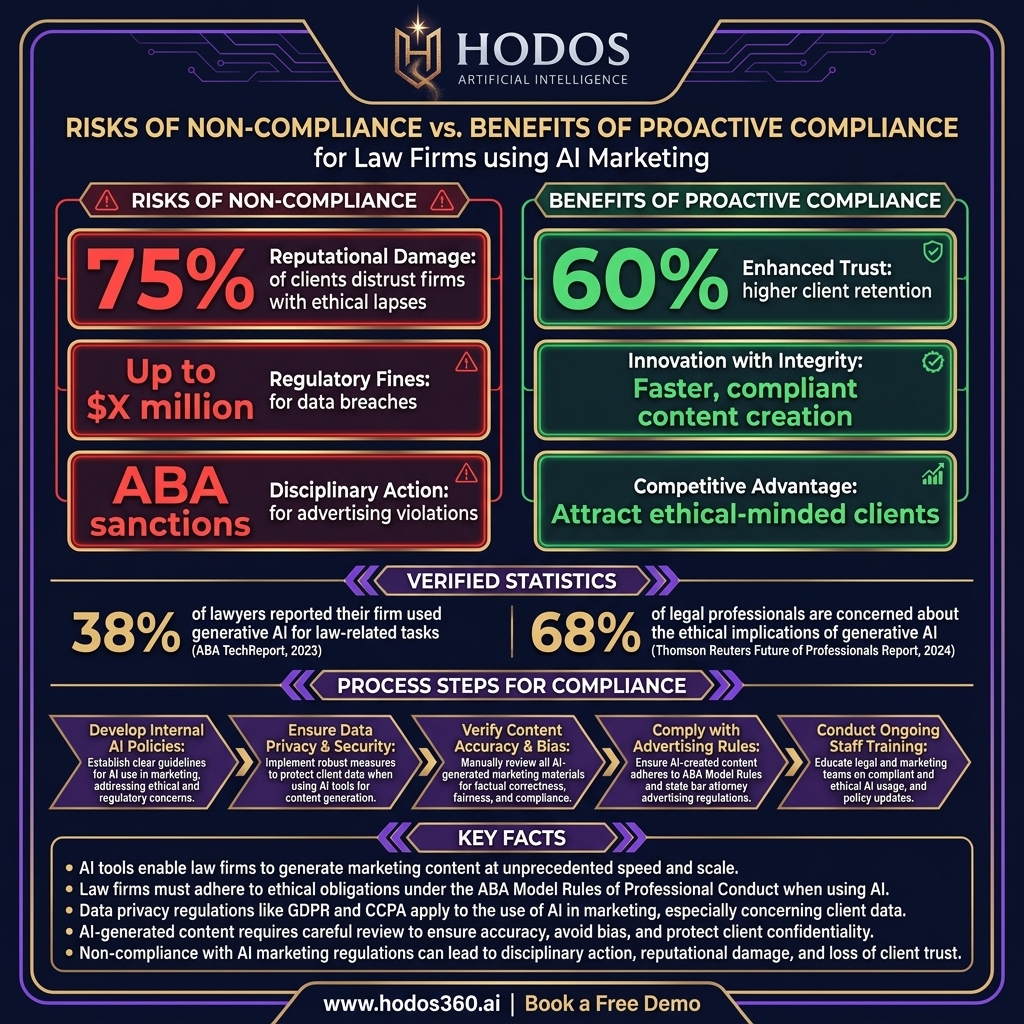
Given the complexities, building a robust AI marketing compliance framework is not merely advisable but essential for law firms. This framework should be comprehensive, integrating technology, policy, and human oversight. It starts with developing clear internal policies that define the acceptable use of AI in marketing, outlining ethical guidelines, data privacy protocols, and content approval workflows. These policies should address everything from the type of content AI can generate to the mandatory human review stages for legal and ethical vetting. Firms should designate a specific compliance team, potentially a cross-functional group of marketing professionals, attorneys, and IT specialists, responsible for overseeing AI marketing initiatives. This team would stay abreast of evolving regulations, conduct regular audits of AI outputs, and provide ongoing training to ensure all personnel understand their responsibilities.
Furthermore, firms must invest in technology solutions that support compliance. This could include platforms like Blee, or integrated systems that offer version control, audit trails, and automated compliance checks for AI-generated content. These tools can help track every piece of content from creation to publication, ensuring that all necessary approvals and revisions are documented. For instance, a sophisticated AI marketing platform might include features that automatically flag certain keywords or phrases that could violate attorney advertising rules, prompting human review before publication. This proactive technological assistance can significantly reduce the risk of non-compliance, allowing firms to leverage AI's speed without sacrificing oversight. The key is to find solutions that streamline the compliance process rather than creating additional administrative burdens.
Training is another critical component. All individuals involved in AI marketing—from the attorneys who conceptualize campaigns to the marketing specialists who operate the AI tools—must receive comprehensive training on ethical AI use, relevant legal regulations (including ABA Model Rules), and the firm’s internal compliance policies. Learn more about AI-Native Law Firms: The Ultimate Guide to Modern Legal Practice. This training should be ongoing, reflecting the rapid changes in both AI technology and legal precedents. Regular workshops, case studies of AI marketing failures, and practical exercises can help embed a culture of compliance. Firms might consider external legal ethics experts or consultants to provide specialized training, ensuring that their team is equipped with the latest knowledge and best practices. A well-informed team is the first line of defense against compliance breaches and a critical asset in maintaining the firm's reputation.
Finally, the framework must include mechanisms for continuous monitoring and adaptation. The AI landscape is evolving at an unprecedented pace, and what is compliant today might not be tomorrow. Firms must establish a system for regularly reviewing their AI marketing policies, assessing the performance of their AI tools, and staying informed about new regulations or ethical guidelines. This proactive approach to regulatory adherence ensures that the firm’s marketing efforts remain agile and compliant in the face of constant change. This includes participating in industry discussions, engaging with bar associations on emerging AI ethics, and collaborating with legal tech providers to influence the development of compliance-focused AI tools. By embracing continuous improvement, firms can future-proof their AI marketing strategies and maintain a competitive edge. HODOS 360, with its comprehensive suite of AI services, including an AI Marketing Platform for content generation and social media automation, and an AI Law Firm Management System with AI-powered legal workflows, is designed to help firms integrate these capabilities while providing the tools necessary for managing and overseeing compliant operations efficiently.
- ✓Develop Clear AI Use Policies: Establish internal guidelines for AI content generation, specifying acceptable use, ethical boundaries, and mandatory review stages.
- ✓Implement Robust Human Oversight: Mandate attorney review for all client-facing AI-generated marketing content to ensure compliance with state bar rules and ethical obligations.
- ✓Prioritize Data Privacy Protocols: Ensure all AI tools handling client or prospective client data adhere to strict privacy regulations (e.g., CCPA, GDPR) through encryption and anonymization.
- ✓Conduct Bias Audits: Regularly audit AI algorithms and content outputs for potential algorithmic bias that could lead to discriminatory practices or misrepresentation.
- ✓Maintain Brand Consistency: Train AI models on your firm's brand voice and style guides, and use human review to ensure all content aligns with brand identity and quality standards.
- ✓Invest in Compliance Technology: Utilize AI-powered platforms that offer compliance checks, audit trails, and version control for marketing content, streamlining oversight.
- ✓Provide Ongoing Training: Educate all marketing and legal personnel on ethical AI use, relevant advertising regulations, and the firm’s specific AI marketing compliance policies.
Leveraging Technology for Proactive Compliance
Leveraging technology for proactive compliance transforms the challenge of AI marketing into a strategic advantage. Modern AI-powered platforms are not just for content creation; they are increasingly incorporating compliance features. This can include real-time checks against regulatory databases, automated flagging of problematic language, and robust audit trails that document every stage of content review and approval. Firms should seek out AI marketing platform solutions that offer these integrated compliance capabilities, allowing them to scale their marketing efforts while embedding safeguards directly into their workflows. Such tools reduce manual compliance burdens, minimize human error, and provide irrefutable evidence of adherence to ethical and legal standards, which is invaluable during audits or disciplinary inquiries. This shift towards tech-enabled compliance ensures that innovation and integrity can coexist seamlessly.

Key Takeaways and Future-Proofing Your Firm's Digital Presence
The advent of AI in legal marketing marks a pivotal moment, offering unprecedented opportunities for efficiency and outreach, yet simultaneously introducing complex ethical and regulatory challenges. As the Blee funding round highlights, the industry is rapidly recognizing the critical need for robust AI marketing compliance frameworks. For law firms, this isn't a peripheral concern but a central pillar of their digital strategy. Embracing AI without a clear governance plan is akin to navigating a minefield blindfolded; the potential for reputational damage, disciplinary action, and erosion of client trust is simply too high. The imperative is clear: firms must proactively develop comprehensive policies, invest in appropriate technology, and foster a culture of ethical AI use.
Firms that succeed in this new era will be those that view AI content governance not as a barrier to innovation, but as its essential enabler. They will implement rigorous human oversight, prioritize data privacy, actively mitigate algorithmic bias, and ensure that every piece of AI-generated marketing content aligns with their professional obligations and brand values. This strategic approach will not only allow them to harness AI's full potential but also to solidify their standing as trusted, forward-thinking legal advisors. The legal profession, traditionally cautious about technological adoption, now has an opportunity to lead by example in responsible AI implementation. By integrating advanced tools, firms can enhance their marketing reach and impact, while upholding the highest standards of integrity and regulatory adherence.
Ultimately, future-proofing your firm's digital presence means more than just adopting the latest AI tools; it means mastering the art of governing them responsibly. It's about building a resilient framework that allows your firm to innovate with confidence, ensuring that your marketing efforts are not only effective but also ethically sound and legally compliant. By taking these proactive steps, law firms can navigate the complexities of AI marketing, protect their brand reputation, and continue to thrive in an increasingly digital world. Consider exploring integrated platforms that offer comprehensive solutions for legal operations and marketing, allowing for seamless management and compliance across all your firm's digital endeavors.
Frequently Asked Questions
Why is AI marketing compliance particularly important for law firms?+
Law firms operate under strict ethical guidelines, such as the ABA Model Rules of Professional Conduct, governing attorney advertising and client solicitation. AI-generated content can inadvertently violate these rules, leading to disciplinary action or reputational harm. Additionally, firms handle sensitive client data, making data privacy compliance crucial for all AI marketing activities. The stakes are higher due to the trust-based nature of the legal profession.
What are the main ethical concerns with AI in legal marketing?+
Key ethical concerns include the potential for AI to generate misleading or unsubstantiated claims, create content that implies unjustified expectations, or inadvertently disclose client confidential information. Algorithmic bias is also a significant concern, as AI could unintentionally discriminate or perpetuate stereotypes. Maintaining transparency and accuracy in all communications remains paramount.
How can law firms mitigate algorithmic bias in AI marketing content?+
Mitigating algorithmic bias involves proactively auditing AI training datasets for fairness and representativeness. Firms should implement 'human-in-the-loop' review processes where diverse teams assess AI-generated content for bias before publication. Regularly reviewing AI outputs for patterns that suggest discrimination in targeting or language is also essential. Collaboration with AI ethicists can further enhance bias detection and mitigation strategies.
What role do internal policies play in AI marketing compliance?+
Internal policies are the foundation of a robust AI marketing compliance framework. They define acceptable AI use, ethical boundaries, data privacy protocols, and mandatory content approval workflows. These policies ensure consistency, clarify responsibilities, and provide a clear roadmap for all personnel involved in AI marketing. Regular updates and comprehensive training on these policies are crucial for effectiveness.
How can technology assist with AI marketing compliance for law firms?+
Technology, such as AI-powered compliance platforms or integrated marketing systems, can automate compliance checks, flag problematic content, and maintain audit trails of content creation and approval. These tools streamline oversight, reduce manual errors, and provide verifiable documentation of compliance efforts. They enable firms to scale AI marketing efforts while embedding safeguards directly into their digital workflows, ensuring both efficiency and integrity.