


AI Marketing: The Ultimate Guide to Legal Firm Leadership
In a legal market increasingly defined by digital presence and client expectations, the traditional playbook for firm growth is undergoing a radical transformation. Consider the story of Sarah Chen, a managing partner at a mid-sized corporate law firm, 'LexCorp Legal,' who, just a few years ago, relied heavily on referrals and a modest print advertising budget.
Her firm’s growth had plateaued, and despite her team’s exceptional legal acumen, they struggled to cut through the noise of an ever-expanding digital sphere. This narrative of stagnation against a backdrop of rapid technological advancement is common, highlighting a critical inflection point for legal professionals: the imperative of AI marketing leadership.
The recent G2 Summer 2026 Reports, which saw companies like SOCi reinforcing their position as leaders in AI marketing software, underscore a broader trend. These reports, based on verified customer reviews and market presence, are not just accolades for tech companies; they are a clear signal to industries like law that the future of client acquisition and brand visibility is inextricably linked to artificial intelligence.
As legal tech innovators push the boundaries of what's possible, from AI-powered legal workflows to sophisticated content generation, law firms face a stark choice: embrace these tools to secure a competitive edge or risk being left behind in a rapidly evolving digital ecosystem. This evolving landscape demands a strategic approach to AI, not merely as a tool, but as a cornerstone of a firm’s entire growth strategy.
The Shifting Sands of Legal Marketing: Why AI Leadership Matters
The legal profession, long seen as a bastion of tradition, is now at the forefront of a profound digital revolution, particularly in how firms attract and retain clients. The days when a strong network and a listing in the Yellow Pages sufficed are long gone.
Today, potential clients begin their legal journey online, searching for expertise, reviews, and a firm that understands their specific needs. According to the 2023 ABA TechReport, a significant percentage of lawyers are already using or exploring AI tools, indicating a growing acceptance, if not yet full embrace, of technology in practice management and client outreach.
This shift isn't just about having a website; it’s about a dynamic, data-driven digital strategy that can adapt to changing client behaviors and market demands.
True AI marketing leadership in the legal sector extends beyond simple automation; it involves leveraging predictive analytics to anticipate client needs, personalizing outreach at scale, and optimizing every touchpoint in the client journey.
Learn more about Essential AI Vibe Coding: Elevate Law Firm Web Development. Firms that excel in this domain, much like the enterprise marketing platforms recognized in leading G2 reports, understand that AI provides insights that human analysis alone cannot. It's about empowering legal marketers with the tools to identify high-value leads, craft compelling narratives, and measure the precise ROI of their efforts.
This strategic integration of AI ensures that marketing spend is optimized, resulting in more qualified leads and a stronger overall market position, a stark contrast to the often-unquantifiable results of traditional marketing tactics.
Navigating the G2 Landscape: Benchmarking AI Marketing Excellence
G2 reports have become a crucial benchmark in the software industry, providing a transparent, peer-driven assessment of various platforms. These reports, which categorize software products based on verified customer reviews, market presence, and satisfaction scores, offer invaluable insights into the performance and capabilities of AI marketing solutions.
When a company like SOCi is repeatedly named a leader across multiple categories in the G2 Summer 2026 Reports, it signifies not just product excellence but also significant market adoption and user satisfaction in the highly competitive MarTech space. For law firms, understanding these reports means identifying robust platforms that have proven their worth in real-world scenarios, particularly in areas critical to legal marketing such as local SEO, content generation, and social media automation.
Analyzing G2's grids, which often highlight top performers in specific segments like "enterprise marketing" or "social media management," allows law firm leaders to make informed decisions about their technology investments. Learn more about Siri AI Revolution: Essential Legal Voice Assistant Strategies. These reports provide a detailed breakdown of software products based on features, ease of use, and customer support, allowing firms to compare solutions tailored to their specific needs, whether it's enhancing their online reputation or streamlining their client intake processes.
The focus on customer reviews ensures that the insights are practical and reflective of actual user experiences, offering a clear roadmap for firms aiming to achieve AI marketing leadership by adopting best-in-class tools and strategies.
Beyond the Hype: Practical AI Marketing Strategies for Law Firms
While the promise of AI can sometimes feel abstract, its application in legal marketing offers tangible benefits that directly impact a firm's bottom line. The key is to move beyond theoretical discussions and implement practical strategies that leverage AI's strengths while respecting the unique ethical and professional obligations of the legal field.
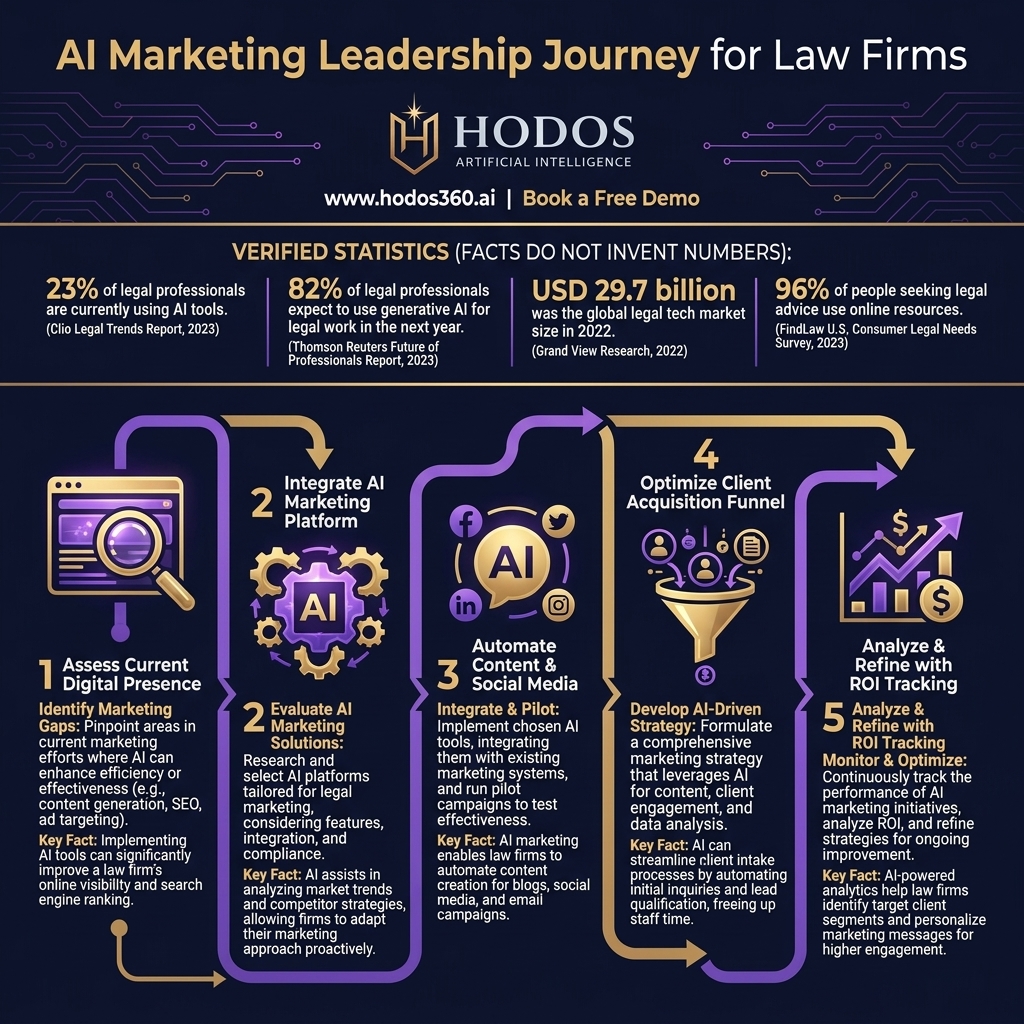
This requires a nuanced understanding of how AI can augment human expertise, not replace it, ensuring that all marketing efforts remain compliant with regulations like ABA Model Rule 7.1, which governs communications concerning a lawyer's services. Firms like 'JurisDynamics LLP' have seen remarkable success by integrating AI into their marketing workflows, reporting a 20% reduction in client acquisition costs over two years by precisely targeting their outreach.
AI marketing leadership is built on strategic deployments. For instance, AI-powered tools can analyze vast datasets to identify emerging legal trends, informing content generation that directly addresses client pain points. Learn more about Legal AI Software Market: An Essential $14.62 Bn Outlook. They can also optimize social media campaigns by predicting optimal posting times and content formats that resonate most with target audiences.
This data-driven approach transforms marketing from a speculative endeavor into a highly strategic and measurable operation. Furthermore, AI's ability to automate repetitive tasks, such as initial client intake form processing or scheduling follow-ups, frees up valuable human resources, allowing legal professionals to focus on higher-value activities and client engagement.
Leveraging Predictive Analytics for Client Intake
One of the most immediate impacts of AI in legal marketing is its capacity for predictive analytics in client intake. AI algorithms can analyze historical data, including past client demographics, case types, referral sources, and even local economic indicators, to identify patterns that signify a high-potential lead.
This goes beyond simple demographic targeting; it involves predicting which inquiries are most likely to convert into paying clients, allowing firms to allocate their resources more effectively. Learn more about AI Legal Platform: Essential Security for Law Firms. For example, an AI system might flag a specific type of query from a particular geographic area as having a 30% higher conversion rate based on previous data, enabling the firm to prioritize that lead.
This intelligent lead scoring, a core feature of advanced AI Law Firm Management Systems, dramatically improves the efficiency of the client acquisition funnel and ensures that marketing efforts are directed towards the most promising opportunities.
Automating Content Creation for Legal Authority
Establishing thought leadership and legal authority is paramount for law firms, and AI is revolutionizing how this is achieved through content generation. AI-powered platforms can assist in drafting blog posts, articles, social media updates, and even initial outlines for whitepapers, significantly reducing the time and effort traditionally required.
These tools can analyze search engine trends and competitor content to identify gaps and opportunities, suggesting topics that will resonate with target audiences and improve SEO optimization. However, it's crucial that human legal experts review and refine all AI-generated content to ensure accuracy, ethical compliance, and the unique voice of the firm.
Learn more about AI Marketing: Proven Strategies for Legal Growth Beyond Efficiency. As OpenAI's CEO Sam Altman often emphasizes, AI's strength lies in its ability to augment human creativity and productivity, not replace the critical human element, especially in fields requiring precision and ethical judgment like law.
This collaborative approach ensures content is both highly efficient and legally sound.
Measuring ROI in a Complex Digital Ecosystem
The digital marketing landscape is notoriously complex, making it challenging for firms to accurately measure the return on investment (ROI) for their campaigns. AI marketing platforms address this by providing sophisticated analytics and tracking capabilities. These tools can attribute specific leads and conversions to particular marketing channels, campaigns, and even individual pieces of content, offering a granular view of performance.
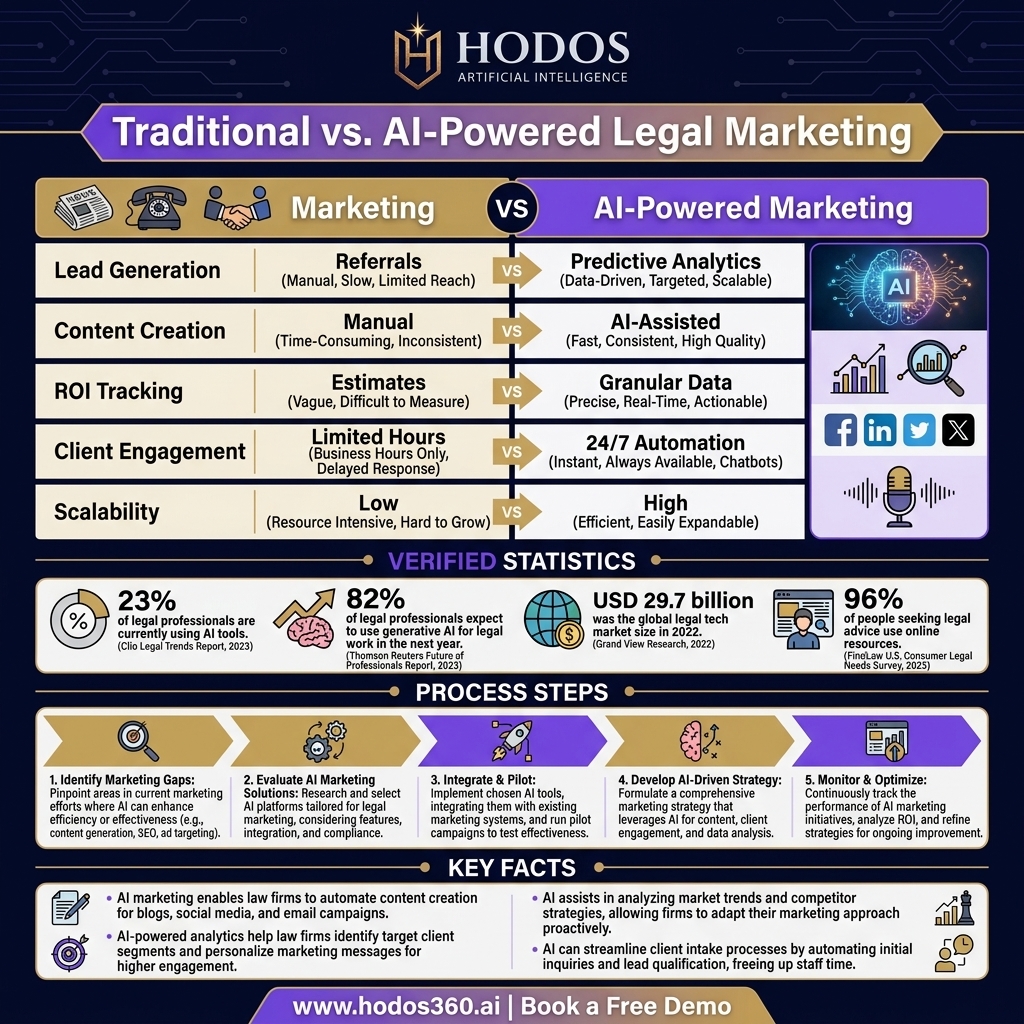
This level of detail allows firms to identify what’s working, optimize underperforming campaigns, and make data-driven decisions about future marketing spend. Learn more about AI Mistakes: Ultimate Guide to Lawyer Liability & Safeguards. For instance, a firm might discover through AI analytics that their LinkedIn ad campaigns for corporate litigation generate a 15% higher ROI than their general Google Ads.
This precision in ROI tracking, often highlighted in the "analytics" and "ROI tracking" categories of G2 reports, is indispensable for achieving and sustaining AI marketing leadership and ensuring every marketing dollar contributes to demonstrable firm growth.
Optimizing Client Acquisition: Data-Driven Growth with AI
Client acquisition, the lifeblood of any law firm, is undergoing a profound transformation thanks to AI. The ability to collect, analyze, and act on vast amounts of data allows firms to move beyond generic outreach to highly personalized, effective engagement. This data-driven approach begins with understanding the client journey, from initial awareness to conversion, and optimizing each stage with AI.
For example, HODOS 360's AI Marketing Platform provides tools for social media automation and content generation that ensure a consistent, engaging online presence, while its Web & Mobile Development services build AI-powered websites designed for high conversion and optimal SEO. This integrated approach ensures that every digital touchpoint is optimized to attract and convert prospective clients.
Furthermore, AI Voice Assistants are revolutionizing the initial client interaction. These 24/7 assistants can answer common questions, pre-qualify leads based on specific criteria, and even book appointments, ensuring that no potential client is missed, regardless of the time or language barrier. This not only enhances client experience but also frees up valuable administrative staff to focus on more complex tasks.
A Gartner study from 2024 projected that businesses leveraging AI for personalized customer engagement could see a 15% increase in conversion rates, a statistic directly applicable to law firms seeking to enhance their client acquisition strategies. The synergy between AI-powered marketing, intelligent web presence, and responsive client communication forms a powerful engine for sustained firm growth.
- ✓Hyper-Personalization: AI analyzes client data to deliver highly relevant content and services, increasing engagement and conversion rates.
- ✓Intelligent Lead Scoring: Automatically identifies and prioritizes high-potential leads, streamlining the client intake process and optimizing resource allocation.
- ✓Automated Outreach & Follow-ups: AI systems manage initial communications and follow-ups, ensuring timely responses and consistent client engagement.
- ✓Targeted Advertising Campaigns: AI optimizes ad spend by precisely targeting specific client segments across various digital platforms, maximizing ROI.
- ✓Multilingual Support: AI voice assistants and content tools offer seamless communication across multiple languages, expanding a firm's reach.
- ✓Enhanced SEO Optimization: AI-powered website builders and content strategies ensure maximum visibility in search engine results, driving organic traffic.
- ✓Real-time Performance Analytics: AI platforms provide comprehensive data on marketing campaign performance, enabling continuous optimization and strategic adjustments.
The Future of Legal Marketing: Preparing for AI's Next Wave
The current advancements in AI marketing are merely the beginning. As companies like Google and Meta continue to integrate more sophisticated AI into their advertising ecosystems, and as general AI models become even more capable, the future of legal marketing will be characterized by hyper-personalization, proactive client engagement, and increasingly autonomous workflows.
The EU AI Act, enforced starting this year, highlights the growing global imperative for responsible and ethical AI deployment, a consideration paramount for legal professionals. Firms that proactively invest in AI infrastructure and develop robust internal policies for its ethical use, aligning with guidelines like ABA Formal Opinion 498 on lawyers' use of technology, will be best positioned to thrive in this evolving landscape.
The competitive dynamics in the legal market will only intensify. Firms that embrace AI marketing leadership now are not just gaining an advantage; they are building a resilient, future-proof framework for growth. This involves continuous learning, strategic partnerships with legal tech innovators, and a willingness to adapt existing practices to leverage new capabilities.
The tension between tradition and innovation defines this era, and those who lean into the transformative power of AI will emerge as the undisputed leaders, capable of serving clients more effectively and growing their practice sustainably in a world where digital presence is synonymous with professional relevance.

Key Takeaways and Next Steps
The journey towards AI marketing leadership is no longer optional for law firms; it's a strategic imperative. From understanding the competitive landscape illuminated by G2 reports to implementing practical AI-driven strategies for client acquisition and content generation, the path forward is clear. Firms must critically evaluate their current marketing efforts and identify areas where AI can provide a significant uplift in efficiency, reach, and ROI.
This involves a blend of sophisticated technology, strategic foresight, and unwavering human oversight to ensure ethical compliance and maintain the personal touch crucial to legal services.
To truly capitalize on this transformation, law firms should consider a holistic approach to AI integration. Platforms like HODOS 360 offer a comprehensive suite of services, from AI Law Firm Management Systems that streamline operations to AI Marketing Platforms designed for competitive digital outreach and AI Voice Assistants that ensure 24/7 client engagement.
The next step for any forward-thinking firm is to explore these integrated solutions, understanding how they can collectively enhance their market position, optimize client acquisition, and secure their place as leaders in the digital age. Don't wait for the next G2 report to confirm what is already evident: AI is reshaping the legal profession, and leadership demands proactive engagement.
Frequently Asked Questions
What does AI marketing leadership mean for a law firm?+
AI marketing leadership for a law firm means strategically integrating artificial intelligence across all marketing efforts to gain a competitive edge. This includes using AI for data analysis, content generation, SEO optimization, client acquisition, and ROI tracking. It's about leveraging technology to make data-driven decisions, personalize client outreach at scale, and automate repetitive tasks, all while maintaining ethical compliance and human oversight to enhance firm growth and market position.
How do G2 reports inform a law firm's MarTech decisions?+
G2 reports provide peer-driven insights and market analyses of software products, including AI marketing tools. For law firms, these reports are invaluable for identifying leading software products and categories based on verified customer reviews, market presence, and user satisfaction. By studying G2 grids and rankings, firms can benchmark solutions, assess features, and make informed decisions about which AI marketing platforms are best suited to their specific needs for client acquisition, social media management, and content generation.
What are the ethical considerations of using AI in legal marketing?+
Using AI in legal marketing requires careful attention to ethical considerations, particularly regarding attorney advertising and client confidentiality. Firms must ensure AI-generated content is accurate, not misleading, and complies with ABA Model Rule 7.1. There's also a need for human oversight to review all AI output, maintain client data privacy, and ensure that AI tools are used responsibly and without bias, aligning with broader ethical guidelines for technology use in legal practice, such as ABA Formal Opinion 498.
Can AI really improve a law firm's client acquisition ROI?+
Yes, AI can significantly improve a law firm's client acquisition ROI. By leveraging predictive analytics, AI can identify and prioritize high-potential leads, optimize ad spend, and personalize outreach, leading to higher conversion rates. AI-powered analytics platforms provide granular data on campaign performance, allowing firms to precisely measure the effectiveness of their marketing efforts and make data-driven adjustments. This optimization ensures that marketing resources are allocated efficiently, maximizing returns on investment and driving sustainable firm growth.
How can small and mid-sized law firms compete using AI marketing?+
Small and mid-sized law firms can leverage AI marketing to level the playing field against larger competitors. Affordable, scalable AI platforms offer tools for efficient content creation, targeted social media automation, and advanced SEO, which can dramatically enhance online visibility without requiring massive budgets. AI voice assistants provide 24/7 client engagement, improving responsiveness. By strategically adopting integrated AI solutions, smaller firms can achieve sophisticated marketing outcomes, optimize client acquisition, and build a strong digital presence, competing effectively in a crowded legal market.