


AI Patent Tools: The Ultimate Guide for IP Lawyers
In early 2026, a quiet revolution began to ripple through the intellectual property landscape, culminating in what Law360 recently dubbed 'The Next Legal AI Boom' in IP and patent tools. This isn't merely an incremental update; it's a fundamental re-architecture of how IP law is practiced. Consider the story of Sarah Chen, a partner at a mid-sized IP boutique in Silicon Valley. For years, her firm struggled with the sheer volume of prior art searches, often dedicating junior associates weeks to manually comb through databases. The process was slow, expensive, and prone to human error, directly impacting their ability to file robust patent applications and advise clients strategically. Chen, an early adopter of legal technology, recognized the impending shift, but even she was initially skeptical of AI's practical application beyond simple document review.
The turning point came after witnessing a demonstration of a new generation of AI patent tools at LegalTech NYC 2026, where companies like LexisNexis IP and Clarivate showcased their advanced platforms alongside innovative startups like Solve Intelligence, which recently secured a $40M Series B funding round to expand its AI-driven IP solutions. Chen realized that these weren't just glorified search engines; they were sophisticated analytical engines capable of semantic understanding, predictive modeling, and automated drafting. This boom signifies a profound shift from AI as a supplementary assistant to an indispensable strategic partner, pushing firms to adapt or risk falling behind. The integration of these advanced artificial intelligence tools is rapidly becoming a non-negotiable for any IP lawyer aiming to maintain a competitive edge and deliver superior client outcomes in an increasingly complex global market.
The Dawn of AI Patent Tools: A New Era for Intellectual Property
The emergence of sophisticated AI patent tools marks a pivotal moment for intellectual property law, transforming what was once a labor-intensive, often tedious process into a streamlined, insight-driven practice. This shift is not theoretical; it's happening now, driven by advancements in natural language processing (NLP) and machine learning. Firms that embrace these innovations are finding themselves at a significant advantage, while those clinging to traditional methods face mounting pressure. Data from a 2025 Thomson Reuters report indicated that law firms leveraging AI for IP tasks saw, on average, a 30% increase in efficiency for repetitive processes, alongside a marked improvement in the accuracy of their patent analyses. This competitive dynamic is creating a clear divide: firms like Landfall IP, an AI-native patent law firm, are demonstrating how a fully integrated AI strategy can deliver faster, more comprehensive results, often at a lower cost, putting pressure on established players to rethink their operational models.
This new era is characterized by an escalating market competition, fueled by rapid innovation from both established legal tech giants and agile startups. Learn more about AI Operational Intelligence: The Essential Shift for Law Firms. Companies like OpenAI and Anthropic are pushing the boundaries of generative AI, and these foundational models are quickly being adapted for specialized legal applications. The challenge for IP lawyers is no longer just understanding patent law but also discerning which AI patent tools offer genuine value and how to integrate them effectively into their existing legal practice. The initial human conflict between disruption and tradition is slowly giving way to a recognition that AI is not here to replace the lawyer but to augment their capabilities, freeing them from mundane administrative tasks to focus on higher-value strategic work. This evolution demands a new skillset from legal professionals, emphasizing technological literacy and critical evaluation of AI-generated insights.
Revolutionizing Prior Art Search and Analysis
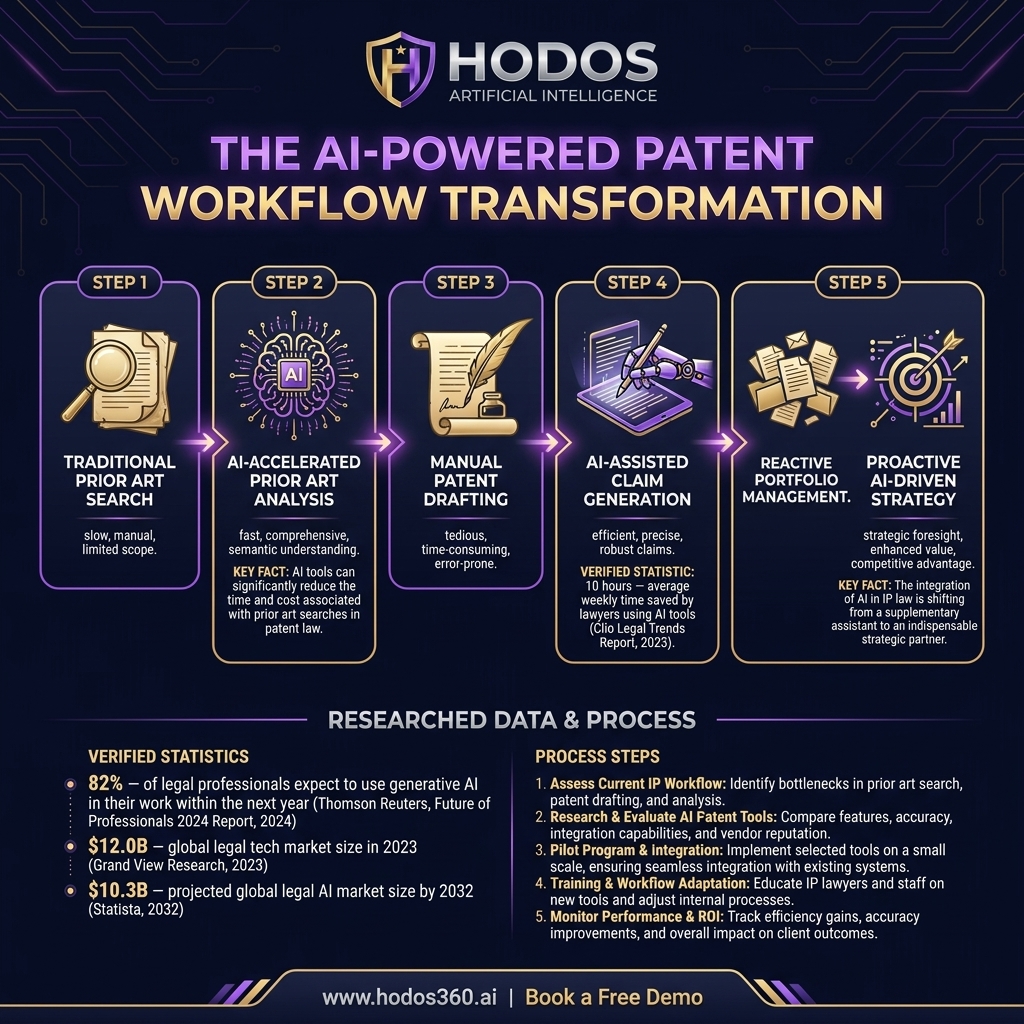
Perhaps the most immediate and profound impact of AI patent tools is seen in prior art search and analysis. Historically, this critical task involved painstaking manual review of vast databases, often requiring weeks of dedicated effort from multiple legal professionals. AI-powered platforms, however, can now ingest and analyze millions of patent documents, scientific papers, and non-patent literature in a fraction of the time. These tools employ advanced semantic search capabilities, going beyond keyword matching to understand the conceptual essence of an invention, identifying highly relevant but obscure prior art that human researchers might miss. For example, a lawyer at a multinational firm recently recounted how an AI system uncovered a crucial obscure Japanese patent from the 1980s that would have been nearly impossible to find through traditional means, saving their client from a costly infringement suit.
The sheer volume of global intellectual property data—tens of millions of patents and growing—makes manual comprehensive searches virtually impossible. Learn more about AI Web Development: The Ultimate Advantage for Law Firms. AI patent tools, like those offered by IPRally, leverage machine learning to learn from vast datasets, improving their accuracy and relevance over time. This not only significantly reduces the time and cost associated with prior art searches but also enhances the quality and defensibility of patent applications. Attorneys can now spend less time on data retrieval and more time on strategic analysis, evaluating the nuances of potential infringements or the strength of a new patent claim. This transformation aligns with ABA Model Rule 1.1 (Competence), which implicitly requires lawyers to keep abreast of technology relevant to their practice, as AI tools are rapidly becoming essential for competent IP representation.
AI-Powered Patent Drafting and Portfolio Management
Beyond search, AI patent tools are making significant inroads into the complex processes of patent drafting and sophisticated portfolio management. Generative AI models, specifically trained on patent databases, can now assist in generating initial drafts of claims, specifications, and even responses to office actions. While these tools are not a substitute for human legal expertise, they act as powerful co-pilots, accelerating the drafting process and ensuring consistency and compliance with established patent language and structures. For instance, PatentPal, a startup founded by patent attorneys, offers an AI platform that can generate hundreds of patent claims from a simple invention disclosure, allowing lawyers to refine and strategize rather than starting from scratch. This drastically cuts down on the initial time investment, allowing firms to handle a larger volume of filings without compromising quality, directly addressing the demand for efficiency.
Furthermore, AI is revolutionizing how law firms manage and strategize their clients' intellectual property portfolios. Traditional portfolio management often involves reactive measures, but AI-driven analytics enable proactive strategies. Learn more about AI Marketing: The Ultimate Platform Disrupting Agencies. These platforms can analyze market trends, competitor filings, and technological landscapes to identify white space for new inventions, assess the strength and value of existing patents, and even predict potential infringement risks. This strategic intelligence is invaluable for corporate legal departments and law firms advising on mergers, acquisitions, or R&D investments. According to a McKinsey report from late 2025, companies that strategically integrated AI into their IP portfolio management saw a 15-20% increase in the commercial value derived from their patent assets. This capability moves IP lawyers from being mere legal administrators to indispensable strategic advisors, offering profound insights into business growth and risk mitigation.
The Ethical and Regulatory Maze: Guiding AI in IP Law
The rapid adoption of AI patent tools also brings forth a complex ethical and regulatory maze that IP lawyers must navigate. Questions surrounding data privacy, algorithmic bias, and the ultimate accountability for AI-generated output are paramount. As AI models learn from vast datasets, there's a risk of perpetuating existing biases or creating new ones, which could lead to inequitable outcomes in patent examination or enforcement. For example, the USPTO has issued guidance on inventorship in AI-assisted inventions, clarifying that only natural persons can be inventors, raising questions about the legal standing of AI-generated innovations. This requires firms to implement robust oversight mechanisms and ensure transparency in how AI tools are used, maintaining the human lawyer as the ultimate decision-maker and responsible party.
The regulatory landscape is still catching up with the pace of technological innovation. Learn more about AI Website Builders: Ultimate Growth for Law Firms. The European Union's AI Act, set to be fully enforced in early 2027, provides a framework for high-risk AI systems, which could potentially include certain advanced AI patent tools, demanding rigorous conformity assessments and human oversight. IP lawyers must stay abreast of these evolving regulations, not only to ensure compliance within their own practice but also to advise clients on the legal implications of their AI-powered innovations. The discussion around intellectual property rights for AI-generated content—who owns it, how it's protected—is a burgeoning area of law, requiring a deep understanding of both technology and policy. This ongoing debate highlights the critical need for a balanced approach that fosters innovation while safeguarding ethical principles and legal integrity.
The Competitive Edge: Firms Leveraging Legal Intelligence
For law firms, the decision to invest in AI patent tools is no longer a matter of 'if,' but 'when' and 'how.' Those that have strategically integrated these legal intelligence platforms are already reaping significant competitive advantages. Firms like Allen & Overy, known for their innovative approach, have publicly discussed their early adoption of AI tools, including partnerships with AI platforms to enhance their legal service delivery. This proactive stance allows them to offer more efficient, cost-effective, and ultimately, higher-quality services to their clients, attracting top talent and securing complex mandates. The ROI on such investments is becoming increasingly clear: reduced operational costs, faster turnaround times, and the ability to handle a greater volume of sophisticated work without a proportional increase in headcount.
The strategic integration of AI patent tools extends beyond individual tasks; it impacts overall law firm management. A comprehensive platform, such as HODOS 360's AI Law Firm Management System, can integrate AI-powered legal workflows across various practice areas, including IP. Learn more about Legal AI Training: Essential Skills for Modern Law Firms. This means seamless client intake, automated document generation for patent applications, and intelligent case management that flags critical deadlines and potential conflicts. Such systems empower firms to operate with unprecedented efficiency and precision, freeing up valuable attorney time for high-level strategic thinking and client interaction. Data from the World Intellectual Property Organization (WIPO) consistently shows that nations with robust IP protection and efficient patent systems tend to foster greater innovation, and AI tools are proving instrumental in strengthening these systems globally.

Beyond Automation: Strategic Insights from AI
The true power of AI patent tools lies not just in automating repetitive tasks but in their capacity to generate profound strategic insights. These platforms can analyze vast datasets to identify emerging technological trends, predict potential litigation outcomes, and uncover lucrative licensing opportunities that would be invisible to human analysis alone. For example, by analyzing patent filing patterns and market data, AI can forecast which technological sectors are poised for rapid growth, allowing clients to strategically invest their R&D efforts and secure foundational IP. This predictive analytics capability transforms the role of the IP lawyer into a forward-thinking business strategist, providing actionable intelligence that directly impacts a client's bottom line.
Consider the scenario where a pharmaceutical company is evaluating a new drug candidate. An AI system can quickly assess the existing patent landscape, identify potential freedom-to-operate issues, and even suggest novel claim language to maximize protection, all while providing a competitive analysis of rival patents. Learn more about Data Readiness: The Essential Key to AI Success in Law. This level of strategic depth was previously unattainable or prohibitively expensive. As legal intelligence evolves, these tools will become even more sophisticated, offering nuanced advice on everything from global patent family expansion to portfolio divestment strategies. The competitive advantage for firms that master this blend of legal acumen and AI-driven insight will be immense, positioning them as leaders in the evolving legal market.
Navigating the Future: Building an AI-Driven IP Practice
Building an AI-driven IP practice requires more than just purchasing software; it demands a cultural shift, strategic planning, and continuous learning. Law firms must invest in training their attorneys and staff to effectively utilize these new AI patent tools, understanding their capabilities and limitations. This involves not only technical proficiency but also a new approach to legal problem-solving, where human expertise guides and validates AI-generated insights. Firms should start with pilot programs, identifying specific pain points where AI can deliver immediate, measurable value, such as prior art searches or initial patent claim generation, before scaling up their integration efforts across the entire practice.
The long-term vision for IP lawyers is one where they are empowered by technology, not replaced by it. The future IP professional will be a hybrid expert, combining deep legal knowledge with technological fluency, capable of leveraging AI to deliver unparalleled value to clients. This evolution will allow lawyers to focus on the truly complex, nuanced, and human-centric aspects of their work – client counseling, negotiation, and strategic litigation – while delegating the data-intensive, repetitive tasks to AI. Embracing this future means staying informed, being adaptable, and proactively seeking out the best AI patent tools to enhance every facet of intellectual property law.
- ✓Enhanced Efficiency: Automate time-consuming tasks like prior art search, drastically reducing research hours.
- ✓Improved Accuracy: AI's capacity to process vast datasets minimizes human error in identifying relevant patents and literature.
- ✓Strategic Foresight: Gain predictive insights into market trends, competitive landscapes, and potential litigation risks.
- ✓Accelerated Drafting: Generate initial patent claims and specifications faster, allowing lawyers to focus on refinement and strategy.
- ✓Optimized Portfolio Management: Proactively identify white space, assess patent strength, and manage IP assets more effectively.
- ✓Cost Reduction: Streamline operations, leading to lower overheads and more competitive client billing.
- ✓Superior Client Outcomes: Deliver faster, more precise, and strategically informed legal advice, enhancing client satisfaction and firm reputation.

Key Takeaways and Next Steps
The legal AI boom, particularly in the realm of intellectual property and patent tools, represents a watershed moment for law firms. The narrative is clear: firms that strategically embrace these technologies will lead the charge in efficiency, innovation, and client service. From transforming prior art searches into rapid, hyper-accurate analyses to empowering lawyers with strategic insights for portfolio management, AI is not just a tool; it's a fundamental shift in legal practice. The human element remains paramount, with lawyers evolving into orchestrators of advanced technology, ensuring ethical application and leveraging AI's power to serve justice and business objectives more effectively. The future of IP law is collaborative, intelligent, and deeply integrated with AI.
For law firms ready to harness this power, the first step is often evaluating existing workflows and identifying areas ripe for AI integration. Exploring comprehensive platforms that offer not just specialized AI patent tools but also broader AI-powered legal workflows, like those provided by HODOS 360's AI Law Firm Management System, can offer a holistic approach to modernization. Such systems provide the infrastructure to integrate AI across case management, document automation, and client intake, setting a firm up for sustained success in this rapidly evolving legal landscape. The time to act is now; the future of intellectual property law is here, and it's powered by AI.
Frequently Asked Questions
What are AI patent tools?+
AI patent tools are specialized software applications that leverage artificial intelligence, including machine learning and natural language processing, to assist IP lawyers with various tasks. These tools can perform rapid prior art searches, analyze complex patent documents, identify emerging technological trends, and even aid in drafting patent claims and specifications, significantly enhancing efficiency and accuracy in intellectual property practice.
How do AI patent tools improve prior art search?+
AI patent tools revolutionize prior art search by employing semantic analysis and machine learning algorithms to process vast datasets of patents and literature far quicker than humans. They can identify conceptually similar inventions, uncover obscure references, and map complex relationships between technologies, leading to more comprehensive and accurate results that reduce the risk of overlooking critical information and strengthening patent applications.
Can AI replace IP lawyers for patent drafting?+
No, AI cannot replace IP lawyers for patent drafting. While AI patent tools can assist by generating initial drafts of claims and specifications, or suggesting language, they serve as co-pilots. The nuanced understanding of legal strategy, client-specific needs, and the ethical considerations involved in patent law require human expertise, critical judgment, and the ultimate responsibility of a qualified IP lawyer to ensure accuracy and enforceability.
What are the ethical concerns with using AI in patent law?+
Ethical concerns include potential algorithmic bias in search results, questions of inventorship for AI-assisted creations (the USPTO states only natural persons can be inventors), data privacy and security, and ensuring human oversight and accountability for AI-generated output. Lawyers must maintain competence in technology and ensure AI tools are used responsibly to uphold professional obligations and protect client interests.
How can law firms integrate AI patent tools effectively?+
Effective integration requires a strategic approach: start with pilot programs targeting specific pain points, invest in comprehensive training for attorneys and staff, establish clear guidelines for AI use, and consider platforms that offer integrated AI-powered legal workflows. The goal is to augment human capabilities, not replace them, fostering a culture where AI tools are seamlessly incorporated to enhance efficiency, accuracy, and strategic decision-making across the IP practice.