


AI Rewriting Litigation Economics: An Essential Guide for Law Firms
The legal industry stands at a pivotal juncture, grappling with a technological revolution that promises to redefine its very foundations. Just as the Twin Cities Business article, 'AI Is Rewriting the Economics of Litigation,' highlighted, the traditional cost structures and operational paradigms of legal practice are being fundamentally reshaped by artificial intelligence. This isn't a distant future scenario; it's the reality unfolding in courtrooms and law offices across the globe today, September 29, 2026. For law firm owners and attorneys, understanding this transformation is not merely an academic exercise but a critical imperative for survival and growth in an increasingly competitive market. The shift in AI in litigation economics is compelling firms to rethink everything from client intake to case resolution, pushing for unprecedented levels of efficiency and strategic foresight.
Consider the experience of Sarah Chen, a managing partner at a mid-sized litigation firm in Chicago. For years, her firm battled escalating e-discovery costs, often consuming a significant portion of a case's budget before substantive arguments even began. Manual document review was a time sink, prone to human error, and a major drain on resources. Then, in early 2025, after attending LegalTech NYC, Chen made the bold decision to integrate AI-powered document review and case management tools. The initial investment was substantial, but within months, her firm reported a 40% reduction in discovery expenses and a 30% faster turnaround on complex document sets. This isn't an isolated anecdote; it's a microcosm of the dramatic changes AI is orchestrating across the legal sector, fundamentally altering how firms approach and manage litigation.
This comprehensive guide delves into how AI in litigation economics is not just an efficiency enhancer but a strategic differentiator. We will explore the concrete ways AI is impacting cost structures, improving predictive capabilities, and creating new avenues for competitive advantage. From the nuanced ethical considerations to practical implementation strategies, we aim to provide a journalistic, in-depth look for legal professionals navigating this new frontier. The insights shared will illuminate how innovative platforms, including robust AI Law Firm Management Systems, are empowering firms to not only adapt but thrive amidst this epochal shift.
The Paradigm Shift: AI's Impact on Litigation Economics
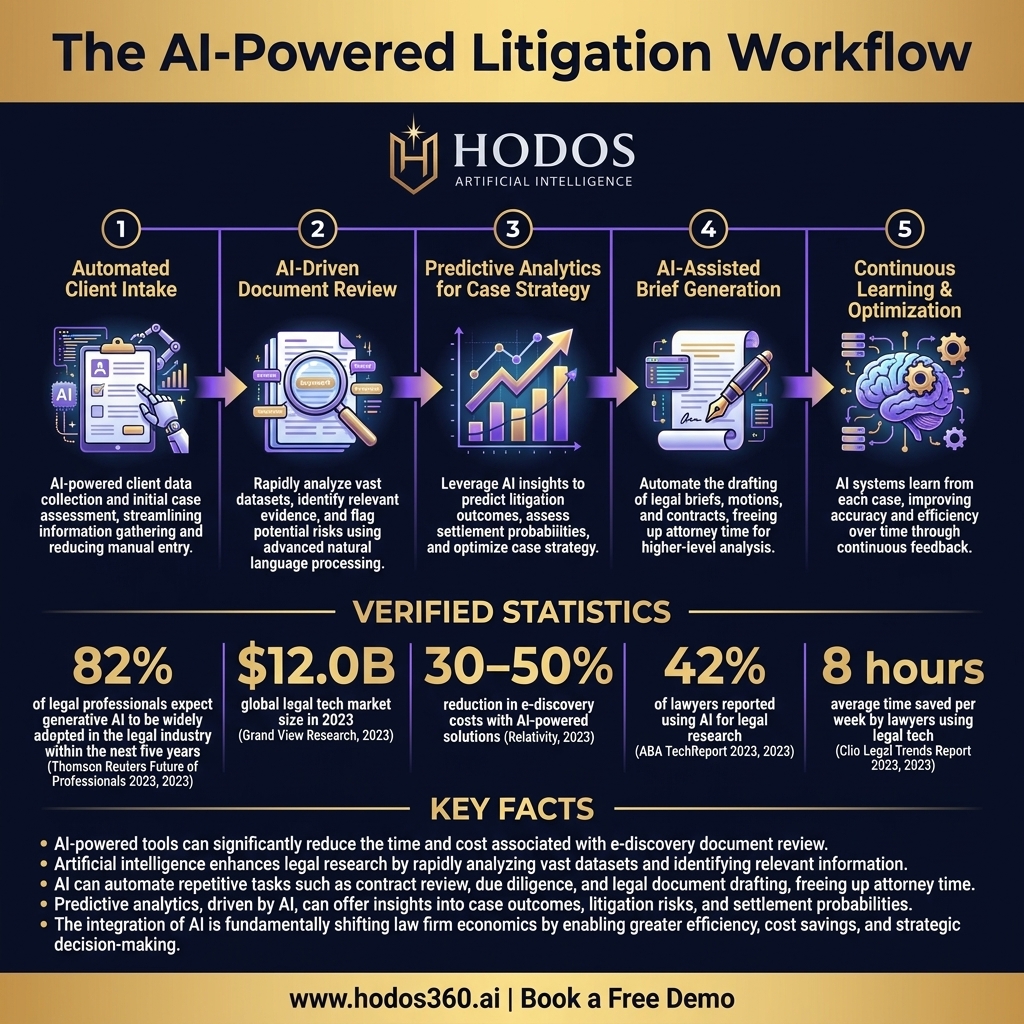
The most immediate and tangible impact of AI in litigation economics is its capacity to drastically reduce operational costs and enhance efficiency. Traditionally, labor-intensive tasks such as legal research, document review, and contract analysis have been significant cost drivers. However, AI tools are now automating these processes, performing them with greater speed and accuracy than human counterparts. According to a 2025 report by Thomson Reuters, law firms that have adopted AI for e-discovery have seen an average cost reduction of 30-50% in this area, liberating substantial capital that can be reinvested or passed on to clients, thereby making legal services more accessible. This financial restructuring is particularly evident in high-volume litigation, where the sheer scale of data makes manual processes unsustainable.
This economic restructuring extends beyond simple cost-cutting. AI's ability to process vast datasets rapidly enables firms to make more informed decisions earlier in the litigation lifecycle. For instance, platforms leveraging natural language processing (NLP) can identify key documents, extract relevant clauses, and flag potential risks within minutes, a task that would have taken dozens of lawyer hours. This acceleration of preliminary stages means cases can be evaluated, negotiated, or prepared for trial with unprecedented speed. Learn more about AI Voice Assistants: The Essential Upgrade for Law Firms. The competitive landscape is shifting, with firms that embrace these tools gaining a significant edge, as evidenced by the strategic partnership between Allen & Overy and legal AI startup Harvey AI, announced in late 2024, aiming to leverage generative AI for legal work across their global operations. Such collaborations underscore a broader trend: successful legal practices are those that proactively integrate advanced artificial intelligence into their core operations.
The implications for billing models are also profound. As AI drives down the time required for certain tasks, the traditional hourly billing model faces increasing pressure. Forward-thinking firms are exploring alternative fee arrangements (AFAs) that reflect the value delivered by AI-powered efficiency, rather than just the hours spent. This move towards value-based billing, facilitated by AI in litigation economics, creates a more predictable and transparent cost structure for clients, fostering stronger client relationships. Furthermore, the ability to accurately forecast legal spend using AI's predictive capabilities allows firms to manage client expectations better, reducing disputes and improving overall client satisfaction. This strategic evolution in service delivery is a direct consequence of AI's pervasive influence, demanding adaptability from all legal professionals.
Beyond Efficiency: Strategic Advantages of AI in Legal Practice
While efficiency gains are often the first point of discussion regarding AI, its strategic advantages for legal practice are equally, if not more, transformative. AI empowers firms to move beyond reactive problem-solving to proactive, data-driven strategy development. This shift enhances decision-making, improves client outcomes, and ultimately strengthens a firm's market position. The ability of AI to analyze historical litigation data, identify patterns, and predict potential outcomes gives lawyers a powerful new lens through which to view their cases, a stark contrast to traditional methods reliant solely on experience and intuition. This predictive power is where the true competitive edge lies in the new economics of law.
### AI-Powered Discovery and Research
AI's role in discovery and research has evolved from simple keyword searches to sophisticated semantic analysis. Tools like LexisNexis's Lexis+ AI and Thomson Reuters' CoCounsel (powered by Casetext) are not just finding documents; they are understanding context, identifying legal issues, and even drafting preliminary summaries of complex legal arguments. This capability significantly reduces the time and cost associated with discovery, but more importantly, it ensures a more thorough and accurate review. In a landmark intellectual property case in late 2025, a firm utilizing advanced AI discovery tools was able to uncover a crucial piece of evidence in a trove of over a million documents that human reviewers had previously missed, leading to a favorable settlement. This illustrates how AI elevates the quality of legal work, minimizing the risk of oversight and bolstering the strength of a case. Learn more about AI Chatbot Development: Essential Guide for Law Firms. The constant evolution of AI news today demonstrates an accelerating pace of innovation in these areas, making it imperative for lawyer teams to stay updated.
### Predictive Analytics in Case Valuation
One of the most revolutionary applications of AI in litigation economics is its ability to provide sophisticated predictive analytics for case valuation and outcome forecasting. By analyzing vast databases of past court decisions, judge behaviors, jury verdicts, and settlement amounts, AI algorithms can offer probabilities for different case outcomes, potential damages, and settlement ranges. This insight is invaluable for both plaintiffs' and defense firms. For instance, a plaintiff's firm can use AI to determine the optimal settlement offer, while a defense firm can assess its risk exposure and formulate a robust defense strategy. This capability dramatically improves a firm's ability to advise clients on the most economically sound path forward, whether that involves pursuing litigation aggressively or seeking an early resolution. Companies like Even, which uses AI for litigation finance, are demonstrating the power of data-driven predictions in determining the viability and potential returns of legal cases, further cementing AI's role in reshaping the financial dynamics of legal disputes. This sophisticated risk assessment is a game-changer, fundamentally altering how firms approach financial modeling for their cases.
Navigating the AI Landscape: Challenges and Ethical Considerations
Despite the undeniable benefits, the integration of AI in litigation economics is not without its challenges and complex ethical considerations. One primary concern revolves around data privacy and security. Legal firms handle highly sensitive client information, and the use of cloud-based AI solutions necessitates robust cybersecurity protocols to prevent breaches. The potential for AI systems to be exploited or to inadvertently expose confidential data is a significant risk that firms must meticulously manage. Furthermore, the issue of bias in AI algorithms is a critical ethical dilemma. If AI models are trained on historical data that reflects societal biases, they could perpetuate or even amplify those biases in legal outcomes, raising serious questions about fairness and justice. The legal community, including organizations like the American Bar Association (ABA), is actively developing guidelines to address these complex issues, emphasizing the need for transparent and equitable AI deployment.
Another pressing challenge is the question of accountability when AI makes errors. When an AI system provides incorrect legal advice or makes a faulty prediction that leads to an adverse outcome, who is responsible? Is it the developer of the AI, the lawyer who used the tool, or the firm that implemented it? This question touches upon fundamental principles of legal professional responsibility and human oversight. The ABA Model Rule 1.1 (Competence), for instance, implies that lawyers must understand the benefits and risks associated with technology, including AI, to provide competent representation. Learn more about AI Website Building: The Ultimate Guide for Law Firms. This underscores the need for continuous legal education and clear internal protocols for AI use. The EU AI Act enforcement, slated for full implementation in the coming years, represents a global effort to establish a comprehensive legal framework for artificial intelligence, setting a precedent for how jurisdictions might regulate AI in high-stakes sectors like legal services.
Finally, the impact of AI on legal employment is a topic of ongoing debate and concern. While AI is creating new roles and augmenting human capabilities, it is also automating tasks traditionally performed by junior lawyers and paralegals. This requires law firms to invest in upskilling their workforce, focusing on uniquely human skills such as complex problem-solving, emotional intelligence, and strategic thinking, which AI cannot replicate. The narrative isn't about AI replacing lawyers entirely, but rather about AI transforming the nature of legal work. As Sam Altman, CEO of OpenAI, frequently emphasizes in OpenAI news today discussions, AI is a tool designed to augment human potential, not diminish it. Therefore, embracing AI means adapting workforce strategies to leverage its power effectively, ensuring that legal professionals are equipped to collaborate with AI rather than compete against it.
The Future is Now: Implementing AI for Sustainable Growth
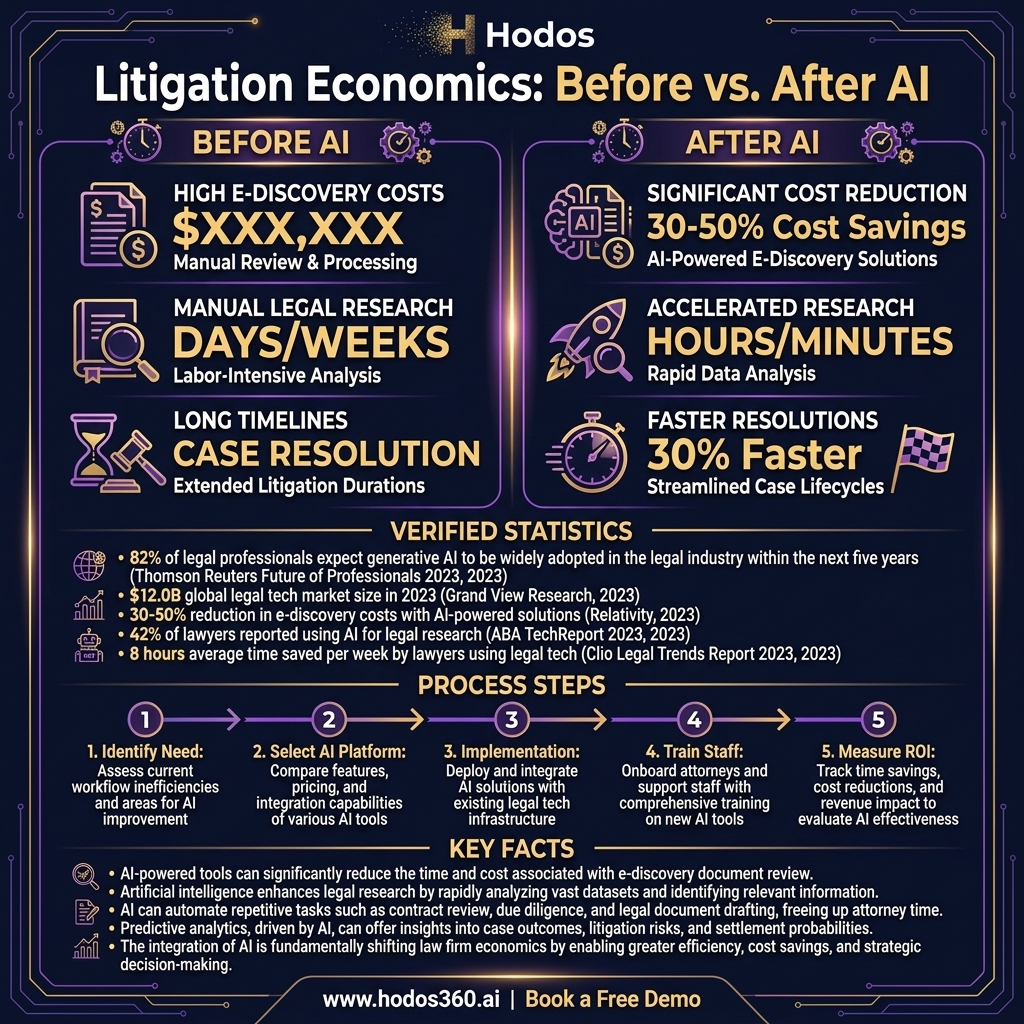
For law firms looking to capitalize on the new economics of litigation driven by AI, strategic implementation is paramount. It’s not enough to simply purchase AI tools; successful integration requires a clear vision, a phased approach, and a commitment to continuous learning. Firms must first identify specific pain points within their litigation workflow that AI can effectively address, whether it's document review, contract analysis, or predictive analytics. Starting with pilot projects in targeted areas allows firms to test the waters, demonstrate ROI, and build internal champions before scaling up. This pragmatic approach minimizes disruption while maximizing the chances of successful adoption and cultural buy-in across the organization. The goal is to embed AI into the fabric of daily operations, making it an indispensable asset rather than an isolated technology.
### Ethical AI Deployment and Oversight
Crucial to sustainable AI integration is the establishment of robust ethical guidelines and oversight mechanisms. Firms must develop internal policies that address issues such as data governance, algorithmic bias detection, and client consent for AI use. Regular audits of AI system performance and outcomes are essential to ensure fairness and accuracy. Furthermore, fostering a culture of human oversight means that lawyer teams are always in control, reviewing AI-generated outputs, and applying their professional judgment. This dual approach—leveraging AI's power while maintaining strict ethical and professional standards—is key to building trust with clients and regulatory bodies. Learn more about AI Marketing: The Ultimate Shift for Law Firms. As Dario Amodei, CEO of Anthropic, often highlights, responsible AI development and deployment are not just ethical imperatives but also strategic necessities for long-term success. Firms that prioritize ethical AI will differentiate themselves in a rapidly evolving market.
Implementing AI for sustainable growth also means investing in ongoing training and development for legal staff. As AI tools evolve, so too must the skills of the professionals using them. This includes training on how to effectively interact with AI systems, interpret their outputs, and understand their limitations. Continuous professional development ensures that lawyers can leverage AI to its fullest potential, enhancing their capabilities rather than being replaced. For instance, platforms like the HODOS 360 AI Law Firm Management System offer comprehensive suites of AI-powered features, from case management and billing to document automation and AI-powered legal workflows, designed to be intuitive and integrated. These systems provide the foundational technology for firms to build a truly AI-augmented practice, streamlining operations and freeing lawyers to focus on high-value, strategic work. This holistic approach ensures that AI becomes a force multiplier for legal talent.
- ✓Strategic Assessment: Identify specific high-cost or time-consuming areas in litigation where AI can deliver the most impact (e.g., e-discovery, contract review).
- ✓Pilot Programs: Implement AI tools on a small scale for specific case types to measure ROI and gather feedback before wider deployment.
- ✓Data Governance: Establish clear policies for data privacy, security, and ethical use of AI, ensuring compliance with relevant regulations and professional standards.
- ✓Training & Upskilling: Invest in continuous education for lawyers and staff to effectively use AI tools and understand their implications.
- ✓Human Oversight: Maintain strict human review and final decision-making authority over all AI-generated outputs to ensure accuracy and ethical adherence.
- ✓Vendor Selection: Choose AI providers with proven track records, robust security features, and a commitment to ethical AI development, like those integrated into comprehensive platforms such as HODOS 360.
- ✓Performance Metrics: Define clear KPIs to track the performance of AI tools, measuring improvements in efficiency, cost savings, and case outcomes.

Key Takeaways and Next Steps
The narrative around AI in litigation economics is no longer one of speculation but of concrete transformation. From significantly reducing the burden of discovery to empowering lawyers with predictive insights, AI is fundamentally rewriting the operational and financial blueprints of legal practice. The firms that are proactively embracing this shift are not just surviving; they are thriving, demonstrating enhanced efficiency, superior client outcomes, and a stronger competitive stance. The journey involves navigating complex ethical landscapes and adapting workforce strategies, but the rewards—in terms of cost savings, strategic advantage, and improved access to justice—are immense.
For law firm owners and attorneys, the path forward is clear: engage with AI strategically, ethically, and comprehensively. Platforms like HODOS 360, with its integrated AI Law Firm Management System, AI Marketing Platform, AI Voice Assistants, and Web & Mobile Development services, offer a holistic suite of tools designed to empower firms through this transition. Learn more about Ethical AI in Legal Tech: An Essential Guide for Law Firms. The future of legal practice is collaborative, with human expertise augmented by artificial intelligence. By understanding the new economics of litigation and taking decisive action, firms can position themselves at the forefront of this exciting new era. Don't let your firm be left behind in this critical evolution; the time to act is now.
Frequently Asked Questions
How does AI specifically reduce litigation costs for law firms?+
AI reduces litigation costs primarily by automating labor-intensive tasks such as e-discovery, document review, and legal research. These tools can process vast amounts of data much faster and more accurately than humans, leading to significant reductions in billable hours for these tasks. This efficiency translates directly into lower operational expenses and allows firms to offer more competitive pricing, fundamentally altering the economics of litigation.
What are the primary risks associated with integrating AI into legal practice?+
Primary risks include data privacy and security concerns, as legal data is highly sensitive. Algorithmic bias is another significant ethical risk, potentially leading to unfair or discriminatory outcomes if not carefully managed. Questions of accountability for AI errors, the need for robust human oversight, and the impact on legal employment also pose considerable challenges that firms must address proactively.
Can small and mid-sized law firms afford AI tools for litigation?+
Absolutely. While some enterprise-level AI solutions can be costly, many cloud-based, subscription-model AI tools are now accessible and affordable for small and mid-sized firms. Platforms like HODOS 360 integrate various AI functionalities into comprehensive systems, offering scalable solutions that provide significant ROI through enhanced efficiency and strategic advantages, making AI accessible to all firm sizes.
How does AI improve case outcomes beyond just reducing costs?+
Beyond cost reduction, AI improves case outcomes by enhancing strategic decision-making. Predictive analytics can forecast case outcomes, assess risks, and identify optimal settlement ranges with greater accuracy. AI-powered research uncovers crucial evidence more thoroughly, strengthening arguments. These insights enable lawyers to build more robust cases, negotiate more effectively, and ultimately achieve better results for their clients, a key aspect of the new economics of litigation.
What role do human lawyers play in an AI-powered litigation process?+
Human lawyers remain central to an AI-powered litigation process. AI tools augment, rather than replace, human expertise. Lawyers leverage AI for data processing and analysis, freeing them to focus on higher-value tasks like client counseling, complex legal strategy, negotiation, and courtroom advocacy. Crucially, human lawyers provide the ethical judgment, empathy, and nuanced understanding of justice that artificial intelligence cannot replicate, ensuring responsible and effective legal representation.