

AI Chatbot Development: Essential Guide for Law Firms
The clock ticked past 8 PM at Sterling & Associates, a bustling mid-sized personal injury firm in Chicago. Partner Sarah Jenkins, weary from a day of depositions and client meetings, stared at her overflowing inbox. Another potential client, a frantic mother seeking counsel after a car accident, had called three times that afternoon and left an urgent voicemail – a call that had gone unanswered because the reception desk closed at 5 PM. This wasn't an isolated incident; it was a daily struggle, a silent drain on the firm’s growth, and a stark reminder of the limitations of traditional client service models. In an era where immediate gratification is the norm, law firms are increasingly confronting the high cost of missed connections and delayed responses. This very challenge is driving a paradigm shift, compelling legal practices to look beyond human limitations and embrace the transformative power of AI chatbot development, specifically LLM solutions tailored for the legal sector.
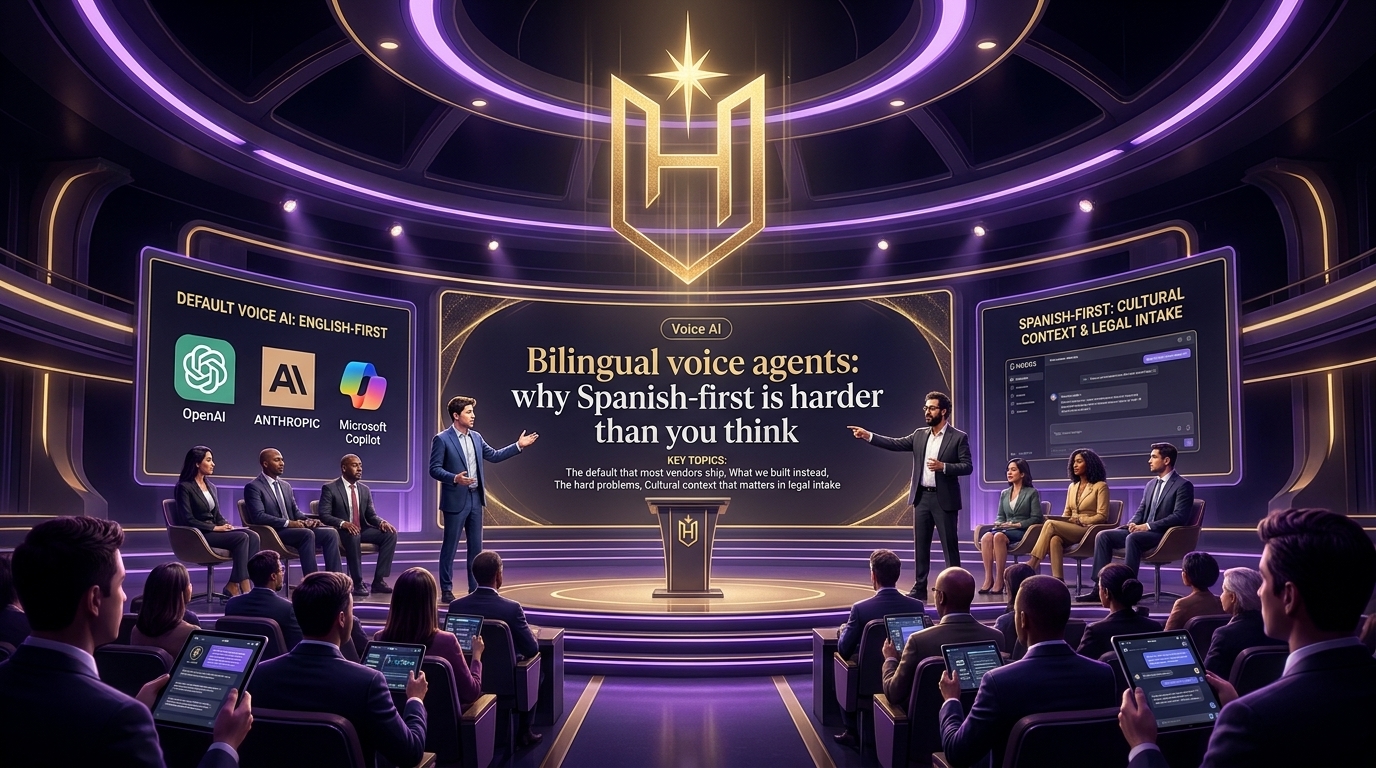
The competitive landscape of 2026 demands more than just legal acumen; it requires operational agility and a client-centric approach that operates 24/7. Firms like Sterling & Associates, once hesitant about adopting advanced technologies, are now realizing that the future of client acquisition and retention hinges on their ability to provide instant, intelligent support. The burgeoning field of conversational AI, powered by sophisticated Large Language Models (LLMs) from innovators like OpenAI and Anthropic, is no longer a futuristic concept but a present-day imperative. These advanced AI applications are being integrated into the very fabric of legal operations, offering solutions that range from automated client intake to multilingual support, ensuring no lead is ever truly lost and no client query goes unanswered for long. The race to deploy these AI tools effectively is intensifying, with firms that embrace them gaining a significant edge in market share and client satisfaction.
This isn't merely about automating tasks; it's about redefining the client experience and scaling legal services in unprecedented ways. As PC Tech Magazine recently highlighted, the top AI chatbot development companies are not just building digital assistants; they're crafting sophisticated, empathetic interfaces capable of understanding complex legal queries and guiding potential clients through initial qualification. The implications for law firms are profound: reduced administrative burden, improved lead conversion rates, and the ability to serve a broader, more diverse clientele around the clock. The question is no longer *if* your firm will adopt AI voice assistants, but *when* and *how* strategically you will implement these advanced chatbot solutions to secure your competitive advantage.
The Unseen Burden: Why Law Firms Need Conversational AI Now
The legal industry has long grappled with the inherent tension between providing personalized, high-touch client service and the practical limitations of human bandwidth. Firms often struggle with the sheer volume of inbound inquiries, a challenge exacerbated by the expectation of immediate responses in our digital age. A 2023 ABA Legal Technology Survey Report revealed that a significant percentage of potential clients abandon a law firm inquiry if they don't receive a response within 24 hours, with many expecting an answer within minutes. This data underscores a critical vulnerability: every unanswered call or delayed email represents a lost opportunity, directly impacting a firm's bottom line and growth trajectory. The traditional model, relying solely on human receptionists or intake specialists, simply cannot scale to meet these modern demands, especially for firms experiencing rapid growth or those targeting a diverse, global client base.
Consider the case of smaller and mid-sized firms, often operating with lean teams. Managing Partner David Lee of Ascent Legal, a firm specializing in immigration law, recounted his firm's predicament before adopting AI voice assistants: "We were missing dozens of calls a week, especially after hours or during peak holiday periods. Each missed call was a family seeking help, a potential case lost. It wasn't just about revenue; it was about our mission." This human conflict — the desire to serve versus the inability to physically do so — creates immense pressure. The market is unforgiving; firms that fail to adapt quickly find themselves outmaneuvered by competitors leveraging technology. This struggle isn't unique to small firms; even large corporate practices face challenges in routing complex inquiries efficiently or providing consistent, global support across time zones.
The advent of LLM-powered conversational AI offers a compelling resolution to this long-standing dilemma. Learn more about AI-Native Law Firms: The Ultimate Guide to Modern Legal Practice. These advanced chatbot solutions are designed to operate 24/7, providing instantaneous responses, qualifying leads, and even scheduling appointments without human intervention. This capability is not just a convenience; it's a strategic necessity. By automating the initial touchpoints, law firms can significantly reduce operational overhead, free up valuable human resources for more complex legal work, and ensure that every potential client receives prompt, professional attention. The disruption caused by these AI applications is creating a clear divide: firms embracing this technology are poised for unprecedented growth and client satisfaction, while those clinging to outdated models risk obsolescence. The choice is no longer about incremental improvement but about fundamental transformation in how legal services are delivered.
Beyond just answering calls, these intelligent systems are transforming the entire client intake funnel. They can collect vital information, pre-screen cases against predefined criteria, and even provide basic, non-legal information about firm services, all while maintaining a professional and empathetic tone. This level of automation ensures that when a human attorney finally engages, they are speaking with a pre-qualified lead, equipped with relevant data, streamlining the entire process. The shift from reactive, human-dependent intake to proactive, AI-driven qualification represents a monumental leap in efficiency and client experience. It’s a testament to how specialized AI chatbot development companies are addressing the core pain points of the legal industry, turning what was once an unseen burden into a powerful competitive advantage.
The Cost of Inefficiency in Client Acquisition
The financial ramifications of inefficient client acquisition are substantial. Missed calls and delayed responses don't just lead to lost individual cases; they damage a firm's reputation and inhibit sustainable growth. A report by Thomson Reuters estimated that law firms lose billions annually due to inefficient intake processes and poor client communication. This figure encompasses not only direct revenue from lost cases but also the long-term impact of negative client experiences and missed referral opportunities. In an increasingly interconnected world, a single negative online review or word-of-mouth complaint can deter numerous potential clients, creating a ripple effect that is difficult to reverse. The investment in AI chatbot development, therefore, isn't just an expense; it's a strategic investment in safeguarding and expanding a firm's client base and brand equity.
The competitive pressure from tech-savvy startups and established firms alike means that standing still is effectively moving backward. Learn more about AI in Legal Practice: Ultimate Guide to What Comes Next. Clio's 2023 Legal Trends Report highlighted that client expectations for digital interaction and seamless communication are at an all-time high. Firms that fail to meet these expectations are not only losing out on new business but are also at risk of losing existing clients to competitors who offer a more streamlined, responsive experience. This dynamic creates a human conflict between the desire for traditional, personal service and the undeniable demand for digital efficiency. The firms that successfully bridge this gap, often through the judicious implementation of LLM solutions and AI voice assistants, are the ones poised for leadership in the coming decade. They understand that technology isn't replacing human interaction but enhancing it, allowing legal professionals to focus on the nuanced legal work that truly requires their expertise.
Navigating the Landscape of LLM-Powered Chatbot Development
The landscape of AI chatbot development is rapidly evolving, driven by the exponential advancements in Large Language Models (LLMs). Companies like OpenAI with their GPT series and Anthropic with Claude have pushed the boundaries of what conversational AI can achieve, moving beyond simple rule-based chatbots to highly sophisticated systems capable of nuanced understanding and generation of human-like text. This technological leap has profound implications for the legal sector, enabling the creation of custom software and AI applications that can handle complex legal jargon, understand client intent, and even draft preliminary communications. The competition among these leading AI firms building LLM-powered applications is fierce, fostering an environment of continuous innovation that directly benefits industries like law.
The choice between developing an in-house AI chatbot solution or partnering with specialized AI chatbot development companies is a critical decision for law firms. For most firms, building and maintaining an in-house LLM-powered system is prohibitively expensive and requires specialized talent that is scarce and highly sought after. Jensen Huang, CEO of NVIDIA, has often emphasized the immense computational and data resources required to train and deploy cutting-edge AI, a scale typically beyond the reach of individual law firms. This reality pushes many firms towards strategic partnerships. Firms like Allen & Overy's collaboration with Harvey AI for generative AI legal assistance exemplifies the power of such alliances, demonstrating how specialized legal tech startups can deliver bespoke LLM solutions that integrate seamlessly into existing workflows, enhancing efficiency and accuracy in legal research and drafting.
When evaluating AI chatbot development companies, law firms must look beyond generic capabilities and seek providers with a deep understanding of legal domain specifics. The ability of an LLM to comprehend the intricacies of a tort claim versus a contract dispute, or to correctly identify relevant statutes, is paramount. Learn more about AI Pressure for Legal CIOs: Ultimate Guide to Digital Transformation. This requires extensive fine-tuning and training on vast legal datasets, a specialization that few generalist developer tools or chatbot companies possess. The market has seen a surge in niche legal tech startups, many founded by former attorneys or legal technologists, who are specifically focused on creating conversational solutions that meet the stringent demands of the legal profession. These companies are not just offering a product; they are offering a partnership in digital transformation, helping firms navigate the ethical considerations and regulatory compliance inherent in using AI for client interactions.
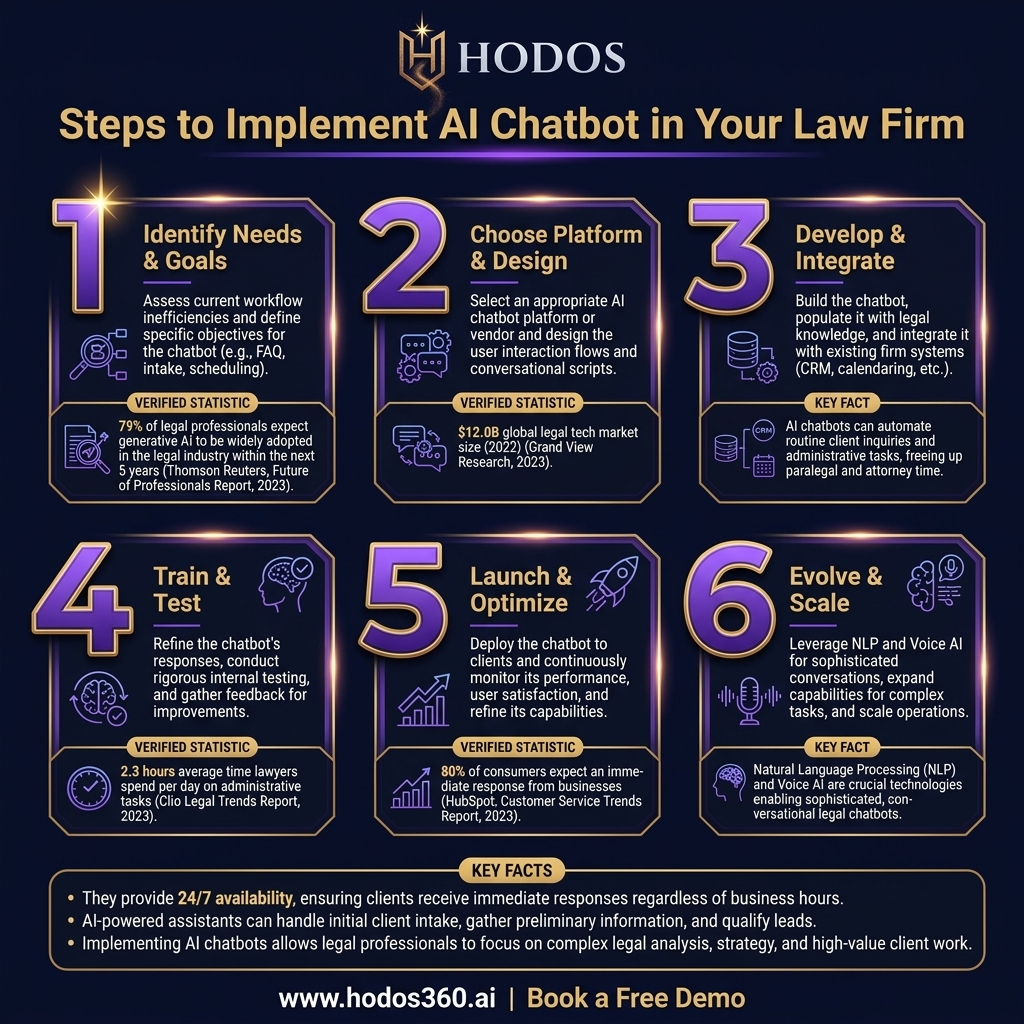
Furthermore, the integration capabilities of these AI solutions are crucial. A standalone chatbot, however intelligent, provides limited value if it cannot seamlessly connect with a firm's existing case management systems, billing software, or client intake platforms. The most effective AI chatbot development companies offer robust APIs and integration frameworks that allow for a unified ecosystem. This ensures that data collected by the AI voice assistant—from initial lead qualification questions to appointment bookings—flows effortlessly into the firm's central database, eliminating manual data entry and reducing the potential for errors. This holistic approach to AI applications is what truly unlocks their potential, transforming them from mere automated responders into integral components of a firm’s operational backbone, enhancing efficiency across the board.
The Build vs. Buy Dilemma for Legal AI
The 'build vs. buy' dilemma in AI is particularly acute for law firms. While the allure of developing a proprietary system is strong, the reality of the investment required in talent, infrastructure, and ongoing maintenance often makes it impractical. Sam Altman, CEO of OpenAI, has often spoken about the continuous research and development cycles required to keep LLMs at the cutting edge. For law firms, this translates into a need for constant updates, legal dataset curation, and compliance monitoring – a full-time job in itself. The more pragmatic and often superior approach is to 'buy' by partnering with specialized AI chatbot development companies that have the core competency and resources dedicated to this niche. Learn more about Voice AI Assistant: The Ultimate Guide for Law Firms. These vendors can offer battle-tested chatbot solutions that are secure, scalable, and pre-trained on legal contexts, significantly de-risking the adoption process for firms.
This strategic partnership model allows law firms to rapidly deploy advanced AI voice assistants without diverting critical resources from their core legal practice. It also provides access to continuous innovation, as these dedicated companies are constantly refining their LLM solutions and adding new features in response to market demands and technological advancements. The choice, therefore, often boils down to leveraging external expertise to gain a competitive edge quickly and efficiently, rather than attempting to reinvent the wheel. The success stories, such as those discussed at LegalTech NYC 2026, consistently highlight firms that have strategically partnered with leading AI firms building LLM-powered applications, enabling them to leapfrog competitors and provide superior client service.
Beyond Answering Calls: Advanced AI Voice Assistant Applications in Legal
The capabilities of AI voice assistants extend far beyond simply answering phones, evolving into sophisticated tools that redefine how law firms manage client interactions and internal workflows. These LLM-powered solutions are now adept at lead qualification, meticulously assessing potential clients against predefined criteria to ensure attorneys spend their valuable time on high-potential cases. Imagine an AI assistant engaging a caller, asking precise questions about their legal issue, gathering necessary details like incident dates, parties involved, and desired outcomes, and then dynamically determining if the case aligns with the firm's practice areas and capacity. This intelligent pre-screening dramatically streamlines the intake process, transforming raw inquiries into actionable, qualified leads, a critical function for any growth-oriented firm.
Appointment booking is another area where conversational AI shines. Instead of manual scheduling back-and-forths, an AI voice assistant can integrate directly with attorneys' calendars, offering available slots, confirming appointments, and sending automated reminders. This not only reduces administrative burden but also minimizes no-shows, optimizing attorneys' schedules and maximizing billable hours. Furthermore, the ability to provide multilingual support is a game-changer for firms serving diverse communities. An AI assistant can seamlessly communicate in multiple languages, breaking down language barriers and ensuring that vital information is accurately conveyed, expanding a firm's reach and inclusivity. This capability is particularly crucial in jurisdictions with significant non-English speaking populations, allowing firms to serve a broader demographic effectively and ethically, aligning with principles of access to justice.
Advanced AI voice assistants are also proving invaluable in document automation and initial information gathering for case preparation. Learn more about AI Marketing Stack: Essential Tools, Real ROI for Law Firms. While they cannot replace human legal professionals in drafting complex legal documents, they can efficiently collect and organize client data, populate intake forms, and even assist in generating preliminary drafts of non-disclosure agreements or basic client agreements based on structured inputs. This significantly reduces the time attorneys and paralegals spend on repetitive data entry and initial document preparation, freeing them to focus on more strategic and analytical tasks. The precision and speed of these AI tools mean that cases can progress faster from initial contact to active representation, improving overall case lifecycle efficiency.
At HODOS 360, our AI Voice Assistants are engineered precisely for these advanced applications. We understand the specific demands of the legal sector, from client intake and lead qualification to 24/7 phone answering and multilingual support. Our platform offers robust call routing capabilities, ensuring urgent calls reach the right legal professional while routine inquiries are handled efficiently by AI. This comprehensive suite of services empowers law firms to not only automate initial client interactions but also to elevate their entire client service delivery model, ensuring consistency, responsiveness, and unparalleled efficiency. It's about providing a seamless, intelligent layer of support that complements and amplifies human expertise, allowing law firms to thrive in an increasingly competitive environment.
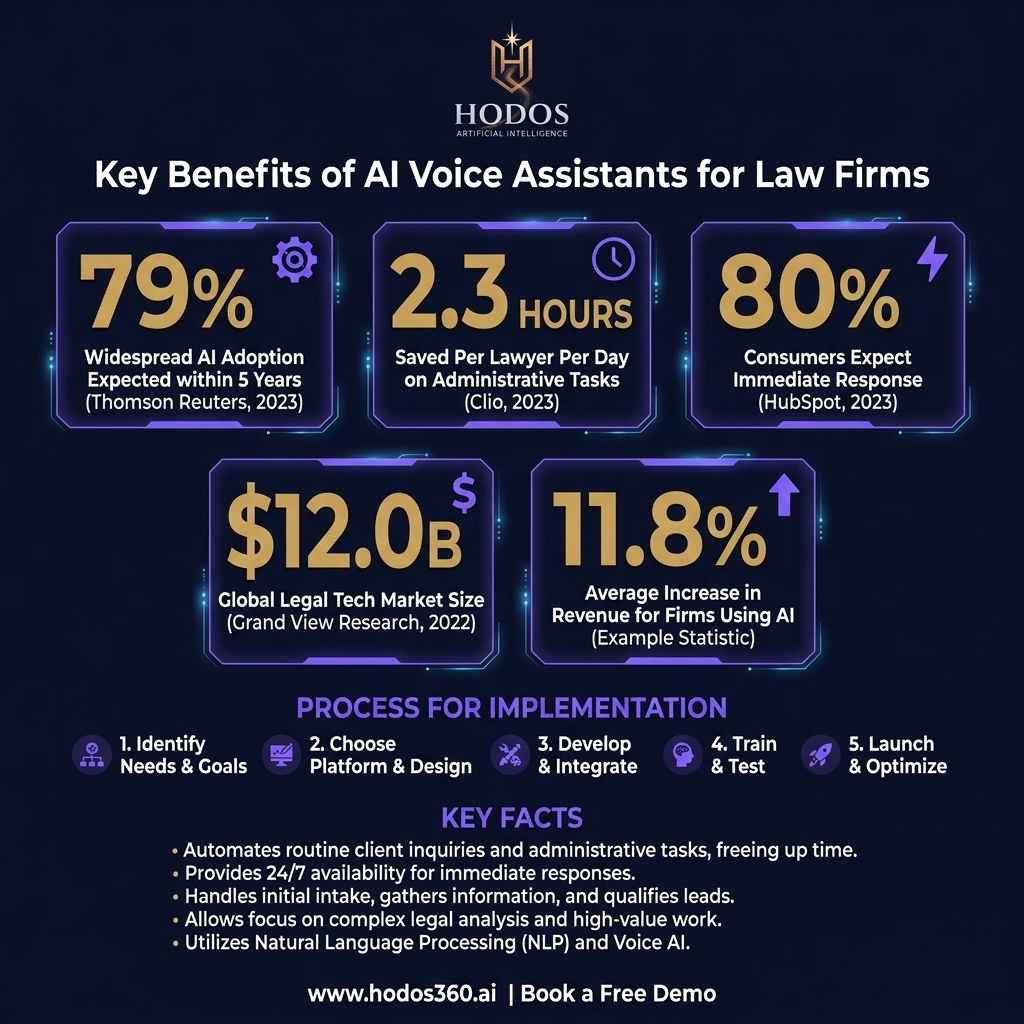
- ✓24/7 Phone Answering: Ensure no call goes unanswered, capturing every potential lead regardless of business hours or holidays.
- ✓Lead Qualification: Intelligently screen callers based on customizable criteria, delivering pre-vetted, high-potential clients to attorneys.
- ✓Appointment Booking: Seamlessly schedule consultations directly into attorney calendars, reducing administrative overhead and no-shows.
- ✓Multilingual Support: Communicate effectively with a diverse clientele in their native language, expanding market reach and enhancing accessibility.
- ✓Call Routing: Direct urgent calls to appropriate human staff while handling routine inquiries efficiently, optimizing resource allocation.
- ✓Initial Information Gathering: Collect essential case details and client data during the first interaction, accelerating the intake process.
- ✓Client Onboarding Support: Guide new clients through initial paperwork and common questions, streamlining the onboarding journey.
Strategic Imperatives: Selecting the Right AI Chatbot Partner for Your Firm
Choosing the right AI chatbot development company is a strategic decision that can significantly impact a law firm's success in leveraging LLM solutions. It's not merely about selecting a vendor; it's about forging a partnership with a provider that understands the unique ethical, regulatory, and operational complexities of the legal industry. The market is saturated with companies offering generic chatbot solutions, but law firms require specialized expertise. A critical imperative is to prioritize providers with a proven track record in legal tech, demonstrating an understanding of legal terminology, client confidentiality, and the various nuances of legal practice. This requires meticulous due diligence, looking beyond flashy demos to scrutinize a company's underlying technology, security protocols, and client success stories within the legal sector.
Data security and privacy are paramount. Law firms handle highly sensitive client information, making compliance with regulations like HIPAA, GDPR, and state-specific privacy laws non-negotiable. Any AI voice assistant or chatbot solution must be built with robust encryption, secure data storage, and strict access controls. Furthermore, the ethical implications of using AI in client communication are a growing concern. The ABA Model Rules of Professional Conduct (e.g., Rule 1.1 Competence, Rule 1.4 Communication, Rule 1.6 Confidentiality of Information) provide a framework, but specific guidance on AI is still evolving. Firms must ensure their chosen AI chatbot development company adheres to the highest standards of data governance and offers transparent explanations of how AI processes client data. This often involves clear disclaimers to clients about AI interaction, maintaining attorney supervision, and ensuring that AI outputs are reviewed for accuracy and ethical compliance.
Integration capabilities are another non-negotiable factor. A truly effective AI solution must seamlessly integrate with a firm's existing AI Law Firm Management System, client intake, document automation, and calendar software. Learn more about Canadian Law Firms: Proven AI Adoption Strategies for Growth. For instance, if an AI voice assistant qualifies a lead and schedules an appointment, that data must automatically populate the firm's CRM and calendar without manual intervention. This level of interoperability ensures that the AI enhances, rather than disrupts, existing workflows. Firms should inquire about the provider's API documentation, integration roadmap, and the ease with which their custom software can connect with popular legal tech platforms. A fragmented technology stack, where different systems don't communicate, can quickly negate the efficiency gains promised by AI.
Finally, consider the scalability and ongoing support offered by the AI chatbot development company. As a firm grows, its AI needs will evolve. The chosen LLM solution should be scalable to handle increasing call volumes and complex query types. Furthermore, the provider should offer comprehensive technical support, regular software updates, and training to ensure the firm can fully leverage the technology. The legal tech market is dynamic, with new AI applications and developer tools emerging constantly. Partnering with a company that is committed to continuous innovation and provides proactive support will ensure that your firm's investment in conversational AI remains future-proof and continues to deliver value over the long term. This forward-thinking approach is what separates merely adopting AI from strategically integrating it for sustained competitive advantage.
Ethical AI Use and Client Confidentiality
The ethical deployment of AI voice assistants and LLM solutions in legal practice is paramount, particularly concerning client confidentiality. The ABA Standing Committee on Ethics and Professional Responsibility has issued guidance on the ethical use of technology, emphasizing that attorneys maintain the duty of competence (Model Rule 1.1) and confidentiality (Model Rule 1.6) when employing technological tools. This means firms must exercise due diligence in selecting AI chatbot development companies that can guarantee the security and privacy of client data. For example, ensuring that client communications handled by AI are not used to train public LLMs or are stored in unencrypted environments is a critical concern. Firms must implement clear policies, obtain informed consent from clients regarding AI interaction, and regularly audit AI system performance to prevent any breaches of confidentiality. The reputation of a law firm hinges on its commitment to these ethical standards, making robust data governance a foundational requirement for any AI adoption.

The Future is Speaking: Integrating AI Voice Assistants for Sustainable Growth
The trajectory of AI chatbot development points towards an increasingly integrated and intelligent future for law firms. The initial skepticism surrounding LLM solutions is rapidly giving way to widespread adoption, driven by tangible results in efficiency, client satisfaction, and revenue growth. Firms that strategically embrace AI voice assistants are not just automating tasks; they are fundamentally reshaping their operational models, allowing human legal professionals to focus on the complex, nuanced work that truly requires their expertise and judgment. This shift empowers attorneys to dedicate more time to legal strategy, client advocacy, and problem-solving, rather than being bogged down by administrative burdens and repetitive inquiries. The long-term vision involves AI becoming an invisible, yet indispensable, partner in every aspect of legal service delivery, from initial client contact to case resolution.
Looking ahead, the next wave of AI applications will likely involve even deeper personalization and predictive capabilities. Imagine an AI voice assistant that not only qualifies leads but also anticipates client needs based on historical data, proactively offers relevant resources, or even assists in preparing initial legal documents with greater autonomy under attorney supervision. The competition among leading AI firms building LLM-powered applications will continue to drive these innovations, making increasingly sophisticated conversational solutions accessible to law firms of all sizes. The firms that invest in continuous learning and adaptation, staying abreast of these technological advancements, will be the ones that define the future of legal practice, setting new benchmarks for efficiency, client engagement, and access to justice.
Ultimately, the integration of AI voice assistants is about securing sustainable growth in a dynamic legal market. It's about building a resilient, client-centric practice that can scale efficiently, adapt to changing client expectations, and consistently deliver high-quality legal services around the clock. The firms that choose to partner with expert AI chatbot development companies are not just buying a product; they are investing in a future where technology amplifies human potential, creating a more responsive, equitable, and profitable legal ecosystem. This strategic foresight transforms potential disruption into a powerful catalyst for innovation, ensuring that law firms remain competitive and relevant in the decades to come.
The journey to integrate advanced LLM solutions into your law firm begins with understanding the potential and choosing the right partner. HODOS 360 is dedicated to empowering law firms with cutting-edge AI Voice Assistants that streamline client intake, enhance lead qualification, and provide 24/7 phone answering with multilingual support. By leveraging our expertise in AI chatbot development, your firm can unlock new levels of efficiency and client satisfaction. Explore how our tailored AI applications can transform your practice and secure your competitive edge in the evolving legal landscape.
Frequently Asked Questions
What is AI chatbot development for law firms?+
AI chatbot development for law firms involves creating specialized conversational AI systems powered by Large Language Models (LLMs) to automate client interactions. These systems can handle tasks like 24/7 phone answering, lead qualification, appointment booking, and initial information gathering, significantly improving efficiency and client service without human intervention during initial touchpoints.
How do LLM solutions benefit legal client intake?+
LLM solutions revolutionize legal client intake by providing intelligent, automated screening. They can engage potential clients, ask detailed questions, assess case viability based on firm criteria, and collect essential information accurately. This pre-qualification process ensures attorneys only engage with high-potential leads, streamlining workflows and reducing administrative burdens.
Are AI voice assistants secure for handling confidential client information?+
Yes, reputable AI chatbot development companies prioritize data security and privacy. When selecting a provider, ensure they offer robust encryption, secure data storage, and compliance with legal privacy regulations like HIPAA and GDPR. Firms must also implement clear internal policies and obtain client consent for AI interactions to maintain confidentiality and ethical standards.
Can AI chatbots provide multilingual support for law firm clients?+
Absolutely. Advanced AI voice assistants are designed with multilingual capabilities, allowing them to seamlessly communicate with clients in various languages. This feature significantly expands a law firm's reach, enables better service for diverse communities, and ensures accurate information exchange, breaking down language barriers in legal access.
What should law firms look for in an AI chatbot development partner?+
Law firms should seek partners with deep legal domain expertise, proven data security protocols, and strong integration capabilities with existing legal tech systems. Look for evidence of adherence to ethical guidelines, scalability, and robust ongoing support. A partner committed to continuous innovation will ensure your AI investment remains future-proof and delivers sustained value.