
AI SEO Analysis: Essential Tools for Law Firm Growth
The digital frontier has become the new battleground for client acquisition in the legal sector. For years, firms like 'Sterling & Associates,' a renowned boutique litigation practice in Chicago, found themselves struggling to translate their stellar courtroom reputation into online visibility. Despite their exceptional legal services, their website was a digital ghost town, lost amidst a sea of competitors.
Their managing partner, Sarah Chen, recounted the frustration: 'We knew we needed to be online, but the complexity of SEO felt like a black box. We were pouring resources into traditional marketing, seeing diminishing returns, while our digital presence lagged.' This narrative echoes across countless law firms grappling with the evolving dynamics of client engagement in an era dominated by search engines.
Today, the paradigm has shifted dramatically. The emergence of AI SEO analysis tools, highlighted recently by 'Trend Hunter' in their coverage of 'AI SEO Analysis Extensions,' signifies a pivotal moment for legal professionals. These AI-powered platforms are not merely incremental upgrades; they represent a fundamental reimagining of how law firms can optimize their digital footprint.
As search algorithms grow more sophisticated, driven by advancements like Google's RankBrain and MUM, traditional keyword stuffing and rudimentary backlinking strategies are obsolete. The modern legal practice demands a strategic, data-driven approach to online presence, one that leverages artificial intelligence to uncover nuanced search trends, predict client intent, and ultimately, secure a competitive edge.
The question for law firms is no longer *if* they should adopt AI SEO analysis, but *how* quickly and effectively they can integrate these essential tools to transform their digital marketing efforts and ensure sustainable growth.
Ready to transform your firm's digital footprint? Explore how HODOS 360's Web & Mobile Development services integrate cutting-edge AI SEO capabilities.
The AI Revolution in Legal SEO: Beyond Traditional Keyword Stuffing
The landscape of Search Engine Optimization (SEO) has undergone a seismic shift, propelled by the relentless pace of artificial intelligence innovation. For law firms, this means moving beyond the rudimentary tactics of yesterday—like simply identifying relevant keywords and building basic links—to embrace a more dynamic, intelligent approach.
Historically, SEO was a manual, often tedious process, requiring vast amounts of human effort to analyze search results, competitor strategies, and on-page content. Today, AI SEO analysis tools automate and elevate this process, offering insights that were previously unattainable. Platforms like Semrush's AI Writing Assistant and Ahrefs' AI-powered content gap analysis exemplify this evolution, enabling legal marketers to not just react to search trends but anticipate them.
These tools are designed to understand natural language, user intent, and contextual relevance, aligning perfectly with Google's increasingly human-like algorithms such as BERT and MUM, which prioritize meaningful, high-quality content over keyword density.
This shift is not just theoretical; it's driving tangible results. Learn more about Marketing AI: Essential Tools to 10x Law Firm Growth.
According to a 2024 report by the Thomson Reuters Institute, law firms that actively invested in advanced legal tech, including AI-driven marketing solutions, reported an average 20% increase in qualified lead generation compared to those relying on traditional methods. Rand Fishkin, co-founder of SparkToro and a leading voice in SEO, often emphasizes that the future of search lies in understanding audience intent, not just keywords.
AI SEO analysis excels at this, dissecting vast datasets of user queries, behavioral patterns, and competitive landscapes to reveal what potential clients are truly looking for. This level of analysis allows law firms to craft content that directly addresses client needs, positioning them as authoritative thought leaders and making them easily discoverable by those seeking legal expertise.
Deconstructing AI SEO Analysis Extensions: What Law Firms Need
The market for AI SEO analysis extensions and dedicated platforms is booming, offering an array of functionalities crucial for legal firms. These tools provide real-time auditing, competitor analysis, content optimization suggestions, predictive analytics, and technical SEO insights. For example, chrome extensions like 'Core Rank AI' simplify auditing by providing AI-driven feedback directly in the browser, while platforms like 'AI Page Ready' assess website performance in AI-driven search environments.
These sophisticated extensions are designed to go beyond surface-level data, digging into aspects like page speed, mobile responsiveness, schema markup, and backlink profiles—all critical factors for ranking in Google's complex algorithm.
However, the sheer volume and complexity of these powered tools can be daunting for law firms without dedicated tech teams.
The drama often unfolds when firms attempt to integrate multiple disparate analysis platforms, leading to data silos and inefficient workflows. Learn more about AI Legal Guidance: Your Essential Compass for Regulatory Complexity. This is where holistic solutions become invaluable. Firms like Cooley LLP, known for their tech-forward approach, leverage integrated search analytics suites that provide a unified view of their digital performance.
These tools are tested rigorously to ensure they deliver accurate, actionable insights that inform strategic decisions. By providing a comprehensive analysis of both internal website performance and external competitive trend data, AI SEO analysis extensions empower law firms to identify opportunities, mitigate risks, and optimize every facet of their online presence, from local SEO for specific service areas to thought leadership content that attracts national attention.
Strategic Content Generation and Optimization
One of the most immediate and impactful benefits of AI SEO analysis for law firms is in content generation and optimization. AI content tools can analyze top-ranking articles, identify semantic gaps in existing content, and even suggest topics that resonate with current trending legal queries.
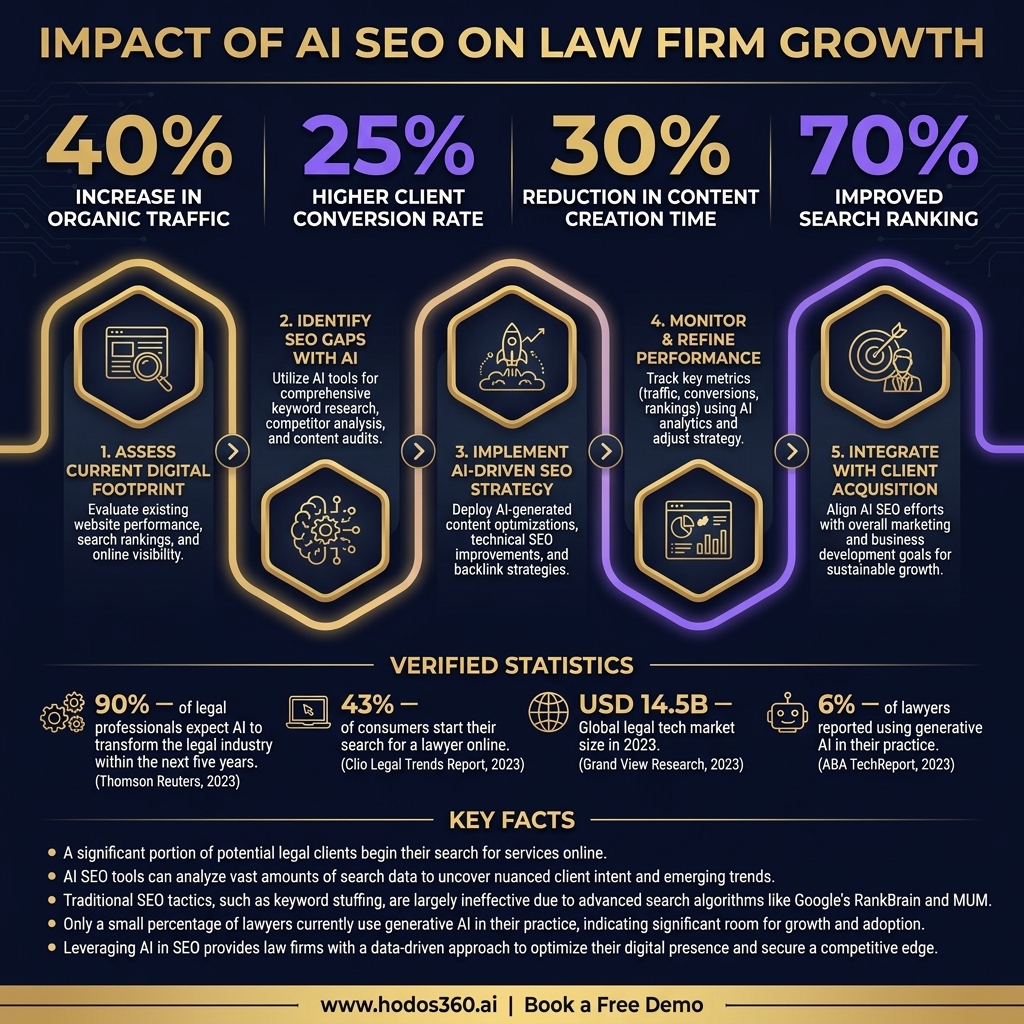
This ensures that legal articles, blog posts, and website copy are not only accurate and informative but also highly discoverable. Learn more about AI Voice Clone: The Ultimate Guide for Law Firms. For instance, AI can help attorneys craft detailed explanations of complex legal concepts, automatically optimizing them for search intent and readability, adhering to best practices advocated by content strategists like Ann Handley, who stresses the importance of valuable, customer-centric content.
This capability allows law firms to produce a steady stream of high-quality, relevant content that establishes their authority and drives organic traffic.
Navigating the Competitive Legal Landscape with Predictive Analytics
In the fiercely competitive legal market, being reactive is no longer sufficient; firms must be proactive, anticipating trends and client needs before they fully materialize. This is where the predictive power of AI SEO analysis truly shines. Unlike traditional SEO analysis that primarily reports on past performance, AI-driven tools utilize machine learning algorithms to forecast future search patterns, identify emerging legal topics, and even predict shifts in competitor strategies.
For example, by analyzing historical data and real-time signals, AI can alert a firm to an upcoming surge in queries related to a specific regulatory change or a new area of litigation, enabling them to create relevant content and campaigns ahead of the curve. This foresight provides a significant competitive advantage, allowing firms to capture market share and position themselves as first-movers.
The drama between firms that embrace this foresight and those that cling to traditional methods is palpable. Learn more about Essential Harvard AI & Web Development Courses for Law Firms. Firms that attended LegalTech NYC 2026, for instance, were actively looking for powered tools that offered this strategic edge, understanding that the cost of client acquisition is continually rising, as noted by Gartner's 2025 legal tech projections.
By leveraging AI SEO analysis for predictive insights, law firms can optimize their digital marketing spend, allocate resources more effectively, and ensure their content and web development efforts are always aligned with future client demand. This proactive stance is not just about staying ahead; it's about shaping the future of their practice by intelligently responding to the evolving digital ecosystem.
Ethical Considerations and Data Privacy in AI-Powered SEO
While the benefits of AI SEO analysis are undeniable, legal professionals must navigate the ethical implications carefully. The use of AI-driven tools in marketing, particularly those that collect and analyze user data, raises concerns about privacy and compliance with regulations like GDPR and CCPA. Furthermore, the American Bar Association (ABA) Model Rules of Professional Conduct, specifically Rule 7.1 concerning Communications About a Lawyer's Services, dictates that marketing communications must not be false or misleading.
This means firms must ensure that AI-generated content and SEO strategies accurately represent their services and qualifications. Learn more about AI Voice Assistants: Ultimate Competitive Edge for Law Firms. Rule 1.6 on Confidentiality of Information also becomes relevant when considering any client data that might be processed by AI analysis platforms.
Companies like OpenAI, under the leadership of Sam Altman, are continually addressing these ethical challenges in AI development, emphasizing the need for robust data governance and transparency. Law firms must ensure their chosen AI SEO analysis tools and practices uphold these ethical standards, safeguarding client trust and professional integrity.
Integrating AI SEO into Your Firm's Digital Strategy: A HODOS 360 Perspective
Successfully integrating AI SEO analysis into a law firm's digital strategy requires a thoughtful, phased approach. It's not about replacing human expertise but augmenting it with AI-powered capabilities to achieve superior results. The goal is to create a seamless ecosystem where web development, content generation, and search insights work in harmony.
This holistic approach ensures that every aspect of a firm's online presence is optimized for maximum visibility and client engagement. By systematically applying AI SEO analysis tools, firms can identify weak points in their current strategy, capitalize on new opportunities, and build a robust digital foundation that attracts and converts ideal clients.
HODOS 360's Web & Mobile Development service is specifically designed to empower law firms in this endeavor. Learn more about AI Legal Assistants: Essential Tools, Not Staff Replacements. We don't just build AI-powered websites; we integrate advanced AI SEO analysis directly into your digital infrastructure, providing responsive design, SEO optimization, and high-converting templates that are inherently intelligent.
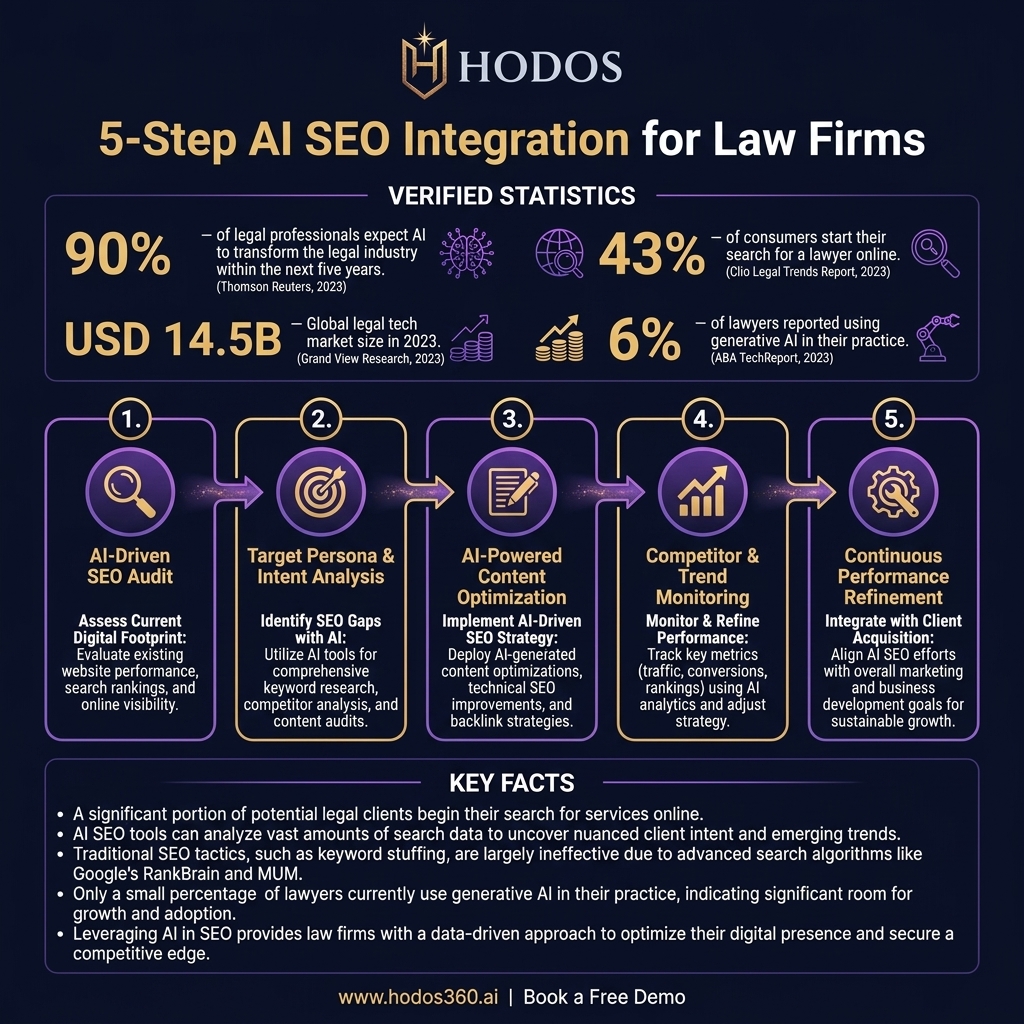
Our platform leverages AI-driven tools to continuously monitor performance, identify trends, and implement optimizations, ensuring your firm remains at the forefront of digital visibility. This integration means you're not just getting a website; you're getting a dynamic, AI-powered client acquisition machine. The key steps for successful AI SEO integration for law firms include:
- ✓Conduct a Comprehensive AI-Driven SEO Audit: Utilize AI SEO analysis tools to perform an in-depth audit of your current website, identifying technical issues, content gaps, and ranking opportunities.
- ✓Identify Target Client Personas and Search Intent: Leverage AI to understand what your ideal clients are looking for, their pain points, and the specific legal search queries they use.
- ✓Leverage AI for Content Topic Generation and Optimization: Use AI-powered tools to suggest high-value content topics, assist in drafting, and optimize existing pages for search engine performance and readability.
- ✓Monitor Competitor Strategies with AI Analysis Extensions: Employ AI SEO analysis extensions to track competitor rankings, backlink profiles, and content strategies, uncovering their strengths and weaknesses.
- ✓Continuously Refine Technical SEO with AI Tools: Use AI to automate the identification and resolution of technical SEO issues like broken links, crawl errors, and slow page loading times.
- ✓Measure ROI and Adapt Strategies Based on Insights: Implement AI-driven analytics to track key performance indicators (KPIs), measure the return on investment (ROI) of SEO efforts, and adapt strategies in real-time based on concrete insights.
Ready to see your law firm rank higher? Schedule a free consultation with HODOS 360 today to optimize your digital presence.
The Future of Legal Marketing: AI-Driven Web & Mobile Development
The future of legal marketing is inextricably linked to AI-driven web development and SEO analysis. As AI continues to advance, we can anticipate even more personalized search results, sophisticated voice search optimization, and hyper-targeted content creation. Jensen Huang, CEO of NVIDIA, frequently articulates a vision where AI permeates every industry, fundamentally changing how businesses operate.
For law firms, this means AI-powered platforms will become even more adept at understanding complex legal nuances, generating highly persuasive marketing copy, and predicting litigation trends that influence content strategy. The integration of AI SEO analysis will move beyond mere optimization to become a core component of client relationship management and business development, ensuring that law firms are not just found, but are the preferred choice for clients in an increasingly digital world.

Key Takeaways and Next Steps for Legal Professionals
The digital visibility of a law firm is no longer a secondary concern; it is a foundational pillar of modern practice. AI SEO analysis tools are not just a passing trend; they are essential technologies providing unprecedented insights and capabilities for legal professionals. From strategic content generation to predictive trend identification and robust technical SEO, AI offers a competitive advantage that cannot be ignored.
Firms that embrace these AI-powered tools will not only enhance their online presence but also streamline their marketing efforts, attract more qualified leads, and ultimately, secure a stronger position in the legal market. The time to act is now: begin with an AI-driven audit, invest in continuous learning, and consider partnering with experts who understand the nuances of legal tech and AI SEO analysis to propel your firm into the future of digital success.
Don't let your firm fall behind. Partner with HODOS 360 for unparalleled AI-powered Web & Mobile Development and propel your legal practice to the forefront of digital visibility. Book your demo now!
Frequently Asked Questions
What are AI SEO analysis tools?+
AI SEO analysis tools are software platforms and extensions that leverage artificial intelligence and machine learning to automate and enhance search engine optimization tasks. They analyze vast amounts of data—including keyword performance, competitor strategies, content gaps, and technical website health—to provide actionable insights and recommendations, making SEO more efficient and effective than traditional manual methods.
How do AI SEO tools specifically benefit law firms?+
For law firms, AI SEO tools offer several key benefits. They help identify niche legal search queries, optimize content for specific client needs, improve local SEO for physical offices, and monitor online reputation. By providing predictive insights into legal trends and client intent, these tools enable firms to attract more qualified leads, enhance their authority in specialized legal areas, and ultimately increase client acquisition and revenue.
Are AI SEO extensions ethical for legal marketing?+
Yes, when used responsibly, AI SEO extensions are ethical for legal marketing. Firms must ensure that AI-driven content is accurate and complies with ABA Model Rules like 7.1 (Communications About a Lawyer's Services), avoiding misleading claims. Additionally, privacy concerns regarding data analysis must adhere to Rule 1.6 (Confidentiality of Information) and relevant data protection laws. Transparency and robust data governance are crucial for ethical implementation.
What is the difference between traditional SEO and AI SEO?+
Traditional SEO relies heavily on manual research, keyword density, and basic link building, often reacting to search algorithm changes. AI SEO, conversely, uses machine learning for proactive, data-driven strategies. It excels at understanding complex search intent, analyzing user behavior, predicting trends, and automating optimizations across technical, on-page, and off-page SEO elements, offering deeper insights and greater efficiency than its traditional counterpart.
How quickly can law firms see results from AI SEO?+
The timeframe for seeing results from AI SEO analysis can vary depending on factors like the firm's current online presence, competitive landscape, and consistency of implementation. While some improvements, particularly in technical SEO and content optimization, can be observed within a few weeks, significant shifts in organic rankings and client acquisition typically take 3 to 6 months or longer. Consistent application of AI-powered insights yields the best long-term results.