


AI Voice: The Ultimate Business Value for Law Firms
The legal industry, often characterized by its meticulous adherence to tradition, is now at the precipice of a technological revolution, spearheaded by advancements in artificial intelligence. Deutsche Telekom's recent announcement, detailing its aggressive expansion of AI voice solutions to business clients, signals a pivotal moment, underscoring the immense value intelligent voice technology offers beyond conventional customer service. This strategic move by a telecommunications giant is a clear indicator that the capabilities of AI voice are extending deeply into core business operations, transforming how enterprises, including law firms, interact with their clients and manage their workflow. For legal professionals, this isn't just about answering calls; it's about redefining accessibility, efficiency, and the very fabric of client engagement.
Historically, the legal sector has wrestled with the dual challenges of high client demands and the need for operational leaness. Missed calls, inefficient lead qualification, and manual appointment scheduling have long been silent drains on productivity and potential revenue. However, the advent of sophisticated AI voice assistants, powered by large language models (LLMs) from innovators like OpenAI and Anthropic, is dramatically shifting this paradigm. These aren't the robotic, frustrating interactive voice response (IVR) systems of old; they are intelligent agents capable of natural language understanding, sentiment analysis, and complex task execution. As firms navigate an increasingly competitive market, the ability to provide instantaneous, intelligent, and multilingual support around the clock presents an unparalleled value proposition, enhancing client satisfaction and securing a crucial competitive edge in the digital age.
Beyond the Beep: The Evolution of AI Voice in Legal Services
The journey from rudimentary IVR to today's advanced AI voice assistants is a testament to rapid technological progress, fundamentally reshaping how legal service is delivered. Legacy IVR systems, often a source of client frustration, were designed for basic call routing, presenting a rigid menu of options. Modern voice AI, however, leverages sophisticated natural language processing (NLP) and machine learning algorithms, allowing for fluid, human-like conversations. This leap in capability means an AI voice assistant can understand context, intent, and even emotional cues, providing truly intelligent responses and personalized interactions. As Jensen Huang, CEO of NVIDIA, has often emphasized, the underlying computational power and advancements in AI chips are driving this exponential growth, making real-time, complex voice interactions feasible and highly effective. For law firms, this translates into a 24/7 virtual receptionist that can handle initial inquiries with the professionalism and nuance previously only possible with a seasoned human assistant.
The implications for law firm management are profound. According to the 2023 Thomson Reuters 'State of the Legal Market Report,' client demands for responsiveness and transparency continue to escalate, yet many firms struggle to meet these expectations consistently, especially outside of standard business hours. Learn more about AI Web Development: The Ultimate Advantage for Law Firms. This gap creates fertile ground for AI voice technology. Imagine a prospective client calling after midnight with an urgent query about an accident. Instead of reaching an answering machine, they engage with an intelligent AI voice assistant that can qualify their needs, explain basic next steps, and even schedule an initial consultation for the morning, all while capturing critical data. This immediate, empathetic interaction can be the decisive factor in turning a potential client into a retained one, directly addressing the issue of missed opportunities that traditional systems fail to capture. Such capabilities are transforming the initial client touchpoint from a potential barrier into a seamless, positive experience, setting a new standard for customer service in the legal sector.
From Call Answering to Intelligent Client Intake
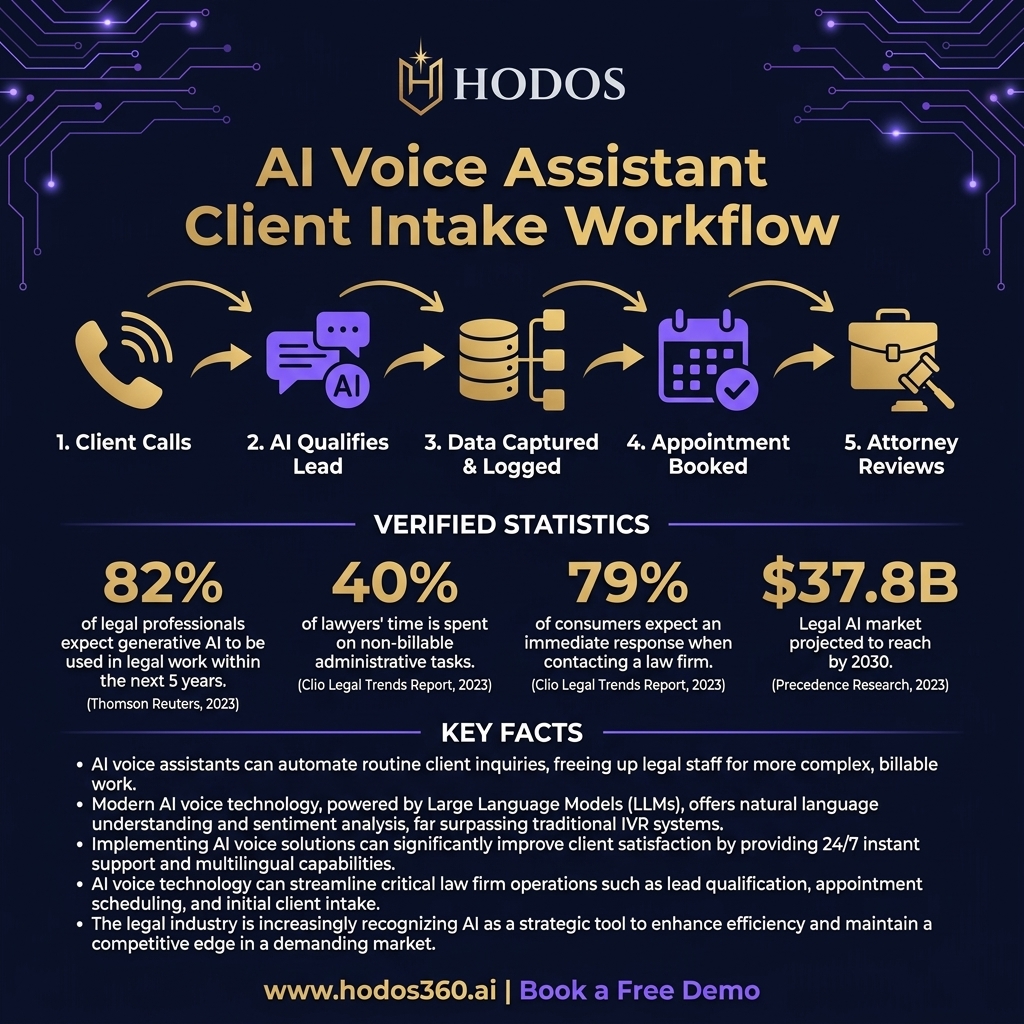
The true value of AI voice for law firms extends far beyond simple call answering; it lies in its capacity to revolutionize client intake. Traditional intake processes are notoriously time-consuming, requiring significant human capital for initial screenings, data collection, and conflict checks. An intelligent AI voice assistant can automate much of this preliminary work, guiding callers through a structured series of questions to gather essential information such as case type, urgency, and contact details. This data is then immediately logged into the firm's case management system, ready for review by a human attorney. This proactive approach ensures that when a lawyer or paralegal engages with a prospective client, they are already equipped with a comprehensive understanding of their needs, significantly reducing initial consultation times and increasing the efficiency of the entire intake funnel. Firms that adopt this technology are seeing a tangible impact on their ability to manage a higher volume of inquiries without compromising service quality, directly contributing to growth.
Moreover, the ability of AI voice assistants to provide multilingual support addresses a critical need in diverse legal markets. Learn more about AI Legal Page Generators: The Ultimate Guide for Firms. A client who can communicate in their native language feels more comfortable and understood, fostering trust from the very first interaction. This capability is particularly relevant in jurisdictions with significant non-English speaking populations, allowing law firms to broaden their reach and service a wider demographic. The investment in such technology is not merely an operational upgrade; it's a strategic move to enhance inclusivity and client accessibility, aligning with modern principles of legal service delivery. As firms like Veritas Law Group, for example, have demonstrated, embracing intelligent intake powered by voice AI can lead to a demonstrable increase in qualified leads and a reduction in administrative overhead, allowing legal professionals to focus on the substantive legal work that truly drives value for their clients.
Unlocking New Revenue Streams and Client Satisfaction with Voice AI
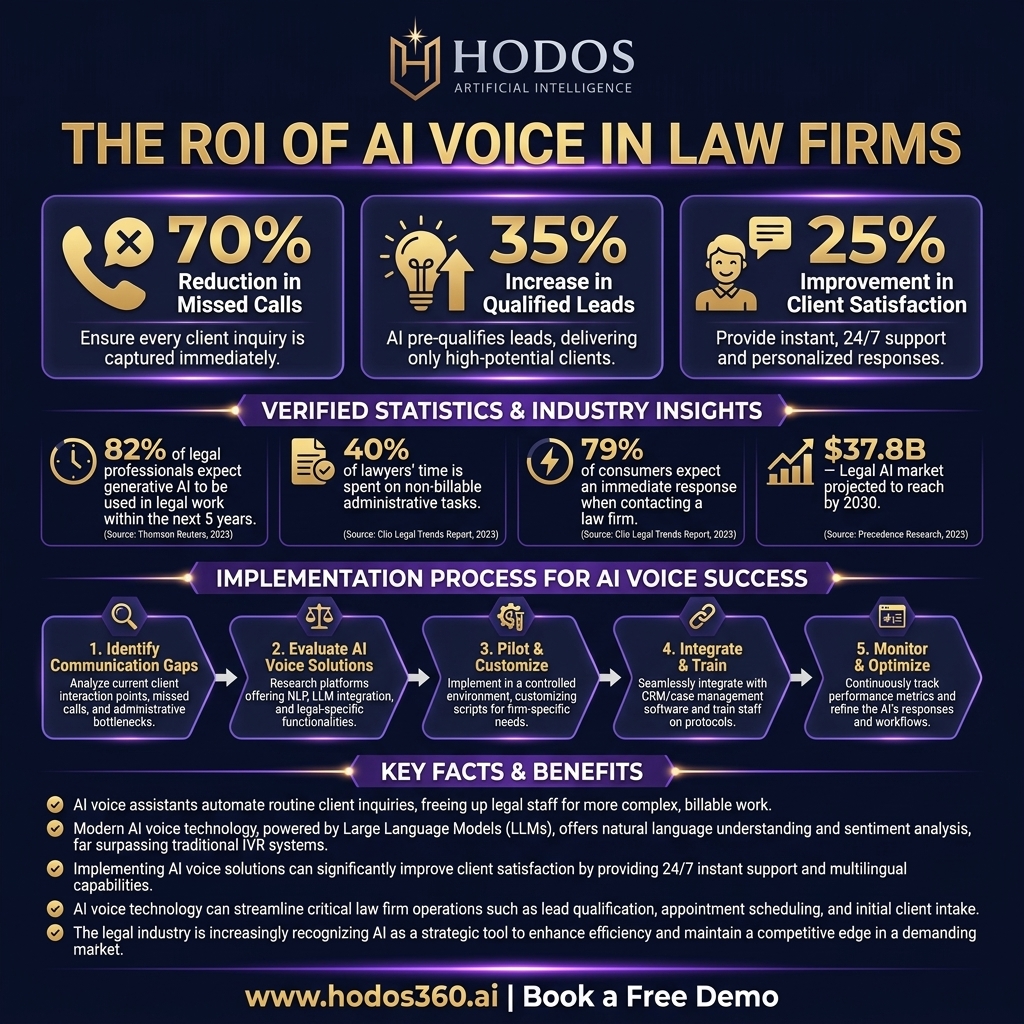
The competitive landscape for law firms demands constant innovation, and AI voice assistants are proving to be a powerful differentiator in turning potential leads into tangible revenue. A significant challenge for many firms is the high volume of initial inquiries that often go unanswered or are mishandled, leading to missed opportunities. A study by LexisNexis found that up to 30% of potential clients will call another firm if their initial call isn't answered promptly. AI voice technology directly addresses this by ensuring every call is answered, every lead is qualified, and every opportunity for engagement is maximized. By providing instant responses, even outside business hours, firms cultivate an image of responsiveness and accessibility that is highly valued by modern clients. This immediate engagement not only captures more leads but also sets a positive tone for the entire client relationship, laying the groundwork for higher satisfaction and retention rates. The value-add is clear: more qualified leads translate directly into more cases and increased firm revenue.
Consider the scenario of a law firm specializing in personal injury. After a major accident, victims often call numerous firms in quick succession. Learn more about AI Legal Tech Boom 2026: Unlocking Billions in Valuation. The firm with an AI voice assistant that can promptly answer, empathize, qualify the lead, and book an urgent consultation gains a significant advantage over competitors relying on traditional answering service models. This proactive approach is not just about customer service; it's a sophisticated marketing tool. Furthermore, the data collected by these agents during initial interactions provides invaluable insights into client needs, common questions, and emerging trends. This intelligence can then be leveraged to refine marketing strategies, optimize website content, and even identify new practice areas. The integration of AI voice into client acquisition strategies is rapidly becoming a cornerstone for growth, allowing firms to scale their outreach without proportionally increasing their overhead. Sam Altman, CEO of OpenAI, has consistently highlighted the transformative power of conversational AI, and its application in legal intake perfectly illustrates this potential for profound business impact.
- ✓24/7 Lead Capture: AI voice assistants ensure no potential client call is ever missed, regardless of time zone or operational hours, capturing leads around the clock.
- ✓Instant Qualification: Intelligent agents can ask targeted questions to pre-qualify leads, identifying high-potential cases and filtering out irrelevant inquiries before human intervention.
- ✓Enhanced Client Experience: Immediate, knowledgeable, and multilingual responses create a positive first impression, fostering trust and satisfaction from the outset.
- ✓Automated Appointment Booking: Seamlessly integrate with calendars to schedule consultations directly, reducing administrative burden and accelerating the client onboarding process.
- ✓Data-Driven Insights: Analytics from voice interactions provide valuable data on client demographics, common legal needs, and service gaps, informing strategic decisions.
- ✓Reduced Operational Costs: By automating routine inquiries and administrative tasks, firms can significantly lower staffing costs associated with client intake and reception.
- ✓Competitive Differentiation: Offering advanced, responsive client interaction through AI voice sets a firm apart in a crowded legal market, attracting tech-savvy clients.
Operational Efficiency: Streamlining Legal Workflows with Intelligent Voice Agents
Beyond client acquisition, the strategic deployment of AI voice assistants offers profound benefits for internal operational efficiency, fundamentally transforming daily management within law firms. The automation of routine administrative tasks, such as scheduling appointments, providing directions, or answering frequently asked questions, frees up valuable human resources—attorneys, paralegals, and administrative staff—to focus on higher-value legal work. This shift not only enhances productivity but also significantly reduces the potential for human error in repetitive tasks. For instance, a paralegal who typically spends hours on the phone confirming appointments or redirecting calls can now dedicate that time to legal research, document drafting, or direct client service that requires complex human judgment. According to a McKinsey report on AI in the workplace, automation can save up to 30% of time spent on administrative tasks across various industries, a figure directly applicable to the legal sector's often paper-intensive and communication-heavy workflows. This efficiency gain is critical for firms looking to scale their operations and improve their bottom line without expanding headcount proportionally.
Furthermore, AI voice technology, especially when integrated with a comprehensive AI Law Firm Management System like HODOS 360, can seamlessly update case files, log client communications, and trigger automated legal workflows. Learn more about Voice AI: Essential Evolution of the Legal User Interface. Imagine an AI voice assistant concluding a call with a client and, based on the conversation, automatically generating a summary, updating the client's profile in the CRM, and scheduling a follow-up task for a specific attorney. This level of integration ensures that no detail is missed and that all client interactions are meticulously documented, enhancing compliance and reducing professional liability risks. The ethical implications of client communication, as outlined in ABA Model Rule 1.4 (Communication), emphasize the importance of keeping clients reasonably informed. AI voice solutions, by providing consistent and documented communication channels, help firms meet these ethical obligations more effectively. The data captured by these agents can also be invaluable for internal auditing and service improvement, providing granular insights into call volumes, common client issues, and staff performance, fostering a culture of continuous operational refinement.
Data-Driven Insights from Client Interactions
The true power of modern AI voice assistants lies not just in their ability to interact, but in their capacity to generate actionable data from every customer interaction. Each call handled by an AI voice agent is a trove of information, capturing client queries, sentiment, and preferences. This data, when analyzed, provides unparalleled insights into client needs, common legal problems, and areas where a firm's service might be excelling or falling short. For example, if a significant number of calls consistently inquire about a specific type of legal issue, it might signal an emerging market trend or an opportunity to expand into a new practice area. Similarly, analyzing sentiment during calls can help identify client dissatisfaction early, allowing the firm to intervene proactively and improve service delivery.
This data-driven approach moves law firm management from reactive problem-solving to proactive strategic planning. Firms can use these insights to refine their marketing messages, tailor their legal service offerings, and even optimize their internal training programs. Learn more about AI Website Design: Essential Prompts for Law Firms. In a highly competitive market, such granular understanding of client behavior is a significant strategic advantage. It allows firms to stay ahead of the curve, anticipate client needs, and allocate resources more effectively. The ongoing growth in the AI voice market, projected to reach tens of billions of dollars by 2030 (according to various industry reports), is largely fueled by the recognition of this immense data value. Firms that embrace this analytical capability are not just automating tasks; they are building a more intelligent, responsive, and ultimately more profitable business model.
Navigating the Future: Trends, Ethical Considerations, and the Human Element
As AI voice technology continues its rapid evolution, law firms must strategically navigate emerging trends and critical ethical considerations to fully harness its potential. The future of voice AI will likely see even deeper integration with other legal tech solutions, creating truly seamless, end-to-end workflows from client intake to case resolution. We can anticipate AI voice assistants becoming more proactive, perhaps even initiating communications with clients for routine updates or document requests, all while maintaining the highest standards of data security and client confidentiality. The ongoing research into advanced conversational AI and emotional intelligence will make interactions even more nuanced and empathetic, further blurring the lines between human and artificial agents. However, this rapid advancement necessitates a vigilant approach to ethical guidelines, particularly concerning client data privacy and the responsible use of AI in legal service. The EU AI Act, for instance, sets a precedent for regulatory frameworks, emphasizing transparency and accountability in AI systems, which legal professionals must heed.
The ethical imperative for law firms adopting AI voice is paramount. While the benefits of efficiency and improved customer service are clear, firms must ensure that the deployment of AI voice assistants aligns with professional responsibility and client trust. This includes transparently disclosing the use of AI to clients, ensuring data security and compliance with regulations like GDPR or HIPAA (where applicable), and maintaining human oversight for critical decisions. The role of the human lawyer is not diminished but rather elevated; AI becomes a powerful augmentative tool, freeing legal minds for complex analysis, strategic counsel, and empathetic client advocacy that only a human can provide. Learn more about Essential Legal Ops AI: Navigating the Future of Law Firms. Dario Amodei, co-founder of Anthropic, often speaks about the importance of 'constitutional AI,' where ethical guardrails are built into the system's core. For law firms, this means carefully configuring AI voice systems to uphold legal ethical standards and client confidentiality, ensuring that technology serves justice, not the other way around. The future of legal service is one where AI and human expertise work in synergy, creating a more accessible, efficient, and just legal system.
Ultimately, the human element remains irreplaceable. While AI voice excels at automating routine tasks and providing instant information, it cannot replicate the complex reasoning, emotional intelligence, and nuanced judgment that define legal practice. Attorneys are responsible for navigating the intricate web of laws, advocating for their clients in court, and providing strategic counsel that requires deep human understanding. AI voice agents are powerful tools designed to support these core functions, enhancing a firm's capacity to serve its clients more effectively and efficiently. By intelligently deploying these technologies, law firms can create a more balanced environment where technology handles the repetitive, and humans focus on the transformative aspects of law. This strategic integration is not about replacing lawyers but empowering them to deliver superior value and service, driving sustainable growth in an ever-evolving legal market.

HODOS 360: Empowering Law Firms with Advanced AI Voice Assistants
The insights from Deutsche Telekom's push into AI voice for business clients resonate deeply with the challenges and opportunities facing modern law firms. HODOS 360 stands at the forefront of this transformation, offering a suite of AI-powered solutions specifically designed to elevate legal service delivery and operational excellence. Our AI Voice Assistants are engineered to address the very pain points discussed, providing a sophisticated, intelligent interface for client interactions. Imagine a system that ensures every inbound call, whether from a prospective lead or an existing client, is handled with immediate professionalism, 24/7 phone answering capability that never misses an opportunity. This means no more lost leads due to unanswered calls outside business hours, a critical factor in today's competitive legal market. The system excels in lead qualification, intelligently guiding callers through a tailored series of questions to gather pertinent information and assess the viability of their case, effectively turning casual inquiries into actionable prospects. This dramatically streamlines the intake process, allowing your legal team to focus on high-value work.
Furthermore, HODOS 360's AI Voice Assistants are equipped with advanced features like appointment booking, seamlessly integrating with your firm's calendar to schedule consultations without manual intervention. This level of automation significantly reduces administrative overhead and ensures that your attorneys' schedules are optimized. The platform's multilingual support capabilities enable firms to cater to a diverse client base, fostering inclusivity and expanding market reach, a crucial advantage in many jurisdictions. For complex organizations, intelligent call routing ensures that clients are directed to the most appropriate department or individual, enhancing efficiency and client satisfaction. By providing a comprehensive, AI-powered solution for client communication, HODOS 360 empowers law firms to not only keep pace with the rapidly evolving trends in legal tech but to lead the charge, setting new standards for responsiveness, efficiency, and client care. This strategic adoption of AI voice technology is more than an upgrade; it's a fundamental shift towards a more intelligent, client-centric, and profitable future for your firm.
Frequently Asked Questions
What is the primary difference between traditional IVR and modern AI voice assistants?+
Traditional IVR systems are rigid, menu-driven, and often frustrating, designed for basic call routing. Modern AI voice assistants, powered by advanced NLP and machine learning, understand natural language, context, and sentiment, enabling fluid, human-like conversations for intelligent interactions and complex task execution.
How do AI voice assistants help law firms acquire new clients?+
AI voice assistants provide 24/7 lead capture, ensuring no potential client call is missed. They intelligently pre-qualify leads, gather essential information, and can even book appointments, effectively turning inquiries into actionable prospects and significantly boosting client acquisition rates.
Can AI voice assistants integrate with existing law firm management systems?+
Yes, advanced AI voice assistants are designed for seamless integration with existing law firm management systems. They can automatically update case files, log client communications, and trigger automated workflows, ensuring data consistency and streamlining administrative processes.
What ethical considerations should law firms be aware of when using AI voice technology?+
Law firms must prioritize client data privacy, ensure transparency about AI usage, and comply with regulations like GDPR or HIPAA. Maintaining human oversight for critical decisions and adhering to professional responsibility guidelines, such as ABA Model Rule 1.4 on communication, is crucial.
How does multilingual support in AI voice assistants benefit law firms?+
Multilingual support allows law firms to cater to a diverse client base, expanding their market reach and fostering inclusivity. Clients can communicate in their native language, enhancing comfort, trust, and overall satisfaction from the very first interaction, leading to better engagement.