


Essential Legal Ops AI: Navigating the Future of Law Firms
The legal industry, often perceived as a bastion of tradition, is undergoing a profound transformation driven by artificial intelligence. From the boardrooms of Silicon Valley giants like OpenAI, led by Sam Altman, to the strategic planning sessions within global law firms, the conversation around AI's disruptive potential has shifted from hypothetical to immediate imperative. A recent article from Wolters Kluwer highlighted critical lessons from the "front lines of legal ops AI," underscoring that the time for cautious observation is over; proactive engagement is essential for survival and growth. Law firms are no longer merely considering AI; they are actively implementing it to redefine their operational core.
This paradigm shift isn't just about adopting new tools; it's about fundamentally rethinking how legal services are delivered, managed, and optimized. The integration of legal ops AI promises not only to streamline mundane tasks but also to unlock unprecedented strategic advantages, enabling firms to deliver higher value at lower costs. Yet, this journey is fraught with challenges, from navigating a fragmented vendor landscape to addressing ethical considerations and fostering a culture of innovation among seasoned legal professionals. The firms that succeed will be those that strategically embed AI into every facet of their legal operations, from initial client intake to complex litigation support.
As we delve into the insights from those pioneering this digital frontier, it becomes clear that success hinges on a blend of technological adoption, strategic foresight, and a keen understanding of the human element. The goal isn't to replace lawyers but to empower them, augmenting their capabilities and freeing them to focus on high-value, client-centric work. This comprehensive guide will explore the essential lessons learned, providing a roadmap for law firm leaders seeking to harness the transformative power of AI in their own legal workflows and business strategies. It's a journey from efficiency gains to a complete re-imagination of legal service provision.
From the Front Lines: Shifting Paradigms in Legal Ops AI
The "front lines" of legal operations AI are not merely experimental labs; they are the daily battlegrounds where efficiency meets innovation. Firms like Allen & Overy, a global legal powerhouse, have been at the vanguard, famously partnering with generative AI startup Harvey AI to enhance their legal research and drafting capabilities. David Wakeling, Allen & Overy's Head of Innovation, has spoken extensively about how this collaboration is not just about speed, but about elevating the quality and consistency of legal advice. This kind of strategic alliance exemplifies a critical lesson: successful AI adoption isn't about isolated tools, but about integrating AI into core legal workflows to achieve measurable business outcomes.
Early adopters are reporting significant gains, particularly in areas historically bogged down by manual processes. The ABA TechReport 2023 indicated a growing comfort among legal professionals with AI tools, with a notable increase in firms exploring AI for legal research and e-discovery. This trend is further amplified by the competitive pressures within the legal market, where clients demand greater transparency, faster turnarounds, and cost-effectiveness. Firms that hesitate risk being outmaneuvered by agile competitors leveraging AI for superior law firm efficiency and client satisfaction. Learn more about AI Voice Agents: The Essential Guide for Modern Law Firms. The shift is from reactive problem-solving to proactive, data-driven strategy, fundamentally altering the role of legal operations within the firm.
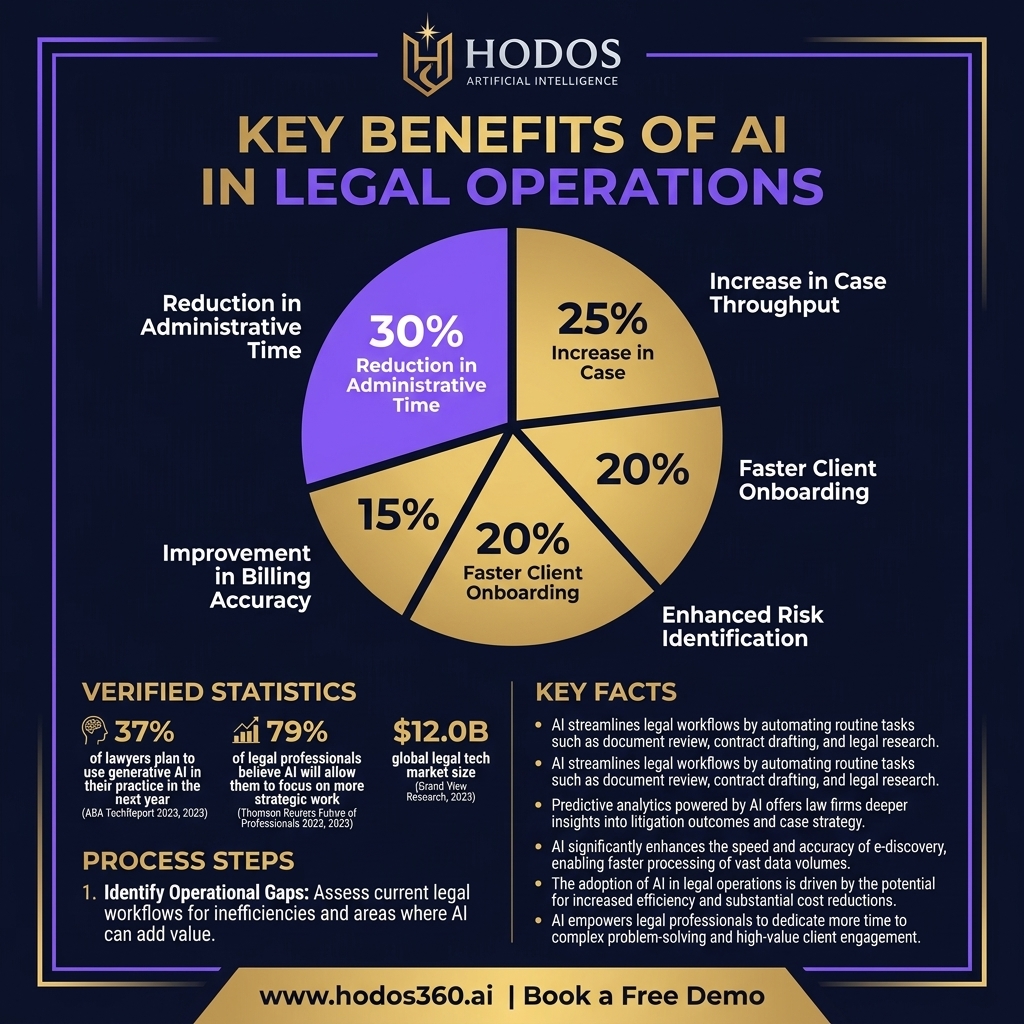
Consider the evolution of client intake. Traditionally, this was a labor-intensive process, prone to human error and delays. With AI, firms are implementing intelligent intake forms and automated data extraction, reducing onboarding time by as much as 30% according to some industry reports. This not only improves the client experience but also frees up valuable paralegal and attorney time, allowing them to focus on substantive legal work. This proactive approach, driven by legal ops AI, is redefining what's possible in legal service delivery, transforming bottlenecks into streamlined, high-performing processes. The key is to identify high-impact areas where AI can deliver immediate, tangible value, building momentum for broader adoption across the firm.
Beyond Efficiency: Strategic Value of AI in Legal Operations
While efficiency gains are often the initial draw for legal ops AI, the true long-term value lies in its strategic potential. AI-powered platforms are moving beyond mere automation to provide predictive insights that inform critical business decisions. For instance, advanced analytics can identify patterns in past litigation outcomes, helping firms assess risk more accurately and advise clients with greater precision. This capability extends to resource allocation, allowing legal operations teams to forecast workload demands and optimize staffing, avoiding both under- and over-utilization of talent. The result is a more agile and responsive legal practice, capable of adapting quickly to market shifts and client needs.
Furthermore, AI is democratizing access to sophisticated legal insights. Smaller firms, which might not have the extensive in-house research capabilities of their larger counterparts, can now leverage AI tools to perform complex legal analysis, competitive intelligence, and market trend forecasting. Learn more about AI Marketing Strategy: Essential Lessons from 25 Years of Evolution. This levels the playing field, fostering greater legal tech innovation across the industry. The impact on client relationships is equally profound, as firms can offer more proactive advice, anticipating potential legal challenges and providing preventative strategies. This transforms the lawyer-client dynamic from reactive problem-solver to strategic partner, building deeper trust and loyalty. The strategic integration of legal ops AI is therefore not just an operational upgrade, but a fundamental re-engineering of the firm's competitive posture.
Data-Driven Decisions: The Core of AI-Powered Legal Operations
At the heart of effective legal ops AI lies data – the fuel that powers intelligent decision-making. Firms are rapidly realizing that their vast repositories of legal documents, billing records, and client communications represent an untapped goldmine of insights. AI algorithms can sift through this data at speeds and scales impossible for humans, identifying trends, anomalies, and correlations that inform everything from pricing strategies to risk management. For example, a Thomson Reuters Institute report highlighted how data analytics is becoming indispensable for law firm profitability, enabling leaders to understand the true cost of service delivery and identify areas for optimization. This move towards data-centric operations marks a significant shift from intuition-based management to evidence-based strategy.
Consider the intricate processes involved in case management. AI-powered systems can analyze historical case data to predict litigation outcomes, estimate case durations, and even forecast settlement ranges. This predictive capability allows attorneys to set more realistic client expectations, develop more effective strategies, and allocate resources more judiciously. For instance, a firm might use AI to identify the most successful approaches for similar cases based on past performance, drawing on thousands of data points that a human attorney could never process. This elevates the quality of legal advice and provides a tangible competitive advantage. The integration of such tools transforms legal operations from a cost center into a strategic value driver.
Another critical area benefiting from data-driven AI is document automation. Learn more about Essential AI Voice Assistants: Navigating ChatGPT's Sponsored Links. Beyond simple template generation, advanced AI can analyze legal documents for compliance, consistency, and potential risks, significantly reducing the time and effort involved in contract review and due diligence. This not only accelerates transactions but also minimizes the potential for costly errors. Firms leveraging these capabilities are seeing a dramatic improvement in efficiency, allowing their legal professionals to focus on the nuanced legal analysis that truly requires human expertise. The data extracted and analyzed by these systems also feeds back into the firm's knowledge base, continuously refining its AI models and enhancing its collective intelligence.
The ability to track and analyze business outcomes in real-time is another transformative aspect. AI dashboards can provide law firm leaders with comprehensive views of key performance indicators (KPIs), from client acquisition costs to project profitability and attorney utilization. This transparency allows for agile adjustments to strategy, ensuring that resources are always aligned with the firm's overarching goals. Jensen Huang, CEO of NVIDIA, often speaks about the power of data and accelerated computing to unlock new frontiers across industries, and legal is no exception. By embracing a data-first mindset, law firms can move beyond simply reacting to challenges and instead proactively shape their future, driving sustainable growth and innovation.
Navigating the AI Landscape: Vendor Selection & Implementation Strategies
The burgeoning legal tech innovation landscape presents both immense opportunity and significant challenges, particularly in vendor selection and implementation. The market is saturated with AI solutions, ranging from specialized tools for e-discovery and contract analysis to comprehensive AI law firm management systems. Making the right choice requires a clear understanding of the firm's specific needs, an assessment of potential ROI tracking, and rigorous due diligence. Clio, a leading practice management software provider, has been actively acquiring and integrating AI capabilities, demonstrating how even established players are evolving to meet the demand for integrated solutions. This highlights a trend towards platforms that offer a holistic approach rather than disparate tools.
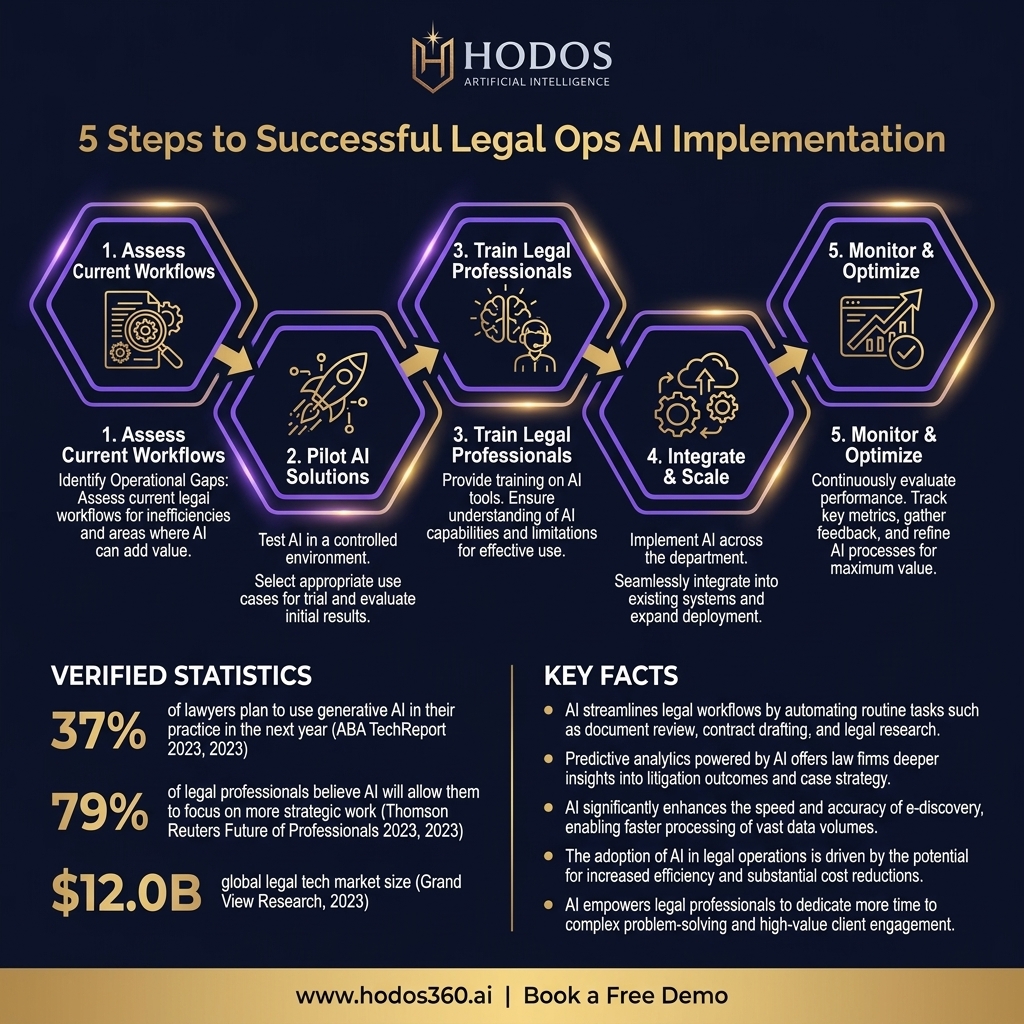
Successful implementation is rarely a plug-and-play scenario. It demands a phased approach, starting with pilot programs in specific departments or for particular use cases. This allows firms to test the technology, gather feedback, and refine processes before a broader rollout. Bas Boris Visser, Global Head of Innovation at Clifford Chance, has emphasized the importance of agile methodologies and user-centric design in legal tech deployments. Without proper change management and training, even the most sophisticated AI tools can fail to achieve their intended impact. Learn more about Agency Renegotiation: Essential Strategies for AI Marketing. Firms must invest in educating their legal professionals on how to effectively interact with and leverage AI, ensuring that the technology becomes an enabler rather than a source of frustration.
Key considerations for vendor selection include the AI's accuracy, scalability, integration capabilities with existing systems, and the vendor's commitment to data security and privacy. Firms should look for solutions that offer robust analytics and reporting features, allowing them to continuously monitor performance and measure the impact on law firm efficiency and profitability. Furthermore, understanding the underlying AI models and their explainability is crucial, particularly in a field where transparency and accountability are paramount. A smart implementation strategy focuses on achieving incremental wins, building confidence and demonstrating value throughout the organization.
Moreover, the long-term viability of the AI solution and the vendor's roadmap are essential. The pace of AI development, driven by companies like Anthropic and Google DeepMind, means that today's cutting-edge might be tomorrow's legacy. Firms need partners who are committed to continuous innovation and who can provide ongoing support and updates. This strategic partnership approach ensures that the firm's investment in legal ops AI remains future-proof, allowing them to adapt to evolving technological capabilities and market demands. The goal is to build a resilient and adaptable technology infrastructure that supports sustained growth and competitive advantage.
- ✓Start Small, Scale Smart: Identify specific, high-impact legal workflows for pilot programs to demonstrate value and build internal buy-in.
- ✓Prioritize Data Integrity: Ensure clean, well-organized data is available, as it is the foundation for effective legal ops AI.
- ✓Invest in Training & Change Management: Equip legal professionals with the skills and mindset to leverage AI tools effectively, addressing concerns about job displacement.
- ✓Focus on Measurable Outcomes: Link AI investments directly to business outcomes and ROI tracking, proving the tangible benefits to the firm.
- ✓Choose Integrated Platforms: Opt for solutions that offer comprehensive capabilities, like HODOS 360's AI Law Firm Management System, to avoid fragmented tech stacks.
- ✓Embrace Ethical AI Governance: Develop clear policies and guidelines for AI use, ensuring compliance with legal and ethical standards like ABA Model Rule 1.6.
The Human Element: Upskilling Legal Professionals for an AI Future
Amidst the excitement surrounding legal ops AI, it's crucial not to overlook the human element. The fear of job displacement is a common concern among legal professionals, yet the reality points towards augmentation rather than replacement. AI is designed to handle repetitive, data-intensive tasks, freeing up attorneys and paralegals to focus on strategic thinking, client relationships, and complex problem-solving—skills that remain uniquely human. This shift necessitates a proactive approach to upskilling and reskilling the workforce, ensuring that legal teams are equipped to collaborate effectively with AI tools.
Forward-thinking firms are investing heavily in continuous education programs, teaching their staff not just how to use new software, but how to think critically about AI's capabilities and limitations. Workshops at conferences like LegalTech NYC 2026 often feature sessions dedicated to prompt engineering, AI ethics, and data literacy for lawyers. The goal is to cultivate a new generation of "hybrid" legal professionals who can combine their deep legal expertise with technological proficiency. This involves understanding how AI makes decisions, how to validate its outputs, and how to integrate AI-generated insights into legal strategy. The firms that champion this educational investment will build a more resilient and adaptable workforce.
This cultural transformation extends to leadership, which must champion AI adoption from the top down. Learn more about Voice Agents: Essential AI for Law Firm Client Engagement. Leaders need to articulate a clear vision for how AI will enhance the firm's mission and create new opportunities for its people. This involves fostering an environment of experimentation and learning, where mistakes are seen as opportunities for growth rather than failures. By demonstrating a commitment to their employees' professional development in an AI-driven world, firms can mitigate resistance to change and foster a collaborative spirit. The ultimate success of legal ops AI lies not just in the technology itself, but in the people who wield it.
Moreover, the demand for new roles, such as legal data scientists, AI ethicists, and legal prompt engineers, is rapidly emerging. Firms are beginning to recruit individuals with these specialized skill sets, bridging the gap between traditional legal practice and advanced technology. This interdisciplinary approach enriches the firm's capabilities and fosters a more diverse and innovative workplace. The future of legal work will be a symbiotic relationship between human intelligence and artificial intelligence, where each augments the other to achieve outcomes previously unimaginable, driving unprecedented law firm efficiency and client value.
Fostering an AI-Ready Culture: Leadership and Training
Creating an AI-ready culture within a law firm is less about dictating change and more about fostering an environment where innovation is encouraged and learning is continuous. Leadership plays a pivotal role in this transformation, not just by investing in technology but by actively participating in its adoption and demonstrating its value. For instance, a managing partner who openly champions the use of AI for document automation or AI-powered legal workflows sends a powerful message throughout the organization. This top-down endorsement helps alleviate anxieties and encourages wider experimentation among legal professionals. Without strong leadership buy-in, even the most advanced legal tech innovation can falter due to internal resistance.
Effective training programs are the bedrock of this cultural shift. These programs should move beyond basic software tutorials to encompass a broader understanding of AI's implications, ethical considerations, and best practices for interaction. Learn more about AI Website Coding: An Essential Guide for Law Firms. The focus should be on practical application, demonstrating how AI can enhance daily tasks rather than replace them. This includes hands-on sessions where attorneys and paralegals can experiment with AI tools for legal research, client intake, or case management. Regularly scheduled workshops, perhaps quarterly, featuring guest speakers from leading legal ops AI companies or academic institutions, can keep the team updated on the latest advancements and foster a sense of continuous learning. By empowering employees with knowledge and practical skills, firms can transform skepticism into enthusiasm, driving widespread adoption and unlocking the full potential of their AI investments.
Ethical AI & Governance: Building Trust in Automated Legal Workflows
As legal ops AI becomes more pervasive, the ethical and governance implications grow exponentially. The legal profession is founded on principles of trust, confidentiality, and professional responsibility. Therefore, the deployment of AI must align rigorously with these foundational tenets. Concerns around data privacy, algorithmic bias, and the unauthorized practice of law are not mere academic discussions; they are real-world challenges that demand proactive solutions. The EU AI Act, for example, represents a landmark effort to regulate AI, particularly high-risk applications, setting a global precedent for responsible AI development and deployment. Law firms must stay abreast of such legislative developments and integrate them into their internal governance frameworks.
Developing clear internal policies for AI usage is paramount. This includes guidelines on data input, output validation, client consent for AI-assisted work, and the human oversight required for all AI-generated content. The ABA Model Rules of Professional Conduct, particularly Rule 1.1 (Competence) and Rule 1.6 (Confidentiality of Information), provide a crucial framework. Attorneys have a duty of technological competence, meaning they must understand the benefits and risks associated with technology, including AI. Furthermore, safeguarding client data when using third-party AI solutions is non-negotiable. Firms must conduct thorough due diligence on vendor security protocols and ensure that client information remains protected from breaches or misuse.
Algorithmic bias presents another significant ethical hurdle. If AI models are trained on historical data that reflects societal biases, their outputs can perpetuate or even amplify those biases, leading to unfair or discriminatory outcomes. This is particularly critical in areas like predictive policing or sentencing recommendations, but also relevant in less obvious applications within a law firm, such as resource allocation or case assessment. Legal operations teams must actively work to identify and mitigate bias in their AI tools, ensuring fairness and equity in all AI workflows. This requires a commitment to diverse data sets, regular auditing of AI systems, and transparent reporting on their performance.
Ultimately, building trust in automated legal workflows is about demonstrating accountability. This means being able to explain how an AI system arrived at a particular conclusion, rather than treating it as a black box. The principle of "explainable AI" (XAI) is gaining traction, pushing developers and users to understand the logic behind AI decisions. For law firms, this translates into maintaining human oversight and ensuring that an attorney always reviews, validates, and takes ultimate responsibility for any work product generated or influenced by AI. By prioritizing ethical considerations and robust governance, firms can harness the power of legal ops AI while upholding the core values of the legal profession, fostering both innovation and public confidence.

Key Takeaways and Next Steps for Legal Ops AI Integration
The journey into legal ops AI is not a sprint, but a strategic marathon demanding foresight, adaptability, and a commitment to continuous learning. The lessons from firms on the front lines underscore that successful integration hinges on a holistic approach that balances technological adoption with human empowerment and ethical governance. From streamlining client intake and document automation to revolutionizing case management and predictive analytics, AI offers an unparalleled opportunity to redefine law firm efficiency and client value.
For law firm leaders, the immediate next steps involve a critical assessment of current operational bottlenecks and a clear articulation of desired business outcomes. This foundational work will guide the selection of appropriate AI tools and inform a phased implementation strategy. Investing in your legal professionals through targeted training and fostering an AI-ready culture will be as crucial as the technology itself. Moreover, establishing robust ethical guidelines and governance frameworks will ensure that AI deployment aligns with the profession’s highest standards of responsibility and trust.
Embracing legal ops AI is no longer optional; it's a strategic imperative for any firm aiming to thrive in the competitive legal landscape of tomorrow. Platforms like HODOS 360, with its comprehensive suite of AI-powered services including an AI Law Firm Management System and AI Marketing Platform, are designed to equip firms with the tools necessary to navigate this transformation. By taking a measured, strategic, and ethically-minded approach, law firms can unlock the full potential of AI, not just to survive, but to lead the future of legal service delivery.
Frequently Asked Questions
What is legal ops AI?+
Legal ops AI refers to the application of artificial intelligence technologies within legal operations to automate, optimize, and enhance various administrative and strategic functions of a law firm. This includes tasks like case management, client intake, document automation, billing, and data analytics, aiming to improve efficiency, reduce costs, and provide better insights for decision-making. It transforms traditional legal workflows into intelligent, data-driven processes.
How can AI improve law firm efficiency?+
AI significantly boosts law firm efficiency by automating repetitive tasks such as document review, data entry, and scheduling, freeing up legal professionals for more complex work. It streamlines legal workflows like client intake and case management, reduces human error, and provides predictive analytics for better resource allocation and strategic planning. This leads to faster service delivery, lower operational costs, and improved profitability.
What are the main challenges in adopting legal ops AI?+
Key challenges include the initial investment cost, integrating new AI systems with existing legacy software, ensuring data security and privacy, and overcoming internal resistance to change among legal professionals. Additionally, selecting the right vendor from a crowded market and developing a clear strategy for measuring ROI tracking can be complex. Ethical considerations like algorithmic bias and maintaining human oversight also pose significant hurdles.
Will AI replace lawyers?+
No, AI is not expected to replace lawyers but rather to augment their capabilities. AI excels at processing vast amounts of data, automating routine tasks, and identifying patterns, allowing lawyers to focus on higher-value activities like strategic thinking, complex problem-solving, client counseling, and courtroom advocacy. It transforms the role of legal professionals, making them more efficient and effective, rather than redundant.
How do law firms ensure ethical AI use?+
Law firms ensure ethical AI use by developing clear internal governance policies, adhering to professional conduct rules (e.g., ABA Model Rule 1.1 on competence), and ensuring robust data privacy and security measures. This involves transparent communication with clients about AI use, rigorous human oversight of AI-generated work, and actively working to identify and mitigate algorithmic bias. Continuous training for legal professionals on AI ethics is also crucial.