


AI Web App Builders: An Essential Guide for Law Firms
The digital landscape for law firms is evolving at an unprecedented pace, largely driven by the democratization of technology through artificial intelligence. Just last year, Sarah Chen, Managing Partner at Chen & Partners, shared her firm's initial excitement at a LegalTech NYC conference about the promise of AI web app builders.
"We saw the headlines – 'AI is making everyone web app builders' – and thought, this could drastically cut our development costs and time," Chen recounted. Her firm, like many others, initially explored off-the-shelf AI tools to rapidly deploy a new client portal and marketing website.
The allure was undeniable: seemingly professional results with minimal coding expertise or investment in a dedicated development team.
However, the initial euphoria quickly gave way to a stark realization. As TechRadar recently highlighted, while AI empowers individuals to become web app builders, it often leaves teams, especially in highly regulated sectors like law, critically exposed.
Chen & Partners soon discovered that their AI-generated client portal, while visually appealing, lacked the bespoke security protocols and compliance architecture essential for handling sensitive client data. A near-miss incident involving a potential data exposure, stemming from generic security features and unpatched vulnerabilities inherent in the platform, forced a complete re-evaluation.
This narrative isn't isolated; it underscores a growing tension between the accessibility of AI-driven development and the imperative for robust, secure, and compliant digital infrastructure in the legal industry. The stakes are simply too high for shortcuts when client confidentiality and professional integrity are on the line.
This trend poses a critical challenge for law firms: how to harness the transformative power of AI in web development without inadvertently compromising security, scalability, or professional standards. The journey from initial excitement to cautious implementation is fraught with pitfalls, particularly for those who underestimate the unique demands of legal digital presence.
The question isn't whether AI will shape the future of legal websites, but how law firms can strategically engage with AI to build a secure, high-performing online foundation, rather than simply letting AI build for them. Ready to fortify your firm's digital presence with cutting-edge, secure solutions?
[Learn more about HODOS 360's Web & Mobile Development services.]
The Democratization of Web Development: A Double-Edged Sword for Law Firms
The proliferation of AI-powered platforms has indeed made building websites and web apps more accessible than ever. Tools like OpenAI’s ChatGPT and Google’s Gemini, when integrated into low-code/no-code environments, can generate code snippets, design layouts, and even populate content with remarkable speed. This has led to a surge in individuals, including legal professionals with limited technical backgrounds, attempting to create their own digital assets.
According to Gartner, by 2025, 70% of new applications developed by enterprises will use low-code or no-code technologies, a significant jump from less than 25% in 2020. This trend reflects a broader industry movement towards rapid prototyping and deployment, allowing everyone to become a 'builder' in some capacity.
However, this democratization carries inherent risks, particularly for law firms where the margin for error is virtually nonexistent. The ease of making a website doesn't equate to the expertise required to build a secure, compliant, and performant legal digital presence. While an AI might quickly assemble a functional site, it lacks the nuanced understanding of legal ethics, client confidentiality, and jurisdictional regulations.
Learn more about AI Marketing: The Ultimate Blueprint for Law Firm Growth. For instance, a generic AI builder might not implement end-to-end encryption by default, or it might store data in jurisdictions that conflict with a firm’s ethical obligations under rules like ABA Model Rule 1.6 on Confidentiality of Information, or even the EU’s GDPR.
This oversight can have catastrophic consequences, as firms like 'LexDigital Associates' learned when their AI-generated client portal was flagged for insufficient data protection protocols.
Moreover, the competitive landscape demands more than just a functional website; it requires a strategic digital asset. A basic AI-generated site often struggles with advanced SEO optimization, responsive design across all devices, and integration with specialized legal practice management systems.
This becomes particularly evident when considering the need for high-converting landing pages or intricate client intake forms that must adhere to strict data privacy standards. While AI can assist with content generation, the strategic oversight and legal accuracy still require human expertise. The danger lies in the illusion of completeness, where a quickly assembled site masks a lack of underlying robustness, leaving legal teams exposed to operational inefficiencies and reputational damage.
The Illusion of Simplicity: Why AI App Builders Fall Short for Legal
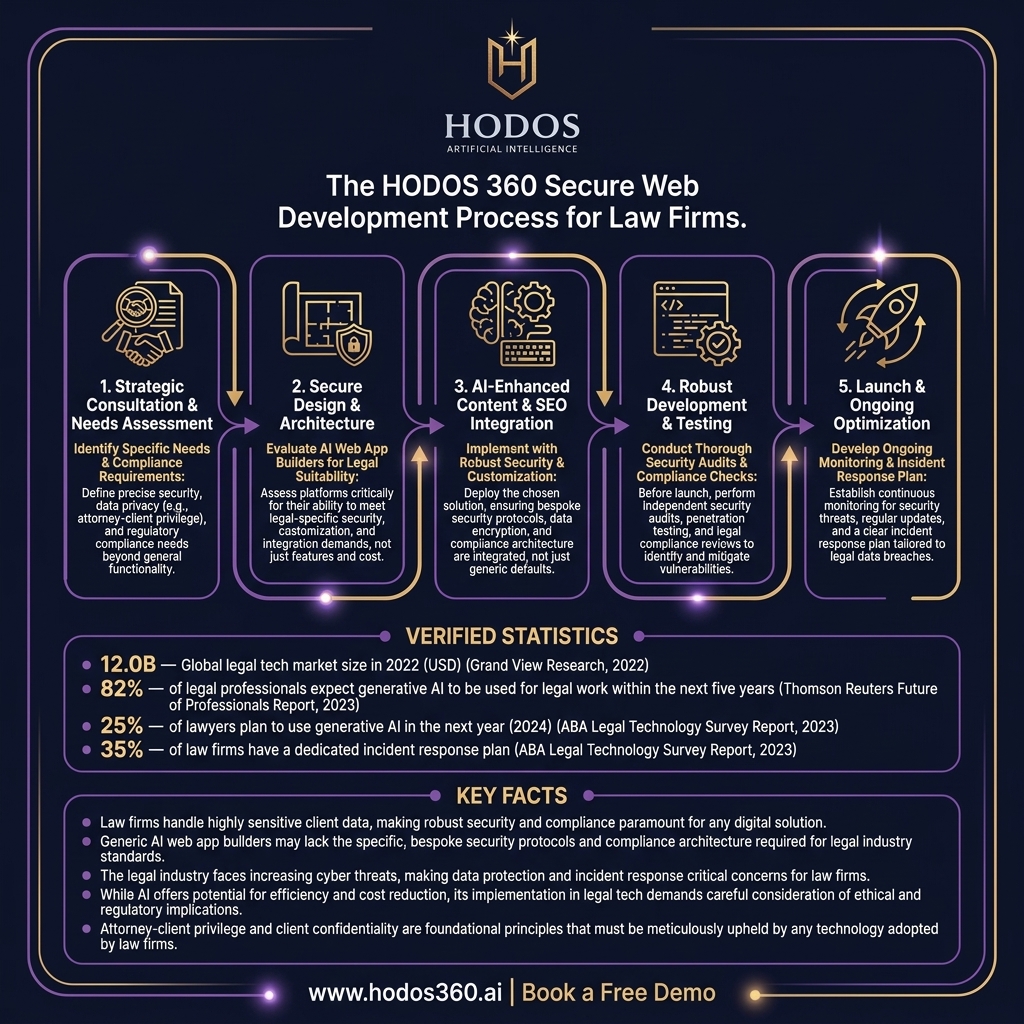
The promise of AI app builders is often simplicity, but this can be deceptive in the legal context. While AI excels at pattern recognition and content generation, it struggles with the subtle yet critical legal nuances that define a firm's digital presence. For example, ensuring compliance with diverse state bar advertising rules, which vary significantly from California's stringent standards to New York's specific disclosures, goes beyond what a general-purpose AI can typically handle without extensive human oversight and customization.
A generic AI might not include necessary disclaimers or integrate specific jurisdictional requirements into a contact form, potentially leading to ethical breaches or regulatory penalties. This gap highlights why relying solely on AI to build a legal website can be a precarious endeavor, as the AI doesn't inherently understand the legal implications of its output.
The 'problem' isn't with AI itself, but with its application without specialized legal context.
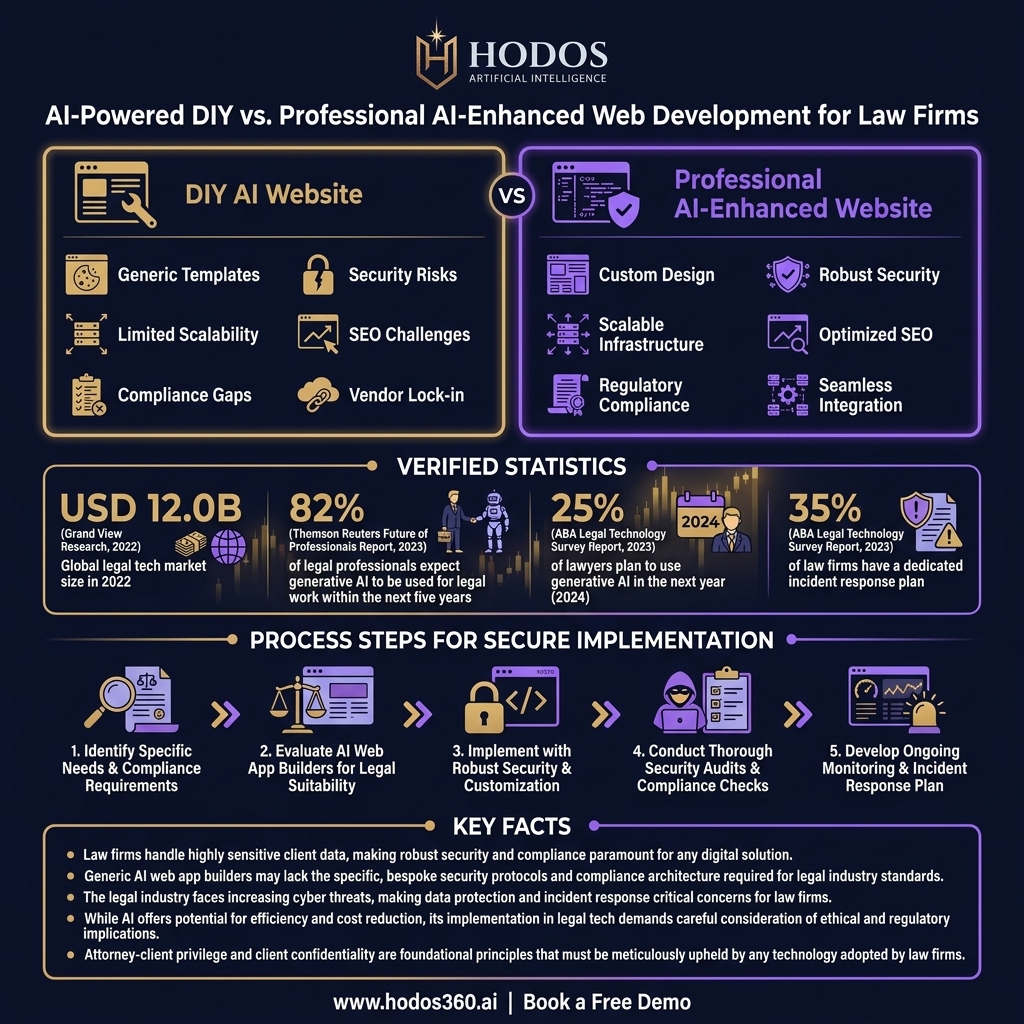
Furthermore, the long-term maintenance and scalability of AI-built sites often present unforeseen challenges. Many AI platforms operate as black boxes, making it difficult for law firms to understand or modify the underlying code.
Learn more about AI Deposition Prep: The Ultimate Guide to Winning Strategies. This creates vendor lock-in and limits the firm's agility in adapting to new legal tech integrations or evolving security threats. Firms need websites that can seamlessly integrate with their case management systems, document automation platforms, and secure communication tools.
A generic AI-built site might require extensive, costly retrofitting to achieve this, or worse, prove incompatible altogether. This lack of deep integration capability can hinder a firm's overall digital transformation efforts, forcing them to choose between a quick, superficial website and a truly integrated, future-proof digital ecosystem.
The initial cost savings can quickly be dwarfed by the expenses and headaches of remediation and compliance.
The Hidden Perils: Why DIY AI Websites Expose Legal Teams
The most significant drawback of relying on generic AI web app builders for law firms lies in the inherent security vulnerabilities and compliance risks. Unlike bespoke solutions, mass-market AI tools are often designed for broad applicability, not the stringent data protection requirements mandated by legal ethics and privacy laws.
Cybersecurity expert Keren Elazari, known for her insights into digital defense, frequently emphasizes that 'convenience often comes at the cost of security.' Generic platforms might not offer enterprise-grade encryption, regular security audits, or robust intrusion detection systems. This leaves client data – from initial intake forms to case details – exposed to potential breaches, violating fundamental duties of confidentiality under rules like ABA Model Rule 1.6 and its Comment 8, which explicitly addresses the safeguarding of client information.
Moreover, the rise of sophisticated cyber threats means that basic security measures are no longer sufficient. Law firms are prime targets for phishing, ransomware, and data exfiltration due to the sensitive nature of the information they hold. A website built without expert cybersecurity oversight can become an unwitting gateway for attackers.
The 2023 ABA Legal Technology Survey Report revealed that a significant percentage of law firms experienced a security breach, underscoring the constant threat. Firms that opt for DIY AI solutions often lack the expertise to identify and mitigate these complex risks, potentially facing severe penalties, reputational damage, and loss of client trust.
The cost of a single data breach, including regulatory fines, notification expenses, and litigation, can be astronomically higher than investing in a professionally developed, secure website from the outset.
Beyond technical vulnerabilities, there are profound compliance implications. The patchwork of global and national data privacy regulations – from GDPR and CCPA to specific state bar opinions on cloud computing and data storage – requires meticulous attention.
Learn more about AI Web Development: The Ultimate Advantage for Law Firms. A generic AI builder may default to server locations or data handling practices that violate these mandates. For example, ABA Formal Opinion 477R stresses the lawyer’s ethical obligation to assess the security of technology used for client communications.
A DIY AI website, by its very nature, often bypasses this critical assessment, placing the firm in direct conflict with its ethical obligations. This oversight isn't just a technical glitch; it's a professional liability that can lead to disciplinary action and severe financial repercussions. The initial appeal of a quick-build solution pales in comparison to the long-term legal and ethical exposure it creates.
Finally, the lack of true ownership and control over the website's underlying infrastructure is a critical exposure point. When a law firm uses a proprietary AI platform, they are often beholden to the vendor's terms of service, update schedules, and security protocols. Any changes or outages by the platform provider can directly impact the firm's online presence, potentially disrupting client communication or access to critical information.
This dependency can create significant operational risks, especially if the vendor's priorities don't align with the firm's specific needs for uptime, data sovereignty, or long-term scalability. The illusion of a quick solution can quickly turn into a strategic liability, as firms find their digital destiny tied to external, non-specialized providers.
Crafting a Secure Digital Fortress: Beyond Generic AI Templates
For law firms, a website is far more than an online brochure; it's a critical client acquisition tool, a secure communication portal, and a reflection of the firm's professionalism and reliability. Moving beyond generic AI web app builders means embracing a strategic approach to digital presence that prioritizes security, compliance, and user experience.
This involves bespoke design, robust backend architecture, and continuous optimization, elements often missing in DIY solutions. Firms need a digital fortress, not a flimsy storefront. Consider the example of major legal entities like Allen & Overy, who, despite their partnership with AI legal research platforms like Harvey AI, invest heavily in custom-built, secure web infrastructure to manage their global client base and sensitive information, recognizing that generic solutions cannot meet their complex needs.
Professional web and mobile development for law firms integrates advanced security features from the ground up. This includes implementing strong encryption protocols, multi-factor authentication for client portals, regular vulnerability assessments, and compliance audits against standards like ISO 27001. A dedicated development partner understands the legal industry's unique requirements, such as secure document upload functionalities, encrypted client communication channels, and adherence to specific bar association guidelines for attorney advertising.
This specialized knowledge ensures that every aspect of the website, from its code to its content management system, is designed with legal rigor in mind, mitigating the risks that teams often encounter with off-the-shelf solutions.
Furthermore, a high-performing legal website must be optimized for search engines (SEO) to attract qualified leads and convert visitors into clients.
This goes beyond simple keyword stuffing; it involves technical SEO, local SEO strategies, compelling content generation, and a user-friendly interface that guides potential clients through the firm's offerings. Learn more about AI Settlement Rates: An Essential Guide to Maximizing Outcomes. A professionally developed site incorporates responsive design, ensuring seamless accessibility across all devices, and utilizes high-converting templates specifically designed to capture legal inquiries.
This strategic approach to SEO for law firms ensures that people searching for legal services find your firm, and once they do, they have a secure, intuitive experience that builds trust. Don't let the allure of quick fixes compromise your firm's integrity. [Discover how HODOS 360 builds high-performing, secure legal websites tailored to your needs.]
True digital excellence for law firms also encompasses future-proofing and scalability. A custom-built platform allows for seamless integration with existing legal tech ecosystems, such as case management systems, client intake platforms, and document automation tools, enhancing operational efficiency. It provides the flexibility to adapt to evolving legal tech trends, expand services, or integrate new functionalities without costly overhauls.
This forward-thinking approach ensures that the firm's digital presence grows with its practice, providing a stable and secure foundation for long-term success, rather than a temporary fix that quickly becomes obsolete or a liability. Investing in professional web development is an investment in the firm's future, safeguarding its reputation and client relationships.
Essential Elements of a Secure Legal Website
- ✓End-to-End Encryption: Ensuring all data transmitted to and from the website, especially client communications and sensitive forms, is encrypted to prevent interception.
- ✓Regulatory Compliance: Adherence to GDPR, CCPA, HIPAA (if applicable), and specific state bar advertising and data privacy rules, including appropriate disclaimers and privacy policies.
- ✓Robust Authentication: Implementing multi-factor authentication (MFA) for client portals and administrative access, significantly reducing unauthorized entry.
- ✓Regular Security Audits & Updates: Continuous monitoring, penetration testing, and timely patching of vulnerabilities to protect against evolving cyber threats.
- ✓Secure Hosting & Data Residency: Utilizing reputable hosting providers with strong security protocols and ensuring data storage aligns with jurisdictional requirements.
- ✓Custom Development & Integration: Tailored solutions that integrate seamlessly with existing legal practice management systems and other secure legal tech tools, avoiding generic limitations.
AI as a Strategic Partner: Enhancing, Not Replacing, Expertise
The narrative isn't about rejecting AI altogether, but rather strategically integrating it as a powerful enhancement tool, not a replacement for specialized expertise. AI has an undeniable role in modern web development for law firms, but its application must be precise and supervised. For instance, AI can be invaluable for advanced SEO analysis, identifying optimal keywords, analyzing competitor strategies, and even suggesting content topics based on search trends.
It can also personalize user experiences, offering tailored content or service recommendations based on visitor behavior, which can significantly improve conversion rates. This is where AI truly shines: augmenting human capabilities and providing data-driven insights that would be impractical to gather manually. Firms that understand this distinction are better positioned to leverage AI effectively without incurring the risks associated with fully automated building.
Consider content generation: while an AI can draft preliminary articles or blog posts, the legal accuracy, ethical considerations, and nuanced tone require human review and refinement. AI excels at providing a strong starting point, freeing up legal professionals to focus on the higher-value aspects of content strategy and legal verification.
Similarly, for user experience (UX) optimization, AI can analyze vast amounts of user data to identify pain points, optimize navigation flows, and suggest design improvements that enhance client engagement. This analytical power allows firms to continuously refine their digital presence based on real-world user interactions, making their websites more intuitive and effective.
The key is to view AI as an intelligent assistant that amplifies human design and legal expertise, rather than an autonomous builder that operates without oversight.
Moreover, AI can play a critical role in continuous monitoring and predictive analytics for website performance and security. Learn more about AI Litigation: The Ultimate Platform for Modern Law Firms.
AI-powered tools can detect unusual traffic patterns, flag potential security threats in real-time, and identify performance bottlenecks before they impact user experience. This proactive approach to website management is crucial for maintaining a secure and reliable online presence. For example, anomaly detection algorithms can alert a firm's IT team to suspicious login attempts or data access patterns that might indicate a breach, allowing for immediate intervention.
This level of sophisticated oversight is rarely available in basic AI-generated sites and underscores the value of integrating AI into a professionally managed web development strategy.
Ultimately, the most successful law firms will be those that embrace AI not as a shortcut to bypass expertise, but as a sophisticated tool to elevate their digital strategy.
By leveraging AI for data analysis, content augmentation, and proactive security monitoring, firms can make their websites more intelligent, secure, and client-centric. This hybrid approach, combining the efficiency of AI with the precision and ethical oversight of human legal and technical experts, offers the best path forward.
It allows firms to stay competitive, innovate responsibly, and build a digital foundation that truly serves their clients and protects their professional integrity. This is the sophisticated approach that a platform like HODOS 360 embodies, ensuring AI is an asset, not a liability.

Key Takeaways: Fortifying Your Firm's Digital Foundation
The rapid ascent of AI web app builders presents a compelling paradox for law firms: immense opportunity coupled with significant, often unseen, risks. While the allure of quick and inexpensive website creation is strong, the unique demands of the legal profession—client confidentiality, regulatory compliance, and ethical obligations—mandate a more considered approach.
The narrative from TechRadar about teams exposed serves as a vital cautionary tale, emphasizing that convenience should never supersede security and professional diligence. Law firms must recognize that a generic, AI-generated website, while functional, is unlikely to meet the stringent requirements necessary to protect client data, maintain professional standards, or effectively convert leads into loyal clients.
The true value lies not in merely using AI to build a website, but in strategically leveraging AI within a framework of expert, secure, and customized development.
To truly fortify your firm's digital foundation, prioritize professional web and mobile development that understands the intricacies of the legal industry.
This means investing in bespoke solutions that offer robust security, compliance with legal ethics, seamless integration with your existing legal tech ecosystem, and advanced SEO capabilities. Learn more about Legora's Strategic Leap: Essential AI Law Firm Management. Embracing AI as a strategic partner—for data analysis, content augmentation, and proactive security—rather than a substitute for human expertise, is the path to sustainable digital success.
By choosing a partner like HODOS 360, law firms can ensure their online presence is not only cutting-edge and high-converting but also a secure, compliant, and reliable extension of their professional reputation. Empower your firm with a digital presence that reflects your expertise and safeguards your clients.
[Schedule a consultation with HODOS 360 today.]
Frequently Asked Questions
Are AI web app builders secure enough for law firms?+
Generally, no. While AI builders can create functional sites, they often lack the specialized, enterprise-grade security protocols, encryption, and compliance features essential for handling sensitive client data. Generic platforms may not meet the stringent requirements of legal ethics, data privacy laws like GDPR/CCPA, or specific bar association guidelines, leaving law firms vulnerable to breaches and regulatory penalties.
What are the primary risks of using DIY AI websites for legal services?+
The main risks include inadequate data security leading to breaches, non-compliance with legal ethics (e.g., ABA Model Rule 1.6), lack of custom features for client intake and secure communication, poor SEO optimization for legal keywords, and limited scalability. These can result in reputational damage, client trust erosion, and significant financial and legal repercussions.
How can AI be used effectively in law firm web development?+
AI is best used as an enhancement tool, not a full replacement for expert development. It can assist with advanced SEO analysis, content generation (with human oversight for legal accuracy), user experience optimization through data analysis, and proactive security monitoring. AI should augment human expertise, providing insights and efficiencies while legal and technical professionals maintain oversight.
What should a law firm look for in a professional web development partner?+
Look for a partner with deep understanding of the legal industry's unique needs, including strict security protocols, compliance expertise (e.g., ABA rules, data privacy laws), custom development capabilities, strong SEO strategies for legal, responsive design, and integration with legal tech ecosystems. They should offer continuous support, maintenance, and scalability for long-term growth.
Can a custom-built website integrate with existing legal tech tools?+
Yes, absolutely. A significant advantage of professional, custom web development is the ability to seamlessly integrate with your existing legal tech stack, such as case management systems, client intake platforms, and document automation software. This ensures a unified, efficient workflow and avoids the compatibility issues often encountered with generic AI-built templates, enhancing overall firm productivity and client experience.