
AI Web Scraping: Essential for Modern Legal Intelligence
The legal landscape, historically cautious in its adoption of new technologies, is now at the precipice of a significant revolution, largely spearheaded by advancements in artificial intelligence. The traditional methods of legal research, market analysis, and client intelligence gathering, often painstaking and resource-intensive, are being rapidly redefined by AI platforms that reshape the very foundation of how law firms operate. This shift isn't merely about efficiency; it's about unlocking strategic insights that were previously unattainable, providing an unprecedented level of business intelligence that can mean the difference between leading the market and being left behind.
Consider the story of Eleanor Vance, a visionary Managing Partner at Sterling & Finch LLP, a mid-sized firm specializing in intellectual property. For years, her team grappled with the arduous task of manually tracking competitor patent filings, monitoring emerging market trends for their tech clients, and identifying potential infringement cases across vast swathes of online data. The sheer volume of information was overwhelming, often leading to missed opportunities or delayed responses. "We knew the data was out there," Vance recounted at the 2026 LegalTech NYC conference, "but extracting it, making sense of it, and applying it strategically felt like trying to drink from a firehose." This sentiment echoes across countless law firms, highlighting a critical need for more sophisticated tools and workflows to harness the power of the internet for legal advantage. The market is increasingly driven by firms that can quickly adapt and leverage these technologies. According to a 2025 report by Thomson Reuters, firms adopting advanced data analytics tools saw a 15% increase in case win rates and a 10% reduction in research costs.
The advent of AI web scraping has emerged as a game-changer, moving beyond rudimentary data extraction to intelligent, context-aware information gathering. This isn't just about pulling text from websites; it involves AI-based models that can identify relevant legal precedents, track judicial decisions, monitor regulatory changes, analyze sentiment around specific legal issues, and even predict market shifts that could impact client portfolios. Firms like Sterling & Finch, under Vance's leadership, began investing in these modern platforms, recognizing that the future of legal practice is inextricably combined with sophisticated data acquisition. "Our ability to proactively advise clients on emerging patent threats, rather than reactively addressing them, has fundamentally altered our client relationships," Vance noted. This paradigm shift underscores the urgent need for legal professionals to understand and implement AI-driven web scraping, not just as a technological enhancement, but as an essential strategic imperative for modern legal intelligence.
AI Web Scraping: The New Frontier for Legal Business Intelligence
The legal industry's reliance on information is absolute. From litigation support to transactional due diligence, the ability to access, process, and analyze vast amounts of data quickly and accurately is paramount. AI web scraping has redefined this capability, transforming what was once a laborious, manual process into an automated, intelligent operation. This technology allows law firms to systematically collect publicly available data from websites, legal databases, news articles, social media, and more, at a scale and speed impossible for human researchers. For instance, a firm specializing in corporate law can scrape financial news sites and regulatory filings to identify potential M&A targets or monitor competitor activities for their clients, providing real-time business intelligence that informs strategic decisions. This capability extends to identifying emerging legal trends, tracking public opinion on controversial cases, or even monitoring for fraudulent activities that could impact client interests.
The market for AI-driven data solutions in legal tech is experiencing exponential growth. A recent McKinsey report projected the AI-driven web scraping market to grow at a CAGR of 39.4% from 2024 to 2029, largely fueled by sectors like legal and finance demanding more sophisticated platforms for competitive analysis. This growth is not merely in volume but in the intelligence of the scraping process itself. Early web scrapers were often brittle, breaking with minor website changes. Modern AI platforms, however, incorporate machine learning models that can adapt to changes in website structure, identify relevant content based on context rather than rigid patterns, and even bypass anti-scraping measures more effectively. This resilience makes them invaluable tools for continuous monitoring, ensuring that law firms always have access to the most up-to-date information for their cases and client advice.
Furthermore, the integration of AI goes beyond mere data collection; it extends to the initial filtering and pre-processing of information. Learn more about AI-Enabled Law Firms: Essential Guide to Client Expectations. Traditional scraping often yields vast quantities of irrelevant data, requiring significant human effort to sift through. AI-based models can perform intelligent filtering, focusing on specific keywords, entities, or concepts relevant to a legal inquiry, thereby significantly reducing the noise. For example, in an e-discovery context, AI scrapers can be trained to identify specific types of communications or documents related to a case, drastically cutting down the volume of data that human reviewers need to examine. This targeted approach not only saves time and resources but also enhances the accuracy and relevance of the retrieved information, making the entire process more efficient and effective. This combined approach of intelligent collection and filtering is a hallmark of the new landscape.
This intelligent approach to data acquisition is particularly critical for law firms needing to stay ahead in fast-evolving legal domains, such as data privacy or cryptocurrency regulation. Take the case of "CryptoLaw Partners," a boutique firm that leverages AI web scraping to monitor global legislative changes impacting digital assets. Their ability to track proposed bills, regulatory guidance from agencies like the SEC and CFTC, and even public discourse around specific tokens, allows them to provide prescient advice to their blockchain clients. John Chen, CTO of CryptoLaw Partners, recently stated, "Our AI platforms give us a 360-degree view of the regulatory landscape, allowing us to anticipate shifts and advise our clients proactively, rather than reactively. It's a competitive advantage that traditional firms simply can't match without similar automation." This demonstrates how AI-driven data acquisition is not just about efficiency, but about transforming legal service delivery into a more predictive and value-driven model.
Navigating the Complexities: Ethical AI Scraping & Data Compliance
While the promise of AI web scraping is immense, its implementation in the legal sector is not without significant ethical and legal considerations. Law firms operate under stringent rules of professional conduct and data privacy regulations, making the compliant acquisition of data paramount. The line between publicly available information and protected data can be blurry, and firms must exercise extreme caution to avoid violating privacy laws, terms of service, or even intellectual property rights. For instance, scraping personal data without consent, even if publicly visible, can lead to severe penalties under regulations like GDPR or CCPA. The legal profession, guided by principles such such as ABA Model Rule 4.4(a) which prohibits using means that have no substantial purpose other than to embarrass, delay, or burden a third person, must ensure that scraping activities are conducted responsibly and ethically. This is not just a technical challenge but a fundamental question of legal ethics that demands careful consideration and a robust compliance framework.
Understanding the Legal & Regulatory Framework The legal framework surrounding web scraping is complex and evolving, often varying by jurisdiction and the nature of the data being collected. Landmark cases, such as hiQ Labs, Inc. v. LinkedIn Corp., have highlighted the ongoing tension between a company's right to protect its data and the public's right to access publicly available information. While the Ninth Circuit initially sided with hiQ, emphasizing that data visible to the public is not protected by the Computer Fraud and Abuse Act (CFAA), the legal landscape remains dynamic, with new challenges emerging constantly. Law firms must remain acutely aware of these precedents and the potential for new legislation, like the EU AI Act, to impact their data acquisition strategies. Ignorance of these evolving rules is no defense, and firms that fail to establish rigorous internal policies risk significant legal and reputational damage. Learn more about AI Website Building: The Essential Guide for Law Firms. The integration of AI platforms must be done with an acute awareness of these legal boundaries.
To mitigate these risks, firms must adopt a proactive approach to compliance. This involves not only understanding the letter of the law but also adhering to best practices that demonstrate a commitment to ethical data handling. This includes ensuring that AI-driven scraping tools respect robots.txt files, avoid overwhelming target servers, and anonymize or aggregate data where appropriate to protect individual privacy. Furthermore, firms should conduct thorough due diligence on any third-party scraping platforms they utilize, ensuring that these providers adhere to similar ethical standards and possess robust security measures. As the market for AI solutions expands, so too does the responsibility of legal professionals to ensure their workflows are not only efficient but also unimpeachable from a legal and ethical standpoint. This careful navigation is crucial for maintaining public trust and professional integrity.
The ethical considerations extend beyond mere legality to the perception of fairness and transparency. As AI automation becomes more pervasive, questions arise about how data is used to inform legal strategies, particularly in sensitive areas like litigation or criminal defense. Firms must be prepared to articulate how their AI web scraping processes uphold principles of justice and avoid biases inherent in data collection or algorithmic analysis. This means implementing robust data governance policies, conducting regular audits of AI-based models, and ensuring human oversight in critical decision-making processes. The future of responsible legal AI hinges on a commitment to transparency and accountability, ensuring that technology serves justice rather than undermining it. Firms that prioritize this will not only avoid legal pitfalls but also build stronger reputations for integrity in an increasingly data-centric world.
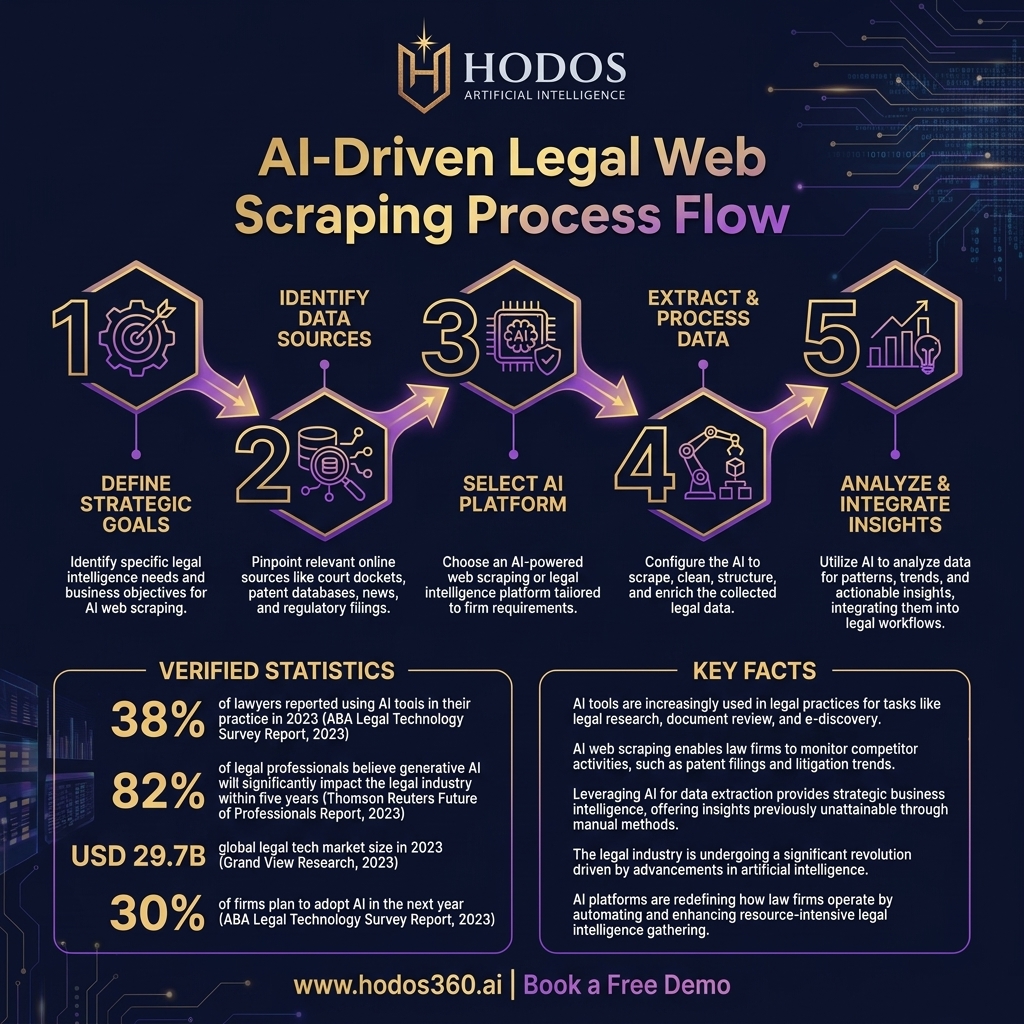
Understanding the Legal & Regulatory Framework
The legal and regulatory environment for web scraping is a patchwork of statutes, common law, and international agreements, making it a complex area for legal practitioners. Key considerations include the Computer Fraud and Abuse Act (CFAA) in the U.S., which prohibits unauthorized access to computer systems, and various state anti-hacking laws. Internationally, data protection regulations like the General Data Protection Regulation (GDPR) in Europe and the California Consumer Privacy Act (CCPA) are highly relevant, especially when scraping personal data. These regulations impose strict requirements for consent, data minimization, and the right to be forgotten. Additionally, websites' terms of service (ToS) often explicitly prohibit scraping, and while the enforceability of ToS in the context of public data is debated, violating them can lead to legal action or IP claims. Learn more about AI Virtual Receptionist: An Essential Guide for Law Firms. Law firms must develop comprehensive policies that address these multi-faceted legal challenges, ensuring that their AI web scraping activities are always on solid legal ground. The growth of regulations mirrors the growth of data. A 2024 report by the ABA Standing Committee on Ethics and Professional Responsibility emphasized the need for attorneys to understand the technological implications of data acquisition.
From Raw Data to Strategic Advantage: AI-Driven Analytics for Law Firms
The true power of AI web scraping isn't just in collecting data, but in transforming that raw information into actionable strategic advantage. For law firms, this means moving beyond simple data points to sophisticated AI-driven analytics that can uncover patterns, predict outcomes, and inform high-stakes decisions. Imagine a firm specializing in class-action lawsuits. With AI platforms capable of scraping public forums, consumer review sites, and news articles, they can identify emerging grievances, gauge public sentiment towards corporations, and even pinpoint potential lead plaintiffs. This proactive approach allows firms to build stronger cases, identify settlement opportunities, and better advise clients on litigation strategy, rather than simply reacting to events. The future of legal practice is one where predictive insights derived from data are as critical as legal precedent.
Transforming Data into Actionable Insights The analytical capabilities of AI-based models extend to complex tasks like natural language processing (NLP) and sentiment analysis. These tools can process vast amounts of unstructured text data collected through scraping—such as court transcripts, legislative proposals, or client communications—to extract key entities, identify relationships, and understand underlying sentiment. For a firm handling high-profile M&A deals, AI-driven sentiment analysis of news articles and social media mentions related to target companies can provide crucial insights into market perception and potential regulatory hurdles. This level of granular insight, combined with traditional legal expertise, offers a significant competitive edge. Firms that effectively leverage these platforms can offer more comprehensive and forward-looking advice, positioning themselves as indispensable partners to their clients.
Furthermore, AI web scraping contributes significantly to e-discovery processes by enabling more efficient and targeted data collection from non-traditional sources. Learn more about Voice AI: The Ultimate Leap with GPT-Live-1 for Law Firms. As legal disputes increasingly involve digital evidence found across diverse online platforms, the ability to legally and effectively scrape relevant data becomes critical. AI-driven workflows can automate the identification and collection of social media posts, public forum discussions, or archived web pages pertinent to a case, significantly reducing the manual effort and time typically associated with such tasks. This not only streamlines the e-discovery phase but also ensures a more thorough collection of potentially crucial evidence, leading to stronger legal arguments and more favorable outcomes. The automation inherent in these systems frees up legal professionals to focus on higher-value analytical work.
Consider the impact on legal marketing. Law firms are constantly seeking to understand their target audience, identify unmet legal needs, and track competitor strategies. An AI marketing platform can leverage AI web scraping to analyze search trends, identify popular legal topics, monitor competitor advertising campaigns, and even gauge the effectiveness of their own content. By scraping legal blogs, industry news, and social media, firms can gain a granular understanding of what potential clients are searching for, what legal challenges they face, and how to position their services most effectively. This data-driven approach to marketing allows firms to create highly targeted content, optimize their SEO, and develop campaigns that resonate deeply with their desired clientele, leading to increased lead generation and client acquisition. This strategic use of data is reshaping the landscape of legal business development.
Implementing AI Scraping Workflows: Tools and Best Practices
Successfully integrating AI web scraping into a law firm's operations requires careful planning, the right tools, and adherence to best practices. It's not enough to simply acquire a scraping platform; firms must develop robust workflows that ensure data quality, compliance, and effective utilization. The first step involves clearly defining the firm's data needs and objectives. Are you looking to track regulatory changes, monitor competitor activities, identify litigation trends, or enhance e-discovery? The specific use case will dictate the type of data to be collected, the frequency of scraping, and the analytical models required. Firms should start with pilot projects, focusing on a specific, manageable area to demonstrate value and refine their processes before scaling up. This iterative approach helps build internal expertise and stakeholder buy-in, which is crucial for successful technological adoption within a legal environment.
Integrating AI Tools for Seamless Operations The market offers a diverse range of AI-driven web scraping tools, from open-source libraries like Scrapy and Beautiful Soup (often combined with machine learning frameworks like TensorFlow or PyTorch for advanced parsing) to sophisticated commercial platforms designed for enterprise use. For law firms, the choice often comes down to balancing customization needs with ease of use and compliance features. Commercial solutions, particularly those offered by legal tech providers, often come with built-in features for data governance, audit trails, and reporting, which are invaluable for meeting regulatory obligations. For example, a modern AI web scraping platform might integrate directly with a firm's case management system, automatically populating client files with relevant public information or updating legal research databases with newly scraped content. This level of integration creates seamless workflows that enhance efficiency and reduce manual data entry errors.
Best practices for implementing AI web scraping extend beyond mere technical setup. They encompass a holistic approach to data management and ethical conduct. Learn more about Voice AI: An Essential Leap for Law Firms' Client Engagement. Firms should establish clear data retention policies, ensuring that scraped data is stored securely and deleted when no longer needed, in compliance with privacy regulations. Regular audits of scraping activities are essential to verify adherence to terms of service, robots.txt protocols, and legal guidelines. Furthermore, training legal professionals on the capabilities and limitations of AI platforms is critical. Attorneys and paralegals need to understand how to formulate effective queries, interpret AI-driven analytics, and critically evaluate the provenance and reliability of scraped data. This human oversight is indispensable, as AI, while powerful, still requires intelligent direction and validation from legal experts.
For law firms seeking to implement these advanced capabilities without the burden of building and maintaining complex infrastructure, platforms like HODOS 360 offer comprehensive solutions. Our Web & Mobile Development service provides AI-powered website building and robust AI web scraping capabilities tailored specifically for the legal sector. We help firms design and integrate custom AI-driven workflows that streamline data acquisition, enhance business intelligence, and ensure compliance. By leveraging our expertise in automation and AI-based models, firms can focus on their core legal practice while benefiting from cutting-edge data scraping and analytics. This strategic partnership allows firms to harness the future of legal data without significant upfront investment in internal development, ensuring they remain competitive in a rapidly evolving landscape.
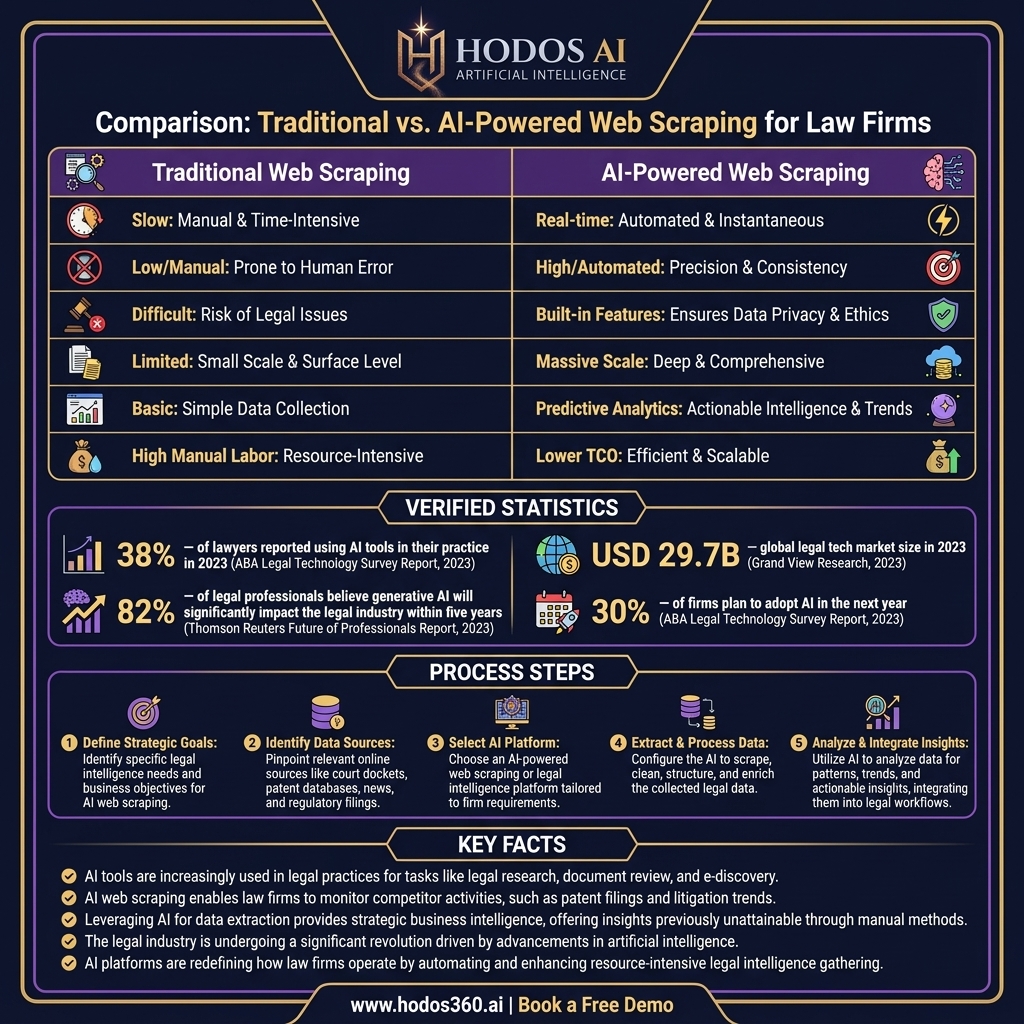
The Future Landscape: What's Next for AI in Legal Data Acquisition?
The future landscape of AI web scraping in legal data acquisition is poised for even greater sophistication and integration. We are moving towards a paradigm where AI platforms will not only collect data but will also proactively identify emerging legal risks, anticipate changes in judicial interpretations, and even predict the likelihood of successful litigation based on vast datasets of historical case law and public sentiment. This predictive power will transform legal strategy from reactive to highly proactive, allowing firms to advise clients with unprecedented foresight. Imagine an AI-driven system that alerts a corporate client to a burgeoning regulatory trend in a specific industry, providing detailed analysis of its potential impact before it even becomes a public concern. This level of modern legal intelligence will redefine the value proposition of legal services, shifting it towards preventative and strategic advisory roles.
Further advancements will likely focus on enhancing the ethical and compliant aspects of scraping. As regulations like the EU AI Act come into full enforcement, there will be a greater emphasis on explainable AI (XAI) in scraping platforms, allowing legal professionals to understand *how* and *why* specific data was collected and analyzed. This transparency will be crucial for maintaining compliance and trust. Furthermore, the growth of privacy-enhancing technologies (PETs) may lead to new methods of data acquisition that respect individual privacy while still allowing for legitimate business intelligence gathering. The development of federated learning and secure multi-party computation could enable AI-based models to analyze distributed data without it ever leaving its source, offering a future where data insights are gained without compromising privacy.
The integration of AI web scraping with other advanced AI tools will also accelerate. Learn more about AI Tools: Essential Strategies for Solo Legal Professionals. We can expect to see scraping workflows seamlessly combined with sophisticated AI voice assistants that can field initial client inquiries based on scraped market data, or document automation systems that automatically generate legal filings using insights gleaned from real-time regulatory scraping. This holistic approach to legal tech will create a truly intelligent law firm ecosystem, where every aspect of operations, from client intake to case management, is informed by dynamic, AI-driven data. The goal is to create a frictionless environment where legal professionals can focus on complex problem-solving and client relationships, while automation handles the underlying data infrastructure.
Finally, the competition among law firms to leverage these modern tools will intensify, creating a clear divide between those who embrace AI-driven data acquisition and those who cling to traditional methods. Firms that invest in AI platforms for scraping and analytics will not only gain a competitive edge in terms of efficiency and insight but will also attract top talent drawn to innovative practices. This technological arms race will necessitate continuous learning and adaptation for legal professionals, making expertise in legal tech and data literacy as crucial as traditional legal acumen. The firms that champion this transformation will be the ones that thrive in the evolving legal landscape, proving that the future of law is indeed driven by intelligent data. The market is clear: innovate or fall behind.

Key Takeaways and Next Steps
The AI web scraping landscape is rapidly evolving, offering law firms unprecedented opportunities to enhance business intelligence, streamline workflows, and gain a significant strategic advantage. From monitoring regulatory changes and competitor activities to bolstering e-discovery and informing marketing strategies, AI platforms are reshaping how legal professionals acquire and utilize data. The narrative of firms like Sterling & Finch LLP and CryptoLaw Partners underscores a critical truth: modern legal practice demands sophisticated, AI-driven tools for data acquisition and analysis. Ignoring this technological imperative is no longer a viable option in today's competitive market.
However, the journey into AI web scraping must be navigated with a keen understanding of ethical responsibilities and legal compliance. Firms must invest not only in the right platforms but also in robust data governance policies and continuous training for their teams. The goal is to harness the power of automation and AI-based models responsibly, ensuring that technology serves justice and upholds professional integrity. The future of legal data acquisition is combined with intelligent scraping, but it must always be guided by human oversight and ethical principles. The growth in this sector demands careful consideration.
For law firms ready to embrace this future, the next step is clear: evaluate your current data acquisition strategies and identify areas where AI web scraping can deliver the most impact. Consider partnering with specialized legal tech providers who understand the unique needs and regulatory environment of the legal industry. HODOS 360, through its Web & Mobile Development services, offers bespoke AI-driven workflows and scraping platforms designed to help your firm navigate this complex terrain, ensuring compliance and maximizing legal intelligence. Discover how our tools can empower your firm to turn raw data into decisive action. Book a Free Demo with HODOS 360 today to transform your legal data strategy!
Frequently Asked Questions
What is AI web scraping and why is it relevant for law firms?+
AI web scraping involves using artificial intelligence to intelligently extract and analyze data from websites. For law firms, it's crucial for gathering legal intelligence, monitoring regulatory changes, tracking competitor activities, and enhancing e-discovery. It automates data collection, provides deeper insights through AI-driven analytics, and helps firms stay competitive by transforming raw data into actionable strategic advantage.
What are the ethical and legal considerations for AI web scraping in the legal industry?+
Law firms must navigate strict ethical and legal boundaries, including data privacy laws (like GDPR, CCPA), intellectual property rights, and website terms of service. Adherence to rules like ABA Model Rule 4.4(a) is essential. Firms must ensure consent for personal data, respect robots.txt protocols, and implement robust compliance frameworks to avoid legal and reputational risks associated with improper data acquisition.
How can AI web scraping enhance a law firm's business intelligence?+
AI web scraping provides a comprehensive view of the legal and market landscape. It enables firms to identify emerging legal trends, analyze public sentiment, monitor competitor strategies, and track judicial decisions in real-time. By transforming raw data into AI-driven analytics, firms gain predictive insights, allowing for proactive legal advice, stronger case building, and more informed strategic business decisions.
What kind of data can law firms collect using AI web scraping?+
Law firms can collect a vast array of publicly available data, including legal precedents, court filings, legislative proposals, news articles, social media discussions, industry reports, competitor patent filings, and market trend data. AI-driven platforms can filter and process this data to extract specific, relevant information, making it invaluable for various legal practice areas from IP to corporate law.
What are the best practices for implementing AI web scraping workflows in a law firm?+
Best practices include clearly defining data objectives, starting with pilot projects, and choosing AI platforms with built-in compliance features. Firms should establish data retention policies, conduct regular audits, and provide comprehensive training for legal professionals. Integrating AI tools seamlessly with existing case management systems and ensuring human oversight are also critical for successful, ethical, and effective implementation.