


Essential AI Website Builders: Law Firm's Ultimate Guide
In the rapidly evolving digital landscape of 2026, the concept of a law firm's online presence has moved far beyond a static brochure. The recent Forbes headline, "Best AI Website Builders Of 2026: 18 Platforms Tested," underscores a monumental shift: AI website builders are no longer a futuristic concept but an essential tool for legal professionals. For years, law firm partners like Michael Sterling of Sterling & Associates in Chicago grappled with the prohibitive costs and time investment required to maintain a cutting-edge website. His firm, specializing in complex litigation, often found itself outmaneuvering competitors in court but lagging in digital first impressions, impacting client acquisition. This tension between legal excellence and digital inadequacy is a narrative familiar to many. The traditional approach, often involving lengthy development cycles and hefty agency fees, created a barrier for many small to mid-sized firms, leaving them struggling to compete with larger, well-resourced counterparts in the digital arena. However, the advent of sophisticated AI tools has democratized access to high-quality web development, promising to level the playing field. This guide explores how these transformative AI website builders are redefining what's possible for legal practices.
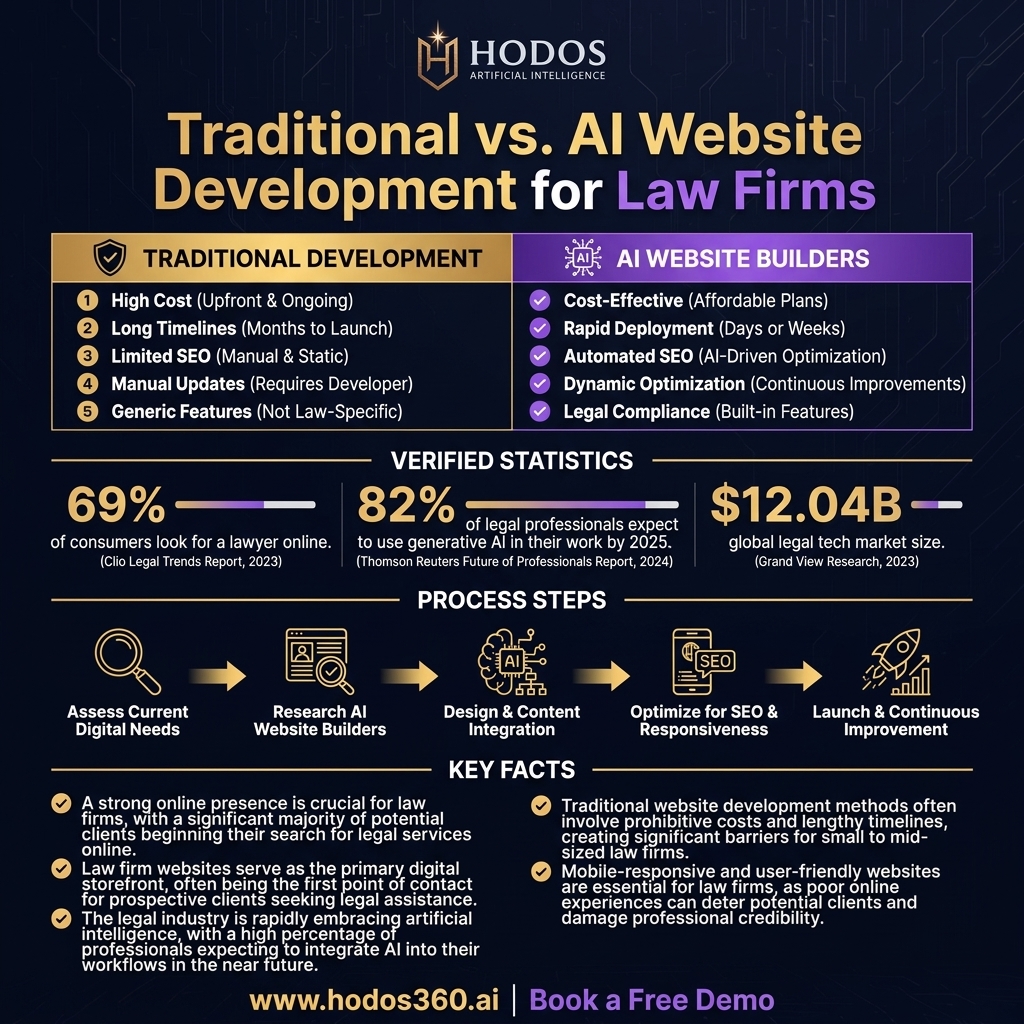
The demand for a robust online presence has intensified, driven by a client base that increasingly turns to digital channels for legal advice and firm selection. According to the 2025 ABA Legal Technology Survey Report, over 70% of clients begin their search for legal services online, and a firm's website is often the first point of contact. Yet, many law firms still operate with websites that are slow, non-responsive, or difficult to navigate, inadvertently turning away potential clients. The challenge lies not just in having a website, but in having one that is a high-performing asset—a digital storefront that reflects professionalism, builds trust, and converts visitors into clients. This is where AI website builders offer a compelling solution, providing tools that can automate complex design tasks, optimize for search engines, and integrate seamlessly with client intake processes, all while keeping costs manageable. The goal is to empower legal professionals to craft an online identity that is as sharp and effective as their legal arguments, ensuring they remain competitive and accessible in an increasingly digital world. Discover how HODOS 360's Web & Mobile Development Solutions can propel your firm forward.
The Shifting Sands of Legal Digital Presence: AI Website Builders Redefine Standards
The legal industry, often perceived as slow to adopt technological advancements, is now experiencing a rapid digital transformation, particularly in how firms establish their online footprint. The Forbes report, highlighting "18 Platforms Tested," signals a clear trend: the days of generic, static legal websites are rapidly fading. Law firms are no longer content with just an online brochure; they require dynamic, intelligent digital platforms that serve as powerful client acquisition and retention tools. This shift is driven by evolving client expectations and the competitive imperative to stand out. Firms that once relied solely on referrals or traditional advertising are now recognizing the undeniable power of a strong digital presence. The integration of artificial intelligence into website development has become a game-changer, moving beyond mere templates to offer deep customization and smart functionalities previously exclusive to high-budget development projects. This means that firms of all sizes can now access sophisticated tools to build and maintain an online presence that is both aesthetically pleasing and highly functional, ensuring they meet the modern client's demands.
Historically, the barrier to entry for a truly cutting-edge legal website was substantial. Learn more about AI Web Development: The Ultimate Growth Engine for Law Firms. Firms faced choices between exorbitant agency fees, lengthy development timelines, or DIY solutions that often lacked professional polish and essential legal-specific features. This dilemma created a significant gap, where many firms either overspent or underperformed online. However, the current generation of AI website builders directly addresses these pain points. These advanced tools leverage machine learning to automate design decisions, optimize content for legal search terms, and even generate responsive layouts across various devices. For example, a solo practitioner in rural Iowa can now deploy a website with the same technical sophistication as a large corporate firm in New York, all without needing an in-house tech team. This democratization of web development capabilities is not just about convenience; it's about empowering legal professionals to focus on their core competency—practicing law—while their digital presence works tirelessly to attract and engage clients.
Beyond Templates: AI-Powered Customization and Legal Nuance
What sets modern AI website builders apart is their ability to move beyond simplistic, one-size-fits-all templates. These intelligent platforms utilize algorithms to understand a firm's specific practice areas, target audience, and brand identity, then suggest content, imagery, and layouts tailored to those unique needs. For instance, an AI builder can differentiate between the design requirements of a personal injury law firm, which might benefit from empathetic visuals and clear calls to action for immediate assistance, versus a corporate law firm requiring a more formal, trust-building aesthetic with in-depth whitepapers. This level of granular customization ensures that each legal website is not just unique, but strategically optimized for its specific niche. The result is a digital presence that feels authentically aligned with the firm's values and expertise, rather than a generic online placeholder.
Furthermore, the "quality" of an AI website builder for legal professionals extends to its understanding of legal compliance and ethical considerations in web design. This is a critical aspect often overlooked by general-purpose builders. Learn more about AI Voice Assistants Law Firms Efficiency. For example, an AI platform specifically designed for law firms can incorporate features to ensure adherence to ethical advertising rules, such as ABA Model Rule 7.1 on communications concerning a lawyer’s services, which prohibits misleading or false statements. This might include automated disclaimers, clear identification of practice areas, and compliant client testimonials. Such builders can also flag potential issues in content that might inadvertently violate professional conduct rules. This deep integration of legal nuance ensures that the website not only looks professional but also operates within the strict ethical boundaries governing the legal profession, providing peace of mind for attorneys and firm owners. It's about building a digital asset that is both powerful and responsible.

Optimizing for Conversion: Client Intake and SEO with AI
For law firms, a website's ultimate success is measured by its ability to convert visitors into clients. Modern AI website builders are engineered with this primary objective in mind, integrating sophisticated tools for both search engine optimization (SEO) and streamlined client intake. On the SEO front, AI-powered platforms automate much of the complex work involved in ranking high on search engines. They can conduct real-time keyword research specific to legal queries, optimize content for local search (crucial for many law firms), and ensure technical SEO best practices are met, such as fast loading speeds and mobile responsiveness. This means a firm specializing in estate planning can have its website intelligently structured to appear prominently when prospective clients search for "estate lawyer near me" or "probate attorney advice." This proactive optimization, guided by AI, significantly enhances a firm's visibility, attracting organic traffic that is highly likely to convert into paying clients, as highlighted by Google's E-E-A-T (Experience, Expertise, Authoritativeness, Trustworthiness) guidelines for content quality.
The journey from website visitor to client is further optimized through AI-powered client intake features. These builders often include intelligent forms, chatbots, and integrated scheduling tools that streamline the initial client interaction. Imagine a potential client visiting your site at 2 AM, having just experienced a personal injury. Learn more about Legal Technology: Essential Steps to Reset Your AI Strategy. Instead of waiting for business hours, an AI chatbot can qualify their lead, gather initial details, answer common questions, and even book an appointment for a consultation, all in real-time. This 24/7 availability and instant engagement dramatically reduce friction in the client acquisition process. Data from Clio's 2024 Legal Trends Report indicated that firms leveraging automated intake systems saw a 20% increase in qualified leads compared to those relying on traditional methods. These features not only enhance the user experience but also free up valuable administrative time for law firm staff, allowing them to focus on more complex tasks. The "speed" and efficiency offered by these AI tools are transforming how law firms connect with and convert potential clients, turning their websites into tireless business development engines. Discover how AI can transform your law firm's marketing and client acquisition strategies.
The Competitive Edge: Speed, Design, and User Experience (UX)
In today's hyper-competitive legal market, a firm's website is often the first and most critical impression. It’s no longer enough for a site to simply exist; it must be fast, visually appealing, and offer an intuitive user experience (UX). AI website builders excel in these areas, providing a significant competitive edge. These tools can rapidly generate sophisticated "design" layouts, ensuring that the visual aesthetic is modern, professional, and on-brand, rivaling the high-end appeal seen on sites like the Tory Burch website, which sets a benchmark for sophisticated online presence. More importantly, AI optimizes for "speed" and performance, a crucial factor for both user satisfaction and search engine rankings. A slow-loading website can deter up to 53% of mobile users, according to Google research, leading to lost opportunities. AI builders automatically compress images, optimize code, and leverage content delivery networks (CDNs) to ensure lightning-fast load times, keeping potential clients engaged.
Furthermore, the user experience offered by AI-powered legal websites is unparalleled. These builders prioritize responsive design, ensuring that a firm's site looks and functions flawlessly across all devices—desktops, tablets, and smartphones. Learn more about AI Legal Tech: Ultimate Guide to Legora's Strategic Funding. This is not merely a convenience but a necessity, as a growing percentage of legal inquiries originate from mobile devices. Beyond responsiveness, AI can help tailor the UX based on user behavior, dynamically adjusting content or navigation paths to provide a more personalized and relevant experience. This level of intelligent adaptation helps potential clients quickly find the information they need, understand the firm's expertise, and easily initiate contact. The dramatic tension between traditional firms, often burdened by outdated, clunky websites, and agile firms leveraging AI for dynamic online presences is palpable. The latter are demonstrably gaining market share by offering a superior digital experience that builds trust and confidence from the very first click. By providing an exceptional user journey, these AI tools elevate a firm's online "quality" and professionalism, positioning them as leaders in a crowded legal landscape.
Evaluating AI Website Builders: Key Metrics for Law Firms
When considering an AI website builder, law firms must move beyond surface-level aesthetics and evaluate tools based on core functionalities critical to legal practice. Key metrics include the depth of "customization" options: can the builder truly reflect your firm's unique brand and practice areas, or is it limited to superficial changes? "Pricing" models are also paramount; firms must assess subscription costs, hidden fees, and scalability to ensure the investment aligns with their budget and growth trajectory. Integration capabilities are equally vital; a top-tier AI builder should seamlessly connect with existing legal tech stacks, such as CRM systems, case management software, and calendaring tools, to create a unified operational ecosystem. This ensures data flows smoothly and reduces manual input, enhancing overall firm efficiency. The platforms "tested" by Forbes and other industry experts often highlight these factors, emphasizing the importance of a comprehensive evaluation rather than simply opting for the cheapest or most popular solution. Firms should approach this decision with the same diligence they would a major technology acquisition, understanding that their website is a foundational asset.
Beyond these practical considerations, law firms must also scrutinize the builder's support for legal-specific features. Learn more about Essential AI Voice Assistant Development for Law Firms. Does it offer compliant client intake forms, secure communication portals, or integrated tools for managing attorney bios and practice area pages? The ability to easily update content, respond to client inquiries, and track website analytics is also crucial for ongoing optimization. Furthermore, assessing the builder's commitment to security and data privacy is non-negotiable, given the sensitive nature of legal information. A reliable AI website builder should provide robust security protocols and adhere to industry best practices, safeguarding both firm and client data. By diligently "comparing" various "tools" against these legal-centric criteria, law firms can select an AI website builder that not only enhances their online presence but also supports their operational integrity and long-term strategic goals. The goal is to choose a partner that understands the unique demands of the legal profession, ensuring the website is an asset, not a liability.
Future-Proofing Your Practice: AI's Role in Continuous Web Evolution
The digital world is in constant flux, with search engine algorithms, web standards, and user expectations evolving at an unprecedented pace. For law firms, this presents a continuous challenge: how to ensure their online presence remains relevant, compliant, and effective without constant, costly overhauls. This is where AI's role in continuous web evolution becomes indispensable for future-proofing a legal practice. AI website builders are designed to adapt and optimize dynamically. They can analyze website performance data in real-time, identify trends in client behavior, and even suggest content updates or design modifications to improve engagement and conversion rates. This means a firm's website is not a static entity but a living, intelligent platform that learns and improves over time. For example, following a major update to Google's ranking factors or a new legislative mandate impacting online privacy, an AI-driven site can quickly adjust its technical SEO or privacy policies, minimizing disruption and maintaining compliance. This proactive adaptability is a stark contrast to traditional websites that often require manual intervention and significant developer resources for every update.
Beyond adaptability, AI website builders facilitate seamless integration with the broader legal technology ecosystem. They can connect with AI-powered legal research platforms, case management systems, and even virtual assistants, creating a cohesive digital infrastructure for the firm. This synergy ensures that data flows effortlessly between the website and internal firm operations, from initial client intake to case management and billing. Learn more about Voice Search: Essential Strategies for Modern Law Firms. For instance, a lead generated through the website's AI chatbot can automatically be entered into the firm's case management system, initiating workflows and assigning tasks to the relevant legal team. This level of integration not only boosts operational efficiency but also enhances client service by providing a more unified and responsive experience. Furthermore, in an era where Federal Rules of Civil Procedure like Rule 26 on e-discovery underscore the importance of robust digital data management, an AI-powered website can be a critical component of a firm's overall data strategy, ensuring content is accessible, secure, and compliant. This holistic approach, where the website is an integral part of an intelligent legal tech stack, positions firms to thrive amidst future technological shifts.
This is where platforms like HODOS 360 offer a distinct advantage. Our comprehensive suite of services includes an AI Law Firm Management System, an AI Marketing Platform, AI Voice Assistants, and crucially, Web & Mobile Development. HODOS 360's AI-powered website building service is specifically designed for the legal sector, offering responsive design, SEO optimization tailored for legal keywords, and high-converting templates that understand the nuances of attracting legal clients. It's not just about building a website; it's about integrating your digital presence with your entire firm's operations, ensuring every touchpoint is optimized for efficiency and growth. By leveraging a platform that understands both web development and the unique needs of law firms, legal professionals can build an online presence that is not only cutting-edge today but also resilient against the challenges of tomorrow.

Key Takeaways and Next Steps
The digital revolution, spearheaded by advancements in artificial intelligence, has fundamentally altered the landscape for law firms. The era of passive, static websites is over; the future belongs to dynamic, intelligent digital platforms that actively contribute to a firm's growth and efficiency. AI website builders offer a compelling solution, democratizing access to sophisticated web development, streamlining client acquisition through advanced SEO and intake features, and delivering an unparalleled user experience. Firms that embrace these technologies are not just keeping pace; they are setting the pace, creating a significant competitive advantage in an increasingly crowded market. The opportunity to leverage AI to build a high-quality, high-converting online presence is no longer a luxury but a strategic imperative for any forward-thinking legal practice.
For law firm owners and attorneys contemplating their next steps, the path is clear: it's time to critically evaluate your current online presence and explore the potential of AI website builders. Look for platforms that offer deep customization, robust SEO capabilities, seamless integration with your existing legal tech stack, and a keen understanding of legal ethics and compliance. The future of legal practice is inextricably linked to its digital footprint. Law firms that embrace these advanced AI website builders will not only attract more clients but also operate with greater efficiency and adaptability. By focusing on strategic integration and continuous optimization, legal professionals can ensure their online presence is a powerful asset, not a persistent challenge. The opportunity to build a responsive, high-converting digital storefront that reflects your firm's expertise is here. It’s time to move beyond outdated paradigms and leverage the full potential of AI for your firm’s success. Book a Free Demo of HODOS 360's AI Solutions Today to start your transformation.
Frequently Asked Questions
What specifically makes AI website builders better for law firms than traditional methods?+
AI website builders offer automated design, legal-specific content generation, and advanced SEO for legal keywords, significantly reducing development time and costs. They ensure compliance with ethical guidelines, integrate with legal tech, and provide 24/7 client intake tools, which traditional methods often lack or require extensive manual customization and expense.
How do AI website builders help with client acquisition for law firms?+
These builders enhance client acquisition through superior SEO optimization, ensuring the firm ranks higher for relevant legal searches. They also feature AI-powered chatbots and streamlined intake forms that qualify leads and book appointments automatically, converting website visitors into prospective clients more efficiently and around the clock.
Are AI-generated legal websites compliant with ethical rules and data privacy laws?+
Reputable AI website builders designed for law firms incorporate features to ensure compliance with ethical advertising rules (e.g., ABA Model Rule 7.1) and data privacy laws. They offer secure communication, compliant disclaimers, and robust data protection protocols, safeguarding sensitive client information and firm reputation.
What should law firms prioritize when selecting an AI website builder?+
Law firms should prioritize customization options, legal-specific features, seamless integration with existing legal tech, and transparent pricing. Evaluate the builder's SEO capabilities, mobile responsiveness, security measures, and ongoing support to ensure it meets both current and future operational needs and ethical obligations.
How does an AI website builder integrate with other legal tech solutions?+
AI website builders often offer APIs and direct integrations with CRM, case management, and AI voice assistant platforms. This allows for automated data transfer, streamlined workflows from lead generation to case initiation, and a unified digital ecosystem, eliminating data silos and enhancing overall firm efficiency and client service.