


AI Web Development: The Ultimate Growth Engine for Law Firms
The legal landscape is undergoing a profound digital metamorphosis, a shift underscored by recent global economic trends. A headline from vietnamnews.vn, "Cloud and AI emerge as growth engines for digital economy," isn't just a regional observation; it's a global blueprint for success, particularly within the legal sector. For years, law firms, traditionally cautious adopters of new technologies, have watched from the sidelines as other industries embraced digital transformation. Now, the imperative to innovate is undeniable, driven by client expectations and fierce market competition. The firms that are thriving are the ones recognizing that their digital presence – specifically, their website and mobile experience – is no longer just a brochure, but a dynamic, AI-powered client acquisition machine.
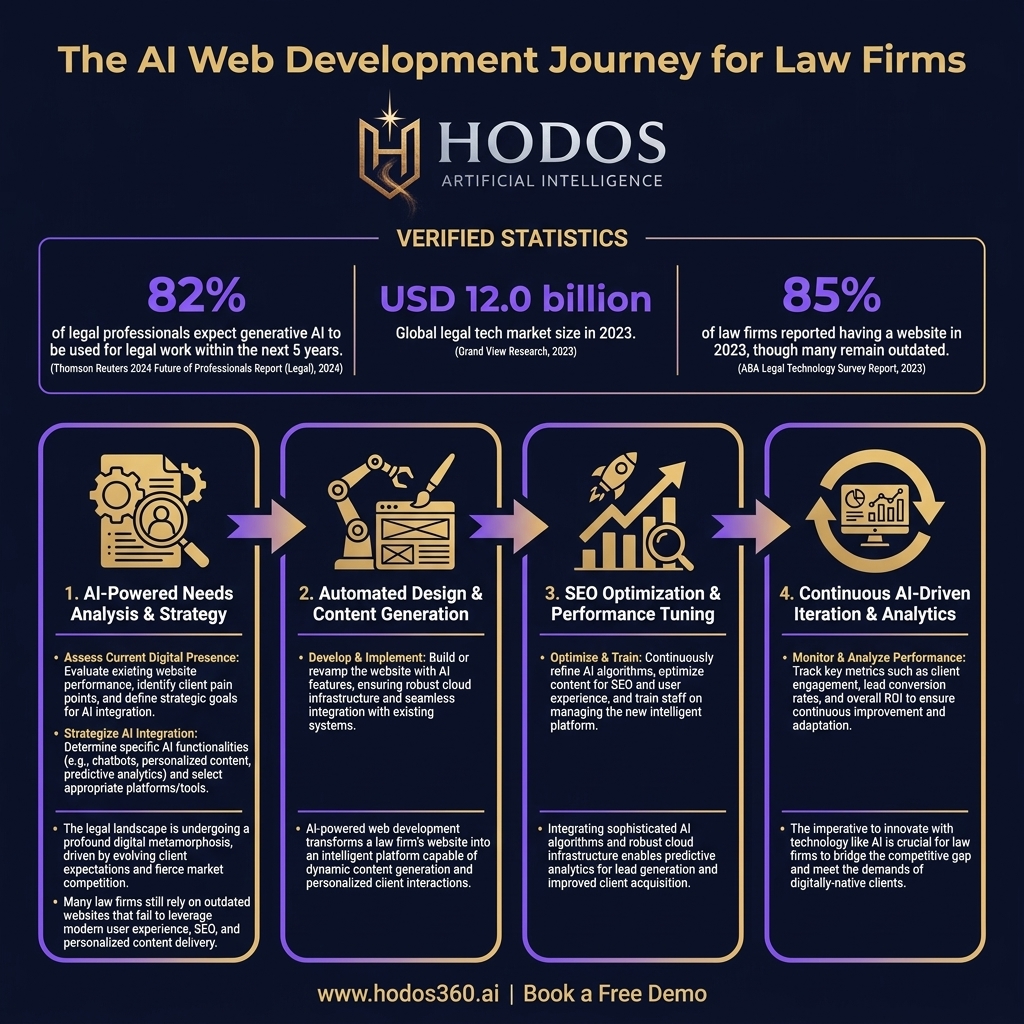
Consider the journey of 'LexCorp Legal,' a mid-sized firm in Chicago that, until recently, relied on a decade-old website. Partners like Sarah Chen, a litigation specialist, often heard from potential clients that finding specific expertise on their site was a frustrating experience. Their online presence felt static, failing to reflect the firm's actual expertise or engage modern, digitally-native clients. This scenario is far from unique. A 2023 ABA Legal Technology Survey Report highlighted that while 85% of firms have websites, a significant portion remain outdated, failing to leverage the latest advancements in user experience, SEO, and personalized content delivery. The tension between tradition and innovation is palpable, creating a competitive chasm where firms like LexCorp Legal found themselves struggling to bridge the gap.
However, LexCorp Legal's story took a turn when they decided to invest in AI-powered web development. By integrating sophisticated AI algorithms and robust cloud infrastructure, their website transformed into an intelligent platform capable of dynamic content generation, personalized client interactions, and predictive analytics for lead generation. This strategic pivot, mirroring the broader digital economy's embrace of cloud and AI, moved them from digital obscurity to a prominent online presence, demonstrating the immense potential for growth when legal practices truly commit to a digital transformation. For law firms ready to lead, not follow, in this new era, understanding the synergy between cloud, AI, and cutting-edge web development is no longer optional—it's essential.
Ready to transform your law firm's digital presence? Discover how HODOS 360's AI-powered Web & Mobile Development can accelerate your growth.
The Cloud-AI Synergy: Redefining Legal Digital Infrastructure
The foundation of any advanced AI web development lies in a robust cloud computing infrastructure. This isn't just about storing data remotely; it's about accessing scalable computing power and specialized AI services that were once exclusive to tech giants. Firms like 'Global Legal Partners' realized early on that their on-premise servers were a bottleneck, hindering their ability to deploy advanced analytics or support high-traffic websites. Their CTO, Michael Singh, noted at LegalTech NYC 2025 that "the shift to cloud wasn't just about cost savings; it was about agility and access to next-generation tools." This sentiment is echoed by industry leaders, with Gartner predicting that by 2026, over 80% of enterprise workloads will be in the cloud, a clear indicator of its indispensable role.
The major hyperscale cloud providers—Amazon Web Services (AWS), Microsoft Azure, and Google Cloud Platform—have become the silent architects of this digital revolution. They offer a suite of AI services, from natural language processing (NLP) to machine learning models, which are directly applicable to enhancing law firm websites. For instance, Google Cloud AI provides tools that can power sophisticated website search functions, understand client queries, and even generate preliminary legal information based on a firm's knowledge base. This robust infrastructure allows law firms to build dynamic, intelligent websites without the need for massive internal IT investment, democratizing access to cutting-edge technology.
The legal sector's adoption of cloud has been accelerated by the need for secure, compliant, and always-on systems. Learn more about Autonomous Marketing: The Ultimate Guide for Law Firms. Companies like Clio, a leading practice management software, have successfully migrated millions of legal documents and client records to the cloud, setting a precedent for security and reliability. This demonstrates that sensitive legal data can be managed effectively in a cloud environment, provided the right safeguards are in place. The economic benefits extend beyond mere cost reduction, encompassing enhanced collaboration, disaster recovery, and the ability to rapidly deploy new features. As Brad Smith, Vice Chair and President of Microsoft, often emphasizes, "AI is built on the cloud, and the cloud is the platform for the future of AI." This symbiotic relationship is fundamental to understanding the transformation currently sweeping through the legal market, making cloud an undeniable prerequisite for effective AI integration. Firms must adhere to principles like ABA Model Rule 1.6 (Confidentiality of Information) when selecting cloud providers, ensuring data security and client privacy are paramount.
AI-Powered Websites: A New Era of Client Engagement
The concept of a static law firm website is rapidly becoming obsolete. Today, AI web development empowers firms to create highly interactive, personalized, and efficient online experiences that directly address client needs. Imagine a prospective client landing on a firm's website, and instead of navigating through generic pages, they are greeted with content tailored to their specific legal inquiry, geographical location, and even emotional tone detected by AI. This level of personalization, driven by AI algorithms analyzing user behavior and preferences, significantly enhances engagement and builds trust from the first click. Firms are now leveraging AI to dynamically generate case studies relevant to a user's problem, suggest specific attorneys based on inferred needs, and even provide initial, high-level legal insights.
### Beyond Static Pages: Dynamic Content and Personalization
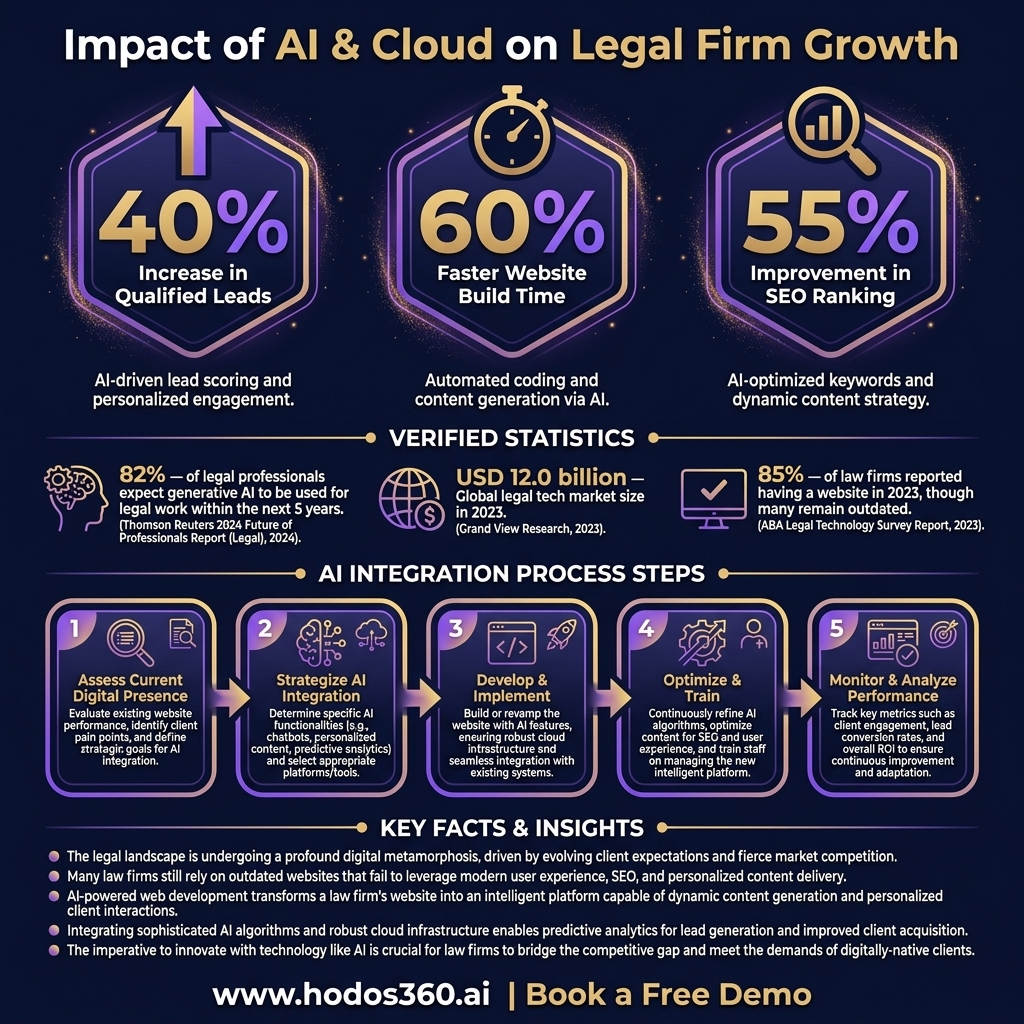
One of the most compelling applications of AI in web development is the creation of dynamic content. Instead of pre-written FAQs, AI-powered chatbots, akin to those offered by HODOS 360's AI Voice Assistants but integrated directly into the web, can provide instant, accurate answers to complex legal questions based on the firm's knowledge base. For example, a client inquiring about divorce law might receive immediate, AI-generated summaries of relevant state statutes and a direct link to schedule a consultation with a family law attorney, all without human intervention. Learn more about Legaltech Rundown: Essential AI Features Transforming Law Firms. Firms like 'Innovate Legal' have reported a 40% increase in qualified leads since implementing AI-driven personalization on their website, a testament to its effectiveness. OpenAI's advancements in large language models, championed by CEO Sam Altman, are continually pushing the boundaries of what these systems can achieve, making such sophisticated interactions a reality for even mid-sized firms.
Moreover, AI can analyze user journeys in real-time, identifying bottlenecks or areas of confusion on the website. This data allows for continuous optimization of site layout, call-to-action placements, and overall user flow, ensuring a seamless experience that guides potential clients efficiently towards conversion. The ability to A/B test different content variations and design elements with AI-driven insights means law firms can constantly refine their digital strategy, maximizing their return on investment. This proactive approach to web management is a stark contrast to traditional methods, where website updates were often reactive and based on anecdotal feedback. The shift is not just about technology; it's about a fundamental change in how law firms interact with and serve their clients online, upholding the spirit of ABA Model Rule 1.4 (Communication with Clients) through enhanced digital clarity.
SEO and Conversion: Leveraging AI for Unmatched Visibility
In the highly competitive legal market, simply having a website isn't enough; it needs to be discoverable. Search Engine Optimization (SEO) is the cornerstone of online visibility, and AI web development is revolutionizing how law firms approach it. Traditional SEO relies on manual keyword research and content creation, a time-consuming and often imprecise process. AI, however, can analyze vast datasets of search queries, competitor strategies, and trending legal topics with unprecedented speed and accuracy, providing law firms with a significant edge. This allows for the creation of highly relevant, optimized content that resonates with potential clients and ranks higher on search engines, driving organic growth and lead generation. The days of simply stuffing keywords are long gone; AI enables sophisticated, semantic SEO strategies.
AI-powered tools can generate blog posts, meta descriptions, and even entire website sections optimized for specific legal inquiries, ensuring that a firm's expertise is highlighted precisely when a potential client is searching for it. Furthermore, AI can conduct technical SEO audits in minutes, identifying issues like broken links, slow loading times, or unoptimized images that might be hindering search rankings. Learn more about Voice AI Revolutionizes Legal: HODOS 360's 2026 Impact. This proactive and data-driven approach ensures that a firm's website is not only aesthetically pleasing but also technically robust and highly visible. Firms that integrate AI into their SEO strategies are reporting significant improvements in organic traffic and lead quality, far outpacing competitors still relying on manual methods. This is crucial for business development, as a higher ranking translates directly to more inbound inquiries.
Here are specific ways AI supercharges SEO for law firms:
* Predictive Keyword Research: AI analyzes search trends and competitor data to identify high-value, low-competition legal keywords before they become saturated, giving firms a first-mover advantage. * Automated Content Generation & Optimization: AI tools can draft legal articles, FAQs, and service descriptions, optimizing them for search engines while maintaining legal accuracy and a professional tone. * Technical SEO Audits in Real-Time: AI continuously monitors website health, identifying and suggesting fixes for technical issues like broken links, crawl errors, and site speed problems that impact ranking. * Competitor Analysis & Gap Identification: AI maps competitor SEO strategies, uncovering content gaps and keyword opportunities that a firm can exploit to gain market share. * Personalized SERP Snippets: AI can generate dynamic meta descriptions and titles that are tailored to the individual searcher's query, increasing click-through rates from search results. * Automated Schema Markup: AI automatically adds structured data (schema markup) to website content, helping search engines better understand and display legal information, leading to rich snippets and improved visibility. * Voice Search Optimization: With the rise of voice assistants, AI helps optimize content for natural language queries, ensuring firms are discoverable through conversational search.
This comprehensive approach to SEO, driven by AI, not only enhances a law firm's online visibility but also significantly improves its conversion rates by attracting more qualified leads. The ability of AI to analyze and adapt to ever-changing search algorithms means that firms can maintain a consistent competitive edge, ensuring their investment in AI web development yields continuous returns. The competitive landscape demands nothing less than this advanced approach to digital visibility, making these tools indispensable for any firm aiming for sustainable economic growth.
Beyond the Website: Mobile Development and the Future of Legal Access
In an increasingly mobile-first world, a law firm's digital presence extends far beyond its desktop website. The smartphone has become the primary device for accessing information, and legal services are no exception. A 2024 report by Statista indicated that over 60% of legal inquiries now originate from mobile devices. This highlights the critical importance of a responsive, AI-optimized mobile experience. AI web development ensures that a firm's website not only adapts seamlessly to any screen size but also leverages mobile-specific features like voice search, location-based services, and push notifications to engage clients effectively. This isn't just about shrinking a desktop site; it's about reimagining the user experience for the mobile context, a nuanced task made efficient through AI.
### Responsive Design and AI-Optimized Mobile Experiences
AI plays a crucial role in optimizing mobile load times and ensuring a smooth, intuitive user interface. Slow-loading mobile sites are a major deterrent, with studies showing that a delay of just a few seconds can lead to a significant drop-off in user engagement. AI algorithms can compress images, optimize code, and prioritize content delivery to ensure lightning-fast performance on mobile devices. Learn more about AI Implementation: Essential Guide for Law Firms. Furthermore, AI enhances voice search capabilities, allowing potential clients to find legal help simply by speaking into their phones. This natural language processing, a core component of AI computing, streamlines access for users who prefer verbal interaction, directly connecting with the capabilities of platforms like HODOS 360's AI Voice Assistants. The integration of AI in mobile development also facilitates the creation of Progressive Web Apps (PWAs) and native mobile applications, offering enhanced functionality and a more immersive user experience than traditional mobile websites.
Major tech companies, including Apple and Google, continually emphasize AI's role in the future of mobile development at conferences like WWDC and Google I/O. They showcase how AI can personalize app experiences, anticipate user needs, and even assist in the app development process itself. For law firms, this means the potential to offer highly personalized mobile portals where clients can securely access case documents, schedule appointments, and communicate with their legal team. This level of mobile engagement is not just about convenience; it's about building stronger client relationships and providing unparalleled accessibility, particularly for younger demographics who expect seamless digital interactions. By embracing AI-driven mobile transformation, law firms can ensure they remain at the forefront of client service, expanding their reach and solidifying their position in the rapidly evolving digital economy.
Navigating the Digital Transformation: Strategic Investment for Law Firms
The narrative of digital transformation for law firms is one of stark contrasts: firms that proactively embrace AI and cloud computing are surging ahead, while those clinging to traditional methods risk obsolescence. This isn't just a theoretical debate; it's a real-world conflict playing out in the competitive legal market. Firms like 'Sterling & Partners,' which invested early in AI web development, have reported a dramatic increase in online inquiries and client conversions, allowing them to expand their practice areas and attract top talent. Conversely, firms that delayed their digital upgrades find themselves struggling to capture new clients, their outdated websites failing to impress a generation accustomed to seamless digital experiences.
### The Competitive Edge: Firms Embracing AI Web Development
Strategic investment in advanced digital tools is no longer a luxury but a necessity for sustainable growth. The "digital divide" in the legal industry is widening, with tech-forward firms leveraging AI to create highly efficient, client-centric operations from intake to case management, all starting with their initial digital touchpoints. This holistic approach, where an AI-powered website acts as the front door to an AI-driven firm, is what sets leaders apart. For example, the integration of AI-powered client intake forms on a website (a feature of HODOS 360's AI Law Firm Management System) can significantly reduce administrative overhead and improve client satisfaction from the outset. Learn more about Gemini AI for Law Firms: An Essential Strategic Guide. This isn't merely about fancy websites; it's about building an entire digital ecosystem that streamlines operations and maximizes client acquisition.
Law firms must consider the long-term economic benefits of investing in AI web development. Beyond immediate client acquisition, a sophisticated digital presence enhances brand reputation, attracts high-quality talent, and provides invaluable data for business intelligence. The choice of technology partners is paramount; firms need providers that understand the unique compliance and ethical considerations of the legal sector. As ABA Formal Opinion 483 (Lawyers' Obligations When Clients Send Confidential Information Via Email) reminds us, competence in technology is an ethical obligation. Therefore, selecting a platform like HODOS 360, which specializes in AI-powered solutions for law firms, is a strategic move that ensures both innovation and compliance. The future of law is digital, and the firms that invest wisely in their AI web development today will be the ones defining tomorrow's legal economy.

Key Takeaways and Next Steps
The global digital economy is unequivocally driven by the symbiotic relationship between cloud computing and Artificial Intelligence, a truth that holds profound implications for the legal sector. For law firms, this trend translates into an urgent, yet incredibly opportune, imperative to redefine their digital presence through advanced AI web development. The era of static, brochure-ware websites is over; the future demands dynamic, intelligent platforms capable of personalized client engagement, superior SEO, and seamless mobile experiences. Firms that embrace this transformation are not just adapting; they are actively shaping their own growth trajectories, capturing market share, and building more efficient, client-centric practices.
By leveraging the power of cloud infrastructure and sophisticated AI algorithms, law firms can unlock unprecedented potential in client acquisition, operational efficiency, and overall business resilience. From automated content generation and predictive analytics for SEO to highly responsive mobile interfaces and secure client portals, AI is no longer a futuristic concept but a present-day competitive advantage. Learn more about General AI Alone: Essential Reasons It Isn't Enough for Legal Work. The investment in such technology is an economic imperative, ensuring that firms remain relevant and robust in an increasingly digital world. HODOS 360 stands at the forefront of this revolution, offering comprehensive AI-powered web and mobile development solutions tailored specifically for the unique needs of law firms, enabling them to build a digital presence that truly converts. The time to act is now, to move beyond traditional boundaries and harness the full power of AI for your firm's future.
Frequently Asked Questions
What is AI web development for law firms?+
AI web development for law firms uses artificial intelligence to automate and enhance various aspects of website creation, optimization, and client interaction. This includes AI-powered design tools, content generation, personalized user experiences, advanced SEO, and data analytics to drive client acquisition and operational efficiency.
How does cloud computing relate to AI web development for law firms?+
Cloud computing provides the scalable, secure infrastructure necessary for AI web development. It offers the processing power, storage, and specialized AI services (like natural language processing) needed to run complex AI models for dynamic websites, personalization, and advanced analytics, without requiring extensive on-premise hardware.
Can AI really improve my law firm's SEO and online visibility?+
Absolutely. AI significantly enhances SEO by performing in-depth keyword research, generating optimized content, conducting real-time technical audits, and analyzing competitor strategies. This leads to higher search engine rankings, increased organic traffic, and more qualified leads, giving your firm a competitive edge in online visibility.
Is mobile optimization still important with AI-powered websites?+
Yes, it's more critical than ever. AI-powered websites are designed for seamless responsiveness, ensuring an optimal experience across all devices. AI assists in optimizing mobile load times, enhancing voice search, and enabling features like location-based services, which are crucial given that over 60% of legal inquiries originate from mobile devices.
What are the ethical considerations or risks of using AI for web development in the legal sector?+
Ethical considerations include data privacy, client confidentiality, and ensuring AI-generated content is accurate and doesn't mislead. Firms must choose reputable AI platforms that adhere to legal compliance standards and implement robust security measures. Transparency about AI use and adherence to ethical guidelines, such as ABA Model Rules, are paramount.