


AI Act: Essential Guide to Europe's Digital Future & Law Firms
The digital frontier is constantly expanding, and with it, the imperative for robust governance. On March 13, 2024, the European Parliament delivered a seismic shift, officially adopting the AI Act, a legislative milestone poised to redefine artificial intelligence development and deployment across Europe and beyond. This isn't merely another piece of legislation; it's the world's first comprehensive legal framework for AI, setting a global precedent that organizations, especially law firms, cannot afford to ignore. As European Commission President Ursula von der Leyen articulated during its inception, the goal is to foster trustworthy AI—a balance between innovation and fundamental rights. For law firms, this means a critical re-evaluation of their digital infrastructure, from client intake systems to their public-facing websites and mobile applications, all of which increasingly leverage AI. The implications for web and mobile development are particularly profound, demanding a proactive approach to compliance that goes beyond superficial updates.
This groundbreaking regulation, which will be fully enforceable by 2026, introduces a risk-based approach, categorizing AI systems into unacceptable, high-risk, limited-risk, and minimal-risk levels, each with varying degrees of oversight and obligations. For legal professionals, the challenge lies not just in comprehending these intricate classifications but in translating them into actionable strategies for their own operations and for advising clients. The stakes are immense: non-compliance could lead to fines up up to €35 million or 7% of a company’s global annual turnover, whichever is higher, as outlined in Article 99 of the Act. This financial penalty underscores the urgent need for law firms to embed AI Act principles into every facet of their digital future, particularly in how they build and maintain their online presence and digital services. Firms that embrace this challenge early will not only mitigate risks but also gain a significant competitive advantage, positioning themselves as leaders in a new era of responsible legal tech.
Table of Contents
- ✓Decoding the EU AI Act: A New Era for Digital Governance
- ✓AI Regulation's Impact on Law Firm Web & Mobile Development
- ✓Navigating the Compliance Labyrinth: Strategies for Legal Professionals
- ✓The Competitive Edge: How Proactive Adaptation Fuels Innovation
- ✓Key Takeaways and Next Steps for Your Firm
Decoding the EU AI Act: A New Era for Digital Governance
The EU AI Act represents a paradigm shift in digital governance, moving beyond previous data protection laws like GDPR to directly regulate the technology itself. Its framework is built on a tiered system of risk, with high-risk AI systems facing the most stringent requirements. These include systems used in critical infrastructure, law enforcement, employment, and democratic processes, as well as those that impact fundamental rights. For law firms, this means any AI application involved in client intake, case management, legal research that directly influences legal outcomes, or even sophisticated marketing tools leveraging client data could fall under scrutiny. The Act mandates that high-risk AI systems undergo conformity assessments, meet specific data quality and cybersecurity requirements, and ensure human oversight. This proactive regulatory stance seeks to instill public trust in artificial intelligence, a sentiment echoed by figures like Dario Amodei, CEO of Anthropic, who has consistently advocated for robust safety and ethical guidelines in AI development.
Enforcement of the AI Act will be phased, with certain provisions related to prohibited AI practices taking effect sooner, while obligations for high-risk AI systems will likely be fully operational by mid-2026. This staggered approach provides a critical window for law firms to assess their current AI usage and prepare for compliance. The Act also establishes national supervisory authorities and an European Artificial Intelligence Board to ensure consistent application across member states. Learn more about AI Voice Assistants: Essential for Modern Law Firms. This multi-layered oversight signifies the EU's commitment to creating a harmonized legal framework for AI, distinguishing it from more fragmented approaches seen elsewhere. Law firms must recognize that this isn't merely a European concern; any firm interacting with EU citizens or offering services within the EU will be subject to these rules, making it a de facto global standard for responsible AI deployment.
The Act's emphasis on transparency and explainability means that AI systems must be designed to allow users to understand their outputs and identify potential biases. This is particularly relevant for legal AI tools, where the rationale behind a legal prediction or document analysis must be clear. As highlighted in a 2023 report by Thomson Reuters, "The Future of Professionals," the demand for ethical AI is growing, with lawyers increasingly needing to not only use AI effectively but also to understand its underlying mechanisms to ensure professional responsibility. The challenge for law firms is to integrate these principles into their entire digital ecosystem, from how they present their services online to the backend AI-powered tools that streamline client intake and manage cases. The core message is clear: AI innovation must proceed hand-in-hand with robust ethical and legal safeguards.
The Risk-Based Framework and its Implications
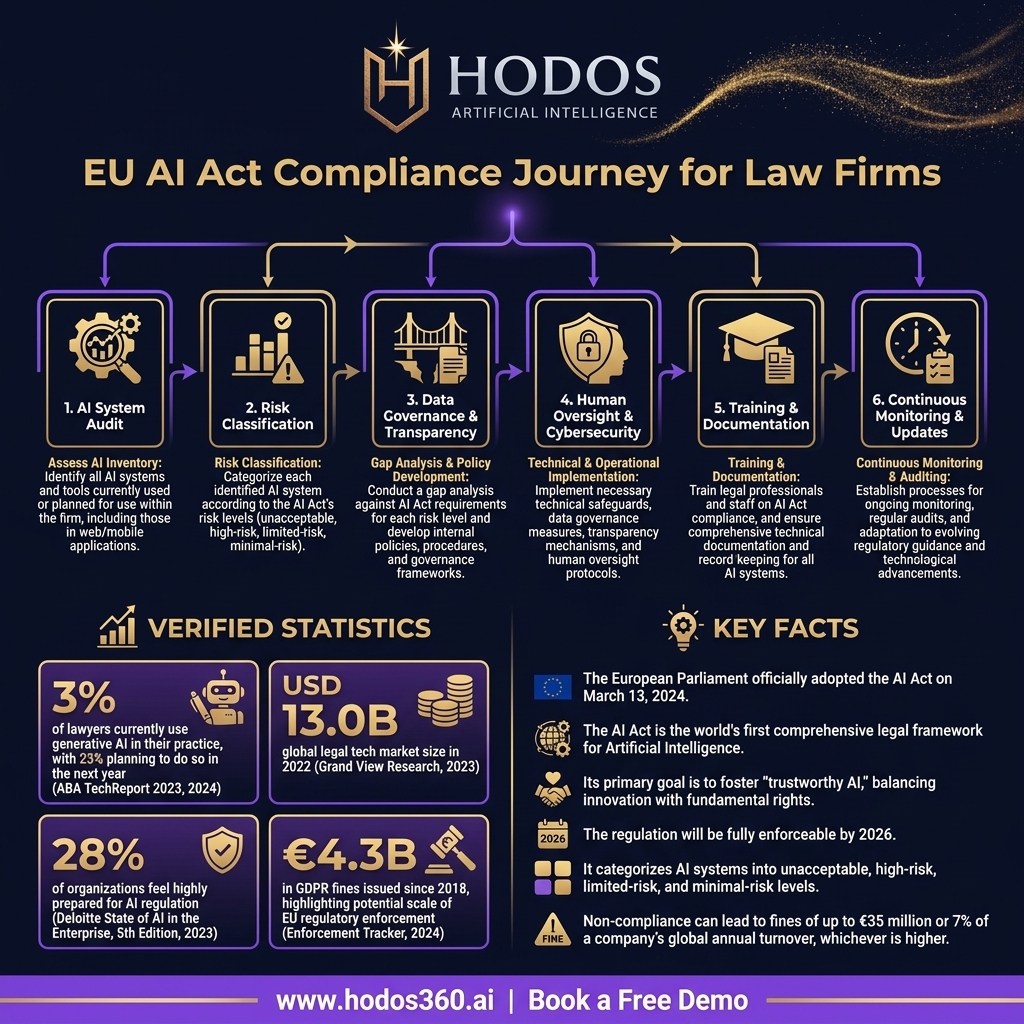
The cornerstone of the AI Act is its risk-based framework, which classifies AI systems into four categories: unacceptable, high-risk, limited-risk, and minimal-risk. Unacceptable risk AI systems, such as social scoring or manipulative subliminal techniques, are outright banned. High-risk systems, which pose significant harm to health, safety, or fundamental rights, face stringent requirements including data governance, technical documentation, human oversight, and conformity assessments. For law firms, this could encompass AI used in predictive justice, immigration applications, or even sophisticated AI-powered legal workflows that automate complex legal decisions. Limited-risk AI, like chatbots, requires transparency obligations (e.g., disclosing that users are interacting with AI). Learn more about AI Legal Tech: Essential Strategies for Market Growth. Minimal-risk AI, such as spam filters, is largely unregulated but encouraged to adhere to voluntary codes of conduct. This nuanced approach demands that law firms not only identify which of their AI tools fall into which category but also implement the corresponding compliance measures. The complexity necessitates a thorough audit of all AI-powered digital assets, a task that demands both legal acumen and technical expertise to avoid significant penalties.
AI Regulation's Impact on Law Firm Web & Mobile Development
The EU AI Act will fundamentally reshape how law firms approach web and mobile development. Consider a law firm's website that uses an AI chatbot for initial client queries or a mobile app that helps clients upload documents and track case progress. If these AI components are deemed high-risk—for instance, if the chatbot provides preliminary legal advice or the app uses facial recognition for identity verification—they will be subject to strict compliance. This includes requirements for robust data governance, ensuring the training data for these AI systems is unbiased and high-quality, and providing clear, comprehensive technical documentation. Firms must also implement human oversight mechanisms, meaning a lawyer should always be able to intervene or override an AI's decision. This is a significant shift from a purely functional development mindset to one deeply embedded with ethical and regulatory considerations. The imperative is not just to build a functional website or app, but a trustworthy AI-powered digital platform that respects fundamental rights and legal principles, a concept that Microsoft President Brad Smith has often emphasized in his discussions on responsible AI.
Furthermore, the Act's transparency obligations will directly influence user interface (UI) and user experience (UX) design. For limited-risk AI, such as a chatbot, firms must explicitly inform users that they are interacting with an AI system. This means clear disclaimers and visual cues on websites and mobile apps. For high-risk systems, the transparency requirements are even more extensive, often necessitating explanations for AI-generated decisions and robust data privacy controls that go hand-in-hand with GDPR. Learn more about AI Voice Assistants: Ultimate Guide for Law Firm Efficiency. Law firms must ensure their AI-powered website building incorporates these disclosures seamlessly, without deterring user engagement. This presents a unique design challenge: how to be transparent and compliant while maintaining a user-friendly and professional online presence. The goal is to build digital platforms that inspire confidence, not confusion or distrust, aligning with the ABA Model Rule 1.1 on Competence, which implies a duty to understand the benefits and risks associated with relevant technology.
The Act also carries significant implications for SEO optimization and AI marketing strategies. If a law firm's website uses AI to personalize content or target ads based on sensitive client data, it must ensure these systems comply with the Act's provisions, particularly regarding data quality and non-discrimination. The use of AI for content generation or social media automation must also be transparent, avoiding deceptive practices. Firms need to review their entire digital marketing stack to ensure that AI tools used for lead generation or client acquisition are compliant. This extends to the backend infrastructure, where robust cybersecurity measures are essential to protect the data processed by AI systems, preventing breaches that could compromise client confidentiality and incur severe penalties. The convergence of AI regulation, web development, and marketing means an integrated strategy is no longer optional but essential for legal firms aiming for long-term success in the digital age.
Ensuring Compliance: Beyond Just Terms of Service
Achieving compliance with the EU AI Act extends far beyond simply updating terms of service or privacy policies. It requires a fundamental shift in the development lifecycle of AI-powered digital tools. Law firms must implement a privacy-by-design and security-by-design approach to all their web and mobile development projects. This means integrating compliance checks at every stage, from initial concept to deployment and ongoing maintenance. Learn more about AI Deposition Prep: The Ultimate Guide to Winning Strategies. Firms must conduct thorough AI impact assessments to identify potential risks, establish robust data governance frameworks for AI training data, and ensure that their AI systems are regularly audited for bias and accuracy. Furthermore, vendor due diligence becomes paramount; firms must ensure that any third-party AI tools or platforms they integrate into their websites or apps are also compliant. This comprehensive approach is critical for mitigating the significant legal and reputational risks associated with non-compliance, safeguarding both the firm's integrity and its clients' trust.
Navigating the Compliance Labyrinth: Strategies for Legal Professionals
For legal professionals, navigating the complexities of the EU AI Act requires a multi-faceted strategy. First, firms must conduct an exhaustive AI audit of all existing and planned AI systems, identifying their risk classification under the Act. This includes not just client-facing applications but also internal AI-powered legal workflows and administrative tools. This audit should assess data quality, transparency mechanisms, human oversight protocols, and cybersecurity measures. Second, firms need to invest in training and upskilling their legal and technical teams. Lawyers must understand the technical nuances of AI, while developers need to grasp the legal implications of their code. This interdisciplinary approach is vital for embedding compliance into the firm's operational DNA. Firms like Allen & Overy, known for their early adoption of legal tech, have already begun integrating AI ethics training for their lawyers, recognizing the evolving landscape of professional responsibility. Third, firms should establish clear internal policies and governance structures for AI development and deployment, ensuring accountability at every level.
Proactive engagement with the regulatory landscape is also crucial. Law firms should monitor guidance from national supervisory authorities and the European AI Board as it emerges. They should also consider participating in industry working groups or pilot programs related to AI compliance. This not only helps them stay ahead of the curve but also allows them to contribute to shaping best practices. Learn more about AI Website Builders: The Ultimate Guide for Law Firms. For instance, the legal tech community at events like LegalTech NYC 2026 will undoubtedly be abuzz with discussions on practical implementation strategies for the AI Act, offering invaluable insights. Furthermore, firms should prioritize partnerships with technology providers that demonstrate a strong commitment to AI ethics and compliance. This includes platforms that offer AI-powered website building with built-in compliance features, ensuring that the digital front door of the firm adheres to the highest standards. The legal profession, traditionally slow to adopt radical technological shifts, now faces an urgent mandate to adapt, transforming compliance from a burden into a strategic advantage.
The financial implications of compliance cannot be underestimated. A 2024 report by McKinsey & Company estimated that global spending on AI governance, risk, and compliance solutions is projected to reach over $10 billion by 2028. For law firms, this means allocating resources for technology upgrades, training, and potentially hiring specialized AI ethics officers. However, this investment should be viewed not as an expense, but as a safeguard for future growth and client trust. Firms that fail to prioritize AI compliance risk not only hefty fines but also reputational damage in an increasingly discerning market. Conversely, firms that demonstrate a clear commitment to responsible AI, particularly in their digital interactions and online services, will build stronger client relationships and attract top talent. This strategic foresight is what separates market leaders from those who merely react to change.
The Competitive Edge: How Proactive Adaptation Fuels Innovation
While the EU AI Act presents significant compliance challenges, it also offers a unique opportunity for law firms to gain a competitive edge through proactive adaptation. Firms that view compliance not as a constraint but as a catalyst for innovation will emerge as leaders. By embedding ethical AI principles into their web and mobile development from the outset, firms can build digital platforms that are not only compliant but also inherently more trustworthy, secure, and user-centric. This commitment to trustworthy AI can become a powerful differentiator in a crowded legal market. Clients are increasingly aware of data privacy and ethical AI concerns, and a firm that can demonstrably assure them of its adherence to the highest standards will naturally attract more business. For example, a law firm leveraging AI Voice Assistants on its website for 24/7 client interaction, if built with AI Act transparency and data governance in mind, can provide superior service while building client confidence.
Consider the narrative arc of legal tech adoption: early movers like Linklaters, which invested heavily in AI tools for due diligence and contract review, gained significant efficiencies and market share. Similarly, firms that are early adopters of AI Act-compliant web and mobile development will be better positioned to attract clients seeking secure and transparent digital legal services. This proactive stance also fosters internal innovation. By forcing a deeper understanding of AI, its risks, and its potential, the Act encourages firms to explore new, responsible ways to leverage AI for efficiency, improved client experience, and even new service offerings. Learn more about AI Adoption: The Essential Shift for Modern Law Firms. This includes developing custom AI-powered legal workflows that are auditable and explainable, or AI marketing strategies that are transparent and ethically sound. The market rewards foresight, and in the rapidly evolving landscape of artificial intelligence, anticipating regulatory shifts is paramount.
The global race for AI leadership, often highlighted by the rivalry between figures like Sam Altman of OpenAI and Dario Amodei of Anthropic, underscores the immense potential of this technology. However, the EU AI Act asserts that this race must be run on a track of responsibility. For law firms, this means embracing the opportunity to innovate within a structured ethical framework. A 2023 Gartner survey revealed that only about 30% of organizations currently have robust AI governance in place. This gap presents a clear opening for law firms to lead by example. By partnering with platforms like HODOS 360, which specialize in compliant AI-powered website building and responsive design, firms can ensure their digital infrastructure is not just functional but also a beacon of ethical and legal adherence. This positions them not just as legal service providers, but as thought leaders in the responsible application of technology, shaping their own digital future and that of the broader legal industry.
The Future of Trustworthy AI in Legal Services
The future of legal services is undeniably intertwined with trustworthy AI. The EU AI Act accelerates this convergence, demanding that AI systems used in the legal sector are not only efficient but also fair, transparent, and accountable. This will drive innovation towards AI solutions that prioritize explainability over black-box complexity, and human oversight over full automation. For law firms, this means a shift towards AI tools that augment human intelligence rather than replace it entirely, enhancing lawyers' capabilities while maintaining their professional judgment and ethical responsibilities. The Act encourages the development of AI that supports, rather than undermines, the foundational principles of justice and due process. Firms that invest in developing or adopting such trustworthy AI will not only meet regulatory requirements but will also set a new standard for excellence in legal service delivery, ensuring that technology serves justice, not the other way around. This proactive vision is essential for securing a sustainable and ethical digital future for the legal profession.

Key Takeaways and Next Steps for Your Firm
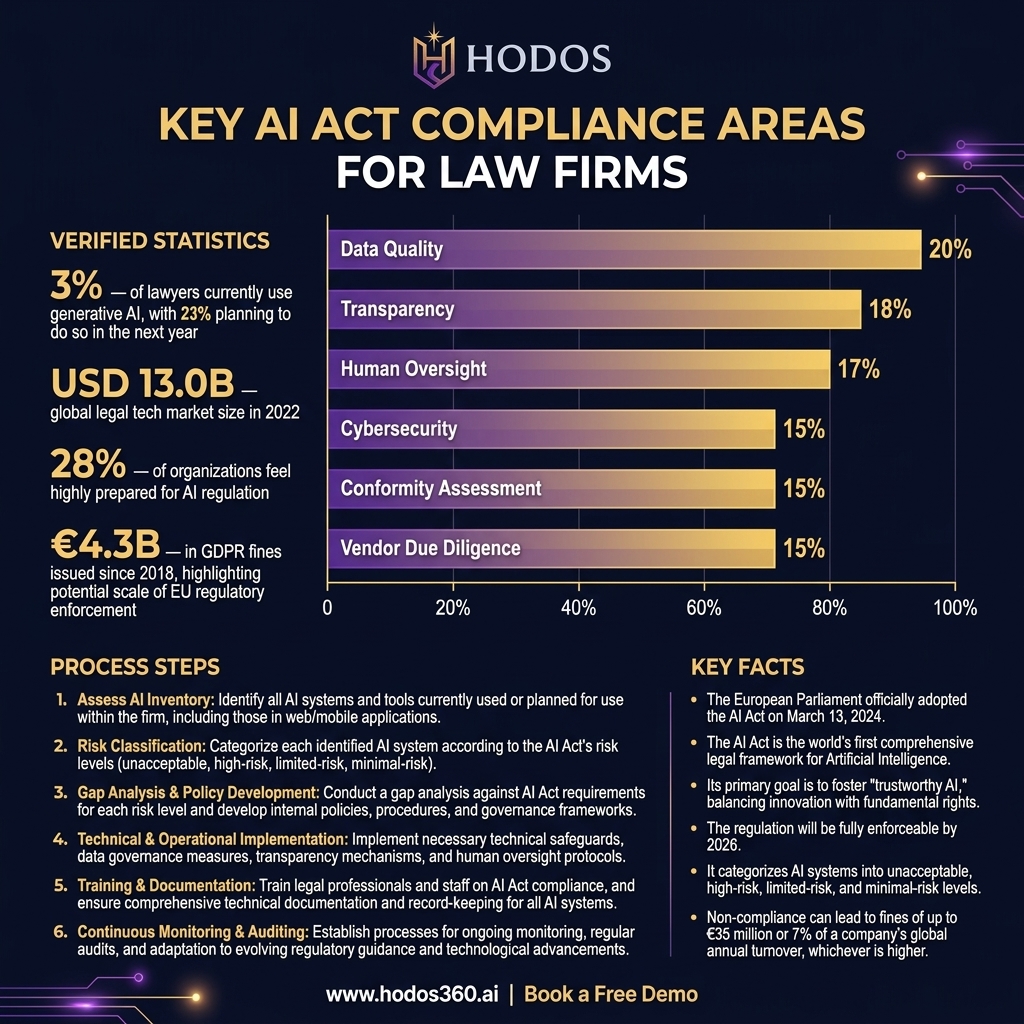
The EU AI Act is not a distant concern; it's a present reality that demands immediate attention from law firms globally, particularly concerning their web and mobile development. The window for proactive compliance is rapidly closing, with full enforcement slated for 2026. Firms must embark on a comprehensive audit of their AI systems, understand the risk classifications, and integrate compliance measures into their digital strategy. This includes ensuring that their websites, mobile apps, and any client-facing AI tools adhere to the Act's stringent requirements for data quality, transparency, human oversight, and cybersecurity. The strategic advantage lies with those who embrace this regulatory shift as an opportunity to build more robust, ethical, and trustworthy digital platforms, thereby strengthening client trust and securing their firm's digital future.
The path forward involves strategic investment in compliant technology and expertise. Firms should leverage platforms that offer AI-powered website building and comprehensive SEO optimization while adhering to the highest regulatory standards. Partnering with a trusted provider can streamline the compliance process, allowing firms to focus on their core legal work while ensuring their digital presence is fully aligned with the new European regulation. The AI Act is a call to action for the legal industry to lead by example in the responsible deployment of artificial intelligence, transforming potential challenges into unparalleled opportunities for growth and ethical leadership. Don't wait for enforcement; begin your firm's journey toward AI Act compliance today.
Frequently Asked Questions
What is the EU AI Act and when does it take effect?+
The EU AI Act is the world's first comprehensive legal framework for artificial intelligence, adopted by the European Parliament in March 2024. It establishes a risk-based approach to regulating AI systems. While some provisions will take effect sooner, the core obligations for high-risk AI systems are expected to be fully enforceable by mid-2026, giving law firms a critical window to ensure compliance and adapt their digital strategies.
How does the AI Act impact a law firm's website and mobile apps?+
The Act significantly impacts law firms' web and mobile development, particularly if their digital platforms use AI for client interaction, data processing, or legal assistance. High-risk AI systems on websites or apps (e.g., predictive legal tools, advanced client intake AI) will face stringent requirements for data quality, transparency, human oversight, and cybersecurity. Even limited-risk AI like chatbots require clear user disclosure that they are interacting with an AI.
What are the penalties for non-compliance with the EU AI Act?+
Non-compliance with the EU AI Act carries severe penalties. Fines can reach up to €35 million or 7% of a company’s global annual turnover, whichever is higher, for violations of prohibited AI practices or non-adherence to high-risk AI requirements. Lower-tier non-compliance can still result in substantial fines, underscoring the critical need for law firms to prioritize and invest in robust AI governance and compliance strategies.
How can law firms ensure their AI-powered web development is compliant?+
Law firms must adopt a privacy-by-design and security-by-design approach to all AI-powered web and mobile development. This involves conducting AI impact assessments, establishing robust data governance for AI training data, ensuring human oversight, providing clear transparency to users, and regularly auditing AI systems for bias and accuracy. Partnering with expert providers specializing in compliant AI web solutions can significantly streamline this process.
Will the AI Act affect law firms outside the European Union?+
Yes, the EU AI Act has extraterritorial reach. Any law firm outside the European Union that develops, deploys, or provides AI systems used in the EU, or whose AI system's output is used in the EU, will likely be subject to its provisions. This means firms globally need to understand and prepare for the Act's requirements, making it a de facto global standard for responsible AI in legal services.