

Gemini AI for Law Firms: The Ultimate Guide to Google's Legal Expansion
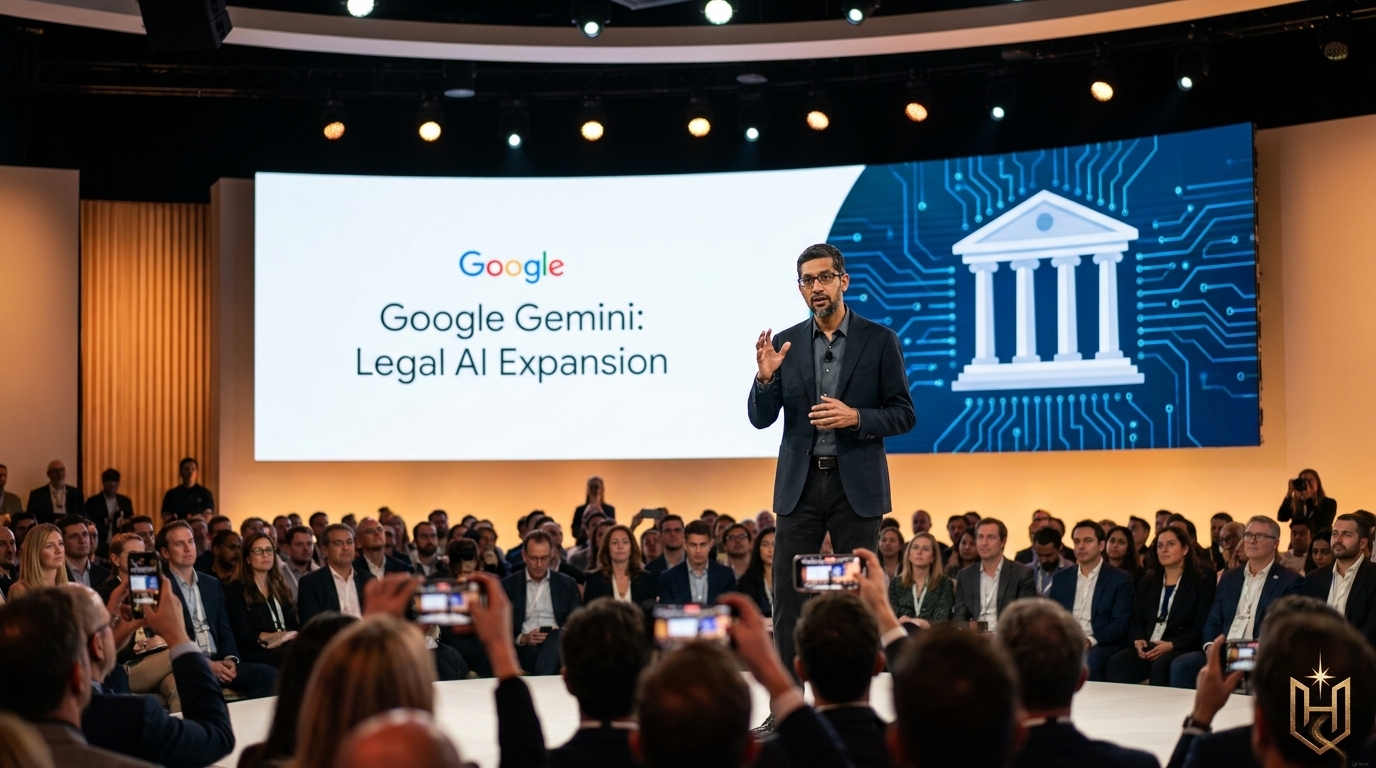
The legal industry, often characterized by its adherence to tradition, is currently in the throes of a technological revolution, spearheaded by artificial intelligence. Just as firms grappled with the shift from paper to digital, they now face an even more profound transformation driven by advanced AI. The recent announcement by Google, as highlighted by *The Business Standard*, regarding its expanded Gemini AI platform for law firms and lawyers, isn't merely an incremental update; it signals a decisive move by a tech titan to capture a significant share of the rapidly evolving legal tech market. This expansion, dubbed "Gemini Enterprise for Legal," is poised to deliver a suite of specialized AI tools designed to integrate seamlessly into complex legal workflows, offering capabilities that extend far beyond the general-purpose AI applications we've seen thus far. This strategic pivot by Google underscores a broader industry narrative: the race to equip legal professionals with intelligent agents that can handle everything from intricate legal research to sophisticated client interactions, fundamentally altering the competitive landscape for legal service providers.
This isn't just about efficiency; it's about strategic advantage. For years, legal tech innovators like Clio and Thomson Reuters have been building specialized platforms, but the entry of a hyperscaler like Google, with its immense computational power and vast data resources, changes the calculus entirely. Consider the early adopters, like a partner at a mid-sized firm, Sarah Jenkins, who, after attending LegalTech NYC 2026, recognized the impending shift. She spearheaded her firm’s pilot program with early AI tools, witnessing firsthand how initial applications could automate routine tasks, freeing up associates for higher-value work. Google's move with Gemini aims to scale this impact dramatically, offering an integrated platform that promises to be a comprehensive solution for law firms and corporate legal teams alike. The drama unfolds as firms must now choose: embrace the future with powerful artificial intelligence tools or risk being outmaneuvered by competitors leveraging these new capabilities. This article delves into the specifics of Google's expansion, its implications, and how legal professionals can strategically navigate this new era. Discover how HODOS 360’s AI Law Firm Management System can integrate with these advancements to supercharge your practice.
The Strategic Imperative: Why Google is Expanding Gemini for Legal
Google's intensified focus on the legal sector with its Gemini platform is no accident; it is a calculated response to a clear market opportunity and the burgeoning demand for specialized artificial intelligence solutions. The legal industry, despite its traditional reputation, is a massive global market, estimated by McKinsey to be worth over $1 trillion annually, yet it struggles with persistent inefficiencies. A recent ABA TechReport survey revealed that while 60% of law firms are exploring AI, only a fraction have fully integrated it into core operations. This gap represents a significant untapped potential for technology providers. Google, under the leadership of CEO Sundar Pichai, has consistently emphasized "AI-first" strategies across its vast ecosystem, and extending this to a high-value, data-intensive vertical like legal is a natural progression. This move also positions Google directly against rivals like Microsoft, which has heavily invested in its Copilot for Legal offerings, and specialized legal AI pioneers such as Harvey AI, recently acquired by Allen & O'Very in a landmark deal signaling institutional commitment to AI.
The competitive tension is palpable. Learn more about AI Marketing Agents: The Ultimate Guide for Law Firms. For years, legal tech vendors like Thomson Reuters (with CoCounsel) and LexisNexis (with Lexis+ AI) have dominated the legal research and content space. Google’s entry with a robust, enterprise-grade AI solution like Gemini, which is designed to go beyond mere information retrieval to intelligent agents capable of performing complex tasks, directly challenges these established players. Google's vast cloud infrastructure, deep learning expertise, and access to immense computational resources give it a distinct advantage in developing scalable, secure AI legal technology. This expansion is not just about competing on features; it's about reshaping the fundamental architecture of legal operations. By offering a comprehensive suite that integrates document automation, case management, and advanced analytics, Google aims to become the foundational AI layer for modern law firms, enabling them to improve client outcomes and operational efficiency.
Beyond Simple Chatbots: Gemini's Agentic Architecture
The key differentiator in Google's Gemini platform for legal is its emphasis on "AI agents." Unlike earlier, more static AI tools or simple chatbots that primarily respond to direct queries, agentic AI systems are designed to operate with a degree of autonomy, understanding complex objectives and orchestrating multiple steps to achieve them. For law firms, this means a shift from AI as a reactive tool to AI as a proactive assistant. Imagine an AI agent that, upon receiving a new client intake, can automatically draft a retainer agreement, cross-reference potential conflicts of interest across firm databases, schedule initial consultations, and even initiate preliminary legal research based on the client's stated needs. These agents are built to integrate deeply with existing legal software and data platforms, acting as intelligent intermediaries that can fetch, process, and synthesize information from disparate sources, and even learn from attorney feedback.
This sophisticated architecture promises to unlock unprecedented levels of efficiency and accuracy. For instance, in due diligence for a corporate merger, a Gemini agent could be tasked with reviewing thousands of contracts for specific clauses, identifying risks, and summarizing key findings, all while adhering to firm-specific guidelines. Learn more about Google Gemini: Ultimate AI Expansion for Law Firms. This moves beyond simple keyword searches to contextual understanding and inference. As Dario Amodei, CEO of Anthropic, has often articulated regarding the development of advanced AI, the future lies in creating systems that can perform complex, multi-step reasoning. Google's Gemini aims to bring this vision to the legal sector, empowering lawyers to delegate highly repetitive or data-intensive tasks to reliable AI counterparts, thereby allowing human expertise to focus on strategic decision-making and client relationship management.
Transforming Legal Workflows: Practical Applications of Gemini Enterprise
Google's Gemini Enterprise for Legal is engineered to permeate and enhance virtually every aspect of a law firm's operational workflow, moving beyond isolated tasks to create a more cohesive and intelligent practice environment. For instance, in the realm of AI Law Firm Management System components, Gemini can revolutionize client intake by automating the collection of initial client data, performing preliminary background checks, and even drafting initial communication, all while ensuring compliance with privacy regulations. This significantly reduces the administrative burden on support staff and accelerates the onboarding process. For case management, Gemini's artificial intelligence agents can monitor case progress, flag upcoming deadlines, and even suggest relevant precedents or strategic approaches based on real-time data analysis and historical case outcomes. This transforms reactive management into proactive, predictive guidance, allowing lawyers to maintain greater control and foresight over their caseloads.
Furthermore, the impact on legal research and document review is profound. Traditionally, these tasks are labor-intensive, time-consuming, and prone to human error. Learn more about Voice AI Landscape: Essential Strategies for Law Firms. Gemini's advanced natural language processing capabilities enable it to sift through vast libraries of statutes, case law, and firm documents with unparalleled speed and accuracy. An attorney could prompt Gemini to "find all cases in the Ninth Circuit concerning intellectual property infringement between 2020 and 2025 where punitive damages were awarded," and receive not just a list of cases, but synthesized summaries of their relevance, key holdings, and potential applicability to a current matter. In contract analysis, Gemini can identify anomalous clauses, compare contracts against standard templates, and highlight potential risks in mere minutes, a task that would take human teams hours or days. This dramatically reduces the cost and time associated with due diligence, litigation discovery, and transactional work, fundamentally reshaping how law firms deliver value. Discover more about how **AI-powered legal workflows** can redefine your practice's efficiency.
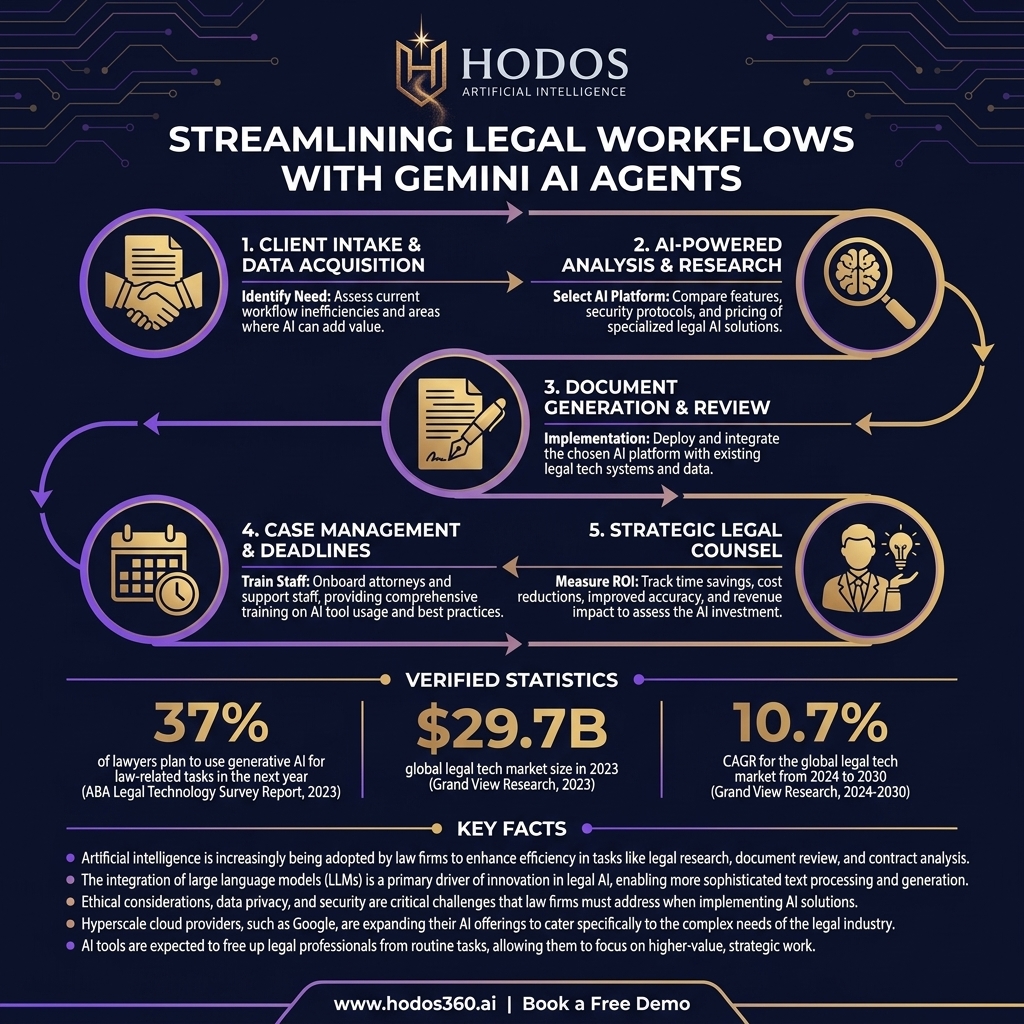
- ✓Automated Document Generation: Rapidly draft contracts, motions, and briefs using firm-specific templates and dynamic data inputs.
- ✓Intelligent Legal Research: Conduct comprehensive, context-aware research across vast legal databases, summarizing key findings and identifying relevant precedents.
- ✓Predictive Analytics: Forecast case outcomes, settlement ranges, and litigation costs based on historical data and current case specifics.
- ✓Enhanced Client Intake: Streamline onboarding with automated data collection, conflict checks, and initial document preparation.
- ✓Contract Review & Analysis: Quickly identify key clauses, risks, and discrepancies in complex legal documents, accelerating due diligence.
- ✓Workflow Automation: Automate routine administrative tasks, scheduling, and communication, freeing up valuable attorney time.
- ✓Compliance Monitoring: Proactively flag potential regulatory violations or compliance gaps within internal documents or client agreements.
Enhanced Due Diligence and Contract Analysis
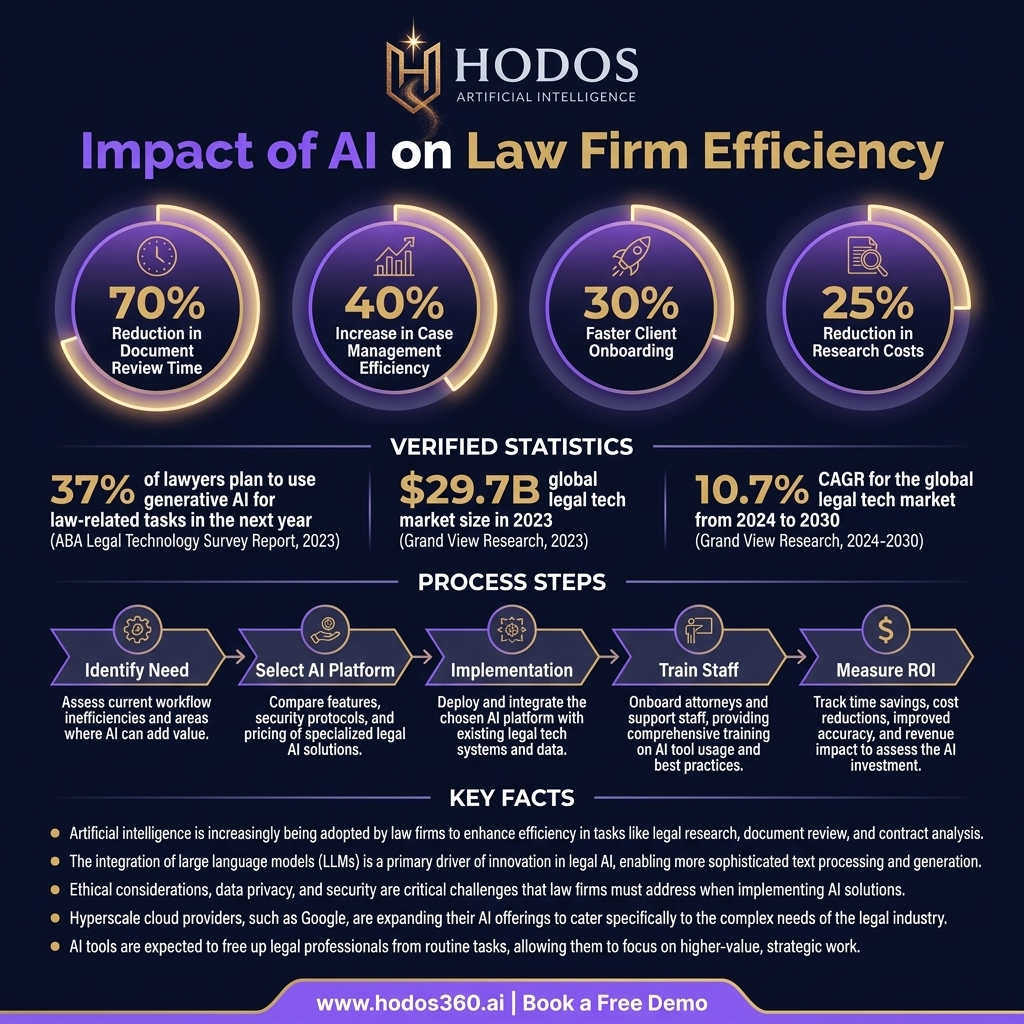
The traditional process of due diligence and contract analysis is a bottleneck in many legal transactions, often requiring hundreds of attorney hours to meticulously review voluminous documents. Gemini Enterprise for Legal directly addresses this pain point by deploying specialized artificial intelligence agents capable of rapid, precise analysis. For a merger and acquisition deal, an AI agent can ingest thousands of contracts, identify specific clauses related to change of control, indemnification, or intellectual property rights, and then extract these clauses into a structured format for human review. This allows lawyers to focus their expertise on the nuanced interpretation and negotiation of critical terms, rather than the tedious initial sift. Learn more about AI for Law Firms: Essential Guide to Scaling Legal AI. Data from early adopters of similar AI tools suggests a reduction in review time by up to 70%, as seen in case studies by legal tech firms like Relativity and Litera, which have also integrated advanced AI functionalities into their offerings. This not only accelerates deal timelines but also significantly reduces client costs, enhancing a firm's competitive edge.
The Competitive Landscape: Google's Play Against Industry Titans
Google's entry with Gemini Enterprise for Legal intensifies an already fierce competition within the legal technology sector, where established players and innovative startups are all vying for market dominance. Microsoft, with its deep integration into corporate IT infrastructure, has been aggressively pushing Copilot for Legal, leveraging its existing user base and Office 365 ecosystem. Brad Smith, Microsoft's Vice Chair and President, has consistently highlighted the company's commitment to responsible AI development, a crucial factor for risk-averse law firms. Similarly, Thomson Reuters and LexisNexis, with their decades-long relationships and proprietary legal databases, are formidable competitors. Their strategy involves integrating advanced artificial intelligence capabilities, such as CoCounsel and Lexis+ AI, directly into their existing research platforms, thereby offering a familiar and comprehensive ecosystem to lawyers.
Beyond these giants, a vibrant ecosystem of specialized legal AI startups continues to innovate. Harvey AI, a generative AI tool for legal professionals, gained significant traction and a strategic partnership with global law firm Allen & O'Very, demonstrating the potential for niche players to disrupt the market. Learn more about Digital Marketing: Essential Strategies for Law Firms. Clio, a leader in cloud-based AI Law Firm Management System software, continues to expand its AI capabilities, focusing on practice management and client relationship aspects. The competitive drama lies in how law firms will choose between these offerings: will they opt for a single, comprehensive platform from a hyperscaler like Google, or prefer a best-of-breed approach, integrating specialized tools from different vendors? This decision will largely hinge on factors like data security, ease of integration, cost-effectiveness, and the perceived ethical robustness of the AI legal technology. Firms that can strategically evaluate and adopt the most impactful AI solutions will be best positioned for future success. Explore how HODOS 360’s **AI Marketing Platform** can help your firm stand out in this competitive environment.
Navigating Ethical AI and Data Security in Legal Practice
The promise of Gemini AI for law firms comes with significant ethical and data security considerations that legal professionals must navigate meticulously. The core tenets of legal practice – confidentiality, competence, and client trust – are directly impacted by the deployment of artificial intelligence. As per ABA Model Rule 1.1 on Competence, lawyers have an ethical duty to keep abreast of changes in the law and its practice, including the benefits and risks associated with relevant technology. This extends to understanding the limitations and potential biases of AI tools. Data security is paramount; the highly sensitive nature of client information means that any platform handling legal data must adhere to the highest standards of encryption, access control, and privacy protocols. Google, with its extensive experience in cloud security, faces the challenge of reassuring the legal community that its enterprise solutions meet or exceed these stringent requirements, especially given the global nature of many law firms and varying data residency laws, such as those under the GDPR or CCPA.
Moreover, the "black box" nature of some advanced AI models raises concerns about transparency and explainability. Learn more about Gemini AI: The Ultimate Guide for Law Firms. If an AI agent assists in drafting a critical legal document or provides research that influences a case strategy, lawyers must be able to understand *how* the AI arrived at its conclusions to fulfill their ethical obligations. This speaks to ABA Model Rule 1.6 concerning Confidentiality of Information, where unauthorized disclosure through AI vulnerabilities could have severe repercussions. The legal community, through bodies like the ABA Standing Committee on Ethics and Professional Responsibility, is actively developing guidelines for AI use, emphasizing the need for human oversight and verification of AI-generated work. The drama here isn't just technological; it's a profound ethical challenge that demands careful consideration, robust internal policies, and a commitment to continuous learning from law firms embracing these powerful new tools. Learn how HODOS 360’s **AI Voice Assistants** provide secure and compliant client communication solutions.
Ensuring Compliance: The Role of Human Oversight
Despite the advanced capabilities of Gemini's artificial intelligence agents, human oversight remains indispensable for ensuring ethical compliance and accuracy in legal practice. AI tools are powerful assistants, but they are not infallible and lack the nuanced judgment, ethical reasoning, and empathy inherent to human lawyers. The principle of "human in the loop" is critical; every AI-generated document, research summary, or strategic recommendation must undergo thorough review by a qualified legal professional. This ensures that the output aligns with the specific facts of a case, client objectives, and prevailing legal standards. Furthermore, human oversight is essential for identifying and mitigating potential AI biases, which can inadvertently arise from the data sets used to train the models. For instance, a historical legal dataset might reflect past societal biases, which an AI could perpetuate if not carefully monitored and corrected. Firms must develop clear internal protocols for AI use, including mandatory review stages and clear accountability frameworks, to harness the power of Google's Gemini responsibly and effectively.

Key Takeaways and Next Steps for Forward-Thinking Firms
Google's expansion of Gemini AI for law firms represents a significant inflection point in the legal industry's technological evolution. The move by Google, a global technology leader, validates the transformative potential of artificial intelligence in legal practice and signals that AI is no longer a niche tool but a core component of future-ready law firms. For attorneys and firm leaders, the key takeaway is not *if* to adopt AI, but *how* to strategically integrate it to maximize efficiency, enhance client service, and maintain a competitive edge. Firms that proactively engage with these advanced tools, understanding both their immense capabilities and their inherent limitations, will be best positioned to thrive. The narrative arc of legal tech is clear: the future belongs to those who leverage intelligent platforms to innovate their practice, streamline operations, and deliver superior client outcomes.
As law firms evaluate solutions like Google's Gemini, it's crucial to consider a holistic approach to technological integration. While a powerful AI platform can enhance specific workflows, a truly optimized practice requires a comprehensive ecosystem. This is where platforms like HODOS 360 provide immense value, offering an integrated suite of services that includes not only an AI Law Firm Management System but also an AI Marketing Platform, AI Voice Assistants, and Web & Mobile Development. By combining specialized AI tools with a broader strategy for operational excellence and digital presence, firms can build a resilient, future-proof practice. The era of the generalist law firm is fading; the era of the AI-empowered, digitally fluent legal practice is here. Embrace the change, educate your teams, and prepare to redefine what's possible in the legal profession. Ready to build a truly intelligent law firm? **Book a free demo** with HODOS 360 today to see our comprehensive AI solutions in action!
Frequently Asked Questions
Q1: What is Google Gemini Enterprise for Legal?+
Google Gemini Enterprise for Legal is an expanded AI platform from Google specifically tailored for law firms and corporate legal teams. It integrates advanced artificial intelligence agents and tools designed to automate complex legal workflows, enhance research capabilities, and improve operational efficiency across various legal tasks.
Q2: How does Gemini AI differ from other legal AI tools?+
Gemini AI distinguishes itself through its "agentic architecture," meaning its AI agents can perform multi-step tasks autonomously and integrate deeply with existing legal software. While many tools focus on specific functions, Gemini aims for a more comprehensive, proactive, and integrated approach across the entire legal workflow.
Q3: What are the primary benefits for law firms using Gemini AI?+
Law firms can expect significant benefits, including accelerated legal research, streamlined document review and generation, improved case management, enhanced client intake processes, and predictive analytics capabilities. These lead to increased efficiency, reduced operational costs, and the ability to focus lawyers on higher-value, strategic work.
Q4: What ethical considerations should law firms be aware of when using Gemini AI?+
Firms must prioritize data security, client confidentiality, and compliance with ethical rules like competence and supervision. It's crucial to understand AI's limitations, potential biases, and ensure robust human oversight to verify AI-generated outputs and maintain professional responsibility.
Q5: How will Google Gemini impact the competitive landscape of legal tech?+
Google's entry intensifies competition with established players like Microsoft, Thomson Reuters, and LexisNexis, as well as specialized AI startups. It pushes the industry towards more integrated, comprehensive AI solutions, forcing firms to strategically choose platforms that align with their operational needs and ethical standards.