
Legal AI Development: Strategic Moves for Future Firms
The legal landscape is undergoing a profound transformation, moving beyond the era of mere AI adoption to one of proactive legal AI development. This pivotal shift was starkly highlighted by Akerman’s recent announcement: the hiring of Charles Zerner as its first Director of AI Development, as reported by Legal IT Insider. This strategic appointment signals a new frontier for law firms, where the competitive edge is increasingly defined not just by how effectively they use existing AI tools, but by their capacity to build proprietary, bespoke AI solutions tailored to their specific needs and client demands. Zerner, previously a partner and co-chair of the AI practice at Munck Wilson Mandala, brings a unique blend of legal acumen and deep technological expertise, positioning Akerman at the forefront of this evolutionary wave.
Akerman's move is more than just a new hire; it's a declarative statement about the future of legal services. It underscores a growing realization among AmLaw 100 firms that off-the-shelf AI products, while valuable, often fall short of delivering truly differentiated value. The industry is witnessing a bifurcation: firms that passively integrate vendor-supplied AI, and those that actively invest in internal capabilities to develop, customize, and refine AI applications from the ground up. This latter group, exemplified by Akerman, is poised to redefine efficiency, client engagement, and even the very nature of legal work, moving beyond simple automation to sophisticated intelligence that anticipates needs and generates strategic insights.
The implications for the broader legal sector are immense. As other firms observe Akerman's strategic legal AI development initiative, a new standard for technological leadership is being set. This shift demands a re-evaluation of talent acquisition strategies, investment priorities, and the foundational understanding of what it means to be a modern law firm. It’s a call to action for legal leaders to consider how they can move from being consumers of technology to architects of their own intelligent legal future, shaping tools that reflect their unique practice areas and operational philosophies. The race for AI superiority in law is no longer about who buys the best software, but who builds the most intelligent solutions.
Ready to transform your firm's AI strategy? Discover how HODOS 360 can empower your firm with cutting-edge AI-powered legal workflows and robust management systems. Book a Free Demo Today!
The Rise of In-House AI Development in Law Firms
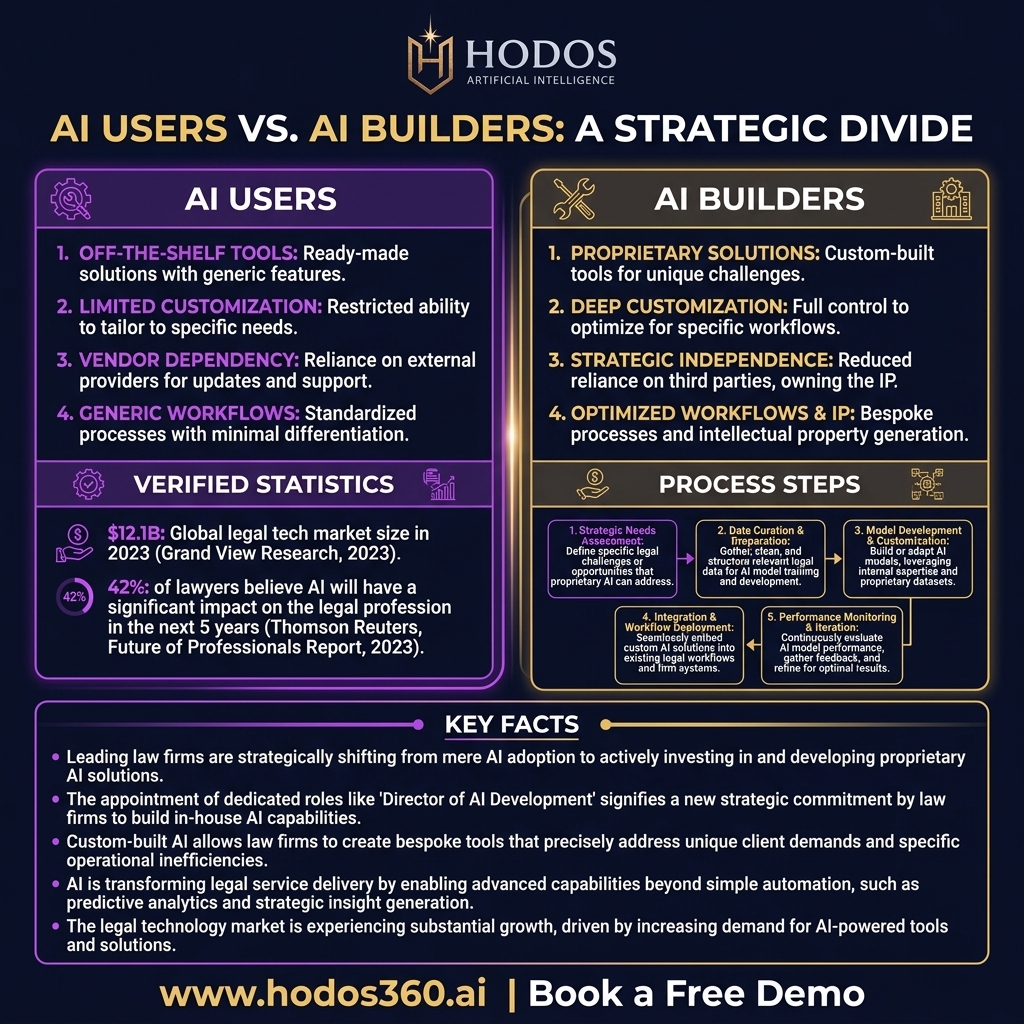
For years, the legal tech narrative centered on adopting AI tools for tasks like document review, legal research, and contract analysis. Firms leveraged platforms from companies like Thomson Reuters and Clio, integrating them into existing workflows. However, a new paradigm is emerging, driven by the desire for greater control, deeper customization, and proprietary competitive advantage. This shift from 'AI users' to 'AI builders' is a response to the limitations of generic solutions. While a general-purpose AI might offer a 70% solution, the remaining 30% often represents critical, firm-specific nuances—be it a specialized practice area, a unique client intake process, or a particular approach to case strategy. Firms are realizing that to truly optimize operations and deliver unparalleled value, they must shape the technology itself, ratheracting as passive recipients. Learn more about Legal AI Divide: Bridge the Gap, Thrive in 2026's Digital Era. This strategic imperative is particularly pronounced in a highly competitive market where differentiation is key.
This movement is not entirely novel; early adopters like Allen & Overy, through its partnership with Harvey AI, demonstrated the potential of co-developing AI to meet specific needs. Yet, Akerman's appointment of a dedicated AI director signifies a more formalized, in-house commitment to this strategy. According to a 2024 McKinsey report on AI adoption, firms that develop proprietary AI solutions often report significantly higher efficiency gains and a stronger strategic position compared to those relying solely on off-the-shelf products. This is because custom-built AI can be seamlessly integrated with legacy systems, trained on a firm's unique historical data, and designed to address very specific pain points, leading to a more profound transformation than a one-size-fits-all approach. The investment, while substantial, is increasingly viewed as a necessary step for long-term growth and market leadership.
From Consumers to Creators: A Paradigm Shift
The transition from consuming AI to creating it represents a fundamental shift in how law firms perceive technology's role. It’s no longer just a support function but a core strategic asset. This paradigm demands new skill sets within firms, moving beyond IT support to include data scientists, prompt engineers, and machine learning specialists. Firms like Akerman are now competing not only for top legal talent but also for scarce AI expertise, often vying with tech giants like OpenAI or Anthropic. Learn more about Essential AI Accountability: Bridging the Legal Tech Gap. This creates a fascinating tension, as law firms must adapt their culture, compensation structures, and innovation labs to attract and retain these critical new roles. The goal is to cultivate an environment where legal professionals and AI developers collaborate intimately, translating complex legal requirements into robust, intelligent applications.
Beyond Adoption: The Strategic Imperative of Building Legal AI Solutions
The decision to build custom legal AI solutions is rooted in a strategic imperative to gain a sustainable competitive advantage. In an increasingly commoditized legal market, firms seek ways to differentiate their services, enhance client value, and optimize internal operations beyond what standard software can offer. For instance, a firm specializing in intellectual property might develop a custom AI model trained on vast repositories of patent litigation data, allowing it to predict outcomes or identify infringement patterns with unprecedented accuracy. This level of specialization is nearly impossible with generic tools. Moreover, building proprietary AI allows firms to develop unique intellectual property, creating a competitive moats that are difficult for rivals to replicate. This strategic foresight extends to internal efficiencies, where AI can streamline complex tasks like discovery, contract drafting, and regulatory compliance, freeing up lawyers to focus on higher-value, strategic work. The 2023 ABA TechReport revealed that firms leveraging AI reported a significant increase in client satisfaction and internal efficiency, with early adopters seeing up to a 30% reduction in time spent on routine tasks.
Furthermore, custom AI fosters a deeper understanding of a firm's own data. By actively engaging in the development process, firms gain insights into their operational bottlenecks, client needs, and internal knowledge gaps. Learn more about AI Voice Assistant: Essential Legal Practice Game-Changer. This iterative process of building and refining AI tools becomes a continuous feedback loop, driving ongoing innovation. Consider a firm that builds an AI-powered client intake system. Beyond automating data collection, this system can be designed to analyze intake patterns, identify emerging legal trends, and even predict client churn, providing actionable intelligence for business development. This depth of insight is simply not available through off-the-shelf products. This strategic approach ensures that technology serves the firm's unique vision, rather than the firm adapting its processes to fit the limitations of external software. It's about empowering legal professionals with tools that are truly extensions of their expertise, not just replacements for manual labor.
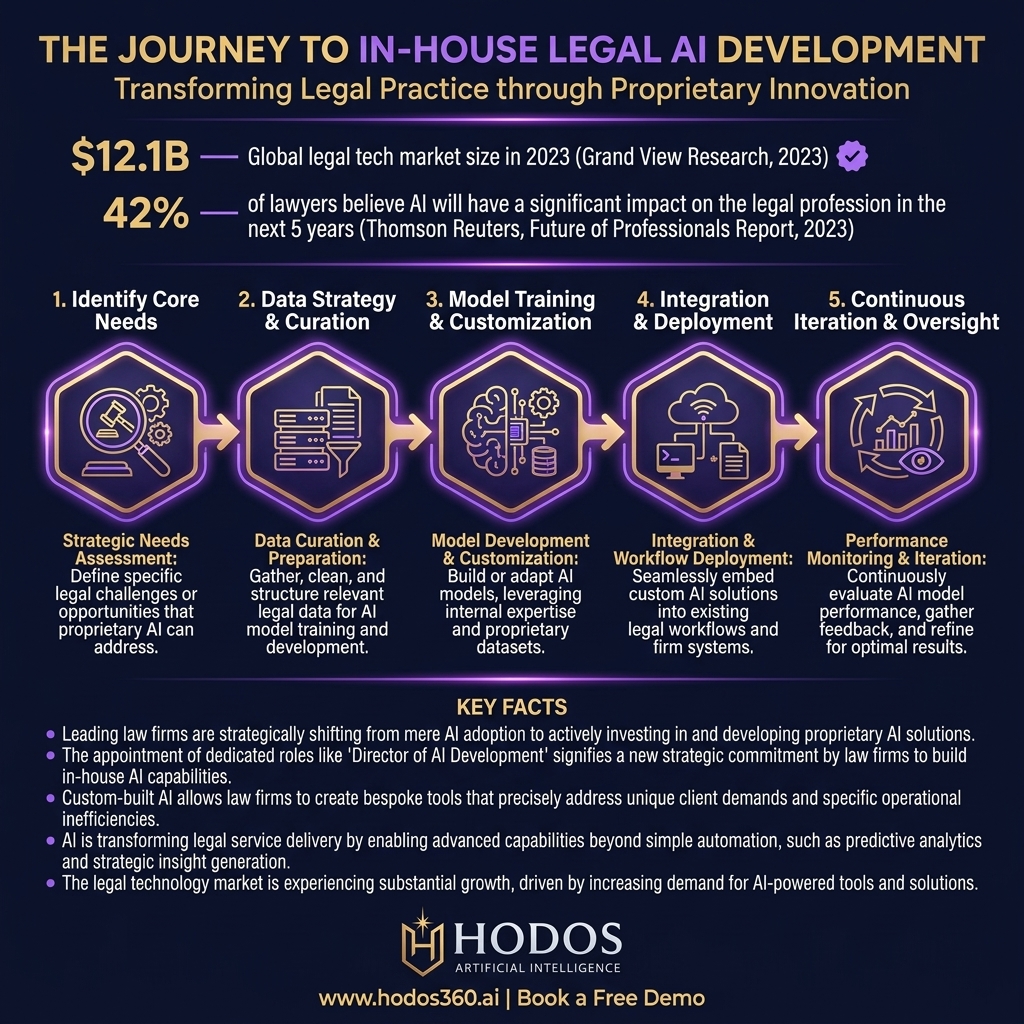
Elevate your firm's operational efficiency and client satisfaction with HODOS 360's comprehensive AI Law Firm Management System. From AI-powered legal workflows to client intake automation, we streamline your practice. Learn more about [AI Web Apps: Ultimate Legal Firms' Guide to Next-Gen Development](/blog/ai-web-apps-law-firms-development). Explore our solutions.
- ✓Enhanced Customization: Tailor AI models to specific practice areas, client types, and firm methodologies.
- ✓Proprietary Advantage: Develop unique AI-driven services that differentiate the firm in the market.
- ✓Data Security & Control: Maintain complete control over sensitive client data and intellectual property.
- ✓Seamless Integration: Design AI tools that integrate perfectly with existing firm infrastructure and workflows.
- ✓Strategic Insight Generation: Train AI on internal data to derive unique insights into operations and client needs.
- ✓Reduced Vendor Dependency: Minimize reliance on third-party providers and their evolving terms of service.
- ✓Talent Attraction: Position the firm as an innovator, attracting top legal and tech talent.
Akerman's Strategic Hire: A Blueprint for Future-Forward Firms
Akerman's decision to hire Charles Zerner as its first director of AI development is a bold move that sends a clear signal across the legal industry. Zerner's background, combining a deep understanding of legal practice as a former partner at Munck Wilson Mandala with significant experience in technology and AI, makes him uniquely qualified for this pioneering role. His mandate at Akerman is not merely to oversee AI adoption, but to actively lead the firm in building custom AI applications, identifying strategic opportunities for legal tech innovation, and integrating advanced machine learning capabilities into the firm's core operations. This goes beyond what a chief information officer or a legal innovation lead typically handles; it's about embedding AI development at the very heart of the firm’s strategic planning and service delivery.
This move by Akerman is likely to serve as a blueprint for other large law firms grappling with how to effectively leverage AI. It signifies an institutional commitment to becoming a builder of technology, rather than just a consumer. Learn more about AI Personal Assistant: Essential Privacy & Efficiency for Law Firms. The firm recognizes that in an era where AI is rapidly commoditizing certain legal tasks, true value will come from developing specialized, high-impact applications that can't be bought off the shelf. Charles Zerner's role will involve close collaboration with practice groups to identify specific use cases, manage data governance, and oversee the development lifecycle of proprietary AI tools. This integrated approach ensures that AI initiatives are directly aligned with business objectives and client needs, fostering an environment of continuous innovation and strategic advantage. The firm is essentially creating an internal AI startup, but with the full backing and resources of a major legal institution.
Navigating the Talent Landscape for AI Development
One of the most significant challenges for law firms embarking on in-house AI development is navigating the complex talent landscape. The demand for skilled AI engineers, data scientists, and machine learning specialists far outstrips supply, and these professionals are typically drawn to tech giants or well-funded startups. Law firms must compete not only on salary but also on culture, offering stimulating projects and a clear vision for how their work will impact the legal sector. Charles Zerner's hire exemplifies this challenge and solution: securing a legal professional with deep technical expertise. Learn more about AI Legal Efficiency: Proven Strategies to Avoid Busywork. Firms may need to consider non-traditional hiring strategies, partnerships with universities, or even acquiring small legal tech startups to bring in the necessary talent and intellectual property. The investment in human capital is as crucial as the investment in technology itself.
Challenges and Opportunities in Custom Legal AI Creation
While the opportunities for custom legal AI creation are vast, so too are the challenges. Data privacy and security remain paramount concerns, especially given the sensitive nature of legal information. Firms must implement robust data governance frameworks, ensuring compliance with regulations like GDPR and CCPA, and adhering to professional obligations under rules such as ABA Model Rule 1.6 on Confidentiality of Information. The ethical implications of AI, including bias in algorithms and the potential for hallucination, also require careful consideration. Firms must develop ethical AI guidelines, ensuring transparency, fairness, and accountability in their proprietary systems. Integration with existing, often siloed, legacy systems presents another technical hurdle, requiring significant investment in infrastructure and IT expertise. Furthermore, the cost of developing and maintaining sophisticated AI models can be substantial, demanding a clear ROI strategy.
Despite these challenges, the opportunities for firms willing to invest are transformative. Custom AI can unlock unprecedented efficiencies in law firm management, automate highly repetitive tasks, and provide predictive analytics for litigation strategy, risk assessment, and even business development. Imagine an AI that can analyze a client's entire corporate history to identify potential legal vulnerabilities before they become crises, or one that can predict the likelihood of success in a complex M&A negotiation based on market data and historical precedents. These bespoke applications move beyond simple process automation to genuine strategic foresight. Firms can also leverage custom AI to develop entirely new service offerings, creating novel revenue streams and attracting a new generation of clients who prioritize technological sophistication and data-driven insights. The potential for AI-powered website building and advanced marketing analytics also opens doors for client acquisition and engagement, fundamentally reshaping how firms present themselves and interact with their target audience.
The Ethical & Regulatory Frontier of AI in Legal Practice
The rapid advancement of AI in legal practice is outpacing regulatory frameworks, creating an ethical frontier that firms building custom AI must actively navigate. The enforcement of the EU AI Act, for example, sets a global precedent for regulating high-risk AI systems, which could include many legal applications. Firms must ensure their proprietary AI adheres to principles of fairness, transparency, and human oversight. The AI director role, as seen with Akerman's Charles Zerner, will be critical in developing internal policies that align with evolving legal and ethical standards, safeguarding client interests, and maintaining professional integrity. This proactive approach to ethical AI development is not just about compliance; it's about building trust and demonstrating responsible innovation in a rapidly evolving technological landscape.

Key Takeaways and Next Steps
Akerman's strategic hiring of its first Director of AI Development marks a watershed moment for the legal industry. It underscores a clear shift from passive AI consumption to active legal AI development, signaling that future success will increasingly hinge on a firm's ability to build and customize its own intelligent solutions. This trend, highlighted by reports from Thomson Reuters on legal tech investment, suggests that firms must proactively invest in human capital, develop robust data strategies, and cultivate an innovation-driven culture to remain competitive. The era of simply buying off-the-shelf software is giving way to a more sophisticated approach, where proprietary AI becomes a core differentiator.
For law firm leaders, the message is clear: the time to strategize beyond basic AI adoption is now. Evaluating internal capabilities, identifying specific pain points that custom AI can address, and investing in the right talent are crucial next steps. Firms that embrace this builder mindset will not only enhance their operational efficiency and client service but will also solidify their position as leaders in a rapidly evolving legal landscape. HODOS 360 is at the forefront of this transformation, providing comprehensive AI law firm management solutions that empower firms to navigate this complex journey, from optimizing law firm operations to pioneering new client engagement models with 24/7 AI voice assistants and AI marketing strategies. The future of legal practice is being built, not just bought, and the firms that are shaping it will reap the greatest rewards.
Frequently Asked Questions
What does an AI Director do in a law firm?+
An AI Director, like Charles Zerner at Akerman, leads the firm's strategy for developing and implementing custom AI solutions. This includes identifying use cases, overseeing the creation of proprietary AI applications, ensuring data governance, and integrating AI into core legal workflows. They bridge the gap between legal expertise and technological innovation, driving the firm's competitive advantage through bespoke AI development.
Why are law firms building their own AI instead of buying?+
Law firms are building their own AI for greater customization, control, and competitive differentiation. Off-the-shelf tools often lack the specificity required for niche practice areas or unique operational needs. Proprietary AI allows firms to tailor solutions, leverage their unique data, maintain data security, and create intellectual property that provides a distinct market advantage and deeper client value.
What are the biggest challenges for law firms developing custom AI?+
Developing custom AI presents several challenges, including securing top-tier AI talent, ensuring robust data privacy and security, navigating complex ethical and regulatory landscapes (like the EU AI Act), and integrating new systems with existing legacy infrastructure. The financial investment and the need for a clear ROI strategy are also significant considerations for firms embarking on this journey.
How does custom AI benefit a law firm's clients?+
Custom AI benefits clients by enabling law firms to offer more efficient, precise, and innovative services. This can translate to faster document review, more accurate legal research, predictive analytics for litigation outcomes, and tailored legal advice based on deeper insights. Ultimately, it leads to reduced costs, quicker resolutions, and a higher quality of legal service, enhancing overall client satisfaction and value.
What ethical considerations must firms address when building AI?+
Firms building AI must address critical ethical considerations such as ensuring algorithmic fairness and mitigating bias, preventing AI hallucinations, maintaining client confidentiality (e.g., ABA Model Rule 1.6), and ensuring human oversight. They must also develop transparent policies for AI usage, comply with evolving data protection regulations, and uphold professional responsibility to ensure AI tools are used ethically and responsibly in legal practice.