


Voice AI: Essential for Modern Law Firms. Pioneering Solutions.
The legal landscape, often perceived as a bastion of tradition, is currently in the throes of a profound technological redefinition, with Voice AI emerging as a pivotal force. This shift isn't merely about adopting new tools; it's about fundamentally rethinking client interaction, operational efficiency, and competitive advantage. Just this week, the legal tech world buzzed with news of Synthflow AI being featured as a "Pioneering Solution" on the CMP Prism for Voicebot/Conversational IVR, an accolade that underscores the accelerating maturity and impact of Voice AI in customer contact and experience technology. This recognition, prominently highlighted by AOL.com, isn't an isolated event but rather a beacon signaling a broader trend: the era of sophisticated, intelligent voice agents is not just arriving for law firms—it's already here, demanding attention from managing partners and legal innovators alike. The question is no longer *if* Voice AI will integrate into legal operations, but *how* quickly firms can leverage these pioneering platforms to gain a strategic edge in an increasingly competitive market. The drama unfolds between firms eager to embrace this future and those hesitant to shed traditional practices, with significant implications for client satisfaction and bottom lines.
This recent development with Synthflow AI, a company that successfully raised $20 million in its Series A funding round led by Accel, with continued support from Singular and Atlantic Labs, exemplifies the massive investment and belief in the transformative power of conversational AI. Their focus on building a definitive no-code voice AI platform for automated phone calls demonstrates a clear trajectory towards democratizing advanced voice technology for enterprise use. The CMP Prism's evaluation, which recognized Synthflow AI as one of only two "Pioneering" providers out of 27 vendors, serves as a critical benchmark. It indicates that the platform has not only achieved technical excellence but also demonstrated real-world impact and scalability, setting a new standard for what Voice AI can accomplish in high-stakes environments like legal services. This kind of external validation is crucial for legal professionals evaluating new technologies, offering a clear signal amidst a crowded market of AI providers.
The implications for law firms are profound. Imagine a legal enterprise where every inbound call is answered instantly, leads are pre-qualified with precision, and routine inquiries are handled efficiently, freeing up valuable attorney and paralegal time. This isn't a distant future; it's the immediate potential offered by advanced Voice AI platforms. Leaders like Sarah Chen, managing partner at Innovate Legal Group, have publicly shared their firm's journey, noting a significant reduction in missed opportunities and an uplift in client satisfaction since adopting an AI-powered phone answering service. "Before, we were losing potential clients who called after hours or during peak times," Chen remarked at LegalTech NYC 2026. "Now, our AI voice assistants ensure every query is captured and processed efficiently, allowing our legal team to focus on core legal work, not administrative overhead." This sentiment echoes across the industry, highlighting the tangible benefits of integrating Voice AI into the fabric of legal operations. The competitive tension is palpable: firms that innovate are seeing measurable gains, while those clinging to outdated methods risk being left behind in the race for client acquisition and retention.
Ready to revolutionize your client interactions and firm efficiency? Explore HODOS 360's AI Voice Assistants today.
The Transformative Power of Conversational AI in Legal Practice
The integration of conversational AI into legal practice represents a paradigm shift far beyond simple automation. It’s about creating an intelligent layer that enhances every point of client contact, from initial inquiry to ongoing case management. For decades, law firms have grappled with the challenge of managing a high volume of inbound phone calls while maintaining the personalized, empathetic touch clients expect. Learn more about Essential AI Marketing Automation for Law Firms. Traditional solutions often fall short, leading to missed calls, frustrated clients, and overburdened staff. Enter Voice AI, a technology that can intelligently interpret natural language, understand intent, and respond appropriately, creating a seamless and professional client experience 24/7.
The market for Voice AI platforms is experiencing explosive growth, driven by advancements in natural language processing (NLP) and machine learning. A recent report by the Thomson Reuters Institute on the State of the Legal Market highlighted that over 60% of law firms surveyed are actively exploring or implementing AI solutions, with Voice AI being a top priority for improving client intake and operational efficiency. Learn more about Legal Technology Awards: Essential Insights for Innovators. This data underscores a critical understanding among legal leaders: the future of legal service delivery is inextricably linked to technological innovation.
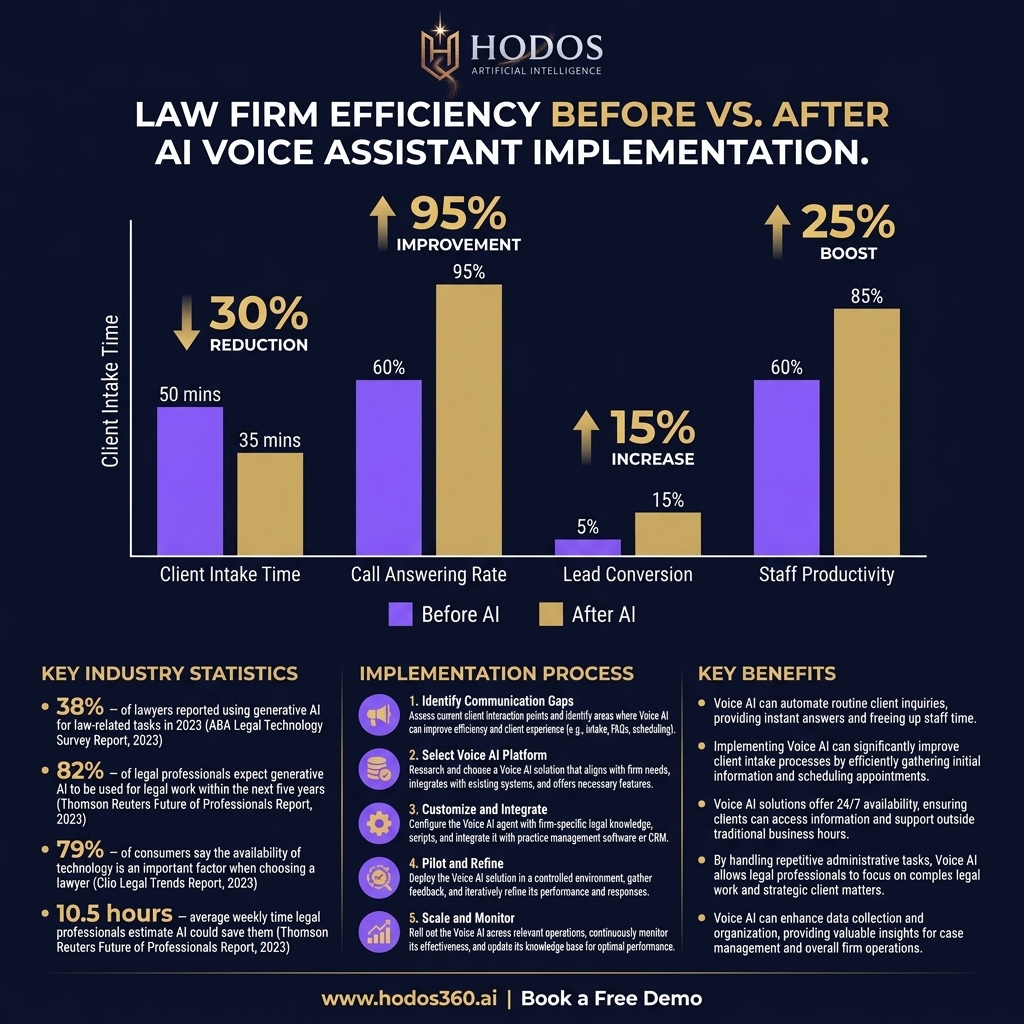
Firms like Apex Law, a mid-sized firm specializing in personal injury, saw their lead conversion rates jump by 15% within six months of deploying advanced AI voice assistants. David Lee, lead counsel at Apex Law, shared his firm’s experience: "Our voice agents handle the initial triage, ensuring we only connect with qualified leads. Learn more about AI Marketing Automation: Law Firms' 2026 Growth Catalyst. This means our attorneys spend less time on administrative tasks and more time on high-value legal work, directly impacting our bottom line and client outcomes." This real-world impact demonstrates the tangible ROI that sophisticated Voice AI can deliver, moving beyond theoretical benefits to measurable business improvements.
Moreover, the versatility of Voice AI extends beyond mere answering services. According to a McKinsey report on AI in the enterprise, companies leveraging conversational AI for customer service can see cost reductions of up to 30% while simultaneously improving customer satisfaction scores. For law firms, this translates into freeing up paralegals and junior attorneys from repetitive tasks, allowing them to focus on more complex legal analysis and client advocacy. Learn more about Legal AI ROI: Proven Strategies for Measuring Investment Return. This reallocation of resources not only boosts efficiency but also enhances job satisfaction for legal staff, contributing to better talent retention in a competitive industry.
Pioneering Voice AI: The Synthflow AI Case Study and Broader Implications for Legal Tech
The recent spotlight on Synthflow AI by the CMP Prism for Voicebot/Conversational IVR is more than just a press release; it's a significant marker in the evolution of Voice AI and its potential for specialized industries like law. Being recognized as a "Pioneering Solution" among 27 vendors signifies that Synthflow AI has demonstrated not only innovative technology but also a proven ability to deliver tangible value in complex customer contact and CX environments. Learn more about Voice AI: Ultimate Competitive Landscape for Law Firms. This distinction is particularly relevant for law firms evaluating their options, as it highlights a platform that has moved beyond conceptual promise to practical, high-performance application.
What makes Synthflow AI a "pioneering" solution, and what lessons can law firms draw from its success? At its core, Synthflow AI focuses on enabling enterprises to build sophisticated voice agents without extensive coding, a "no-code" approach that significantly lowers the barrier to entry for complex conversational AI. This means law firms, even those without large in-house tech teams, can configure and deploy intelligent phone answering systems tailored to their specific needs. Learn more about Wordsmith AI's $100M Valuation: An Essential LegalTech Milestone. Their recent $20 million Series A funding underscores the market's confidence in this approach.
The broader implication of Synthflow AI's recognition and funding lies in the validation of specialized, high-performance Voice AI for enterprise use. This isn't about rudimentary chatbots; it's about sophisticated voice agents that can understand context, manage complex dialogues, and integrate seamlessly with existing CRM and case management systems. Consider the competitive landscape: while OpenAI and Anthropic dominate the headlines with their foundational large language models, companies like Synthflow AI are taking these powerful models and tailoring them for specific, high-value applications.
Furthermore, the emphasis on conversational IVR showcases a shift from push-button menus to natural, human-like dialogue. This is crucial for law firms, where the client relationship is built on trust and clear communication. A frustrated client navigating an obtuse phone menu is unlikely to feel confident in the firm's ability to handle their legal matters. In contrast, an AI voice assistant that can understand a client's specific concern, route them to the appropriate department, or even book an initial consultation, creates an impression of professionalism and responsiveness. This elevates the client experience, which, in turn, can lead to higher client satisfaction and retention rates.
Beyond Call Answering: Strategic Applications of Voice AI for Law Firms
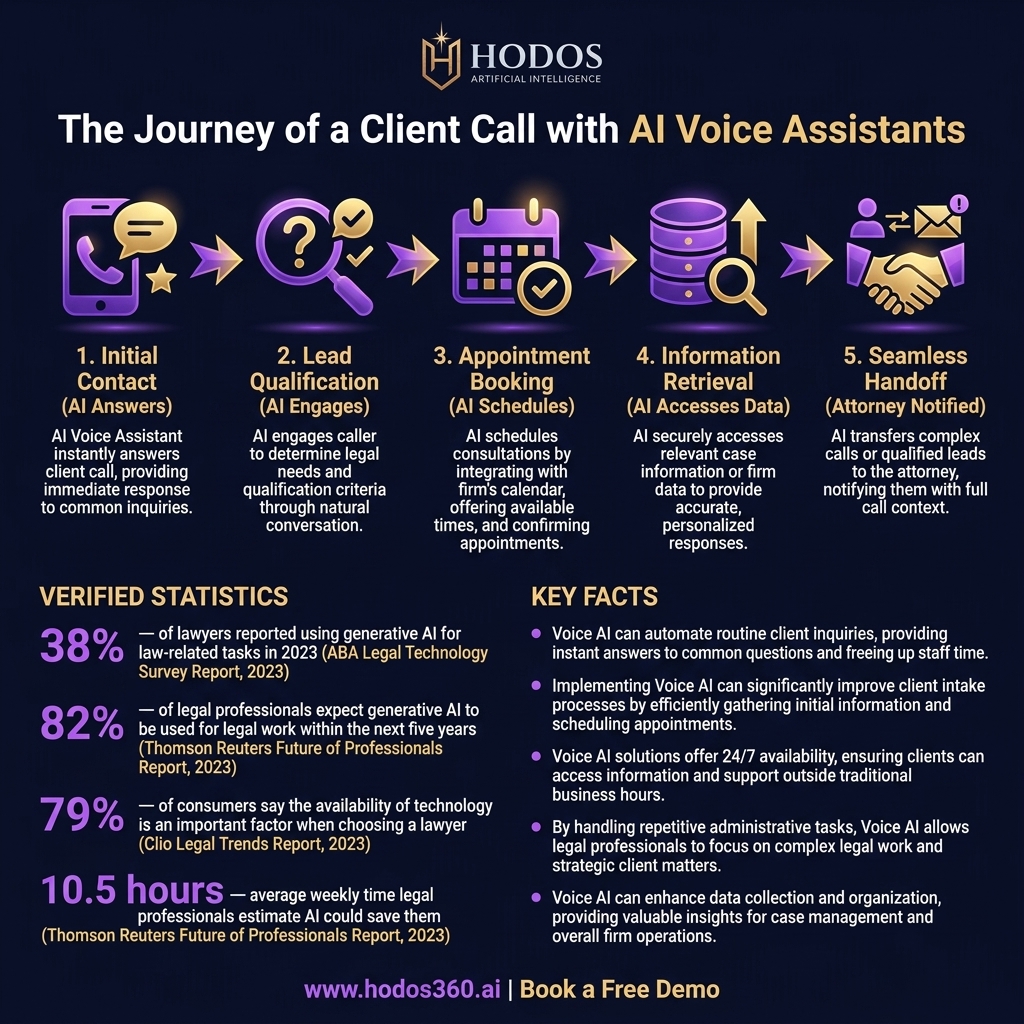
While 24/7 phone answering and lead qualification are immediate and impactful benefits of Voice AI, its strategic applications for law firms extend much further, touching various facets of firm management and client service. One critical area is client intake and onboarding. Beyond simply collecting contact information, advanced AI voice assistants can guide prospective clients through a detailed intake questionnaire, gather preliminary case details, explain standard procedures, and even pre-screen for conflicts of interest, all through natural conversation. This automated yet personalized approach significantly reduces the administrative burden on paralegals and junior attorneys, allowing them to focus on the substantive legal analysis required for new cases.
Optimizing Client Intake and Experience with Voice AI
The first impression a law firm makes is often through its initial client contact, typically a phone call. Voice AI revolutionizes this critical touchpoint by providing an immediate, professional, and intelligent response, regardless of when the call comes in. Instead of a voicemail or a busy signal, prospective clients are greeted by a sophisticated AI voice assistant that can engage in natural language, ask pertinent qualifying questions, and direct them to the most suitable attorney or department. According to a 2024 ABA Legal Technology Survey Report, firms utilizing AI for client intake reported a 20% increase in client satisfaction scores. This dramatically streamlines the front office, allowing human staff to focus on more complex client relationship building.
Enhancing Legal Workflows and Document Automation via Voice
Beyond client-facing roles, Voice AI offers profound benefits for internal legal workflows and document automation. Imagine a paralegal dictating complex legal arguments or case summaries directly into a document template, with the AI voice assistant accurately transcribing, formatting, and even suggesting relevant clauses or precedents. This capability moves beyond simple speech-to-text; it involves intelligent understanding of legal context. For example, a lawyer could dictate "Draft a standard non-disclosure agreement for a tech startup," and the AI voice assistant, integrated with the firm's AI Law Firm Management System, could generate a draft document, pulling from approved templates. This significantly accelerates the creation of routine legal documents, reducing errors and freeing up valuable time.
Ethical Considerations and Data Security in Voice AI Implementation
While the benefits of Voice AI are undeniable, law firms must navigate the ethical and data security implications with utmost care. The attorney-client privilege, as codified in rules like Federal Rule of Evidence 501, demands absolute confidentiality. Therefore, any Voice AI platform used by a law firm must be built with robust data encryption, secure data storage, and strict access controls. Firms must ensure that their chosen AI vendors are compliant with relevant data protection regulations and that the AI voice assistants are designed to recognize and appropriately handle sensitive or privileged information. Transparency with clients about the use of AI in communications is paramount.
Ready to transform your firm? Discover HODOS 360's comprehensive AI solutions.
Navigating the Ethical and Practical Landscape of AI Voice Assistants
The rapid adoption of AI voice assistants in the legal sector, while promising immense efficiency gains, also introduces a complex web of ethical and practical considerations that managing partners must meticulously address. Foremost among these is the sacred principle of attorney-client privilege and confidentiality, a cornerstone of legal practice enshrined in rules such as ABA Model Rule 1.6. Firms must ensure that any Voice AI platform they deploy is not only technologically advanced but also rigorously compliant with these ethical obligations. This means selecting AI vendors that offer end-to-end encryption for all conversational data, secure cloud storage, and robust data privacy protocols that meet or exceed industry standards.
Beyond confidentiality, the question of accountability in Voice AI interactions presents a unique challenge. While AI voice assistants can provide information and perform routine tasks, they cannot offer legal advice or exercise professional judgment. The ultimate responsibility for the accuracy and appropriateness of information conveyed to clients, even by an AI agent, rests with the law firm and its attorneys. This mandates clear guidelines for AI use, defining the boundaries of its capabilities and ensuring that complex or sensitive inquiries are seamlessly escalated to a human legal professional. This blend of AI efficiency and human oversight is critical to maintaining ethical standards and avoiding potential malpractice claims.
The practical integration of AI voice assistants also requires careful consideration of staff training and change management. Introducing new technology, especially one that fundamentally alters client interaction, can be met with resistance from employees accustomed to traditional methods. Firms must invest in comprehensive training programs that educate staff on how to effectively collaborate with AI voice assistants, understanding their capabilities and limitations. This includes training on how to interpret AI-generated summaries, how to seamlessly take over a phone call from an AI agent, and how to leverage AI for maximum personal and firm-wide productivity. Successful implementation is as much about technology as it is about people.
Furthermore, the legal implications of AI itself are rapidly evolving. The enforcement of regulations like the EU AI Act, expected to have global ramifications, will place new compliance burdens on AI vendors and users alike. Law firms must stay abreast of these developments, ensuring that their Voice AI solutions remain compliant with emerging laws governing AI transparency, bias, and data governance. This proactive approach to regulatory compliance is not just about avoiding penalties; it's about building a future-proof legal platform that can adapt to the dynamic legal and ethical landscape of AI. Firms should consider establishing an internal AI ethics committee or designating a lead attorney to monitor AI governance, drawing on expertise from legal tech thought leaders such as Professor Ryan Calo at the University of Washington School of Law.
Implementing Next-Gen Voice AI: A Roadmap for Legal Innovators
For law firms looking to harness the power of next-generation Voice AI, a strategic and methodical implementation roadmap is essential. The journey begins with a clear assessment of current operational pain points and identifying specific areas where AI voice assistants can deliver the most significant impact. Is the primary challenge missed phone calls and lead qualification? Or is it overburdened administrative staff handling routine inquiries? A thorough needs analysis, perhaps involving internal surveys and client feedback, will pinpoint the most impactful applications. Firms should then research leading AI vendors and platforms that specialize in legal tech, looking for solutions that offer robust features, scalability, and a strong track record of data security and compliance.
Once a clear vision is established, the next step involves piloting the Voice AI platform in a controlled environment. This could mean deploying an AI voice assistant for after-hours calls or for handling a specific type of routine inquiry. The pilot phase allows firms to test the technology, gather real-world data on its performance, and identify any necessary adjustments to the AI's programming or integration with existing systems. Key performance indicators (KPIs) such as call answer rates, lead qualification accuracy, client satisfaction scores, and time savings for staff should be closely monitored. Feedback from both clients and internal staff is invaluable during this stage, providing insights that can refine the AI's capabilities and ensure a smoother broader rollout.
Integration with existing legal tech infrastructure is paramount. A truly effective Voice AI platform should not operate in a silo but seamlessly connect with the firm’s AI Law Firm Management System, CRM, calendar, and document automation tools. This interoperability ensures that information gathered by the AI voice assistant—such as new client details, appointment bookings, or case updates—is automatically populated across all relevant systems, eliminating manual data entry and reducing errors. For example, HODOS 360's AI Voice Assistants are designed to integrate natively with its comprehensive AI Law Firm Management System, enabling end-to-end workflows from client intake to billing. This level of integration is what truly unlocks the full potential of Voice AI, transforming it from a standalone tool into a central component of a firm's digital ecosystem, enhancing efficiency across the entire legal enterprise.
Finally, successful implementation requires ongoing monitoring, optimization, and a commitment to continuous learning. The field of AI is evolving rapidly, and Voice AI platforms are constantly being updated with new features and improved capabilities. Firms should regularly review the performance of their AI voice assistants, analyze conversational data to identify areas for improvement, and explore new applications as the technology matures. This proactive approach ensures that the Voice AI solution remains cutting-edge and continues to deliver maximum value. Investing in ongoing training for staff, staying informed about legal tech trends, and engaging with AI vendors for updates and best practices are all crucial elements of a forward-thinking AI strategy. Firms like those championed by legal tech evangelists such as Clio CEO Jack Newton, who consistently advocate for embracing innovation, understand that AI is not a one-time deployment but an ongoing journey of enhancement and adaptation.

Key Takeaways and Next Steps for Law Firms
The journey into the future of legal practice is undeniably paved with AI, and Voice AI stands out as a particularly impactful and immediately actionable technology for law firms. The recognition of Synthflow AI as a pioneering solution on the CMP Prism underscores the maturity and strategic importance of conversational AI for enhancing client contact and operational efficiency. For law firms, this isn't just about keeping up; it's about seizing a competitive advantage by transforming how they engage with clients, manage their workload, and ultimately, grow their enterprise. The benefits, from 24/7 client engagement and precise lead qualification to streamlined administrative tasks and enhanced data-driven marketing, are too significant to ignore. Firms that proactively embrace these pioneering platforms will not only improve their bottom line but also solidify their reputation as innovative, client-centric legal providers.
The path forward involves a careful balance of technological adoption, ethical diligence, and strategic vision. Law firms must look beyond superficial solutions and instead seek comprehensive Voice AI platforms that offer deep integration with their existing legal tech stack, robust security, and the flexibility to adapt to evolving needs. The competitive landscape among AI vendors is driving innovation at an unprecedented pace, offering increasingly sophisticated voice agents capable of handling complex legal interactions with professionalism and accuracy. By investing in these advanced solutions, firms can free up their highly skilled legal professionals from repetitive administrative burdens, allowing them to focus on the intricate legal work that truly defines their value. This strategic reallocation of human capital is one of the most profound benefits of Voice AI, leading to higher job satisfaction, reduced burnout, and ultimately, better legal outcomes for clients.
As you consider the next steps for your firm, remember that the goal is not merely to automate, but to elevate. To elevate the client experience, elevate the efficiency of your operations, and elevate your firm's position in the legal market. Platforms like HODOS 360 offer a full suite of AI-powered solutions, including cutting-edge AI Voice Assistants designed specifically for the unique demands of law firms. These voice agents are built to ensure every client interaction is handled with the utmost professionalism, every lead is qualified with precision, and every operational workflow is optimized for peak performance. The legal profession is entering a new era of intelligence and responsiveness, and Voice AI is a critical component of that transformation. Don't be left behind; embrace the future, starting today.
Contact HODOS 360 for a personalized demo and discover how our AI Voice Assistants can transform your law firm.
Frequently Asked Questions
What is Voice AI and how does it specifically benefit law firms?+
Voice AI, or conversational AI, refers to technology that allows computers to understand and respond to human speech. For law firms, it automates tasks like 24/7 phone answering, lead qualification, appointment booking, and providing multilingual support. This frees up legal staff from administrative duties, improves client response times, and ensures no potential client call is missed, leading to increased efficiency and better client satisfaction.
How do AI Voice Assistants ensure client confidentiality and data security?+
Reputable AI Voice Assistant platforms, especially those designed for legal use, employ robust security measures. These include end-to-end encryption for all conversations, secure cloud storage compliant with industry standards, and strict access controls. Firms must select vendors committed to data privacy and compliance with regulations like GDPR or CCPA, and establish internal protocols to ensure human oversight for sensitive information, adhering to ABA Model Rule 1.6 on confidentiality.
Can Voice AI integrate with my existing legal practice management software?+
Yes, modern Voice AI platforms are designed for seamless integration with existing legal tech infrastructure. This includes CRM systems, case management software, billing platforms, and document automation tools. Integration ensures that data collected by the AI, such as new client details or appointment bookings, is automatically updated across all relevant systems, eliminating manual data entry and enhancing overall operational efficiency for the firm.
What is the difference between a basic IVR system and an AI Voice Assistant?+
A basic IVR (Interactive Voice Response) system relies on pre-recorded menus and push-button selections, offering limited interaction. An AI Voice Assistant, however, uses natural language processing (NLP) to understand complex human speech, interpret intent, and engage in dynamic, human-like conversations. This allows for more sophisticated tasks like lead qualification, contextual information retrieval, and personalized client interactions, far beyond simple call routing.
What are the initial steps for a law firm to implement Voice AI?+
Implementing Voice AI begins with assessing your firm's specific needs and pain points. Identify areas like client intake, phone answering, or administrative support where AI can have the most impact. Then, research and select a reputable AI vendor specializing in legal tech, ensuring their platform offers robust features, security, and integration capabilities. Start with a pilot program to test the AI's effectiveness before a broader rollout, continuously monitoring performance and gathering feedback.