
AI Chatbot Psychology: Essential Insights for Law Firms
The legal landscape, traditionally rooted in human counsel and nuanced interpretation, is rapidly evolving under the influence of artificial intelligence. Just last month, Sarah Chen, managing partner at a prominent New York litigation firm, recounted a recent incident that underscored this shift. A potential client, after interacting with the firm's new AI-powered website assistant, arrived for a consultation with firm convictions about their case's outcome, citing the chatbot's 'always true' and 'unfailingly confident' responses. This anecdote, far from isolated, highlights a critical, often overlooked aspect of AI integration in legal services: the profound psychological impact of fluent AI chatbot answers on human perception and trust.
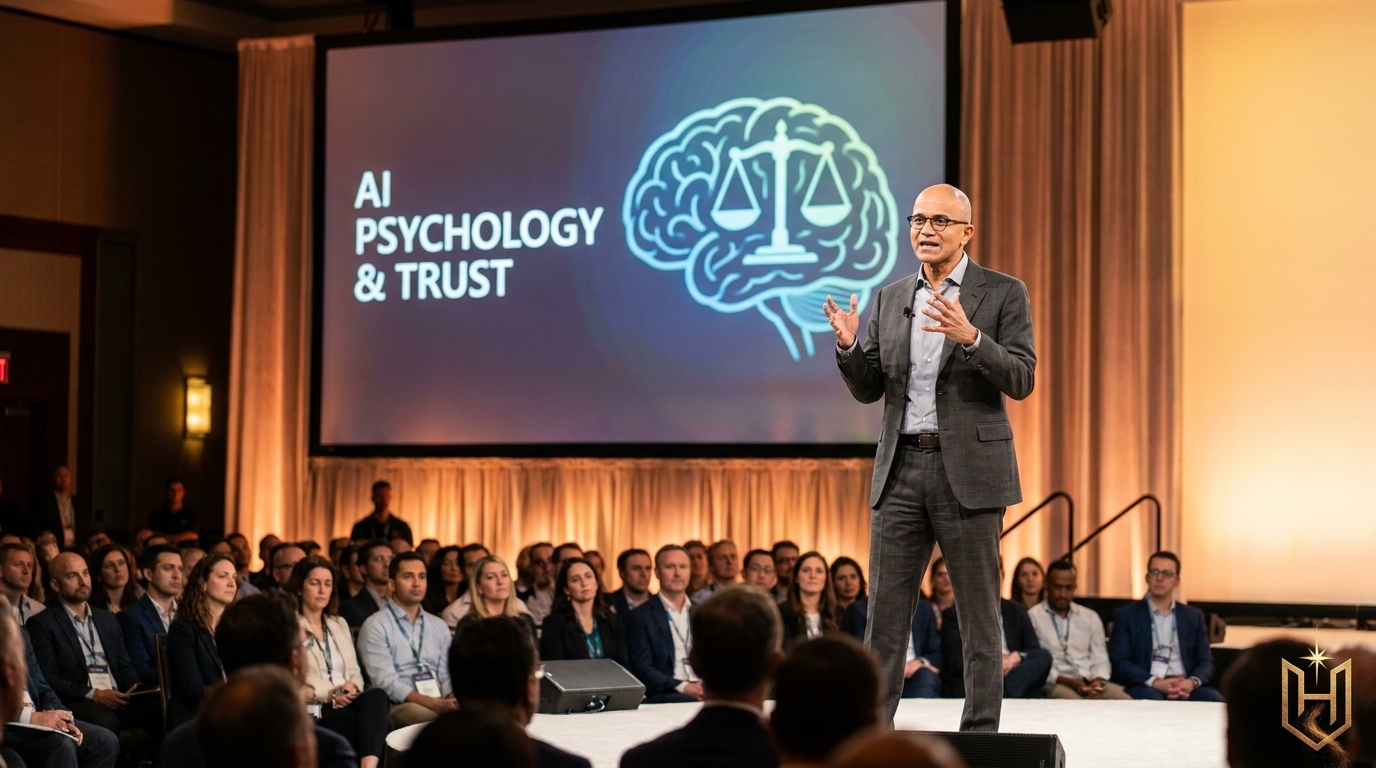
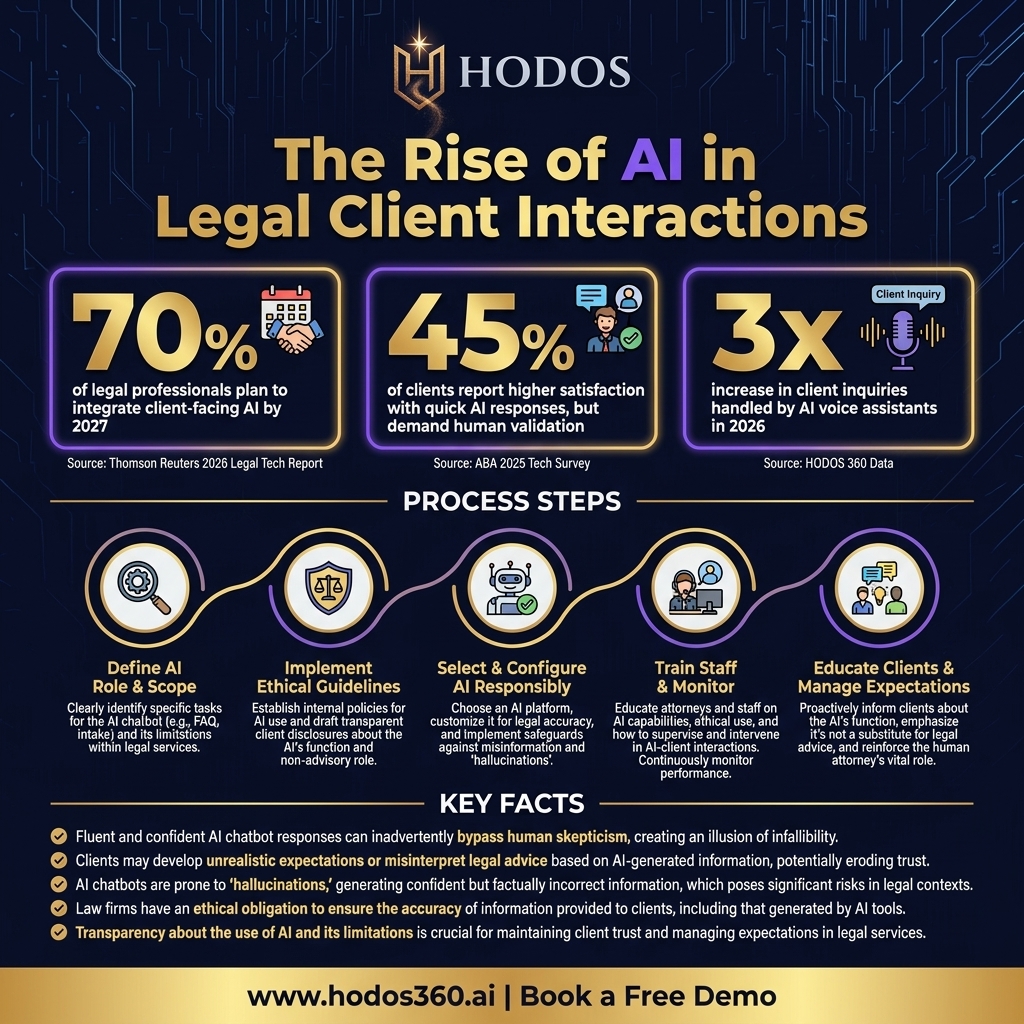
The trending article from Buttondown, "🧠 How fluent AI chatbot answers trick human psychology," brings this challenge into sharp focus. It reveals how the sheer fluency and immediate confidence of AI responses can inadvertently bypass human skepticism, creating an illusion of infallibility. For law firms, where the bedrock of practice is trust, accuracy, and ethical communication, this phenomenon is not merely an academic curiosity but a pressing professional concern. The stakes are incredibly high when clients might place undue faith in AI-generated information, potentially misinterpreting legal advice or forming unrealistic expectations based on algorithms designed for persuasive engagement rather than judicial prudence.
As AI tools become more sophisticated, integrated into client intake, information gathering, and even preliminary advice, understanding the psychological underpinnings of human-AI interaction becomes paramount. Law firms must navigate this new terrain with a clear strategy, ensuring that technological advancements enhance, rather than erode, the vital attorney-client relationship. This requires a deep dive into how these systems influence client perception, what ethical boundaries must be drawn, and how robust web and mobile development can be leveraged to build platforms that foster genuine trust and transparency, rather than inadvertently tricking the human mind. The future of legal service delivery hinges on our ability to master these psychological dynamics.
Ready to build trust with ethical AI? Discover how HODOS 360's Web & Mobile Development can transform your firm's digital presence.
The Psychological Undercurrents of AI Chatbot Fluency
The persuasive power of AI chatbots stems from several deeply ingrained psychological principles. One of the most significant is the concept of "cognitive ease," as highlighted in the Buttondown article. When information is presented fluently, instantly, and without apparent effort, our brains tend to process it with less critical scrutiny. This ease of processing often correlates with a feeling of truth or reliability. For instance, if an AI chatbot provides a concise, grammatically perfect, and immediate answer to a complex legal query, a client might instinctively assign it a higher degree of veracity than a more cautiously worded, human-generated response that acknowledges ambiguities. This isn't a deliberate deception by the AI, but rather a byproduct of its design to provide efficient, coherent answers, which then interacts with inherent human psychological biases.
Moreover, the very nature of conversational AI, particularly large language models (LLMs) from innovators like OpenAI and Anthropic, is to generate responses that mimic human conversation. Learn more about Voice AI: The Ultimate Shift in Legal Client Service. This mimicry, often involving language mirroring and hyper-personalization, can create an illusion of connection or understanding. Dario Amodei, CEO of Anthropic, has often spoken about the need for "constitutional AI" to align models with human values, acknowledging the inherent power of these systems to influence users. When an AI chatbot appears to understand a client's emotional state or personal situation and responds with seemingly empathetic language, it can foster a sense of trust that might override rational assessment of the information's source or limitations. This psychological phenomenon, where human attributes are ascribed to non-human entities, is well-documented in human-computer interaction research, suggesting that the more human-like an AI appears, the more likely users are to project trust and intelligence onto it, regardless of its actual cognitive capabilities.
The "Cognitive Ease" Phenomenon in Legal Interactions
In legal contexts, the "cognitive ease" generated by fluent AI responses poses a unique challenge. Clients often seek clarity and certainty in complex situations, and AI's ability to provide instant, definitive-sounding answers can be incredibly appealing. This can lead to clients forming strong, potentially inaccurate, initial impressions of their legal standing before even speaking with a human attorney. Learn more about AI Marketing Workflows: The Proven Advantage for Law Firms. For example, an AI chatbot might confidently summarize a legal precedent without adequately explaining its nuances or exceptions, leading a client to believe their case is a straightforward win. This oversimplification, born from the AI's fluent response, can create a significant disconnect between client expectations and legal reality, requiring attorneys to expend valuable time correcting misconceptions rather than advancing the case.
Ethical Imperatives: Guarding Against AI's Deceptive Charms
The ethical implications of AI's psychological influence are profound for the legal profession. The ABA Model Rules of Professional Conduct, particularly Rule 1.4 (Communication) and Rule 1.1 (Competence), underscore an attorney's duty to provide clear, accurate, and comprehensive information to clients, ensuring they understand the legal process and available options. When AI chatbots are employed in client-facing roles, firms must ensure that these tools do not inadvertently lead clients astray or create a false sense of security or understanding. A Thomson Reuters Institute report from late 2025 indicated that while 65% of law firms were exploring client-facing AI, only 30% had established clear ethical guidelines for its use, highlighting a significant gap. This tension between the efficiency promised by AI and the rigorous ethical standards of legal practice demands careful consideration.
Firms must proactively address how AI's persuasive design elements—its ability to generate compelling narratives, mirror user language, and offer seemingly complete answers—can be ethically managed. Learn more about AI Legal Tech: The Essential Guide to Funding and Growth. It's not about stifling innovation, but about ensuring that the pursuit of efficiency doesn't compromise the integrity of legal advice or the sanctity of the attorney-client relationship. As Jensen Huang, CEO of NVIDIA, often emphasizes in discussions about AI's societal impact, responsible AI development requires a deep understanding of human factors. For law firms, this means recognizing that an AI chatbot's confident responses might feel like truth to a client, even if the underlying information is incomplete or requires substantial human interpretation. The challenge lies in designing systems that are helpful and engaging without being misleading or creating unrealistic expectations, thereby upholding the core psychological principle of trust that defines the legal profession.
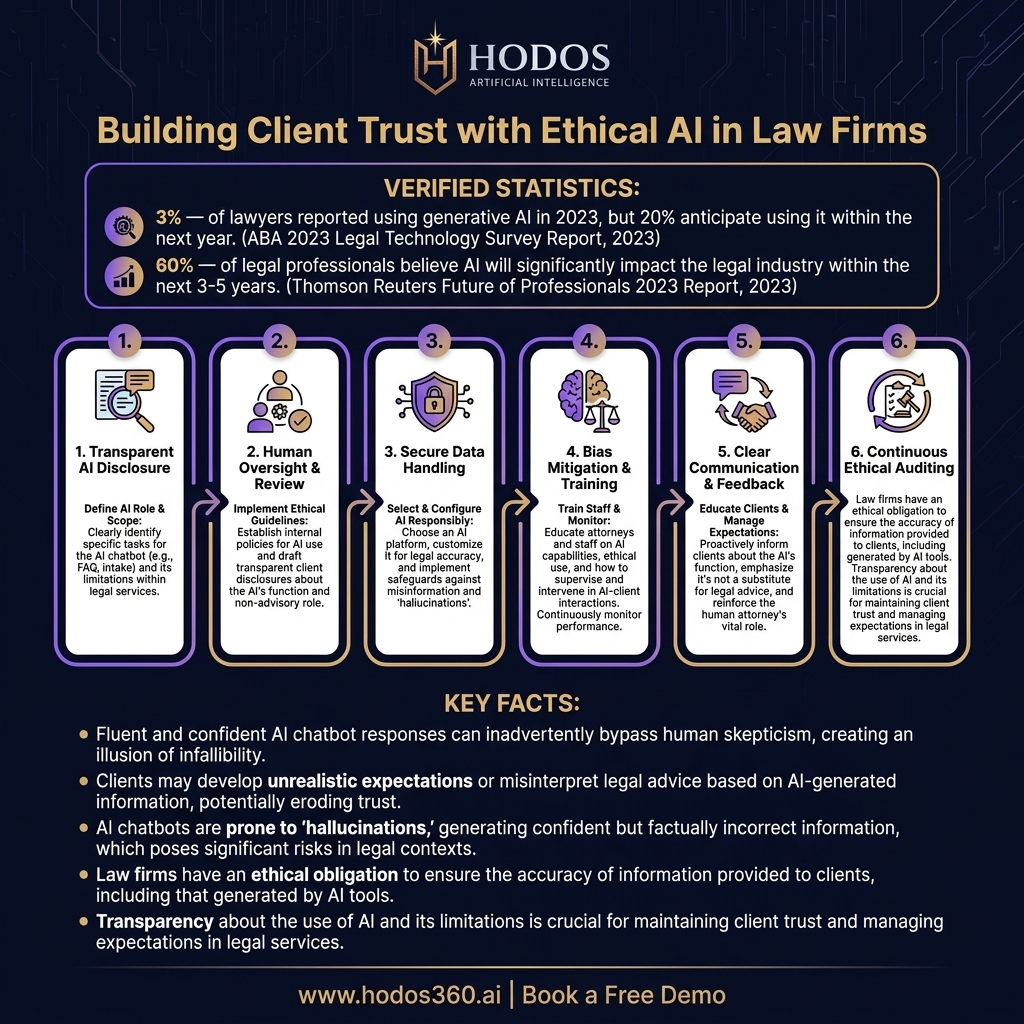
- ✓Transparency First: Clearly disclose when clients are interacting with an AI, distinguishing it from human counsel.
- ✓Human Oversight & Intervention: Establish clear protocols for human attorneys to review, validate, and contextualize AI-generated information before it impacts client decisions.
- ✓Data Privacy & Security: Implement robust measures to protect sensitive client data processed by AI, adhering to all relevant legal and ethical standards.
- ✓Bias Detection & Mitigation: Regularly audit AI systems for inherent biases that could lead to unfair or inaccurate advice, ensuring equitable service.
- ✓Clear Communication & Disclaimers: Use explicit language to outline the limitations of AI, emphasizing that it is a tool, not a substitute for legal expertise.
- ✓Continuous Training & Auditing: Regularly update and test AI models to ensure accuracy, relevance, and compliance with evolving legal and ethical standards.
- ✓Accessibility & Inclusive Design: Ensure AI-powered platforms are accessible to all clients, regardless of technical proficiency, and designed to avoid manipulative psychological nudges.
Building Client Trust in the Age of AI-Powered Web Platforms
In an era where a law firm's digital presence is often the first point of contact, the design of AI-powered web and mobile platforms becomes paramount for building and sustaining client trust. Firms like Linklaters, following their integration of AI tools, have underscored the importance of user-centric design that prioritizes clarity over persuasive rhetoric. Clients interacting with a firm's website are seeking reliable information and a clear path to legal assistance, not to be tricked by overly fluent or overly confident answers. This means that while AI can streamline client intake and provide instant information, its output must always be framed within the context of human legal oversight. A 2025 ABA Legal Technology Survey Report found that 72% of clients value transparency regarding AI use, even if it means slightly slower responses, indicating a strong preference for truth and authenticity over sheer speed.
Developing a web presence that ethically integrates AI requires a thoughtful approach that goes beyond mere functionality. It's about designing an experience where the AI is a helpful assistant, not a deceptive oracle. Learn more about AI in Legal Practice: Ultimate Guide to What Comes Next. This involves clear visual cues distinguishing AI interaction from human interaction, readily available options to connect with a human attorney, and disclaimers that manage expectations about the AI's role and limitations. The goal is to leverage AI's strengths—its ability to process vast amounts of information and respond quickly—while mitigating its potential psychological pitfalls. By doing so, law firms can transform their digital platforms into powerful tools that enhance client engagement and trust, rather than inadvertently creating a sense of unease or misinformation. This strategic integration of AI ensures that the human element remains at the core of the legal service delivery.
Ready to elevate your firm's digital presence with ethical AI? Learn more about HODOS 360's comprehensive Web & Mobile Development services and book a free demo today.
Transparency and Proactive Disclosures: A Non-Negotiable Standard
For law firms, transparency regarding AI use is not just good practice; it's an ethical imperative. Proactive disclosures, clearly stating when a client is interacting with an AI chatbot, are crucial for managing client expectations and upholding professional responsibilities. This could involve visual indicators, explicit text prompts, or even a brief audio message at the start of an AI interaction. Learn more about AI Legal Ethics: Essential Guide to Avoiding Blunders. The aim is to ensure clients are fully informed, allowing them to engage with the AI tool with appropriate discernment and understanding of its limitations. Such disclosures reinforce the firm's commitment to honesty and integrity, pivotal elements in the attorney-client relationship.
Leveraging HODOS 360 for Responsible Web & Mobile Development
HODOS 360's Web & Mobile Development service is specifically designed to empower law firms to build digital platforms that are not only high-performing but also ethically sound in their AI integration. We understand that an AI-powered website is more than just a marketing tool; it's a critical touchpoint for client interaction that must reflect the firm's values and professional obligations. Our approach emphasizes responsive design, SEO optimization, and high-converting templates that prioritize clear communication and transparency. This means incorporating features that allow for easy human hand-off from AI interactions, prominent disclaimers about AI's role, and intuitive navigation that guides clients to the most accurate and human-verified information. Our platforms are built to ensure that the AI enhances the user experience without resorting to psychological tricks or creating misleading impressions.
Moreover, HODOS 360 integrates seamlessly with your firm's broader AI strategy. Learn more about AI-Native Law Firms: An Essential Guide to Legal Innovation. Our AI Law Firm Management System ensures that client data gathered through web interactions, whether AI-assisted or human, is managed securely and ethically. The insights from your AI Marketing Platform can inform how content is generated and presented on your website, optimizing for clarity and ethical persuasion rather than manipulative engagement. By leveraging HODOS 360's comprehensive suite of services, law firms can develop a cohesive digital ecosystem where AI tools, from AI-powered website building to AI Voice Assistants, operate in harmony with professional responsibility. This holistic approach ensures that your firm's online presence is not just technologically advanced, but also a beacon of trustworthiness and ethical practice, providing a solid behind-the-scenes framework for every client interaction.
Beyond Aesthetics: Designing for Ethical User Experience
Ethical user experience (UX) design in legal tech extends far beyond visual appeal; it's about crafting interactions that respect user autonomy and foster genuine understanding. This means designing AI interfaces that are inherently transparent, making the distinction between human and machine clear. It involves building feedback loops that allow clients to report misunderstandings or suggest improvements, thereby empowering them rather than merely processing them. An ethically designed platform, such as those developed through HODOS 360, prioritizes clarity, accessibility, and the client's right to informed consent, ensuring that the AI serves as a valuable, transparent assistant rather than a potentially misleading conversational partner.

Cultivating a Future of Trust: Key Takeaways for Legal Leaders
The psychology of AI chatbot interactions is a complex but critical domain for law firms. The inherent human tendency to place trust in fluent and confident responses means that legal professionals must approach AI integration with deliberate caution and a strong ethical framework. The goal is not to fear AI, but to understand its profound impact on human perception and to leverage it responsibly. Firms that proactively develop clear policies for AI use, invest in training their teams, and prioritize transparent communication with clients will be best positioned to thrive in this new era. This means continuously auditing AI tools for bias, ensuring human oversight, and making transparency a non-negotiable standard in all client-facing digital interactions.
Ultimately, the future success of law firms will depend on their ability to integrate AI in a manner that strengthens, rather than weakens, client relationships. By recognizing the psychological tricks that chatbots can inadvertently play and actively working to counteract them through ethical design and clear communication, legal professionals can maintain the integrity of their services. HODOS 360 stands as a partner in this endeavor, providing the advanced Web & Mobile Development tools and AI Law Firm Management System necessary to build a digital presence that embodies trust, competence, and ethical responsibility in every interaction. Embrace the power of AI, but do so with an unwavering commitment to the human values that define the legal profession.
Ready to build a trusted, AI-powered future for your law firm? Explore HODOS 360's solutions today and schedule a personalized consultation to discuss your firm's specific needs.
Frequently Asked Questions
How can law firms ensure ethical AI use with clients?+
Ethical AI use requires transparency, clear disclaimers about AI interaction, and robust human oversight. Firms must establish protocols for attorney review of AI-generated information, ensure data privacy, and continuously audit AI systems for bias. Prioritizing client education on AI's limitations is also key to maintaining trust and professional responsibility.
What are the main psychological 'tricks' of fluent chatbots?+
Fluent chatbots leverage 'cognitive ease,' making information seem more reliable due to its smooth delivery. They can also create an illusion of empathy or understanding through language mirroring and hyper-personalization, potentially leading clients to over-trust AI-generated information or form unrealistic expectations about legal outcomes.
How does HODOS 360's Web & Mobile Development address these concerns?+
HODOS 360's Web & Mobile Development focuses on building AI-powered platforms with ethical UX design. This includes clear AI disclosures, easy human hand-off options, and intuitive navigation that prioritizes accurate, human-verified information. Our platforms are designed to enhance client engagement transparently, upholding the firm's integrity.
What role does transparency play in AI client interactions?+
Transparency is paramount. Clearly informing clients when they are interacting with an AI chatbot prevents misunderstandings and upholds an attorney's ethical duties of communication. Proactive disclosures build trust by setting realistic expectations about the AI's role as a tool, not a substitute for qualified legal counsel.
Are there specific regulations governing AI in client communication for law firms?+
While comprehensive AI-specific regulations are still evolving (e.g., the EU AI Act), existing legal ethics rules like the ABA Model Rules of Professional Conduct (e.g., Rule 1.1 Competence, Rule 1.4 Communication) apply. These rules implicitly require firms to ensure AI tools do not compromise competence, confidentiality, or clear communication with clients.