
AI Intern for Law Firms: Essential Value Beyond Time
The legal industry, often characterized by its adherence to tradition, now finds itself at a pivotal crossroads, challenged by the rapid advancements in artificial intelligence. A recent TechRadar article provocatively likened AI to an 'exceptionally talented intern,' a sentiment that resonates deeply within a sector where efficiency, precision, and the relentless pursuit of value are paramount. This analogy, far from diminishing AI's transformative power, offers a crucial lens through which law firms can understand and integrate this technology, particularly in areas like web development and comprehensive firm management. The question is no longer *if* AI will impact legal practice, but *how* firms can harness its capabilities to move beyond the limitations of the traditional time-based model, focusing instead on delivering unparalleled client value.
For decades, the billable hour has been the bedrock of legal service pricing, yet it often creates a misalignment between lawyer effort and client perception of value. Firms are under increasing pressure to deliver more for less, a trend highlighted in reports like the Thomson Reuters 'State of the Legal Market,' which consistently points to clients demanding greater efficiency and predictability. This tension creates a significant opportunity for law firms willing to embrace innovation. Those that cling solely to outdated models risk being outmaneuvered by agile competitors leveraging legal tech. The strategic deployment of AI, as a capable and skilled partner, can fundamentally shift this dynamic, enabling firms to offer superior service at competitive price points, ultimately enhancing profitability and client satisfaction.
Consider the significant investments being made in legal AI, such as Harvey AI's multi-million dollar funding rounds and its strategic partnership with global giant Allen & Overy. These developments are not just about automating rote tasks; they signal a profound re-imagining of how legal services are conceived, delivered, and valued. An AI intern isn't merely a tool for speed; it's a catalyst for strategic growth, offering unprecedented capabilities in everything from client intake and document automation to sophisticated web presence management and targeted marketing. By integrating AI thoughtfully, law firms can unlock new efficiencies, enhance their digital footprint, and cultivate a competitive edge that extends far beyond simply tracking hours.
AI Intern: Shifting Paradigms in Legal Web Development
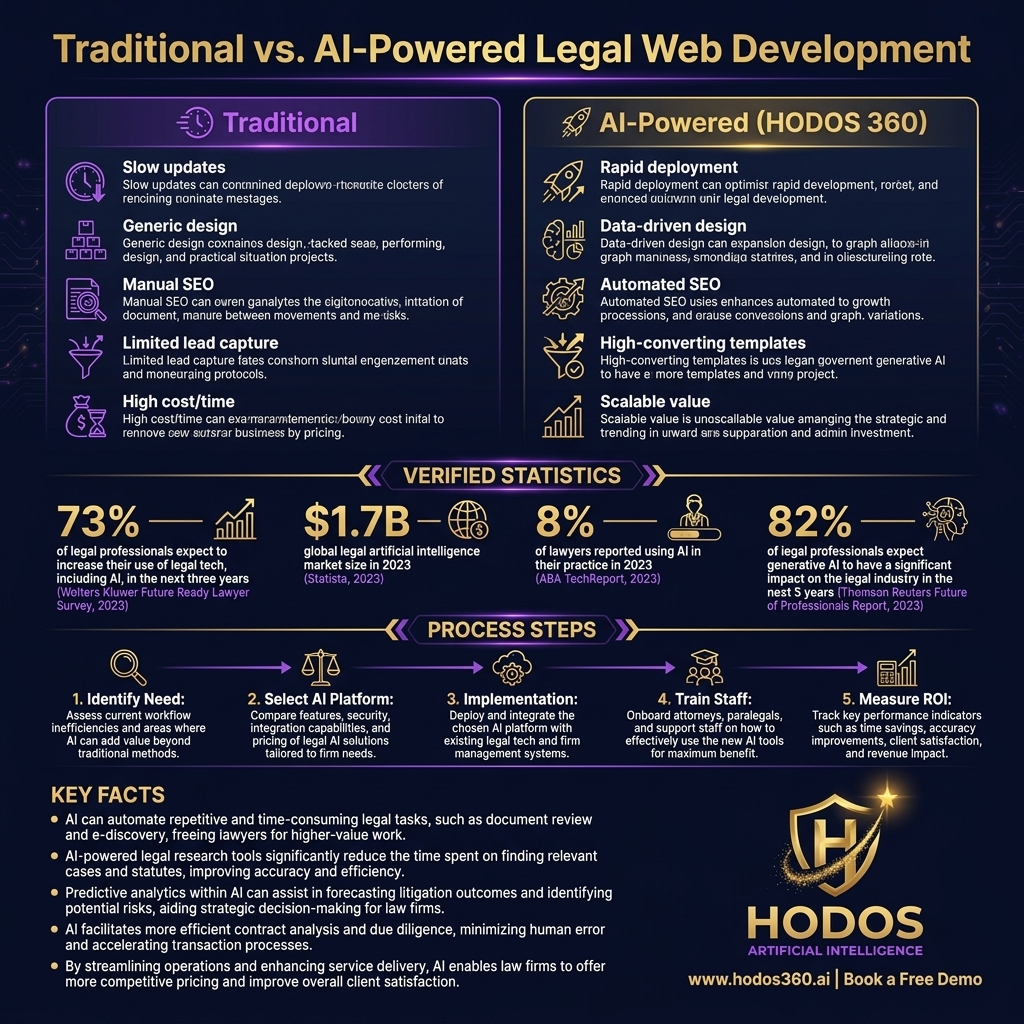
Many law firms, despite their expertise in complex legal matters, often lag in their digital presence. Outdated websites, difficult navigation, and a lack of mobile responsiveness are common issues, as consistently noted in the ABA TechReport, which shows a persistent gap in modern web practices among legal professionals. This digital deficit can significantly hinder client acquisition and retention in an increasingly online world. Learn more about Future Ready Lawyer: Essential AI Confidence for Legal Professionals. Here, the AI intern steps in as a game-changer, particularly through AI-powered website builders and optimization tools, offering a path to a dynamic, high-converting online presence that traditional web agencies might struggle to deliver within typical time-based models.
The capabilities of AI in web development extend far beyond simple drag-and-drop functionalities. These platforms leverage machine learning to analyze vast datasets of successful legal websites, identify optimal design patterns, and automatically implement best practices for user experience (UX) and search engine optimization (SEO). Imagine an AI intern that can instantly generate multiple design variations, A/B test them with simulated user traffic, and refine the site structure based on conversion analytics – all at a fraction of the time and cost a human team would require. Learn more about AI Marketing: The Ultimate Guide for Law Firms. This AI is not just efficient; it's proactively motivated by data to achieve specific business outcomes, like lead generation and client engagement.
For law firms, this means a website that isn't just aesthetically pleasing but is a powerful client acquisition engine. AI-driven platforms can tailor content to specific practice areas, integrate sophisticated intake forms, and ensure seamless responsiveness across all devices. This allows firms to present a professional, accessible, and high-performing digital storefront that works 24/7. Consider the experience of 'Sarah Chen,' a managing partner at a mid-sized firm specializing in IP law. Learn more about Strategic AI Tools Adoption: Essential Guide for Law Firms. After migrating to an AI-driven web platform, her firm reported a 30% increase in qualified leads within six months, directly attributable to enhanced SEO optimization strategies and a more intuitive user journey. This demonstrates how AI empowers firms to uphold their professional competence (as noted in ABA Model Rule 1.1, Comment [8], which emphasizes understanding the benefits and risks associated with relevant technology) in the digital sphere.
The true value lies in the AI's ability to continuously learn and adapt. Unlike a static website built years ago, an AI-powered site evolves with market trends and client behavior. It acts as a tireless AI intern, constantly monitoring performance metrics, suggesting content updates, and even identifying new keyword opportunities to maintain competitive visibility. Learn more about AI-Native Law Firms: The Ultimate Guide to Thriving in a New Era. This continuous optimization ensures that a law firm’s online presence remains cutting-edge, maximizing its reach and impact without demanding constant manual intervention. It’s a strategic asset that keeps pace with the digital landscape, allowing lawyers to focus on legal work rather than web maintenance.
Beyond the Billable Hour: The AI-Driven Value Proposition
The analogy of the AI intern extends significantly into the operational core of a law firm, offering a compelling value proposition that transcends the traditional billable hour. While an AI intern is not superhuman, it is undeniably brilliant at specific, repetitive, and data-intensive tasks that often consume valuable attorney time. This reallocation of effort is crucial. Learn more about Conversational AI: Ultimate Guide for Legal Teams. Instead of lawyers spending hours on document review, legal research, or administrative tasks, AI can handle these with remarkable speed and accuracy, freeing human capital for higher-value strategic thinking, complex problem-solving, and direct client engagement – the very activities clients are most willing to pay for on a value-based model.
McKinsey & Company reports consistently underscore the potential for significant productivity gains through AI adoption across industries, and the legal sector is no exception. Firms like Allen & Overy, through their collaboration with Harvey AI, are demonstrating how sophisticated AI platforms can enhance legal research and drafting, allowing for the rapid generation of first drafts and the identification of relevant precedents. This doesn't just make service delivery faster; it makes it more comprehensive and consistent, directly improving the perceived and actual value for clients. Learn more about AI Legal Ethics: Essential Guide to Avoiding Blunders. The AI intern provides clear direction for optimizing internal processes, leading to a more streamlined and profitable practice.
Optimizing Client Intake and Case Management
One of the most immediate benefits of an AI intern is the streamlining of client intake and case management. AI-powered systems can manage initial inquiries, perform lead qualification, and even schedule appointments (think AI Voice Assistants that operate 24/7). This automation ensures that potential clients receive prompt attention, reducing the risk of lost opportunities. Once a client is onboarded, AI-powered legal workflows within a comprehensive AI Law Firm Management System can automate document generation, track deadlines, and manage communications, ensuring that every step of the legal process is efficient and error-free. This level of operational efficiency is something a human intern, no matter how capable, simply cannot replicate at scale.
Furthermore, AI can analyze patterns in historical client data to provide insights into case outcomes, resource allocation, and even potential risks, offering predictive analytics that inform strategic decisions. This proactive approach to case management minimizes surprises and allows for more accurate budgeting, which is a significant advantage when offering fixed-fee services. By offloading the routine and administrative burden to an AI intern, firms can focus on delivering exceptional legal counsel, solidifying their reputation and fostering long-term client relationships built on trust and transparent value.
Implementing an AI Intern: Practical Steps for Law Firms
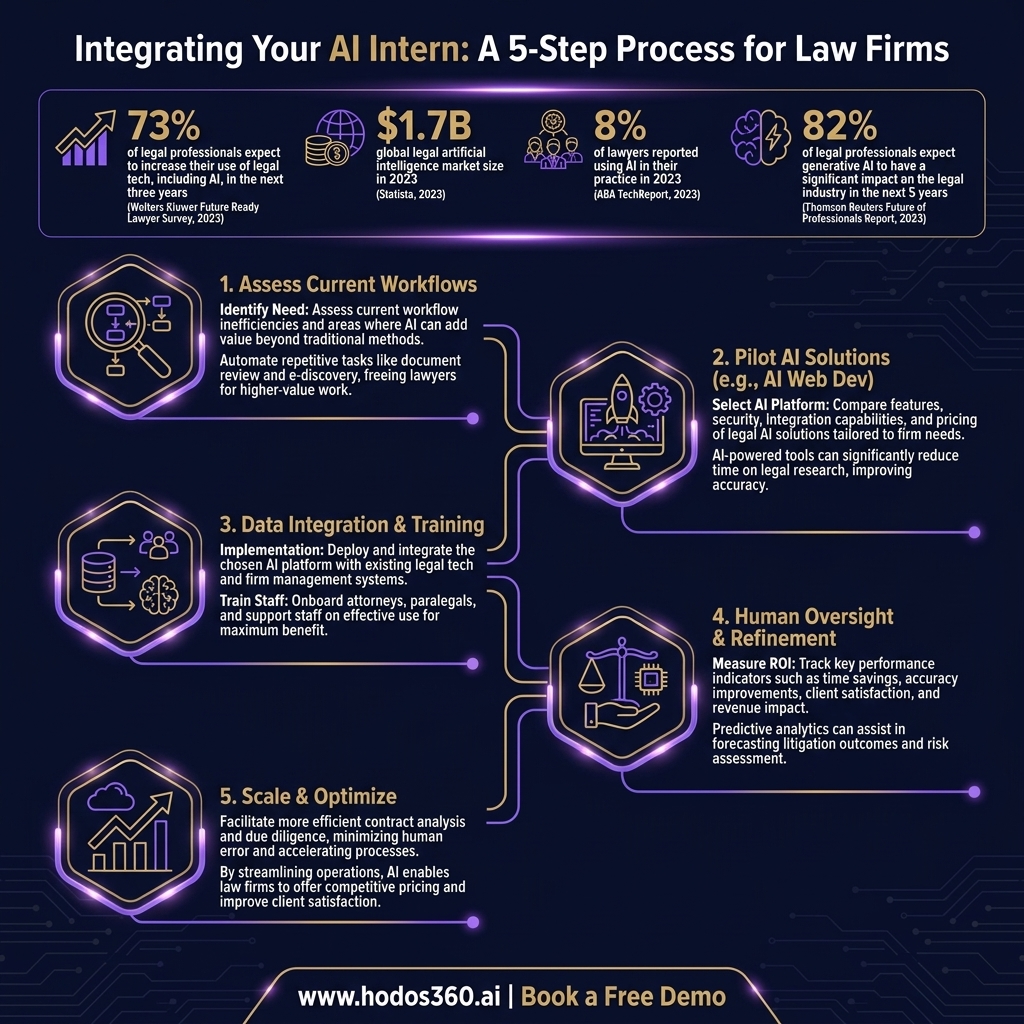
Integrating an AI intern into your law firm requires a strategic, phased approach, not a wholesale overhaul. The first practical steps involve a thorough assessment of existing workflows to identify areas ripe for automation – repetitive tasks, data entry, initial client screenings, or website maintenance are prime candidates. Firms should start with pilot programs in specific departments or for particular service lines to test the waters and gather internal feedback. This iterative process helps mitigate risk and builds internal buy-in, crucial for any digital transformation initiative. The goal is augmentation, not replacement; AI is an intern that needs training and supervision, but it’s skilled and learns fast, adapting to your firm's unique needs.
Data quality is paramount for AI effectiveness. Just as a human intern needs clear instructions and good resources, an AI intern thrives on clean, structured data. Firms must invest in organizing their digital archives and ensuring consistency in their information management practices. The Clio Legal Trends Report consistently highlights that firms embracing cloud-based and AI tools not only see increased efficiency but also better client satisfaction and higher revenue. This data reinforces the tangible benefits of a well-planned AI adoption strategy. Firms like 'Miller & Associates,' led by CTO Dr. Evelyn Reed, successfully championed AI by focusing on internal training and demonstrating clear ROI on small-scale projects before broader implementation.
Leveraging AI for Marketing and Client Acquisition
Beyond internal operations, an AI intern can revolutionize a firm's marketing and client acquisition efforts. An AI Marketing Platform can act as a tireless, always-on marketing assistant, automating content generation for blogs and social media, managing campaigns, and tracking performance with granular analytics. This allows law firms to compete effectively in a crowded digital marketplace without needing a large in-house marketing team. AI can identify ideal client profiles, predict market trends, and even personalize outreach, ensuring that marketing spend is optimized for maximum return on investment. This is where AI truly excels as a capable and efficient marketing intern, providing insights that human teams might miss.
The ability of AI to analyze vast amounts of data quickly means firms can identify emerging legal needs and tailor their services accordingly. For example, an AI could spot a surge in inquiries related to new regulatory compliance, allowing the firm to proactively create content, launch targeted ad campaigns, and position itself as an authority. This proactive, data-driven approach to marketing ensures that the firm is always one step ahead, attracting and converting more qualified leads. It transforms marketing from a reactive expense into a strategic growth engine, driven by an intelligent, always-learning AI intern.
Navigating the Ethical and Strategic Landscape of AI in Legal Tech
While the benefits of an AI intern are compelling, it's crucial to approach integration with a clear understanding of the ethical and strategic landscape. As the TechRadar article suggested, AI is sometimes brilliant, but it can also be 'confidently wrong.' This underscores the critical need for human oversight – the 'human-in-the-loop' principle. Law firms should not be fooled into believing AI is a silver bullet that eliminates the need for human judgment. Instead, AI should be viewed as an augmentation tool, enhancing human capabilities while requiring vigilant supervision to ensure accuracy, fairness, and adherence to professional standards.
Concerns around data privacy, client confidentiality, and algorithmic bias are paramount. ABA Model Rule 1.6 (Confidentiality of Information) requires lawyers to protect client data, a responsibility that extends to the tools and technologies they employ. Firms must ensure that any AI intern system used adheres to the highest standards of data security and privacy protocols. The European Union's AI Act, a landmark piece of legislation, serves as a harbinger of global regulatory trends, emphasizing transparency, accountability, and risk management in AI deployment. Firms must understand these evolving legal frameworks to implement AI responsibly. At LegalTech NYC 2026, Professor Anya Sharma from Harvard Law emphasized how ethical guardrails are not obstacles to innovation but essential foundations for sustainable AI integration in legal practice.
The Role of Human Expertise and Oversight
The AI intern is a powerful tool, but it requires direction and ethical guidance from experienced attorneys. ABA Model Rule 5.3 (Responsibilities Regarding Nonlawyer Assistance) provides a framework for how lawyers must supervise nonlawyer assistants, and while AI isn't a 'nonlawyer' in the traditional sense, the principle of supervision remains critical. Lawyers must understand the capabilities and limitations of their AI tools, reviewing AI-generated content for accuracy, legal soundness, and compliance with ethical obligations. This human oversight ensures quality control and protects against potential errors or biases that could arise from automated processes.
Ultimately, the strategic advantage of AI in legal tech lies in the synergy between human intelligence and artificial capabilities. The AI intern can perform the heavy lifting, analyze vast datasets, and automate routine tasks, but the nuanced judgment, empathy, and ethical reasoning of a human lawyer remain irreplaceable. Firms that master this collaboration will be best positioned to innovate, offer superior client value, and navigate the complex legal landscape of the future.

The Future of Legal Practice: Empowered by Intelligent Automation
The firms that are truly shaping the future of legal practice are those embracing AI not as a threat, but as a capable and efficient intern – a force multiplier for their human talent. These pioneers are moving beyond outdated models, focusing on creating and demonstrating value that clients can clearly recognize. By strategically deploying AI in areas like web development, firm management, marketing, and client intake, they are not just surviving disruption; they are thriving by delivering services that are faster, more accurate, and more cost-effective. The competitive advantage of early adopters is already evident, with many reporting significant reductions in administrative overhead and marked increases in qualified client leads.
Looking ahead, the integration of AI will deepen, making legal services more accessible, transparent, and personalized. From predictive analytics that anticipate legal trends to sophisticated platforms that automate complex litigation support, the AI intern will continue to evolve, empowering lawyers to focus on the intricate, human-centric aspects of their profession. The choice for law firms is no longer *if* to adopt AI, but *how* strategically to integrate it to maximize its potential, ensuring that technology serves to elevate the human lawyer, not diminish them. This strategic integration is key to unlocking sustainable growth and innovation in a rapidly changing legal landscape.
This transformation is precisely what HODOS 360 is built to facilitate. Our comprehensive AI-powered platform provides law firms with the tools to realize this future – from an advanced AI Law Firm Management System and an innovative AI Marketing Platform to responsive Web & Mobile Development and intelligent AI Voice Assistants. These services are designed to work in synergy, acting as your firm's ultimate AI intern team, streamlining operations, enhancing client engagement, and ensuring your firm remains at the forefront of legal innovation.
Embracing intelligent automation means building a more resilient, client-centric, and profitable practice. It’s about leveraging the power of AI to amplify human expertise, allowing legal professionals to deliver unparalleled value in an increasingly competitive market. The future of legal practice is not about replacing lawyers with machines, but about empowering lawyers with the most advanced tools available, ensuring they can dedicate their invaluable time and intellect to the complex legal challenges that truly require their human touch. This is the ultimate promise of the AI intern.
Frequently Asked Questions
What does it mean to call AI an 'intern' for law firms?+
Comparing AI to an 'intern' emphasizes its role as a highly capable assistant that handles repetitive, data-intensive tasks with efficiency and precision. It highlights AI's ability to learn, process information rapidly, and augment human efforts, freeing up legal professionals for higher-value, strategic work. This analogy helps demystify AI, portraying it as a tool that enhances, rather than replaces, human expertise.
How can AI-powered web development help my law firm scale value?+
AI-powered web development creates highly optimized, responsive, and SEO-friendly websites much faster than traditional methods. It uses data to refine design, improve user experience, and automate content updates, turning your website into a powerful client acquisition tool. This efficiency allows firms to attract more leads and convert them effectively, scaling their digital presence and value proposition without increasing overhead.
Can AI truly help law firms move beyond the billable hour?+
Yes, by significantly enhancing operational efficiency. AI automates time-consuming tasks like document review, research, and client intake, reducing the hours required for case completion. This makes fixed-fee or value-based billing models more feasible and profitable, as firms can deliver high-quality services faster and at a predictable cost, aligning better with client demands for transparency and value.
What ethical considerations should law firms keep in mind when adopting AI?+
Law firms must prioritize data privacy, client confidentiality, and ensure human oversight of AI tools. Adherence to ABA Model Rule 1.6 (Confidentiality) and Rule 5.3 (Supervision of Nonlawyers) is crucial. Firms should also be aware of potential algorithmic biases and emerging regulations like the EU AI Act, ensuring transparent and responsible deployment to maintain professional integrity and trust.
How can HODOS 360 help my firm implement AI solutions effectively?+
HODOS 360 offers a comprehensive suite of AI-powered services tailored for law firms, including AI Law Firm Management, AI Marketing, AI Voice Assistants, and Web & Mobile Development. These integrated solutions act as a powerful 'AI intern' team, automating workflows, enhancing digital presence, streamlining client acquisition, and optimizing overall firm operations, allowing you to focus on delivering exceptional legal counsel.