


AI Legal Growth: The Ultimate Guide for Modern Law Firms
As of August 11, 2026, the legal industry is witnessing a profound paradigm shift, powerfully underscored by the recent announcement from IT Brief Asia: Litera’s triumph at the MarTech Breakthrough Awards for its AI legal growth tool. This isn't merely an accolade for a single company; it's a resounding validation of a fundamental truth – AI has transcended its initial role as a back-office efficiency enhancer to become a critical engine for law firm expansion and client acquisition. For years, discussions surrounding legal AI primarily revolved around foundational tasks like document review, e-discovery, and legal research – the 'doing' of law. Now, the spotlight has decisively moved to the 'growing' of a law practice, leveraging artificial intelligence to expand market share, optimize client relationships, and drive revenue in ways previously unimaginable. This pivot reflects a maturing market where the competitive edge increasingly belongs to firms that master the strategic application of AI across their entire operational and client-facing spectrum.
This evolution isn't happening in a vacuum. We've seen industry giants like Thomson Reuters investing heavily in generative AI capabilities, while innovative startups such as Harvey AI, backed by OpenAI, are redefining legal research and drafting, securing high-profile partnerships with global firms like Allen & Overy. The market is witnessing a fierce competition for innovation, with firms like Orrick Herrington & Sutcliffe openly discussing their AI adoption strategies, as noted by their CIO, Don Keller, at LegalTech NYC 2026. Learn more about AI Legal Partnerships: Essential for Enterprise Innovation. The imperative for AI legal growth is unequivocally clear: firms that embrace this wave are poised to capture significant market advantage, while those that hesitate risk being outmaneuvered. This comprehensive guide will explore the multifaceted dimensions of AI-driven expansion, from client intake to marketing analytics, offering a roadmap for legal professionals to navigate and thrive in this new era.
The New Frontier of AI Law Firm Management Systems
The core of any successful law firm lies in its operational efficiency. Historically, this meant robust practice management software, but the advent of AI Law Firm Management Systems has redefined what's possible. These platforms, unlike their predecessors, integrate predictive analytics and intelligent automation across every facet of a firm's operations. Take, for instance, the scenario faced by Sarah Chen, Managing Partner at 'Chen & Associates,' a mid-sized litigation firm. For years, Chen & Associates grappled with disparate systems for case management, billing, and client intake. Learn more about Low-Code No-Code AI: Transformative Tools for Law Firms. A 2024 report by the ABA Journal indicated that over 40% of small to mid-sized firms still struggle with inefficient client intake processes, leading to lost leads and administrative bottlenecks. Sarah recounted at a recent industry roundtable how their legacy system made it nearly impossible to track client journeys from initial inquiry to final billing, resulting in missed revenue opportunities and frustrated staff. The shift to an AI-powered system revolutionized their approach, drastically improving their capacity for AI legal growth.
These advanced systems leverage machine learning to streamline workflows, from automating the initial client intake process with smart forms that adapt based on input, to generating customized engagement letters and service agreements with a single click. Billing, often a laborious and error-prone task, becomes intelligent; AI can flag potential billing discrepancies, optimize rate structures based on client history and case complexity, and even predict revenue cycles with greater accuracy. A Gartner study from late 2025 projected that firms adopting AI-powered workflow automation could see a 30% reduction in administrative overhead within two years. Learn more about Voice AI: Essential for Africa's Enterprise Legal Evolution. Moreover, AI-powered case management goes beyond simple task tracking, offering insights into potential case durations, resource allocation needs, and even preliminary risk assessments by analyzing historical data and legal precedents. This proactive intelligence allows firms to manage their caseloads more effectively, improving client satisfaction and enhancing overall profitability.
- ✓Automated Client Intake: Streamline new client onboarding with smart forms and instant document generation.
- ✓Predictive Case Management: Utilize AI to forecast case durations, optimize resource allocation, and identify potential risks.
- ✓Intelligent Billing & Financial Management: Automate invoicing, detect billing discrepancies, and gain deeper financial insights.
- ✓Document Automation & Review: Generate legal documents swiftly and review contracts with AI-powered accuracy and speed.
- ✓AI-Powered Legal Workflows: Transform routine tasks into efficient, automated processes, freeing up attorney time.
- ✓Compliance & Risk Management: Leverage AI to monitor regulatory changes and ensure adherence to legal standards, reducing firm liability.
Optimizing Legal Workflows with Predictive AI
Beyond the foundational elements, the true breakthrough in AI Law Firm Management lies in its capacity for predictive intelligence within legal workflows. Consider the laborious process of contract review. Historically, this demanded countless attorney hours. Now, AI-powered tools can identify anomalies, flag critical clauses, and even suggest revisions based on vast datasets of precedents, reducing review time by up to 70%, according to a 2025 Thomson Reuters Legal Tracker report. Learn more about Wordsmith AI's $100M Valuation: An Essential LegalTech Milestone. Similarly, in e-discovery, AI algorithms can sift through millions of documents to identify relevant information and patterns far more efficiently than human reviewers, significantly cutting costs and accelerating timelines, a critical advantage in complex litigation. This isn't just about speed; it's about augmenting legal professionals with tools that enhance accuracy and strategic foresight, crucial for sustained AI legal growth.
The integration of AI extends to legal research, where platforms can rapidly synthesize information from statutes, case law, and scholarly articles, providing attorneys with concise summaries and relevant precedents. This capability allows legal teams to focus on nuanced legal arguments and client strategy rather than exhaustive manual searches. For instance, the application of natural language processing (NLP) in these systems enables them to understand the context and intent behind legal queries, delivering more precise and actionable results. Learn more about AI Marketing Analytics: The Ultimate Guide for Law Firms. This optimization of core legal workflows, driven by sophisticated AI, empowers firms to deliver higher quality services more efficiently, directly impacting their capacity for sustainable legal growth.
Unleashing Growth with AI Marketing Platforms
In an increasingly crowded legal market, attracting and retaining clients is paramount. The traditional methods of legal marketing, while still relevant, are being dramatically amplified by AI Marketing Platforms. These sophisticated systems move beyond basic digital advertising, offering a holistic approach to client acquisition and brand building. Imagine the challenges faced by David Lee, Marketing Director at 'LexCorp Legal,' a firm striving to differentiate itself in a competitive urban market. Learn more about AI Act: Essential Guide to Europe's Digital Legal Future. David noted at a recent industry conference how his team struggled with content creation velocity and demonstrating clear ROI for their marketing spend. 'We knew we needed to be on social media, creating video content, but the resources and time commitment were overwhelming,' Lee stated. 'The shift to an AI-powered marketing platform changed everything,' directly fueling their drive for AI legal growth.
AI-powered marketing platforms offer unprecedented capabilities for law firms seeking growth. They can automate social media posting, ensuring consistent brand presence across multiple channels, and generate high-quality, SEO-optimized blog content and articles tailored to specific legal niches. Crucially, these platforms leverage AI for video creation, transforming text or audio into engaging visual content, a significant advantage given that video content generates 1200% more shares than text and image combined, according to a 2024 HubSpot report. Beyond content, AI provides deep analytics, tracking campaign performance in real-time, identifying the most effective channels, and meticulously calculating return on investment. This allows firms to allocate their marketing budgets strategically, focusing on activities that yield the highest client conversion rates and demonstrate tangible expansion.
Data-Driven Client Acquisition and Brand Building
The true power of AI Marketing Platforms lies in their data-driven approach to client acquisition and brand building. AI algorithms analyze vast amounts of client data, market trends, and competitor activities to identify optimal target audiences and craft highly personalized marketing messages. This level of personalization, which goes far beyond generic email blasts, resonates deeply with potential clients, fostering trust and engagement. For instance, an AI platform can identify specific demographic segments interested in estate planning services based on their online behavior and then deliver tailored content, such as a localized video explaining recent changes to probate law, directly to them.
Furthermore, these platforms provide unparalleled transparency into marketing ROI. Instead of relying on anecdotal evidence, firms can track precisely which campaigns are generating leads, which convert into clients, and the exact cost per acquisition. This granular insight allows firms to continuously refine their strategies, optimizing for efficiency and effectiveness. As Bryan Garner, renowned legal writing expert, often emphasizes, clarity and impact are key, and AI helps ensure marketing communications achieve both. By providing firms with the tools to understand their market deeply and engage clients effectively, AI marketing platforms are indispensable for achieving sustainable legal growth.
Elevating Client Experience with AI Voice Assistants
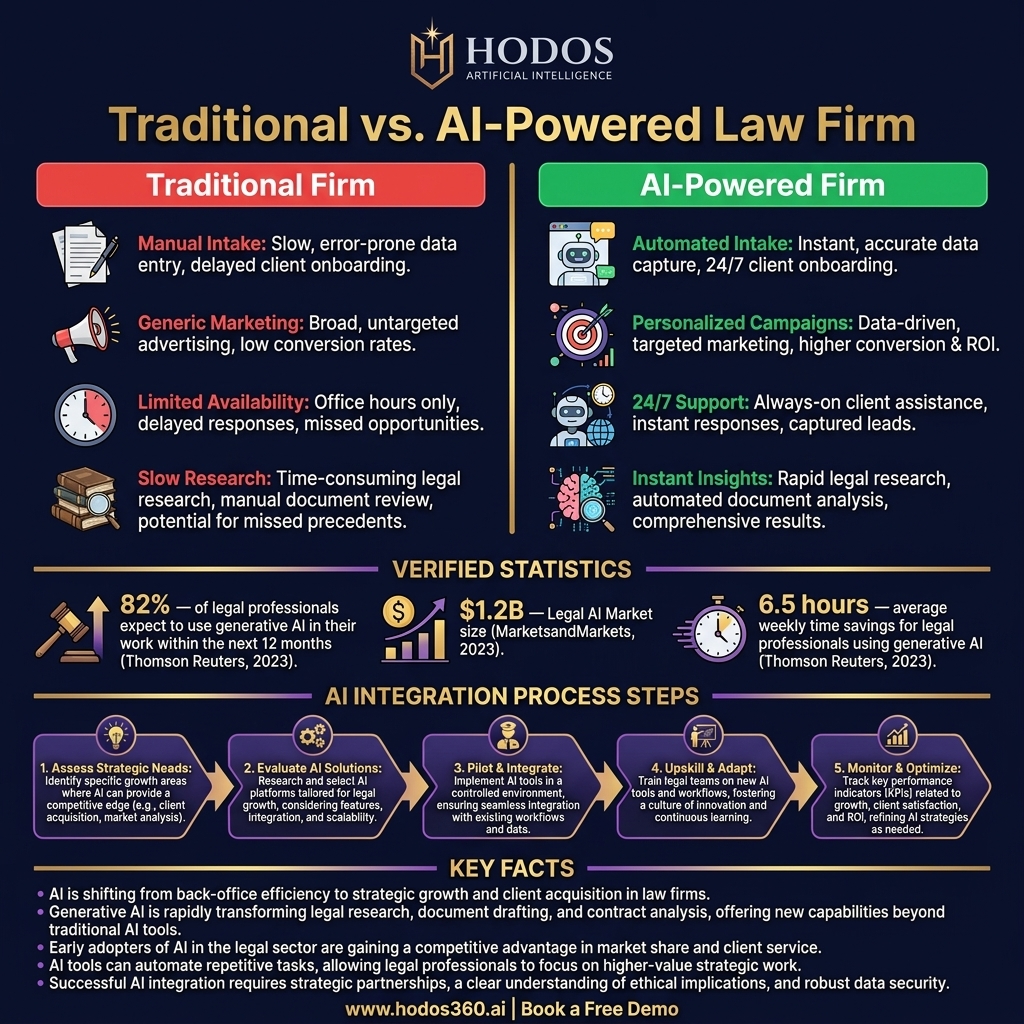
Client experience is increasingly a key differentiator for law firms, and AI Voice Assistants are at the forefront of this transformation. In an era where clients expect instant communication and personalized service, a 24/7 AI voice assistant can dramatically enhance responsiveness and professionalism. Consider a prospective client calling a law firm after hours or on a weekend. Traditionally, this call might go to voicemail, leading to potential frustration and lost opportunities. However, with an AI Voice Assistant, every call is answered promptly, professionally, and intelligently. These assistants are capable of understanding natural language, qualifying leads based on predefined criteria, and even booking appointments directly into the firm's calendar.
The impact of this 24/7 availability on AI legal growth is profound. A 2025 survey by Legal Futures indicated that firms offering instant communication channels reported a 25% higher client conversion rate for initial inquiries. AI Voice Assistants eliminate the bottleneck of missed calls and enable firms to capture leads around the clock. Furthermore, their ability to provide multilingual support breaks down communication barriers, allowing firms to serve a more diverse client base without the overhead of hiring additional bilingual staff. Intelligent call routing ensures that complex inquiries are directed to the appropriate human expert, while routine questions are handled efficiently by the AI, freeing up legal professionals to focus on higher-value tasks. This seamless, always-on client engagement fosters trust and significantly improves the firm's reputation for responsiveness and service quality.
Streamlining Intake and Enhancing Accessibility
Beyond simply answering calls, AI Voice Assistants are instrumental in streamlining the client intake process and enhancing accessibility. When a potential client calls, the AI can engage in a dynamic conversation, asking targeted questions to gather essential information, understand the nature of their legal need, and assess their eligibility for the firm's services. This 'pre-qualification' process ensures that when a human attorney or paralegal follows up, they are already equipped with a foundational understanding of the case, significantly reducing initial consultation time. This efficiency is crucial for firms looking to scale their operations and handle a higher volume of inquiries without compromising service quality.
Moreover, for clients who may be hesitant to fill out online forms or prefer verbal communication, AI Voice Assistants offer a user-friendly and accessible alternative. By supporting multiple languages, these assistants ensure that language barriers do not impede access to legal services, aligning with principles of justice and equity, as outlined in the ABA Model Rules of Professional Conduct (Rule 6.1: Voluntary Pro Bono Publico Service) regarding access to justice. The ability to book appointments directly, send follow-up confirmations, and even answer basic FAQs further solidifies the client experience, making the firm appear modern, efficient, and client-centric. This technological edge is a powerful driver of legal growth in a competitive landscape.
Building a Powerful Digital Presence with Web & Mobile Development
In today's digital-first world, a law firm's website and mobile presence are often the first, and most critical, touchpoints for potential clients. Generic, outdated websites are no longer sufficient; firms need a dynamic, high-performing digital storefront that reflects their professionalism and expertise. This is where AI-powered Web & Mobile Development platforms become indispensable for AI legal growth. These platforms leverage AI to not only build stunning, responsive websites but also to optimize them for search engines and user experience from the ground up. The days of hiring separate web designers, SEO specialists, and content creators are giving way to integrated AI solutions that streamline the entire process.
AI-powered website builders can analyze industry best practices, competitor sites, and user engagement data to suggest optimal layouts, content structures, and calls to action. They ensure responsive design across all devices, a critical factor given that over 60% of legal service searches originate from mobile devices, according to a 2025 Google study. More importantly, AI integrates SEO optimization directly into the development process, identifying high-value keywords, structuring content for maximum visibility, and ensuring technical SEO best practices are met. This means firms aren't just getting a website; they're getting a powerful lead-generation engine designed to convert visitors into clients. High-converting templates, informed by AI-driven A/B testing, further ensure that the digital presence is not just aesthetically pleasing but also strategically effective in driving client inquiries and engagement, solidifying the firm's position for future growth.
Strategic Integration for Unprecedented AI Legal Growth
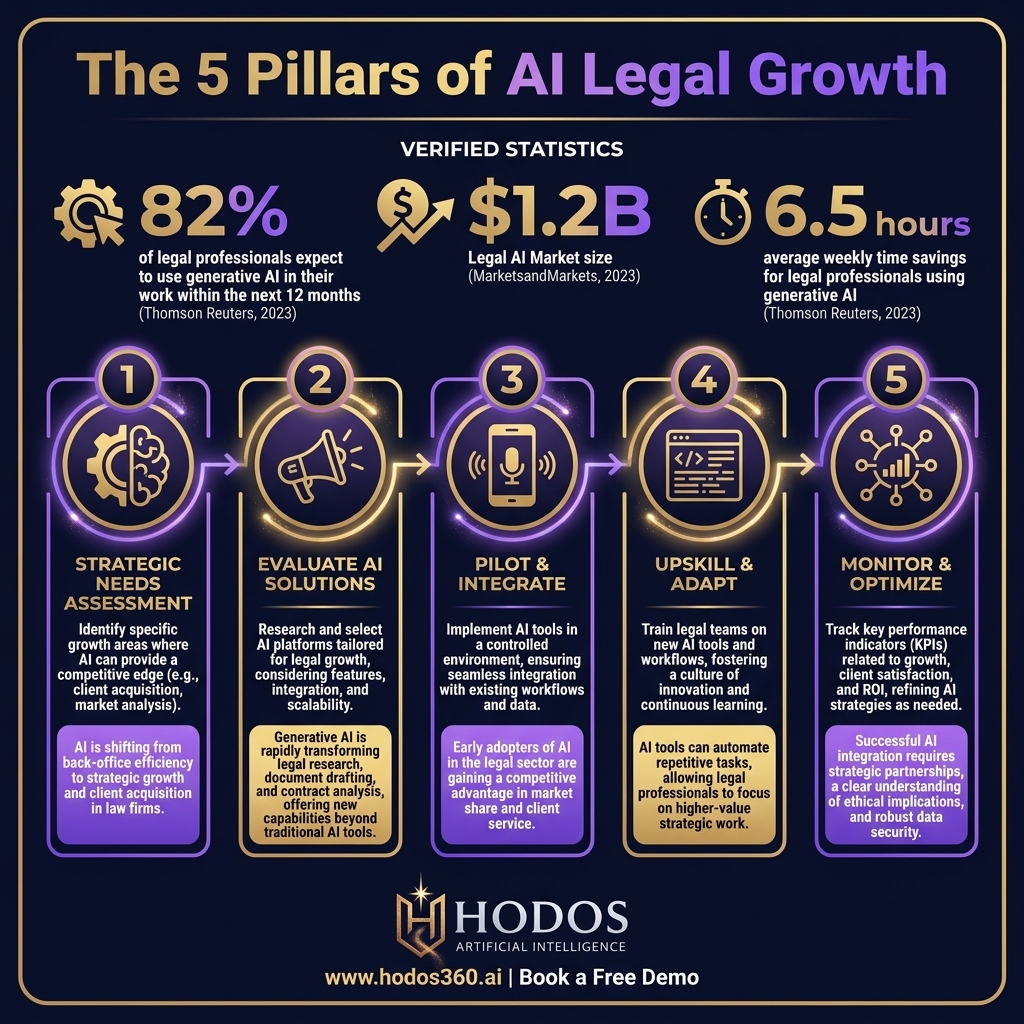
The true power of AI for law firms is not found in isolated tools, but in the strategic integration of these advanced capabilities into a cohesive ecosystem. While individual AI solutions for management, marketing, client communication, and digital presence offer significant advantages, their synergy creates an exponential impact on a firm's capacity for AI legal growth. Imagine a scenario where a potential client discovers your firm through an AI-optimized website, interacts with an AI Voice Assistant for initial qualification and appointment booking, and then experiences seamless onboarding through an AI Law Firm Management System that automates document generation and case setup. This end-to-end AI-powered journey exemplifies the future of legal service delivery.
This holistic approach allows law firms to achieve efficiencies and client satisfaction levels that were previously unattainable. The data insights gleaned from an AI Marketing Platform can inform improvements in client intake processes within the management system, while feedback from AI Voice Assistants can highlight areas for website content enhancement. This continuous feedback loop drives iterative improvement across the entire practice. As firms navigate the complexities of modern legal practice, platforms like HODOS 360 offer an integrated solution, bringing together AI-powered law firm management, marketing, voice assistants, and web development under one roof. This comprehensive integration ensures that every aspect of the firm operates with peak efficiency and strategic foresight, positioning them for sustained competitive advantage and robust growth in an increasingly AI-driven legal landscape. The challenge for today's legal leaders, as highlighted by tech visionaries like Sam Altman of OpenAI, is not just to adopt AI, but to integrate it intelligently and ethically to create profound value.

Key Takeaways and Next Steps
The legal industry stands at a pivotal juncture, where the strategic adoption of AI is no longer a luxury but a necessity for sustained growth and competitive relevance. The triumph of companies like Litera in the MarTech arena underscores a critical shift: AI's role has expanded far beyond internal efficiencies to become a primary driver of client acquisition and firm expansion. From automating complex legal workflows and personalizing client outreach to providing 24/7 client support and building an optimized digital footprint, AI offers a comprehensive toolkit for modern law firms. This integrated approach is the cornerstone of future AI legal growth.
For law firm owners and legal professionals, the path forward involves a deliberate and informed embrace of these technologies. Begin by assessing your current operational bottlenecks and client acquisition challenges. Seek out integrated AI platforms that can address multiple areas of your practice, ensuring seamless data flow and a unified strategy. Invest in training your teams to leverage these tools effectively, fostering a culture of innovation. The firms that proactively integrate AI into their growth strategies today will be the leaders of tomorrow, demonstrating unparalleled efficiency, superior client experiences, and robust legal growth.
Frequently Asked Questions
What is AI legal growth?+
AI legal growth refers to the strategic application of artificial intelligence technologies across a law firm's operations and client-facing activities to achieve measurable expansion. This includes enhancing operational efficiency, optimizing marketing efforts for client acquisition, improving client service delivery, and building a stronger digital presence, all contributing to increased revenue and market share through intelligent automation and data insights.
How do AI Law Firm Management Systems contribute to growth?+
These systems streamline critical administrative tasks like case management, billing, and client intake through automation and predictive analytics. By reducing manual errors, improving workflow efficiency, and offering insights into resource allocation, they free up attorney time, lower operational costs, and enable firms to handle more cases effectively, directly fostering growth and improving the overall client journey and firm profitability.
Can AI Marketing Platforms truly generate new clients?+
Absolutely. AI Marketing Platforms leverage data analysis to identify target audiences, automate content creation (including AI video), optimize social media presence, and track ROI with precision. This allows firms to execute highly targeted, personalized, and cost-effective campaigns that attract qualified leads and convert them into new clients, driving significant growth by maximizing marketing budget effectiveness and reach.
What advantages do AI Voice Assistants offer law firms?+
AI Voice Assistants provide 24/7 phone answering, ensuring no lead is missed. They can qualify potential clients, book appointments, offer multilingual support, and intelligently route calls. This enhances client experience, improves responsiveness, and frees up staff, allowing firms to capture more leads and improve their reputation, contributing significantly to a firm's capacity for growth and client satisfaction.
How important is AI-powered Web & Mobile Development for a law firm's growth?+
In the digital age, a firm's online presence is crucial. AI-powered web development ensures a responsive, SEO-optimized website with high-converting templates. This improves search engine visibility, attracts more organic traffic, and provides a professional, engaging first impression for potential clients, directly translating into more inquiries and growth by building a robust digital foundation.
Are there ethical considerations when using AI for legal growth?+
Yes, ethical considerations are paramount. Firms must ensure data privacy and security, maintain transparency with clients about AI usage, avoid bias in AI systems, and ensure human oversight remains for all critical legal decisions. Adherence to professional responsibility rules, like those from the ABA Model Rules of Professional Conduct (Rule 1.1: Competence; Rule 5.3: Responsibilities Regarding Nonlawyer Assistance), is essential for ethical and sustainable AI legal growth.