


AI for Legal Teams: Essential Needs & Strategic Adoption
In 2024, when Allen & Overy announced its groundbreaking partnership with Harvey AI, the legal world watched with a mix of excitement and trepidation. This wasn't just another tech rollout; it signaled a fundamental shift in how leading firms approached legal work. Sarah Williams, a veteran M&A partner at a mid-sized firm in Chicago, initially viewed AI with skepticism. Her team, buried under mountains of due diligence documents for a complex cross-border merger, faced mounting pressure. The firm's existing systems, a patchwork of legacy software and manual processes, were buckling. "We were drowning in data," Williams recounted at a recent LegalTech NYC panel, "and the thought of adding another 'solution' felt overwhelming. We needed to know, what does our legal team actually need from AI, not just what's flashy?"
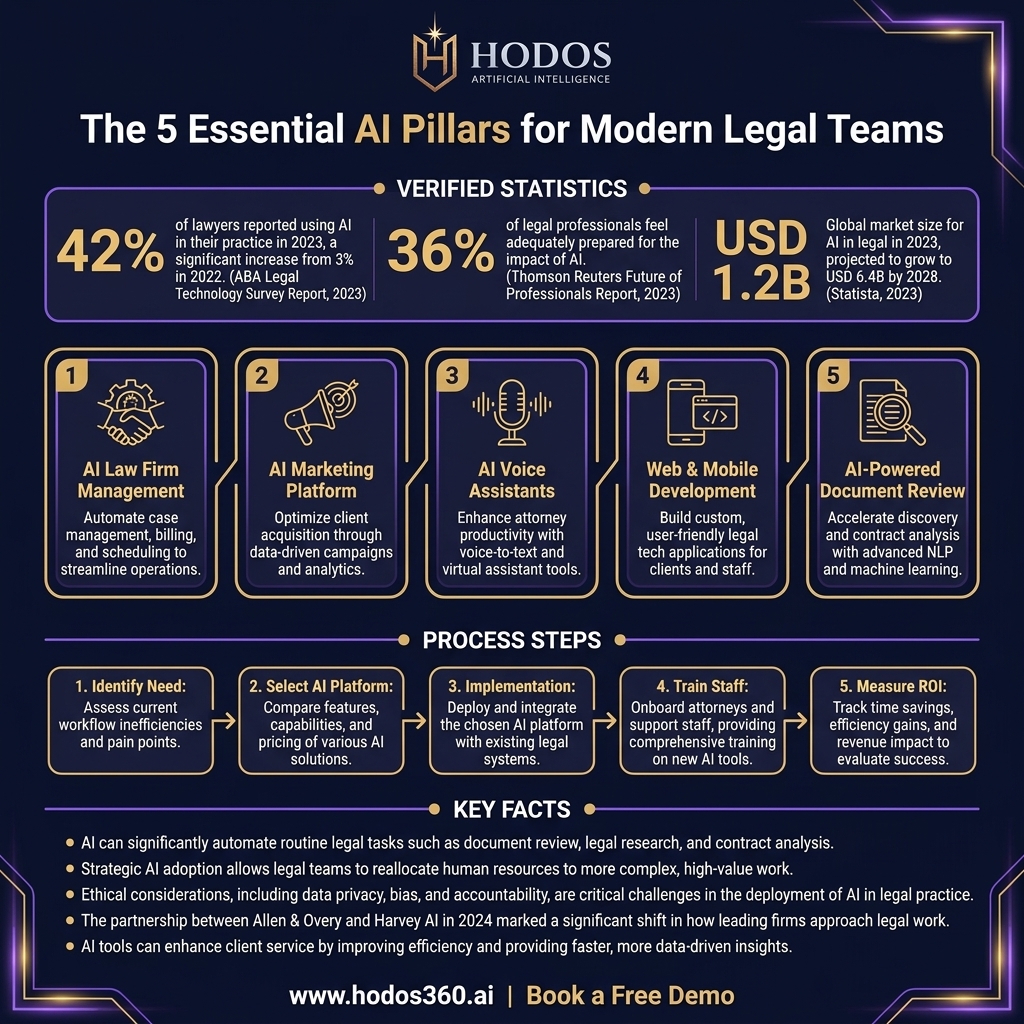
Williams’s dilemma echoes a pervasive sentiment across the legal landscape. The market is saturated with AI tools, each promising revolutionary change, yet many law firms struggle to discern genuine value from hype. The crucial question isn't whether AI will transform the legal industry – it already is – but rather, how to strategically integrate AI to address specific, tangible needs of legal teams. According to a 2023 report by Thomson Reuters, only 36% of legal professionals feel adequately prepared for the impact of AI, highlighting a significant gap between awareness and practical implementation. This disparity often stems from a lack of clarity on which AI applications deliver real productivity gains and which are simply novelties. The challenge for legal professionals is to cut through the noise and identify solutions that genuinely enhance legal workflow, client service, and business development.
This isn't just about adopting new software; it's about fundamentally rethinking legal operations. The conflict isn't between humans and machines, but between stagnation and innovation. Firms like Latham & Watkins, which recently invested heavily in custom AI solutions for litigation support, understand that strategic AI adoption provides a competitive edge, allowing their legal teams to focus on high-value, complex tasks. Conversely, firms that delay risk being outmaneuvered, struggling with inefficiencies that erode profitability and client satisfaction. The insights gleaned from early adopters and industry leaders offer a clear roadmap for identifying the essential AI capabilities that empower legal professionals, streamline processes, and ultimately, redefine success in a rapidly evolving legal market.
Revolutionizing Legal Operations with AI Law Firm Management
At the core of a modern, efficient law practice lies robust firm management, and AI is now redefining its very structure. For years, legal teams grappled with disparate systems for case management, client intake, billing, and document automation, often leading to data silos, errors, and significant time drains. The advent of integrated AI Law Firm Management Systems has changed this narrative dramatically. Take for instance, the journey of Attorney Mark Johnson, managing partner at Johnson & Associates, a boutique IP firm. Faced with escalating administrative costs and a growing caseload, Johnson realized his legal team was spending more time on operational minutiae than on strategic legal work. "Our old system was a bottleneck," Johnson remarked at a recent ABA conference. "Client intake was slow, document generation was manual, and tracking billable hours felt like a chore. We knew we needed a comprehensive solution that could actually tie everything together."
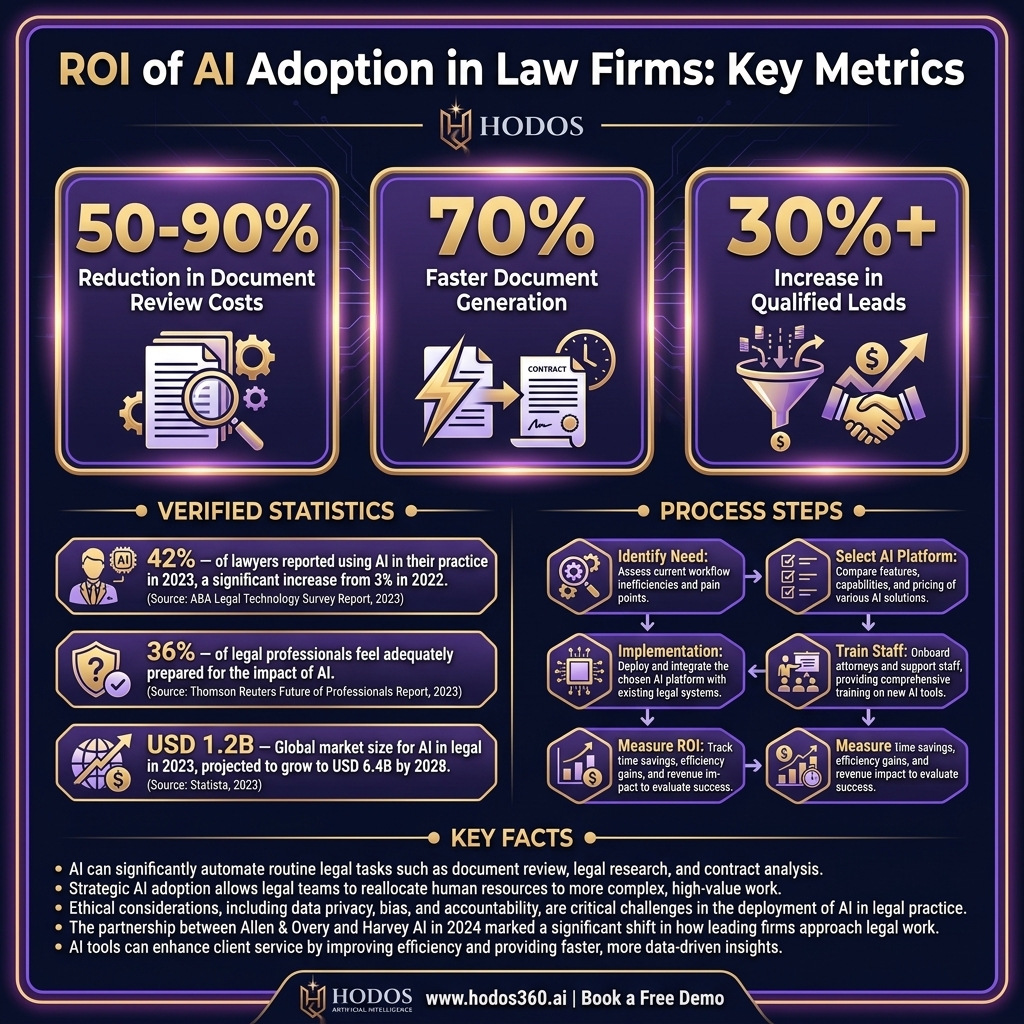
The strategic value of AI in this domain is multifaceted. AI-powered case management streamlines every aspect of a matter, from initial client contact to final resolution. Features like automated task assignment, intelligent deadline tracking, and predictive analytics for case outcomes empower legal professionals to manage their portfolios with unprecedented precision. Learn more about Legal AI Adoption: An Essential Roadmap for Law Firms. Furthermore, AI-driven document automation transforms the creation of contracts, briefs, and pleadings, drastically reducing drafting time and minimizing human error. According to a 2024 Gartner report, firms leveraging AI for document generation can see a reduction in drafting time by up to 70%, freeing up lawyers for more complex analytical work. This efficiency isn't just about saving time; it's about reallocating valuable legal expertise to areas where human judgment and nuanced strategy are indispensable.
Beyond just efficiency, these systems enhance client experience and internal collaboration. AI-powered legal workflows ensure consistency and compliance across all matters, crucial for avoiding pitfalls and maintaining high professional standards. For example, during the enforcement of the EU AI Act, firms with automated compliance workflows could adapt far more swiftly than those relying on manual updates. Client intake, often a tedious process, becomes seamless with AI-driven forms that intelligently gather information and pre-populate relevant documents. Billing, traditionally a source of contention, is made transparent and accurate through AI’s ability to track billable activities and generate detailed invoices automatically. This holistic approach ensures that every member of the legal team, from paralegals to senior partners, operates from a unified, intelligent platform, fostering greater productivity and strategic alignment.
Streamlining Document Review and Discovery with AI
One of the most profound impacts of AI on legal teams has been in the realm of document review and e-discovery. Historically, this process was a monumental undertaking, often requiring armies of junior lawyers to manually sift through millions of documents, a task notorious for its cost, time consumption, and propensity for human error. The arrival of advanced AI tools has revolutionized this bottleneck. Take the case of a major antitrust lawsuit where a firm, representing a tech giant, faced the daunting task of reviewing over 10 million documents. Without AI, such an undertaking would have taken hundreds of thousands of lawyer hours and cost tens of millions of dollars. With AI-powered e-discovery platforms, the legal team could leverage algorithms to quickly identify relevant documents, flag privileged information, and uncover patterns and inconsistencies that might have been missed by human reviewers.
These platforms utilize natural language processing (NLP) and machine learning to understand context, categorize documents, and predict relevance. This doesn't replace the lawyer; rather, it augments their capabilities, allowing them to focus on the truly critical documents and develop more informed legal strategies. A study by McKinsey & Company indicated that AI-driven document review can reduce review costs by 50-90% and accelerate the process by 75-90%. This dramatic increase in productivity allows firms to handle larger, more complex cases with fewer resources, offering a significant competitive advantage. Learn more about Voice Search Optimization: The Ultimate Guide for Law Firms. The ability to quickly surface key evidence and insights can be the deciding factor in litigation, giving firms leveraging AI a distinct edge in settlement negotiations and trial preparation. It fundamentally changes what does it mean to conduct thorough discovery in modern litigation.
Moreover, AI's role extends beyond mere speed. It enhances accuracy and consistency, crucial elements often compromised by human fatigue during extensive manual review. AI algorithms can apply consistent criteria across vast datasets, reducing the risk of missing critical documents or inadvertently disclosing sensitive information. This is particularly vital in compliance-heavy sectors where regulatory scrutiny is intense. As Federal Rules of Civil Procedure continue to evolve regarding e-discovery, the ethical imperative to use efficient and accurate tools becomes paramount. Firms that invest in these capabilities are not just saving money; they are elevating the quality of their legal work and mitigating significant risks for their clients, ensuring a more robust and defensible discovery process.
Driving Growth: The AI Marketing Platform for Law Firms
Beyond internal operations, AI is now a potent force in client acquisition and retention, fundamentally transforming how law firms market themselves. The traditional approach to legal marketing, often reliant on networking and referrals, is now complemented, if not superseded, by sophisticated AI Marketing Platforms. These platforms empower legal professionals to reach wider audiences, generate high-quality leads, and track ROI with unprecedented precision. Consider the firm of Smith & Lee, specializing in personal injury. For years, their marketing efforts were fragmented, with inconsistent social media presence and limited ability to measure campaign effectiveness. Their marketing partner, Emily Chen, recognized the need for a unified, data-driven approach. "We knew we needed to grow," Chen stated at a recent industry webinar, "but our marketing felt like a shot in the dark. AI offered a way to make it strategic and measurable."
An AI Marketing Platform offers an array of tools designed specifically for the legal sector. AI video creation allows firms to produce engaging, professional video content for websites and social media without the need for expensive production teams. This is critical in an era where video content dominates online engagement. Learn more about Voice AI: Essential Legal Assistant Revolutionizing Law Practice. Social media automation ensures a consistent, impactful online presence, scheduling posts, and engaging with potential clients around the clock. More importantly, AI-powered content generation can draft blog posts, articles, and website copy, ensuring SEO optimization and thought leadership. This frees up lawyers from time-consuming content creation, allowing them to focus on their legal practice while the AI maintains a robust digital footprint.
The true power of these platforms lies in their analytics and ROI tracking capabilities. Firms can precisely measure which marketing channels and campaigns are most effective, optimizing their spend and maximizing client acquisition. This data-driven approach removes the guesswork from marketing, providing clear insights into lead qualification, conversion rates, and client lifetime value. For instance, a firm might discover that AI-generated Facebook ads targeting specific demographic groups yield a 30% higher conversion rate than traditional print advertising. This level of insight allows for continuous refinement and improvement of marketing strategies, ensuring that every dollar spent contributes directly to firm growth. The ability for legal teams to leverage these tools means they can compete more effectively for clients, even against larger firms with extensive marketing budgets, by being smarter and more targeted in their outreach.
Elevating Client Service: The Power of AI Voice Assistants
In the competitive legal market, client service is paramount, and the first point of contact often sets the tone. Traditional phone answering services can be costly, inconsistent, and limited by human availability. This is where AI Voice Assistants are making an undeniable impact, transforming the front lines of law firm operations. Imagine a potential client calling at 2 AM with an urgent legal query; without an AI Voice Assistant, that call might go to voicemail, potentially a lost lead. With AI, a sophisticated system provides 24/7 phone answering, ensuring no inquiry goes unanswered. This level of responsiveness is a game-changer for firms seeking to capture every lead and provide immediate support.
These AI assistants are far more than simple answering machines; they are intelligent lead qualification engines. They can engage callers in natural language, ask pertinent questions to understand their legal needs, and even conduct initial conflict checks. For example, a legal professional at a busy criminal defense firm once lamented the time spent by paralegals on initial calls that often didn't result in qualified leads. Implementing an AI Voice Assistant meant that only pre-qualified leads, whose issues aligned with the firm's expertise and capacity, were routed to human staff, dramatically increasing the efficiency of their intake process. Learn more about AI Search Visibility: The Ultimate Guide for Law Firms. They offer multilingual support, breaking down language barriers and expanding a firm's potential client base, a feature increasingly vital in diverse urban centers. This ensures that a firm can serve a broader community, reflecting the demographic shifts seen across the United States, as highlighted by recent Census Bureau data.
Moreover, AI Voice Assistants excel at appointment booking and call routing. They can seamlessly integrate with firm calendars, allowing callers to schedule consultations directly, reducing administrative burden and ensuring attorneys' schedules are optimized. Complex inquiries can be intelligently routed to the appropriate department or lawyer, minimizing transfers and client frustration. This means that a client seeking advice on a real estate matter is directed straight to the real estate team, not through multiple receptionists. The efficiency gained by automating these crucial, yet often time-consuming, tasks allows legal teams to focus their human talent on providing expert legal advice and building deeper client relationships, rather than managing inbound calls. This shift elevates the entire client experience, projecting an image of modernity, efficiency, and unwavering client commitment.
Building Digital Presence: AI-Powered Web & Mobile Development
In today's digital-first world, a law firm's online presence is its virtual storefront, and a poorly designed or outdated website can be a significant liability. AI-powered Web & Mobile Development offers law firms the ability to build sophisticated, high-performing digital platforms without extensive technical expertise or exorbitant costs. For many small to mid-sized firms, the cost and complexity of developing a professional website have been prohibitive, leaving them with generic templates or outdated designs that fail to convert visitors into clients. The promise of AI in this space is to democratize access to cutting-edge web design and functionality.
AI-powered website building tools can analyze a firm's services, target audience, and competitive landscape to generate bespoke website designs tailored to legal industry best practices. These platforms ensure responsive design, meaning the website looks and functions flawlessly across all devices, from desktops to smartphones – a non-negotiable in an era where mobile browsing dominates. More critically, AI integrates robust SEO optimization from the ground up, ensuring the firm's website ranks highly in search engine results for relevant keywords. This proactive approach to SEO is vital for organic client acquisition, as most potential clients begin their legal search online. Learn more about Legal AI Divide: Bridge the Gap, Thrive in 2026's Digital Era. High-converting templates, informed by AI analysis of user behavior, guide visitors seamlessly towards contact forms, consultation bookings, and other conversion goals.
The impact of a superior digital presence on a firm's bottom line cannot be overstated. A well-optimized website acts as a 24/7 marketing and client acquisition tool, continuously generating leads and building credibility. For instance, a family law firm in Florida saw a 40% increase in new client inquiries after overhauling their outdated website with an AI-driven platform that emphasized clear calls to action and personalized content. This isn't just about aesthetics; it's about functionality and strategic advantage. A firm with a modern, AI-optimized website projects professionalism and accessibility, fostering trust with potential clients before they even pick up the phone. This empowers legal teams to leverage their digital assets more effectively, transforming their online presence from a static brochure into a dynamic engine for growth and client engagement.
- ✓Automated Case Management: Streamlines client intake, task assignment, and deadline tracking, reducing administrative burden.
- ✓AI-Powered Document Automation: Generates contracts, briefs, and pleadings rapidly and accurately, minimizing human error and saving valuable time.
- ✓Intelligent E-Discovery & Review: Accelerates document analysis, identifies key evidence, and flags inconsistencies across vast datasets, significantly cutting costs and time.
- ✓Targeted AI Legal Marketing: Leverages AI for content generation, social media automation, and video creation to reach target audiences and track ROI effectively.
- ✓24/7 AI Voice Assistants: Ensures continuous client communication, qualifies leads, books appointments, and routes calls efficiently, enhancing client service.
- ✓SEO-Optimized Web Development: Builds responsive, high-converting websites with integrated AI for superior search engine ranking and lead generation.

Key Takeaways and Strategic Next Steps for Legal Teams
The question of "What Does Your Legal Team Actually Need From AI?" isn't a simple one, but the answer is becoming increasingly clear: a strategic, integrated approach that addresses core operational inefficiencies and capitalizes on growth opportunities. As firms navigate this transformative era, the imperative is to move beyond mere curiosity about AI to purposeful adoption. This means evaluating existing workflows, identifying pain points, and then selecting AI solutions that offer tangible, measurable benefits. The journey of firms like Allen & Overy with Harvey AI, or the individual successes of partners like Sarah Williams and Mark Johnson, underscore a critical truth: AI is not a luxury, but a necessity for firms aiming to remain competitive and client-centric. The ABA's formal guidance on the ethical use of AI, as outlined in recent interpretations of ABA Model Rule 1.1 (Competence), further emphasizes the professional obligation of lawyers to understand and leverage technology for the benefit of their clients.
For legal teams looking to embrace this future, the path forward involves a holistic integration of AI across key service areas. Learn more about Context Matters AI: Essential for Legal Accuracy & Insight. Platforms like HODOS 360 offer a comprehensive suite of AI-powered services—from Law Firm Management and Marketing to Voice Assistants and Web Development—designed to address these exact needs. The goal isn't to replace human expertise but to augment it, freeing up legal professionals to focus on the nuanced legal analysis, strategic thinking, and client relationship building that only humans can provide. By strategically adopting AI, law firms can not only enhance their efficiency and productivity but also elevate the quality of their legal services, ensuring they are well-equipped to thrive in the legal landscape of tomorrow. This is about building a smarter, more resilient practice that is prepared for the challenges and opportunities ahead, ensuring that every member of the legal team is empowered to perform at their best.
Frequently Asked Questions
How can AI improve document review for my legal team?+
AI significantly accelerates document review by using machine learning and natural language processing to identify relevant documents, flag privileged information, and uncover inconsistencies across vast datasets. This reduces manual effort by 50-90%, cuts costs, and frees up lawyers for higher-value analytical tasks, ensuring a more accurate and efficient discovery process.
What kind of ROI can law firms expect from adopting AI marketing platforms?+
Law firms can expect substantial ROI from AI marketing platforms through optimized ad spend, increased lead generation, and improved client conversion rates. AI helps create targeted content, automates social media, and provides precise analytics, allowing firms to identify the most effective strategies and allocate resources efficiently, ultimately boosting client acquisition and revenue.
Are AI Voice Assistants suitable for handling sensitive client information?+
Modern AI Voice Assistants are designed with robust security protocols and compliance measures. While they can handle initial lead qualification and appointment booking, sensitive client information is typically transferred to secure human interaction or encrypted systems. Firms must ensure their chosen AI solution adheres to strict data privacy regulations like HIPAA or GDPR, maintaining client confidentiality.
How does AI-powered website development benefit a law firm's online presence?+
AI-powered website development creates highly optimized, responsive, and aesthetically pleasing websites tailored to legal services. It integrates SEO from the ground up, ensuring higher search engine rankings and increased organic traffic. High-converting templates and AI-driven content generation attract and engage potential clients, transforming the firm's online presence into a powerful lead-generation tool.
Will AI replace lawyers, or what does it mean for legal professionals?+
AI is not designed to replace lawyers but to augment their capabilities, changing what it means to practice law. It automates routine, time-consuming tasks like document review, research, and administrative duties, allowing legal professionals to focus on complex legal analysis, strategy development, and client relationships. AI enhances productivity, accuracy, and efficiency, making lawyers more effective and competitive.