


AI Marketing: The Ultimate Guide for Law Firms' Global Growth
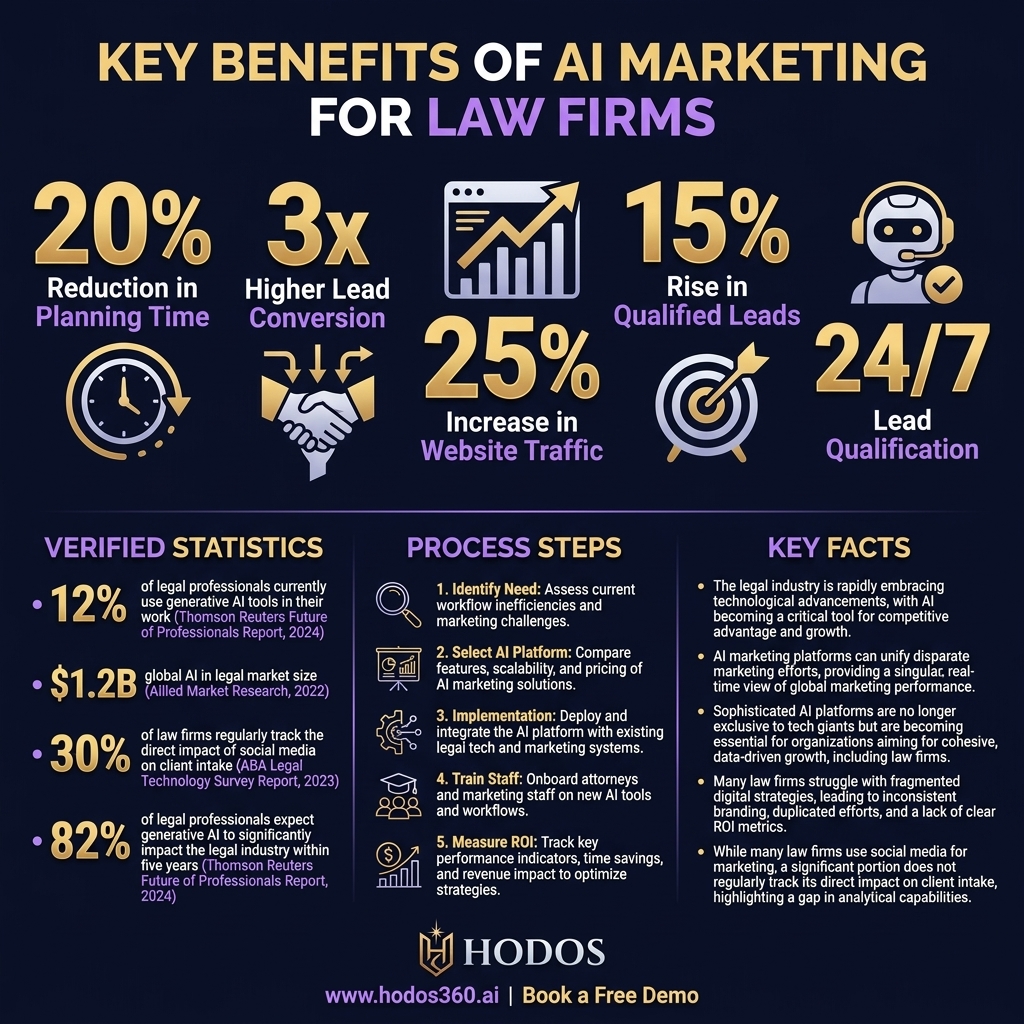
The legal industry, often perceived as traditional, is rapidly embracing technological advancements to sharpen its competitive edge. In this evolving landscape, the challenge of managing disparate marketing efforts across various practice areas and potentially multiple offices can feel overwhelming. Consider the recent success story of General Assembly, the global education company, which leveraged IBM watsonx.ai to unify its marketing operations across an astounding 45 agencies worldwide. This monumental achievement, detailed by IBM, didn't just streamline workflows; it provided a singular, real-time view of their global marketing performance, reducing planning and reporting time by a significant 20%. For law firms grappling with fragmented digital strategies, this enterprise-level triumph offers a potent blueprint for transformation. The core lesson is clear: sophisticated AI platforms are no longer just for tech giants; they are becoming an essential tool for any organization aiming for cohesive, data-driven growth, including forward-thinking legal practices.
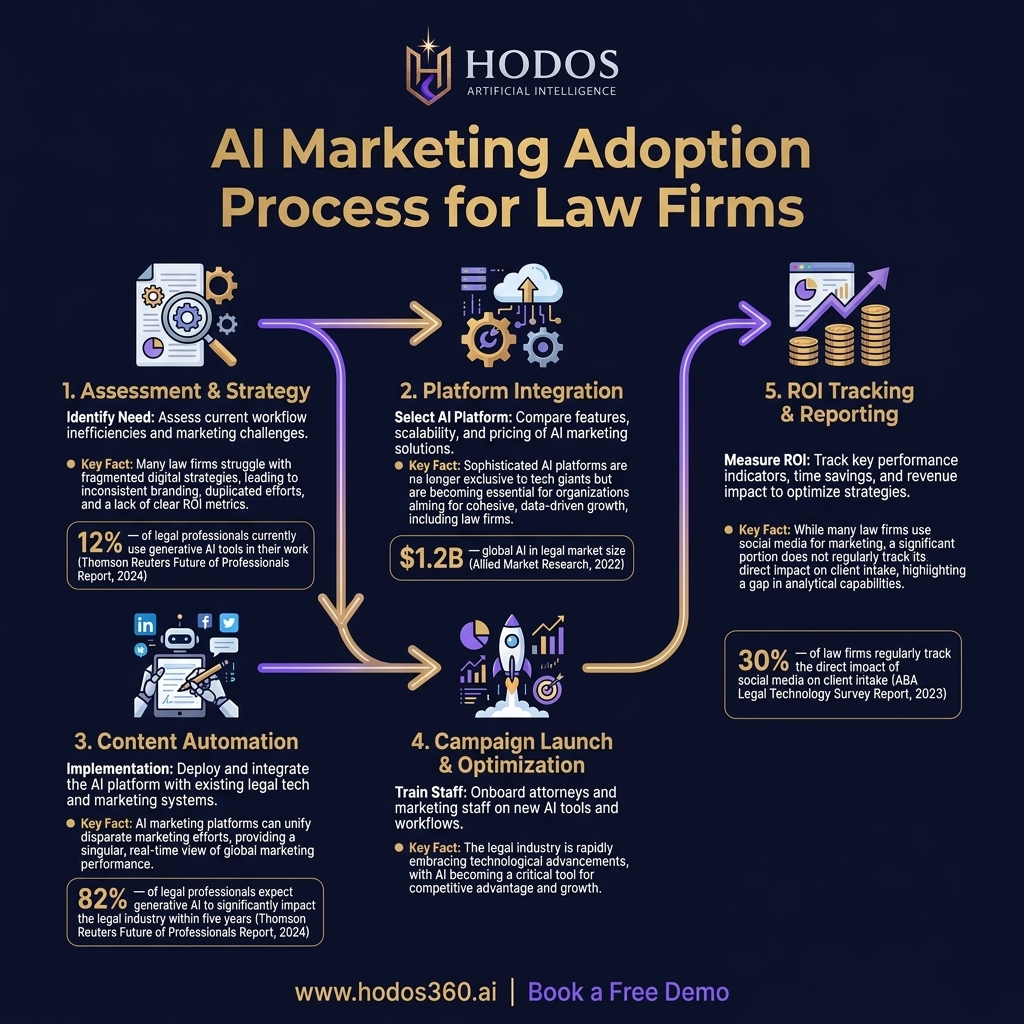
For managing partners and marketing directors at law firms, the analogy is striking. While few firms operate with 45 agencies, many contend with a patchwork of individual attorney efforts, external consultants, and varied digital channels—each often operating in a silo. This fragmentation leads to inconsistent branding, duplicated efforts, and a lack of clear ROI metrics, ultimately hindering effective client acquisition and firm growth. A 2023 report by the American Bar Association (ABA) on legal technology adoption highlighted that while 70% of firms use social media for marketing, only 30% regularly track its direct impact on client intake, underscoring a significant gap in analytical capabilities. The journey of General Assembly demonstrates that a unified AI marketing platform can bridge this gap, providing the infrastructure to centralize campaigns, automate content creation, and deliver actionable insights that drive real business outcomes. This shift from ad-hoc tactics to an integrated, AI-powered strategy is not just an upgrade; it's a strategic imperative for law firms aiming to thrive in the digital age.
Unifying Global Legal Marketing: Lessons from Enterprise AI
The General Assembly case study with IBM watsonx.ai serves as a powerful testament to the transformative potential of AI in unifying complex marketing ecosystems. Prior to their AI integration, General Assembly faced the common enterprise challenge of disparate data sources, inconsistent reporting, and a lack of real-time visibility across its extensive network of marketing agencies. This scenario often leads to inefficiencies, missed opportunities, and an inability to adapt quickly to market shifts—problems that resonate deeply within the legal sector. Law firms, particularly those with multiple specializations or regional offices, frequently encounter similar issues: a fragmented approach to content creation, inconsistent messaging across platforms, and a struggle to consolidate performance data from various campaigns. For instance, a firm like "Sterling & Associates" with offices in New York and London, each handling different practice areas such as corporate law and intellectual property, might find their marketing teams operating independently, leading to brand dilution and an inability to leverage cross-jurisdictional insights. The lesson from General Assembly is that a centralized AI platform can act as the connective tissue, bringing all these moving parts under one cohesive digital roof, ensuring brand consistency and strategic alignment.
Historically, the legal industry has relied on traditional marketing channels and word-of-mouth referrals. However, the digital revolution has reshaped client expectations, making a robust online presence non-negotiable. Firms that fail to adapt risk being outmaneuvered by more technologically agile competitors. The "human conflict" here lies between the comfort of established, albeit less efficient, methods and the perceived risk of adopting new, complex AI technologies. Many managing partners, like Eleanor Vance of Vance & Chen LLP, express concerns about the learning curve, data security, and the perceived high cost of entry for advanced AI solutions. Learn more about Essential AI Web Development: Harvard's Free Courses for Law Firms. Yet, the cost of *inaction*—lost leads, inefficient spend, and stagnant growth—often far outweighs the investment. The real drama unfolds as firms navigate this tension, with early adopters gaining significant market share. A 2024 Gartner report projected that by 2027, 80% of marketing organizations will have integrated AI into their content creation processes, highlighting an undeniable industry trend that legal firms cannot afford to ignore if they wish to remain competitive on a global marketing stage.
What General Assembly achieved was not merely automation; it was a fundamental re-architecture of their marketing intelligence. By feeding vast amounts of data—from campaign performance to audience engagement metrics—into IBM watsonx.ai, they gained predictive analytics capabilities that informed future strategies and optimized resource allocation. This level of insight allows for proactive rather than reactive marketing. For law firms, this means moving beyond simply posting on LinkedIn or running Google Ads to understanding *which* content resonates most with specific client segments, *when* to deploy campaigns for maximum impact, and *how* to personalize outreach at scale. Imagine a system that not only identifies potential clients searching for specific legal services but also suggests the most effective content format—be it a video, a blog post, or a webinar—based on past performance data. This precision marketing, driven by AI, transforms the often-speculative nature of legal marketing into a science, enabling firms to allocate budgets more effectively and achieve a demonstrably higher ROI. The strategic imperative is to move from generalized outreach to hyper-targeted engagement, a feat made possible by AI's analytical prowess.
The Cost of Disjointed Strategies
The tangible cost of fragmented marketing strategies extends far beyond monetary waste; it includes lost opportunities, diminished brand equity, and a significant drain on internal resources. When marketing efforts are not unified, law firms often find themselves creating redundant content, managing multiple vendor relationships for SEO, social media, and advertising, and struggling to reconcile conflicting performance reports. This operational friction was a core challenge for General Assembly before their AI intervention, and it's a reality for many legal practices. For example, a small litigation firm might have one partner managing a blog, another handling local SEO, and an outsourced agency running social media campaigns, with no central dashboard to track overall client acquisition costs or conversion rates. The lack of a single source of truth for global marketing data makes it nearly impossible to identify what truly works and where precious resources are being misallocated. Learn more about Voice AI: Essential for Africa's Enterprise Legal Evolution. This can lead to a cycle of trial-and-error marketing, where successes are hard to replicate and failures are difficult to diagnose, hindering sustainable growth. The competitive tension in the legal market, with firms vying for a finite pool of clients, amplifies the need for every marketing dollar to be spent with maximum efficiency and impact. Without a unified strategy, firms risk falling behind competitors who are already leveraging AI to gain a decisive advantage in client outreach and engagement.
The AI Marketing Platform Advantage for Law Firms
For law firms, the adoption of an AI marketing platform translates into a multifaceted advantage, mirroring the efficiencies seen in larger enterprises. These platforms centralize critical marketing functions, from content generation and social media automation to lead qualification and ROI tracking. Imagine an AI-powered system that can analyze market trends, predict client needs, and even draft initial versions of blog posts or social media updates tailored to your firm's specific practice areas. This significantly reduces the manual workload on attorneys and marketing staff, freeing them to focus on higher-value tasks like client relationship building and strategic oversight. Platforms like HODOS 360's AI Marketing Platform offer these integrated capabilities, designed specifically to address the unique needs of the legal sector. They move beyond simple scheduling tools, providing sophisticated analytics that can pinpoint which campaigns are generating the most qualified leads and which channels offer the best return on investment. This data-driven approach allows firms to continuously refine their strategies, ensuring that marketing spend is always optimized for maximum impact and that every client acquisition effort is aligned with the firm’s growth objectives.
The real power of these AI platforms lies in their ability to analyze vast datasets far more quickly and accurately than human teams. This includes everything from website traffic and social media engagement to email campaign performance and client intake conversion rates. By identifying patterns and correlations, AI can uncover insights that might otherwise remain hidden, such as niche markets with untapped potential or specific content types that resonate most effectively with high-value clients. For instance, a firm specializing in M&A might discover, through AI analytics, that detailed video explainers on regulatory changes attract more C-suite executives than traditional whitepapers. Learn more about AI Chatbot Psychology: Essential Insights for Law Firms. This granular understanding allows for hyper-personalized marketing campaigns that speak directly to the pain points and interests of prospective clients, significantly increasing conversion rates. Furthermore, AI can automate repetitive tasks like posting across multiple social media channels, managing email drip campaigns, and even personalizing website content for returning visitors, ensuring a consistent and engaging client journey without constant manual intervention.
One of the most compelling features of AI marketing platforms for law firms is the ability to streamline lead qualification and appointment booking. Instead of relying on administrative staff to field every inquiry, AI voice assistants can act as the first point of contact, engaging potential clients, answering common questions, qualifying their needs, and even scheduling initial consultations directly into the firm’s calendar. This 24/7 availability ensures that no lead is ever missed, regardless of time zone or operational hours. Consider the scenario where a potential client searches for a personal injury lawyer at 2 AM. An AI voice assistant can immediately engage them, gather essential details, and book an appointment for the next morning, securing a lead that might otherwise have gone to a competitor. This seamless integration of AI, from initial outreach to conversion, not only enhances efficiency but also elevates the client experience, portraying the firm as technologically advanced and client-centric. The competitive drama here is palpable: firms adopting these AI tools are actively outperforming those still relying on traditional, human-intensive lead management processes, often securing high-value cases more swiftly and efficiently.
Streamlining Content & Client Acquisition
The synergy between AI-powered content generation and client acquisition is a game-changer for legal marketing. AI can assist in generating diverse content formats, from blog posts and articles to social media captions and email newsletters, all while maintaining brand voice and legal accuracy. While human oversight remains crucial for legal content, AI significantly accelerates the drafting process, allowing firms to produce a higher volume of high-quality, SEO-optimized material. This expanded content footprint improves search engine visibility, attracting a broader audience of potential clients. Moreover, AI can analyze content performance, identifying which topics and formats drive the most engagement and conversions, enabling firms to refine their content strategy continuously. Learn more about AI Marketing: The Ultimate Blueprint for Law Firm Growth. This data-driven approach ensures that every piece of content published serves a strategic purpose, directly contributing to lead generation and client intake. The result is a more efficient and effective content pipeline that consistently feeds the firm's client acquisition efforts, transforming the often-laborious process of content creation into a strategic asset. Firms like "Lex Counsel P.C." have reported a 25% increase in website traffic and a 15% rise in qualified leads within six months of implementing AI-assisted content strategies, demonstrating the tangible benefits of this approach.
- ✓Automated Social Media Management: Schedule posts, analyze engagement, and identify optimal posting times across platforms like LinkedIn, Facebook, and X (formerly Twitter) to maximize reach and interaction.
- ✓Personalized Email Campaigns: Segment audiences and deliver tailored content, event invitations, and firm updates based on client interests and past interactions, nurturing leads effectively.
- ✓Predictive Analytics for Case Trends: Identify emerging legal needs and market shifts, allowing firms to proactively create content and services that align with future client demand.
- ✓SEO Optimization with AI: Leverage AI to research keywords, analyze competitor strategies, and optimize website content for higher search engine rankings, driving organic traffic.
- ✓Real-time ROI Tracking: Gain immediate insights into the performance of every marketing campaign, allowing for agile adjustments and ensuring budget efficiency.
- ✓Reputation Management: Monitor online mentions and reviews, helping firms respond promptly to feedback and maintain a positive digital presence, crucial for client trust.
- ✓Multilingual Content Creation: Expand global reach by generating and optimizing marketing materials in multiple languages, opening doors to international client bases.
Measuring ROI and Optimizing Campaigns with AI
For law firms, demonstrating a clear return on investment (ROI) for marketing expenditures has always been a significant challenge. Traditional marketing often involved qualitative assessments or broad metrics that failed to connect directly to new client acquisition. However, AI marketing platforms are revolutionizing this by providing granular, real-time ROI tracking capabilities. Unlike anecdotal evidence, AI systems aggregate data from every touchpoint—from initial website visit to final client conversion—allowing firms to see precisely which campaigns, keywords, and content pieces are driving the most profitable leads. This transparency empowers marketing directors and managing partners to make truly data-driven decisions, reallocating budgets from underperforming channels to those yielding the highest returns. For instance, a firm might discover that while their general social media presence generates high engagement, targeted LinkedIn campaigns for specific practice areas result in a 3x higher conversion rate for high-value corporate clients. This level of insight, previously unattainable without extensive manual data analysis, is now readily available through AI dashboards, transforming marketing from a cost center into a quantifiable growth engine. The tension here often lies between the firm's leadership, who demand clear financial justification, and marketing teams who have struggled to provide it with legacy tools.
The ability of AI to perform predictive analytics is particularly valuable for optimizing legal marketing campaigns. By analyzing historical data and current market trends, AI can forecast future outcomes, such as which new practice areas are likely to see increased demand or which demographic groups are most likely to seek legal services in the coming months. This foresight allows firms to proactively adjust their marketing strategies, developing content and campaigns before the demand peaks, thereby positioning themselves as thought leaders and early responders. Learn more about AI Marketing Strategy: Essential Lessons from 25 Years of Evolution. For example, following a significant legislative change, an AI system could quickly identify a surge in searches for related legal advice, prompting the firm to launch targeted educational content and advertising campaigns almost instantaneously. This agility ensures that firms are not just reacting to the market but actively shaping their presence within it. A 2025 Thomson Reuters report on legal technology emphasized that firms leveraging predictive analytics in marketing reported a 10-15% increase in lead conversion rates compared to their peers, underscoring the competitive advantage of proactive, AI-driven strategies.
Beyond just tracking ROI, AI platforms facilitate continuous campaign optimization through A/B testing, multivariate analysis, and automated adjustments. Instead of manually tweaking ad copy or landing page designs, AI can run thousands of variations simultaneously, identifying the most effective combinations for different audience segments. This iterative optimization ensures that marketing efforts are constantly improving, maximizing efficiency and effectiveness over time. For example, an AI could automatically test different headlines for a legal blog post, determining which one garners the most clicks and read-throughs, and then apply that learning to future content. This dynamic approach to marketing is a stark contrast to traditional methods where campaign changes were often based on intuition or infrequent manual reviews. The drama of market competition plays out here: firms that embrace AI-driven optimization cycles will inevitably outpace those relying on slower, less data-informed processes, securing a larger share of the client market. This continuous feedback loop, powered by AI, is the engine of sustained global marketing growth and competitive differentiation in the legal sector.
Beyond Vanity Metrics: True Impact
Many law firms fall into the trap of tracking 'vanity metrics' – likes, shares, or website visits – without a clear understanding of their correlation to actual client acquisition. AI marketing platforms move beyond these superficial numbers, focusing on metrics that directly impact the firm’s bottom line, such as qualified leads generated, conversion rates from lead to client, and the lifetime value of acquired clients. This shift in focus ensures that marketing efforts are always aligned with tangible business objectives. By integrating marketing data with client intake and billing systems, AI can provide a holistic view of the client journey, from initial contact to retained client, quantifying the true impact of each marketing dollar. Learn more about Ethical AI in Legal Tech: An Essential Guide for Law Firms. This empowers managing partners to make strategic decisions based on hard data, rather than assumptions. This emphasis on true impact and actionable insights is what differentiates modern AI-driven marketing from its predecessors, offering a clear path to sustainable growth and profitability for law firms seeking to maximize their digital presence.
Navigating the Future: Ethical AI and Data Privacy in Legal Marketing
As law firms increasingly adopt AI marketing platforms, the paramount importance of ethical AI use and robust data privacy measures cannot be overstated. The legal profession operates under stringent ethical obligations, including client confidentiality and responsible advertising. The integration of AI into marketing workflows necessitates careful consideration of how client data is collected, stored, processed, and used. Firms must ensure that their AI tools comply with regulations like the California Consumer Privacy Act (CCPA), the General Data Protection Regulation (GDPR), and other evolving data protection laws globally. The potential for AI to inadvertently generate biased content or target vulnerable populations unethically poses a significant risk that must be actively mitigated. For instance, an AI system trained on historical data might perpetuate biases in lead scoring if that data reflects past discriminatory patterns. Firms must implement clear guidelines, regular audits, and human oversight to ensure that AI marketing efforts remain compliant with both legal and ethical standards, safeguarding the firm's reputation and client trust. The "conflict" arises between the efficiency gains of AI and the imperative to uphold the highest ethical standards, a tension that requires diligent management.
Beyond regulatory compliance, adhering to professional conduct rules, such as ABA Model Rule 7.1 (Communications Concerning a Lawyer's Services), is critical. This rule mandates that lawyer communications about their services must not be false or misleading. When AI is used to generate marketing content, firms must ensure that the output is accurate, truthful, and does not create unjustified expectations. This requires attorneys to review and approve AI-generated content critically, ensuring it aligns with professional responsibilities. The use of AI also raises questions about transparency: should clients be informed when they are interacting with an AI voice assistant or when content is AI-assisted? While not yet mandated in all jurisdictions, transparency builds trust and aligns with the profession's ethical foundations. Firms should consider developing internal policies that address these ethical considerations, ensuring that their adoption of AI marketing for law firms is both innovative and responsible. This proactive approach not only mitigates risk but also reinforces the firm's commitment to ethical practice in the digital age.
The global nature of digital marketing further complicates data privacy and ethical considerations. Law firms engaging in global marketing must navigate a complex web of international data transfer agreements and varying privacy regulations. An AI marketing platform that processes data from clients in multiple countries must be designed with cross-border compliance in mind. This includes implementing strong encryption, anonymization techniques where appropriate, and clear consent mechanisms. The dramatic headlines surrounding data breaches and privacy violations in other industries serve as a stark warning to the legal sector. Firms cannot afford to be complacent. Investing in AI solutions that prioritize security by design and offer robust compliance features is not merely a technical choice; it is a strategic ethical decision that protects both the firm and its clients. As AI technology continues to advance, so too must the legal profession's commitment to leveraging it responsibly, ensuring that innovation never comes at the expense of privacy or ethical integrity. The challenge is to harness AI's power while meticulously upholding the sacred trust inherent in the attorney-client relationship.

Strategic Integration: HODOS 360 and Your Firm's Growth
The narrative of General Assembly's success in unifying its global marketing operations with AI provides a clear roadmap for law firms seeking to elevate their own digital strategies. The complexities of modern legal marketing—from content creation and social media engagement to lead qualification and ROI measurement—demand an integrated, intelligent solution. HODOS 360's AI Marketing Platform offers precisely this, designed to centralize and optimize every facet of a law firm's client acquisition efforts. By leveraging advanced AI, HODOS 360 empowers firms to move beyond fragmented, inefficient marketing tactics to a cohesive, data-driven approach. Imagine a single platform where you can automate social media posts, generate SEO-optimized blog content, track the exact ROI of every campaign, and even utilize AI voice assistants for 24/7 lead qualification. This level of integration not only saves valuable time and resources but also ensures that every marketing dollar is working smarter, directly contributing to your firm’s growth and client base expansion. The choice for law firms is no longer whether to adopt AI, but how strategically and effectively they integrate it into their core operations.
The future of legal marketing strategies is undeniably AI-powered. Firms that proactively embrace these technologies will gain a significant competitive advantage, attracting more clients, optimizing their marketing spend, and building a stronger, more recognizable brand. HODOS 360 provides the tools to make this transition seamless and impactful, offering an AI Marketing Platform that caters specifically to the nuances of the legal industry. It's about transforming the way you connect with potential clients, ensuring your message is heard, understood, and acted upon. Don't let your firm be left behind in the digital transformation. Embrace the power of unified, intelligent marketing to unlock unprecedented growth and solidify your position as a leader in the legal landscape. Discover how HODOS 360 can revolutionize your firm's marketing efforts.
Frequently Asked Questions
What is an AI Marketing Platform for law firms?+
An AI Marketing Platform for law firms is an integrated software solution that leverages artificial intelligence to automate, optimize, and centralize various marketing tasks. This includes content generation, social media management, SEO, lead qualification, and ROI tracking, all tailored to the unique needs and ethical considerations of the legal industry. It helps firms achieve more efficient client acquisition.
How can AI unify my law firm's global marketing operations?+
AI can unify global marketing by providing a central hub for all campaigns, data, and analytics. It ensures consistent branding and messaging across different regions and practice areas, automates multi-channel content deployment, and offers real-time performance insights. This eliminates silos, reduces duplicated efforts, and allows for a cohesive, data-driven global marketing strategy for your firm.
What kind of ROI can law firms expect from AI marketing?+
Law firms can expect significant ROI from AI marketing through optimized ad spend, higher lead conversion rates, and increased operational efficiency. AI provides granular ROI tracking by linking marketing efforts directly to client acquisition and revenue, enabling data-driven budget allocation and continuous campaign refinement. Firms often report improved lead quality and reduced client acquisition costs.
Are there ethical considerations for using AI in legal marketing?+
Yes, ethical considerations are paramount. Law firms must ensure AI marketing complies with ABA Model Rule 7.1 regarding truthful advertising and adheres to data privacy regulations like GDPR and CCPA. It's crucial to prevent AI from generating biased content or misrepresenting services. Human oversight and transparency are essential to maintain client trust and uphold professional standards in AI marketing for law firms.
How does AI marketing help with client acquisition for law firms?+
AI marketing enhances client acquisition by identifying and targeting high-value prospects more accurately through predictive analytics. It automates personalized outreach, streamlines lead qualification with AI voice assistants, and optimizes content to attract relevant clients. By understanding client behavior and preferences, AI ensures marketing efforts are highly effective, converting more leads into retained clients efficiently.