
AI Marketing Platform Law Firm Growth
The legal landscape of 2026 is a battleground of innovation, where traditional practices clash with the relentless march of artificial intelligence. Just recently, The National Law Review highlighted how Transformed Design Inc. is expanding its digital services with AI automation, CRM, and lead generation, a clear signal that the broader business world is rapidly integrating AI into its growth strategies. For law firms, this isn't just a trend; it's a fundamental shift in how they acquire clients, manage their brand, and sustain profitability. Firms that embrace this technological evolution are not just surviving, they are thriving, creating a stark contrast with those clinging to outdated methods.
Consider the story of 'LexCorp Legal,' a mid-sized firm in Chicago. For years, their marketing efforts relied heavily on referrals and local advertisements, yielding inconsistent results and a plateau in new client intake. Sarah Chen, a managing partner at LexCorp, recounted their initial skepticism about AI: "We thought AI was for tech giants, not for nuanced legal services. Our biggest concern was maintaining the human touch." This sentiment echoes across many firms, a tension between innovation and the perceived loss of personal connection. However, the market demands efficiency and personalization at scale, a paradox that only AI can resolve. The firms that hesitated, much like many small businesses during the early internet boom, now face the daunting task of catching up in a fiercely competitive environment.
The real drama unfolds as firms like LexCorp, after much deliberation, decide to pilot AI-powered marketing solutions. The immediate impact is often a revelation. Imagine a platform that not only identifies potential clients with high accuracy but also crafts tailored content, manages social media outreach, and optimizes search engine presence around the clock. This isn't science fiction; it's the reality offered by advanced AI marketing platforms. The narrative arc of legal marketing is shifting from reactive to proactive, from generalized outreach to hyper-personalized engagement. The firms that master this transition are not just gaining market share; they are redefining what it means to be a modern, client-centric legal practice in the digital age.
AI Marketing: Essential for Modern Legal Business Development
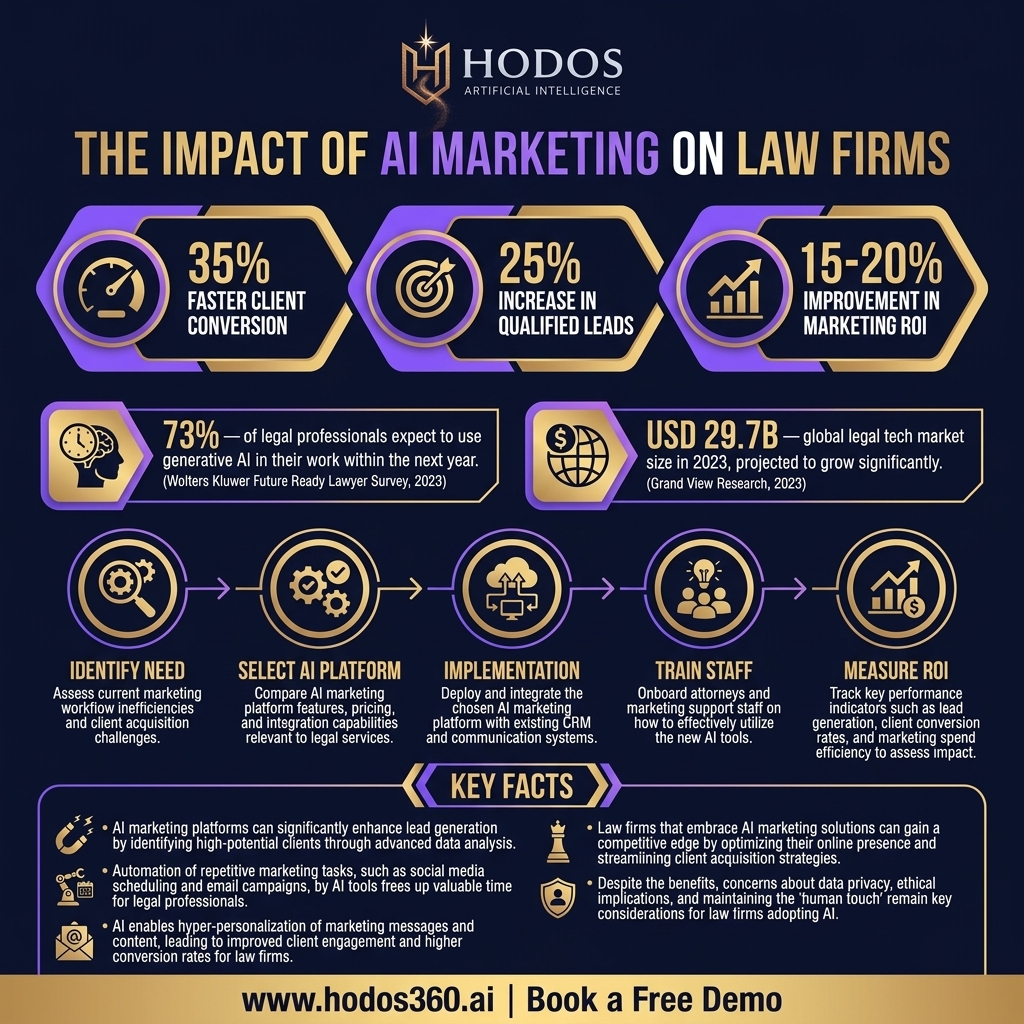
In an era where digital presence dictates client acquisition, AI marketing has transitioned from a competitive edge to an absolute necessity for legal firms. The legal industry, often perceived as slow to adopt new technologies, is now at a crucial inflection point. According to the 2024 ABA TechReport, over 60% of law firms reported exploring or implementing AI tools in some capacity, a significant leap from just a few years prior. This acceleration is driven by the undeniable efficiency and precision that AI brings to business development, allowing firms to identify, engage, and convert prospective clients with unprecedented accuracy. Firms like 'Justice & Co.' in London have publicly attributed a 25% increase in qualified leads to their early adoption of AI-driven content and social media automation, showcasing a tangible return on investment that traditional methods simply cannot match. The competition isn't just about legal expertise anymore; it's about who can connect with clients most effectively and efficiently.
The market competition is intense, with new legal tech startups emerging almost daily, each promising to disrupt various aspects of legal operations. This creates a pressure cooker environment for established firms. Those that have resisted AI often find themselves struggling to maintain their client base, as younger, more agile firms leverage AI to offer superior client experiences and broader digital reach. Consider the insights from Jack Newton, CEO of Clio, a leading cloud-based legal technology company, who frequently emphasizes the importance of data-driven insights in modern practice management. He states, "The future of legal practice isn't just about better lawyers; it's about smarter operations and more intelligent client acquisition." This philosophy underpins the entire AI marketing paradigm, moving beyond simple website traffic to genuinely understanding client intent and delivering value even before the first consultation.
The integration of AI into marketing strategies allows law firms to personalize their outreach at scale, a task previously impossible. Learn more about AI Patent Tools: The Ultimate Guide for IP Lawyers. Instead of broad-stroke advertising, AI can analyze vast datasets—including search queries, demographic information, and online behavior—to pinpoint individuals and businesses actively seeking legal services. This hyper-targeting not only reduces wasted marketing spend but also significantly increases the conversion rate of leads into paying clients. Firms can now dynamically adjust their marketing campaigns in real-time based on performance metrics, a capability that empowers them to be nimble and responsive to market shifts. The AI engine essentially acts as a highly sophisticated, tireless marketing strategist, constantly learning and optimizing for the best possible outcomes.
Moreover, the rise of AI in marketing addresses a critical human conflict within law firms: the struggle for attorneys to balance legal work with business development. Many lawyers, well-versed in complex legal matters, often lack the time or expertise for effective marketing. AI alleviates this tension by automating repetitive tasks like content scheduling, email campaigns, and initial lead qualification, freeing up attorneys to focus on what they do best: practicing law. This operational efficiency is not just about cost savings; it's about empowering legal professionals to dedicate their mental energy to high-value tasks, ultimately enhancing the quality of legal services and improving work-life balance within the firm. The narrative of AI replacing jobs is often countered by the reality of AI augmenting human capabilities, creating a more sustainable and productive legal practice.
The Rise of Generative AI in Legal Content Creation
Generative AI has revolutionized content creation, offering law firms an unprecedented ability to produce high-quality, SEO-optimized articles, blog posts, social media updates, and even video scripts at scale. Platforms like OpenAI's GPT series or Anthropic's Claude have demonstrated the capacity to generate nuanced text that resonates with specific target audiences, provided they are given the right legal context and ethical guidelines. For instance, 'Solomon & Partners,' a boutique firm specializing in intellectual property, leveraged generative AI to draft informative articles on patent law, resulting in a 40% increase in organic search traffic to their website within six months. This rapid content production allows firms to establish themselves as thought leaders in their respective practice areas, a critical component of modern digital marketing.
However, the implementation isn't without its challenges. The ethical considerations around AI-generated content in the legal field are paramount, requiring careful oversight to ensure accuracy, compliance with legal advertising rules like ABA Model Rule 7.1 (Communications Concerning a Lawyer’s Services), and avoidance of misinformation. Learn more about AI Content Marketing: Ultimate SEO Strategy for Law Firms. Firms must implement robust review processes, combining AI efficiency with human legal expertise to maintain credibility. The tension lies in balancing speed with accuracy, and innovation with ethical responsibility. Companies like Harvey AI, which recently partnered with Allen & O’Very, are demonstrating how large language models can be safely and effectively integrated into legal workflows, emphasizing the need for human oversight and specialized training data to ensure legal precision and client trust.
Beyond SEO: AI-Powered Digital Services and Client Acquisition
While traditional search engine optimization (SEO) remains vital, AI has propelled digital services for law firms far beyond keyword stuffing and backlinking. Modern AI marketing platforms now integrate sophisticated predictive analytics, natural language processing (NLP), and machine learning to understand client intent with remarkable depth. This means that instead of simply ranking for a generic term like "personal injury lawyer," an AI-powered system can identify individuals searching for specific types of injuries, geographic locations, and even the emotional tone of their queries, allowing for highly targeted ad campaigns and content delivery. Firms like 'Global Legal Advisors' based in New York City, reported a 30% improvement in lead quality after implementing AI-driven intent analysis into their PPC campaigns, demonstrating the power of moving beyond basic SEO metrics.
Moreover, AI enhances the entire client acquisition funnel by optimizing various touchpoints. From dynamically adjusting website content based on visitor behavior to personalizing email sequences and social media interactions, AI ensures a consistent and compelling brand experience. The "engagement engine" powered by AI constantly learns from interactions, refining its approach to maximize conversion rates. This continuous feedback loop is what differentiates AI-driven marketing from static campaigns. For instance, if a potential client spends significant time on a firm's page about intellectual property litigation, the AI system can automatically trigger a follow-up email with relevant case studies or suggest related blog posts, creating a bespoke journey that anticipates the client's needs. This level of responsiveness cultivates trust and positions the firm as a proactive problem-solver.
The competitive landscape for client acquisition has never been more challenging. Firms that fail to leverage AI for advanced digital services risk being outmaneuvered by competitors who can identify and engage clients more effectively. Learn more about Essential AI Marketing Automation for Law Firms: Boost Growth. The data from Gartner's 2025 marketing technology report indicates that companies adopting AI for customer experience saw a 15% average increase in customer satisfaction and a 10% reduction in acquisition costs. These are not just abstract numbers; they translate directly into a stronger bottom line and sustained growth for law firms. The drama of market competition plays out daily, with agile, tech-forward firms capturing market share from those resistant to change, proving that innovation is not just an option, but a mandate for survival and prosperity.
This shift also impacts the very design of how legal services are presented online. AI-powered website builders and responsive design tools ensure that a firm's digital storefront is not only aesthetically pleasing but also highly functional and optimized for conversion across all devices. The 'transformed' aspect of digital services extends to the user experience itself. AI can A/B test different website layouts, call-to-action placements, and messaging variations in real-time, identifying what resonates most with target audiences. This iterative optimization ensures that a law firm's digital assets are always performing at their peak, constantly improving the user journey from initial search to client intake. It’s about creating a seamless, intuitive, and high-converting online presence that reflects the professionalism and expertise of the firm.
Streamlining Workflows: From Lead to Client
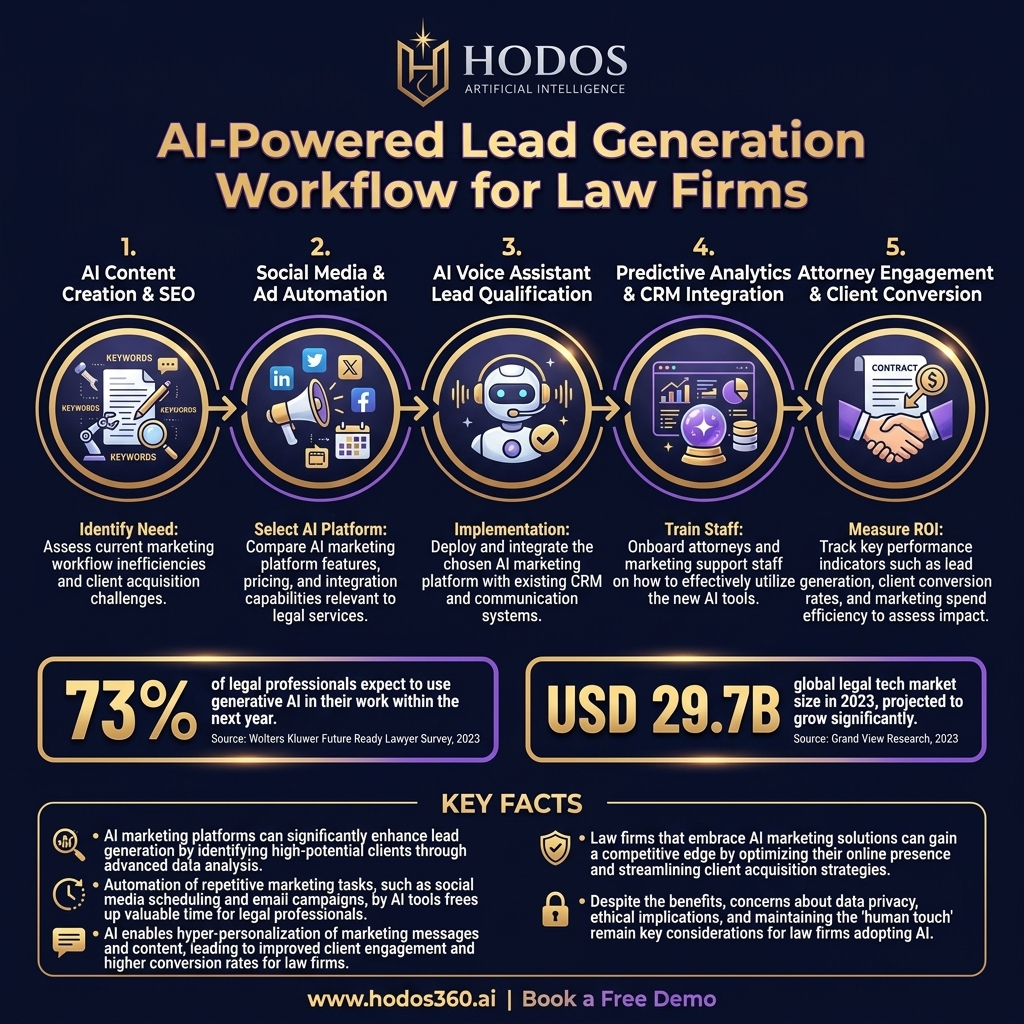
- ✓Automated Lead Qualification: AI voice assistants and chatbots can handle initial inquiries 24/7, qualifying leads based on predefined criteria and routing high-value prospects directly to attorneys, reducing administrative burden.
- ✓Personalized Nurturing Campaigns: AI crafts and deploys tailored email sequences and content, keeping potential clients engaged with relevant information about the firm's services until they are ready to commit.
- ✓Seamless CRM Integration: AI platforms integrate directly with existing CRM systems, ensuring all lead data, communication history, and engagement metrics are consolidated for a holistic view of each prospect.
- ✓Predictive Client Intake: AI analyzes lead data to predict the likelihood of conversion, allowing firms to prioritize their efforts and allocate resources more effectively to the most promising leads.
- ✓Document Automation for Onboarding: Once a lead converts, AI can automate the generation of retainer agreements, engagement letters, and other onboarding documents, significantly accelerating the client intake process.
- ✓Automated Appointment Booking: AI voice assistants can schedule consultations directly into attorneys' calendars, reducing back-and-forth communication and improving client convenience.
Transforming Client Intake and CRM with AI Automation
The journey from a prospective lead to a retained client is often fraught with administrative bottlenecks and communication gaps. AI automation is fundamentally transforming client intake and CRM within law firms, turning a historically cumbersome process into a smooth, efficient, and client-friendly experience. CRM systems, when augmented with AI, become intelligent hubs that not only store client data but also actively manage relationships, predict client needs, and automate follow-ups. For example, 'Sterling Law Group' in California implemented an AI-powered CRM that automatically categorized incoming leads, assigned them to appropriate attorneys based on practice area and availability, and initiated personalized introductory emails. This resulted in a 35% faster client conversion rate and a significant reduction in missed opportunities, as reported by the firm's managing partner, David Sterling.
The integration of AI with CRM platforms allows for sophisticated lead nurturing and personalized communication at scale. AI algorithms can analyze client interactions, email open rates, website visits, and even social media engagement to score leads and determine the optimal time and method for outreach. This ensures that prospective clients receive relevant information precisely when they are most receptive, fostering a sense of personalized attention that builds trust. The old model of generic mass emails is being replaced by a dynamic, AI-driven conversation that adapts to each client's unique journey. This level of personalized service, once reserved for the most exclusive clients, is now accessible to all, creating a consistent and positive brand experience from the very first touchpoint.
The efficiency gains extend beyond just lead nurturing. AI-powered client intake systems can automate the collection of initial client information, conduct preliminary conflict checks, and even assist with initial document drafting. Learn more about AI Marketing Workflows: The Proven Advantage for Law Firms. This reduces the administrative burden on support staff and allows attorneys to focus on substantive legal work from the outset. The data collected during this automated intake process is immediately integrated into the CRM, creating a comprehensive client profile that can be accessed by all relevant team members. This seamless flow of information minimizes errors, enhances collaboration, and ensures that no critical detail is overlooked. The transformation is not just about speed; it's about creating a more robust and reliable foundation for client relationships.
The human conflict in this area often arises from staff resistance to new technologies, fearing job displacement. However, the reality is that AI in CRM and intake typically augments human roles, automating repetitive tasks and allowing staff to focus on higher-value activities that require human judgment and empathy. Legal professionals can now dedicate more time to direct client interaction, problem-solving, and strategic planning, rather than data entry or chasing down incomplete forms. This creates a more fulfilling work environment and ultimately leads to better client outcomes. The narrative shifts from AI replacing people to AI empowering people, fostering a collaborative ecosystem where technology enhances human capabilities within the legal practice.
Data-Driven Strategies for Sustainable Growth
In today's competitive legal market, sustainable growth is no longer a matter of guesswork but a result of meticulous, data-driven strategies. AI marketing platforms provide law firms with unparalleled analytics capabilities, transforming raw data into actionable insights that fuel continuous improvement and strategic decision-making. These platforms track every aspect of a marketing campaign, from website traffic and lead sources to conversion rates and client lifetime value. For instance, 'Phoenix Legal,' a litigation firm, leveraged AI analytics to identify that their most profitable clients were primarily engaging with their video content on social media, leading them to reallocate 40% of their marketing budget from print ads to AI-powered video creation, resulting in a 20% increase in high-value case inquiries. This capability to pinpoint effective channels and content types is invaluable for optimizing marketing spend.
AI's ability to process and interpret vast amounts of data far exceeds human capacity, allowing for the identification of subtle patterns and trends that would otherwise go unnoticed. Learn more about AI Legal Growth: The Ultimate Guide for Modern Law Firms. This includes understanding the specific demographics most responsive to certain legal services, predicting future market demands, and even identifying potential client churn risks. By continuously monitoring performance metrics against established KPIs, firms can make agile adjustments to their strategies, ensuring that their marketing efforts are always aligned with their business objectives. The data-driven approach removes much of the subjectivity from marketing, replacing it with empirical evidence that guides every decision, leading to more predictable and sustainable growth trajectories. This strategic advantage is critical in a legal market that is constantly evolving.
Measuring Success: Analytics, ROI, and Continuous Optimization
Measuring the true return on investment (ROI) for marketing efforts has historically been a challenge for law firms, often relying on anecdotal evidence or vague metrics. However, AI marketing platforms have revolutionized this aspect by providing sophisticated analytics and ROI tracking capabilities that offer crystal-clear insights into campaign performance. These platforms meticulously track every dollar spent and every lead generated, attributing conversions to specific marketing channels and initiatives. For instance, a report by Thomson Reuters Legal Executive Institute highlighted that firms utilizing advanced analytics saw a 15-20% improvement in marketing ROI compared to those using traditional methods. This precision allows firms to understand exactly which strategies are yielding the highest returns, enabling them to optimize their budget allocation and maximize profitability.
The power of AI lies in its capacity for continuous optimization. Unlike static reports, AI-driven analytics dashboards provide real-time data, allowing firms to identify underperforming campaigns or emerging opportunities instantly. This means that if a particular ad campaign isn't generating the desired lead volume, the AI can automatically suggest adjustments to targeting, messaging, or budget allocation. This iterative process of analysis, adjustment, and re-evaluation ensures that marketing efforts are always improving. Learn more about AI Voice Generator: The Ultimate Guide for Law Firms. 'Horizon Law Partners,' a firm specializing in corporate law, leveraged AI's predictive analytics to anticipate seasonal fluctuations in client demand, allowing them to pre-emptively launch targeted campaigns that captured market share during peak periods, a strategy that led to a 10% increase in revenue during those months.
Beyond just lead generation, AI analytics can track client lifetime value (CLV), providing a deeper understanding of the long-term profitability of different client segments. This holistic view allows firms to tailor their retention strategies and identify opportunities for cross-selling or up-selling additional legal services. By understanding which clients are most valuable over time, firms can refine their marketing efforts to attract more similar high-value clients, fostering sustainable growth. This strategic insight transcends mere client acquisition, focusing on building lasting, profitable relationships, which is the cornerstone of any successful legal practice.
Furthermore, the transparency offered by AI marketing analytics helps bridge the internal conflict often found between marketing departments and firm leadership. With clear, quantifiable data on ROI, marketing teams can definitively demonstrate the value of their initiatives, securing greater budget allocations and fostering a more data-informed culture within the firm. This removes much of the guesswork and subjective debate from marketing strategy, replacing it with objective evidence. The narrative shifts from marketing as a cost center to marketing as a profit driver, empowering firms to make confident, growth-oriented decisions based on robust data, ensuring that every marketing dollar is working as hard as possible to expand the firm's reach and impact.

The Future of Legal Marketing: Embracing AI for Competitive Advantage
The legal industry stands at the precipice of a marketing revolution, where AI is no longer a futuristic concept but a present-day imperative for competitive advantage. The firms that embrace AI will not only survive but thrive, reshaping the landscape of client acquisition and business development. As evidenced by the expansion of digital services by companies like Transformed Design Inc., the broader market is clearly moving towards AI automation. Law firms must recognize that this shift is not optional; it is essential for maintaining relevance and capturing market share in an increasingly digital world. The future belongs to those who leverage intelligent tools to connect with clients, streamline operations, and make data-driven decisions.
For law firm owners and attorneys, the message is clear: proactive adoption of AI marketing platforms is paramount. Platforms like HODOS 360's AI Marketing Platform offer a comprehensive suite of tools—from AI video creation and social media automation to content generation and ROI tracking—designed specifically to meet the unique needs of the legal sector. By integrating these advanced capabilities, firms can transform their digital presence, attract high-quality leads, and build stronger, more profitable client relationships. The competitive advantage gained by early and effective AI adoption will be substantial, creating a clear delineation between the innovators and those who fall behind.
The narrative of legal tech adoption is one of transformation and opportunity. Those who view AI as a threat risk being left behind, while those who see it as an enabler will unlock unprecedented levels of growth and efficiency. The choice is stark: evolve with AI or face obsolescence. The firms that prioritize intelligent marketing strategies, powered by AI, are not just preparing for the future; they are actively building it, ensuring their longevity and prosperity in a rapidly changing legal world. The time to act is now, to secure a leadership position in the digital-first era of legal services.
Frequently Asked Questions
What specifically is AI marketing for law firms?+
AI marketing for law firms involves using artificial intelligence technologies to automate, optimize, and personalize marketing efforts. This includes AI-powered content creation, SEO optimization, social media management, lead qualification, predictive analytics, and ROI tracking, all tailored to attract and convert legal clients efficiently.
How does AI improve lead generation for law firms?+
AI improves lead generation by analyzing vast datasets to identify high-potential prospects, personalizing outreach messages, and optimizing ad campaigns in real-time. It can qualify leads using AI voice assistants and chatbots, ensuring attorneys only engage with genuinely interested and suitable clients, significantly boosting conversion rates.
Are there ethical considerations for using AI in legal marketing?+
Yes, ethical considerations are crucial. Law firms must ensure AI-generated content is accurate, complies with legal advertising rules like ABA Model Rule 7.1, and maintains client confidentiality. Human oversight is essential to prevent misinformation and uphold professional responsibility, balancing efficiency with ethical standards.
Can AI marketing help small law firms compete with larger ones?+
Absolutely. AI marketing levels the playing field by providing small firms with sophisticated tools traditionally accessible only to larger entities with substantial budgets. AI automates tasks, optimizes spending, and enables hyper-targeted marketing, allowing small firms to efficiently reach niche audiences and compete effectively for clients.
What kind of ROI can law firms expect from AI marketing?+
Law firms can expect significant ROI from AI marketing, including improved lead quality, higher conversion rates, and optimized marketing spend. Studies show firms using advanced analytics see 15-20% better marketing ROI, with increased revenue and reduced acquisition costs due to data-driven decision-making and continuous optimization.