


AI-Native Builder: Essential for Law Firm Digital Transformation
The legal landscape, once perceived as slow to adopt technological shifts, is now at the precipice of a fundamental transformation, driven by artificial intelligence. Just last week, Oracle made waves with the unveiling of its AI-Native Builder Experience, a development poised to redefine enterprise application creation. This isn't just another tool; it signals a profound paradigm shift where AI isn't merely integrated into existing systems but is the very foundation upon which new digital infrastructures are conceived and constructed. For law firms, this innovation from a tech giant like Oracle isn't a distant corporate event, but a potent harbinger of the future of their own digital presence and operational efficiency. The question for managing partners like Sarah Chen, who oversees a thriving litigation practice in Boston, is no longer *if* AI will impact their firm, but *how* quickly they can leverage these advanced builder capabilities to stay ahead.
Historically, legal practices have relied on off-the-shelf software or cumbersome custom solutions for their digital needs. Client portals were often static, intake forms manual, and website updates a tedious process. However, the emergence of AI-native builder platforms promises to dismantle these traditional barriers. These new tools allow firms to architect highly personalized, intelligent digital experiences from the ground up, with AI embedded at every layer. Think dynamic client interfaces that adapt to individual needs, automated legal workflows that anticipate next steps, and secure platforms that handle sensitive data with unprecedented efficiency. This shift moves beyond simply 'AI-enabled' features to 'AI-native' design, where intelligence is intrinsic to the application's core functionality, offering a far more powerful and agile solution for the complex demands of legal practice. The implications for enhancing client service, streamlining internal operations, and gaining a significant competitive edge are immense.
The Dawn of AI-Native Development: A Paradigm Shift for Legal
The announcement of Oracle's AI-Native Builder Experience marks a pivotal moment in software development, underscoring a broader industry movement towards truly intelligent digital infrastructure. Unlike previous generations of software that might have bolted on AI features as an afterthought, an AI-native approach means that artificial intelligence is the fundamental operating principle from conception. For law firms, this translates into the ability to create and build digital applications that are inherently smarter, more responsive, and predictive. Imagine a client intake system that not only collects information but intelligently qualifies leads, routes them to the appropriate attorney, and even drafts initial engagement letters based on learned patterns and firm protocols. This level of integrated intelligence fundamentally redefines what's possible in legal operations.
This shift is not merely incremental; it's a leap. As Satya Nadella, CEO of Microsoft, has often emphasized regarding the ubiquitous nature of AI, we are moving into an era where every application will be infused with intelligence. For the legal sector, this means moving beyond static websites and generic client portals to dynamic, adaptive digital ecosystems. Firms can leverage AI-native builder tools to develop bespoke client communication platforms that offer personalized legal insights, secure document exchange systems with built-in AI review capabilities, and internal knowledge management systems that learn from every query. This capability to create tailored applications with native AI integration represents a significant leap from the 'AI-enabled' tools of yesteryear, offering unparalleled opportunities for efficiency and innovation. It's about designing a digital experience where every interaction is optimized by intelligence, from the initial client touchpoint to the final resolution of a case.
The implications extend beyond just client-facing tools. Internally, an AI-native approach can revolutionize how law firms manage their entire operational stack. Learn more about EU AI Act: Essential Guide for Law Firms' Digital Future. Case management systems, billing platforms, and document automation workflows can all be rebuilt or enhanced with AI as a core component. Consider the example of a firm like Allen & Overy, which famously partnered with Harvey AI to enhance its legal research capabilities. While that was an integration, the AI-native builder concept suggests an environment where such capabilities are baked into the very fabric of every custom application. This allows for seamless, intelligent automation across the board, reducing manual effort, minimizing errors, and freeing up attorneys to focus on high-value legal work. The operational benefits, from reduced overhead to improved accuracy, are substantial, making the investment in AI-native development a strategic imperative for firms aiming for long-term growth and resilience.
The competitive landscape for law firms is intensifying, with client expectations for digital engagement rising. The ABA's 2023 Legal Technology Report highlighted that client portals and secure communication methods are increasingly seen as essential. Firms that embrace AI-native builder solutions will be uniquely positioned to meet and exceed these expectations. By designing platforms that offer intuitive, intelligent, and secure digital experiences, they can attract and retain clients more effectively. Furthermore, the agility offered by these builder tools means firms can rapidly iterate and adapt their digital offerings in response to market changes or evolving client needs, maintaining a distinct competitive edge. This proactive approach to digital transformation is no longer a luxury but a necessity for survival and prosperity in the modern legal market, allowing firms to deploy innovative solutions with unprecedented speed and precision.
Beyond Templates: Crafting Bespoke Legal Experiences with AI Builders
While off-the-shelf website templates and generic software have served law firms adequately in the past, the era of AI-native builder platforms ushers in a new standard of bespoke digital experiences. These advanced builder tools empower law firms to move beyond mere customization to true innovation, crafting digital touchpoints that are deeply integrated with their specific legal services and client demographics. Imagine a client portal that not only allows for secure document uploads but also provides an AI-powered progress tracker for their specific case, offering predictive timelines and answering FAQs in real-time. This level of personalized engagement significantly elevates the client experience, fostering trust and transparency. Firms can create unique digital applications for niche practices, offering specialized resources and communication channels that resonate directly with their target audience, making their digital presence a powerful extension of their legal expertise.
The true power of an AI-native builder lies in its ability to facilitate the development of sophisticated, intelligent applications without requiring extensive coding expertise. This democratizes high-end digital development, allowing legal professionals to collaborate more directly in the design process. For example, a managing partner might envision an automated client intake system that uses natural language processing to extract key information from initial inquiries, qualify leads, and even suggest preliminary legal strategies. With an AI-native builder like the one Oracle recently unveiled, the firm can rapidly prototype and deploy such a system, iterating based on real-world feedback. This agility means firms can quickly adapt to new market demands or regulatory changes, developing and deploying tools that keep them at the forefront of legal service delivery. HODOS 360’s Web & Mobile Development service, with its AI-powered website building and high-converting templates, provides this crucial blend of accessibility and advanced customization, ensuring law firms can craft digital experiences that truly reflect their brand and meet their clients' evolving needs.
The capacity to create and build custom legal applications using AI-native builder tools translates directly into operational efficiency and competitive differentiation. Learn more about AI Settlement Rates: An Essential Guide to Maximizing Outcomes. Firms can develop internal tools that automate repetitive tasks, such as document assembly, contract review, or compliance checks. This frees up valuable attorney time, allowing them to focus on complex legal analysis and client advocacy. Consider a mid-sized firm specializing in intellectual property, which might leverage an AI-native builder to create a system that monitors patent infringements across various databases, flagging potential issues instantly. This proactive capability not only enhances the firm's service offering but also positions it as a technology-forward leader in its field. The ability to rapidly build and deploy such specialized applications is a game-changer, moving firms from reactive problem-solving to proactive value creation.
Moreover, the integration of AI-native builder technologies allows for the development of dynamic legal resource hubs. Instead of static FAQ pages, firms can create AI-driven knowledge bases that provide instant, context-aware answers to client questions, drawing from the firm's entire repository of legal documents and expertise. This not only improves client satisfaction by providing immediate information but also reduces the burden on administrative staff. The potential to build and execute complex legal tasks through these intelligent applications extends to every aspect of a firm's operations, from optimizing internal communication to automating routine legal research. This comprehensive approach to digital transformation, powered by AI-native builder tools, ensures that every digital touchpoint, both internal and external, is intelligent, efficient, and aligned with the firm's strategic objectives.
The Agentic Future: AI-Powered Legal Workflows
A key aspect of Oracle's new offering is its focus on 'agentic applications,' a concept that holds immense promise for the legal sector. Agentic AI refers to systems designed to take autonomous action towards a goal, often by breaking down complex tasks into smaller, manageable steps and executing them. For law firms, this could mean deploying AI agents that manage initial client qualification, acting as intelligent AI Voice Assistants to answer common questions and even book appointments, freeing up human staff for more complex interactions. These agents could be programmed to review specific clauses in contracts, identify potential risks based on predefined parameters, or even draft preliminary legal opinions by synthesizing information from vast legal databases. The ability to build and execute such sophisticated, goal-oriented processes represents a significant leap in legal workflow automation, transforming how legal work is performed and managed.
Consider the implications for client intake solutions. Learn more about AI Web Apps: Ultimate Legal Firms' Guide to Next-Gen Development. Instead of a static form, an agentic AI system could engage potential clients in a conversational manner, gathering necessary details, assessing the nature of their legal issue, and even performing initial conflict checks against the firm’s existing client database. This intelligent pre-screening not only streamlines the intake process but also ensures that attorneys receive well-qualified leads, ready for substantive engagement. Firms can create these intelligent agent systems to handle the initial heavy lifting, allowing legal professionals to focus their expertise where it matters most. The integration of such agentic capabilities into a firm's digital infrastructure, facilitated by AI-native builder platforms, is poised to dramatically enhance both efficiency and the quality of client service, leading to a more streamlined and responsive legal practice.
The Competitive Edge: Data-Driven Design and SEO Optimization
In today's digital-first world, a law firm's online presence is often the first point of contact for potential clients. An AI-native builder platform offers a distinct competitive advantage by integrating data-driven design and SEO optimization from the ground up, rather than as an afterthought. These platforms are engineered to continuously analyze user behavior, website performance, and search engine algorithms in real-time, allowing for dynamic adjustments that maximize visibility and engagement. For instance, an AI-powered website can automatically A/B test different layouts, call-to-action placements, or content variations to determine what resonates best with specific client segments. This continuous optimization ensures that the firm's digital assets are always performing at their peak, attracting more qualified leads and converting them more effectively. The result is a website that isn't just aesthetically pleasing, but a highly efficient client acquisition and retention engine, crucial for outranking competitors in a crowded online legal market.
The impact on client acquisition and retention is profound. According to the 2023 Thomson Reuters State of the Legal Market Report, client expectations for digital engagement and responsiveness continue to rise, with firms needing to differentiate through superior online experiences. An AI-native builder empowers firms to create highly personalized digital journeys. Imagine a website that dynamically adjusts its content based on a visitor's location, their previous interactions, or even the type of legal query they've previously searched for. This level of personalization, driven by embedded AI, fosters a deeper connection with potential clients, making them feel understood and valued. Furthermore, the built-in analytics and ROI tracking capabilities mean firms can clearly see the impact of their digital investments, optimizing spending and strategy for maximum effect. Learn more about Proven Strategy: AI-Built Websites Can Convert for Law Firms. This proactive, data-driven approach to web presence is a cornerstone of modern legal marketing, ensuring every click and every interaction moves the client closer to engagement.
Effective SEO is no longer about keyword stuffing; it's about delivering high-quality, relevant content that genuinely addresses user intent. AI-native builder platforms excel here by enabling firms to create and deploy content strategies that are optimized for search engines and human users alike. These platforms can assist in identifying trending legal topics, analyzing competitor content, and even generating drafts that are tailored for specific search queries, ensuring the firm's expertise is visible to those who need it most. Moreover, the underlying architecture of AI-native sites is typically designed for speed, mobile responsiveness, and clean code – all critical factors for search engine rankings. This holistic approach means that every element of the firm's website, from its technical foundation to its content, is working in concert to enhance its online visibility and authority. This translates directly into higher organic traffic, more qualified leads, and a stronger digital footprint for the firm.
Beyond just search engines, AI-native builder tools also enhance the overall user experience (UX), which is a significant factor in client satisfaction and conversion. A website built with AI at its core can offer intuitive navigation, intelligent chatbots (linked to AI Voice Assistants for seamless integration), and personalized content recommendations. This leads to longer visit durations, lower bounce rates, and increased client engagement. The ability to build and execute such a sophisticated and responsive digital platform ensures that law firms are not just present online, but are actively engaging and converting potential clients through a superior digital experience. This continuous feedback loop, where data informs design and AI optimizes performance, creates a virtuous cycle that consistently improves the firm's online effectiveness and market reach, reinforcing its position as a leader in legal innovation.
Navigating Ethical AI in Legal Web Development
As law firms embrace AI-native builder platforms, navigating the ethical implications of artificial intelligence becomes paramount. The legal profession, guided by principles like ABA Model Rule 1.1 (Competence) and 1.6 (Confidentiality), has a heightened responsibility to ensure that AI-powered digital tools uphold client trust and legal standards. This means carefully considering data privacy, particularly with client information, and ensuring compliance with regulations like the GDPR or emerging frameworks such as the EU AI Act. Firms must ensure that the AI models used in their digital applications are transparent, explainable, and free from biases that could lead to discriminatory outcomes. The design and deployment of AI-native client portals or automated intake systems must prioritize secure data handling and clear communication about how client data is processed, maintaining ethical integrity at every step of the digital journey. It's not just about building smart systems, but building them responsibly.
Furthermore, the ethical use of AI in web development for law firms extends to the content generated and the advice provided by AI-powered tools. Learn more about AI Website Builders: Ultimate Growth for Law Firms. While AI can assist in drafting, research, and client communication, the ultimate responsibility for legal advice remains with the human attorney. Firms must implement robust oversight mechanisms to review AI-generated content and ensure its accuracy and compliance with legal and ethical standards. This involves continuous training for both the AI models and the legal professionals using them. By proactively addressing these ethical considerations during the design and deployment phases of AI-native builder solutions, law firms can leverage the transformative power of AI while safeguarding their professional obligations and maintaining public trust in the legal system. This commitment to ethical AI is not just a regulatory necessity, but a hallmark of responsible innovation in the legal tech space.
Overcoming Implementation Challenges: The Path to Digital Maturity
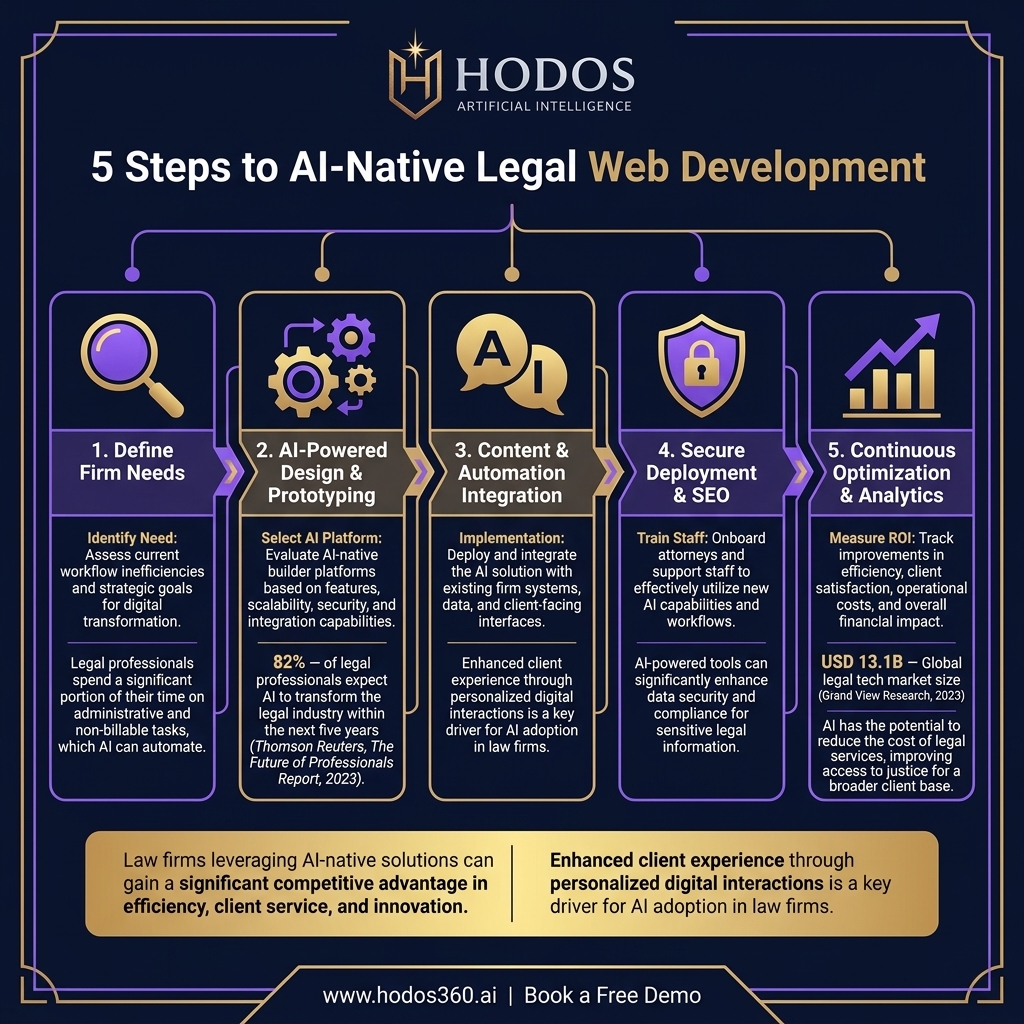
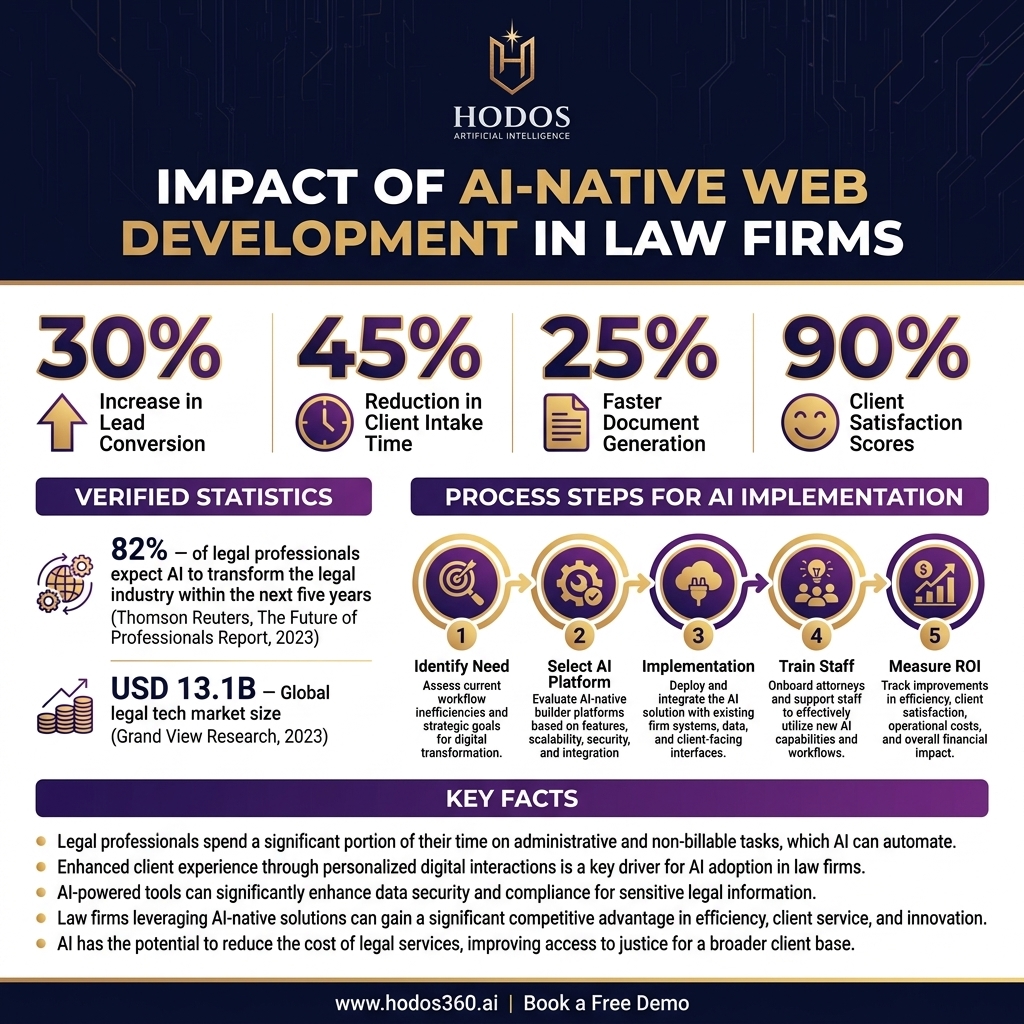
The promise of AI-native builder platforms is immense, but the path to full implementation for law firms is not without its challenges. Many firms grapple with legacy systems, a talent gap in AI expertise, and a natural resistance to change within traditional legal structures. The initial perceived cost of migrating to new, AI-centric infrastructure can also be a deterrent. However, these challenges are increasingly surmountable with the right strategy and partnership. AI-native builder tools are specifically designed to simplify complexity, often featuring low-code/no-code interfaces that reduce the need for specialized developers, allowing legal professionals themselves to contribute to the createion of applications. This democratization of development helps bridge the talent gap, enabling firms to leverage their existing workforce in new, innovative ways. The key is to approach digital transformation incrementally, focusing on high-impact areas first and demonstrating clear ROI.
Strategic partnerships with specialized legal tech providers are crucial in navigating these complexities. Companies like HODOS 360 offer comprehensive AI-powered platforms that not only include AI-powered website building but also AI Law Firm Management System features, AI Marketing Platform capabilities, and AI Voice Assistants. This integrated approach addresses multiple pain points simultaneously, from streamlining client intake solutions and legal workflow automation to enhancing client communication and marketing efforts. By collaborating with experts who understand both legal practice and cutting-edge AI, firms can accelerate their digital maturity without having to build everything from scratch. Learn more about Legal AI Funding: Essential Strategies for Law Firms. This collaborative model minimizes risk, optimizes investment, and ensures that the firm's AI-native builder solutions are precisely tailored to their unique needs, allowing them to deploy robust applications effectively.
Furthermore, overcoming resistance to change requires a clear vision and strong leadership. Managing partners must champion the adoption of AI-native builder platforms, communicating the long-term benefits to all stakeholders. This includes demonstrating how these tools can reduce administrative burdens, improve work-life balance for staff, and ultimately lead to better client outcomes and increased profitability. Providing adequate training and support is also essential to ensure smooth adoption and maximize the utility of new applications. Firms that foster a culture of innovation and continuous learning will be best positioned to leverage the full potential of AI-native development. This human-centric approach to technological integration is just as important as the technology itself, ensuring that the firm's people are empowered, not intimidated, by the digital transformation.
The long-term benefits of embracing AI-native builder solutions far outweigh the initial implementation hurdles. Firms that make this strategic shift will not only enhance their operational efficiency but also dramatically improve their client acquisition and retention capabilities. By prioritizing a holistic approach that includes robust web & mobile development, integrated AI Law Firm Management Systems, and intelligent AI Marketing Platforms, law firms can achieve a truly transformative digital presence. The investment in these advanced builder technologies is an investment in the future resilience and competitiveness of the legal practice, positioning the firm as a forward-thinking leader in an increasingly digital world, ready to execute against evolving market demands.
Measuring ROI: Quantifying the Impact of AI-Native Platforms
For law firms, any significant technology investment must demonstrate a clear return on investment (ROI). With AI-native builder platforms, quantifying this impact is not only possible but essential for ongoing strategic decision-making. Key metrics include improvements in client conversion rates, reduction in client intake time, and overall operational cost savings. Firms can track how AI-powered websites lead to higher engagement and more qualified leads, directly impacting revenue. Internally, measuring the time saved through legal workflow automation and document generation provides a tangible measure of efficiency gains. Furthermore, client satisfaction scores related to digital interactions can highlight improved service quality. By rigorously tracking these metrics, firms can continuously optimize their AI-native builder solutions and demonstrate the concrete value these applications bring to the practice, ensuring that every digital initiative contributes to the firm's bottom line.
The ability of AI-native builder platforms to integrate analytics from the outset means that ROI tracking is built into the system. Firms can monitor user journeys, identify bottlenecks, and pinpoint areas for further AI optimization. For example, an AI-powered client portal might show a significant decrease in the time clients spend searching for information, directly correlating to improved client satisfaction and reduced administrative inquiries. These platforms provide actionable insights, allowing firms to make data-driven decisions about their digital strategy. This continuous measurement and refinement cycle ensures that the investment in AI-native builder solutions is not a one-time expense but a dynamic process that consistently delivers value, making the firm more agile, efficient, and client-centric in the long run. The power to execute and measure effectively is a defining characteristic of this new wave of legal technology.

Key Takeaways and Next Steps
The emergence of AI-native builder platforms, exemplified by recent innovations from industry giants like Oracle, represents a watershed moment for the legal profession. This isn't just about adopting new tools; it's about fundamentally rethinking how law firms operate, engage with clients, and compete in an increasingly digital world. The benefits are clear: unparalleled operational efficiency through legal workflow automation, enhanced client experiences via bespoke and intelligent digital applications, and a significant competitive advantage in attracting and retaining top-tier clients. Firms that proactively embrace this shift will be better positioned to navigate the complexities of modern legal practice, freeing up valuable attorney time and fostering a more responsive, client-centric service model. The future of legal service delivery is inextricably linked to the intelligent design and deployment of AI-native digital infrastructure.
For law firms looking to embark on or accelerate their digital transformation journey, the next steps are critical. Begin by assessing your current digital footprint and identifying key areas where AI-native builder solutions can yield the most significant impact, whether it's optimizing your website, streamlining client intake solutions, or automating internal processes. Explore specialized legal tech providers that offer integrated AI-powered services, ensuring a holistic approach to your firm's digital ecosystem. By partnering with experts who understand the unique demands of the legal industry, you can harness the power of AI-native development to create a resilient, efficient, and forward-thinking practice. The time to build for the future is now, ensuring your firm is not just keeping pace, but leading the charge in legal innovation.
- ✓AI-Native vs. AI-Enabled: Understand that AI-native means AI is foundational, not an add-on, leading to inherently smarter and more responsive applications.
- ✓Bespoke Legal Experiences: Leverage AI-native builder tools to create custom client portals, intelligent intake forms, and dynamic legal resource hubs tailored to your firm’s specific needs.
- ✓Agentic Applications: Explore the potential of AI agents to automate tasks like lead qualification, document review, and appointment booking, transforming legal workflow automation.
- ✓Data-Driven Advantage: Utilize built-in analytics and SEO optimization features to continuously improve your online presence, attract qualified leads, and enhance client conversion rates.
- ✓Ethical Imperatives: Prioritize data privacy, bias mitigation, and compliance with legal ethics (e.g., ABA Model Rules) when deploying AI-powered digital solutions.
- ✓Strategic Partnerships: Consider collaborating with specialized legal tech providers like HODOS 360 to navigate implementation challenges and achieve a comprehensive digital transformation.
- ✓Quantifiable ROI: Establish clear metrics to measure the impact of AI-native platforms on efficiency, client satisfaction, and profitability, ensuring continuous value delivery.
Frequently Asked Questions
What does 'AI-native builder' mean for my law firm?+
An AI-native builder means that artificial intelligence is integrated into the core design and functionality of digital tools, rather than being an add-on. For law firms, this enables the creation of inherently smarter websites, client portals, and internal applications that can automate complex tasks, personalize client interactions, and provide predictive insights from the ground up, leading to greater efficiency and innovation.
How can AI-native web development improve client acquisition?+
AI-native web development enhances client acquisition by enabling highly optimized, personalized online experiences. AI can analyze user behavior, personalize content, and fine-tune SEO strategies in real-time, ensuring your firm's website attracts more qualified leads. Intelligent chatbots and dynamic content delivery also improve engagement, converting visitors into clients more effectively than traditional websites.
Are AI-native platforms secure for handling sensitive legal data?+
Yes, reputable AI-native builder platforms are designed with robust security protocols, including encryption and compliance features. However, law firms must ensure that any AI solution chosen adheres to strict data privacy regulations (e.g., GDPR, CCPA) and ethical guidelines like ABA Model Rule 1.6 on confidentiality. Partnering with legal tech experts can help implement secure, compliant AI-native solutions tailored to legal industry standards.
What are 'agentic applications' and how do they apply to law firms?+
Agentic applications are AI systems designed to autonomously perform tasks towards a specific goal, breaking down complex processes into actionable steps. For law firms, this means AI agents can handle initial client qualification, schedule appointments, review documents for specific clauses, or even assist in legal research. They streamline workflows, reduce manual effort, and free up attorneys for higher-value legal work, enhancing overall operational efficiency.
How does HODOS 360 support law firms in adopting AI-native web development?+
HODOS 360 empowers law firms with its comprehensive AI-powered platform, including Web & Mobile Development services. We provide AI-powered website building, responsive design, SEO optimization, and high-converting templates specifically tailored for the legal sector. Our platform helps firms leverage AI-native builder capabilities to create bespoke digital experiences, streamline client intake, automate workflows, and enhance their online presence, ensuring a competitive edge in the digital legal landscape.