AI Squeeze: Essential Guide to Thriving in Legal Marketing
The legal industry, often perceived as a bastion of tradition, is no stranger to disruption. Yet, a recent headline from The Ritz Herald, "The AI Squeeze on Entry-Level Work Is Landing on Marketing and Legal, Not Engineering," sent ripples through firms still grappling with digital transformation. This isn't just a theoretical concern; it's a palpable shift impacting how law firms approach talent acquisition, particularly for their crucial marketing functions. Consider the experience of firms like *LexCorp Legal*, a mid-sized practice in Chicago, which, by early 2026, had paused several entry-level marketing hires, instead opting to integrate AI-powered content and social media tools. Sarah Chen, LexCorp's Marketing Director, candidly admitted at the Legal Marketing Association's Chicago chapter meeting that while they initially feared job displacement, the reality was a rapid re-evaluation of required skills. The traditional tasks of junior marketers—drafting basic social media posts, compiling competitor reports, or scheduling email campaigns—are increasingly being automated, creating what experts are calling the 'AI squeeze'. This phenomenon is not about AI directly replacing human workers in mass layoffs, but rather about the changing nature of work, where the initial roles that once served as entry points into the profession are being redefined or absorbed by intelligent systems. The tension between maintaining traditional staffing models and embracing technological efficiency has become a central challenge for managing partners and marketing leads alike, demanding a proactive strategy to navigate this evolving landscape.
This report from The Ritz Herald underscores a broader trend identified by leading consultancies. A McKinsey Global Institute analysis from late 2025 indicated that while AI's impact on highly specialized engineering roles might be less direct due to their complex problem-solving nature, white-collar administrative and content-creation roles, including significant portions of marketing and legal support, face a higher automation potential. For law firms, this means the expectation for entry-level marketing hires has fundamentally shifted. No longer are firms primarily seeking individuals to execute routine tasks; instead, they need professionals capable of strategizing, overseeing AI tools, and interpreting data to drive client acquisition and firm visibility. Learn more about AI Deposition Prep: The Ultimate Guide to Winning Strategies. This dynamic creates a critical juncture: firms that adapt by empowering their teams with AI will gain a significant competitive edge, while those clinging to outdated models risk falling behind. The narrative isn't one of inevitable decline for human talent, but rather a compelling call to action for upskilling, strategic integration, and a reimagining of what constitutes valuable contributions in an AI-augmented legal ecosystem. The challenge is real, but so is the opportunity for growth and innovation.
The Shifting Landscape: Why AI Impacts Legal Marketing Entry-Level Roles
The 'AI squeeze' on entry-level marketing roles in the legal sector is a direct consequence of AI's rapid advancements in automating cognitive tasks. Historically, junior marketers in law firms were responsible for a multitude of foundational activities: drafting initial content for blogs and social media, conducting basic competitive analysis, managing email lists, and scheduling outreach. These tasks, while essential, are often repetitive and rule-based, making them prime candidates for AI automation. Companies like Jasper.ai and Copy.ai have already demonstrated AI's prowess in generating compelling marketing copy, and similar capabilities are now deeply integrated into legal tech platforms. For instance, an AI-powered content generator can now produce a first draft of a blog post on a new regulatory change in minutes, far quicker than an entry-level associate might research and write it. Similarly, social media automation tools can schedule posts across multiple platforms, monitor engagement, and even suggest optimal posting times based on audience analytics, largely diminishing the need for manual oversight by junior staff. This shift means that the very foundation of many entry-level marketing positions is eroding, forcing firms to reconsider their hiring profiles and operational workflows.
Furthermore, the competitive pressures within the legal industry demand unprecedented efficiency and data-driven decision-making. Law firms are no longer just competing on legal expertise; they are also vying for digital visibility and client engagement. Learn more about AI Web Design: Essential for Law Firms in the Agentic Era. This necessitates marketing strategies that are highly optimized, personalized, and measurable. AI excels in these areas, offering capabilities such as predictive analytics for identifying high-value leads, hyper-personalization of client communications, and granular ROI tracking across various campaigns. These advanced functions, once the domain of seasoned analysts or external agencies, are now accessible through integrated AI platforms. Firms that adopt these tools can achieve higher levels of marketing sophistication with a leaner, more strategically focused team. The result is a reduced demand for purely executional entry-level roles, as AI systems effectively absorb these tasks, allowing firms to direct human talent towards more complex, creative, and client-facing initiatives. This evolution is not a temporary trend but a fundamental reshaping of the talent landscape, requiring law firms to invest in new skills and technologies.
Data-Driven Marketing: Beyond Junior Analysts
The impact of AI extends beyond simple automation, fundamentally altering the landscape of data-driven marketing. Where junior analysts once spent hours manually compiling reports from various analytics platforms, AI now offers sophisticated insights at the click of a button. For example, AI algorithms can analyze vast datasets of client interactions, website traffic, and campaign performance to identify patterns and predict future trends with remarkable accuracy. This means firms can pinpoint which marketing channels yield the highest return on investment, understand client preferences in granular detail, and even anticipate legal service demands before they fully materialize. A Gartner report from early 2026 projected that by 2028, over 60% of marketing analytics tasks would be significantly augmented or fully automated by AI, making traditional data entry and basic reporting roles largely obsolete.
This evolution necessitates a shift from *data compilation* to *data interpretation* and *strategic application*. Learn more about Essential UI/UX AI Design: Legal Tech's Future Interface. Law firms now need professionals who can understand the output of complex AI models, translate insights into actionable marketing strategies, and continuously refine AI parameters for optimal performance. The value proposition of a marketing team is no longer how much data they can collect, but how effectively they can leverage AI-generated insights to drive business growth. This is where platforms like HODOS 360’s AI Marketing Platform become indispensable, providing not just automation but also sophisticated analytics that empower legal marketers to move beyond reactive reporting to proactive, predictive strategy. The entry-level squeeze, therefore, is not just about tasks disappearing; it's about the entire analytical framework ascending to a higher level of complexity and strategic importance, demanding a more sophisticated skill set from new entrants.
Redefining Talent: Upskilling and Strategic Roles in the AI Era
The narrative of the 'AI squeeze' often evokes fears of job displacement, but a more accurate interpretation reveals a powerful opportunity for job evolution and strategic upskilling within law firms. The focus is shifting from routine execution to higher-order cognitive functions: critical thinking, creativity, strategic planning, and ethical oversight. Firms that embrace this paradigm are investing in their existing talent and seeking new hires with a different skill profile. As Professor Daniel Katz of Chicago-Kent College of Law frequently articulates at legal tech conferences like LegalTech NYC, the future legal professional, including marketers, will be a 'hybrid professional' – one who understands both legal principles and technological capabilities. This means training current staff in prompt engineering, AI tool management, and data ethics, transforming them into 'AI copilots' rather than simply users.
Leading firms are already demonstrating this proactive approach. Allen & Overy, known for its early adoption of legal AI through its partnership with Harvey AI, has openly discussed how AI tools augment, rather than replace, their legal and operational teams. Their global head of innovation, Jonathan Brayne, has emphasized the importance of training lawyers and support staff to work alongside AI, freeing them from mundane tasks to focus on complex advisory work and client relationship building. Learn more about AI Marketing Tools: Essential Strategies for Law Firms. For marketing teams, this translates to roles focused on brand storytelling, high-level campaign design, crisis communication, and sophisticated client experience management, all informed and accelerated by AI. The demand for purely executional marketing roles might be squeezed, but the demand for strategically savvy, technologically proficient marketers is soaring. This evolution requires law firms to view AI not as a cost-cutting measure for personnel, but as an investment in elevating the strategic capacity of their entire operation. The goal is to create a workforce that is empowered by AI to achieve greater impact, rather than being overshadowed by it. This strategy ensures that human ingenuity remains at the core of legal service delivery and marketing innovation, with AI serving as a powerful accelerator.
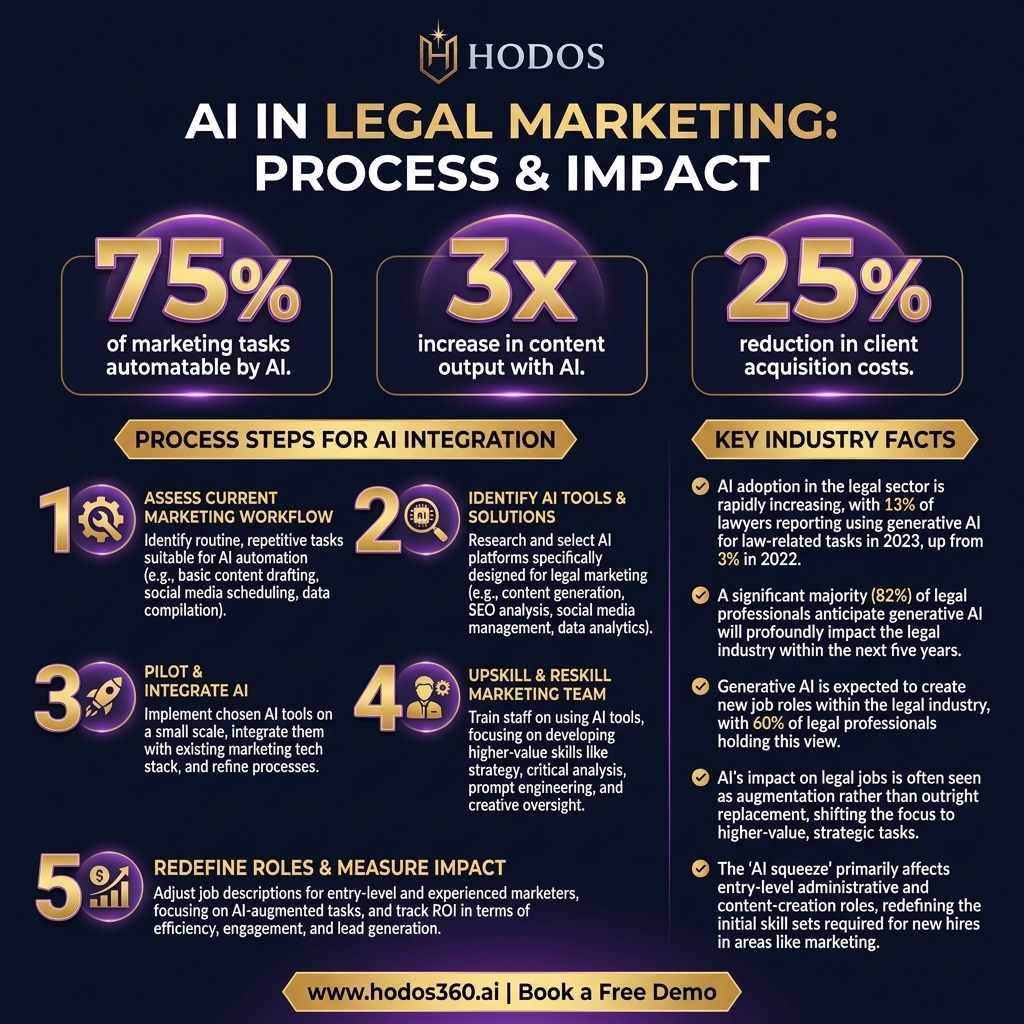
- ✓Prompt Engineering: Developing the skill to craft effective prompts for AI content generation, ensuring outputs align with brand voice and legal accuracy.
- ✓AI Tool Management: Proficiency in configuring, optimizing, and integrating various AI marketing tools into existing workflows for seamless operation.
- ✓Data Interpretation & Strategy: Moving beyond basic data collection to analyze AI-generated insights, identify trends, and formulate data-driven marketing strategies.
- ✓Ethical AI Oversight: Understanding and applying ethical guidelines and legal regulations (like the EU AI Act) to AI-generated content and data handling in marketing.
- ✓Creative & Strategic Storytelling: Focusing on unique brand narratives, high-impact campaign concepts, and client engagement strategies that AI can augment but not originate.
- ✓Client Relationship Management (CRM) with AI: Leveraging AI-powered CRM systems to deepen client relationships through personalized communication and predictive service offerings.
Leveraging AI Marketing Platforms for Law Firm Growth
The answer to the 'AI squeeze' is not to resist AI, but to strategically embrace it through comprehensive AI marketing platforms. These integrated solutions are designed to empower law firms, allowing them to do more with their existing talent and elevate their marketing impact. Take, for example, the robust capabilities offered by platforms like HODOS 360's AI Marketing Platform. It provides a suite of services including AI video creation, which can generate engaging promotional content without the need for extensive production teams; social media automation that ensures consistent online presence and engagement; and sophisticated content generation tools that produce high-quality legal articles, blog posts, and website copy tailored to specific audiences. These tools don't just automate tasks; they enhance the quality and reach of a firm's marketing efforts, freeing up human marketers to focus on strategy, client relationships, and creative oversight. According to the Clio Legal Trends Report (2025 edition), firms that invested in marketing automation saw an average 15% increase in client acquisition efficiency and a 10% reduction in marketing spend per client within 12 months, showcasing the tangible ROI.
Furthermore, an integrated platform offers unparalleled analytics and ROI tracking. Instead of disparate data points from various tools, firms gain a holistic view of their marketing performance, understanding precisely which campaigns are driving leads and conversions. Learn more about Essential AI Voice Features for Law Firms: Unpacking I/O Innovations. This level of insight allows for agile adjustments and continuous optimization, ensuring every marketing dollar is spent effectively. For instance, a firm can use AI to identify which specific legal topics resonate most with potential clients in a particular geographic area, then automatically generate targeted content and social media campaigns. This strategic utilization of AI transforms marketing from a cost center into a powerful growth engine. The market itself is recognizing this value; in late 2025, Adobe acquired a leading AI-powered content optimization startup for over $1 billion, signaling the industry's strong belief in integrated AI marketing solutions. For law firms, this means adopting a platform that streamlines operations, enhances content quality, and provides actionable insights is no longer a luxury but a necessity for sustained growth and competitive advantage in a rapidly evolving digital landscape.
Ethical Considerations in AI-Powered Legal Marketing
While the efficiency gains from AI in legal marketing are undeniable, law firms must navigate a complex web of ethical considerations. The core tenets of legal professionalism, particularly client confidentiality and truthful communication, remain paramount. For instance, when using AI for content generation or client communication, firms must ensure that no confidential client information is inadvertently processed or revealed. This directly implicates ABA Model Rule 1.6 (Confidentiality of Information), requiring lawyers to protect information relating to the representation of a client. Additionally, AI-generated marketing content must adhere strictly to ABA Model Rule 7.1 (Communications Concerning a Lawyer's Services), which prohibits false or misleading communications. Firms must implement robust review processes to vet AI-produced content for accuracy, avoid any claims that could be construed as misleading, and ensure transparency where necessary.
The potential for bias in AI algorithms is another critical ethical concern. Learn more about Voice Assistant Migration: An Essential Guide for Law Firms. If AI models are trained on biased data, their outputs—whether in targeted advertising or content generation—could inadvertently perpetuate stereotypes or exclude certain demographics, leading to ethical and reputational risks. Firms must actively audit their AI tools and data sources for bias and ensure their marketing practices are inclusive and fair. The development of internal guidelines for AI use, coupled with ongoing training for marketing teams, is essential to mitigate these risks. By prioritizing ethical deployment and maintaining rigorous human oversight, law firms can harness the power of AI marketing responsibly, safeguarding both their professional integrity and client trust.
The Future of Entry-Level: Cultivating AI-Savvy Legal Professionals
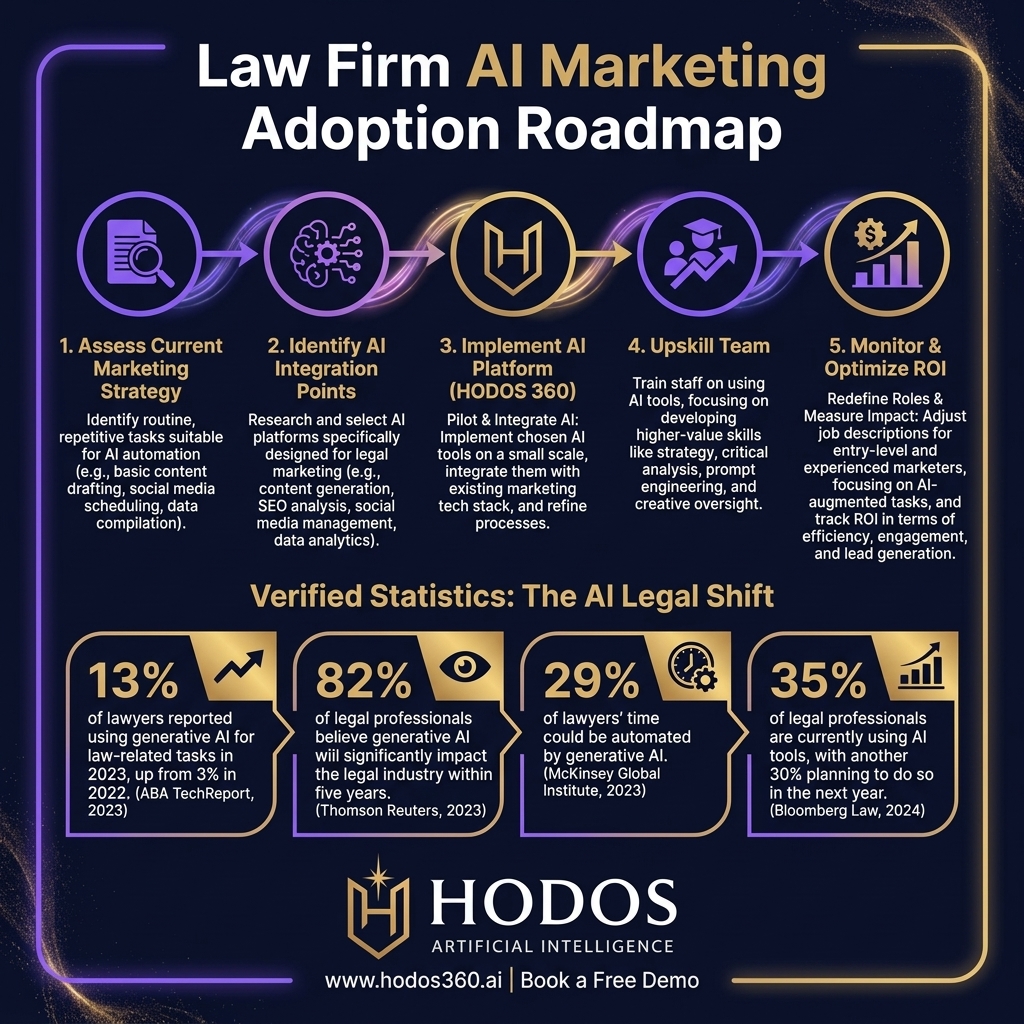
The 'AI squeeze' is not an end to entry-level opportunities, but a catalyst for their transformation. The future workforce in legal marketing will be characterized by a blend of traditional legal acumen and advanced technological literacy. Educational institutions are already responding to this shift. Law schools, once primarily focused on legal theory and practice, are increasingly incorporating legal tech courses, data analytics, and even prompt engineering into their curricula. Universities like Stanford and Georgetown have launched specialized programs in Law & Technology, recognizing the need to cultivate a new generation of AI-savvy legal professionals. This academic evolution provides a pipeline of talent better equipped to navigate the augmented workplace.
For law firms, the challenge is to foster this new talent internally. This means not only seeking out graduates with these emerging skills but also investing heavily in continuous professional development for existing staff. Mentorship programs that pair experienced legal marketers with tech-fluent new hires, or vice versa, can facilitate knowledge transfer and cultural integration. The emphasis should be on developing critical thinking, creativity, emotional intelligence, and complex problem-solving—skills that AI cannot replicate. These human-centric attributes become even more valuable in an AI-driven environment, where strategic insight and nuanced client communication are paramount. Firms that prioritize a culture of continuous learning and adaptability will be best positioned to attract and retain the talent needed to thrive. This proactive approach ensures that the entry-level experience evolves from routine task execution to a dynamic role focused on leveraging AI for strategic advantage, fostering a more engaging and impactful career path for new professionals in legal marketing.
Navigating the Regulatory Landscape: The EU AI Act and Beyond
As AI becomes more pervasive in legal marketing, the regulatory landscape is rapidly catching up. The EU AI Act, set to be fully enforced by late 2026 or early 2027, stands as a landmark piece of legislation that will significantly impact how AI is developed and deployed, including in marketing contexts. While the Act primarily targets 'high-risk' AI systems, its principles around transparency, data governance, and human oversight will influence all AI applications. For law firms utilizing AI in marketing, this means a heightened responsibility to understand the provenance of their AI tools, the data they are trained on, and the potential for their outputs to be discriminatory or misleading. The Act's provisions on transparency, for instance, may require firms to disclose when content or interactions are AI-generated, fostering client trust and compliance.
Beyond the EU AI Act, other jurisdictions are developing their own frameworks. In the United States, states like California are enacting stricter data privacy laws (e.g., CCPA, CPRA) that intersect with AI's use in personalized marketing. Law firms must adopt a proactive, compliance-first mindset when integrating AI into their marketing strategies. This involves selecting AI platforms that are built with regulatory adherence in mind, establishing internal compliance protocols, and regularly auditing AI system outputs. Failure to navigate this evolving regulatory environment could lead to significant legal and reputational risks. Therefore, a comprehensive AI strategy for legal marketing must include a robust understanding of current and anticipated legal frameworks, ensuring that innovation proceeds hand-in-hand with ethical and legal responsibility. This approach ensures that the benefits of AI are realized without compromising a firm's integrity or client confidence.

Key Takeaways and Next Steps
The 'AI squeeze' on entry-level roles, particularly in legal marketing, is not a harbinger of doom but a powerful catalyst for change. As highlighted by The Ritz Herald and echoed by industry insights, the legal profession is undergoing a fundamental redefinition of talent and tasks. Firms can no longer afford to view AI as a peripheral technology; it is now central to optimizing operations, enhancing client acquisition, and shaping future growth. The critical takeaway is that while AI automates routine tasks, it simultaneously elevates the demand for human skills such as strategic thinking, creativity, ethical judgment, and complex problem-solving.
For law firm owners and managing partners, the path forward is clear: embrace AI strategically. This means investing in integrated AI platforms that streamline marketing efforts, upskilling your existing team to work effectively with AI tools, and cultivating a culture of continuous learning and adaptability. The future of legal marketing lies in a symbiotic relationship between human intelligence and artificial intelligence, where AI serves as a powerful co-pilot, empowering legal professionals to achieve unprecedented levels of efficiency and impact. By proactively addressing the 'AI squeeze' and leveraging innovative solutions like HODOS 360’s AI Marketing Platform, law firms can transform perceived challenges into significant competitive advantages, ensuring sustained growth and a thriving, future-ready workforce. The time to act is now, to lead the charge in this new era of legal innovation.
Frequently Asked Questions
What is the 'AI squeeze' in legal marketing?+
The 'AI squeeze' refers to the phenomenon where AI automation handles tasks traditionally performed by entry-level employees, particularly in fields like marketing and legal. In law firms, this means AI tools are now executing routine activities such as content drafting, social media scheduling, and basic data analysis, altering the demand for traditional junior marketing roles and necessitating new skill sets.
How can law firms adapt to the changing entry-level job market due to AI?+
Law firms can adapt by focusing on upskilling existing staff in AI tool management, prompt engineering, and data interpretation. They should also seek new hires with strategic thinking, creativity, and ethical AI oversight. Investing in integrated AI marketing platforms allows firms to optimize operations and elevate their marketing impact, redefining roles for greater strategic value.
Which specific marketing tasks are most affected by AI in law firms?+
AI most affects repetitive and rule-based marketing tasks. These include generating first drafts of blog posts and articles, automating social media content scheduling and engagement, conducting basic market research and competitor analysis, and compiling routine performance reports. AI's efficiency in these areas reduces the need for manual execution by junior staff.
What ethical considerations should law firms keep in mind when using AI for marketing?+
Law firms must prioritize ethical considerations such as protecting client confidentiality (ABA Model Rule 1.6), ensuring marketing communications are truthful and not misleading (ABA Model Rule 7.1), and mitigating algorithmic bias. Implementing robust review processes for AI-generated content and adhering to emerging regulations like the EU AI Act are crucial for responsible AI deployment.
How does HODOS 360's AI Marketing Platform help law firms navigate the AI squeeze?+
HODOS 360's AI Marketing Platform empowers law firms by automating core marketing tasks like AI video creation, social media management, and content generation. It provides advanced analytics and ROI tracking, freeing up human marketers for strategic planning and client relations. This allows firms to enhance efficiency, optimize talent, and achieve significant growth in the AI-driven legal landscape.