


AI Voice Assistants: Essential for Modern Law Firms
In the bustling legal landscape of 2026, the story of Patel & Associates is a familiar one. Managing Partner Anika Patel often recounted the frustration of missed calls after hours, the bottleneck at the reception desk during peak times, and the countless potential clients lost to competitors simply because her firm couldn't provide immediate, round-the-clock responsiveness. This tension between traditional operational constraints and the escalating demands of modern clients has long been a defining challenge for law firms of all sizes. The promise of technology has always loomed large, but it's only recently, with the maturation of sophisticated AI voice assistants, that a truly transformative solution has emerged, capable of bridging this critical gap and reshaping the very fabric of client engagement.
The recent buzz around articles like Memeburn's "10 Best AI Voice Assistants in 2026: Tested & Compared" isn't just about consumer gadgets; it signals a profound shift in how businesses, particularly law firms, are leveraging conversational AI. These aren't the clunky interactive voice response (IVR) systems of old. Today's AI voice assistants are powered by advanced large language models, exhibiting unprecedented naturalness and an almost human-like understanding, capable of complex interactions. Firms that recognize this evolution are not just adopting new tools; they are fundamentally redefining their client experience, ensuring no lead is missed, no question goes unanswered, and every client feels heard, regardless of the hour or language. This article delves into how these essential technologies are not just a luxury but a strategic imperative for any law firm aiming to thrive in the competitive legal market.
The Evolution of Legal Client Interaction: Beyond Traditional Reception
For decades, the legal profession has relied on the human touch – a friendly receptionist, a diligent paralegal – to be the first point of contact. While invaluable, this traditional model carries inherent limitations: finite working hours, susceptibility to human error, and the sheer volume of calls that can overwhelm even the most efficient teams. Firms like Sterling & Stone LLP, a mid-sized corporate law firm in Chicago, initially viewed any automation of client interaction with skepticism, fearing it would dilute their personalized service. Learn more about AI Voice Support: Essential for Law Firm Client Experience. However, as Managing Partner David Sterling noted at LegalTech NYC 2025, observing competitors successfully integrating advanced AI voice assistants forced a re-evaluation. The data spoke for itself: firms with 24/7 responsiveness were capturing a significantly larger share of urgent inquiries and new client consultations, particularly outside standard business hours.
The shift isn't merely about availability; it's about optimizing the entire client journey from the very first interaction. A 2024 ABA Legal Technology Survey Report highlighted that over 60% of prospective clients expect an immediate response, and nearly 40% will move to another firm if their initial inquiry isn't addressed promptly. This expectation, largely shaped by consumer experiences with on-demand services, underscores the inadequacy of a 9-to-5 reception model. Learn more about Legal AI: The Ultimate Guide to Automating Conveyancing. The new generation of AI voice assistants steps into this void, offering not just an answering service, but an intelligent, proactive engagement system that can qualify leads, answer common questions, and even initiate the intake process, all while maintaining a professional and empathetic tone. This level of responsiveness is no longer a competitive edge but a baseline expectation.
The early iterations of automated phone systems were often clunky, leading to frustrating experiences for callers. However, the advancements in natural language processing (NLP) and speech synthesis, driven by companies like OpenAI with its GPT-4o voice capabilities and Anthropic's Claude, have transformed these interactions. Today’s AI voice assistants can understand nuances, handle interruptions, and maintain context throughout a conversation, making the experience remarkably fluid and human-like. Learn more about Voice AI: An Essential Leap for Law Firms' Client Engagement. This technological leap has moved these tools from mere novelty to indispensable assets, allowing firms to scale their client engagement efforts without compromising on quality or the personal touch that defines legal service. The goal is to augment human capabilities, freeing up legal professionals to focus on complex legal work rather than administrative tasks.
Moreover, the globalized nature of modern legal practice means that firms often serve clients across different time zones and linguistic backgrounds. Traditional receptionists struggle to provide consistent, high-quality support in multiple languages, making international outreach challenging. AI voice assistants, however, are inherently designed for multilingual support, capable of conversing fluently in dozens of languages. Learn more about AI Website Builders: Ultimate Growth for Law Firms. This capability not only expands a firm's potential client base but also enhances inclusivity, ensuring that language barriers do not prevent access to justice. The evolution of client interaction is therefore not just about speed and efficiency, but also about creating a more accessible and equitable legal system, where every potential client receives the attention they deserve from the outset, powered by intelligent automation.
Unpacking the Core Capabilities of Advanced AI Voice Assistants
The true power of modern AI voice assistants lies in their sophisticated array of capabilities, far surpassing simple call answering. These platforms are engineered for "production-scale deployment," meaning they can handle high volumes of calls with consistent quality, making them ideal for law firms that experience fluctuating call loads. Beyond basic greetings, they offer 24/7 phone answering, ensuring no potential client call goes to voicemail, a critical factor for urgent legal matters. Learn more about Legal AI Trust: An Essential Guide for Law Firms. This constant availability is a game-changer for firms, especially those dealing with personal injury cases or emergency legal advice, where immediate response can be the difference between retaining a client and losing them to a competitor. The "naturalness" of their voice and conversation flow is often indistinguishable from a human, enhancing the caller's experience significantly.
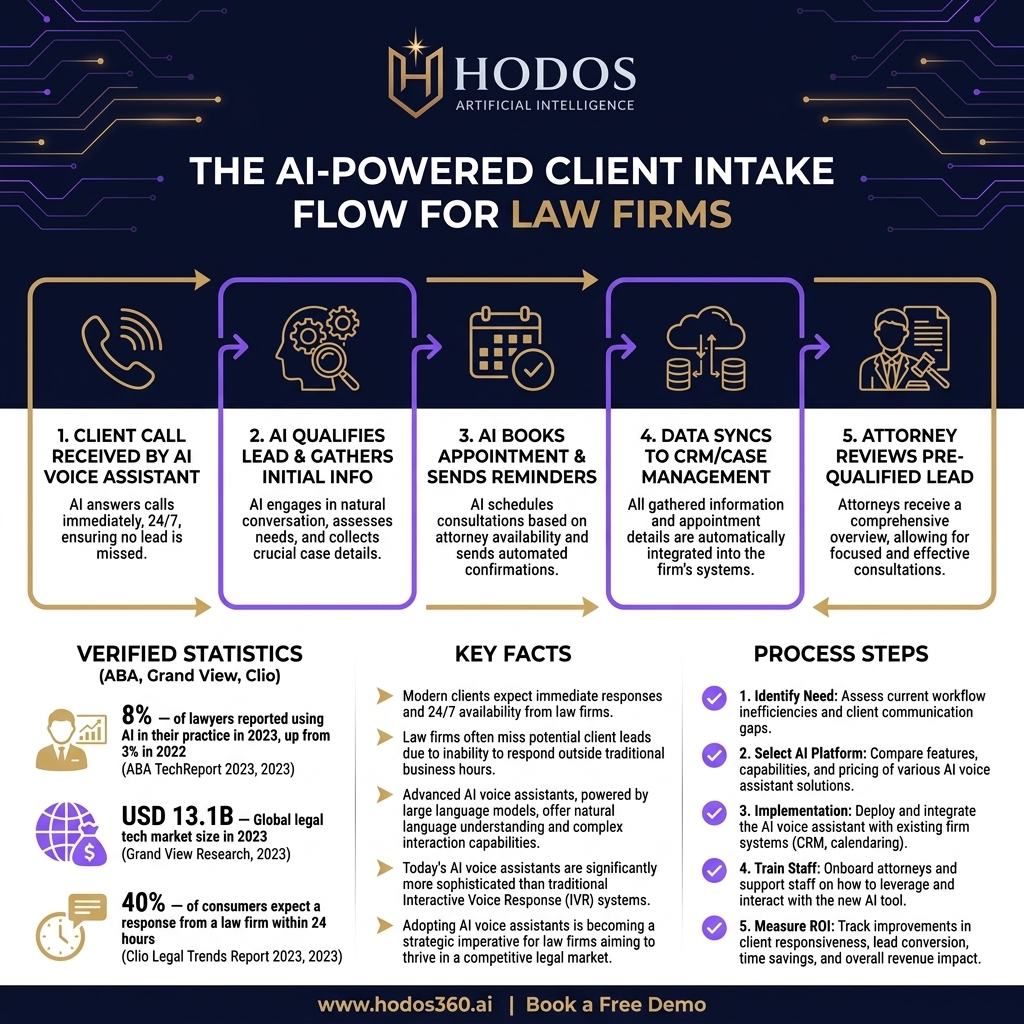
One of the most valuable features is intelligent lead qualification. Imagine an AI voice assistant engaging a caller, asking specific, pre-programmed questions like, "Is this a new client inquiry? What type of legal matter are you calling about? Do you have a specific deadline or court date?" Based on the responses, the AI can filter out unqualified leads, prioritize urgent cases, and route calls to the most appropriate attorney or department. This drastically reduces the administrative burden on paralegals and legal assistants, allowing them to focus on substantive legal work rather than spending hours on initial screenings. Learn more about AI Intake: The Essential Guide for Modern Law Firms. Firms using these "expert" systems report a significant increase in the quality of leads passed to their legal teams, directly impacting their conversion rates and overall "business" growth.
Enhancing Client Intake and Qualification
The initial client intake process, often cumbersome and time-consuming, is fundamentally transformed by AI voice assistants. These intelligent agents can gather critical information such as contact details, case type, opposing parties, and preliminary facts during the first call. This data is then automatically transcribed, summarized, and integrated into the firm's client relationship management (CRM) system or case management software. For instance, a caller inquiring about a divorce case might be prompted by the AI to confirm their marital status, the duration of the marriage, and if children are involved, all before a human ever intervenes. This proactive data collection not only streamlines the intake process but also ensures that when a human attorney or paralegal takes over, they are already equipped with a comprehensive understanding of the client's needs, enabling a more efficient and productive initial consultation. The precision and speed of these AI voice assistants in capturing essential details are consistently "tested" and refined for optimal performance.
Streamlining Appointment Scheduling and Reminders
Beyond intake, AI voice assistants excel at managing the complexities of legal calendars. They can access attorneys' and paralegals' schedules in real-time, suggest available slots, and book appointments directly, eliminating the back-and-forth typically involved in scheduling. Furthermore, these systems automatically send appointment confirmations and reminders via text or email, significantly reducing no-show rates. For a busy practice, even a 10-15% reduction in missed appointments can translate into substantial time and revenue savings. This capability is particularly beneficial for firms that manage a high volume of consultations, such as those in family law or immigration law. The convenience offered to clients, who can book appointments at their leisure, further enhances client satisfaction and streamlines the firm's "legal operations." The integration with popular calendar tools (e.g., Google Calendar, Outlook) makes this a seamless process, ensuring accuracy and avoiding double-bookings.
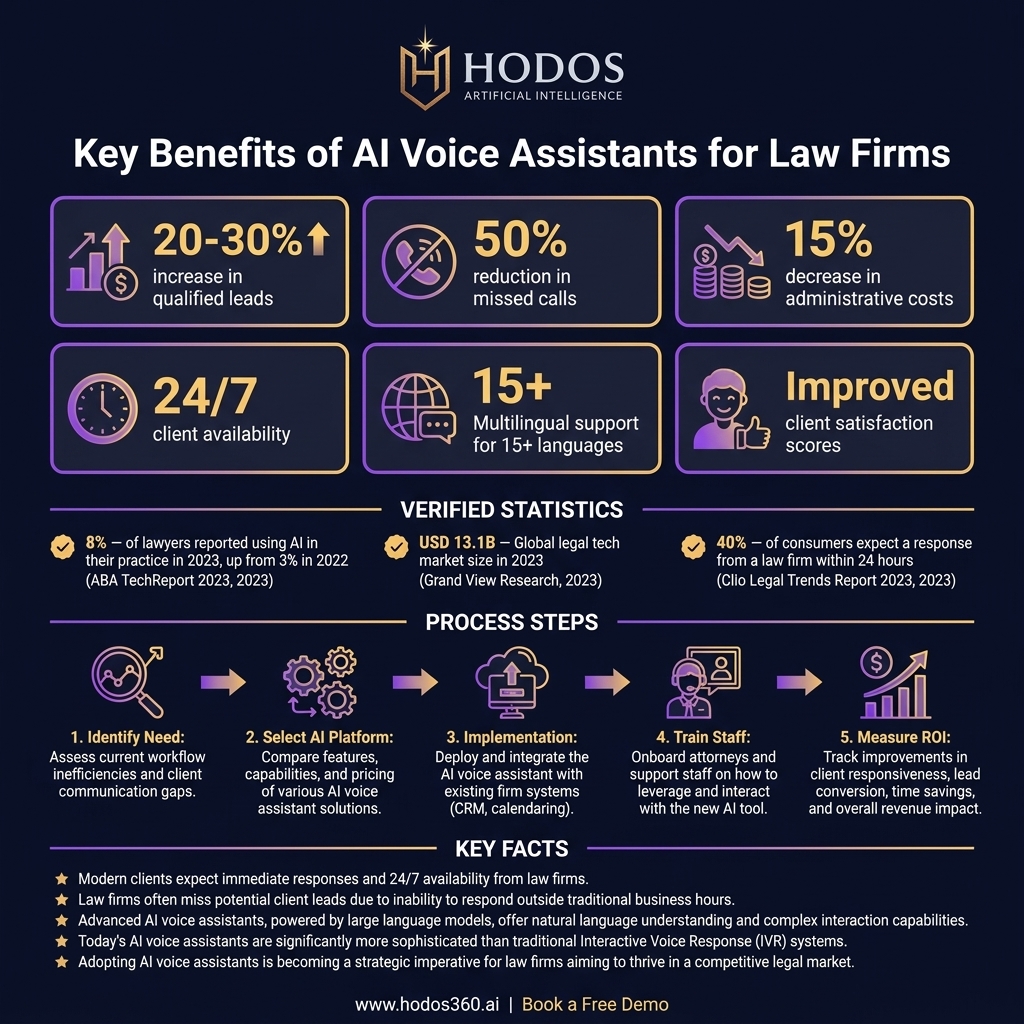
- ✓24/7 Client Availability: Ensures no call goes unanswered, capturing leads and providing support around the clock.
- ✓Improved Lead Capture and Qualification: Intelligently screens calls, identifies qualified prospects, and prioritizes urgent cases, saving valuable staff time.
- ✓Reduced Administrative Burden: Automates routine tasks like data collection, scheduling, and information dissemination, freeing legal professionals for core work.
- ✓Enhanced Client Experience and Satisfaction: Offers immediate, professional, and multilingual assistance, leading to higher client retention and positive reviews.
- ✓Multilingual Accessibility: Provides support in numerous languages, expanding a firm's reach and inclusivity to diverse client bases.
- ✓Data-Driven Insights for Practice Growth: Collects valuable data on call patterns, client needs, and lead sources, informing strategic business decisions.
- ✓Cost Efficiency Compared to Human Receptionists: Offers a scalable solution that can significantly reduce overheads associated with staffing a full-time reception team.
Real-World Impact: How Law Firms Are Leveraging Voice AI
The transformation brought by AI voice assistants is not merely theoretical; it's tangible, with real firms reporting significant operational improvements and growth. Consider the story of Attorney Sarah Chen, a solo practitioner specializing in estate planning in San Francisco. Initially overwhelmed by the administrative demands of her growing practice, especially managing initial inquiries and scheduling consultations, Sarah adopted an AI voice assistant early in 2025. Within six months, she reported a 30% increase in qualified leads, attributing it directly to the AI's ability to capture after-hours calls and pre-qualify potential clients. "I used to dread Mondays, sifting through voicemails," Chen stated in a recent interview with LegalTech News. "Now, I walk into the office with a clear list of pre-screened appointments, ready to focus on actual legal work. It's been absolutely transformative for my 'business'."
Beyond solo practices, larger firms are leveraging these AI voice assistants to manage high call volumes that would otherwise necessitate a significantly larger human workforce. A prominent personal injury firm in Houston, for instance, implemented a sophisticated AI system to handle the deluge of calls following car accidents or other incidents. The AI efficiently gathers initial details, explains the firm's contingency fee structure, and sets up urgent consultations, ensuring that victims receive immediate attention during critical times. This proactive approach not only improves client outcomes but also positions the firm as highly responsive and client-centric in a competitive market. The firm's managing partner publicly stated they saw an improvement in their lead conversion "ranking" within their specific practice area.
Ensuring Multilingual Accessibility and Inclusivity
One of the most profound impacts of AI voice assistants is their ability to break down language barriers, fostering greater inclusivity in legal services. For immigration law firms, for example, serving clients from diverse linguistic backgrounds is a daily challenge. Prior to advanced AI, this often required hiring multilingual staff or relying on translation services, adding layers of cost and complexity. Now, an AI voice assistant can seamlessly switch between languages, engaging clients in their native tongue, whether it’s Spanish, Mandarin, or Arabic. This not only enhances the client experience but also significantly broadens the firm's reach, allowing them to serve previously underserved communities. A 2025 Thomson Reuters Institute report on diversity in legal tech highlighted that firms adopting multilingual AI solutions saw a 15% increase in client inquiries from non-English speaking communities, demonstrating a clear positive correlation with market expansion.
Furthermore, the data collected by these intelligent systems provides invaluable insights for "legal operations" and strategic planning. By tracking call origins, common inquiries, and conversion rates handled by the AI voice assistants, firms can identify emerging trends, optimize their marketing strategies, and allocate resources more effectively. This data-driven approach moves firms beyond guesswork, allowing them to make informed decisions about practice area expansion, marketing campaigns (e.g., targeting specific demographics identified by AI interactions), and even staffing needs. The ability to monitor and analyze the performance of these AI voice assistants ensures continuous improvement and a higher return on investment, solidifying their role as an "expert" tool for modern legal practice. The competitive landscape demands that firms not just adopt AI, but also understand how to leverage its data for strategic advantage.
Navigating Implementation and Ethical Considerations
While the benefits of AI voice assistants are clear, their implementation within a law firm is not without its challenges and ethical considerations. A common concern, often dubbed the "human conflict," revolves around potential job displacement for administrative staff. However, leading legal tech evangelists, such as Clio CEO Jack Newton, have consistently articulated that AI is an augmentation tool, not a replacement. The goal is to free up human talent from repetitive tasks, allowing them to focus on higher-value, more complex work that requires empathy, strategic thinking, and nuanced legal judgment. Firms that successfully integrate AI often invest in upskilling their staff, training them to manage and optimize these new systems, thereby evolving their roles rather than eliminating them. This proactive approach fosters a culture of innovation rather than resistance, making the transition smoother and more productive for the entire team.
Ethical considerations are paramount, particularly concerning client confidentiality and data privacy. The legal profession is bound by strict rules, such as ABA Model Rule 1.6 (Confidentiality of Information), which mandates that attorneys protect client data. Therefore, any AI voice assistant implemented must adhere to the highest standards of data security, encryption, and privacy compliance (e.g., GDPR, CCPA, and relevant state bar opinions). Firms must conduct thorough due diligence on vendors, ensuring their AI platforms are built with robust security protocols and that data is stored and processed in compliance with all applicable legal and ethical guidelines. Transparency with clients about interacting with an AI system is also crucial, maintaining trust and upholding professional obligations. Firms should ensure their AI voice assistants explicitly state they are AI at the beginning of interactions, as recommended by many state bar ethical opinions.
Another critical aspect is maintaining legal competence in an AI-driven world, as outlined in ABA Model Rule 1.1 (Competence), which now implicitly includes technological competence. Attorneys and firm leadership must understand how these AI voice assistants function, their limitations, and how to effectively integrate them into their existing workflows. This requires ongoing education and a commitment to staying abreast of rapid technological advancements. The role of a Chief Technology Officer (CTO) or a dedicated legal tech consultant becomes increasingly vital in selecting, customizing, and overseeing the deployment of these AI solutions, ensuring they align with the firm's strategic objectives and ethical responsibilities. Without careful planning and oversight, even the most advanced AI voice assistants can lead to inefficiencies or, worse, ethical breaches.
Furthermore, the quality and accuracy of information provided by AI voice assistants must be carefully managed. While they excel at answering factual questions based on programmed knowledge bases, they must never provide legal advice. Firms must configure their AI systems to identify when a query requires human legal expertise and to route such calls appropriately. This demarcation is crucial for liability and ethical reasons. Regular audits of AI interactions, coupled with continuous refinement of its knowledge base and conversational scripts, are essential to ensure the AI remains a helpful tool that augments, rather than compromises, legal service quality. The success of these "powered" systems hinges on a balanced approach that leverages their strengths while mitigating their inherent limitations, ensuring they are "actually" beneficial.

Future-Proofing Your Practice: Strategic Adoption of Voice AI
The legal industry stands at a pivotal juncture, where the strategic adoption of AI voice assistants is no longer a futuristic concept but a present-day necessity for any firm aspiring to future-proof its practice. The competitive landscape is increasingly defined by efficiency, responsiveness, and an exceptional client experience. Firms that embrace these technologies are not just streamlining their operations; they are positioning themselves as modern, client-centric entities capable of thriving in an increasingly digital world. The ongoing advancements in AI, driven by continuous innovation from leading companies, mean that the capabilities of these AI voice assistants will only continue to grow, making them even more integral to the fabric of legal service delivery. This isn't just about keeping up; it's about leading the charge.
For law firm owners and legal professionals, the takeaway is clear: procrastination on AI adoption is no longer a viable strategy. The benefits—from enhanced lead capture and 24/7 client support to significant administrative cost savings and improved client satisfaction—are too substantial to ignore. Implementing a robust AI voice assistant solution means investing in a future where your firm operates with unparalleled efficiency, offers superior client engagement, and maintains a competitive edge. Platforms like HODOS 360 offer comprehensive AI-powered services, including advanced AI Voice Assistants that provide 24/7 phone answering, lead qualification, and appointment booking, seamlessly integrating with other crucial "legal operations" tools like case management and client intake. This holistic approach ensures that your firm is not just adopting a single tool, but building an entire ecosystem of intelligent solutions designed for sustained growth and success. It's time to discover how these powerful tools can transform your business.
Frequently Asked Questions
How do AI voice assistants differ from traditional IVR systems?+
Modern AI voice assistants are fundamentally different from traditional IVR (Interactive Voice Response) systems. While IVRs rely on rigid, pre-programmed menus and keyword recognition, AI voice assistants leverage advanced natural language processing (NLP) to understand conversational speech, context, and intent. This allows for fluid, human-like interactions, enabling them to answer complex questions, qualify leads dynamically, and even handle interruptions, providing a far superior and less frustrating client experience than static IVR trees.
What are the key benefits of AI voice assistants for a small law firm?+
For small law firms, AI voice assistants offer transformative benefits. They provide 24/7 client availability, ensuring no lead is missed outside business hours, effectively acting as an always-on virtual receptionist. This significantly enhances lead capture and qualification, reducing the administrative burden on limited staff. They also streamline appointment scheduling, improve client satisfaction through immediate responses, and offer multilingual support, allowing small firms to compete more effectively with larger practices by maximizing efficiency and reach without significant overheads.
How do AI voice assistants handle sensitive client information?+
Handling sensitive client information is a critical concern. Reputable AI voice assistants for law firms are designed with robust security protocols, including end-to-end encryption, secure data storage, and compliance with privacy regulations like HIPAA, GDPR, and CCPA. Firms must choose vendors that prioritize data security and have a strong track record. Additionally, the AI should be configured not to store highly sensitive data directly but to facilitate its secure transfer to human personnel or encrypted case management systems, adhering strictly to ABA Model Rule 1.6 (Confidentiality of Information).
Can AI voice assistants integrate with existing legal software?+
Yes, seamless integration with existing legal software is a key feature of advanced AI voice assistants. They are typically designed to connect with popular legal practice management platforms (e.g., Clio, MyCase), CRM systems, and calendar applications. This allows the AI to automatically update client records, book appointments directly into attorney calendars, and transfer captured lead data. Such integrations ensure data consistency, eliminate manual data entry, and create a unified, efficient workflow across the firm's entire technological ecosystem, enhancing overall "legal operations" and data accuracy.
What is the typical ROI for implementing an AI voice assistant?+
The Return on Investment (ROI) for implementing an AI voice assistant can be substantial. Firms often see ROI through several channels: increased lead conversion rates due to 24/7 availability and efficient qualification, significant cost savings by reducing reliance on extensive human reception staff, decreased no-show rates for appointments, and improved operational efficiency that frees up legal professionals for billable work. While specific figures vary, many firms report recouping their investment within 6-12 months through enhanced productivity and revenue growth, making it a sound "business" decision for forward-thinking practices.