

AI Voice Security: Essential Safeguards for Law Firms
The legal industry, often cautious by nature, finds itself at a pivotal juncture with the rapid proliferation of artificial intelligence. A recent report from tech-insider.org detailing the Meta Muse custom voices leak, revealing an 80ms model priced at $3 per 1,000 minutes, has sent ripples through the tech world. This incident, involving a major player like Meta, underscores a crucial tension: the immense potential of AI voice generation and the equally immense responsibility to ensure robust security and data privacy. For law firms actively exploring or implementing AI voice assistants, this is not merely a tech headline; it's a stark reminder of the imperative to scrutinize every aspect of their digital infrastructure.
The leak points to the growing sophistication of custom AI voices and the increasing accessibility of advanced AI models. While Meta's intent with Muse is to empower users with a personal AI agent, the underlying technology, if mishandled or compromised, poses significant risks, especially in sectors dealing with highly sensitive information like legal services. Law firms, bound by strict ethical obligations and client confidentiality, cannot afford to overlook the implications of such breaches. The question isn't whether to adopt AI, but how to do so with an unyielding commitment to security, ensuring that the benefits of efficiency and innovation do not come at the cost of trust or regulatory compliance. This article delves into the critical safeguards necessary for secure AI voice deployment in legal practice.
The Meta Muse Leak: A Wake-Up Call for Legal AI Voice Security
The Meta Muse custom voices leak serves as a potent case study in the evolving challenges of AI deployment. What began as an internal development for a personal AI agent designed to offer advanced voice capabilities has, through an inadvertent disclosure, illuminated the vulnerabilities inherent in pioneering technologies. The reported 80ms response time and cost structure highlight the accelerating pace of voice generation technology, making sophisticated AI voices more accessible than ever. Learn more about AI Search Visibility: The Ultimate Guide for Law Firms. This accessibility, while promising for enhancing client interactions and operational efficiency, simultaneously amplifies the need for stringent security protocols, particularly for law firms where the stakes involve attorney-client privilege and sensitive case details.
For legal professionals, the implications extend far beyond a technical glitch. Imagine a scenario where a firm's AI voice assistant, designed to handle client intake or routine queries, operates on a compromised AI model. The potential for eavesdropping, data exfiltration, or even the creation of deepfake voices to impersonate legal counsel or clients becomes a tangible threat. Learn more about AI Marketing Compliance: An Essential Guide for Law Firms. As Microsoft President Brad Smith frequently emphasizes, the development and deployment of AI must be accompanied by a profound commitment to responsible AI principles, including security and privacy by design. The leak forces law firms to confront the reality that even leading tech giants face challenges in securing cutting-edge AI, demanding an even higher level of scrutiny from legal practitioners.
The competitive landscape in AI voice technology, with major players like Meta, OpenAI, Google, and Anthropic constantly introducing new models and upgrades, means firms have a wealth of options. However, this diversity also necessitates rigorous due diligence. The choice of an AI voice provider is not just about functionality; it's a strategic decision that impacts the firm's overall security posture. Learn more about AI Legaltech: The Ultimate Guide to Firm Transformation. Firms must evaluate not only the capabilities of the AI model but also the vendor's track record in data protection, incident response, and commitment to ethical AI development, ensuring that any AI built into their operations aligns with the highest standards of legal practice.
Unpacking the Risks: Data Privacy and Ethical Concerns with Custom AI Voices
The proliferation of custom AI voices introduces a complex array of data privacy and ethical considerations for law firms. At the core is the sacred principle of client confidentiality, enshrined in professional rules such as ABA Model Rule 1.6 (Confidentiality of Information). Any AI voice assistant interacting with client data, whether for scheduling, lead qualification, or document review, must guarantee absolute privacy. Learn more about AI Voice Calls: The Essential Guide for Modern Law Firms. The risk of unauthorized access to recordings, transcripts, or derived voice biometric data could constitute a severe breach of this fundamental duty. Furthermore, the ethical duty of competence, outlined in ABA Model Rule 1.1 (Competence), mandates that lawyers understand the risks and benefits of technology they employ, making robust AI security a professional obligation.
Building Trust: Essential Safeguards for Secure AI Voice Deployment
Protecting client data in an era of advanced AI voice technology requires a multi-layered approach to security. Law firms must move beyond basic cybersecurity measures to implement safeguards specifically tailored to the nuances of voice AI. This begins with an exhaustive vendor evaluation process, scrutinizing not only the AI model's performance but also its inherent security architecture. Learn more about AI Act: Essential Guide to Europe's Digital Legal Future. A recent report by the Thomson Reuters Institute highlighted that only 36% of law firms feel highly prepared for AI's ethical and security challenges, underscoring a significant gap that needs urgent attention. Firms must demand transparency regarding data handling, encryption protocols, and data residency, ensuring that all client interactions managed by AI voice assistants remain within secure, compliant jurisdictions.
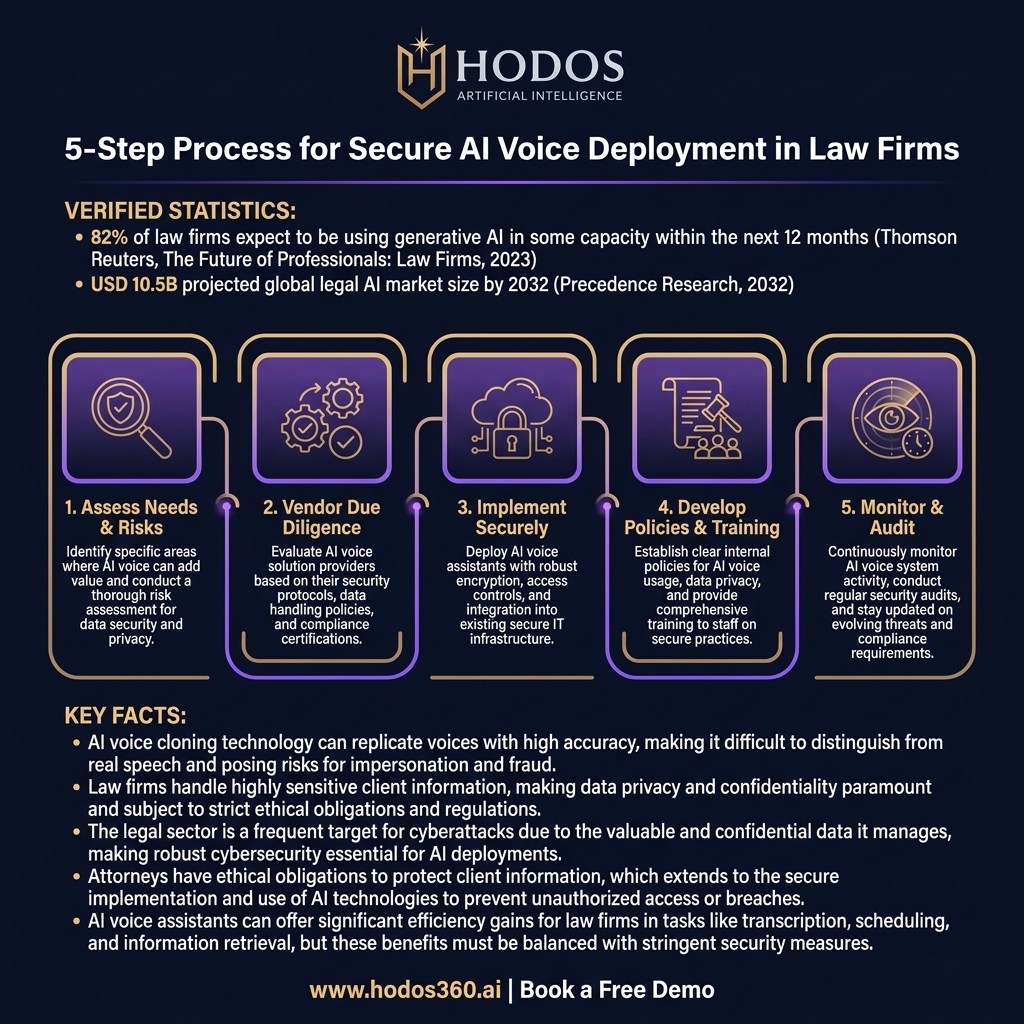
Implementing end-to-end encryption for all voice data, both in transit and at rest, is non-negotiable. This means that every interaction, from initial client intake via an AI voice assistant to the routing of calls, must be protected by the strongest available cryptographic standards. Furthermore, robust access controls must be in place, ensuring that only authorized personnel can access sensitive data processed by the AI. Learn more about Voice AI: Essential Strategies for Law Firms' Future. Firms should also consider anonymization techniques for certain data sets used to train or refine their AI models, particularly when dealing with large volumes of conversational data. This proactive approach helps mitigate the risks associated with potential leaks or breaches, safeguarding client confidentiality at every touchpoint.
Regular security audits and penetration testing of AI voice systems are crucial to identify and address vulnerabilities before they can be exploited. This isn't a one-time task but an ongoing commitment to maintaining a resilient security posture. Leading law firms are increasingly investing in dedicated AI ethics committees or appointing Chief AI Officers, reflecting the growing understanding that AI governance is as critical as its implementation. These internal bodies can establish clear policies for data retention, usage, and deletion for custom AI voices, ensuring adherence to both regulatory requirements and internal ethical guidelines. The goal is to establish complete control over how voice data is managed and processed.
- ✓Vendor Due Diligence: Thoroughly vet AI voice providers for security certifications (e.g., ISO 27001, SOC 2 Type II), data handling policies, and incident response plans.
- ✓End-to-End Encryption: Ensure all voice communications and data processed by AI are encrypted both in transit and at rest, using robust, modern cryptographic standards.
- ✓Data Residency and Sovereignty: Verify that client data processed by AI resides in compliant geographic locations, meeting jurisdictional legal and ethical requirements.
- ✓Access Controls & Anonymization: Implement strict role-based access controls and explore data anonymization techniques for training data to protect personally identifiable information.
- ✓Regular Security Audits: Conduct frequent independent security audits, penetration testing, and vulnerability assessments of all AI voice systems.
- ✓Employee Training & Policy Enforcement: Educate all staff on AI voice security best practices, data privacy policies, and the ethical use of AI in legal workflows.
- ✓Incident Response Plan: Develop and regularly test a comprehensive incident response plan specifically for AI-related data breaches or security incidents.
Navigating the Vendor Landscape: Choosing the Right AI Voice Partner
The market for AI voice solutions is dynamic, with numerous providers offering varying levels of functionality and security. For law firms, selecting the right partner is paramount, dictating not only the efficiency of their operations but also the integrity of their client data. Beyond the foundational features like 24/7 phone answering or multilingual support, firms must delve into the provider's commitment to data governance. For instance, while firms like Allen & Overy have publicly embraced AI tools like Harvey AI, their integration strategy involved rigorous vetting and a clear understanding of data flow and security protocols, setting a precedent for responsible AI adoption in the legal sector. This careful approach ensures that the chosen AI agent enhances, rather than compromises, a firm's ethical standing.
When evaluating potential AI voice partners, transparency should be a non-negotiable demand. Firms should inquire about the origins of the AI model's training data, the mechanisms for de-identifying sensitive information, and the process for introducing new features or upgrades. A reputable vendor will provide clear documentation on their data privacy policies, compliance certifications, and their approach to ethical AI development. They should also offer customizable settings that allow law firms to maintain granular control over how their data is used, stored, and accessed, preventing the kind of broad data exposure seen in some consumer-facing AI applications.
Furthermore, consider the vendor's financial stability and long-term commitment to the legal sector. A partner that understands the unique regulatory and ethical environment of law firms is far more valuable than a generic tech provider. Look for evidence of continuous investment in security research and development, as well as a robust customer support system that can address legal-specific concerns promptly. The goal is to establish a partnership built on trust, where the AI voice solution acts as a secure extension of your firm's professional capabilities, not a potential liability. This diligence extends to every aspect, from the initial setup to ongoing maintenance and updates of the AI built into your operations.
The Future of Legal Communication: Beyond Basic Voice Models
The evolution of AI voice generation extends far beyond simple question-and-answer systems. Advanced AI models now offer nuanced features like sentiment analysis, adaptive learning, and sophisticated multilingual support, transforming how law firms interact with clients globally. These upgrades enable AI voice assistants to not only understand spoken words but also interpret emotional cues and handle complex legal terminology across diverse languages, significantly enhancing client experience and operational reach. This leap in capability means firms can offer more personalized, efficient, and accessible services, differentiating themselves in a competitive market while maintaining high standards of communication and care.
Regulatory Landscape and Compliance in AI Voice Deployment
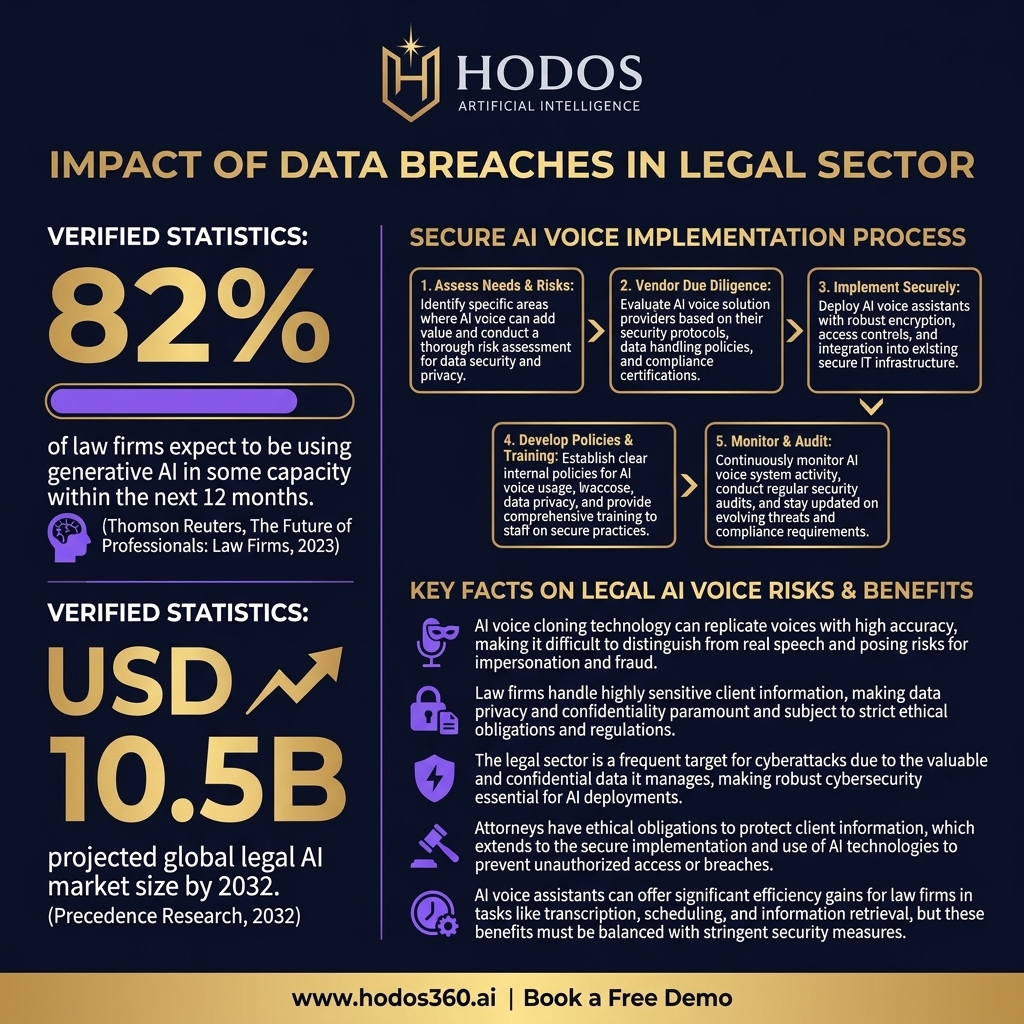
The deployment of AI voice technology within law firms operates within an increasingly complex regulatory framework. Data privacy laws like the GDPR, CCPA, and evolving state-specific statutes (e.g., those in Virginia, Colorado, and Utah) directly impact how custom AI voices can collect, process, and store personal information. Firms must ensure that their AI voice assistants are configured to comply with these diverse requirements, particularly concerning consent for voice recording, data retention limits, and individuals' rights to access or delete their data. The penalties for non-compliance can be severe, ranging from hefty fines to reputational damage, making proactive legal counsel an indispensable part of AI adoption strategies.
Beyond existing privacy laws, the global regulatory environment for AI itself is rapidly taking shape. The European Union's AI Act, for example, sets a precedent for comprehensive AI governance, classifying AI systems by risk level and imposing strict requirements on high-risk applications. While direct enforcement for U.S. law firms might be limited, such legislation influences global best practices and could inspire similar frameworks domestically. Law firms must anticipate these legislative trends, ensuring that their AI models and voice generation tools are adaptable to future compliance demands. This forward-looking approach is crucial for maintaining legal and ethical integrity as AI technology continues to advance and evolve.
Adhering to these regulations is not merely a legal checkbox; it's a strategic imperative that builds client trust and differentiates a firm in the marketplace. Firms that demonstrate a clear commitment to responsible AI governance, including robust AI voice security, are better positioned to attract and retain clients in an increasingly privacy-conscious world. This includes transparent communication with clients about how their data is handled by AI voice assistants, providing clear opt-out options, and regularly updating privacy policies to reflect AI usage. This proactive stance on compliance, particularly with AI built into client-facing services, can transform potential liabilities into competitive advantages, reinforcing the firm's reputation for integrity and foresight.
Proactive Compliance: A Competitive Advantage in Legal AI
In the rapidly evolving legal tech landscape, proactive compliance with AI regulations is no longer just a necessity but a significant competitive advantage. Law firms that prioritize robust AI voice security and transparent data governance build stronger client trust and enhance their brand reputation. By demonstrating a deep understanding of ethical AI deployment and regulatory adherence, these firms differentiate themselves from competitors, positioning themselves as leaders in responsible innovation. This commitment to compliance, extending to every AI model and AI agent deployed, not only mitigates legal risks but also fosters a culture of integrity that resonates deeply with clients seeking secure and trustworthy legal services.

Key Takeaways and Next Steps: Empowering Your Firm with Secure AI Voice
The Meta Muse leak underscores a fundamental truth: innovation, particularly with AI voice generation, must be coupled with unwavering security. For law firms, the adoption of AI voice assistants offers unprecedented opportunities for efficiency, client engagement, and operational streamlining. However, these benefits can only be fully realized if firms prioritize AI voice security and client confidentiality at every stage of implementation. This means rigorous vendor selection, robust data encryption, continuous auditing, and an unyielding commitment to ethical AI principles. The future of legal practice is undeniably intertwined with AI, but its successful integration hinges on a foundation of trust and meticulous risk management.
As you navigate this transformative landscape, consider your firm's readiness for AI. Are your existing systems capable of handling advanced AI models securely? Do your partners understand the ethical implications of custom AI voices? Platforms like HODOS 360 offer comprehensive AI solutions, including AI Voice Assistants designed with the legal industry's stringent security and compliance needs in mind. By embracing intelligent, secure technology, your firm can not only mitigate the risks highlighted by recent events but also unlock new levels of productivity and client satisfaction, solidifying your position as a forward-thinking and trustworthy legal entity. The time to act decisively on AI voice security is now.
Frequently Asked Questions
What are the primary security risks of AI voice assistants for law firms?+
The main risks include unauthorized access to confidential client communications, potential data breaches of sensitive case information, and the ethical implications of using AI to handle attorney-client privileged interactions. There's also the risk of deepfake voice generation to impersonate legal professionals or clients, undermining trust and security.
How can law firms ensure client confidentiality when using custom AI voices?+
Law firms must prioritize end-to-end encryption for all voice data, implement strict access controls, and select AI voice providers with proven security certifications and transparent data handling policies. Regular security audits and ensuring data residency in compliant jurisdictions are also critical for maintaining confidentiality.
What specific regulations apply to AI voice technology in the legal sector?+
While specific AI regulations are evolving, law firms must comply with existing data privacy laws like GDPR, CCPA, and state-specific statutes. Ethical guidelines, such as ABA Model Rules 1.1 (Competence) and 1.6 (Confidentiality), also govern the responsible adoption and secure use of AI technologies, including voice assistants.
How does the Meta Muse leak impact law firms considering AI voice solutions?+
The Meta Muse leak serves as a cautionary tale, highlighting the potential vulnerabilities in even advanced AI voice models. It underscores the critical need for law firms to conduct exhaustive due diligence on AI vendors, demand stringent security protocols, and understand the full scope of data privacy implications before deployment.
What should a law firm look for in an AI voice assistant vendor?+
Firms should seek vendors with robust security certifications (e.g., ISO 27001), clear data residency policies, transparent data usage practices, and a strong track record in the legal tech sector. Customizable controls for data management, continuous security updates, and comprehensive support are also essential for secure AI voice deployment.