


AI Website Builder: Essential for Law Firm Digital Growth
In early 2026, Sarah Chen, a managing partner at a boutique intellectual property firm in Austin, Texas, found herself at a crossroads. Her firm, Chen & Associates, boasted an impressive win record, yet their online presence felt stuck in 2010. Their website, a static relic built by a local freelancer years ago, offered little in the way of interactive client intake, mobile responsiveness, or modern SEO. "We were losing potential clients to competitors with sleek, dynamic sites," Chen recounted at a recent ABA TechShow panel. "The traditional web development process was too slow and costly, and generic builders lacked the legal-specific features we desperately needed. It was a classic dilemma: innovate or stagnate."
Chen's struggle reflects a broader tension across the legal sector. While the promise of AI permeates every facet of legal practice—from document review to case management—its application in foundational areas like web presence often gets overlooked. Yet, a firm's website is its digital storefront, its primary lead generation engine, and a critical component of its brand identity. The recent buzz around platforms like Hostinger's AI Website Builder highlights a growing trend: the democratization of sophisticated web design, now accessible even to those with no coding needed. But for law firms, the question isn't just about building *a* website; it's about leveraging an AI website builder to create a compliant, high-converting, and strategically optimized digital asset that truly serves the unique demands of legal practice. This isn't just about aesthetics; it's about competitive survival and growth in a rapidly digitizing world.
AI Website Builder: The Essential Tool for Modern Law Firms
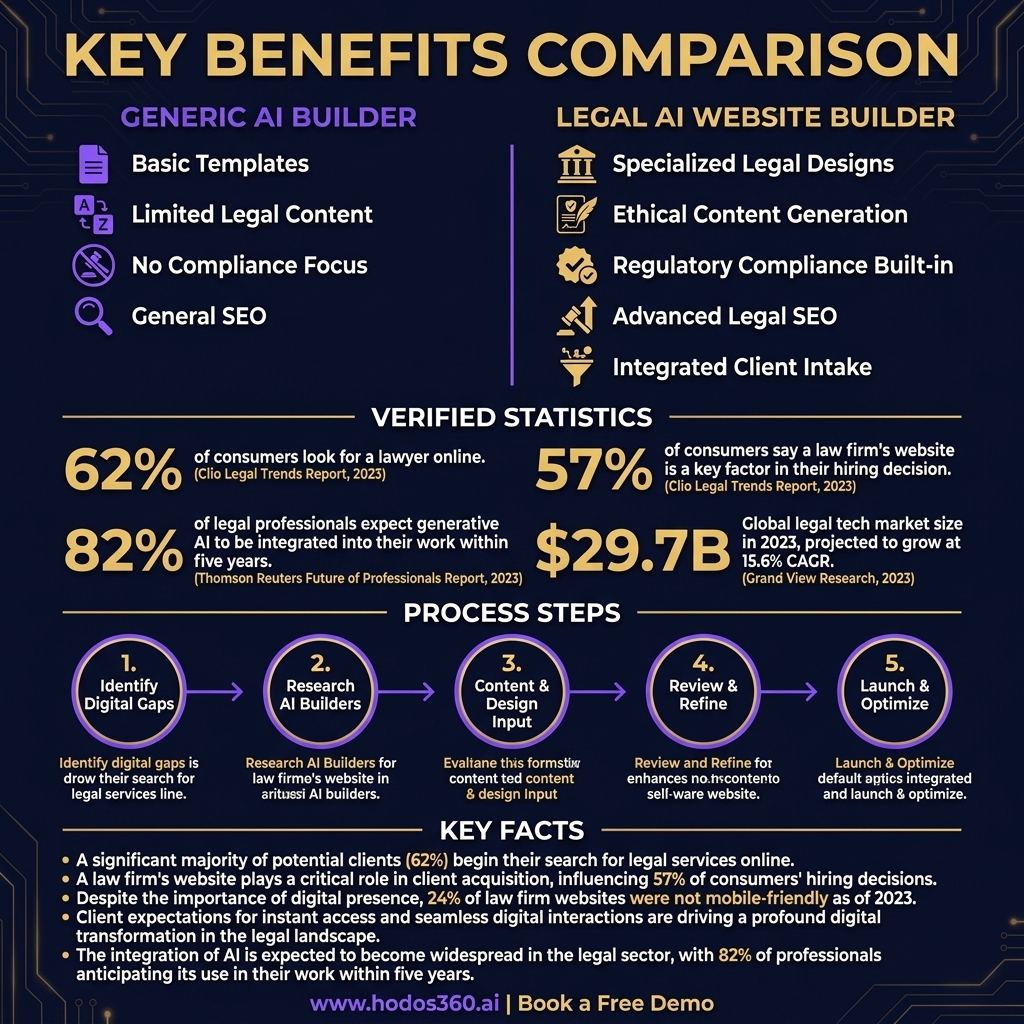
The legal landscape is undergoing a profound digital transformation, driven by client expectations for instant access and seamless digital interactions. Gone are the days when a simple online brochure sufficed. Today, a law firm's website must be a dynamic hub for information, client engagement, and lead conversion. This is where an advanced AI website builder becomes an indispensable asset. Unlike generic website creation tools that offer basic templates and drag-and-drop editors, specialized AI platforms for law firms integrate deep industry knowledge to automate complex design and content generation tasks, ensuring compliance and professional polish from the outset. For instance, the latest ABA TechReport found that over 60% of small to mid-sized firms identified client acquisition as their top challenge, directly correlating with the effectiveness of their online presence.
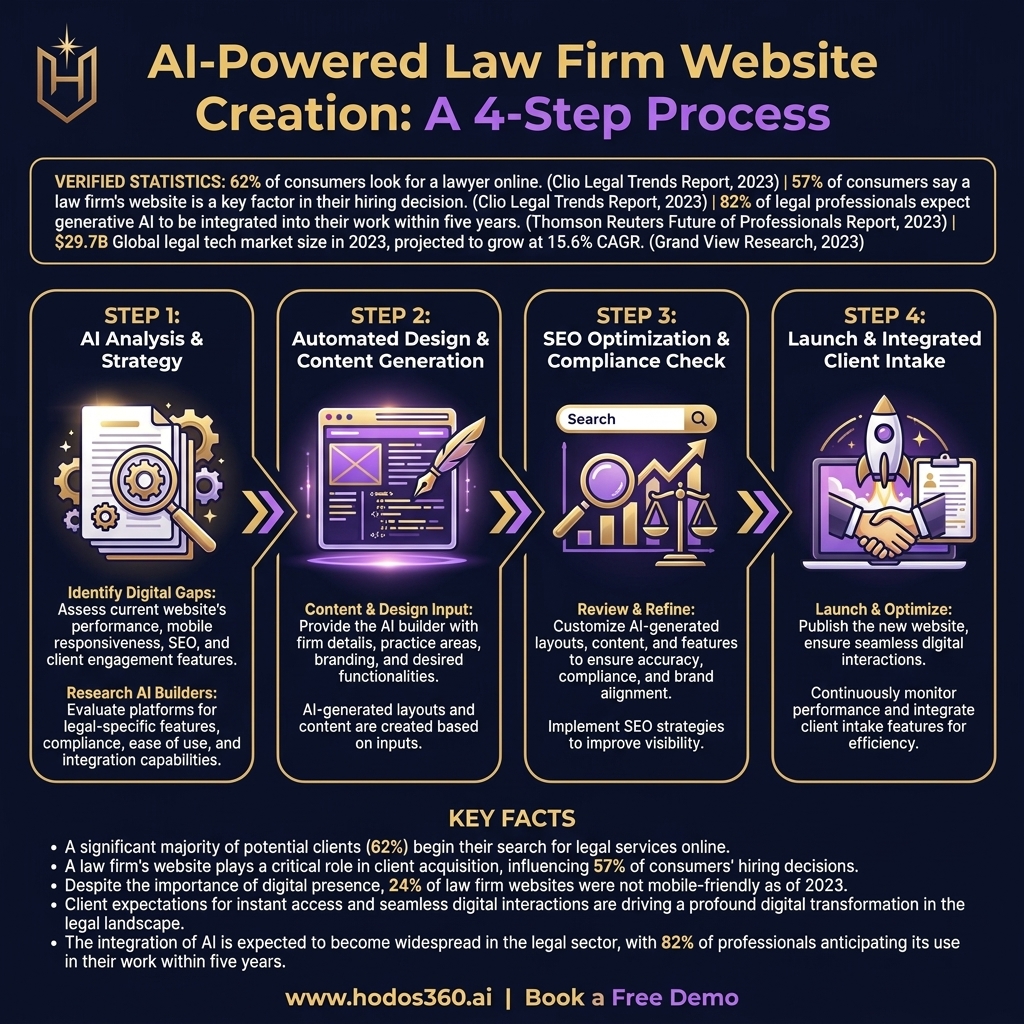
Firms are increasingly looking to launch new, powerful websites without the traditional overhead. Learn more about Ethical AI in Legal Tech: An Essential Guide for Law Firms. The emergence of sophisticated AI-powered platforms means firms can create a professional online presence in minutes, rather than weeks or months. Take, for example, the advancements seen in platforms like HODOS 360's Web & Mobile Development services, which move beyond simple template customization. These systems can analyze a firm's practice areas, target audience, and competitive landscape to intelligently suggest design layouts, write compelling, SEO-optimized content, and even integrate client intake forms that capture crucial data. This level of automation ensures that even firms without a dedicated marketing team can develop a web presence that rivals larger, more resource-rich competitors, effectively leveling the playing field in the digital arena. For any law firm wondering how to compete effectively online, embracing an AI website builder is no longer optional, but a strategic imperative.
Beyond the Basics: Why Generic AI Builders Fall Short for Legal Practices
While general-purpose AI website builders like those reviewed on Hostinger offer impressive speed and ease of use for many businesses, they often fall short when confronted with the unique demands of the legal profession. Law firms operate within a stringent regulatory framework, where accuracy, confidentiality, and ethical compliance are paramount. A generic builder might generate persuasive marketing copy, but it rarely accounts for the specific disclaimers required by state bar associations or the nuanced language necessary to avoid unauthorized practice of law concerns. Furthermore, the aesthetic and functional requirements of a legal website differ significantly from, say, an e-commerce store or a personal blog. Firms need robust security, clear pathways for client communication, and content that establishes authority and trust, not just sales.
Consider the specific challenges faced by firms. Attorney advertising rules, governed by ABA Model Rule 7.1, demand that communications about legal services are not false or misleading. A generic AI content generator, without legal-specific training, might inadvertently produce claims that violate these rules. Learn more about Voice AI: Essential Revenue Protection for Law Firms. Moreover, data privacy is non-negotiable. While a basic builder might offer SSL certificates, it won't inherently provide the secure client portal integrations or HIPAA-compliant data handling protocols that legal practices often require. This fundamental mismatch underscores why a dedicated AI website builder designed for legal professionals is not just a convenience, but a necessity. It ensures that the speed and efficiency of AI don't come at the cost of ethical integrity or professional credibility. It’s about building a digital asset that is not only functional but also legally sound.
The Compliance Conundrum: Ethical Considerations in AI Web Design
The intersection of AI and legal ethics presents a complex challenge, particularly in public-facing platforms like websites. When an AI website builder generates content, it must adhere to the myriad of rules governing attorney advertising and client communication. For example, jurisdictions often have strict guidelines on testimonials, claims of specialization, and even the visual representation of legal services. A system that understands these nuances—perhaps by integrating a comprehensive legal knowledge base and jurisdictional rule sets—can prevent costly ethical missteps. Learn more about AI SEO: Ultimate Content Strategy for Law Firms. Firms must ensure that any AI-powered content creation is reviewed by human oversight to maintain compliance with state bar regulations and professional standards, safeguarding the firm's reputation and avoiding potential disciplinary action. This human-in-the-loop approach is critical for responsible AI adoption in legal web development.
Crafting a Digital Fortress: Key Features of an AI-Powered Legal Website
A truly effective AI website builder for law firms extends far beyond simple templates and basic functionality. It acts as an intelligent architect, constructing a digital fortress that protects client data, attracts ideal clients, and streamlines operations. At its core, such a platform should offer unparalleled customization driven by AI, allowing firms to create a unique brand identity that resonates with their target audience. Features like responsive design, ensuring optimal viewing across all devices (mobile, tablet, desktop), are no longer luxuries but baseline requirements. According to a recent Gartner report, over 70% of web traffic now originates from mobile devices, making mobile-first design crucial for client engagement and search engine ranking. The ability to create a professional website quickly is key, but the depth of features truly differentiates.
Beyond aesthetics, the power of an AI-driven platform lies in its ability to automate critical backend processes. Learn more about AI Web Design: The Ultimate Guide for Modern Law Firms. This includes AI-powered content generation that adheres to legal standards, automated SEO optimization to improve visibility, and integrated CRM functionalities for seamless client intake and lead management. Imagine an AI that not only builds your site but also optimizes every page for relevant legal keywords, schedules content updates, and tracks visitor behavior to suggest improvements. This intelligent approach transforms a static website into a dynamic marketing and operational asset. Firms can create a domain that reflects their brand, using an intuitive editor to manage content, and leverage AI to ensure their online presence is always working for them, attracting new clients and enhancing their professional standing. Many are wondering how to best use these tools, and the answer lies in leveraging their full, integrated capabilities.
SEO for Lawyers: Dominating Local Search with AI
For law firms, local search engine optimization (SEO) is paramount. Clients often search for legal services in their geographic area. An advanced AI website builder integrates sophisticated SEO tools that analyze local search trends, identify high-intent keywords, and automatically optimize website content and metadata. This isn't just about keyword stuffing; it's about building authority through well-structured content, optimized business listings, and strategic backlinking. Learn more about Legal AI Models: Essential for Law Firm Autonomy. AI can monitor competitor performance, suggest schema markup for rich snippets, and even generate localized content variations, ensuring the firm ranks prominently in local search results and captures the attention of potential clients in their immediate vicinity. This targeted approach is crucial for sustained client acquisition.
- ✓AI-Powered Design & Content Generation: Automatically generates layouts and legal-specific content, adhering to ethical guidelines, saving countless hours in website creation.
- ✓Integrated Client Intake Workflows: Seamlessly connects your website to your case management system, streamlining lead qualification and client onboarding.
- ✓Advanced SEO & Analytics: AI monitors search trends, optimizes for local legal keywords, and provides actionable insights to boost online visibility and track ROI.
- ✓Responsive & Mobile-First Design: Ensures your website performs flawlessly across all devices, crucial for reaching clients on the go and improving search rankings.
- ✓Secure Client Portals: Offers encrypted communication channels and document sharing, enhancing client confidentiality and trust.
- ✓Multilingual Support: Automatically translates website content, expanding your reach to diverse client populations and demonstrating inclusivity.
The Strategic Advantage: How AI Web Development Drives Growth and Client Acquisition
The strategic deployment of an AI website builder isn't merely about having an online presence; it's about transforming your website into a powerful engine for growth and client acquisition. In a market where competition is fierce, firms that leverage AI for their web development gain a significant edge. They can adapt more quickly to market changes, launch targeted marketing campaigns with unprecedented speed, and provide a superior user experience that converts visitors into clients. For example, firms using AI-driven analytics can identify which content pieces are most effective, which practice areas are generating the most leads, and where to allocate marketing resources for maximum impact. This data-driven approach, powered by AI, moves firms beyond guesswork, allowing them to make informed decisions that directly contribute to their bottom line.
Moreover, the integration of AI extends beyond just the website itself. It creates a cohesive digital ecosystem. Learn more about AI Marketing Stack: Essential Tools for Law Firm Growth. Imagine your website feeding directly into an AI Law Firm Management System, where new client inquiries are automatically qualified, appointments are booked by AI Voice Assistants, and documents are generated with AI-powered legal workflows. This holistic approach, exemplified by platforms like HODOS 360, ensures that every digital touchpoint is optimized for efficiency and client satisfaction. Firms that embrace this level of integration are not just building websites; they are building a future-proof foundation for sustained success in the digital age. They are creating an AI-powered platform that continually learns and improves, ensuring their online presence is always a step ahead.
Integrating Client Intake & Case Management: A Seamless Experience
One of the most significant benefits of a specialized AI website builder for law firms is its ability to seamlessly integrate with core operational systems. This means that a potential client filling out an inquiry form on your website can trigger a cascade of automated actions: a new lead profile is created in your case management system, an AI voice assistant can follow up with a personalized call, and initial documents can be drafted using AI-powered automation. This integration eliminates manual data entry, reduces the risk of errors, and dramatically speeds up the client intake process. It transforms a website from a static information source into an active participant in your firm's workflow, enhancing efficiency and improving the client experience from the very first touchpoint, which is crucial for client retention and satisfaction. This is the future of legal web development.

Navigating the Future: Implementing AI for Your Firm's Online Presence
As law firms navigate the complexities of the digital age, the choice of an AI website builder becomes a critical strategic decision. The market is evolving rapidly, with new tools and capabilities emerging constantly. The key is to select a platform that not only offers cutting-edge AI features but also understands the unique regulatory and operational environment of the legal industry. Firms should look for solutions that provide robust security, compliance features, and seamless integration with other essential legal tech tools, such as case management and marketing automation platforms. The goal is to build a website that is not just aesthetically pleasing but is a high-performing digital asset, capable of driving client acquisition and operational efficiency.
Ultimately, the future of legal practice is inextricably linked to digital innovation. Firms that embrace specialized AI for their web development will be better positioned to attract and serve clients, streamline their operations, and maintain a competitive edge. The narrative of Sarah Chen and Chen & Associates, who ultimately adopted an AI-powered platform tailored for legal professionals, serves as a powerful testament. "It wasn't just about a new website; it was about reinventing our entire digital strategy," Chen concluded. "The investment in an AI website builder paid dividends almost immediately, transforming our online presence into our most effective client acquisition tool." For any law firm looking to thrive in the modern era, harnessing the power of AI for web development is not just an option; it's a strategic imperative for sustained success.
Frequently Asked Questions
What is an AI website builder specifically for law firms?+
An AI website builder for law firms is a specialized platform that uses artificial intelligence to design, develop, and optimize legal websites. Unlike generic builders, it incorporates legal-specific templates, content generation that adheres to ethical guidelines, integrated client intake forms, and advanced SEO for legal keywords, ensuring compliance and maximizing client acquisition for attorneys and legal professionals.
How does an AI website builder enhance client acquisition for law firms?+
An AI website builder boosts client acquisition by automating SEO optimization for local and practice-specific keywords, creating mobile-responsive designs, and integrating high-converting client intake forms. It analyzes user behavior to refine the site, ensuring potential clients find the firm easily, engage with relevant content, and have a seamless process for contacting attorneys, ultimately increasing lead generation.
Are AI-generated websites compliant with legal advertising rules?+
While an AI website builder can generate content and designs, human oversight remains crucial for compliance. Specialized legal AI platforms are trained on legal regulations and ethical guidelines to minimize risks. However, firms must review all AI-generated content to ensure it fully adheres to state bar advertising rules and professional conduct standards before publication, safeguarding against ethical violations.
What are the key differences between a generic and a legal AI website builder?+
The core difference lies in specialization. A legal AI website builder understands the nuances of legal ethics, specific content requirements (e.g., disclaimers), and integrates with legal tech like case management systems. Generic builders offer broad functionality but lack the deep legal context, compliance features, and industry-specific tools necessary for a high-performing, ethically sound law firm website.
Can an AI website builder integrate with existing law firm management systems?+
Yes, advanced AI website builders designed for law firms often offer robust integration capabilities. They can seamlessly connect with existing case management, client relationship management (CRM), and billing systems. This creates a unified workflow, automating data transfer from website inquiries to client profiles, streamlining client intake, and improving overall operational efficiency across the firm's digital ecosystem.