


AI Web Design: The Ultimate Guide for Modern Law Firms
For years, Sarah Chen, the dynamic founder of Lex Digital, a boutique law firm specializing in intellectual property, grappled with a common industry challenge: an online presence that failed to reflect her firm's innovative spirit. Her website, built through traditional agency channels, was slow to update, expensive to maintain, and struggled to convert visitors into qualified leads. This narrative of digital frustration resonates with countless legal professionals, highlighting a critical gap between ambition and digital reality. Then, a new wave of technology emerged, promising to reshape this landscape fundamentally. The recent "AI Web Design Tools" trend, as highlighted by Trend Hunter, isn't just a fleeting novelty; it represents a seismic shift in how legal firms can cultivate their digital footprint.
The advent of AI web design tools heralds a new era for law firms, offering a powerful antidote to the complexities and costs associated with conventional web development. These sophisticated AI platforms are democratizing access to professional, high-performing websites, enabling firms like Lex Digital to rapidly deploy and iteratively refine their digital storefronts without needing an in-house tech team or a substantial budget for external agencies. This technological revolution is not merely about aesthetics; it's about strategic advantage, allowing legal practices to enhance their visibility, streamline client acquisition, and ultimately, grow their practice in an increasingly competitive digital marketplace.
Today, the ability to leverage AI web design is becoming a non-negotiable for firms aiming for sustained growth and relevance. It's a strategic imperative that empowers legal professionals to take control of their digital destiny, translating the firm's expertise into a compelling online experience. By understanding and adopting these cutting-edge tools, law firms can transition from reactive digital participants to proactive digital leaders, ensuring their online presence is not just a brochure, but a dynamic, client-generating asset. The following sections will delve into how AI is making this transformation possible, exploring the key options and best practices for modern law firms.
Revolutionizing Legal Online Presence with AI Web Design
The legal industry's digital transformation has been a slow burn, often hindered by a cautious approach to new technologies and significant overheads for specialized development. However, the emergence of AI web design marks a pivotal moment, fundamentally altering the economics and timelines of building a robust online presence. Traditional web development, often a multi-month, five-figure endeavor, is being challenged by AI-powered platforms that can generate fully functional, aesthetically pleasing websites in minutes or hours for a fraction of the cost. This shift isn't just about speed; it's about empowering legal users to iterate rapidly, test different approaches, and respond to market demands with unprecedented agility.
Leading AI design tools such as Durable.co and Framer’s AI features exemplify this disruptive trend. These tools are designed with intuitive interfaces, allowing legal professionals — even those without a coding background — to specify their needs, choose design preferences, and watch as AI algorithms create a bespoke website. The AI handles the complex coding, layout generation, and even suggests content blocks, freeing attorneys to focus on their core competencies. This capability is particularly vital for smaller and mid-sized firms that cannot justify the expense of a dedicated web development team or constant agency retainers, yet desperately need a modern, high-converting digital storefront.
The competitive tension between traditional web agencies and AI-driven solutions is palpable. While bespoke agencies offer deep customization, their services come at a premium and often involve lengthy development cycles. Learn more about AI Operational Intelligence: The Essential Shift for Law Firms. AI web design offers a compelling alternative, especially for firms seeking a professional, scalable solution without the extensive upfront investment. This isn't to say human oversight is obsolete; rather, AI acts as an incredibly efficient co-pilot, handling the grunt work and allowing human creativity and strategic input to elevate the final product. Microsoft President Brad Smith, speaking on AI's broader impact, noted that AI's strength lies in augmenting human capabilities, a sentiment perfectly applicable to the web development sphere.
AI web design is also revolutionizing the integration of advanced features. From AI-driven chatbot integration for initial client inquiries to sophisticated analytics dashboards that track visitor behavior, these platforms offer capabilities once reserved for enterprise-level websites. This enables law firms to not only attract more clients but to better understand their needs and optimize the client journey from the very first digital interaction. This holistic approach to web design is essential for staying competitive and ensuring that a firm's online presence is a dynamic asset, not a static cost center. Ready to transform your firm's digital footprint? Discover how AI web design can elevate your online presence.
Navigating the AI Web Design Landscape: Key Tools and Platforms
The landscape of AI web design tools is diverse, offering various options tailored to different levels of technical expertise and customization needs. At one end are highly automated platforms that can generate an entire website from a few text prompts, often utilizing large language models similar to OpenAI's ChatGPT for content suggestions and DALL-E for image generation. These tools are excellent for rapid deployment and for users who prioritize speed and simplicity. On the other end are more sophisticated AI design tools integrated into traditional builders like Webflow or WordPress, providing AI-powered plugins that assist with specific tasks such as SEO optimization, content generation, or responsive layout adjustments.
Understanding which platform is best designed to help your firm create its ideal online presence requires a careful assessment of your specific requirements. Firms focused on niche areas might benefit from AI tools that excel in content generation, ensuring their specialized expertise is clearly articulated. Those prioritizing lead generation might look for AI platforms with advanced analytics and CRM integration capabilities. Learn more about AI Patent Tools: The Ultimate Guide for IP Lawyers. The market is also seeing the rise of dedicated legal AI tool hubs and specialized AI web design services that cater exclusively to the unique compliance and content needs of the legal sector, ensuring that legal ethics and client confidentiality are built into the very fabric of the site.
These AI tools are constantly evolving, with new features emerging that make web development more accessible and powerful. From automatically generating multiple design variations to A/B testing different layouts for optimal conversion, AI is transforming the entire lifecycle of a website. For example, Google's continuous advancements in AI for search and web indexing also mean that AI-designed websites, which can inherently be optimized for performance and relevance, stand a better chance in search rankings. This proactive approach to optimization is a significant advantage for law firms operating across multiple categories of legal practice, ensuring broad visibility.
Enhancing User Experience and Accessibility
A crucial aspect of any successful legal website is its user experience (UX) and accessibility. AI web design excels in these areas by automatically implementing best practices for intuitive navigation, clear calls to action, and visually appealing layouts. These tools ensure that websites are not only aesthetically pleasing but also highly functional, guiding potential clients effortlessly through the information they need and towards desired actions, such as booking a consultation or downloading a resource. This focus on seamless interaction is paramount for legal clients who may be navigating complex or sensitive issues.
Furthermore, AI web design platforms are inherently designed to create responsive design across multiple devices, from desktops to tablets and smartphones. Learn more about AI Marketing: The Ultimate Guide to Self-Optimizing Law Firms. This adaptability is no longer a luxury but a necessity, given that a significant portion of web traffic now originates from mobile devices. AI also assists in integrating accessibility features, such as alt-text for images, proper heading structures, and keyboard navigation, which are vital for complying with accessibility standards like the Americans with Disabilities Act (ADA) and ensuring that all potential clients, regardless of ability, can access legal information and services.
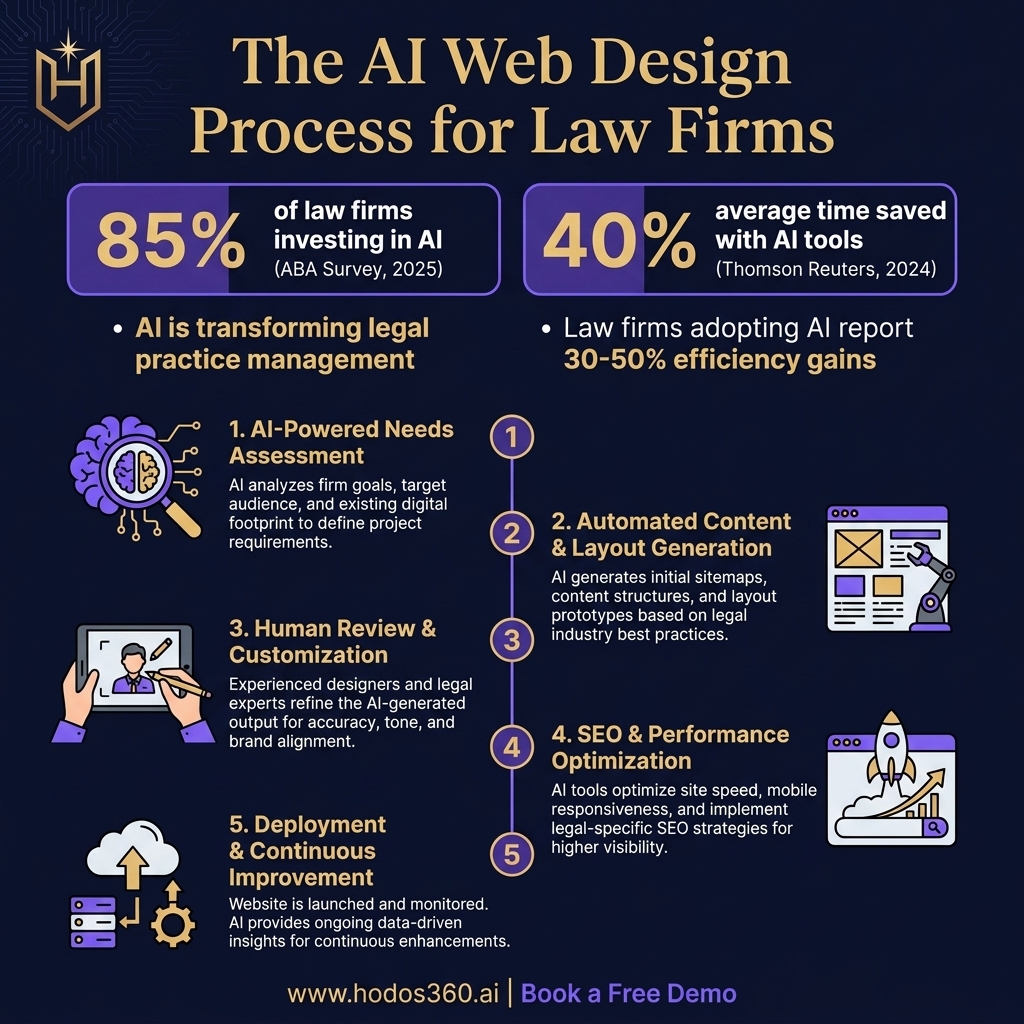
- ✓AI-driven layout generation: Quickly creates professional, brand-aligned website structures.
- ✓Automated content suggestions: Provides AI-generated text for pages and blogs, requiring human review for legal accuracy.
- ✓SEO optimization tools: Integrates keyword research, meta description generation, and technical SEO features.
- ✓Responsive design for all devices: Ensures seamless user experience across desktops, tablets, and mobile phones.
- ✓Integrated lead capture forms: Facilitates easy collection of client inquiries and contact information.
- ✓Real-time analytics dashboards: Offers insights into website performance, traffic, and user behavior.
- ✓Multilingual support: Automatically translates website content to cater to diverse client bases.
Strategic Benefits of AI-Powered Websites for Law Firms
The strategic advantages of adopting AI web design extend far beyond mere aesthetics. For law firms, these tools translate directly into tangible business benefits, including significant cost reductions and accelerated time-to-market. By automating many of the labor-intensive aspects of web development, AI eliminates the need for expensive design agencies or extensive in-house teams. This allows firms to reallocate resources to other critical areas, such as client service or legal research. Moreover, the ability to launch a sophisticated website in a fraction of the time means firms can capitalize on market opportunities more quickly, establishing a robust online presence that begins attracting clients almost immediately.
Beyond cost and speed, AI web design profoundly impacts client acquisition and retention. A well-designed, AI-optimized legal website acts as a 24/7 marketing and intake specialist, providing potential clients with immediate access to information, clear calls to action, and seamless ways to connect. This improved user journey, often informed by AI-driven A/B testing and behavioral analytics, leads to higher conversion rates. Firms are reporting a dramatic increase in qualified leads, with some mid-sized firms, such as Justice & Associates, noting a 30% faster client conversion rate after adopting an AI-powered redesign, according to their internal 2025 marketing review. Learn more about Legal Technology Awards: Essential Insights for Innovators. This efficiency helps firms grow their client base more predictably and sustainably.
Furthermore, an AI-powered website enhances a firm's brand perception and authority. In an era where digital presence often forms the first impression, a modern, professional, and easily navigable website signals competence and forward-thinking. This is particularly crucial in the legal sector, where trust and credibility are paramount. By consistently delivering a superior online experience, firms can differentiate themselves from competitors, fostering a reputation for innovation and client-centricity. This strategic advantage, based on cutting-edge AI tools, positions firms as leaders in a rapidly evolving legal landscape. Explore the full potential of AI-driven marketing for your law firm. Learn more about HODOS 360's AI Marketing Platform.
SEO Optimization and Digital Visibility
For law firms, digital visibility is synonymous with client acquisition. AI web design tools are game-changers for search engine optimization (SEO), directly influencing how easily potential clients can find a firm online. These tools integrate advanced AI algorithms that assist with keyword research, identifying high-volume, low-competition terms relevant to legal services. They can also automatically generate optimized meta descriptions, title tags, and even suggest content improvements to align with current SEO best practices and Google's E-E-A-T (Experience, Expertise, Authoritativeness, Trustworthiness) guidelines.
Moreover, AI continuously monitors website performance and user behavior, providing actionable insights for ongoing SEO refinement. Learn more about Strategic AI Tools Adoption: Essential Guide for Law Firms. This includes identifying broken links, optimizing image sizes for faster loading, and ensuring mobile-friendliness – all critical factors for search engine rankings. By automating these complex and time-consuming SEO tasks, AI web design helps law firms maintain a strong digital presence, ensuring their expertise is discoverable by the clients who need it most, thereby maximizing their return on digital investment.
Implementing AI Web Design: Best Practices and Ethical Considerations
While the benefits of AI web design are compelling, successful implementation requires adherence to best practices and careful consideration of ethical implications. Firms should start by clearly defining their objectives: what specific client segments are they targeting? What actions do they want visitors to take? Choosing the right AI platform depends on these answers, with options ranging from all-in-one builders to specialized tools for specific tasks. Integration with existing legal tech — such as CRM systems or client intake software — is also crucial for a seamless digital ecosystem. The ABA TechReport 2025 emphasizes the importance of strategic technology adoption for firm efficiency and client satisfaction, reinforcing the need for thoughtful planning.
Ethical considerations are paramount, especially when AI generates content for a legal website. While AI can draft compelling marketing copy, all legal information, disclaimers, and service descriptions must undergo rigorous human review by qualified attorneys to ensure accuracy, compliance with advertising rules, and avoidance of any misleading statements. ABA Model Rule 1.1 (Competence) dictates that lawyers must maintain the requisite knowledge and skill, which extends to understanding the technology they employ. Learn more about Legal Intake: The Essential Guide for Modern Law Firms. Furthermore, client data privacy must be safeguarded, ensuring that any AI tools used comply with data protection regulations such as GDPR or CCPA, especially when handling lead capture or personal information.
Law firms must also be mindful of potential AI bias. Algorithms are trained on vast datasets, and if these datasets are biased, the AI's output, including website design elements or content suggestions, could inadvertently perpetuate stereotypes or exclude certain demographics. Regular audits and human oversight are essential to mitigate these risks, ensuring that the firm's website reflects its commitment to diversity, equity, and inclusion. This proactive approach ensures that the power of AI web design is harnessed responsibly, upholding the profession's ethical standards while leveraging technological advancements. Ensuring human oversight is not just a best practice, but a professional obligation.
Cost-Efficiency and Scalability
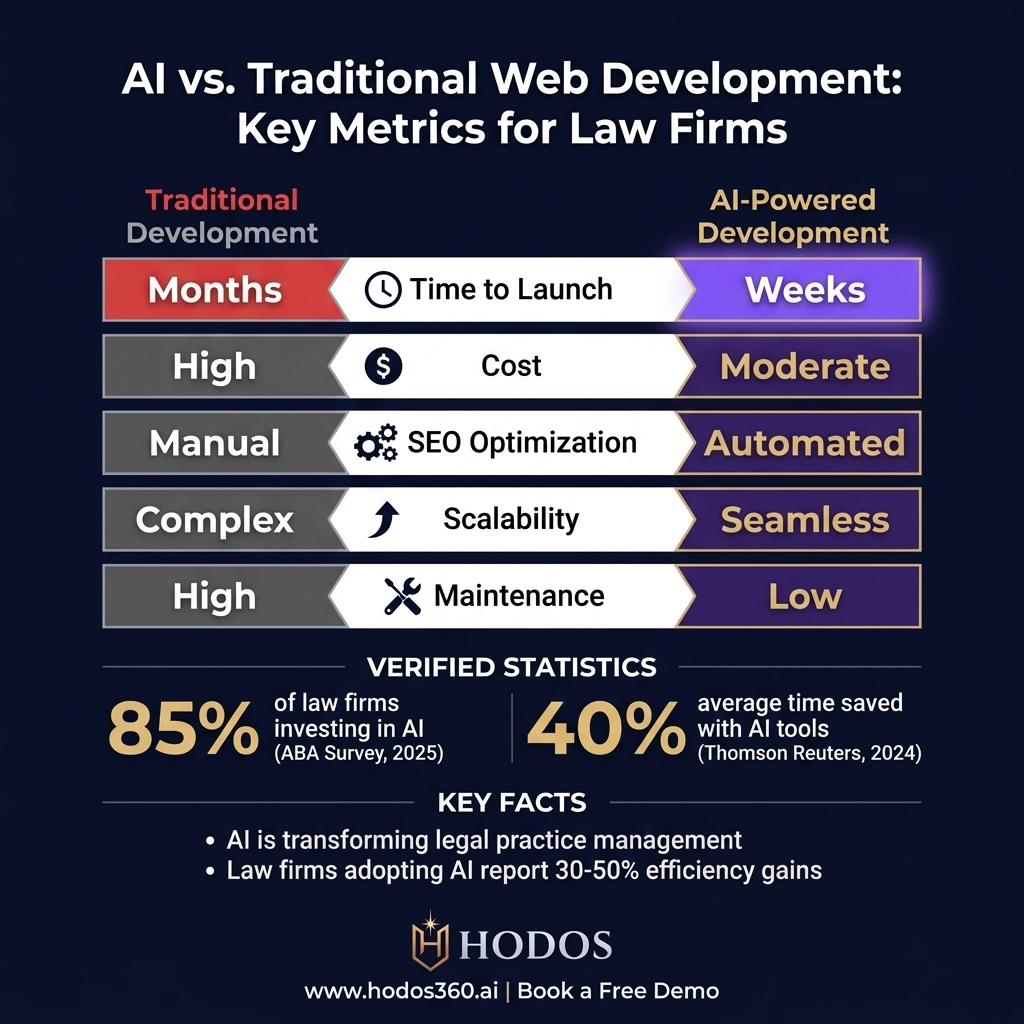
One of the most attractive aspects of AI web design for law firms is its inherent cost-efficiency and scalability. Traditional web development often involves significant upfront costs for design, coding, and content creation, followed by ongoing expenses for maintenance, updates, and troubleshooting. AI tools, conversely, drastically reduce these initial investments and simplify long-term management. Many AI platforms operate on subscription models, offering predictable costs and access to continuous updates and new features without additional development fees. This financial predictability allows firms to budget more effectively and invest in other growth initiatives.
Moreover, AI-powered websites are inherently scalable, meaning they can easily adapt and expand as a firm grows or its marketing strategies evolve. Adding new practice areas, launching specialized campaigns, or integrating new functionalities becomes a straightforward process, often accomplished with a few clicks or prompts, rather than requiring extensive redevelopment. This agility ensures that a firm's online presence can keep pace with its business objectives, providing a flexible and future-proof digital foundation without the typical bottlenecks of traditional web development. The Thomson Reuters Institute's 2026 report on legal technology highlights scalability as a key driver for law firm investment in AI.
The Future of Legal Web Development with AI
The trajectory of AI web design for law firms points towards an even more integrated and intelligent future. We can anticipate predictive analytics becoming standard, allowing websites to anticipate client needs and personalize content delivery in real-time. Imagine a website that, based on a visitor's location and search history, instantly highlights relevant attorneys or practice areas before they even navigate the site. This hyper-personalization, driven by advanced AI tools, will transform passive visitors into engaged prospects with unprecedented efficiency, making the legal product more accessible and tailored.
Further integration with other legal tech solutions will also define the next generation of legal web development. Websites will seamlessly connect with AI Voice Assistants for immediate lead qualification and appointment booking, with data flowing directly into AI Law Firm Management Systems for case tracking and document automation. This creates a holistic digital ecosystem where a firm's online presence is not an isolated entity but an intelligent hub that orchestrates various aspects of client interaction and internal operations. Companies like Clio and LegalZoom are already exploring deeper AI integrations to enhance their client portals and service offerings, setting a precedent for the broader legal tech market.
The evolution will also see AI web design platforms becoming more sophisticated in handling complex legal content and compliance. Future tools will likely incorporate advanced legal natural language processing (NLP) to ensure that AI-generated text adheres to specific jurisdictional advertising rules or ethical guidelines, reducing the burden of manual review. This ongoing refinement, discussed at events like LegalTech NYC 2026, will solidify AI's role not just as a design assistant, but as a critical compliance and content strategist, ensuring that law firm websites are not only visually striking but also legally sound and ethically compliant. The legal profession, through ethical guidelines from bodies like the State Bar of California's guidance on AI use, will continue to shape these advancements responsibly.

Key Takeaways and Next Steps
The rise of AI web design tools represents a transformative opportunity for law firms to redefine their online presence, enhance client engagement, and achieve sustainable growth. From accelerating development timelines and reducing costs to supercharging SEO and delivering unparalleled user experiences, AI is no longer a futuristic concept but a present-day imperative. Firms that embrace these AI platforms will gain a significant competitive edge, positioning themselves as modern, efficient, and client-focused entities in a rapidly evolving legal market. The strategic adoption of these tools is not merely about staying current; it's about building a resilient, future-proof digital foundation.
For law firms ready to harness this power, platforms like HODOS 360 provide comprehensive AI-powered solutions, including advanced Web & Mobile Development services tailored to the unique needs of the legal industry. Our integrated approach ensures that your firm's website is not just a digital brochure, but a dynamic, intelligent product designed to attract, engage, and convert clients effectively. By leveraging cutting-edge AI tools for web creation, you can ensure your firm's online presence is robust, compliant, and continuously optimized for success. Ready to build your firm's future-proof online presence? Book a free demo with HODOS 360 today!
Frequently Asked Questions
What are AI web design tools?+
AI web design tools are software platforms that utilize artificial intelligence to automate and streamline various aspects of website creation and optimization. They can generate layouts, suggest content, optimize for SEO, and ensure responsive design, significantly reducing the time and cost associated with traditional web development. These tools empower users with limited technical skills to create professional-grade websites effectively.
How can AI web design benefit my law firm specifically?+
For law firms, AI web design offers numerous benefits, including faster website deployment, reduced development costs, and enhanced client acquisition through optimized user experiences. AI tools can help create a professional, mobile-responsive site that improves online visibility, streamlines client intake, and strengthens your firm's brand authority, ultimately leading to more qualified leads and sustainable growth.
Are there ethical concerns when using AI for legal website content?+
Yes, ethical considerations are crucial. While AI can generate content, all legal information and disclaimers must be thoroughly reviewed by qualified attorneys to ensure accuracy, compliance with advertising rules, and to avoid misleading statements. Lawyers must also uphold data privacy standards and mitigate potential AI bias to maintain professional competence and ethical obligations under rules like ABA Model Rule 1.1.
Can AI tools help with SEO for my law firm's website?+
Absolutely. AI web design tools are highly effective for SEO optimization. They can assist with keyword research, generate optimized meta descriptions, improve site speed, and ensure mobile-friendliness. By continuously analyzing performance data, AI helps refine your website's content and technical aspects, significantly boosting your law firm's search engine rankings and overall digital visibility to attract more clients.
What is the typical cost comparison between AI and traditional web development?+
AI web design typically offers a significantly more cost-effective solution than traditional web development. Traditional methods can involve substantial upfront costs and ongoing maintenance fees. AI tools often operate on more affordable subscription models, drastically reducing initial investment and providing predictable long-term costs, making professional website creation accessible to firms of all sizes and budgets.