

Custom AI Voice Agents: The Ultimate 24/7 Law Firm Advantage
The legal profession, often perceived as resistant to rapid technological shifts, is now at the precipice of a profound transformation, particularly in client interaction. Imagine Sarah Chen, managing partner at a bustling litigation firm in San Francisco. A critical new client, referred by a long-standing contact, calls at 6:30 PM on a Friday. Sarah, en route to a family engagement, misses the call. By Monday morning, the potential client has contacted a competitor who offered immediate engagement through an advanced virtual receptionist. This scenario, a common pain point for law firms, underscores the immense pressure to provide seamless, 24/7 availability without incurring prohibitive overheads.
The recent announcement of no-cost access to custom AI voice assistants with 24/7 call handling, as highlighted by FinancialContent, marks a pivotal moment. This isn't just about answering a phone; it's about intelligent, proactive engagement that mirrors a human interaction, tailored specifically to the nuances of legal practice. For law firms, this technology promises to bridge the gap between client expectation and operational capacity, ensuring that every inquiry, regardless of time or complexity, is met with the appropriate response, capturing crucial information, and setting the stage for successful client relationships.
This shift from generic answering services to sophisticated custom AI voice agents represents a strategic imperative. Firms that embrace this technology aren't just adopting a new tool; they're redefining their client acquisition funnel, enhancing their brand reputation for responsiveness, and optimizing internal workflows. The ability to customize these agents, leveraging advanced capabilities like AI voice cloning and natural language processing, allows legal practices to maintain their unique identity while scaling their client service capabilities to unprecedented levels, securing an ultimate advantage in a fiercely competitive market.
The Unfolding Revolution of AI Voice Agents in Legal Practice
The broader AI revolution, spearheaded by visionaries like Sam Altman of OpenAI and Dario Amodei of Anthropic, has fundamentally reshaped industries far beyond tech, and legal is no exception. While much of the early legal AI focus centered on document review and research, the frontier of client interaction is now seeing its own profound disruption. Law firms historically relied on human receptionists or, at best, basic answering services. However, as client expectations for immediate service have escalated—fueled by experiences in other sectors—these traditional models are proving increasingly inadequate, often leading to missed opportunities and client frustration.
A significant finding from Clio's 2023 Legal Trends Report revealed that a substantial percentage of potential clients abandon their search if a law firm doesn't respond quickly. The report highlighted that nearly half of prospective clients expect a response within an hour. This data point alone underscores the critical need for a robust, always-on client communication system. Generic virtual receptionists, while offering some relief, often fall short of the nuanced requirements of legal intake, struggling with complex queries, specific legal terminology, or the delicate art of lead qualification that requires more than just scripting.
This is where custom AI voice agents enter the scene as a true game-changer. Learn more about AI Content Creation: Ultimate Edge for Law Firms. Unlike their generic counterparts, these agents are designed to understand and adapt to the specific needs of a law firm, its practice areas, and its unique client base. They can be trained on proprietary firm knowledge, legal precedents, and even mimic a specific firm's tone and communication style, thanks to advancements in AI voice cloning technology. The recent news of no-cost access to these custom solutions democratizes this advanced capability, making it accessible to a wider range of firms, from solo practitioners to mid-sized operations.
The integration of such advanced AI voice agents transforms a law firm's front office into a highly efficient, intelligent operation. They ensure that every single caller receives immediate, professional attention, whether it's after traditional business hours, on weekends, or during peak call times. This consistent availability not only drastically reduces the number of missed calls—and thus, missed leads—but also significantly enhances the perception of client care and responsiveness. HODOS 360’s AI Voice Assistants are at the forefront of this transformation, offering tailored solutions that integrate seamlessly into a firm’s existing infrastructure, providing 24/7 phone answering, lead qualification, and appointment booking with multilingual support.
Beyond Basic Answering: Crafting Custom AI for Legal Intake
The days of simply having a machine answer the phone are long gone. Today's legal market demands more than just rudimentary phone answering service; it requires an intelligent call handling system capable of complex legal client intake. The financial and reputational costs associated with missed calls and inefficient intake processes are staggering. According to a recent ABA survey on client satisfaction, the initial client contact often dictates the entire relationship. A clunky, impersonal, or delayed intake process can deter potential clients before a lawyer even has a chance to speak with them, leading to lost revenue and a diminished competitive edge. Firms that fail to adapt risk falling behind competitors, many of whom are already investing in advanced legal tech solutions, as evidenced by major players like Allen & Overy's partnership with Harvey AI for internal legal research, signaling a broader embrace of AI across the legal value chain.
What truly differentiates custom AI voice agents from basic virtual receptionist services is their capacity for deep customization and intelligent workflow integration. Imagine an AI agent trained specifically to qualify personal injury leads, asking precise questions about incident details, insurance information, and potential damages, all while maintaining a empathetic tone. This level of sophistication means the AI isn't just routing calls; it's actively performing critical lead qualification, pre-screening potential clients to ensure that only genuinely promising cases reach a human attorney. This dramatically improves efficiency, allowing legal teams to focus on substantive legal work rather than administrative triage.
Thomson Reuters' 2024 State of the Legal Market Report emphasized the growing pressure on law firms to improve operational efficiency while maintaining high standards of client service. Learn more about AI Receptionist Disclosure: Essential Legal Compliance for Firms. Custom AI voice agents directly address this by automating repetitive, time-consuming intake tasks. Beyond initial qualification, these agents can also handle appointment booking directly into a firm's calendar system, provide answers to common FAQs (e.g., firm hours, practice areas, general fee structures), and even collect initial documentation requirements. This comprehensive approach ensures that by the time a human lawyer engages, they are equipped with a well-qualified lead and preliminary information, streamlining the entire onboarding process.
### The Cost of Missed Calls and Inefficient Intake
The true cost of an unanswered call extends far beyond a single lost client. It encompasses the cumulative impact of tarnished reputation, the opportunity cost of potential referrals from satisfied clients, and the operational strain of an overwhelmed administrative staff. Each missed call is a missed opportunity for revenue and growth, particularly for smaller and mid-sized firms where every client counts. In an era where immediacy is king, the absence of 24/7 after-hours support means firms are effectively closed to a significant portion of their potential market during non-business hours, ceding ground to more technologically agile competitors. This silent drain on resources and potential revenue highlights the urgent need for a robust, intelligent solution that can consistently capture and nurture every lead, regardless of when it arrives.
Navigating the Ethical and Regulatory Landscape of Voice AI
The adoption of AI in legal practice, particularly in client-facing roles, naturally raises significant ethical and regulatory questions. Attorneys are bound by strict professional obligations, including ABA Model Rule 1.6 (Confidentiality of Information) and Rule 1.1 (Competence). The use of AI voice agents necessitates careful consideration of how client data is handled, stored, and protected. Firms must ensure that any AI system deployed maintains the highest standards of data security and privacy, preventing unauthorized access or breaches that could compromise sensitive client communications. This isn't merely a technological challenge but a professional imperative, demanding due diligence in vendor selection and implementation.
Beyond confidentiality, the ethical implications extend to transparency and the potential for misrepresentation. Clients should ideally be informed when they are interacting with an AI, even if the experience is highly personalized. While advanced custom AI voice generator technology can create incredibly human-like voices, transparency builds trust. Regulations like the emerging EU AI Act, while primarily focused on high-risk AI systems, set a global precedent for responsible AI deployment, emphasizing human oversight, robustness, and non-discrimination. Law firms must proactively engage with these principles, ensuring their AI voice agents are designed and implemented in a manner that upholds the integrity of the legal profession and protects client interests.
The competitive landscape in legal tech also presents a form of human conflict, pitting traditionalists against innovators. Learn more about AI Law Firm's Landmark UK Trial Win: An Essential Blueprint. Firms that cautiously approach AI must balance the ethical considerations with the practical realities of market competition. While some partners, like senior attorney Michael Davies, might express reservations about AI's role in client relationships, the data on efficiency and client capture from firms embracing AI is compelling. The tension lies in integrating cutting-edge technology without compromising the core values of legal service—trust, confidentiality, and personalized counsel. This requires a nuanced strategy that leverages AI's strengths while mitigating its risks, ensuring that technology serves the attorney-client relationship, rather than replacing it.
### Ensuring Compliance and Client Trust
To effectively navigate this complex landscape, law firms must prioritize robust compliance frameworks. This involves meticulous due diligence when selecting AI vendors, ensuring they adhere to industry-leading security protocols such as end-to-end encryption for all communications and data storage. Furthermore, firms should establish clear internal policies for AI usage, including guidelines for human oversight and intervention when the AI encounters complex or sensitive inquiries. Implementing explicit consent mechanisms, where clients are informed about interacting with an AI and have the option to speak with a human, can significantly bolster trust. Regular audits of AI interactions and data handling practices are also crucial to ensure ongoing compliance with both ethical rules and evolving data protection statutes, safeguarding both the firm's reputation and its clients' sensitive information.
Real-World Impact: Law Firms Transforming with AI Voice Assistants
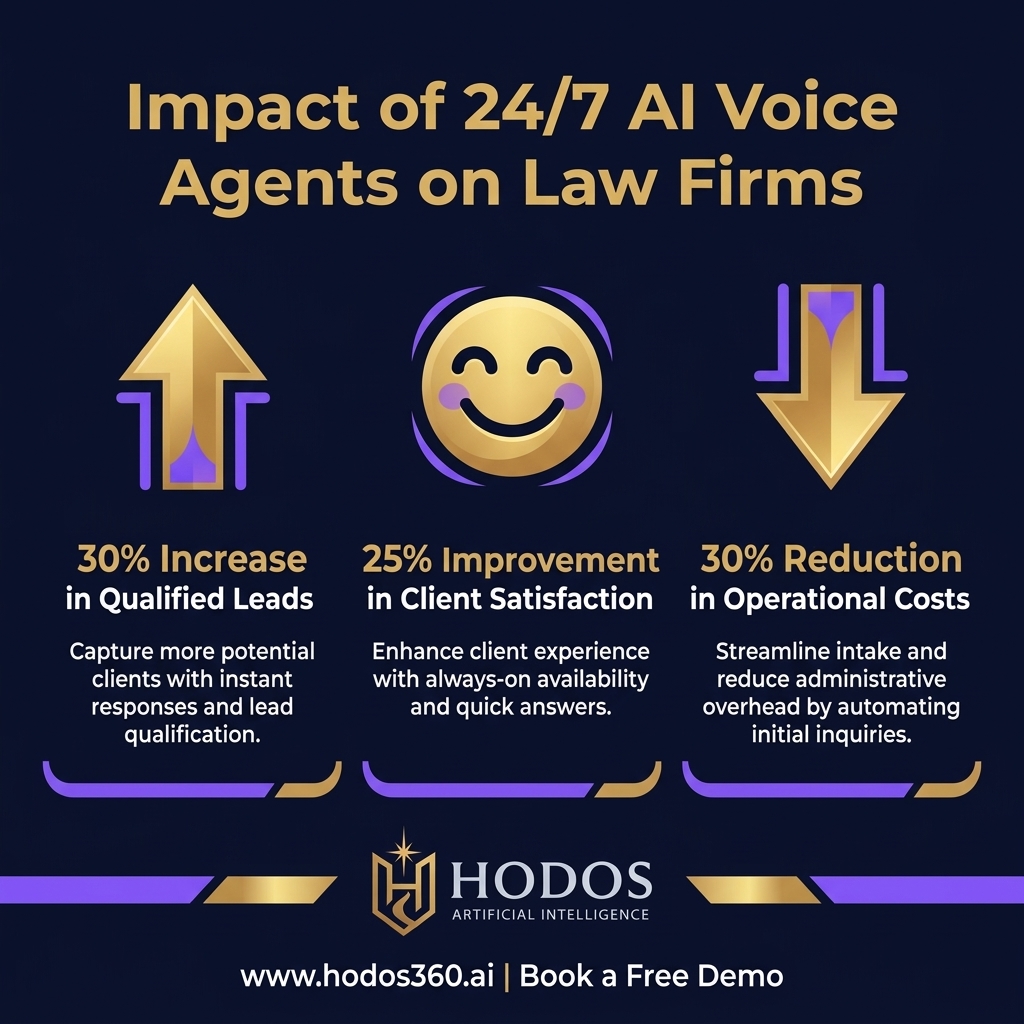
The transformative power of custom AI voice assistants is not theoretical; it's being realized in law firms across the globe. Consider the case of Liberty Law Group, a mid-sized firm specializing in real estate and business law, led by partner David Miller. Before implementing HODOS 360’s AI Voice Assistants, Liberty Law struggled with an overwhelming volume of after-hours calls, leading to a significant backlog of unreturned messages and missed opportunities. Their previous answering service was generic, often failing to capture critical details or properly qualify leads. Post-implementation, Liberty Law saw a 30% increase in qualified leads within the first six months, attributed directly to the AI's 24/7 intelligent call handling and sophisticated lead qualification capabilities. Miller noted, "Our AI agent acts as a seamless extension of our team, ensuring every caller feels heard and valued, even when we're not physically in the office."
This tangible impact is consistent with broader industry trends. A Gartner report on enterprise AI adoption indicated that businesses leveraging conversational AI see, on average, a 25% improvement in customer satisfaction and a 30% reduction in operational costs. For law firms, this translates into more clients, happier clients, and a more efficient allocation of resources. The AI voice agents handle routine inquiries, freeing up paralegals and administrative staff to focus on higher-value tasks, contributing to a more productive and less stressed work environment. This operational efficiency is a key factor in law firm profitability, allowing firms to scale their services without a proportional increase in headcount.
The competitive drama in the legal market intensifies as technology advances. Learn more about Essential Website Accessibility Tools for Law Firms. Firms that hesitate to adopt these solutions risk being outmaneuvered by agile competitors who leverage AI to create superior client experiences and streamline operations. The contrast is stark: firms like Liberty Law Group are actively growing their client base and improving their bottom line, while others, clinging to outdated methods, find themselves struggling to keep pace. This creates a clear divide between those embracing the future of legal service delivery and those who remain tethered to the past, highlighting the critical juncture at which the industry finds itself.
### Advanced Features: From Lead Qualification to Appointment Booking
The capabilities of modern custom AI voice agents extend far beyond basic call answering. They are sophisticated intelligent call handling systems capable of performing multiple critical functions. This includes multilingual support, allowing firms to cater to a diverse client base and expand their reach. The AI can dynamically adapt its script based on caller intent, seamlessly routing calls to specific departments or individuals, or even initiating a complex legal client intake process directly over the phone. Crucially, these agents can integrate directly with a firm's existing AI Law Firm Management System, automatically populating new client profiles, scheduling appointments, and sending follow-up communications. This level of integration transforms the AI from a simple answering machine into a powerful virtual legal assistant, enhancing every stage of the client journey from initial contact to case management.

Key Takeaways and Next Steps for Law Firm Adoption
The legal industry is undergoing an undeniable shift, driven by client demands for immediacy and efficiency, and powered by accessible AI technology. Custom AI voice agents are no longer a luxury but a strategic necessity for law firms aiming to thrive in this evolving landscape. They offer an unparalleled ability to ensure 24/7 phone answering, robust lead qualification, and a consistently professional client experience, all while optimizing operational costs. For firms looking to enhance their client acquisition and retention strategies, embracing this technology is a clear path forward, allowing them to remain competitive and responsive.
For law firm owners and attorneys contemplating this transition, the first step is to assess current pain points in client intake and call management. Consider piloting a custom AI voice agent solution for specific practice areas or after-hours support to demonstrate its value internally. Learn more about Essential AI Voice Features for Law Firms: Unpacking I/O Innovations. Focus on solutions that offer deep customization, seamless integration with existing legal tech, and robust security features. Platforms like HODOS 360 provide comprehensive AI-powered services, including advanced AI Voice Assistants, designed specifically to meet the unique demands of the legal sector, helping firms not just adopt AI, but truly leverage it for transformative growth. The future of legal practice is here, and it answers every call.
- ✓Enhanced Client Experience: Provide instant, professional responses 24/7, significantly boosting client satisfaction and loyalty.
- ✓Superior Lead Qualification: Automate the pre-screening of potential clients, ensuring attorneys focus only on high-value, qualified leads.
- ✓Operational Efficiency: Drastically reduce administrative burden by automating routine calls, appointment booking, and initial information gathering.
- ✓Cost Savings: Lower overheads associated with traditional reception staff or less efficient answering services.
- ✓Competitive Advantage: Outpace competitors by offering unparalleled responsiveness and modern client engagement strategies.
- ✓Data-Driven Insights: Collect valuable data on caller intent, common queries, and lead sources to refine marketing and intake processes.
Frequently Asked Questions
How do custom AI voice agents differ from standard answering services?+
Custom AI voice agents are far more sophisticated, offering intelligent call handling tailored to a firm's specific needs. Unlike standard services that simply take messages or follow basic scripts, custom AI can perform lead qualification, answer nuanced legal FAQs, integrate with case management systems, and even book appointments, all while maintaining a consistent brand voice. They learn and adapt, providing a truly personalized experience.
What are the key benefits of implementing 24/7 AI call handling for a law firm?+
Implementing 24/7 AI call handling ensures no potential client call is ever missed, significantly improving lead capture and client satisfaction. It frees up staff from routine calls, reduces operational costs, provides multilingual support, and offers consistent, professional engagement at any hour. This leads to increased efficiency, better client retention, and a strong competitive edge in the legal market.
How can AI voice agents ensure client confidentiality and data security?+
Ensuring confidentiality is paramount. Reputable AI voice agent providers utilize robust security measures, including end-to-end encryption for all communications, secure data storage, and compliance with privacy regulations like GDPR or CCPA. Firms should choose vendors with proven security track records and establish clear internal protocols for data handling and human oversight, ensuring ethical and compliant AI deployment.
Can custom AI voice agents integrate with existing law firm management systems?+
Yes, a key advantage of advanced custom AI voice agents is their ability to integrate seamlessly with existing law firm management systems. This allows for automated client intake, direct appointment scheduling, and automatic population of client data into case files. Such integration streamlines workflows, reduces manual data entry, and ensures a cohesive operational environment, enhancing overall firm efficiency.
What is the typical implementation process for a custom AI voice agent?+
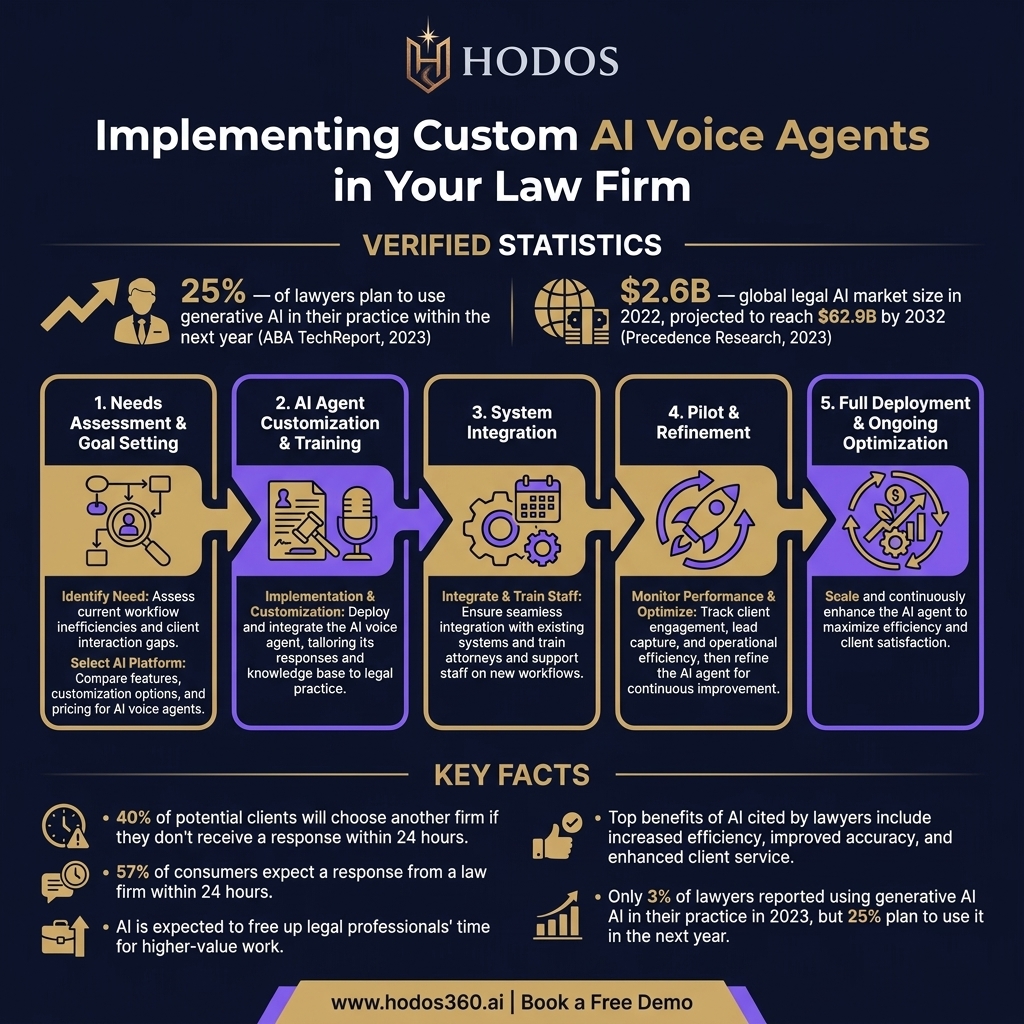
The implementation process typically involves an initial consultation to understand the firm's specific needs and desired functionalities. This is followed by a customization phase, where the AI is trained on firm-specific scripts, FAQs, and integration points. A testing phase ensures accuracy and performance, often with a pilot program. Finally, the agent is deployed, with ongoing support and optimization to adapt to evolving requirements.