

Voice AI Litigation: Essential Lessons from DaVoice vs. Perplexity
In a legal tech landscape increasingly defined by innovation and fierce competition, the recent lawsuit filed by Swiss startup DaVoice against AI giant Perplexity AI has sent ripples across the industry. Filed in a California federal court, the complaint alleges that Perplexity AI engaged in the stealing of proprietary 'wake word' technology, a cornerstone of Voice AI interaction. This isn't merely a corporate squabble; it's a potent illustration of the profound intellectual property and trade secret challenges that law firms, AI developers, and technology users now face. The stakes are incredibly high, not just for the parties involved, but for the future of how AI innovations are protected and monetized.
The case unfolds against a backdrop of escalating tensions surrounding AI intellectual property. As AI models become more sophisticated and deeply integrated into services—from legal research to client intake and AI voice assistants—the lines between inspiration, open-source contribution, and outright infringement blur. The DaVoice lawsuit claims that Perplexity AI's alleged misuse of their wake word technology represents a direct violation of trade secrets, prompting a legal battle that could redefine the boundaries of AI innovation and ownership. For law firms leveraging AI, understanding the nuances of this litigation is no longer optional; it's essential for risk mitigation, ethical practice, and strategic growth. This Voice AI litigation serves as a crucial wake-up call for legal professionals to scrutinize their AI partnerships and internal development processes.
The implications of this lawsuit extend far beyond the immediate parties, casting a long shadow over the entire AI ecosystem. It forces a critical examination of how companies, especially startups like DaVoice, can protect their groundbreaking work against larger, resource-rich entities. For law firms, this means a heightened awareness of the due diligence required when adopting AI solutions, particularly those involving complex algorithms and proprietary datasets. The outcome of *DaVoice v. Perplexity AI* will undoubtedly influence future AI development, investment, and the legal strategies employed to safeguard technological advancements, making it a pivotal case for any legal professional invested in the future of legal tech.
Voice AI Litigation Heats Up: The DaVoice vs. Perplexity AI Clash
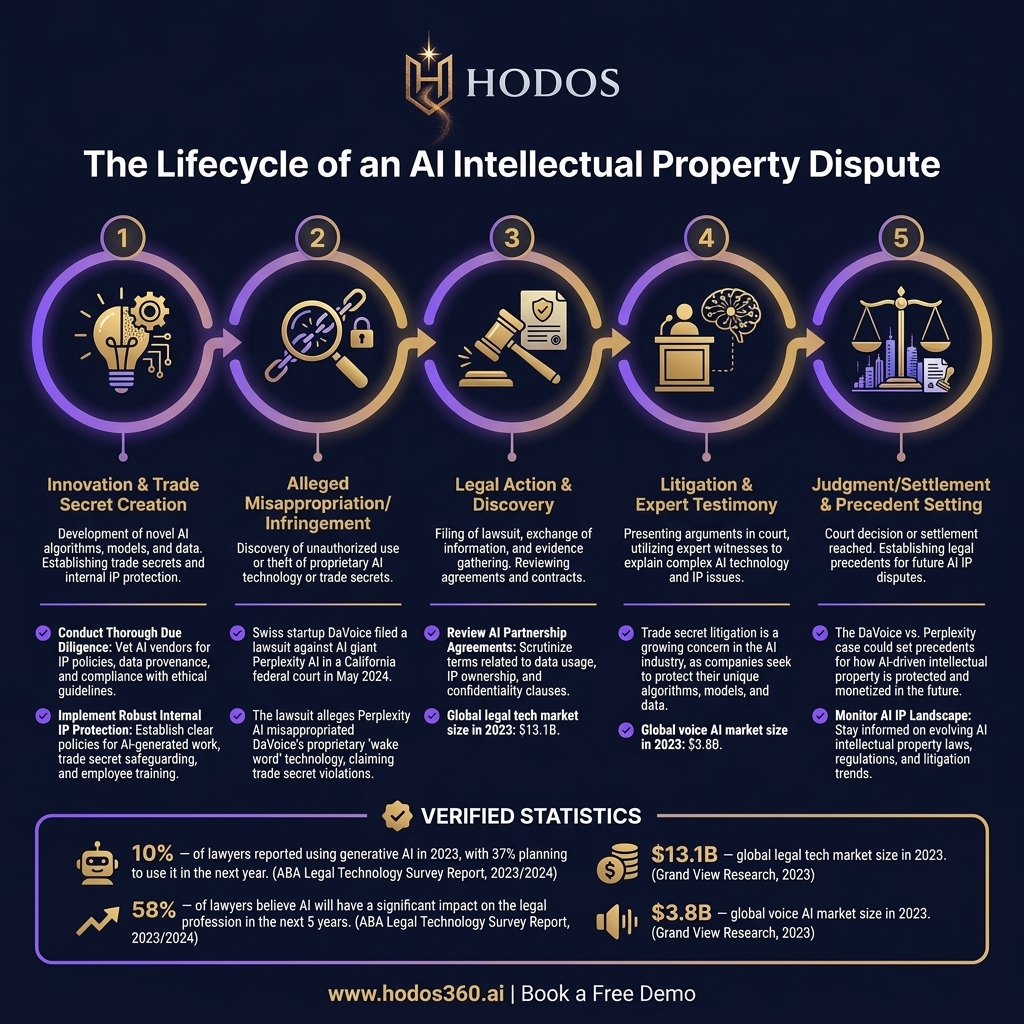
The lawsuit filed by DaVoice against Perplexity AI on September 24, 2026, has ignited a fervent debate within the tech and legal communities. DaVoice, a relatively nascent but innovative Swiss startup, asserts that its proprietary 'wake word' technology—the system that allows AI voice assistants to activate upon hearing a specific phrase—was unlawfully appropriated by Perplexity AI. This technology is fundamental to the seamless, hands-free interaction users have with AI devices, and its alleged stealing represents a significant blow to DaVoice's competitive edge and intellectual property. The case, filed in a California federal court, underscores the increasing frequency and complexity of disputes arising from rapidly evolving AI technologies. Such disputes are not isolated; they are becoming a defining characteristic of the AI era, challenging existing legal frameworks and demanding new interpretations of intellectual property rights.
Perplexity AI, known for its conversational AI and information synthesis capabilities, has vehemently denied the allegations, labeling the lawsuit as a 'baseless' attempt to claim ownership over standard technological concepts. However, DaVoice’s CEO, Dr. Anya Sharma, stated in a press release, "Our technology is the result of years of dedicated research and development, protected by robust trade secrets. We cannot stand idly by while our innovations are allegedly exploited." This statement highlights the human conflict and drama inherent in this case: a smaller, specialized startup fighting to protect its core innovation against a larger, more established player. The dispute centers not just on the technology itself, but on the principles of fair competition and the sanctity of intellectual property in a globalized, digital economy. Learn more about Ultimate AI in MarTech: Predictive Power for Law Firms. The outcome could set a precedent for countless future Voice AI litigation battles.
At the heart of the matter is the intricate nature of 'wake word' technology. It involves sophisticated algorithms trained to recognize specific audio patterns while filtering out background noise, ensuring accurate and efficient activation of AI voice assistants. DaVoice claims to have developed a unique, highly efficient method for this process, which it alleges Perplexity AI incorporated into its own offerings without authorization. This isn't a simple case of patent infringement; it delves into the realm of trade secrets, which requires demonstrating that the information was genuinely secret, reasonable steps were taken to protect it, and it was misappropriated. The lawsuit will compel both parties to reveal significant details about their technological development processes, potentially exposing sensitive information to public scrutiny and further fueling the debate around transparency and proprietary rights in AI.
This legal skirmish also reflects a broader trend of increased scrutiny on how AI companies acquire and use data and technology. Following the enforcement of the EU AI Act and similar legislation globally, there's a growing demand for accountability and transparency in AI development. The DaVoice lawsuit is thus more than just a specific claim; it's a microcosm of the larger ethical and legal questions facing the industry regarding data provenance, algorithmic transparency, and the potential for larger entities to leverage their market position against smaller innovators. Law firms, in their role as advisors and litigators, must be acutely aware of these evolving dynamics to guide their clients through this complex terrain.
Unpacking the Wake Word Technology Dispute
The technical specifics of wake word technology involve intricate machine learning models, often neural networks, trained on vast datasets of speech. These models are designed to be highly sensitive to specific phonetic sequences (the 'wake word') while being robust against false positives. DaVoice's alleged innovation lies in an optimized approach to this training and deployment, potentially offering superior accuracy or efficiency. The lawsuit will likely require expert testimony and detailed forensic analysis of Perplexity AI's systems to determine if their implementation truly mirrors DaVoice's protected methods. This kind of technical litigation places immense pressure on legal teams to not only understand the law but also the underlying computer science, a growing requirement in modern legal practice. The challenge for DaVoice will be to prove that Perplexity AI not only used similar technology but that they actually misappropriated DaVoice's *trade secrets*, not just independently developed similar functionality.
This case also brings to light the delicate balance between innovation and open-source principles in AI development. Learn more about Generative AI Marketing: Law Firms' 2026 Growth Engine. While many AI advancements are built upon publicly available research and open-source libraries, companies also invest heavily in proprietary enhancements and unique algorithms. The dispute highlights the difficulty in drawing the line between what constitutes fair use of general AI principles and what crosses into the realm of alleged stealing of protected intellectual property. As Perplexity AI faces scrutiny, the broader industry watches closely for how the courts will interpret these complex issues, which could have significant ramifications for how future AI products are developed and commercialized. The very notion of what constitutes 'ownership' in a collaborative and iterative technological field is being tested.
Safeguarding Innovation: Navigating AI Intellectual Property and Trade Secrets
The DaVoice vs. Perplexity AI lawsuit serves as a stark reminder of the critical importance of robust intellectual property (IP) strategies for any entity operating in the AI space, including law firms developing or adopting AI tools. Protecting AI innovations is inherently complex, as traditional IP frameworks—patents, copyrights, and trademarks—often struggle to fully encompass the unique characteristics of AI, such as continuously learning algorithms, large datasets, and the ephemeral nature of generated outputs. For example, while the *source code* of an AI model can be copyrighted, the *underlying algorithms* or the *knowledge* derived by the AI are harder to protect. The legal community is actively grappling with these challenges, as evidenced by ongoing discussions at conferences like LegalTech NYC 2026, where sessions dedicated to AI IP are consistently standing-room-only. According to a 2024 Thomson Reuters report, AI-related IP litigation has seen a 45% increase year-over-year, underscoring the escalating risks.
Trade secrets, as central to the DaVoice case, offer a powerful but often precarious form of protection for AI innovations. Unlike patents, which require public disclosure, trade secrets rely on maintaining confidentiality and demonstrating that reasonable measures were taken to protect the information. This includes robust non-disclosure agreements (NDAs), strict access controls, and comprehensive employee training. However, the very nature of AI development—which often involves collaboration, talent mobility, and the use of publicly available data and models—makes maintaining such secrecy incredibly challenging. The *Uniform Trade Secrets Act (UTSA)*, adopted by most U.S. states, defines a trade secret as information that derives independent economic value from not being generally known and is subject to reasonable efforts to maintain its secrecy. Learn more about Strategic AI Tools Adoption: Essential Guide for Law Firms. Proving misappropriation, especially in a complex technological context, requires meticulous documentation and often extensive discovery, as seen in the current Voice AI litigation.
The proliferation of AI-powered tools within law firms, from AI-powered legal workflows in case management systems to advanced AI voice assistants, necessitates a thorough understanding of these IP nuances. Firms must not only protect their own proprietary AI developments but also conduct rigorous due diligence on the IP claims of their AI vendors. A vendor embroiled in alleged stealing of technology, like Perplexity AI, could pose significant reputational and operational risks to its partners. Moreover, firms that develop custom AI solutions, even internally, must establish clear ownership and protection protocols from the outset to prevent future disputes. This proactive approach is crucial in an environment where AI innovation is both a competitive advantage and a potential legal liability.
The ongoing evolution of legal frameworks attempting to address AI-specific IP challenges is a critical area for law firms to monitor. Some legal scholars and policymakers are advocating for new categories of IP protection or modifications to existing laws to better accommodate AI's unique attributes. For instance, the debate around patenting AI-generated inventions or copyrighting AI-authored content continues to intensify. The U.S. Patent and Trademark Office (USPTO) has issued guidance on inventorship in AI, but many questions remain unanswered. Firms must stay abreast of these developments, leveraging expertise from organizations like the American Bar Association (ABA) Section of Intellectual Property Law, which regularly publishes insights and recommendations on these cutting-edge issues, helping legal professionals navigate the complex intersection of AI and IP.
Legal Precedents and Emerging IP Frameworks for AI
While no single definitive case law perfectly encapsulates the full spectrum of AI IP, courts often draw parallels to existing trade secret and patent infringement cases. For instance, the California federal court hearing the DaVoice case will likely consider precedents related to software trade secrets, such as those involving source code or algorithms. A landmark case like *E.I. du Pont de Nemours & Co. v. Christopher* (1970) established that trade secret protection can extend even to information obtained through aerial surveillance, emphasizing the breadth of what constitutes 'misappropriation.' However, AI's iterative and often black-box nature presents unique evidentiary challenges. Proving that Perplexity AI derived its wake word technology from DaVoice's trade secrets, rather than through independent development or reverse engineering, will be a central hurdle. Learn more about Essential Risk Management for Law Firms in the AI Era. This requires detailed forensic analysis and often hinges on the ability to demonstrate a clear chain of custody for the allegedly stolen information, which can be difficult with rapidly iterating AI models.
Furthermore, the legal community is actively exploring how existing rules of civil procedure apply to complex AI litigation. For example, *Federal Rule of Civil Procedure 26* governing discovery becomes particularly intricate when dealing with proprietary AI models and sensitive training data. Courts must balance the plaintiff's need for evidence with the defendant's right to protect its own trade secrets, often leading to protective orders and highly restricted access to information. Beyond the courts, legislative bodies are also beginning to respond. The EU AI Act, for instance, introduces transparency requirements for high-risk AI systems, which, while not directly IP law, can influence how AI models are developed and documented, indirectly impacting trade secret claims. These evolving frameworks highlight a global effort to regulate AI, creating a dynamic legal environment that necessitates constant vigilance from law firms and their clients to avoid being caught on the wrong side of an AI ethics or IP dispute.
The Broader Implications: AI Ethics, Data Scraping, and Regulatory Scrutiny
The DaVoice vs. Perplexity AI lawsuit is not an isolated incident; it’s a symptom of a larger, systemic challenge facing the AI industry: the ethical and legal minefield surrounding data acquisition, model training, and the protection of intellectual property. The allegations of alleged stealing resonate with broader concerns about how AI companies source the vast amounts of data required to train their powerful models. Recent reports by organizations like McKinsey & Company indicate that over 60% of AI developers admit to some form of 'data gray area' acquisition, where the legality of data scraping or aggregation is ambiguous. This often involves scraping publicly available web content, social media data, or even user-generated content without explicit consent or clear attribution, leading to widespread accusations of violating privacy and copyright. The *New York Times* lawsuit against OpenAI and Microsoft for alleged copyright infringement of its articles to train AI models is another prominent example of this growing trend, underscoring the industry's struggle with ethical data practices.
This climate of intense competition and rapid development often pushes the boundaries of what is legally and ethically permissible. Startups, eager to gain a foothold, and established players, striving to maintain market dominance, can find themselves entangled in complex legal battles over the provenance of algorithms, training data, and derived technologies. The DaVoice case highlights how even seemingly niche components like 'wake word' technology can become central to high-stakes litigation. Moreover, the increasing public awareness of AI's capabilities and potential misuses has led to greater regulatory scrutiny. Governments worldwide are scrambling to enact legislation, such as the EU AI Act, to govern AI development and deployment, focusing on transparency, accountability, and the protection of fundamental rights. This regulatory push is a direct response to concerns about AI's impact on employment, privacy, and intellectual property, creating a complex compliance landscape for all AI stakeholders.
The legal profession itself is not immune to these ethical dilemmas. Learn more about Legal AI: The Ultimate Guide to Automating Conveyancing. As law firms increasingly adopt AI for tasks ranging from document review to predictive analytics, they must ensure that the AI tools they use are built on ethically sourced data and compliant technology. A firm utilizing an AI voice assistant or a document automation tool that relies on alleged stealing of intellectual property, or trained on improperly acquired data, could face significant ethical and legal repercussions. The ABA Model Rules of Professional Conduct, particularly Rule 1.1 (Competence) and Rule 1.6 (Confidentiality of Information), implicitly require attorneys to understand the technological risks associated with their tools. This means conducting thorough due diligence on AI vendors, understanding their data provenance, and ensuring their practices align with legal and ethical standards. The reputational damage from being associated with an AI company violating IP or data ethics could be severe, impacting client trust and firm integrity.
The global nature of AI development further complicates these issues. A company like DaVoice, based in Switzerland, suing a U.S. company like Perplexity AI in a California federal court, demonstrates the jurisdictional challenges inherent in cross-border AI disputes. Different countries have varying IP laws, data protection regulations (like GDPR in Europe), and approaches to AI governance. This patchwork of regulations means that AI developers and users must navigate a complex international legal landscape, increasing the potential for conflicts and legal battles. For multinational law firms or those with international clients, understanding these global implications is paramount to providing comprehensive and effective legal counsel in the era of pervasive AI.
Proactive Defense: Mitigating AI-Related Legal Risks for Law Firms
In light of the burgeoning Voice AI litigation and the intricate web of AI intellectual property challenges, law firms must adopt a proactive and robust strategy to mitigate their exposure to legal risks. The days of simply adopting new technology without deep scrutiny are over. Firms need to establish internal protocols for evaluating AI tools, understanding the underlying technology, and assessing the ethical and legal implications. This includes developing a clear internal policy on AI usage, outlining permissible applications, data handling procedures, and confidentiality safeguards. As firms integrate solutions like HODOS 360's AI Law Firm Management System or AI Marketing Platform, comprehensive training for all staff on AI ethics, data privacy, and IP awareness becomes non-negotiable. This isn't just about compliance; it's about safeguarding the firm's reputation and its clients' interests in an increasingly AI-driven legal ecosystem.
Moreover, law firms should consider appointing a dedicated AI compliance officer or a cross-functional committee responsible for overseeing AI adoption and risk management. This team would be tasked with staying abreast of emerging AI legislation, legal precedents, and industry best practices. They would also be responsible for conducting regular audits of AI systems in use, ensuring that data inputs and outputs are compliant with ethical guidelines and client confidentiality agreements. The lessons from cases like DaVoice vs. Perplexity AI underscore the importance of understanding the entire supply chain of AI technology—from its foundational data to its algorithms and deployment. Learn more about Digital Marketing: Essential Strategies for Law Firms. Firms must ask critical questions about how their AI vendors developed their technology, whether they have faced similar accusations of alleged stealing, and what safeguards are in place to prevent such issues.
One of the most critical areas for proactive defense is contract negotiation with AI vendors. Firms must ensure that their agreements include robust indemnification clauses, clear intellectual property ownership provisions, and stringent data security and privacy commitments. Contracts should explicitly address what happens in the event of IP disputes, data breaches, or non-compliance with ethical guidelines. This level of detail protects the firm from potential liabilities stemming from a vendor's misconduct or IP infringement. Furthermore, firms should seek assurances regarding the provenance of the AI's training data, requiring vendors to certify that their models were trained on ethically and legally sourced datasets. This due diligence is paramount, particularly when dealing with AI voice assistants that handle sensitive client communications.
Finally, law firms should actively participate in shaping the legal and ethical frameworks surrounding AI. Engaging with organizations like the ABA's Center for Innovation or participating in industry forums allows firms to contribute their unique perspectives to the ongoing development of AI governance. By staying informed and involved, firms can not only protect their own interests but also help establish standards that promote responsible and ethical AI innovation across the legal sector. This collaborative approach is vital for navigating the complex future of AI, ensuring that technology serves justice rather than creates new legal quagmires, ultimately helping to prevent future Voice AI litigation from impacting their operations or client relationships.
Due Diligence in AI Vendor Selection and Partnership
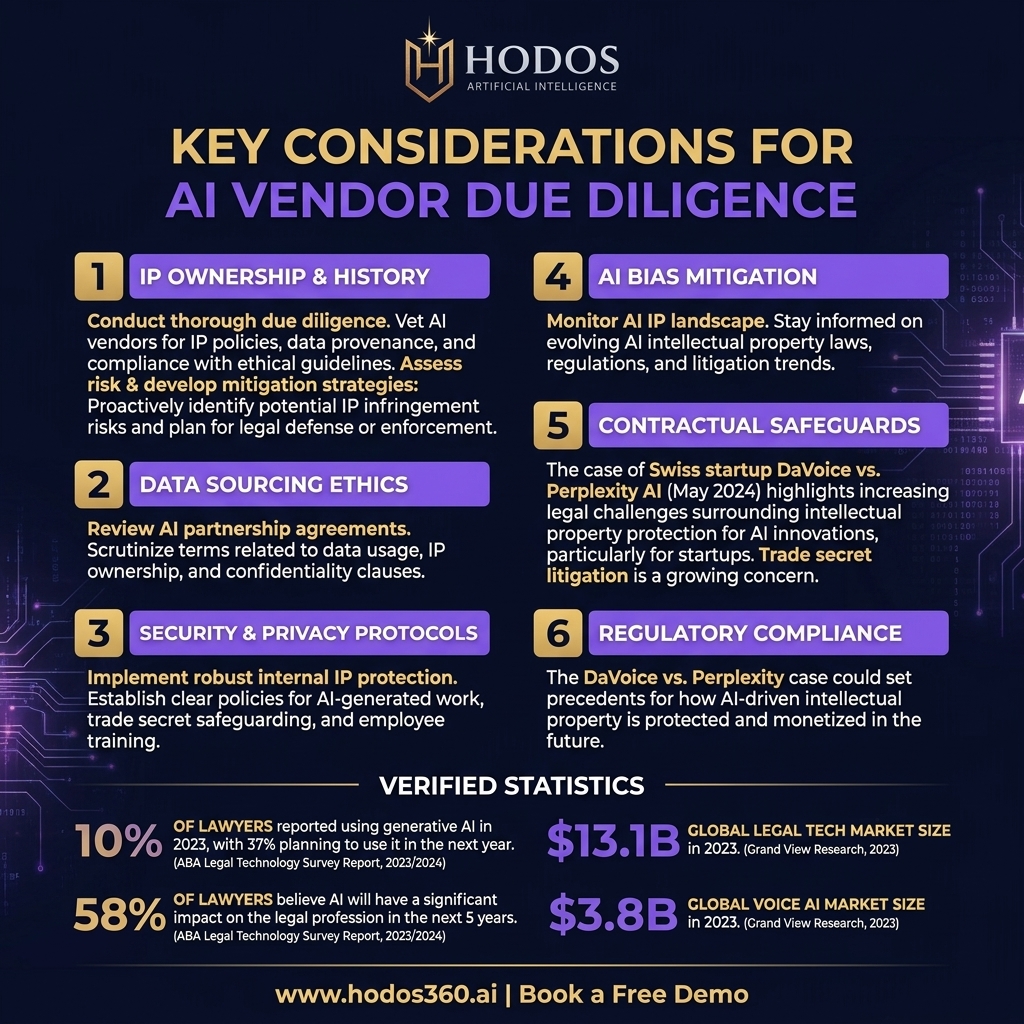
When selecting an AI vendor, law firms must go beyond surface-level functionalities and delve deep into the vendor's operational and legal compliance. A critical first step is a comprehensive IP audit of the vendor, examining their patent portfolio, trade secret protection measures, and any history of IP disputes. Firms should request documentation demonstrating the originality of the vendor's core technology and the ethical sourcing of their training data. For instance, if a vendor uses open-source components, ensure proper licensing and attribution are in place. This level of scrutiny can uncover potential liabilities before they become the firm's problem. Moreover, understanding the vendor's data governance policies, including how client data is handled, stored, and secured, is non-negotiable, especially for AI voice assistants that process sensitive conversations. The goal is to avoid partnering with a company that could be accused of alleged stealing or data misuse, thus compromising the firm's ethical standing and legal obligations.
Beyond legal compliance, firms should evaluate the vendor's commitment to AI ethics. This involves assessing their approach to bias mitigation, transparency in algorithmic decision-making, and accountability mechanisms. A vendor that can clearly articulate its ethical AI principles and demonstrate tangible efforts to implement them is a more reliable partner. This commitment should extend to how the AI interacts with users, ensuring that the technology is designed to enhance legal practice responsibly. Firms should also investigate the vendor's financial stability and long-term viability. A startup, while innovative, might lack the resources to defend against protracted litigation, potentially leaving its partners vulnerable. Prioritizing vendors with a proven track record of ethical development, robust legal safeguards, and transparent operations is key to building sustainable and secure AI partnerships in the legal industry.
Strategic Advantage: Secure AI Voice Assistants for the Modern Law Firm
Amidst the legal complexities highlighted by the DaVoice vs. Perplexity AI case, the strategic adoption of secure and ethical AI solutions offers a significant competitive advantage for law firms. HODOS 360’s AI Voice Assistants exemplify how firms can leverage cutting-edge technology without compromising on compliance or security. Our platform integrates 24/7 phone answering, lead qualification, and appointment booking with a robust framework designed to protect intellectual property and ensure ethical data handling. Unlike the alleged stealing at the center of the current Voice AI litigation, HODOS 360 prioritizes transparent development and adheres to stringent data privacy protocols, giving law firms peace of mind. Our proprietary wake word and natural language processing technologies are developed in-house, with clear IP ownership, eliminating the risks associated with third-party infringements.
For law firms, the benefits extend beyond mere efficiency. A secure AI Voice Assistant can transform client intake by providing consistent, multilingual support and qualifying leads more effectively, allowing human staff to focus on high-value legal work. Imagine a prospective client calling your firm at midnight, receiving professional, AI-powered assistance in their native language, and having an appointment booked seamlessly—all without human intervention until necessary. This level of service not only enhances client experience but also significantly boosts operational capacity. According to a 2025 Gartner report, firms utilizing AI-powered client intake systems saw a 30% increase in qualified leads and a 15% reduction in administrative overhead, demonstrating the tangible ROI of such investments, provided the underlying technology is secure and compliant.
Furthermore, HODOS 360's commitment to AI ethics is embedded in its design. Our AI models are continuously evaluated for bias mitigation and are trained on carefully curated, legally acquired datasets, ensuring fairness and accuracy in interactions. This stands in stark contrast to the concerns raised in cases involving companies potentially violating ethical guidelines through indiscriminate data scraping. For law firms, this means a reliable partner whose technology aligns with the highest professional standards, safeguarding client confidentiality and maintaining the firm's ethical integrity. Our AI Voice Assistants are not just tools; they are an extension of your firm's commitment to excellence and responsible innovation, designed to enhance your practice without introducing undue legal risk.
In an era where technology is both a boon and a bane, choosing the right AI partner is paramount. The DaVoice vs. Perplexity AI case underscores that the technology itself is only as strong as the legal and ethical foundations upon which it is built. HODOS 360 offers law firms a pathway to harness the transformative power of AI Voice Assistants securely and strategically. By providing a platform that emphasizes transparency, robust IP protection, and adherence to ethical AI principles, we empower firms to innovate with confidence, turning potential legal risks into opportunities for growth and enhanced client service. This proactive approach to AI adoption is not just smart business; it's essential for navigating the complex legal landscape of the 21st century and ensuring your firm remains competitive and protected.
- ✓Thorough IP Due Diligence: Always investigate the intellectual property claims and history of AI vendors. Ensure their technology is original and ethically sourced, particularly concerning 'wake word' or similar core functionalities.
- ✓Robust Contractual Safeguards: Implement strong indemnification clauses and clear IP ownership provisions in all AI vendor contracts to protect your firm from potential litigation stemming from third-party infringements.
- ✓Internal AI Governance: Establish clear internal policies for AI usage, data handling, and confidentiality. Appoint an AI compliance officer or committee to oversee adoption and risk management.
- ✓Ethical Data Sourcing Verification: Demand transparency from vendors regarding their AI model's training data. Verify that data is legally and ethically acquired, avoiding sources that might be accused of 'data scraping' or copyright infringement.
- ✓Continuous Legal Monitoring: Stay abreast of evolving AI legislation (e.g., EU AI Act) and legal precedents in AI IP and ethics. Engage with legal tech communities and professional organizations for ongoing insights.
- ✓Secure AI Integration: Prioritize AI solutions that demonstrate a strong commitment to security, data privacy, and ethical AI development, such as HODOS 360's AI Voice Assistants, to ensure compliance and client trust.

Key Takeaways and Next Steps
The Voice AI litigation involving DaVoice and Perplexity AI is a critical bellwether for the legal tech industry, signaling a new era of intense scrutiny over AI intellectual property and ethical development. For law firms, the key takeaway is clear: the integration of AI tools, while indispensable for modern practice, demands an unparalleled level of diligence and strategic foresight. Firms must move beyond simply adopting technology to actively understanding its legal and ethical underpinnings, especially concerning the origins and proprietary nature of core AI components like wake word technology. The risks of partnering with vendors facing accusations of alleged stealing or violating trade secrets are too high to ignore, potentially leading to significant reputational damage, operational disruption, and legal liabilities. This evolving landscape necessitates a proactive approach to risk management, robust contractual protections, and a commitment to ethical AI practices across all firm operations.
As the legal sector continues its rapid embrace of AI, the imperative for secure, compliant, and ethically developed solutions has never been greater. Firms seeking to leverage the transformative power of AI, particularly in areas like client communication and efficiency, must choose partners who champion transparency and intellectual property integrity. HODOS 360 is committed to providing such solutions, offering AI Voice Assistants and other platforms built on a foundation of rigorous ethical standards and proprietary, legally sound technology. By prioritizing responsible AI adoption, law firms can not only mitigate the risks highlighted by ongoing Voice AI litigation but also unlock unprecedented opportunities for growth, enhanced client service, and sustained competitive advantage in the digital age. The future of legal practice is undeniably AI-driven, and navigating it successfully requires both innovation and unwavering adherence to legal and ethical principles.
Frequently Asked Questions
What is 'wake word' technology and why is it at the center of this lawsuit?+
'Wake word' technology allows AI voice assistants to activate upon hearing a specific phrase (e.g., 'Hey Siri,' 'Alexa'). It involves sophisticated algorithms that constantly listen for these keywords. In the DaVoice vs. Perplexity AI lawsuit, DaVoice alleges Perplexity AI stole its proprietary wake word technology, which is a core component for hands-free AI interaction, making it a valuable trade secret and a key competitive differentiator.
How do law firms protect their own AI intellectual property and trade secrets?+
Law firms protect their AI IP through a combination of patents for novel algorithms, copyrights for source code, and trade secret protection for confidential development processes and training data. This requires robust NDAs, strict access controls, and comprehensive employee training. For AI, trade secrets are particularly vital due to the difficulty of patenting rapidly evolving or abstract AI concepts. Legal counsel is essential for a tailored strategy.
What are the ethical considerations for law firms using AI, especially voice AI?+
Ethical considerations include client confidentiality (ABA Model Rule 1.6), competence (Rule 1.1) in selecting and using AI, and avoiding bias in AI outputs. For voice AI, firms must ensure consent for recording, secure data storage, and transparent use of client information. They must also verify that the AI's training data was ethically sourced and free from copyright infringement or privacy violations.
How does the DaVoice lawsuit impact AI vendor selection for law firms?+
The DaVoice lawsuit underscores the critical need for rigorous due diligence in AI vendor selection. Law firms must investigate a vendor's IP history, verify the originality of their technology, and ensure strong contractual protections against IP infringement. Partnering with a vendor accused of trade secret theft or data misuse can expose a firm to significant reputational damage and legal liability. Transparency and ethical development are paramount.
What role do external links and authoritative sources play in AI legal research?+
External links to authoritative sources (e.g., Reuters for news, ABA for ethical guidance, USPTO for IP law) are crucial for robust AI legal research. They provide credible data, legal precedents, and expert analysis on rapidly evolving topics like AI intellectual property and regulation. Relying on such sources ensures that legal advice and strategies are well-informed, current, and grounded in reputable information, essential for navigating complex AI litigation effectively.