
Website Redesign: The Ultimate AI Marketing Boost for Law Firms
The legal industry, often perceived as traditional, is undergoing a profound digital transformation, and the recent announcement from Digital.Marketing about their redesigned website and new AI-enabled Marketing Operating System, as reported by USA Today, serves as a powerful testament to this shift. This isn't just another tech headline; it signals a new era where a law firm's digital presence, spearheaded by a strategic website redesign and powered by advanced AI marketing, dictates its competitive edge and future growth. For legal practices, the implications are clear: the passive brochure-ware website of yesterday is obsolete. Today's clients, accustomed to seamless digital experiences in every facet of their lives, expect nothing less from their legal counsel, making a sophisticated online presence a vital component of any successful legal strategy. Firms that fail to adapt risk falling behind, losing out on crucial lead generation and client engagement opportunities in an increasingly crowded market.
Indeed, the stakes are higher than ever. The American Bar Association's 2023 TechReport indicated that a significant portion of potential clients begin their search for legal services online, with a firm's website often serving as the first, and sometimes only, impression. This makes the quality and functionality of a law firm's digital storefront paramount. Firms like Greenberg Traurig, for instance, continuously invest in their online platforms, understanding that their digital footprint is as critical as their physical offices. The integration of artificial intelligence, as championed by companies like Digital.Marketing, moves beyond mere automation; it empowers firms to predict client needs, personalize outreach, and optimize every touchpoint from initial inquiry to case resolution. This paradigm shift demands that legal professionals not only embrace a comprehensive website redesign but also strategically integrate AI marketing solutions to unlock unprecedented levels of efficiency, client satisfaction, and sustainable growth.
The Imperative of a Modern Legal Website Redesign
In today's hyper-digital legal landscape, a law firm's website is far more than an online business card; it's the central hub of its digital strategy and a critical tool for client acquisition and retention. The importance of a thoughtful website redesign cannot be overstated. An outdated, non-responsive, or difficult-to-navigate site not only deters potential clients but also actively erodes a firm's credibility. Consider the experience of a prospective client, perhaps a small business owner seeking corporate counsel, who lands on a firm's website that loads slowly, lacks clear calls to action, or is not optimized for mobile devices. This immediate negative user experience often leads to a swift departure, often to a competitor whose digital presence is more polished and professional. This isn't merely an aesthetic issue; it's a fundamental business problem that directly impacts lead flow and revenue.
Furthermore, the competitive legal market demands that firms distinguish themselves not just through legal expertise, but also through their accessibility and client-centric approach, which begins online. According to a recent Thomson Reuters report, 70% of legal consumers expect a digital-first experience from law firms. Firms like Kirkland & Ellis, recognized for their innovative approach, understand that their digital infrastructure must reflect their market leadership. Learn more about AI Marketing: The Essential Legal Firm Growth Blueprint. A strategic website redesign provides an opportunity to reassess content strategy, enhance search engine optimization (SEO), and ensure compliance with accessibility standards, all while presenting a cohesive and compelling brand narrative. It's about creating a digital environment that instills confidence, provides valuable information, and guides visitors effortlessly towards conversion, ultimately enhancing the firm's overall digital presence and market standing.
The redesign process is also an opportune moment to integrate advanced functionalities that streamline operations and improve client interactions. For example, incorporating secure client portals, easy-to-use contact forms, or direct scheduling features can significantly improve the user experience. Beyond mere aesthetics, a modern website design must prioritize functionality, security, and scalability. It must be built with future growth in mind, capable of integrating new technologies, adapting to evolving client expectations, and supporting the firm's long-term marketing objectives. Firms that undertake this strategic overhaul position themselves not just to compete, but to lead, leveraging their online platform as a powerful engine for growth and client engagement.
AI Marketing Operating Systems: The New Standard for Legal Growth
The introduction of AI-enabled Marketing Operating Systems, like the one recently unveiled by Digital.Marketing, represents a significant leap forward for industries, and the legal sector is no exception. These sophisticated platforms move beyond basic automation, utilizing machine learning and natural language processing to deliver hyper-personalized marketing campaigns, optimize content distribution, and provide granular analytics previously unattainable. Imagine an AI system that analyzes market trends, identifies emerging legal needs, and automatically generates targeted content for specific client segments, distributing it across the most effective social media channels at optimal times. This level of strategic intelligence and execution transforms how law firms can attract and engage clients, effectively acting as an extension of their marketing team.
Trailblazers in legal tech, such as Clio, have already demonstrated the power of integrated platforms for practice management, and the marketing sphere is now catching up. While Sam Altman of OpenAI often speaks about the general societal impact of AI, its application in specialized fields like legal marketing is where its true transformative power lies. These AI marketing systems can analyze vast datasets of client behavior, case outcomes, and industry trends to identify high-value leads with remarkable precision. This means law firms can allocate their marketing budget more effectively, focusing on prospects with a higher likelihood of conversion, thereby dramatically increasing their ROI. Learn more about Google Gemini: Ultimate AI Expansion for Law Firms. Furthermore, the ability to automate routine marketing tasks, from email drip campaigns to social media scheduling, frees up valuable time for attorneys and marketing staff to focus on higher-level strategic initiatives and client relationship building.
For law firms, adopting an AI marketing operating system isn't just about efficiency; it's about gaining a competitive advantage in a market where every lead counts. These systems empower firms to create dynamic, responsive marketing strategies that adapt in real-time to market changes and client interactions. They provide unparalleled insights into campaign performance, allowing for continuous optimization and refinement. The era of 'spray and pray' marketing is over; the future belongs to data-driven, intelligent outreach that resonates deeply with target audiences. This strategic shift is vital for firms looking to not only survive but thrive in the digital age, ensuring their message reaches the right person, at the right time, with the right legal solution.
Personalization at Scale: Beyond Generic Outreach
One of the most profound benefits of AI marketing operating systems is their capacity for personalization at scale. In a world saturated with generic advertising, clients crave tailored experiences that address their specific pain points and legal needs. AI algorithms can analyze a prospect's online behavior, demographic data, and stated interests to deliver highly relevant content and service recommendations. For instance, a potential client researching intellectual property law might receive targeted articles, case studies, or webinar invitations directly related to their specific industry or patent concerns, rather than general firm news. Learn more about Personal Injury AI: The Ultimate Assistant for Law Firms. This level of bespoke engagement fosters trust and demonstrates a firm's deep understanding of client challenges, significantly improving the likelihood of conversion. It moves beyond the traditional one-to-many marketing approach, enabling a one-to-one dialogue that feels genuine and valuable, a crucial differentiator for law firms in a competitive environment.
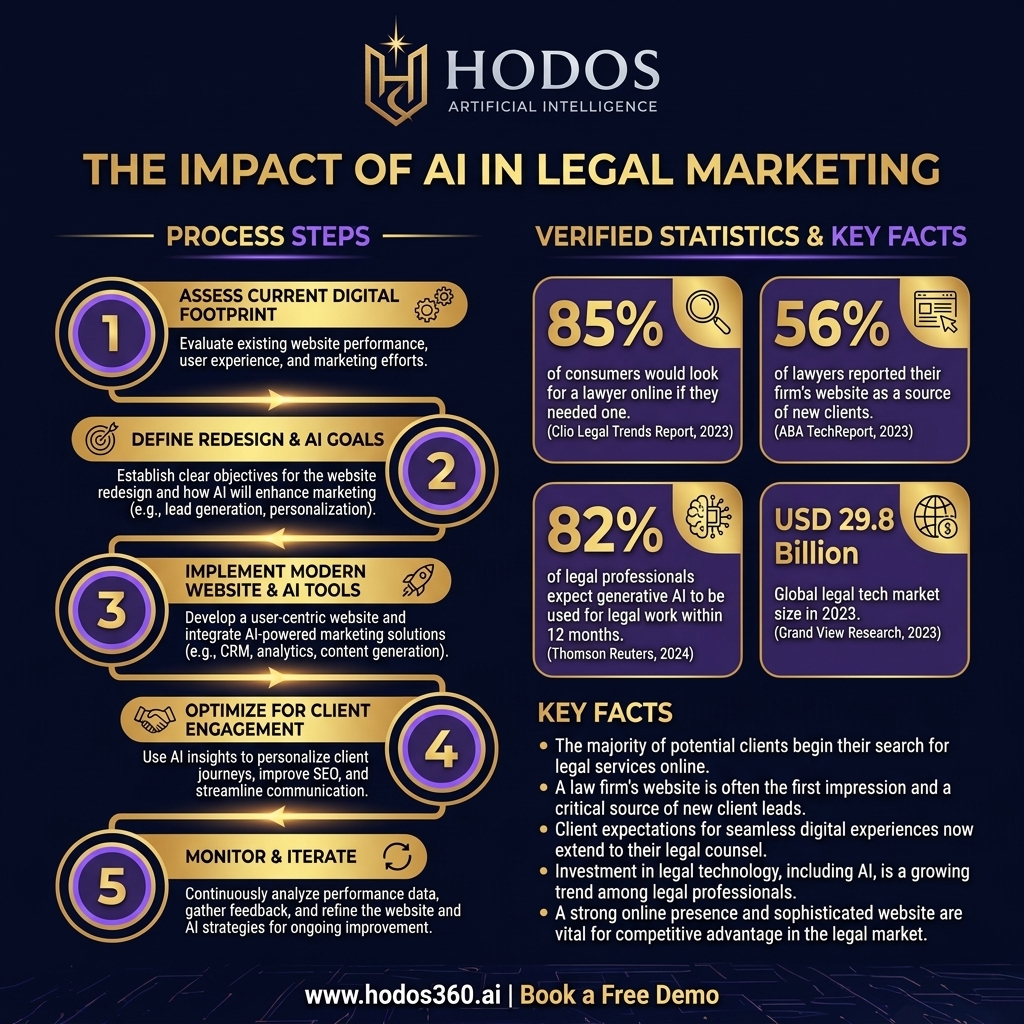
Strategic Redesign for Enhanced Client Experience and Conversions
A successful website redesign goes far beyond aesthetic improvements; its primary goal should be to enhance the client experience and drive conversions. User Experience (UX) and User Interface (UI) are paramount, particularly in the legal sector where trust and clarity are non-negotiable. A well-designed legal website should be intuitive, accessible, and provide clear pathways for visitors to find the information they need or take the desired action, such as scheduling a consultation or downloading a resource. Firms that prioritize a clean, professional, and mobile-responsive design are demonstrating their commitment to client satisfaction from the very first digital interaction. This strategic approach ensures that every element, from navigation menus to contact forms, is optimized to facilitate a positive and productive user journey, directly impacting the firm's ability to attract and convert new clients.
Moreover, integrating AI into the website redesign process can elevate UX to new heights. AI-powered analytics can track user behavior in real-time, identifying points of friction or areas of interest on the site. This data can then inform iterative design improvements, ensuring the website continually evolves to meet user needs and optimize conversion funnels. For instance, an AI tool might reveal that visitors consistently drop off at a particular page or spend an unusually long time searching for specific practice area information. Learn more about Essential AI Safeguards: Navigating Responsible Legal Tech. Such insights allow firms to refine their content, reorganize their site structure, or implement intelligent chatbots to provide immediate assistance, thereby improving engagement and guiding prospects more effectively towards desired outcomes. This dynamic optimization is a game-changer for firms aiming for sustained growth and a superior online presence.
The synergy between a modern website redesign and AI marketing capabilities is particularly powerful for driving tangible conversions. Imagine a website that not only looks professional but also leverages AI to personalize content recommendations based on a visitor's browsing history, geographic location, or even the legal terms they've searched for. This proactive engagement, combined with streamlined intake forms and clear calls to action, significantly increases the likelihood of a visitor becoming a qualified lead. Legal firms that embrace this integrated approach are not just building better websites; they are building highly efficient client acquisition machines that consistently deliver results. The goal is to create a seamless digital journey where every interaction, from initial click to final conversion, is smooth, informative, and confidence-inspiring, making the firm the obvious choice for legal services.
Integrating AI for Seamless Client Intake and Communication
Beyond marketing, a strategically redesigned website, when integrated with AI-powered tools, can revolutionize the entire client intake and communication process. Imagine a prospective client visiting your newly redesigned site outside of business hours. Instead of an unanswered phone call or a static contact form, they are greeted by an AI voice assistant or chatbot that can answer frequently asked questions, qualify their legal needs, and even book an appointment directly into an attorney's calendar. This 24/7 availability and instant responsiveness drastically improve the initial client experience and ensure that no valuable lead is lost due to delays. Learn more about Gemini AI for Law Firms: The Ultimate Guide to Google's Legal Expansion. This integration is where platforms like HODOS 360 truly shine, offering a suite of services, including AI Voice Assistants and an AI Law Firm Management System, that unify marketing, intake, and case management for a truly seamless operational flow. This level of automated, intelligent support not only enhances client satisfaction but also frees up valuable administrative time, allowing legal professionals to focus on their core competencies.
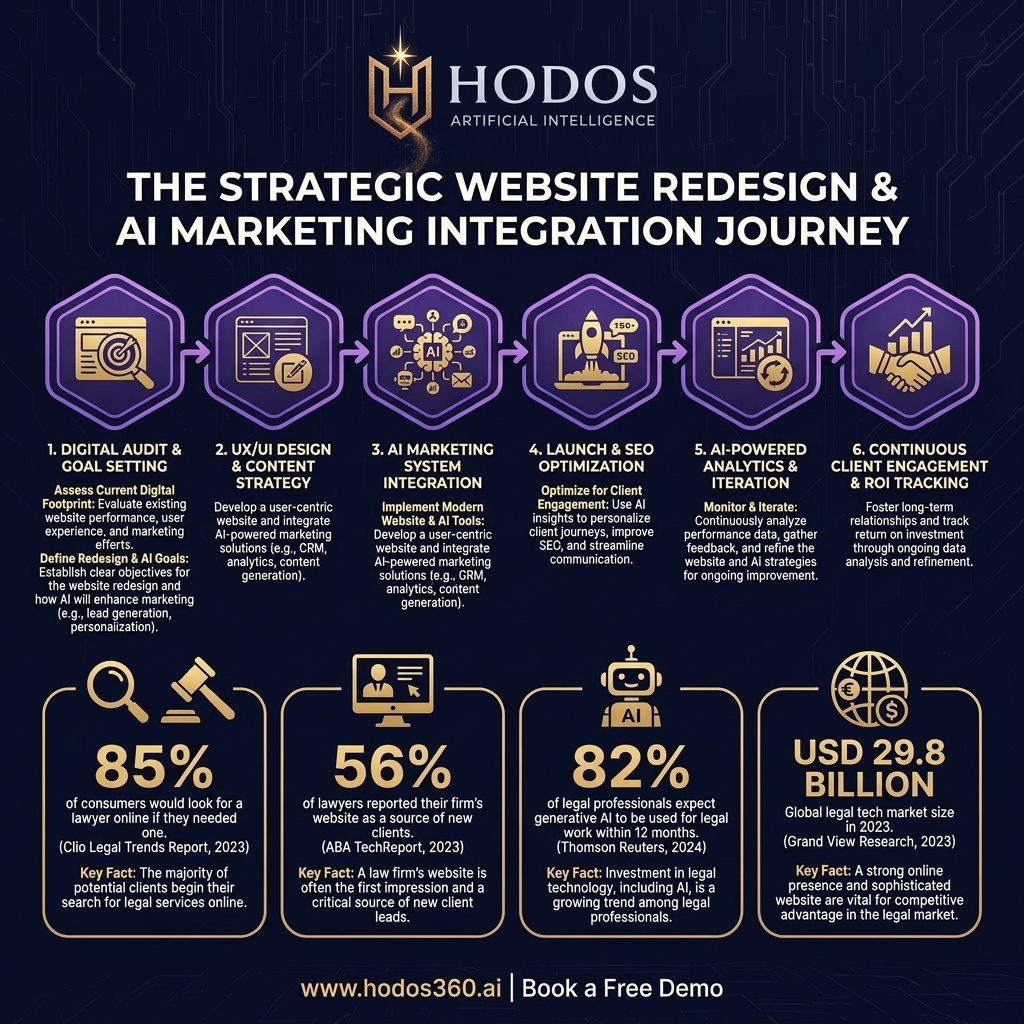
Driving Tangible ROI: Measuring Success in AI-Powered Legal Marketing
For any law firm, the ultimate measure of a marketing strategy's success is its return on investment (ROI). The beauty of AI marketing operating systems, especially when paired with a data-driven website redesign, lies in their unparalleled ability to track, analyze, and optimize performance, providing clear, tangible ROI. Traditional marketing often struggled with attributing specific leads or cases to particular campaigns, leaving firms guessing about the effectiveness of their investments. However, modern AI platforms offer sophisticated analytics dashboards that provide real-time insights into every aspect of a firm's digital footprint. From website traffic and bounce rates to lead conversion rates and client acquisition costs (CAC), every metric is meticulously tracked and presented, allowing firms to understand exactly where their marketing dollars are making the most impact and where adjustments are needed.
Consider the insights from a recent Gartner report, which highlighted that organizations leveraging AI for marketing see an average of 15-20% improvement in marketing efficiency. For law firms, this translates into more qualified leads, lower acquisition costs, and ultimately, higher revenue. AI can identify which content pieces are most engaging, which ad copy resonates best with specific demographics, and even predict which leads are most likely to convert based on their digital interactions. Learn more about Voice AI: The Ultimate Comeback for Legal Client Calls. This predictive analytics capability allows firms to proactively refine their campaigns, ensuring continuous improvement and maximum efficiency. Firms no longer have to rely on guesswork; instead, they can make informed, data-backed decisions that directly contribute to their bottom line, fostering sustainable growth and a stronger market presence.
Furthermore, the long-term value of an AI-powered marketing strategy extends beyond immediate lead generation. By continually learning from client interactions and market dynamics, these systems help firms build stronger client relationships, enhance client lifetime value (CLV), and cultivate a reputation for innovation and responsiveness. The ability to track the entire client journey, from initial website visit to successful case resolution, provides invaluable data for refining services, improving client satisfaction, and identifying new opportunities for growth. This strategic approach to marketing, deeply rooted in data and powered by AI, ensures that every investment in a website redesign and subsequent marketing efforts yields measurable, significant returns, solidifying the firm's position as a leader in the digital age. It's about building a robust, future-proof marketing infrastructure that consistently delivers results.
The Ethical Compass: Navigating AI in Legal Marketing
While the benefits of AI marketing are immense, law firms must navigate its implementation with a strong ethical compass. The use of AI in client data analysis, personalized outreach, and lead qualification raises important questions about data privacy, transparency, and potential biases. Adherence to professional responsibility rules, such as ABA Model Rule 7.1 (Communications Concerning a Lawyer's Services), which prohibits false or misleading communications, is paramount. Firms must ensure that their AI-driven marketing efforts are transparent about data collection and usage, comply with regulations like GDPR and CCPA, and avoid any practices that could be perceived as manipulative or discriminatory. The integrity of the legal profession must always take precedence, ensuring that AI enhances, rather than compromises, ethical standards. This requires careful oversight and a commitment to responsible AI deployment, building trust with both clients and regulatory bodies.

Key Takeaways and Next Steps for Forward-Thinking Law Firms
The legal industry stands at a pivotal juncture, where digital innovation is no longer optional but essential for survival and growth. The news of Digital.Marketing's AI-enabled Marketing Operating System underscores a broader trend: the imperative for law firms to embrace a strategic website redesign coupled with sophisticated AI marketing solutions. This dual approach is not merely about keeping pace; it's about setting the pace, creating a formidable digital presence that attracts, engages, and converts clients more effectively than ever before. Firms that proactively invest in modernizing their digital infrastructure and leveraging AI's capabilities will be the ones that capture market share, build enduring client relationships, and thrive in the competitive landscape of the coming decade. The future of legal practice is undeniably digital and AI-powered.
For law firm owners and managing partners, the immediate next step is to conduct a thorough audit of their existing digital footprint. Is your website truly a high-performing asset, or is it a liability? Are you leveraging the full potential of AI to drive your marketing and client acquisition efforts? Platforms designed specifically for legal professionals, such as HODOS 360, offer comprehensive solutions that integrate AI-powered website building, advanced marketing tools, and efficient law firm management systems. By embracing these innovative technologies, firms can not only enhance their digital presence and streamline operations but also position themselves as leaders committed to delivering exceptional client experiences in an increasingly digital world. The time for strategic action is now, transforming your firm's digital strategy into its most powerful growth engine.
- ✓AI Law Firm Management System: Streamline case management, billing, and document automation with intelligent workflows.
- ✓AI Marketing Platform: Boost lead generation and brand presence through AI video creation, social media automation, and ROI tracking.
- ✓AI Voice Assistants: Enhance client intake and support with 24/7 phone answering, lead qualification, and appointment booking.
- ✓Web & Mobile Development: Build high-converting, AI-powered websites with responsive design and SEO optimization tailored for legal audiences.
- ✓Client Intake Automation: Discover how AI can transform your initial client interactions, from lead capture to seamless onboarding.
- ✓Data-Driven Decision Making: Learn to leverage analytics from your AI marketing platform to make informed strategic choices for firm growth.
Frequently Asked Questions
Why is a website redesign critical for law firms in 2026?+
A website redesign is crucial because client expectations have evolved. Modern legal clients demand responsive, intuitive, and secure online experiences. An outdated site can deter potential clients, signaling a lack of technological adoption and professionalism. A strategic redesign enhances user experience, improves SEO, and integrates AI tools for better lead generation, directly impacting a firm's credibility and growth in a competitive digital landscape.
How do AI marketing operating systems benefit law firms?+
AI marketing operating systems offer law firms unprecedented advantages by automating and optimizing complex marketing tasks. They enable hyper-personalization of outreach, efficient content generation, and precise lead qualification. This leads to more targeted campaigns, reduced client acquisition costs, and a higher ROI on marketing investments. AI provides data-driven insights, allowing firms to adapt strategies in real-time and maintain a competitive edge.
What role does user experience (UX) play in a law firm's website redesign?+
User experience (UX) is paramount in a law firm's website redesign as it directly influences client perception and conversion rates. A well-designed UX ensures easy navigation, clear access to information, and a seamless journey for prospective clients. A positive UX builds trust and professionalism, guiding visitors efficiently towards desired actions like scheduling consultations. Poor UX, conversely, leads to high bounce rates and lost opportunities.
Can AI help law firms with client intake and communication?+
Absolutely. AI-powered tools, such as intelligent chatbots and voice assistants, can significantly enhance client intake and communication. Integrated into a redesigned website, these tools offer 24/7 responsiveness, qualify leads, answer FAQs, and even book appointments. This automation streamlines initial interactions, improves client satisfaction through instant support, and frees up staff time, ensuring no valuable lead is missed and operations are more efficient.
What ethical considerations should law firms keep in mind when using AI for marketing?+
Law firms must carefully navigate ethical considerations when deploying AI for marketing. Key concerns include data privacy, transparency in data collection and usage, and potential biases in AI algorithms. Firms must adhere to professional responsibility rules, like ABA Model Rule 7.1, ensuring communications are not misleading. Compliance with data protection regulations (e.g., GDPR, CCPA) is essential to maintain client trust and avoid legal repercussions, requiring responsible AI governance.