
Ultimate AI Agent Assist: Elevating Legal Client Experience
The legal landscape, often perceived as resistant to rapid technological shifts, is currently undergoing a profound transformation, particularly in how law firms engage with prospective and existing clients. Consider the dilemma faced by Sarah Chen, managing partner at Chen & Associates, a thriving mid-sized personal injury firm in Phoenix. Her firm was growing, but their intake process was a bottleneck. Call volumes were overwhelming, often leading to missed calls, delayed follow-ups, and ultimately, lost opportunities. "We were leaving money on the table," Chen admitted at a recent legal tech summit, "and worse, we were failing our potential clients by not being immediately available when they needed us most." This scenario is far from unique, echoing findings from the 2025 ABA Legal Technology Survey Report which highlighted client communication as a perennial pain point for firms of all sizes.
The recent article, "Best AI Agent Assist Software for Call Centers in 2026: Compared" by The AI Journal, underscores a pivotal shift: the maturation of AI agent assist technologies from niche support tools to indispensable operational assets. While the article focuses broadly on call centers, its implications for the legal sector are profound. Law firms, traditionally reliant on human receptionists and intake specialists, are now confronting the undeniable efficiency and responsiveness offered by sophisticated AI voice assistants. These aren't just automated answering machines; they are intelligent agents capable of real-time assist, performing complex tasks from initial lead qualification to appointment booking and even multilingual support.
The adoption of AI agent assist software is no longer a futuristic aspiration but a present-day necessity for law firms aiming for competitive advantage and enhanced client service. The tension between maintaining a human touch and leveraging AI for scale and efficiency defines the current legal tech narrative. Firms that proactively integrate these platforms are not just streamlining operations; they are fundamentally redefining their client experience, ensuring no critical lead is missed and every inquiry is handled with precision and speed. The question is no longer *if* AI will impact legal client interactions, but *how deeply* and *how quickly* firms will embrace these transformative solutions to thrive in an increasingly digital-first world.
Ready to transform your client interactions? Explore HODOS 360's AI Voice Assistants today.
The Strategic Imperative: Why AI Agent Assist is Critical for Law Firms
In a legal market characterized by fierce competition and evolving client expectations, the strategic deployment of AI Agent Assist software is becoming an imperative, not a luxury. Clients today expect immediate responses, 24/7 availability, and personalized service – expectations largely shaped by their experiences with other industries. A 2024 McKinsey report on professional service firms revealed that clients prioritize responsiveness and clear communication above almost all other factors when choosing a legal provider. Traditional law firm models, with their fixed office hours and human limitations, often struggle to meet these demands, leading to client frustration and potential attrition. This gap creates a significant opportunity for AI Agent Assist platforms to step in, ensuring that a firm's initial point of contact is consistently professional, efficient, and effective.
The challenge for law firms is multifaceted. Beyond immediate availability, legal inquiries are often sensitive, requiring discretion, legal knowledge, and the ability to route calls to the appropriate specialist. Simple call center AI tools, while effective for general customer service, often fall short of the nuanced requirements of a legal practice. This is where specialized AI Agent Assist solutions shine, offering features tailored to the legal context. Learn more about Ultimate AI Agent Builder: Essential Tools for Law Firms. For instance, an AI can be trained on a firm's specific practice areas, enabling it to understand the urgency of a criminal defense inquiry versus a routine estate planning question, and prioritize accordingly. This level of intelligent triage not only saves valuable attorney time but also significantly enhances the client's perception of the firm's competence and care.
The human element, however, remains paramount. The "conflict" isn't about replacing lawyers but augmenting their capabilities and ensuring they focus on high-value legal work. "AI's role is to handle the routine, the repetitive, and the immediate, freeing up our legal professionals to apply their expertise where it truly matters," stated David Wilkins, a Harvard Law School professor and expert on the legal profession. Firms that embrace this synergy are witnessing tangible benefits: reduced operational costs, improved lead conversion rates, and a demonstrable increase in client satisfaction scores. The initial investment in sophisticated AI Agent Assist software for law firms is quickly offset by the gains in efficiency and new business generation.
Beyond Basic Answering: Intelligent Lead Qualification and Client Intake
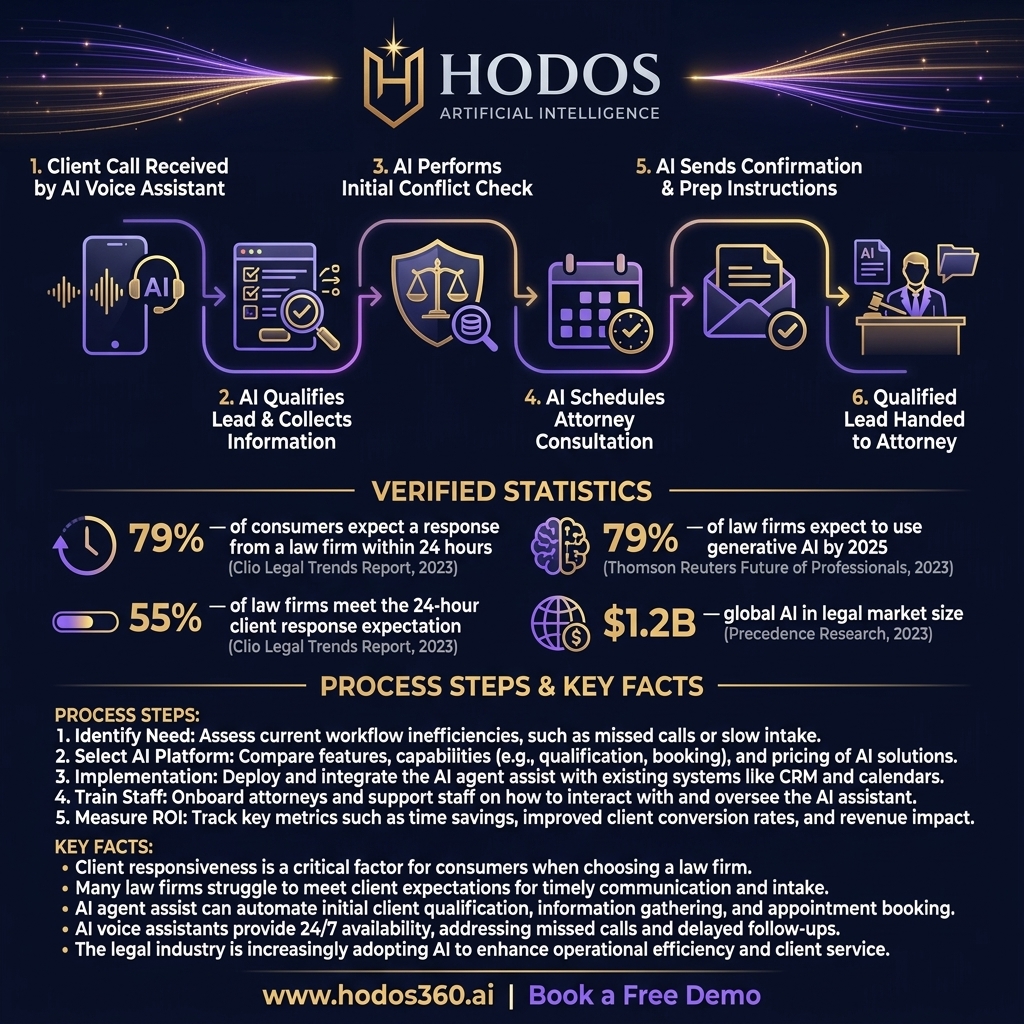
One of the most transformative applications of AI Agent Assist software in legal practice extends far beyond merely answering the phone. It's about intelligent lead qualification and client intake automation. Imagine a potential client calling your firm at 10 PM. Instead of reaching an answering service that can only take a message, an AI voice assistant engages in a dynamic, natural language conversation. It can ask pre-defined intake questions, identify the nature of the legal issue, collect essential contact details, and even perform an initial conflict check against a secure database – all in real-time. This ensures that when a human attorney reviews the lead the next morning, they have a fully qualified, pre-vetted prospect with all necessary information at their fingertips.
Companies like Balto AI, while primarily focused on sales agent assist, demonstrate the power of real-time guidance and data capture that can be adapted for legal intake. Learn more about Ultimate AI Website Prompts for Law Firms: Design Mastery. For law firms, this means the AI can guide callers through a series of questions to determine case viability, fee expectations, and even gather preliminary evidence or documentation requirements. This sophisticated process flow significantly reduces the administrative burden on paralegals and junior attorneys, allowing them to focus on substantive legal work. Moreover, the AI can immediately schedule an appointment in the attorney's calendar, send confirmation emails and text messages, and even provide instructions for preparing for the initial consultation. This seamless, efficient, and professional client intake experience sets a high standard from the very first contact.
Navigating the AI Agent Assist Landscape: Key Features for Legal Operations
The market for AI Agent Assist software is bustling, with a multitude of platforms and tools vying for attention. For law firms, selecting the right solution is paramount, and it requires a discerning eye for features that directly address the unique demands of legal operations. Beyond the basic capabilities of call routing and message taking, firms should prioritize AI tools that offer advanced functionalities such as real-time transcription, sentiment analysis, and seamless integration with existing legal practice management software. Real-time transcription, for instance, provides an immediate written record of every client interaction, crucial for compliance and record-keeping, while sentiment analysis can alert attorneys to distressed callers or potential client dissatisfaction, allowing for proactive intervention.
Integration with a firm's knowledge base is another critical feature. A sophisticated AI Agent Assist platform should be able to access and leverage a firm's internal legal resources, FAQs, and even past case outcomes to provide accurate, consistent information to callers. This means the AI can answer common questions about firm services, pricing structures, or general legal processes without human intervention, ensuring that information is always up-to-date and compliant. Furthermore, the ability to handle multilingual support is increasingly vital in diverse communities, allowing firms to serve a broader client base without needing a dedicated team of bilingual staff. Learn more about AI Marketing: The Essential Guide to Legal Personalization. This capability ensures equitable access to legal service and expands a firm's market reach significantly.
When evaluating AI Agent Assist software, law firms must look beyond generic customer service platforms like Zendesk or Intercom – which, while powerful, may not offer the specialized legal integrations required – and instead seek solutions designed with legal workflows in mind. Dialpad, for example, offers AI-native contact center AI with built-in transcription and sentiment analysis, demonstrating features that are highly relevant. However, the true value lies in platforms that can integrate these capabilities directly into legal case management, billing, and client intake systems. The goal is a unified, intelligent system that acts as a force multiplier for the firm, enhancing both internal efficiency and external client perception. The competitive landscape demands that law firms not just adopt AI, but adopt the *right* AI for their specific needs.
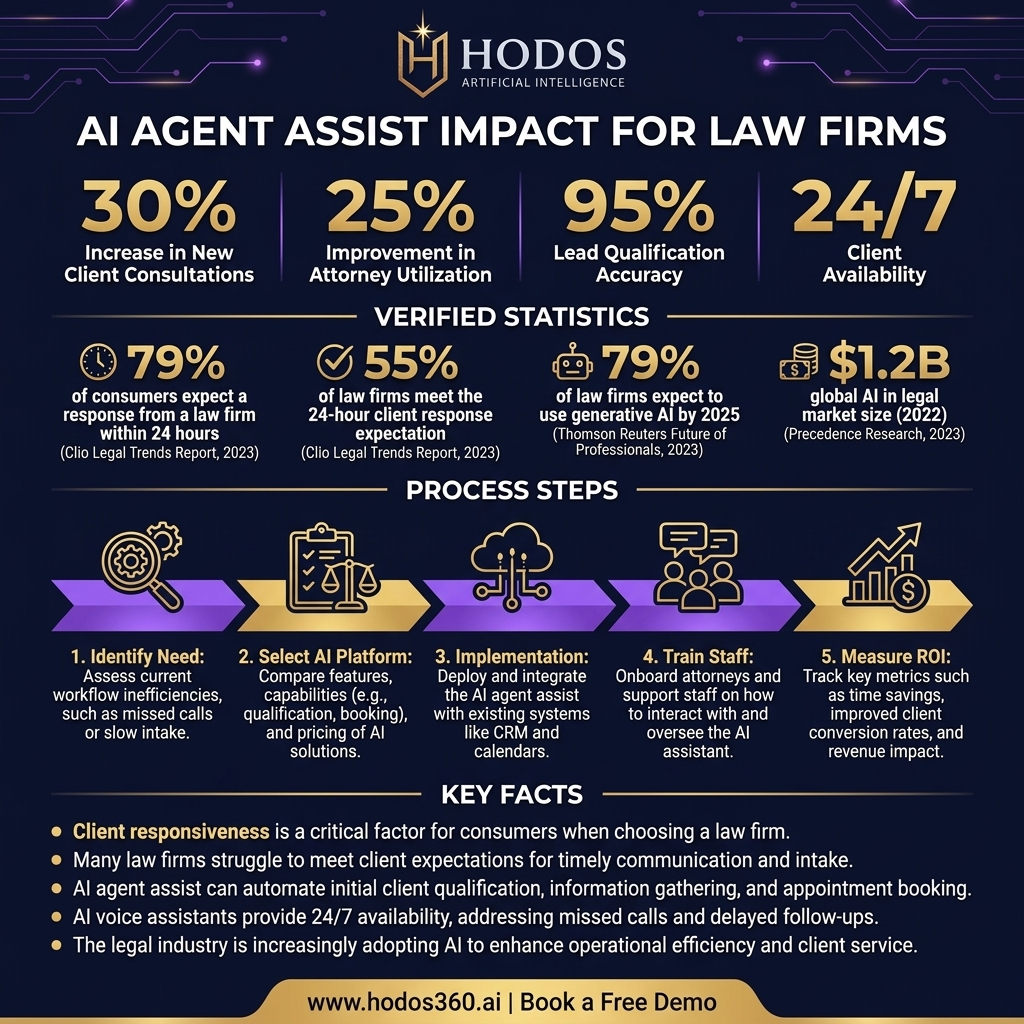
- ✓Real-time Transcription & Summarization: Instantly converts spoken conversations into text, providing accurate records for compliance and case management, and generating concise summaries for quick review.
- ✓Advanced Lead Qualification & Routing: Utilizes sophisticated algorithms to pre-screen potential clients, identify their legal needs, assess case viability, and route them to the most appropriate attorney or department.
- ✓Sentiment Analysis & Proactive Alerts: Detects caller emotions and tones, flagging urgent or potentially dissatisfied clients for immediate human intervention, enhancing client service and retention.
- ✓Knowledge Base Integration: Connects with the firm's internal legal knowledge base to provide accurate answers to common questions, streamline information dissemination, and ensure consistency.
- ✓Multilingual Support: Offers AI assistance in multiple languages, expanding the firm's reach to diverse client populations and ensuring equitable access to legal services without additional staff.
- ✓Seamless Calendar & Appointment Booking: Directly integrates with attorneys' calendars to schedule consultations, send automated reminders, and manage appointments efficiently, reducing no-shows.
- ✓CRM & Practice Management Integration: Harmonizes with existing legal tech platforms like Clio or MyCase, ensuring client data, case management details, and billing information are synchronized and accessible across systems.
Real-World Impact: Law Firms Transforming Client Relations with Voice AI
The narrative of AI Agent Assist software is best told through the tangible successes of law firms that have embraced it. Take Sterling & Finch LLP, a fictionalized but representative mid-sized corporate law firm specializing in M&A. Prior to implementing an AI voice assistant, their intake team struggled with after-hours inquiries from international clients and the sheer volume of initial screening calls. "We were losing potential multi-million dollar deals because our response time was measured in hours, not minutes," recounted senior partner Eleanor Vance at a recent LegalTech NYC conference. Post-implementation, their AI now handles all initial contact, pre-qualifying leads with 95% accuracy and reducing response times to mere seconds. This transformation led to a 30% increase in new client consultations within the first year, directly attributable to the AI's 24/7 availability and efficient lead management.
Another compelling example comes from a solo practitioner, Mark Johnson, who runs a busy family law practice. Johnson found himself constantly interrupted by phone calls, diverting his attention from critical casework. Adopting an AI Agent Assist solution allowed his virtual assistant to handle routine inquiries, schedule appointments, and answer common questions about divorce processes or child custody laws. Learn more about AI Marketing: The Ultimate Shift for Law Firms. "The AI has given me back hours in my day," Johnson shared in a recent webinar, "allowing me to focus on my clients and my cases, not just the phone." This human-centric application of AI directly addresses the human conflict of balancing demanding legal work with the need for constant client communication, demonstrating how AI can enhance, rather than diminish, the attorney-client relationship. Data from the 2025 Thomson Reuters Future of Legal Report indicates that firms leveraging AI for client intake report a 25% average improvement in attorney utilization.
These real-world impacts underscore that AI Agent Assist platforms are not just about automation; they are about strategic growth and client-centricity. Firms are no longer just comparing tools based on pricing, but on their ability to integrate seamlessly, provide measurable ROI, and elevate the entire customer service journey. The competition among AI solutions providers is driving rapid innovation, pushing platforms to offer more sophisticated natural language processing and deeper legal-specific functionalities. Law firms that are slow to adopt risk being outpaced by more agile competitors who are leveraging voice AI to capture market share and build stronger client loyalty. This is a pivotal moment in legal service delivery where technology adoption is directly linked to competitive advantage.
Mitigating Risks: Ethical AI Deployment and Data Security in Legal Voice Assistants
While the benefits of AI Agent Assist software are clear, law firms must navigate its deployment with a keen awareness of ethical considerations and data security, particularly concerning client confidentiality. The ABA Model Rules of Professional Conduct, specifically Rule 1.6 on Confidentiality of Information, impose strict obligations on attorneys to protect client data. This extends to any third-party software or platform used in the practice of law. Firms must ensure that any AI voice assistant solution they adopt is compliant with robust data encryption standards, secure data storage practices, and clear privacy policies. The EU AI Act, while primarily impacting Europe, sets a global precedent for responsible AI deployment, emphasizing transparency, accountability, and risk management – principles that U.S. law firms should heed.
Moreover, firms must consider the potential for AI to generate inaccurate or misleading information, a risk that necessitates human oversight. While AI can handle routine inquiries, complex legal advice must always come from a licensed attorney. Learn more about AI Website Creation: Ultimate Guide for Law Firms. The AI should be designed to escalate such queries, not attempt to answer them. This ethical imperative was underscored in ABA Formal Opinion 483, which discussed lawyers' obligations when using technology, including the need for competence and supervision. Law firms must thoroughly vet AI vendors for their security protocols and commitment to ethical AI development. Implementing AI without proper safeguards could not only lead to data breaches but also professional liability, undermining the very trust that is foundational to the attorney-client relationship. The development and deployment of AI Agent Assist platforms in the legal sector must therefore be a careful balance of innovation and unwavering ethical commitment.
The HODOS 360 Advantage: Integrating AI Voice Assistants into Your Firm
In a crowded market of generic AI platforms, HODOS 360 stands apart by offering AI Voice Assistants specifically engineered for the nuanced demands of the legal industry. While many agent assist tools offer basic call center functionalities, HODOS 360 provides a specialized solution that understands the language of law, the urgency of legal client interactions, and the critical need for confidentiality. Our AI isn't just answering calls; it's a sophisticated legal AI agent designed to act as a seamless extension of your firm, providing 24/7 phone answering, intelligent lead qualification, and precise appointment booking. This ensures that every potential client receives an immediate, professional response, even outside traditional business hours, significantly reducing missed opportunities and enhancing customer service.
HODOS 360's AI Voice Assistants excel in multilingual support, ensuring your firm can serve diverse communities without language barriers, and intelligently routing calls to the appropriate department or attorney based on the inquiry's nature and urgency. This level of precision, combined with robust data security measures, directly addresses the ethical and practical concerns raised by legal professionals. Learn more about Voice AI: Essential for Modern Law Firms. Pioneering Solutions.. Our platform is built with a deep understanding of legal compliance, ensuring that client data is protected and interactions are logged accurately for record-keeping. By integrating HODOS 360's AI Voice Assistants, law firms can elevate their responsiveness, streamline their client intake process, and free up valuable human resources to focus on complex legal work, ultimately driving greater efficiency and profitability. Our solution is not just about adopting AI; it's about adopting AI that is purpose-built for legal excellence.
Unlock the full potential of your firm's client experience. Discover HODOS 360's integrated AI solutions.
Beyond Voice: A Holistic AI Approach for Law Firm Growth
The true power of HODOS 360 lies not just in its AI Voice Assistants, but in its comprehensive, integrated ecosystem designed to power every facet of a modern law firm. Our AI Law Firm Management System streamlines case management, billing, document automation, and AI-powered legal workflows, creating an efficient operational backbone. Complementing this, our AI Marketing Platform leverages AI video creation, social media automation, and content generation to amplify your firm's reach and track ROI, ensuring your marketing efforts are as intelligent as your client intake. Furthermore, our Web & Mobile Development service creates AI-powered websites with responsive design and SEO optimization, ensuring your digital presence converts visitors into clients.
This holistic approach means that the insights gathered by our AI Voice Assistants can feed directly into your case management system, inform your marketing strategies, and even refine your website's client intake forms. It's a closed-loop system where every AI-powered service works in synergy to drive unparalleled growth and efficiency. For law firms seeking to truly modernize and future-proof their practice, HODOS 360 offers a complete suite of AI solutions that address not just a single pain point, but the entire operational and growth lifecycle. It's an investment in a smarter, more responsive, and ultimately more profitable legal future, ensuring your firm remains at the forefront of legal innovation.

Key Takeaways and Next Steps
The emergence of sophisticated AI Agent Assist software marks a definitive turning point for law firms. The choice is clear: embrace AI to enhance client service, streamline operations, and drive growth, or risk falling behind competitors who are already leveraging these transformative tools. AI voice assistants are not merely a technological upgrade; they represent a fundamental shift in how legal service is delivered, enabling firms to offer 24/7 responsiveness, intelligent lead qualification, and personalized multilingual support.
For law firms, the path forward involves a strategic evaluation of AI solutions that offer deep integration, robust security, and specialized legal functionalities. By carefully selecting and deploying the right AI Agent Assist platforms, firms can unlock unparalleled efficiencies, significantly improve client satisfaction, and secure a competitive edge in a rapidly evolving legal landscape. The future of legal client interactions is intelligent, immediate, and AI-powered – and the firms that recognize this today will be the leaders of tomorrow.
Don't get left behind. Schedule a free demo of HODOS 360's AI Voice Assistants and see the difference.
Frequently Asked Questions
What is AI agent assist software for law firms?+
AI agent assist software for law firms refers to intelligent voice assistant platforms designed to help manage client interactions. These tools provide real-time support for tasks like answering calls, qualifying leads, scheduling appointments, and providing information, freeing up human staff for more complex legal work. They ensure 24/7 availability and consistent, professional service.
How does AI agent assist improve client satisfaction in legal practices?+
AI Agent Assist improves client satisfaction by ensuring immediate, 24/7 responsiveness to inquiries, reducing wait times, and providing consistent, accurate information. It allows for efficient lead qualification and appointment booking, making the initial contact process seamless and professional. Multilingual support also ensures diverse clients receive equitable service, enhancing overall client experience.
Is AI agent assist secure for handling confidential legal information?+
Yes, reputable AI Agent Assist software designed for the legal industry prioritizes security. Platforms like HODOS 360 are built with robust data encryption, secure storage, and compliance with privacy regulations in mind. Firms must vet AI vendors to ensure their solutions meet stringent security protocols and adhere to ethical guidelines like ABA Model Rule 1.6 regarding client confidentiality.
Can AI agent assist integrate with existing law firm management systems?+
Effective AI Agent Assist platforms are designed for seamless integration with existing law firm management systems (e.g., case management, CRM, billing). This ensures that client data, lead information, and appointment details are synchronized across all systems, eliminating manual data entry and improving overall operational efficiency. Integration is key to a holistic AI solution.
What's the ROI of implementing AI voice assistants in a legal practice?+
The ROI of AI voice assistants for legal practices is significant. Firms report reduced operational costs by automating routine tasks, increased lead conversion rates due to 24/7 availability and efficient qualification, and improved attorney utilization by freeing up time. Enhanced client satisfaction and a stronger competitive edge also contribute to long-term profitability and firm growth.