


AI Agents Unveiled: Essential Frontend Vision for Law Firms
For years, law firms have grappled with the inherent disconnect between their sophisticated backend systems and the often-clunky, static frontend websites that serve as their digital storefronts. Imagine Sarah Chen, a managing partner at a boutique intellectual property firm, LexCorp Legal. She invested heavily in a cutting-edge case management system, yet her firm’s online client intake forms were a labyrinth of dropdowns and unresponsive fields, leading to frustrated potential clients and lost opportunities.
Her frustration echoed a common sentiment across the legal sector: how could the powerful AI tools streamlining internal operations fail to translate into a seamless, intelligent client-facing experience? The answer, until recently, lay in a fundamental limitation of artificial intelligence: its inability to truly *see* and understand the visual and interactive layers of a website, much like a human user does.
This paradigm is now rapidly shifting. A groundbreaking article published on HackerNoon, titled "Domscribe Gives AI Agents Eyes on Your Frontend," highlighted a pivotal innovation that promises to bridge this very gap. Developed by Kaushik Gnanaskandan, Domscribe offers a crucial capability: it allows AI agents to interpret and interact with live DOM (Document Object Model) elements, effectively giving them 'eyes' on the frontend.
This isn't just about reading code; it's about understanding layout, user flows, visual cues, and interactive components in real-time. For law firms, this development isn't merely incremental; it represents a foundational change in how digital strategy is conceived and executed, offering unprecedented avenues for optimizing client engagement, streamlining online services, and maintaining a competitive edge in an increasingly digital legal landscape.
The implications extend far beyond simple website maintenance. With AI agents capable of visual comprehension, law firms can deploy autonomous systems that not only identify technical glitches but also proactively suggest design improvements, optimize user journeys for conversion, and personalize client experiences on a scale previously unimaginable.
This technology empowers firms to move from reactive web management to proactive, AI-driven digital excellence. As the legal industry continues its rapid digital transformation, fueled by advancements showcased at events like LegalTech NYC, the ability of AI to understand the user interface is becoming a non-negotiable asset for firms aiming to attract and retain clients in a fiercely competitive market.
The era of truly intelligent, client-centric legal websites is no longer a distant vision but an immediate reality.
The Evolution of AI Agents: Beyond Code to Visual Cognition
Historically, AI’s interaction with web interfaces has been largely confined to the backend—parsing data, executing scripts, and understanding the underlying code structure. While powerful for automating internal processes, this approach often overlooked the critical human element: how users actually *experience* a website. This limitation became a significant bottleneck for law firms striving to create intuitive client portals or high-converting landing pages for their legal services.
For instance, an AI might detect a broken link in the HTML, but it couldn't discern if a button was visually confusing, if a form field was too small for mobile users, or if the overall flow of information was logically disjointed from a human perspective.
This gap necessitated constant human oversight and iterative design, consuming valuable resources and time that could be better spent on legal work.
The advent of tools like Domscribe, spearheaded by innovators such as Kaushik Gnanaskandan, marks a significant leap forward. By enabling AI agents to interpret the DOM visually, these systems can now effectively 'see' the website as a user does.
This means understanding not just the code that renders a contact form, but also its position on the page, its color contrast, the size of its input fields, and its responsiveness across different devices. This level of visual cognition allows AI to analyze user experience (UX) and user interface (UI) elements with unprecedented accuracy, moving beyond abstract data points to tangible visual feedback.
This capability is critical for law firms, where the clarity and professionalism of their online presence directly impact client trust and engagement. Learn more about AI Local Search: The Ultimate Visibility Guide for Law Firms. According to the 2023 ABA TechReport, only 49% of law firms reported having a website optimized for mobile devices, highlighting a vast area where AI with frontend vision can drive immediate, impactful improvements.
Furthermore, this enhanced visual understanding allows AI to perform complex tasks that mimic human testers and designers. Imagine an AI agent not just checking for broken images, but also evaluating the aesthetic consistency of branding elements across pages, identifying accessibility issues for users with disabilities (e.g., inadequate color contrast, missing alt-text for images), or even predicting where a user might abandon a lengthy client intake process based on visual cues and historical interaction patterns.
This goes beyond simple automation; it's about intelligent, empathetic design assistance. For law firm owners, this translates into a website that is not only technically sound but also psychologically optimized to convert visitors into clients, fostering a seamless and professional digital interaction from the very first click.
This shift towards visually aware AI agents is not just a technological curiosity; it's a strategic imperative. As competition for legal services intensifies, a firm's digital storefront becomes a primary differentiator. Firms that leverage this technology will be able to iterate on their web presence faster, respond to user feedback more intelligently, and ultimately provide a superior online experience that reflects the high standards of their legal practice.
This proactive approach to web development, driven by AI's newfound 'eyes,' allows law firms to stay ahead of the curve, ensuring their digital platforms are always at the forefront of functionality and client satisfaction.
Bridging the Gap: AI-Powered UX/UI Optimization for Legal Portals
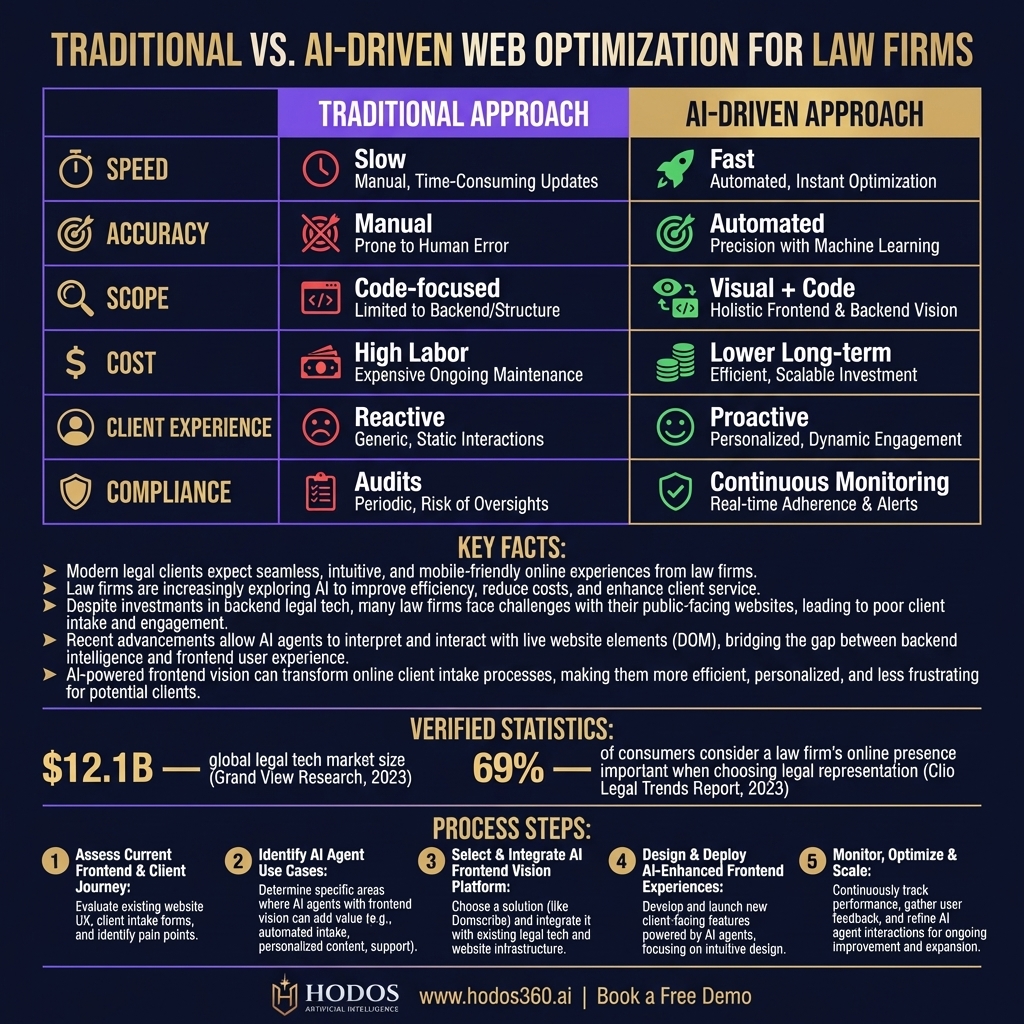
The ability of AI to interpret frontend elements directly addresses a long-standing challenge in legal tech: optimizing user experience (UX) and user interface (UI) for complex legal portals and client-facing applications. Traditional A/B testing can be slow and resource-intensive, requiring human designers to hypothesize, implement, and analyze changes.
With AI agents possessing visual cognition, this process can be dramatically accelerated and refined. These agents can autonomously identify bottlenecks in client intake forms, suggest more intuitive navigation paths within a secure client portal, or even dynamically adjust content layout based on user behavior patterns detected in real-time.
Learn more about Privilege & AI: The Ultimate Guide After US v. Heppner. For example, an AI could observe that clients frequently abandon a specific section of a document upload portal and then automatically propose design modifications or provide contextual help bubbles to guide users more effectively.
This level of granular, proactive optimization ensures that a law firm’s digital touchpoints are always performing at their peak, minimizing friction and maximizing client satisfaction.
Transforming Legal Web Development and Client Engagement
The implications of visually aware AI agents for legal web development are profound, extending across every facet of a law firm's digital presence. Consider the painstaking process of ensuring compliance with web accessibility standards, such as WCAG (Web Content Accessibility Guidelines). Historically, this required specialized audits and manual reviews.
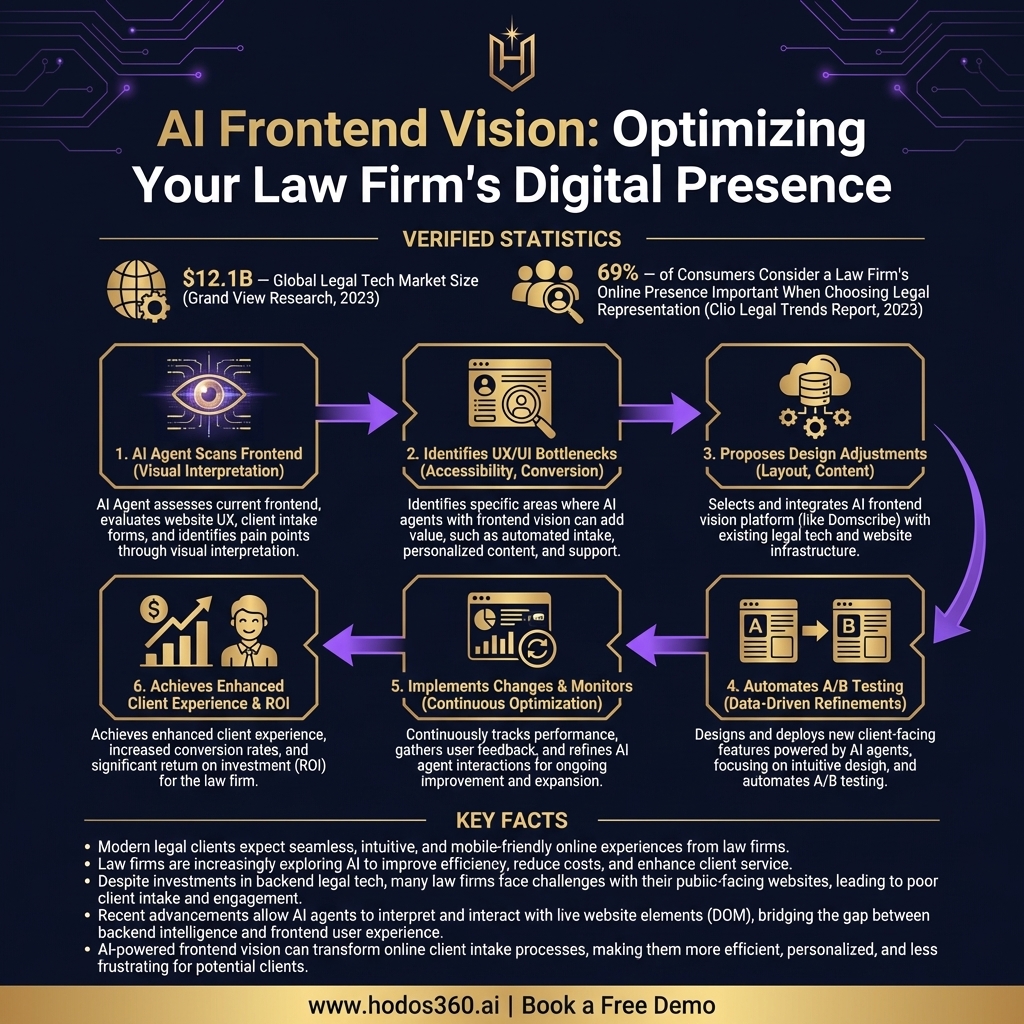
Now, an AI agent with frontend vision can continuously scan a law firm's website, not just for code-level compliance, but for visual and interactive adherence, flagging issues like insufficient color contrast, lack of keyboard navigation support, or improper heading structures that impact screen readers. This ensures that legal services are accessible to all potential clients, a moral imperative and often a legal requirement under statutes like the Americans with Disabilities Act (ADA), which has seen a rise in web accessibility lawsuits against businesses, including law firms.
Beyond compliance, these sophisticated AI agents can revolutionize content management and personalization. Imagine an AI that understands the visual hierarchy of your blog posts, identifies which call-to-action buttons are most prominent, and then dynamically optimizes their placement or wording based on real-time engagement data. For a law firm leveraging an AI marketing platform, this integration is invaluable.
The AI can analyze user journeys, identify drop-off points, and then suggest content adjustments or design tweaks to improve conversion rates for specific practice areas. Learn more about Voice AI: Essential Transformation for Modern Legal Workflows. This level of intelligent, data-driven optimization is crucial for law firms seeking to maximize their return on investment from digital marketing efforts, turning website visitors into qualified leads with greater efficiency.
Moreover, the ability of AI agents to 'see' the frontend opens up new possibilities for automated testing and quality assurance. Instead of relying solely on unit tests or integration tests that focus on backend logic, firms can deploy AI agents to perform comprehensive visual regression testing, ensuring that design changes don't inadvertently break existing layouts or user flows.
This is particularly vital for large, complex legal websites or client portals that undergo frequent updates. The AI can simulate user interactions, navigate complex forms, and validate the visual integrity of every page, drastically reducing the time and cost associated with manual testing and preventing embarrassing errors that could erode client trust.
This new wave of AI-powered frontend intelligence also facilitates a more agile and responsive approach to web design. Law firms can quickly prototype new features, deploy them, and have AI agents provide immediate feedback on their visual impact and user-friendliness. This iterative process, driven by intelligent automation, allows firms to adapt rapidly to changing client expectations and market trends, ensuring their digital platforms remain cutting-edge.
The days of launching a website and leaving it static for years are over; continuous improvement, guided by AI with frontend vision, is the new standard for digital excellence in the legal sector.
- ✓Enhanced Client Intake: AI agents can visually optimize online forms, reducing abandonment rates by identifying confusing layouts or overly complex steps.
- ✓Proactive Accessibility Compliance: Automated scanning for WCAG violations directly on the frontend, ensuring legal services are inclusive for all users.
- ✓Intelligent Content Personalization: AI understands visual cues to recommend content or adjust layouts based on individual user behavior and preferences.
- ✓Real-time UX/UI Optimization: AI agents can conduct continuous A/B testing and suggest design improvements based on visual interaction data.
- ✓Automated Visual Regression Testing: Ensures design consistency and prevents layout breaks across updates, saving valuable development time.
- ✓Streamlined Digital Marketing: AI analyzes visual effectiveness of CTAs and ad placements, boosting conversion rates for legal services.
- ✓Faster Iteration Cycles: Rapid prototyping and deployment with immediate AI-driven visual feedback, accelerating web development workflows.
The Competitive Edge: Law Firms Embracing AI-Driven Digital Excellence
In an increasingly crowded legal market, the digital experience a law firm offers can be a significant differentiator. Firms that embrace visually aware AI agents are positioning themselves for a substantial competitive advantage. Consider the firm that can launch a new practice area microsite in weeks, with AI-optimized content and an intuitive user experience, compared to a competitor still bogged down by months of manual design and testing.
This agility allows firms to respond faster to market demands, seize new opportunities, and effectively communicate their value proposition to a broader audience. The ability to continuously refine and perfect their digital storefront ensures that they are always presenting the most professional, user-friendly, and high-converting version of their brand.
The real drama unfolds in the marketplace between firms that aggressively adopt advanced legal tech and those that hesitate. Firms like Allen & Overy, known for their early adoption of AI tools like Harvey AI for legal research, understand that technological superiority isn't just about internal efficiency; it's about delivering a superior client experience at every touchpoint.
When their clients interact with their digital platforms, they expect the same level of sophistication and precision they receive in legal counsel. A clunky website, a confusing client portal, or an unresponsive mobile experience can subtly erode trust and drive potential clients to more digitally savvy competitors.
The investment in AI-powered web development is therefore not merely an IT expenditure but a strategic play for market share and client loyalty.
Moreover, the data insights generated by these intelligent AI agents are invaluable. Learn more about AI Agents: Essential Guide for Law Firms to Master Marketing.
By understanding how users visually interact with a website, firms gain a deeper understanding of client preferences, pain points, and engagement patterns. This data, when integrated with a comprehensive AI Law Firm Management System, can inform broader business strategies—from identifying unmet client needs to optimizing service delivery.
For example, if AI agents consistently detect friction points in accessing specific legal resources online, the firm can proactively develop clearer guides or even new service offerings. This data-driven approach, powered by AI's visual understanding, transforms a website from a static brochure into a dynamic, intelligent engine for business growth and client relationship management.
The strategic tension here is clear: firms that invest in technologies that enhance their digital frontend are investing in their future. They are not just building websites; they are crafting intelligent digital ecosystems that learn, adapt, and continuously improve the client journey. This proactive stance, fueled by the capabilities of AI agents with frontend vision, is what separates market leaders from followers.
As the legal tech landscape evolves at an unprecedented pace, driven by innovations and discussions at forums like the ABA TechShow, the ability to leverage AI for comprehensive digital excellence will be the hallmark of successful law firms in the coming decade.
Ethical Considerations and the Future of Human-AI Collaboration
While the benefits of AI agents with frontend vision are clear, their deployment also raises important ethical considerations, particularly concerning data privacy and the potential for manipulation. As these AI systems collect granular data on user interactions, including eye-tracking patterns and click behaviors, law firms must ensure strict adherence to data protection regulations such as GDPR and CCPA.
Transparency with clients about data collection practices is paramount, aligning with professional responsibility outlined in ABA Model Rule 1.6 (Confidentiality of Information). The goal is to enhance the user experience, not to exploit it. Learn more about AI Settlement Rates: An Essential Guide to Maximizing Outcomes.
Furthermore, the future of web development with AI will likely involve a sophisticated collaboration between human designers and AI agents, where AI handles repetitive optimization tasks and provides data-driven insights, while human creativity and ethical oversight remain central to strategic design and client trust. This synergy ensures that technology serves humanity, rather than replacing essential human judgment and empathy in the legal profession.
Leveraging AI for Holistic Law Firm Digital Transformation
The emergence of AI agents with frontend vision is not an isolated development; it is a critical component of a broader digital transformation sweeping through the legal industry. For law firms, this means thinking beyond individual tools and towards an integrated ecosystem where every AI-powered service works in concert.
Imagine a scenario where an AI Law Firm Management System identifies a surge in inquiries for a specific legal service. An integrated AI Marketing Platform could then leverage this insight to generate targeted content and social media campaigns. Critically, these campaigns would direct potential clients to a website that has been continuously optimized by AI agents with frontend vision, ensuring that the landing pages are not only visually appealing but also intuitively designed to convert visitors into qualified leads.
This holistic approach is where the true power of advanced legal tech lies. Firms that integrate their web development strategies with their overall AI infrastructure will achieve unparalleled efficiency and client satisfaction. The AI Voice Assistants, for instance, could provide 24/7 support, answering common queries and booking appointments directly through an AI-optimized booking system on the firm's website.
If the website's user interface is visually confusing, even the most advanced voice assistant might struggle to guide clients effectively. Learn more about AI Voice Agent: Essential Legal Firm Automation for 2026. This interconnectedness underscores the importance of a seamless frontend experience, driven by AI that truly understands human interaction with digital interfaces.
The synergy across these services—from client intake and document automation to marketing analytics and responsive web design—creates a powerful, cohesive client journey.
This integrated vision is what platforms like HODOS 360 aim to deliver. By providing a comprehensive suite of AI-powered services—including AI Law Firm Management, AI Marketing, AI Voice Assistants, and advanced Web & Mobile Development—HODOS 360 empowers law firms to build a truly intelligent digital presence.
Our Web & Mobile Development service, for example, is designed to harness these cutting-edge AI capabilities, ensuring that your firm’s website is not just a digital brochure, but a dynamic, high-converting asset. This means leveraging AI agents to continuously optimize your site for SEO, user experience, and client conversion, freeing up your legal professionals to focus on what they do best: practicing law.
The future of legal practice demands a digital presence that is as intelligent and adaptive as the legal professionals it represents, and AI agents with frontend vision are essential to achieving this goal.
The Future of Legal Tech: Beyond Automation to Intelligent Interaction
The trajectory of legal tech is clearly moving beyond mere automation of repetitive tasks towards creating truly intelligent, interactive digital experiences. The ability of AI agents to 'see' the frontend is a cornerstone of this evolution. It transforms websites from static information repositories into dynamic, responsive entities that can anticipate user needs, personalize interactions, and continuously self-optimize.
This profound shift will enable law firms to offer digital services that are not only efficient but also deeply intuitive and empathetic to the client's journey, setting a new benchmark for client care in the digital age. Firms that embrace this innovation will not just keep pace with change; they will lead it, shaping the future of legal service delivery.

Key Takeaways and Next Steps for Law Firms
The emergence of AI agents with frontend vision, as highlighted by innovations like Domscribe, marks a pivotal moment for law firms. It signals a shift from purely backend-focused AI to a more holistic approach that integrates intelligence directly into the client-facing digital experience. For law firm owners and legal professionals, the message is clear: your website and digital portals are no longer static assets but dynamic, intelligent extensions of your practice.
Embracing this technology means unlocking unprecedented opportunities for optimizing client engagement, streamlining online operations, and securing a significant competitive advantage. Firms that proactively integrate these advanced AI capabilities into their web development strategies will not only enhance their digital presence but also cultivate deeper client trust and loyalty in a rapidly evolving legal landscape.
The strategic takeaway for law firms is to recognize that a superior online presence, driven by visually intelligent AI agents, is no longer a luxury but a necessity. Begin by assessing your current digital platforms for areas where client friction is high—from complex intake forms to non-responsive mobile experiences.
Explore how AI-powered tools can provide continuous UX/UI optimization, ensuring your website is always at the forefront of functionality and design. Engage with legal tech providers who offer integrated solutions that connect your web presence with your broader firm management and marketing efforts. The future of legal service delivery is digital, intelligent, and deeply client-centric.
By leveraging AI agents that can truly *see* your frontend, your firm can confidently navigate this future, building a digital foundation that is as robust and forward-thinking as your legal expertise.
Frequently Asked Questions
What does it mean for AI agents to have 'eyes on your frontend'?+
It means AI systems can visually interpret and interact with a website's user interface (UI) and user experience (UX) elements, much like a human user. This goes beyond reading code to understanding layouts, visual cues, interactive components, and user flows in real-time, enabling more intelligent optimization and interaction with digital interfaces.
How will this technology benefit a law firm's website and client portals?+
Law firms can benefit from automated UX/UI optimization, proactive accessibility compliance checks, intelligent content personalization, and enhanced client intake processes. AI agents can identify friction points, suggest design improvements, and ensure a seamless, professional digital experience, leading to higher client satisfaction and conversion rates.
Are there any ethical concerns with AI agents having frontend vision?+
Yes, ethical considerations include data privacy and potential for manipulation. Law firms must ensure transparency in data collection, adhere to regulations like GDPR and CCPA, and maintain human oversight. The goal is to enhance user experience ethically, fostering trust while leveraging AI's capabilities for optimization.
How does this integrate with other legal tech solutions?+
Frontend-aware AI agents integrate seamlessly with AI Law Firm Management Systems, AI Marketing Platforms, and AI Voice Assistants. A superior web frontend enhances lead qualification, appointment booking, and content delivery, creating a cohesive digital ecosystem where all AI services work together to optimize client journeys and firm operations.
What immediate steps should law firms take to leverage this technology?+
Law firms should first assess their current digital platforms for UX/UI weaknesses. Next, explore AI-powered web development tools that offer frontend vision capabilities. Prioritize continuous optimization for client intake and accessibility. Finally, seek integrated legal tech solutions that unify web presence with broader firm management and marketing strategies for holistic digital transformation.