


Essential AI Browser Extensions: Revolutionizing Legal Web Interactions
For years, the legal profession has grappled with the sheer volume of information available online—from intricate case law databases to ever-evolving regulatory frameworks and fragmented client data. Attorneys and legal staff have spent countless hours sifting through websites, manually extracting data, and painstakingly re-entering it into various systems. This challenge was acutely felt by partners like Michael Chen at a mid-sized corporate law firm in New York, who recently lamented the 'digital friction' his team experienced daily. "We're drowning in tabs and manual transfers," Chen shared at a recent ABA Techshow panel, articulating a widespread sentiment that the promise of digital efficiency often fell short when faced with the realities of disparate web tools and legal platforms. The traditional approach, while thorough, often meant sacrificing speed and agility, directly impacting client service and firm profitability in an increasingly competitive market. The manual effort involved in legal research, due diligence, and even client intake created bottlenecks that no amount of human dedication could fully overcome, leading to burnout and missed opportunities for innovation.
However, a new wave of innovation is rapidly changing this landscape: AI browser extensions. These sophisticated tools, built upon advancements in artificial intelligence and natural language processing, are poised to fundamentally transform how legal professionals interact with the web. The recent buzz around platforms like 'Extended,' highlighted by Trend Hunter, which allows users to transform websites with simple language commands, underscores a broader trend. This isn't just about minor productivity hacks; it's about embedding intelligent automation directly into the browser, turning static web pages into dynamic, interactive workspaces tailored to specific legal tasks. Imagine an extension that can automatically highlight key contractual terms on a government procurement site, summarize pertinent case law from a legal database, or even pre-populate client intake forms by extracting information from a public profile—all with a few clicks or a simple voice command. This shift represents a powerful evolution from discrete legal software applications to an integrated, AI-powered web experience, promising to resolve the 'digital friction' that has long plagued the industry. Law firms are beginning to recognize that leveraging these AI browser extensions is not merely an upgrade but a strategic imperative to maintain competitive edge and deliver superior legal services in the digital age.
This article delves into how these cutting-edge AI browser extensions are revolutionizing legal workflows. We'll explore their practical applications, the strategic advantages they offer, and the critical considerations for their secure and ethical implementation within your firm. From automating mundane data entry to empowering sophisticated legal analysis, these tools are redefining the boundaries of what's possible directly within your web browser. Discover how these innovations can unlock unparalleled efficiency and intelligence for your practice. Learn more about HODOS 360's AI-powered solutions for law firms today!
The Rise of AI Browser Extensions in Legal Practice
The legal technology landscape is undergoing a profound transformation, driven by the rapid maturation of artificial intelligence. What began with large, enterprise-level AI platforms is now cascading down to more accessible, modular solutions, most notably in the form of AI browser extensions. This democratized access to AI capabilities is a game-changer for law firms of all sizes. Historically, custom legal software development was a significant investment, often out of reach for smaller or mid-sized firms. However, the emergence of advanced browser extension builders and AI-powered development tools means that even non-technical legal professionals can conceptualize and deploy tailored solutions. As reported by Gartner, AI adoption in legal services is projected to grow by over 30% annually through 2028, with a significant portion of this growth attributed to specialized, accessible tools that integrate seamlessly into existing workflows, rather than requiring wholesale system overhauls. This trend reflects a broader industry shift towards agility and customization, moving away from monolithic software suites. The ability to quickly build, test, and iterate on simple browser-based tools allows firms to address specific pain points almost immediately, without the lengthy development cycles and exorbitant costs associated with traditional software projects.
This paradigm shift is exemplified by companies like Harvey AI, which, despite its large-scale partnerships with firms like Allen & Overy, also highlights the underlying potential for modular AI. While Harvey focuses on foundational models, the principles of AI-driven legal assistance are being miniaturized into browser-based applications. Consider the statement by legal tech pioneer Andrew Arruda, co-founder of ROSS Intelligence, who has consistently championed the idea of 'AI as an assistant.' This philosophy perfectly aligns with the utility of AI browser extensions—they don't replace lawyers but augment their capabilities, making their existing tools smarter. A key driver for this growth is the increasing sophistication of large language models (LLMs) and their ability to be fine-tuned for specific legal domains. Firms can now leverage these models within a browser context to perform tasks that once required specialized software or extensive manual review. This evolution is not just about efficiency; it's about empowering legal professionals with immediate access to advanced analytical capabilities, directly at the point of need—their web browser. The competitive advantage for early adopters will be substantial, allowing them to deliver faster, more accurate, and more cost-effective services.
Furthermore, the ease of deployment and integration of these extensions makes them particularly attractive. Learn more about AI Marketing Automation: Essential Lead Flow for Law Firms. Unlike traditional software, which often requires complex installation and IT support, browser extensions can be installed and updated with minimal effort. This low barrier to entry means that legal teams can experiment with different tools and quickly identify what works best for their specific needs. For instance, a firm specializing in intellectual property law might deploy an extension that monitors patent databases for specific keywords, while a real estate practice might use one to extract property tax data from county websites. This flexibility allows for a highly customized approach to technology adoption, ensuring that investments are directly aligned with operational needs and strategic objectives. The builders behind these tools are continuously refining their offerings, making it easier for law firms to leverage AI without needing in-house development teams. This proliferation of user-friendly browser extension builders means that legal professionals themselves can often contribute to the development of bespoke tools, fostering a culture of innovation from within the firm. This grassroots approach to AI adoption is proving to be a powerful catalyst for change across the legal industry, enabling firms to stay agile and responsive to market demands.
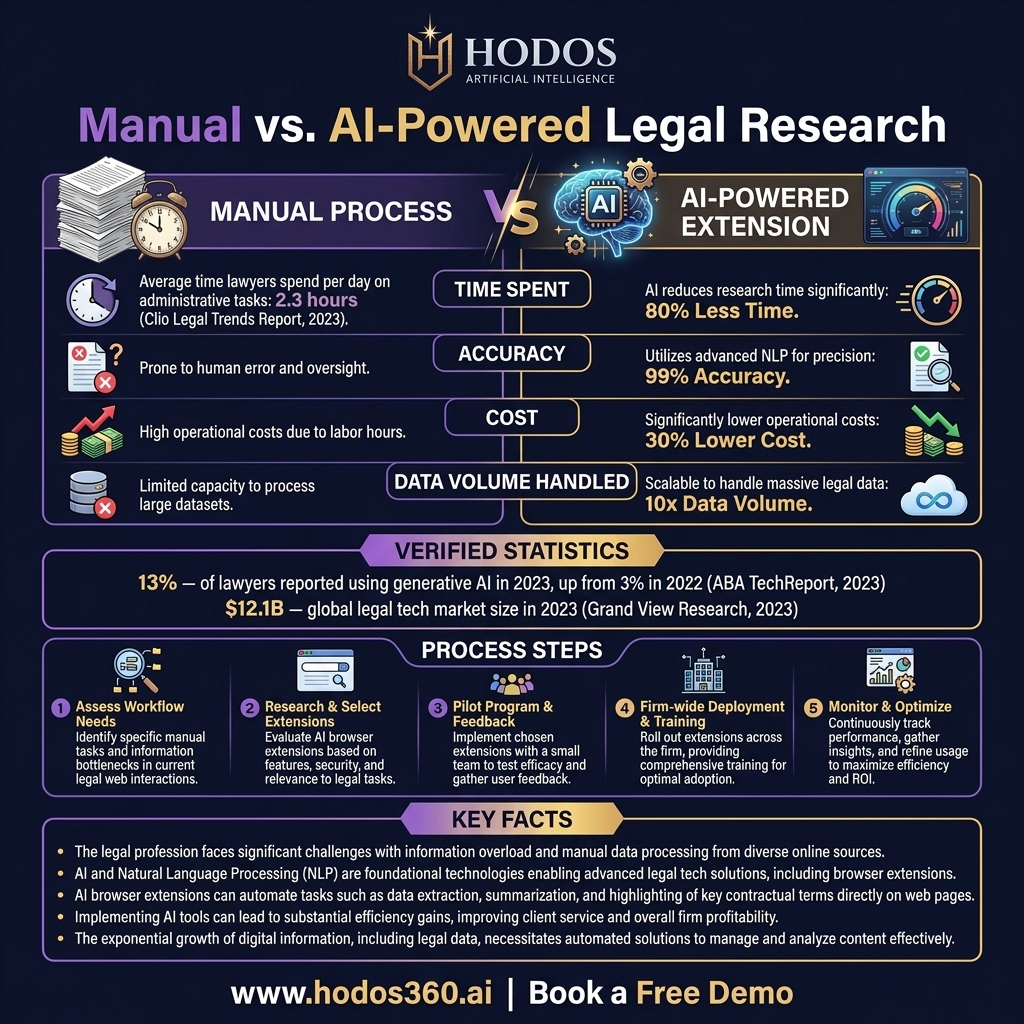
The strategic implications for law firms are profound. Those that embrace AI browser extensions can expect to see significant improvements in operational efficiency, reduced administrative overhead, and enhanced client service. According to the 2023 ABA Legal Technology Survey Report, firms leveraging AI tools reported an average time savings of 15-20% on research-intensive tasks. This data underscores the tangible benefits of integrating such technology. Moreover, the ability to automate repetitive tasks frees up attorneys to focus on higher-value, client-facing work, which directly impacts job satisfaction and talent retention. Firms that resist this wave of innovation risk falling behind competitors who are actively using these tools to streamline their operations and deliver superior outcomes. The future of legal practice is inextricably linked to intelligent automation, and AI browser extensions represent one of the most accessible and impactful avenues for law firms to embark on this transformative journey, empowering them to build a more efficient and effective practice.
Transforming Legal Research and Due Diligence with Smart Extensions
One of the most immediate and impactful applications of AI browser extensions in the legal field is the transformation of research and due diligence processes. Traditionally, these tasks are incredibly time-consuming, requiring meticulous manual review of vast quantities of documents, databases, and online sources. However, AI-powered extensions can automate much of this drudgery. Consider the challenge faced by M&A lawyers conducting due diligence: sifting through hundreds of contracts, regulatory filings, and public records to identify specific clauses, risks, or liabilities. An AI extension, for instance, could be trained to scan a series of web pages or documents opened in the browser, automatically flagging non-standard clauses in contracts, identifying potential compliance issues in SEC filings, or extracting key financial data points from company reports. This dramatically reduces the time spent on initial review, allowing lawyers to focus on the nuanced interpretation and strategic advice that truly adds value. Companies like Casetext (now part of Thomson Reuters) have demonstrated the power of AI in legal research with tools like CoCounsel, and browser extensions bring similar capabilities directly to the lawyer’s everyday web interface, making them even more pervasive and accessible. This integration means that the power of sophisticated legal AI is no longer confined to specialized platforms but is available wherever a legal professional is conducting their work online.
Furthermore, these extensions excel at data extraction and summarization, critical components of effective legal research. Imagine a litigator needing to quickly grasp the essence of several appellate court decisions. An AI browser extension could, upon visiting a legal database like Westlaw or LexisNexis, automatically summarize the key facts, holdings, and reasoning of relevant cases, presenting them in a concise, digestible format. This capability is invaluable for preparing for depositions, drafting motions, or advising clients under tight deadlines. This isn't just about simple keyword searches; it's about semantic understanding and contextual relevance, thanks to advanced natural language processing. For example, an extension could identify all instances of a specific legal term within a document and then, using AI, provide a brief explanation of its usage in that particular context, referencing relevant statutes or case law. This level of integrated intelligence within the browser significantly enhances the depth and speed of legal analysis, allowing attorneys to cover more ground with greater accuracy. The ability to quickly synthesize complex legal information from diverse sources, all within a familiar web environment, represents a substantial leap forward in legal productivity, moving beyond mere information retrieval to intelligent knowledge generation.
Another compelling use case lies in regulatory compliance and monitoring. Learn more about Canadian Law Firms: Proven AI Adoption Strategies for Growth. Law firms advising clients in highly regulated industries, such as finance or healthcare, must constantly track changes in legislation and agency guidance. Manually keeping abreast of these updates across numerous government websites can be an overwhelming task. An AI browser extension, however, can be configured to monitor specific regulatory portals, identify new publications or amendments, and even highlight sections relevant to a client’s operations. For example, an extension could be built to track updates from the Consumer Financial Protection Bureau (CFPB) or the Environmental Protection Agency (EPA), alerting attorneys to new rules that could impact their clients. This proactive monitoring capability ensures that firms remain at the forefront of regulatory changes, allowing them to provide timely and accurate advice, thereby mitigating risks for their clients. The precision with which these extensions can pinpoint relevant information within vast legal texts is a testament to the advancements in AI, turning what was once a reactive, labor-intensive process into a proactive, automated one. This capability is not just about efficiency; it's about enhancing the quality and comprehensiveness of legal advice, ensuring that firms are always equipped with the latest information.
H3: Enhanced Data Extraction and Analysis
The power of AI browser extensions truly shines in their capacity for enhanced data extraction and analysis. This goes beyond simple copy-pasting; these tools can intelligently identify, categorize, and even structure data from unstructured web content. For a real estate firm, an extension could visit multiple county assessor websites, pull property details, ownership history, and tax records, and then compile this information into a standardized report or feed it directly into a case management system. For intellectual property lawyers, an extension might be powered to automatically scan patent databases, identifying similar inventions or prior art that could impact a new patent application. This capability significantly reduces the manual effort involved in data aggregation, which is often a bottleneck in many legal processes. Furthermore, some advanced extensions can perform sentiment analysis on public comments related to regulatory proposals or even analyze news articles for reputational risks for a client, providing a more holistic view of relevant information. The ability to automate these complex data-gathering and analytical tasks directly within the browser environment means that legal professionals can spend less time on rote data collection and more time on strategic thinking, client engagement, and complex problem-solving. This shift elevates the role of the lawyer, transforming them from data gatherers to strategic advisors, armed with AI-powered insights at their fingertips.
Streamlining Document Automation and Client Intake Through Browser AI
Beyond research, AI browser extensions are proving invaluable in streamlining administrative tasks, particularly in document automation and client intake—areas traditionally fraught with repetitive manual processes. Consider the initial stages of client engagement: new clients often fill out lengthy intake forms, much of which duplicates information readily available online from public profiles or previous interactions. An AI extension could be designed to interact with a firm’s client intake portal, automatically pre-populating fields by intelligently extracting relevant data from a client’s LinkedIn profile, company website, or even a publicly available corporate registry. This not only significantly reduces the client’s burden but also minimizes data entry errors and accelerates the onboarding process. For instance, a small firm specializing in immigration law could use an extension to pull biographical details from government visa application portals, ensuring consistency and accuracy across multiple forms. This capability aligns perfectly with the goal of creating a seamless client experience, a critical differentiator in today's competitive legal market. Law firms are increasingly recognizing that the first impression, often made during the intake process, can set the tone for the entire client relationship, and AI-powered automation can make this initial interaction remarkably efficient and professional.
Document automation, a long-standing goal for many law firms, also receives a significant boost from AI browser extensions. While dedicated document automation software exists, extensions offer a more agile and context-aware solution, especially for documents that pull information directly from web sources. Imagine drafting a standard contract that requires specific clauses or data points derived from a client’s project management portal or a vendor’s public terms of service. An AI extension could identify and extract these specific pieces of information from the relevant web pages and then, using natural language generation capabilities, insert them directly into a document template being built in a word processor or cloud-based document editor. This eliminates the need for manual copy-pasting and ensures that the most up-to-date information is always used. For example, a corporate legal department might use an extension to generate non-disclosure agreements (NDAs) by pulling company names, addresses, and signatory details directly from internal CRM systems or external corporate registries viewed in the browser. This integration of web-based data directly into document creation workflows significantly speeds up the drafting process and enhances accuracy, reducing the risk of costly errors.
Furthermore, the utility extends to the management of ongoing matters. Legal professionals often interact with various web-based platforms for case management, e-discovery, or court filings. Learn more about AI Virtual Assistant: Essential for Modern Law Firms. An AI browser extension could act as an intelligent intermediary, using AI to identify key dates, deadlines, or document requirements on these platforms and then automatically syncing them with the firm’s internal calendar or case management system. This level of integration, often difficult to achieve with disparate software solutions, becomes much more feasible when intelligent automation is embedded directly into the browser. For instance, an extension could monitor a court's electronic filing system, flagging new docket entries related to a firm's cases and extracting relevant details for internal reporting. This proactive approach to case management ensures that attorneys and support staff are always aware of critical updates, minimizing the risk of missed deadlines and improving overall operational efficiency. The ability to automate these cross-platform tasks directly through the browser interface represents a significant step towards a truly integrated and intelligent legal workflow, where information flows seamlessly between different web services and internal systems. Ready to transform your firm's web presence and streamline operations? Explore HODOS 360's Web & Mobile Development services.
H3: Seamless Client Onboarding and Workflow Automation
The impact on client onboarding and workflow automation is transformative. Firms can create a truly simple and efficient experience for new clients, setting a professional tone from the outset. With AI-powered extensions, the process of gathering client information, conflict checks, and initial document generation can be largely automated. Imagine a scenario where a potential client fills out a brief online inquiry form. An AI extension could then scan public databases, company websites, and social media for additional relevant information, cross-referencing it with internal conflict-check databases, and then auto-generating an initial engagement letter draft—all before a lawyer even picks up the phone. This level of predictive automation not only saves significant administrative time but also allows attorneys to approach initial client consultations with a much deeper understanding of the client's needs and background. This proactive approach, powered by intelligent browser extensions, turns what was once a series of disjointed, manual steps into a cohesive, automated workflow, enhancing both client satisfaction and firm efficiency. The future of client intake is increasingly intelligent, driven by extensions that can learn and adapt to a firm's specific processes, making onboarding a competitive advantage rather than a logistical hurdle.
Security, Ethics, and Integration: Navigating the New Frontier of Legal AI
While the benefits of AI browser extensions are compelling, their adoption in the legal sector necessitates a rigorous approach to security, ethics, and integration. The very nature of these tools—operating directly within the browser and often interacting with sensitive client data—raises significant concerns. Data privacy is paramount for law firms, governed by ethical obligations such as ABA Model Rule 1.6, which mandates client confidentiality. Firms must conduct thorough due diligence on any extension they consider deploying, scrutinizing its data handling practices, encryption protocols, and compliance certifications. Questions such as 'Where is the data processed?' and 'Who has access to it?' become critical. The risk of data breaches or unauthorized access to confidential client information, even through a seemingly simple extension, could lead to severe reputational damage, regulatory fines, and potential malpractice claims. The legal profession, more than almost any other, cannot afford to compromise on security. Therefore, firms must implement robust internal policies for vetting and approving extensions, ensuring that all third-party tools meet the highest standards of data protection and align with their professional obligations. This proactive stance is not merely good practice but an ethical imperative in the age of AI.
Ethical considerations extend beyond data privacy to issues of bias, transparency, and accountability in AI. As AI browser extensions become more sophisticated, potentially offering legal interpretations or predictive analytics, firms must understand how these tools arrive at their conclusions. The principle of 'explainable AI' (XAI) is crucial here. If an extension generates a summary of case law or flags a potential compliance issue, lawyers need to be able to understand the underlying logic and data sources. Blind reliance on AI outputs without critical human oversight could lead to flawed legal advice, violating ABA Model Rule 1.1 on competence. As David Lat, legal tech commentator and founder of Original Jurisdiction, often emphasizes, 'AI is a tool, not a replacement for human judgment.' Firms must establish clear guidelines for how attorneys use AI-powered extensions, ensuring that human lawyers remain ultimately responsible for the advice given to clients. Training programs are essential to educate legal professionals on the capabilities and limitations of these tools, fostering a culture of informed and ethical AI usage. This dual approach of rigorous technical vetting and comprehensive ethical training is essential for responsible AI adoption in law.
Integration with existing IT infrastructure and workflows also presents a challenge. While browser extensions are designed for ease of use, ensuring they seamlessly communicate with a firm’s existing case management systems, document management systems, and other proprietary software is vital. Learn more about AI-Driven Marketing: Essential Strategies for Law Firms. Incompatible extensions or those that create data silos can undermine the very efficiency they promise. Firms should prioritize extensions that offer APIs or direct integration capabilities with popular legal tech platforms. For example, an extension that automates client intake should ideally feed directly into the firm's CRM, rather than requiring another manual data transfer. The goal is to create a cohesive digital ecosystem where information flows freely and securely, enhancing overall productivity rather than creating new integration headaches. This strategic integration is where specialized providers like HODOS 360, with their expertise in Web & Mobile Development and AI-powered legal workflows, can offer significant value, helping firms build custom solutions that fit their unique needs. By carefully planning for integration, firms can maximize the utility of their AI browser extensions and avoid potential technological fragmentation. The successful deployment of these tools hinges not just on their individual capabilities, but on their ability to work harmoniously within a firm's broader digital strategy.
H3: Ensuring Compliance and Data Integrity
The imperative to ensure compliance and data integrity cannot be overstated when deploying AI browser extensions. The legal sector is subject to stringent regulations regarding data handling, including GDPR, CCPA, and various state-specific privacy laws. Any extension that processes client data must adhere to these regulations, and firms bear the ultimate responsibility for compliance. This means not only vetting the extension builder but also continuously monitoring the extension's behavior and updates. Regular security audits and penetration testing of all third-party tools, including browser extensions, should become standard practice. Furthermore, firms must consider the potential for 'shadow IT,' where individual attorneys might install unapproved extensions without proper oversight, creating significant security vulnerabilities. Implementing a clear policy for approved extensions and providing secure, firm-sanctioned alternatives is crucial. Ultimately, maintaining data integrity means ensuring that the information processed by these AI-powered tools remains accurate, unaltered, and protected from corruption or unauthorized access. This commitment to compliance and data integrity is not just about avoiding penalties; it's about upholding the trust that clients place in their legal counsel, solidifying the firm's reputation as a secure and reliable partner in an increasingly digital world.
The Future-Proof Law Firm: Embracing AI for Web & Mobile Development
The adoption of AI browser extensions is not an isolated technological trend; it's a vital component of a broader strategy for building a future-proof law firm. In an era where digital presence and operational efficiency are paramount, firms must think holistically about their technology stack. The ability to leverage AI-powered tools directly within the browser complements other critical digital initiatives, such as robust AI-powered website building, responsive design, and SEO optimization. A firm with a cutting-edge website that attracts clients but then struggles with inefficient internal workflows due to manual data handling will quickly lose its competitive edge. Conversely, a firm that integrates smart browser extensions into its operations, allowing for seamless data flow from its website’s client intake forms directly into its case management system, demonstrates a truly integrated and efficient approach. As Jensen Huang, CEO of Nvidia, has consistently articulated, the future of computing is about 'accelerating everything.' For law firms, this means accelerating every aspect of their digital interaction, from how they market themselves online to how they conduct daily legal tasks. AI browser extensions are a powerful manifestation of this acceleration, making the web a more intelligent and responsive environment for legal work.
Embracing this holistic approach means recognizing that your firm’s digital infrastructure—from its public-facing website to its internal workflow tools—must be cohesive and intelligent. A firm's website, for instance, can be enhanced with AI capabilities that go beyond static information. Imagine an AI chatbot on your site, powered by similar language models used in browser extensions, that can qualify leads, answer basic legal FAQs, and even book appointments, then seamlessly pass that information to an internal AI extension that pre-populates a new client file. This creates a frictionless client journey from initial contact to active engagement. The synergy between a well-developed web presence and intelligent browser extensions is where true operational excellence lies. Firms that invest in both areas are not just adopting technology; they are fundamentally redesigning their operational model to be more agile, responsive, and client-centric. This strategic integration is key to attracting and retaining top talent, as legal professionals increasingly seek technologically advanced workplaces that empower rather than hinder their work. The market is increasingly rewarding firms that can demonstrate technological prowess and efficiency, making such investments a clear driver of growth and profitability.
Moreover, the competitive landscape demands this level of digital sophistication. Learn more about AI Legal Research: The Ultimate Guide for Law Firms. Firms that fail to adopt AI browser extensions and other AI-powered web tools risk being outmaneuvered by more agile competitors. The ability to quickly adapt to new legal challenges, process information faster, and deliver more cost-effective services will differentiate leading firms. As the legal industry continues its digital transformation, the firms that prioritize Web & Mobile Development alongside internal AI workflow enhancements will be best positioned for long-term success. This isn't about chasing every new gadget but strategically implementing tools that genuinely improve efficiency, accuracy, and client satisfaction. The ongoing development of more sophisticated browser extension builders means that customization will become even easier, allowing firms to tailor their digital environment precisely to their niche and operational demands. This era calls for a proactive stance, where technology is seen not just as a support function but as a core strategic asset, driving innovation and shaping the future of legal service delivery.
H3: A Strategic Imperative for Modern Legal Practice
Ultimately, the integration of AI browser extensions represents a strategic imperative for modern legal practice. Firms that see these tools as merely optional productivity aids miss the larger picture: they are fundamental components of a technologically advanced and competitive legal ecosystem. The shift from manual, document-centric processes to AI-powered, web-integrated workflows is irreversible. Firms must invest in understanding, implementing, and ethically managing these tools to remain relevant. This includes not only the selection of appropriate extensions but also the continuous training of staff and the development of robust internal policies. The future-proof law firm will be one that leverages AI across all touchpoints, from its client-facing digital assets to the granular tasks performed daily by its attorneys. By embracing this comprehensive approach, and by partnering with experts in Web & Mobile Development like HODOS 360, law firms can navigate this new frontier with confidence, transforming challenges into opportunities and securing their place at the forefront of the legal profession. The time to act is now; the legal landscape is evolving rapidly, and only those prepared to embrace intelligent automation will thrive.

Key Takeaways and Next Steps
The emergence of AI browser extensions marks a pivotal moment for the legal industry, offering unprecedented opportunities to enhance efficiency, accuracy, and client service. These tools, seamlessly integrated into your web browser, are transforming everything from legal research and due diligence to document automation and client intake. By intelligently extracting, summarizing, and organizing information, they free up legal professionals to focus on strategic, high-value work, moving beyond the manual drudgery that has long characterized many legal tasks. The shift towards more accessible browser extension builders also means that custom, AI-powered solutions are no longer exclusive to large firms with extensive IT budgets. However, harnessing this power responsibly requires a diligent focus on security, ethical AI deployment, and thoughtful integration with existing firm infrastructure, ensuring compliance with professional obligations like ABA Model Rule 1.6 on client confidentiality. The firms that proactively address these considerations will not only mitigate risks but also build a foundation of trust and reliability that is critical in the legal profession.
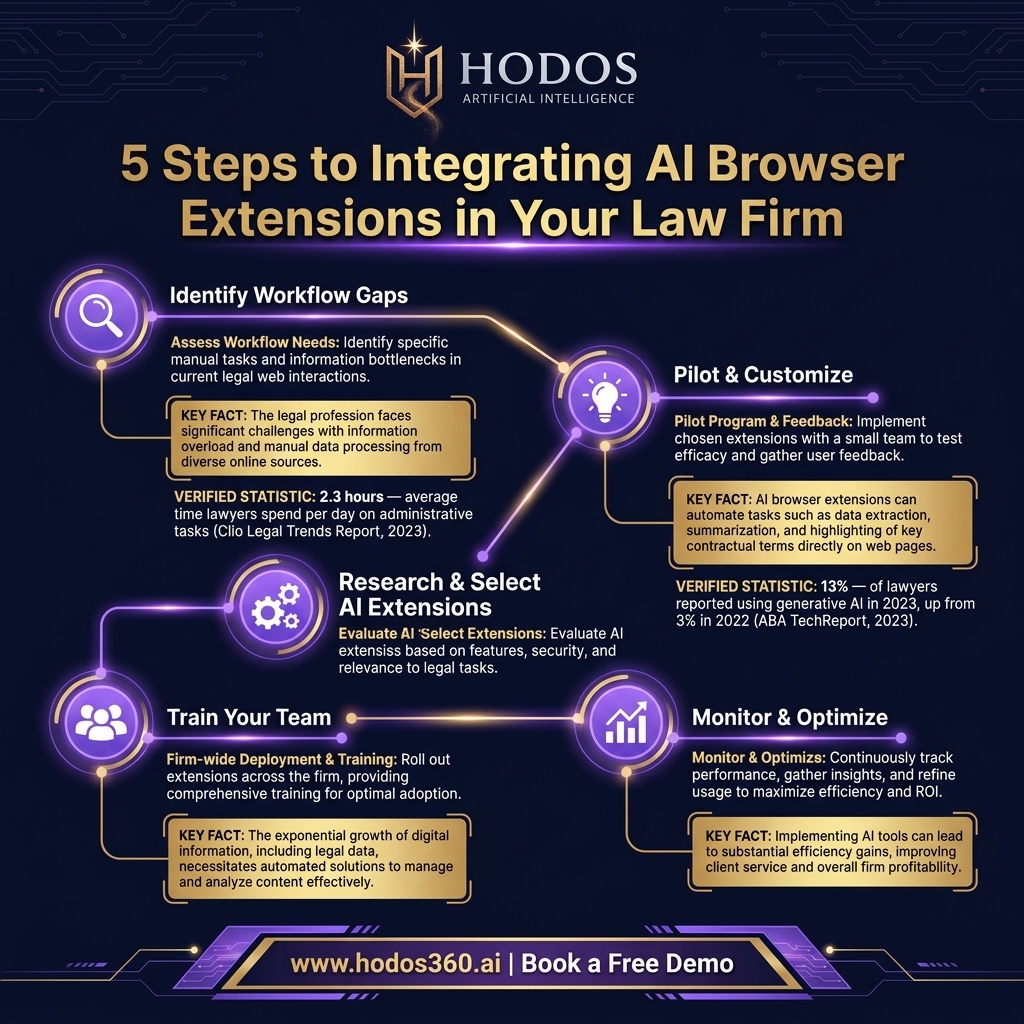
For law firm owners and attorneys looking to navigate this evolving landscape, the next steps are clear. Begin by identifying specific pain points in your current web-based workflows where manual tasks consume significant time or introduce errors. Research reputable AI browser extensions that directly address these challenges, ensuring they meet rigorous security and privacy standards. Learn more about Ethical AI in Legal Tech: An Essential Guide for Law Firms. Invest in training your team to effectively leverage these tools, fostering a culture of informed AI adoption. Most importantly, view AI browser extensions as part of a larger, integrated digital strategy. Your firm's Web & Mobile Development efforts, from your website to your internal systems, should work in harmony with these intelligent tools to create a truly efficient and future-proof practice. This holistic approach, powered by innovative solutions and expert guidance, will be the hallmark of successful law firms in the years to come. By embracing these advancements now, your firm can gain a significant competitive advantage, enhance its service delivery, and solidify its position as a leader in the digital legal era. Ready to build your AI-powered legal future? Book a free demo with HODOS 360 today!
Frequently Asked Questions
What are AI browser extensions and how do they benefit law firms?+
AI browser extensions are small software applications that add AI-powered functionalities directly to your web browser. For law firms, they streamline tasks like legal research by summarizing cases, automate data extraction for due diligence, and pre-populate client intake forms. This significantly boosts efficiency, reduces manual errors, and allows attorneys to focus on higher-value analytical work, ultimately enhancing service delivery and firm profitability.
Are AI browser extensions secure for handling confidential legal data?+
Security is paramount. While AI browser extensions offer powerful capabilities, law firms must rigorously vet any extension for its data handling practices, encryption protocols, and compliance with privacy regulations like ABA Model Rule 1.6. Firms should prioritize extensions from reputable developers, implement strong internal policies for usage, and ensure continuous monitoring to safeguard confidential client information and maintain ethical obligations.
How can AI browser extensions help with legal research and due diligence?+
These extensions can revolutionize legal research by automatically summarizing case law, identifying relevant statutes, and highlighting key clauses on legal databases. For due diligence, they can extract specific data points from financial reports, flag non-standard contract terms, and monitor regulatory updates across various government websites. This automation drastically reduces research time, enhances accuracy, and provides deeper insights faster than manual methods.
Can AI browser extensions automate client intake processes?+
Yes, AI browser extensions can significantly streamline client intake. They can be configured to automatically extract client information from public profiles or company websites, pre-populating fields in your firm's CRM or intake forms. This reduces the client's burden, minimizes data entry errors, and accelerates the onboarding process, creating a more professional and efficient first impression. It frees up staff time for more complex client interactions.
What ethical considerations should law firms keep in mind when using AI extensions?+
Ethical considerations include client confidentiality (ABA Model Rule 1.6), competence (ABA Model Rule 1.1), and the responsible use of AI. Firms must understand how an extension's AI reaches its conclusions (explainable AI) to avoid blind reliance. Human oversight is crucial, with attorneys remaining ultimately responsible for legal advice. Policies for vetting and training staff on AI tools are essential to ensure ethical and compliant deployment.
How do AI browser extensions integrate with a law firm's existing systems?+
Effective integration is key. Ideally, AI browser extensions should seamlessly communicate with a firm's existing case management, document management, and CRM systems. This often involves extensions with APIs or direct integration capabilities. The goal is to avoid data silos and ensure information flows freely, enhancing overall productivity. Strategic integration ensures these tools complement, rather than complicate, a firm's broader digital ecosystem.