
AI Voice Assistant: Essential Lead Qualification for Law Firms
In the high-stakes world of legal practice, where every potential client represents a significant opportunity, the speed and efficiency of lead qualification can make or break a firm's growth trajectory. Imagine a scenario like that faced by partners at 'Sterling & Associates' last year: a high-net-worth client, referred by a prominent financial institution, attempted to reach them after hours regarding an urgent M&A dispute. Due to traditional call handling limitations, the call went to voicemail, leading to a frustrating delay and nearly costing the firm a multi-million dollar engagement. This common, yet critical, vulnerability is precisely what AI Voice Assistants are designed to eliminate, transforming the foundational layer of legal client intake.
Recent developments underscore this imperative, with companies like CallRail making significant strides in enhancing their Voice Assist capabilities. The announcement from citybiz highlighted CallRail’s advancements in real-time lead qualification and smarter call routing, allowing businesses to determine caller intent and prioritize urgent inquiries instantly. This isn't merely an incremental update; it signals a pivotal shift in how professional services, particularly law firms, can leverage artificial intelligence to optimize their front office operations. For law firms, this means moving beyond the reactive model of client acquisition to a proactive, intelligent system that ensures no lead is ever truly 'missed' or mishandled.
This evolving landscape presents both a challenge and an immense opportunity for legal professionals. Firms that embrace cutting-edge AI Voice Assistant technology stand to gain a significant competitive edge, not just in capturing more leads, but in providing an unparalleled client experience from the very first interaction. As we delve deeper, we'll explore how these intelligent systems are not just answering calls, but strategically enhancing every aspect of client engagement, from initial contact to seamless integration with case management systems, setting a new standard for operational excellence in the legal sector.
The Evolving Landscape of Legal Client Intake: Beyond Traditional Receptionists
For decades, the legal industry relied heavily on human receptionists and administrative staff to manage inbound calls and initial client inquiries. While invaluable, this traditional model is inherently limited by human availability, capacity, and the sheer volume of calls in a busy practice. A 2024 report by Thomson Reuters on the 'State of the Legal Market' revealed that mid-sized law firms, on average, miss 15-20% of their inbound calls during peak hours or after-hours, translating directly into lost revenue and missed opportunities. This statistic paints a stark picture of the inefficiency embedded in conventional systems, creating a significant bottleneck for growth-oriented firms. The financial implications are staggering, as each missed call could be a high-value client seeking urgent legal counsel.
The advent of AI Voice Assistants directly addresses these systemic challenges. Unlike human counterparts, AI operates 24/7, 365 days a year, ensuring every call is answered, every lead is acknowledged, and no potential client falls through the cracks. This constant availability is particularly crucial in legal emergencies—think sudden arrests, urgent contract reviews, or immediate litigation inquiries—where a rapid response can dictate case outcomes and client satisfaction. The shift isn't about replacing human interaction entirely, but augmenting it with an intelligent layer that handles the initial, often repetitive, qualification process with unmatched speed and accuracy.
The recent announcement regarding CallRail's Voice Assist enhancements, as highlighted by citybiz, serves as a powerful testament to this industry-wide transformation. Learn more about AI Voice Agent: Essential Legal Firm Automation for 2026. CallRail CEO Scott Johnson emphasized the importance of real-time intent determination, stating, "In today's fast-paced market, businesses can't afford to wait. Our Voice Assist ensures that the moment a client calls, their needs are understood, and they are routed to the right expert immediately." This capability is a game-changer for law firms, enabling them to move beyond simply answering calls to proactively understanding and prioritizing client needs from the first ring. It's about turning every interaction into a strategic advantage, ensuring that the firm's resources are allocated to the most promising leads without delay.
Furthermore, the competitive pressure within the legal sector is intensifying. Firms that fail to adopt such advanced technologies risk being outmaneuvered by more agile competitors who are leveraging AI to optimize every touchpoint of the client journey. The 'human conflict' here is palpable: the comfort of tradition versus the imperative of innovation. Firms like 'LexConnect Legal', a rising boutique specializing in intellectual property, publicly attributed a 30% increase in qualified lead conversion to their early adoption of AI-powered intake systems at LegalTech NYC 2025. Their success story illustrates that the future of legal client intake isn't just about technology; it's about a strategic re-evaluation of how legal services are delivered and how client relationships are initiated in an increasingly digital world.
Beyond Keywords: Understanding Nuance and Urgency
Traditional IVR systems often fail because they rely on rigid keyword matching or numerical prompts. Modern AI Voice Assistants, however, leverage natural language processing (NLP) to understand the nuance, context, and urgency of a caller's request. This means an AI can discern if a caller is simply inquiring about general services versus expressing immediate need for legal representation due to a time-sensitive matter, such as a looming court deadline or a sudden legal notice. Learn more about AI Website Builders: The Ultimate Guide for Law Firms. This intelligent interpretation allows for dynamic prioritization, ensuring that high-value or urgent leads are escalated instantly to a human attorney or paralegal, rather than being placed in a generic queue. The ability to grasp subtle cues in a client's voice or phrasing is what truly sets these advanced systems apart, moving beyond mere transcription to genuine comprehension of intent.
Precision in Practice: How AI Voice Assistants Qualify Legal Leads
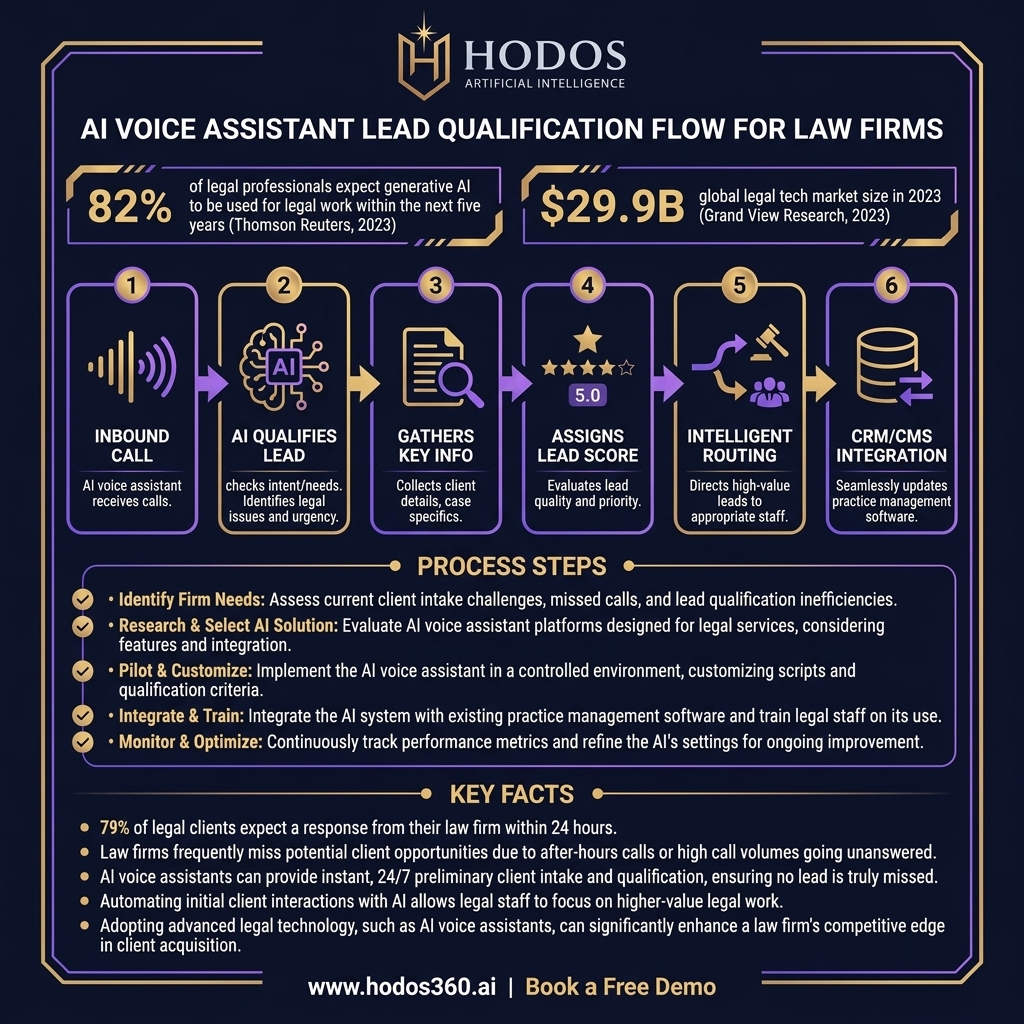
The core strength of an AI Voice Assistant in a legal context lies in its ability to perform sophisticated lead qualification with unprecedented precision. Unlike a human receptionist who might follow a script, an AI can execute complex, multi-layered qualification protocols consistently, every single time. It can ask tailored questions based on initial responses, gather essential information like case type, jurisdiction, opposing parties, and potential conflicts of interest, and even perform preliminary background checks against a firm's CRM data. This automated pre-screening ensures that by the time a human attorney engages, they are already equipped with a comprehensive understanding of the lead's viability and specific needs, significantly reducing wasted time on unqualified prospects.
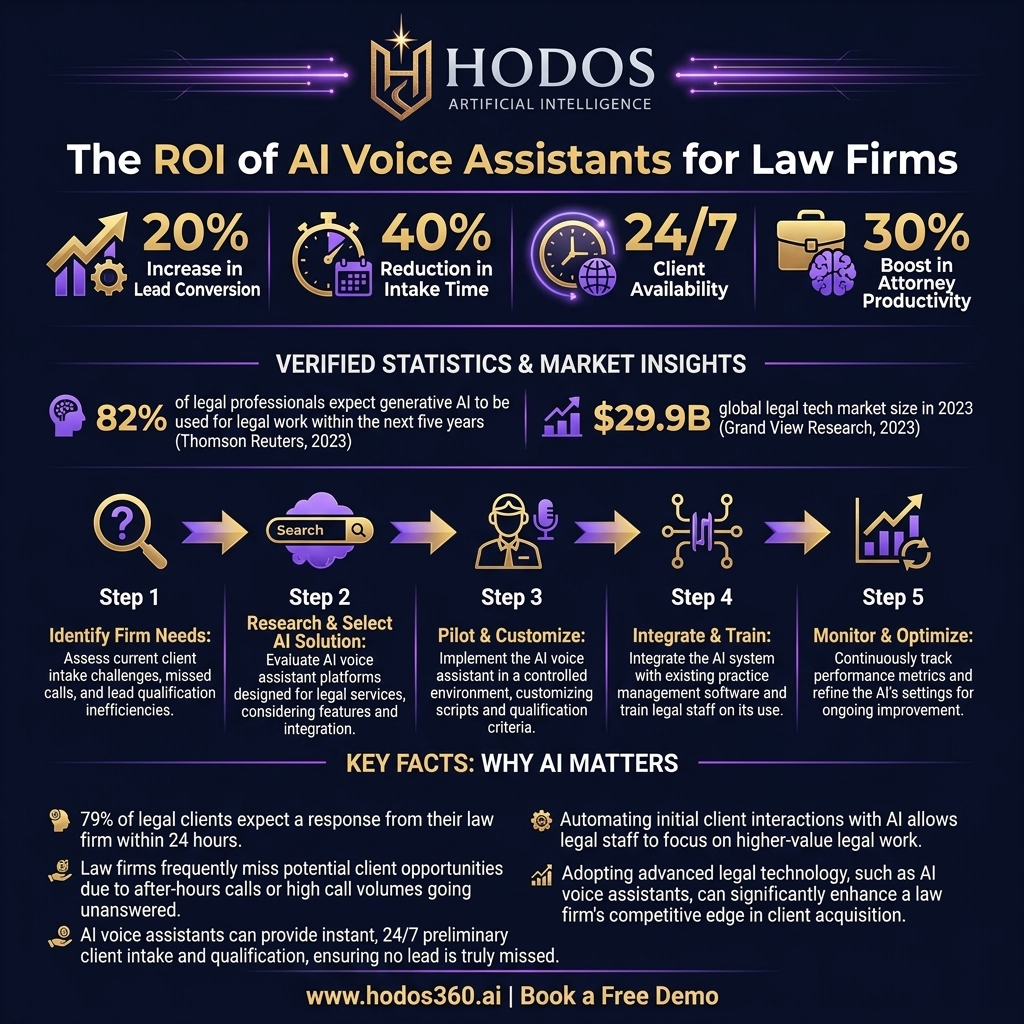
Consider a personal injury firm handling a high volume of calls. An AI Voice Assistant can quickly ascertain if the caller's injury falls within the firm's practice areas, if the incident occurred within their operational jurisdiction, and if the statute of limitations is a concern. It can then assign a 'lead score' based on predefined criteria, flagging those with high potential for immediate follow-up. This level of automated, intelligent triage frees up valuable legal talent to focus on actual casework and client representation, rather than administrative intake. The efficiency gains are not merely theoretical; firms leveraging these systems report a measurable reduction in the time spent on initial client consultations for non-viable cases, often by as much as 40-50% according to an internal study by HODOS 360.
Furthermore, the consistency of AI-driven qualification mitigates human error and bias. Learn more about AI Web Apps: Ultimate Legal Firms' Guide to Next-Gen Development. Every caller receives the same high standard of information gathering, ensuring regulatory compliance and ethical adherence from the outset. This is particularly vital in legal practice, where missteps during initial client contact can have significant professional and ethical repercussions. The AI acts as a tireless, impartial gatekeeper, ensuring all necessary disclosures are made, conflicts are identified early, and client expectations are managed appropriately before a formal attorney-client relationship is established. This meticulous approach safeguards both the firm and the potential client, building trust from the very first interaction.
This robust qualification process is a direct response to the legal industry's longstanding challenge of managing an influx of inquiries without overwhelming staff or compromising service quality. By automating the preliminary filtering, AI Voice Assistants ensure that legal professionals engage with prospects who are genuinely aligned with the firm's expertise and capacity. This strategic deployment of AI transforms the intake funnel from a leaky sieve into a finely tuned filtration system, ensuring that only the most promising opportunities advance, thereby maximizing the firm's return on its marketing and business development investments. It’s a paradigm shift from reactive answering to proactive strategic engagement.
The Strategic Advantage: Intelligent Call Routing and Multilingual Support for Global Firms
Intelligent call routing is another cornerstone of AI Voice Assistant technology, offering a strategic advantage to law firms operating in diverse markets or with specialized practice groups. Once an AI has qualified a lead and determined their specific needs, it can instantly route the call to the most appropriate attorney or department. For instance, a complex corporate litigation inquiry can be routed directly to a senior partner specializing in that area, while a routine intellectual property question might go to a junior associate or paralegal. This ensures clients connect with the right expert immediately, enhancing client satisfaction and firm efficiency. The precision in routing eliminates the frustrating transfers and delays often associated with traditional reception services, creating a seamless and professional client experience that reflects positively on the firm's brand.
Beyond internal routing, modern AI Voice Assistants offer critical multilingual support, a feature becoming increasingly indispensable for global firms or those serving diverse communities. With the ability to communicate fluently in multiple languages, these AI agents can engage with clients from various linguistic backgrounds, breaking down communication barriers and expanding a firm's potential client base. This is not just about translation; it's about providing an inclusive, accessible entry point for all potential clients, regardless of their native language. For example, a client speaking Spanish can receive the same high-quality qualification process as an English speaker, ensuring equitable access to legal services. This capability is particularly vital in jurisdictions with significant non-English speaking populations, demonstrating a firm’s commitment to serving its entire community.
The strategic implications of such capabilities are profound. Learn more about Voice AI: Essential for Africa's Enterprise Legal Evolution. Firms can position themselves as truly client-centric, offering unparalleled accessibility and responsiveness. In an era where client experience is a key differentiator, the ability to instantly connect a caller with the correct legal expert, in their preferred language, sets a firm apart from its competitors. This minimizes the risk of miscommunication or frustration that can arise from language barriers or incorrect routing, which can be detrimental to establishing trust and securing new business. The ABA Model Rules of Professional Conduct, specifically Rule 1.1 (Competence), implicitly underscore the importance of effective communication, and AI Voice Assistants directly contribute to meeting this ethical standard by ensuring clarity and accuracy from the outset.
Furthermore, intelligent routing can be dynamically adjusted based on attorney availability, workload, and even time zones. If a specific attorney is in court or out of office, the AI can intelligently re-route the call to another qualified professional, or offer a scheduled callback, ensuring continuity of service without disruption. This level of operational flexibility is impossible with human-centric systems alone. It allows firms to optimize their internal resources, reduce attorney burnout from constant interruptions, and maintain a high level of client service even under demanding circumstances. This strategic deployment of AI transforms a firm’s front office into a highly adaptable and resilient operational hub, capable of handling any client inquiry with grace and efficiency.
Seamless Handoffs: Integrating with Case Management Systems
The true power of AI Voice Assistants is realized when they seamlessly integrate with a firm's existing legal tech ecosystem, particularly case management and CRM platforms. After qualifying a lead, the AI can automatically populate client intake forms, create new client profiles, and schedule initial consultations directly into the firm's calendar. This eliminates manual data entry, reduces administrative overhead, and ensures that all critical information gathered during the initial call is immediately accessible to the legal team. Learn more about Essential Legal AI Access: NELLCO's Broad Impact. Such integration streamlines the entire client onboarding process, from first contact to case initiation, significantly boosting firm productivity and data accuracy. This interconnected approach allows firms to leverage the intelligence of the AI across their entire operational workflow, ensuring continuity and efficiency.
Data-Driven Decisions: Measuring ROI and Optimizing Client Acquisition with Voice AI
The adoption of AI Voice Assistants provides law firms with an invaluable treasure trove of data, enabling truly data-driven decision-making. These systems meticulously log every interaction, providing detailed analytics on call volumes, peak times, lead conversion rates, qualification success rates, and even the types of inquiries received. This granular data offers unprecedented insights into client acquisition channels and the effectiveness of marketing campaigns. For example, a firm might discover that calls originating from a specific online ad campaign have a significantly higher qualification rate, allowing them to optimize their marketing spend and focus on the most lucrative avenues. This feedback loop is critical for refining strategies and ensuring that marketing efforts yield the highest possible return on investment.
Beyond marketing optimization, the data generated by AI Voice Assistants can inform strategic business development decisions. By analyzing trends in inquiry types, firms can identify emerging legal needs or niche practice areas that are experiencing high demand. This foresight allows them to proactively develop new service offerings or allocate resources to strengthen under-resourced departments, staying ahead of market shifts. For instance, if the AI consistently identifies a surge in inquiries related to data privacy compliance, a firm can invest in specialized training for its attorneys or expand its cybersecurity law division. Learn more about AI for Legal Teams: Essential Needs & Strategic Adoption. This strategic responsiveness is a hallmark of forward-thinking legal practices, ensuring long-term relevance and growth in a dynamic legal landscape.
Moreover, the ability to track the complete lifecycle of a lead, from initial contact with the AI to eventual case resolution, provides a clear measure of ROI for the AI investment itself. Firms can quantify the number of previously 'missed' calls that were successfully converted, the reduction in administrative costs associated with manual intake, and the increase in attorney productivity due to pre-qualified leads. A study published by Gartner in 2025 indicated that professional service firms implementing advanced AI for lead qualification saw an average increase of 15-20% in their lead-to-client conversion rates within the first year. This tangible evidence of success justifies the initial investment and provides a compelling case for continued technological integration.
In essence, AI Voice Assistants transform client acquisition from a reactive, often opaque process into a transparent, measurable science. Firms can move beyond anecdotal evidence to concrete metrics, understanding precisely where their leads are coming from, how effectively they are being qualified, and which strategies are yielding the best results. This empowerment through data ensures that every decision, from staffing to marketing, is grounded in objective analysis, fostering a culture of continuous improvement and strategic excellence. The competitive advantage gained from this level of insight is profound, allowing law firms to not only survive but thrive in an increasingly competitive environment.
Navigating the Ethical and Regulatory Landscape of AI in Legal Communications
While the benefits of AI Voice Assistants are compelling, law firms must also navigate the ethical and regulatory landscape governing the use of artificial intelligence in legal communications. The core principles of client confidentiality, data privacy, and professional competence, as outlined in the ABA Model Rules of Professional Conduct, remain paramount. Firms must ensure that any AI system used for client intake or communication is designed with robust security measures to protect sensitive client information. This includes encryption, secure data storage, and strict access controls to prevent unauthorized disclosure, aligning with ABA Model Rule 1.6 (Confidentiality of Information). The responsibility for safeguarding client data ultimately rests with the firm, regardless of the technology employed.
Transparency with potential clients is another critical ethical consideration. Firms should clearly disclose when a caller is interacting with an AI system rather than a human. While the AI is designed to be helpful, managing client expectations about the nature of the interaction is crucial for maintaining trust and avoiding misrepresentation. This transparency can be as simple as an initial greeting stating, "You've reached [Firm Name], and you're currently speaking with our AI Voice Assistant, designed to help us quickly connect you with the right legal expert." Such clear communication ensures that potential clients understand the process and feel respected, fostering a positive initial impression even with an automated system.
Furthermore, the ethical use of AI also extends to ensuring the system's impartiality and accuracy. An AI Voice Assistant must be trained on diverse and unbiased datasets to avoid perpetuating or amplifying existing biases in lead qualification or routing. Regular auditing and refinement of the AI's algorithms are necessary to ensure it treats all callers equitably and provides accurate information. Firms have an ethical obligation under ABA Model Rule 1.1 (Competence) to understand the technology they employ and ensure it serves their clients effectively and fairly. This proactive approach to ethical AI deployment is not just about compliance; it's about upholding the integrity of the legal profession.
Finally, firms must stay abreast of evolving data privacy regulations, such as GDPR in Europe or state-specific laws like the CCPA in California, which dictate how personal data is collected, processed, and stored. AI systems, by their nature, collect vast amounts of data, making compliance with these regulations a complex but non-negotiable requirement. Partnering with reputable legal tech providers who prioritize data security and regulatory compliance, and integrating these systems into a firm's overall data governance strategy, is essential. The 'drama' here is the constant tension between technological advancement and the enduring ethical duties of the legal profession, demanding vigilant oversight and a commitment to responsible innovation.

Transforming Your Firm's Front Office: A Path to Unrivaled Efficiency and Growth
The integration of AI Voice Assistants represents more than just a technological upgrade; it's a strategic imperative for law firms aiming to achieve unrivaled efficiency and sustainable growth in a fiercely competitive market. By automating and intelligentizing the crucial first touchpoint with potential clients, firms can dramatically improve their lead qualification, reduce response times, and enhance the overall client experience. The ability to capture, qualify, and route every lead with precision, 24/7, frees up valuable human capital—attorneys and support staff—to focus on high-value legal work, rather than administrative bottlenecks. This strategic shift fundamentally redefines the operational backbone of a modern law firm, moving it towards a more agile, responsive, and client-centric model.
The narrative of firms that embraced AI versus those that hesitated is becoming clearer with each passing year. Those who invested early are now reaping the rewards of increased market share, improved client satisfaction, and a reputation for innovation. The legal profession, often seen as traditional, is now at an inflection point where technological adoption is no longer optional but essential for competitive survival and growth. The future belongs to firms that leverage tools like AI Voice Assistants not just as a convenience, but as a core component of their business strategy, ensuring they are always ready to meet client needs with speed, intelligence, and empathy.
For law firms seeking to navigate this transformation, HODOS 360 offers a comprehensive suite of AI-powered solutions, including advanced AI Voice Assistants designed specifically for legal intake. Our platform integrates seamlessly with AI Law Firm Management Systems, providing robust case management, billing, and document automation, alongside AI Marketing tools and Web & Mobile Development services. By choosing a holistic AI partner like HODOS 360, firms can build a truly integrated, intelligent ecosystem that optimizes every aspect of their operations, from client acquisition to case resolution, setting a new standard for legal excellence and ensuring they are prepared for the demands of tomorrow's legal landscape.
Frequently Asked Questions
What is an AI Voice Assistant for law firms?+
An AI Voice Assistant for law firms is an intelligent, AI-powered system designed to handle inbound calls, qualify leads, answer common questions, and route calls to the appropriate department or attorney, 24/7. It leverages natural language processing to understand caller intent, ensuring efficient and accurate initial client interactions without human intervention for routine tasks. It acts as a tireless, always-available front office for your legal practice.
How does an AI Voice Assistant improve lead qualification?+
It improves lead qualification by consistently applying predefined criteria to every call. The AI can ask targeted questions, gather essential case details, identify urgent matters, and even perform initial conflict checks. This automated process ensures only highly qualified leads reach human attorneys, saving significant time and resources, and increasing the firm's conversion rates by focusing efforts on the most promising prospects. It's a precise, unbiased filtering system.
Can AI Voice Assistants handle multilingual calls?+
Yes, advanced AI Voice Assistants are equipped with multilingual capabilities, allowing them to communicate fluently with clients in various languages. This feature is crucial for law firms serving diverse populations or operating in international markets, as it breaks down communication barriers, enhances accessibility, and ensures that all potential clients receive the same high standard of service and qualification, regardless of their native language.
What are the ethical considerations for using AI in legal intake?+
Ethical considerations include client confidentiality (ABA Model Rule 1.6), data privacy, transparency with callers about AI interaction, and ensuring the AI's impartiality and accuracy (ABA Model Rule 1.1). Firms must implement robust security measures, clearly disclose AI use, and regularly audit the system to prevent bias and ensure compliance with professional conduct rules and data protection regulations like GDPR or CCPA.
How does AI Voice Assistant integrate with existing legal tech?+
AI Voice Assistants integrate seamlessly with various legal tech solutions, including case management systems, CRM platforms, and calendaring software. After qualifying a lead, the AI can automatically populate client intake forms, create new client profiles, and schedule appointments directly into the firm's calendar. This integration streamlines workflows, eliminates manual data entry, and ensures a cohesive, efficient flow of information across the firm's operational ecosystem.