
Ultimate AI Voice Assistant: Uber's New Travel Feature
On October 9, 2026, Uber CEO Dara Khosrowshahi announced a groundbreaking expansion of the company's platform, introducing hotel booking capabilities and, most notably, an AI-powered voice assistant designed to streamline the travel experience. This move, widely covered by outlets like ABC News, positions Uber further as an 'everything app,' allowing users to book rides, order food, and now, manage hotel reservations with unprecedented ease. The integration of this sophisticated AI Voice Assistant signals a pivotal moment, not just for the travel industry, but for any service-oriented sector grappling with high call volumes and the demand for instant, intelligent interaction. While the immediate impact is on consumer travel, the underlying technology and its strategic application hold profound implications for the legal industry, where client communication and operational efficiency are paramount.
The essence of Uber's innovation lies in its ability to offer a seamless, natural language interface for complex transactions. Imagine a client simply stating their needs – 'Book a hotel in Miami for three nights next month, pet-friendly' – and the AI handles the intricate search, comparison, and booking process. This level of automation, powered by advancements from firms like OpenAI and Anthropic, which continue to push the boundaries of large language models, is no longer futuristic speculation but a present-day reality. For law firms, this development isn't merely an interesting industry update; it's a stark illustration of how client expectations are evolving. In an era where consumers are accustomed to instant gratification and personalized service from platforms like Uber, the legal sector must critically evaluate its own client engagement strategies. Firms that cling to outdated communication methods risk being perceived as inefficient and out of touch, creating a significant competitive disadvantage in a rapidly digitizing legal landscape.
This trend underscores a critical tension within the legal profession: the balance between traditional, human-centric service and the undeniable advantages of AI-driven efficiency. While the unique complexities of legal advice will always require human expertise, the peripheral, yet crucial, aspects of client interaction – initial inquiries, appointment scheduling, routine updates – are ripe for AI transformation. The success of Uber's AI Voice Assistant in handling travel bookings serves as a compelling case study for law firms. It highlights how intelligent automation can free up valuable human resources, allowing legal professionals to focus on high-value, strategic work, rather than being bogged down by administrative tasks. This is where platforms like HODOS 360 come into play, offering specialized AI Voice Assistants tailored to the unique demands of the legal industry, providing a sophisticated answer to these evolving client expectations and operational challenges. Discover how HODOS 360 can transform your law firm's client engagement and operational efficiency.
The Uber Effect: AI Voice Assistant Redefines Travel & Service
Uber's foray into hotel booking, augmented by an AI Voice Assistant, is a calculated move to capture a larger share of the travel market by offering an 'everything app' experience. This strategy, spearheaded by CEO Dara Khosrowshahi, leverages the company's vast user base and technological prowess to simplify complex multi-step processes like booking a hotel. The AI assistant isn't just a chatbot; it's designed for natural language understanding and interaction, capable of handling nuanced requests, managing preferences, and even suggesting options based on past behavior. This level of personalized, instantaneous service sets a new benchmark for customer expectations across all industries, including the legal sector. The immediate takeaway for law firms is clear: if a tech giant like Uber is investing heavily in voice AI to enhance customer convenience, then legal practices, which thrive on client relationships, cannot afford to lag. The imperative is to embrace similar technological advancements to meet and exceed these rising expectations, ensuring that the client journey remains as smooth and efficient as possible.
The competitive landscape for law firms is evolving rapidly, with a growing divide between those leveraging advanced technology and those maintaining traditional operational models. Firms that have begun to integrate AI, such as Winston & Strawn's partnership with Harvey AI for legal research and drafting, are already seeing significant gains in efficiency and accuracy. This trend is further illuminated by reports from the Thomson Reuters Institute, which consistently highlight the increasing adoption of AI tools within legal practices, driven by both cost-efficiency and the demand for improved client service. The Uber model demonstrates that voice AI, in particular, can serve as the first point of contact, handling initial queries, pre-qualifying leads, and even scheduling appointments without human intervention. Learn more about AI Legaltech: The Ultimate Guide to Firm Transformation. This not only optimizes resource allocation but also ensures that potential clients receive immediate attention, a crucial factor in securing new business in today's fast-paced environment. The ability to offer 24/7 multilingual support, as Uber's assistant likely aims for, is a game-changer for firms serving diverse client bases.
The implications extend beyond mere convenience; they touch upon the very definition of client engagement. In a world where a significant percentage of consumer interactions are now digital, a law firm's digital front door – its website, social media, and crucially, its phone system – must be as sophisticated and responsive as any leading tech platform. The Uber AI Voice Assistant exemplifies a proactive approach to customer service, anticipating needs and resolving issues before they escalate. For law firms, this translates into reduced administrative burden on paralegals and receptionists, allowing them to dedicate more time to complex client issues. Moreover, the data generated by AI interactions can provide invaluable insights into client needs and common inquiries, enabling firms to refine their services and marketing strategies. This isn't about replacing human lawyers but augmenting their capabilities, ensuring that every client interaction is optimized for efficiency, satisfaction, and ultimately, retention.
Beyond Booking: How AI Voice Assistants Elevate Client Experience
The deployment of AI Voice Assistants by companies like Uber isn't just about automating simple tasks; it's about fundamentally rethinking the client journey. For law firms, this means moving beyond the traditional call center model where clients might face long hold times or be routed through multiple departments. Instead, an AI Voice Assistant can act as an intelligent first point of contact, capable of understanding the context of a client's inquiry, whether it's about a new case, a billing question, or a request for a document. This immediate, intelligent response significantly improves the initial client experience, a critical factor in building trust and confidence. According to a 2023 report by the ABA Journal on legal technology trends, firms that prioritize client experience through digital tools report higher client satisfaction rates and improved retention. The ability of AI Voice Assistants to provide consistent, accurate information 24/7 ensures that no client inquiry goes unanswered, regardless of business hours or geographical differences.
Consider the scenario of a potential client calling a law firm after hours, perhaps following an accident or an urgent legal matter. Traditionally, they would reach an answering machine or a generic answering service, often leading to frustration and potentially seeking help elsewhere. With an AI Voice Assistant, like those offered through HODOS 360’s platform, this client can immediately engage in a structured, intelligent conversation. Learn more about AI Website Redesign: Essential for Modern Legal Firms. The AI can gather preliminary details, qualify the lead based on predefined criteria, explain the firm's relevant practice areas, and even book an initial consultation directly into the attorney's calendar. This not only captures leads that might otherwise be lost but also provides a superior, empathetic experience during a stressful time for the client. This proactive client engagement is a stark contrast to the reactive models prevalent in many firms, creating a significant differentiator in a competitive market.
Furthermore, AI Voice Assistants can handle multilingual support seamlessly, breaking down communication barriers that often plague traditional firms. For instance, a firm serving a diverse urban population can ensure that clients speaking Spanish, Mandarin, or other languages receive the same high-quality initial interaction without the need for immediate human translation. This inclusivity not only broadens a firm's potential client base but also enhances its reputation as a modern, client-centric practice. The data collected from these interactions, such as frequently asked questions or common legal issues, can also be leveraged to refine a firm's content marketing strategies, identify emerging legal trends, and even inform the development of new service offerings. This intelligent data feedback loop is a powerful tool for continuous improvement and strategic growth, far beyond the capabilities of manual call logs.
Streamlining Client Intake and Inquiries
One of the most time-consuming processes in any law firm is client intake. From initial contact to gathering preliminary information and scheduling the first meeting, it involves numerous steps that often require significant human intervention. An AI Voice Assistant can revolutionize this by automating much of the process. Upon a new inquiry, the AI can guide the caller through a series of questions designed to capture essential details – name, contact information, type of legal issue, urgency, and any relevant background. This structured data collection ensures consistency and completeness, reducing the likelihood of missed information that can delay a case. Learn more about Legal AI: Essential Tools Completing Rules-Based Engines. For example, a client calling about a personal injury claim can be prompted for details about the incident, injuries sustained, and insurance information, all of which can be automatically transcribed and integrated into the firm's case management system. This not only saves valuable time for paralegals and legal assistants but also ensures that attorneys receive a pre-vetted, well-documented lead, allowing them to prepare more effectively for initial consultations. The efficiency gained here translates directly into faster client onboarding and a more professional first impression.
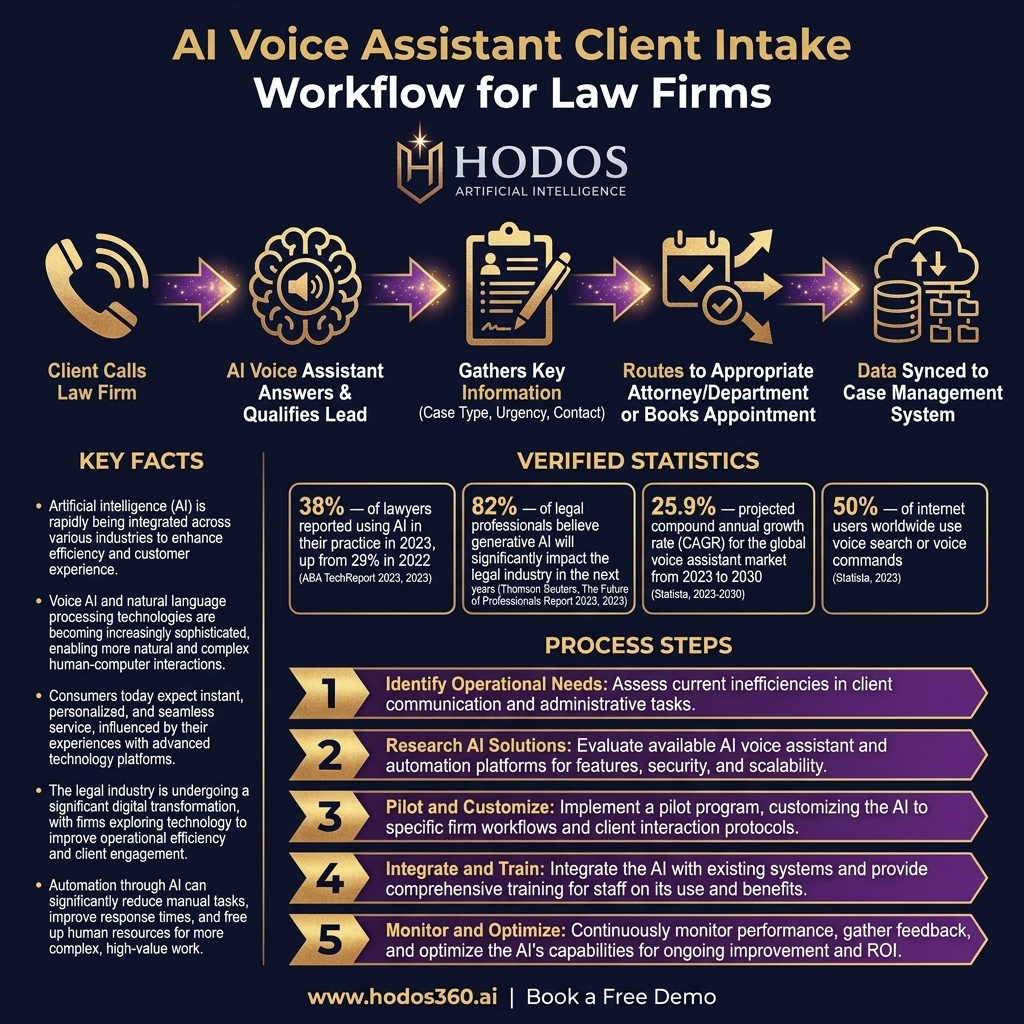
Operational Excellence: AI-Powered Workflows for Law Firms
The operational benefits of integrating AI Voice Assistants extend far beyond initial client contact. By offloading routine inquiries and administrative tasks, law firms can achieve unprecedented levels of operational excellence. Consider the sheer volume of calls a typical law firm receives daily: clients checking case status, requesting documents, asking about billing, or seeking general information. Each of these calls consumes valuable staff time that could be better spent on complex legal work. A sophisticated AI Voice Assistant can handle these repetitive queries efficiently, providing immediate answers to frequently asked questions, giving updates on case progress (within ethical boundaries and privacy protocols), and even processing simple document requests. This not only drastically reduces the workload on support staff but also minimizes interruptions for attorneys, allowing them to maintain focus on their core responsibilities. The net effect is a more productive and less stressed legal team, directly contributing to higher quality legal services and improved employee satisfaction.
The real power of AI in legal operations lies in its ability to integrate seamlessly with existing firm management systems. An AI Voice Assistant isn't a standalone tool; it's an intelligent gateway to a firm's entire digital infrastructure. When a client calls, the AI can access information from the firm's case management systems, billing software, and document repositories to provide accurate, real-time responses. Learn more about AI Marketing Intelligence: The Ultimate Guide for Law Firms. For instance, if a client inquires about their latest invoice, the AI can pull the information directly from the billing system and relay it, or even initiate a payment process. This level of integration, as demonstrated by the advancements in platforms like Clio's practice management suite, transforms fragmented processes into a cohesive, automated workflow. The ABA Standing Committee on Ethics and Professional Responsibility has also provided guidance, such as Formal Opinion 483, on lawyers' obligations regarding client data security when using technology, emphasizing the need for secure and compliant AI solutions.
Furthermore, AI Voice Assistants can play a crucial role in proactive communication. Instead of waiting for clients to call, the AI can initiate automated, personalized outbound calls for appointment reminders, deadline notifications, or to follow up on document submissions. This proactive approach not only enhances client satisfaction by keeping them informed but also reduces the likelihood of missed appointments or delays due to forgotten deadlines. The insights gained from analyzing call patterns and client interactions can also inform strategic decisions, such as identifying bottlenecks in existing workflows or pinpointing areas where additional legal services might be needed. This continuous feedback loop, driven by AI, transforms a firm's operations from reactive to predictive, allowing for more agile and client-focused service delivery. The efficiency gains translate directly into improved profitability and a stronger competitive position in the market.
Automating Routine Tasks and Appointments
Beyond client intake, AI Voice Assistants are exceptionally adept at automating a myriad of routine administrative tasks that consume significant staff time. This includes tasks such as appointment booking, rescheduling, and sending reminders. Imagine an AI assistant handling all initial consultation bookings, finding available slots in multiple attorneys' calendars, and sending confirmation emails or text messages – all without human intervention. This frees up administrative staff to focus on more complex tasks, improving overall office productivity. Learn more about Essential Legal AI Access: NELLCO's Broad Impact. Moreover, for tasks like requesting document status updates or general information about firm services, the AI can provide immediate, accurate responses, preventing the need for staff to interrupt their work to answer simple questions. This not only streamlines daily operations but also ensures a consistent and professional response every time, enhancing the firm's reputation for efficiency and client care. The automation of these 'low-value' tasks allows human talent to be redirected to 'high-value' tasks, maximizing the firm's intellectual capital.
The Competitive Edge: Firms Adopting Voice AI for Growth
The legal industry is witnessing a significant shift, with firms that embrace AI gaining a distinct competitive edge. The ability to handle a higher volume of inquiries, provide 24/7 service, and offer multilingual support without scaling human staff is a powerful differentiator. Firms like Allen & Overy, through their collaboration with platforms like Harvey AI, are showcasing how advanced AI can augment legal services, from due diligence to complex litigation. This proactive adoption of technology is not just about efficiency; it's about market positioning and attracting a new generation of clients who expect digital-first, responsive service. A firm equipped with a sophisticated AI Voice Assistant can effectively manage surges in call volume, such as those following a major news event or a new regulatory change, ensuring that every potential lead is captured and processed efficiently. This operational resilience is invaluable in today's unpredictable legal landscape, allowing firms to scale their client service capabilities without incurring prohibitive costs.
The competitive drama in the legal tech space is palpable, with established players like Clio constantly innovating and new startups emerging with specialized AI solutions. Firms that are quick to adopt these technologies are not just improving their internal processes; they are actively reshaping client expectations for the entire industry. Consider the impact of a firm that can qualify leads with 90% accuracy and schedule appointments within minutes, compared to a competitor still relying on manual phone screening and email tag. This gap in service delivery will inevitably lead to clients gravitating towards the more technologically advanced and client-friendly firm. Learn more about AI Meeting Privacy: Essential Governance Lessons for Law Firms. Data from a recent McKinsey report on AI adoption across industries indicates that early adopters often see a 10-15% increase in market share due to enhanced customer satisfaction and operational cost savings. For law firms, this translates directly into tangible growth, not just in client numbers but also in reputation and brand equity.
Moreover, the strategic use of AI Voice Assistants extends to AI Marketing Platform solutions. The insights gathered from client interactions – common pain points, popular legal services, demographic data – can be fed directly into a firm's marketing efforts. This allows for highly targeted campaigns, personalized content generation, and more effective lead nurturing. For example, if the AI identifies a surge in inquiries related to real estate law in a specific neighborhood, the marketing team can quickly launch a localized digital campaign addressing those needs. This synergy between AI-powered client service and data-driven marketing creates a virtuous cycle of growth, ensuring that a firm not only attracts new clients but also understands and serves its existing ones more effectively. The firms that integrate these capabilities holistically are the ones poised to dominate the legal market in the coming decade, leaving behind those who view AI as a mere novelty rather than a strategic imperative.
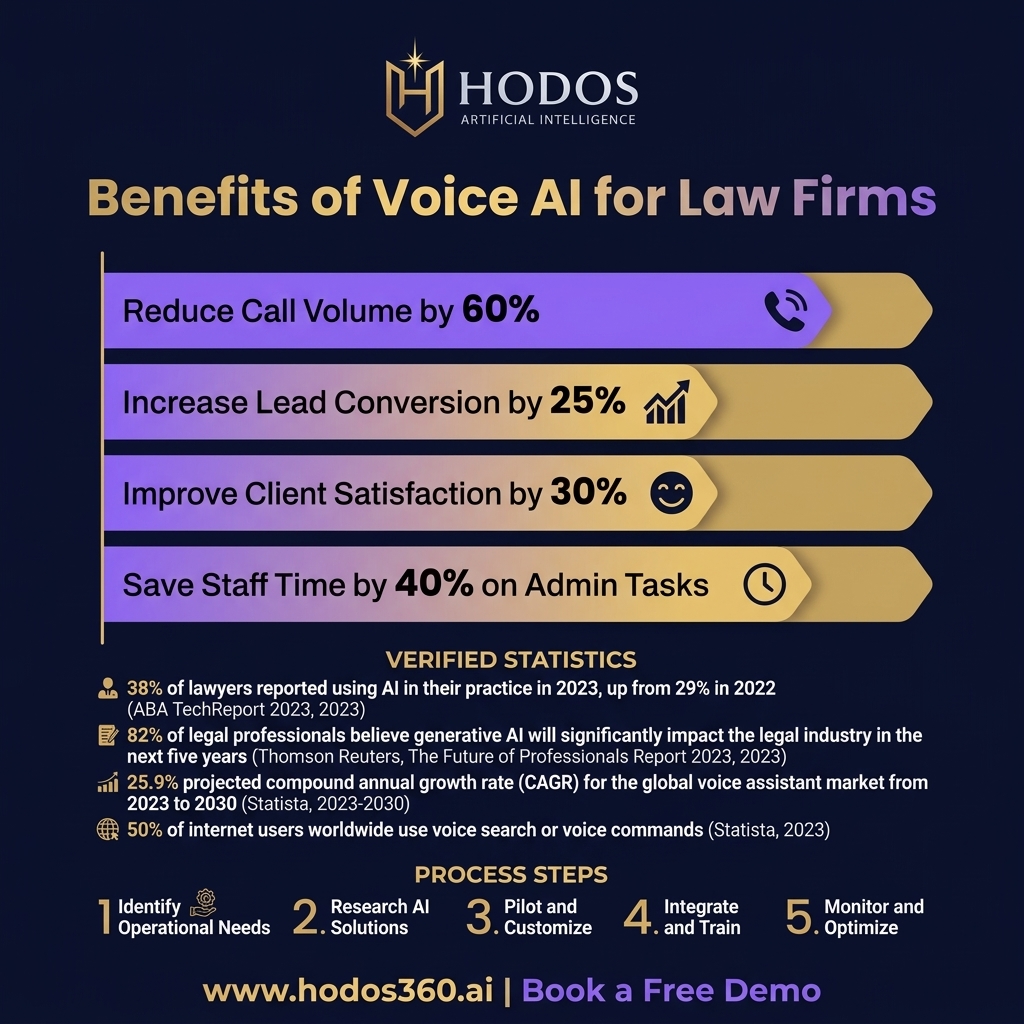
- ✓24/7 Availability: AI Voice Assistants offer round-the-clock client support, ensuring no inquiry is missed, regardless of time zones or business hours, a distinct advantage over human staff.
- ✓Multilingual Support: Seamlessly communicate with a diverse client base in multiple languages, broadening market reach and enhancing accessibility for non-English speaking clients.
- ✓Automated Lead Qualification: Intelligently screen and qualify potential clients based on predefined criteria, ensuring attorneys and staff focus only on high-value leads.
- ✓Efficient Appointment Booking: Automate the scheduling, rescheduling, and confirmation of consultations and meetings, integrating directly with firm calendars to minimize administrative overhead.
- ✓Reduced Administrative Burden: Free up paralegals and legal assistants from repetitive phone tasks, allowing them to dedicate more time to complex legal work and client support.
- ✓Consistent Client Experience: Provide uniform, accurate, and professional responses to common inquiries, ensuring a high-quality client interaction every time, improving satisfaction.
- ✓Data-Driven Insights: Gather valuable data from client interactions to identify trends, refine service offerings, and inform targeted marketing strategies for continuous improvement.
Strategic Implementation: Integrating AI Voice Assistant into Your Practice
Implementing an AI Voice Assistant within a law firm requires careful strategic planning to maximize its benefits and ensure ethical compliance. It's not simply about plugging in a new piece of software; it's about redefining workflows and training staff to leverage the technology effectively. The first step involves identifying the specific pain points and administrative bottlenecks that an AI can alleviate. For many firms, this often includes high call volumes during peak hours, frequent requests for routine information, or challenges in consistent lead qualification. By focusing on these areas, firms can design an AI deployment that delivers immediate, measurable ROI. Moreover, ethical considerations, particularly those outlined in ABA Model Rule 1.6 (Confidentiality of Information) and Rule 1.4 (Communication), must be at the forefront. AI solutions must be rigorously vetted for data security, privacy protocols, and adherence to professional responsibility, ensuring that client information is always protected and that clients are aware they are interacting with an AI.
Successful integration also hinges on a phased approach and continuous optimization. Firms should begin with clearly defined use cases, such as automating initial client intake or handling frequently asked questions, and then gradually expand the AI's responsibilities as confidence and capabilities grow. This iterative process allows for fine-tuning the AI's responses, integrating it more deeply with existing systems like document automation capabilities, and gathering feedback from both clients and staff. Training is crucial: legal professionals need to understand how to interact with the AI, how to escalate complex queries, and how to leverage the data it collects. Firms that invest in comprehensive training and foster a culture of technological adoption, much like innovative tech companies, will see the greatest returns. This cultural shift is often the most challenging aspect, requiring leadership to champion the benefits of AI and address any anxieties about job displacement by emphasizing augmentation rather than replacement.
Ultimately, the goal is to create a symbiotic relationship between human expertise and AI efficiency. The AI Voice Assistant handles the repetitive, high-volume tasks, freeing up human staff to focus on the nuanced, empathetic, and strategic aspects of legal practice that only a human can provide. This includes complex legal analysis, courtroom advocacy, and deep client counseling. By offloading the administrative burden, attorneys can dedicate more time to case strategy, client relationships, and professional development. This not only improves the quality of legal services but also enhances the overall job satisfaction of legal professionals, combating burnout. The future of legal practice isn't about choosing between humans and AI, but rather about intelligently combining their strengths to deliver unparalleled value to clients. This forward-thinking approach is what positions firms for sustainable growth and leadership in a rapidly evolving legal landscape.
Choosing the Right AI Voice Solution
Selecting the appropriate AI Voice Assistant for a law firm requires careful consideration of several key factors. First, the solution must be specifically designed for the legal industry, understanding its unique terminology, ethical requirements, and workflow complexities. Generic AI chatbots often fall short in this regard. Second, robust integration capabilities with existing practice management software, CRM systems, and communication platforms are essential for seamless operation. A standalone AI that cannot exchange data with a firm's core systems will have limited utility. Third, scalability and customization are crucial; the solution should be able to grow with the firm and be tailored to its specific needs and client demographics. Finally, the vendor's commitment to security, compliance, and ongoing support is paramount. Platforms like HODOS 360 offer AI Voice Assistants built with these legal-specific requirements in mind, ensuring a secure, intelligent, and integrated solution that can truly transform a law firm's client engagement and operational efficiency. Choosing wisely means investing in a partner, not just a product.

Key Takeaways and Next Steps
Uber's strategic move to integrate an AI Voice Assistant for hotel booking is a clear signal of the growing power of voice AI in transforming customer service and operational efficiency across industries. For law firms, this isn't just a distant trend; it's an immediate call to action. The legal profession, often perceived as traditional, must embrace these technological shifts to remain competitive, meet evolving client expectations, and optimize internal operations. Firms that proactively adopt AI Voice Assistants stand to gain significant advantages in client satisfaction, lead generation, administrative burden reduction, and overall profitability. The ability to offer 24/7, multilingual, intelligent client support is no longer a luxury but a necessity in a digitally driven world. The conflict between traditional methods and modern efficiency is real, and the firms that bridge this gap with strategic AI implementation will emerge as leaders.
The narrative arc of legal innovation is accelerating, fueled by advancements from AI powerhouses and specialized legal tech providers. The tension between maintaining a human touch and leveraging automation can be resolved by carefully integrating AI to handle routine tasks, thereby freeing up legal professionals to focus on complex, empathetic, and strategic work. This symbiotic relationship between human and machine is the future. For law firms looking to take the next step, evaluating current client communication bottlenecks and exploring AI solutions tailored for legal practice is paramount. Platforms offering comprehensive AI Voice Assistants, designed with legal ethics and workflows in mind, provide a clear pathway to enhanced client engagement and operational excellence. The time to act is now, to ensure your firm is not just participating in the future of legal service, but actively shaping it. Ready to revolutionize your client interactions? Book a free demo with HODOS 360 today.
Frequently Asked Questions
How can an AI Voice Assistant benefit my law firm?+
An AI Voice Assistant can significantly benefit your law firm by providing 24/7 client support, automating lead qualification, streamlining appointment booking, and handling routine inquiries. This frees up staff for complex legal work, reduces operational costs, and enhances overall client satisfaction by offering immediate, consistent responses, ultimately improving efficiency and profitability.
Is AI Voice Assistant technology secure for client confidentiality?+
Yes, reputable AI Voice Assistant platforms designed for the legal industry prioritize security and compliance. They employ robust encryption, adhere to data privacy regulations, and are built with ethical considerations in mind, such as those outlined by the ABA. It's crucial to choose a vendor that can demonstrate stringent security protocols and a clear understanding of legal confidentiality requirements.
Can an AI Voice Assistant handle complex legal questions?+
AI Voice Assistants are excellent for handling routine inquiries, qualifying leads, and providing information based on pre-programmed knowledge. While they can't offer legal advice, they can intelligently route complex questions to the appropriate human attorney or paralegal. Their role is to augment, not replace, human legal expertise, ensuring that clients receive the right level of support efficiently.
How does AI Voice Assistant integrate with existing law firm software?+
Modern AI Voice Assistants are designed for seamless integration with a law firm's existing tech stack, including case management systems, CRM, billing software, and calendars. This allows the AI to access and update client information, schedule appointments, and provide accurate, real-time data, creating a cohesive and automated workflow across your firm's operations.
What is the ROI of implementing an AI Voice Assistant in a law firm?+
The ROI of an AI Voice Assistant in a law firm is substantial. It includes reduced administrative costs, increased lead capture and conversion rates, improved client satisfaction leading to better retention, and enhanced staff productivity. By automating repetitive tasks and providing 24/7 service, firms can achieve significant operational efficiencies and drive measurable business growth.