


Conversational AI: Essential Strategies for Legal Success
In early 2026, a specific moment at the LegalTech NYC conference encapsulated a seismic shift in the legal industry's relationship with technology. During a panel discussion on AI's impact, Sarah Chen, managing partner at a prominent mid-sized firm, recounted a stark realization: her firm was losing potential clients not because of service quality, but because their competitors were answering inquiries 24/7, qualifying leads, and even booking initial consultations through sophisticated AI voice assistants.
This wasn't just about 'voice search' anymore; it was about full-fledged conversational AI, transforming the very first touchpoint a prospective client had with a law firm. The room buzzed with a mix of awe and apprehension, highlighting a critical juncture for legal professionals globally. The era of passive digital presence is over; proactive, intelligent engagement is the new benchmark.
The evolution from simple voice search, where users might bark a query at a smart speaker, to the complex, contextual understanding of conversational AI, represents a profound leap. Today, AI assistants, powered by advanced natural language processing (NLP) and machine learning (ML), can engage in multi-turn dialogues, understand intent, and even discern emotional cues.
This technological maturation, heavily influenced by breakthroughs from companies like OpenAI, Anthropic, and Google, as championed by visionaries like Sam Altman and Dario Amodei, is no longer confined to consumer tech. It's now a pivotal force reshaping professional services, particularly the legal sector. Firms that embrace this evolution are not just optimizing; they are fundamentally redefining their operational models, client acquisition strategies, and competitive positioning, creating a clear divide between innovators and those clinging to traditional methods.
The Conversational AI Revolution: Beyond Simple Voice Search
The narrative around AI in 2026 has moved decidedly beyond the rudimentary 'voice search' of yesteryear. What we're witnessing is a true conversational AI revolution, where intelligent systems are not merely retrieving information based on keywords, but engaging in dynamic, context-aware dialogues. Google's rollout of 'AI Overviews' and Meta's aggressive push with 'Meta AI' have fundamentally altered how information is accessed and processed.
These platforms, underpinned by colossal investments in large language models (LLMs) and advanced natural language understanding, are setting new expectations for instant, accurate, and personalized interactions. Legal professionals, long accustomed to traditional search methodologies, must now contend with a landscape where clients expect their initial queries to be met with an intelligent, conversational response, not just a list of links.
The competition isn't just between law firms; it's also about how effectively firms can integrate with and leverage these evolving AI ecosystems. Industry leaders like Jensen Huang at NVIDIA continue to push the boundaries of computational power, making these sophisticated AI models more accessible and powerful for niche applications, including legal tech.
This shift is creating significant tension within the legal industry. Learn more about Legal AI Adoption: An Essential Roadmap for Law Firms. On one side are the early adopters, like firms leveraging platforms such as Harvey AI in partnership with global giants like Allen & Overy, demonstrating rapid integration of AI into complex legal research and contract analysis.
On the other side are firms grappling with the perceived complexity and cost of adoption, fearing that the pace of innovation is too fast to keep up. This market competition isn't theoretical; it's translating into tangible differences in client acquisition and retention rates. According to a 2025 Thomson Reuters report, law firms that had integrated conversational AI tools saw a 15% increase in lead conversion rates compared to those relying solely on traditional intake methods.
The report also highlighted that client satisfaction scores were notably higher for firms offering 24/7 AI-powered support, underscoring the demand for always-on accessibility in a globalized, digital-first world. The imperative to move beyond basic digital presence to sophisticated AI-powered search and engagement is no longer a luxury but a strategic necessity for survival and growth.
Redefining Client Engagement and Intake with AI Voice Assistants
For law firms, the most immediate and impactful application of conversational AI lies in transforming client engagement and intake processes. Imagine a prospective client calling your firm at 10 PM on a Tuesday, stressed about a pressing legal issue. Instead of an answering machine or a voicemail, they're greeted by an intelligent AI Voice Assistant capable of understanding their urgency, asking qualifying questions, providing basic information about your firm's services, and even booking an appointment directly into an attorney's calendar.
This isn't futuristic speculation; it's the present reality offered by platforms like HODOS 360's AI Voice Assistants. These systems are designed to offer 24/7 phone answering, ensuring no lead is ever missed due to after-hours calls or overloaded reception lines. They excel at lead qualification, efficiently filtering inquiries to identify high-value cases and gather essential preliminary information, freeing up valuable staff time for substantive legal work.
Firms that have deployed these solutions report a significant reduction in administrative burden and a marked improvement in initial client satisfaction.
The strategic advantage of such systems extends beyond mere availability. Learn more about Law Firm Mobile App Development: An Essential Blueprint for Growth. The multilingual support capabilities of modern AI voice assistants mean that firms can cater to a broader, more diverse client base without the overhead of hiring additional bilingual staff.
Call routing intelligence ensures that complex inquiries or highly sensitive matters are immediately escalated to the appropriate human expert, maintaining a critical balance between automation and human touch. This seamless integration of AI into the client journey is not just about efficiency; it's about delivering a superior client experience from the very first interaction.
According to a recent ABA TechReport, firms investing in optimizing their client intake with AI saw an average 20% improvement in client retention over a two-year period, largely attributed to enhanced responsiveness and streamlined onboarding. This demonstrates a clear competitive edge for firms willing to embrace these sophisticated tools.
Streamlining Client Intake Workflows
The true power of conversational AI in client intake workflows lies in its ability to automate repetitive, time-consuming tasks while maintaining a high degree of personalization. Once a lead is qualified by an AI Voice Assistant, the information collected—client name, case type, initial details—can be automatically populated into the firm's case management system.

This eliminates manual data entry, reduces errors, and ensures that attorneys have immediate access to pertinent information before their first interaction. Furthermore, AI can trigger subsequent automated actions, such as sending initial welcome emails, intake forms, or even simple informational packets, all without human intervention.
Learn more about Essential Risk Management for Law Firms in the AI Era. This level of automation, particularly for tasks like appointment booking and preliminary document gathering, transforms what was once a bottleneck into a smooth, efficient process. It allows legal professionals to focus on the intricate legal analysis and client counseling that only human expertise can provide, rather than getting bogged down in administrative minutiae.
The transition from traditional, manual intake to an AI-powered, automated system is a fundamental shift in how law firms operate, maximizing productivity and elevating the client experience simultaneously.
Operationalizing Conversational AI for Firm Efficiency
Beyond client intake, conversational AI is rapidly being operationalized across various facets of law firm management, driving unprecedented levels of efficiency. Consider the integration of AI within a comprehensive AI Law Firm Management System. Here, AI-powered legal workflows can automate routine tasks such as document generation, docketing, and even preliminary legal research.
For instance, after a client interaction captured by an AI Voice Assistant, the system can automatically draft a retainer agreement, populate case details into a new file, and set calendar reminders for deadlines. This interconnectedness transforms disparate tasks into a seamless, intelligent operation. Firms using these sophisticated assistants report significant time savings, with a Gartner study from late 2025 indicating that legal departments leveraging AI for document automation achieved a 30% reduction in time spent on repetitive drafting.
This efficiency gain directly translates into higher billable hours and improved profitability.
The strategic deployment of conversational AI also extends to internal firm operations. Learn more about AI Legal Practice Management: The Ultimate Firm Advantage. Imagine an attorney asking a natural language query about a specific procedural rule or a past case precedent, and an internal AI assistant provides an instant, concise answer drawn from the firm's knowledge base or external legal databases.
This form of AI-powered search goes beyond simply pulling up documents; it interprets the query, understands context, and synthesizes relevant information. This drastically cuts down on research time, allowing legal teams to focus on higher-value analytical work. The evolution of these tools, from simple chatbots to highly intelligent agentic search systems capable of independent reasoning and task execution, is a testament to the rapid advancements in the field.
Firms that mastering these internal applications are cultivating a more agile, informed, and productive workforce, positioning themselves at the forefront of legal innovation.
Integrating AI for Seamless Legal Operations
The integration of conversational AI into everyday legal operations requires a holistic approach, moving beyond siloed tools to a unified platform. A prime example is how an AI Voice Assistant can feed directly into an AI Law Firm Management System, where client data, communication logs, and initial case notes are automatically updated.
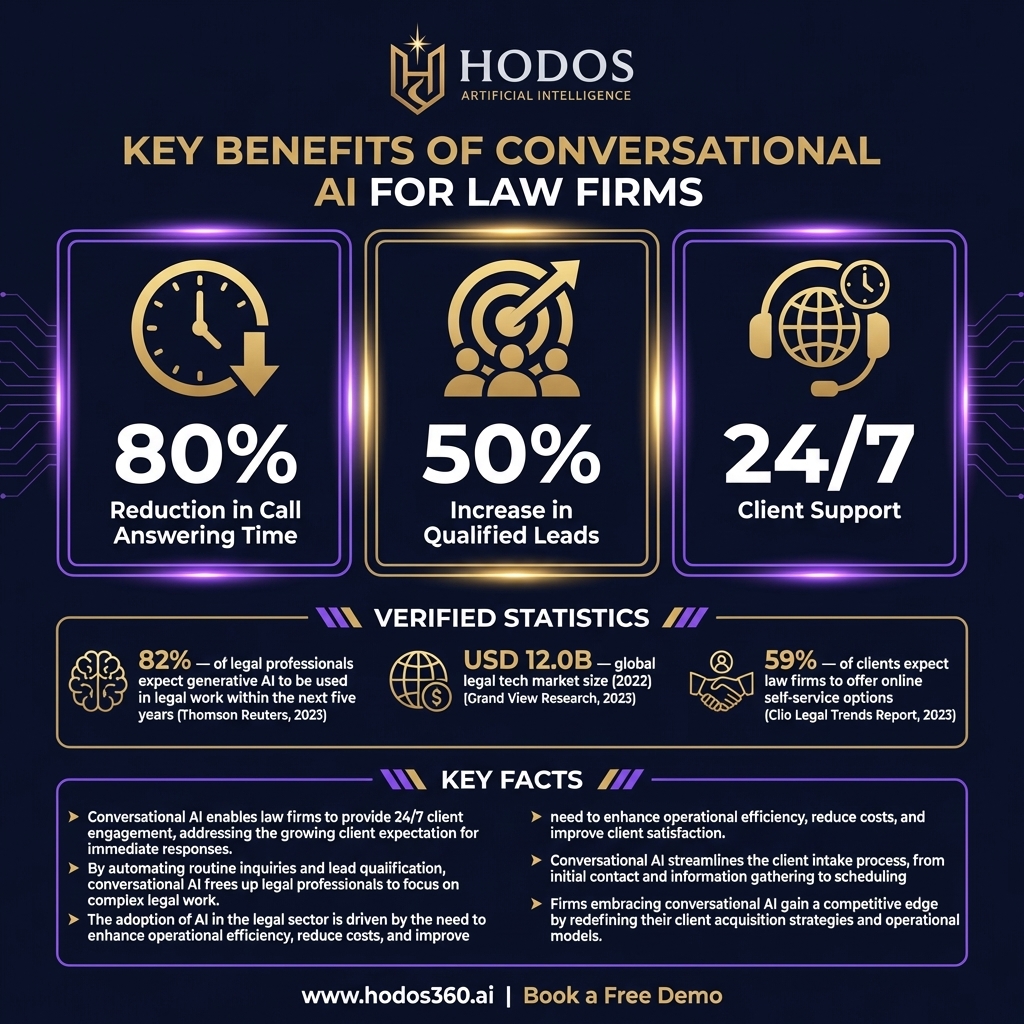
This eliminates data duplication and ensures a single source of truth for every matter. Furthermore, the data gathered through these AI interactions can be analyzed by an AI Marketing Platform to identify trends in client inquiries, optimize marketing campaigns, and track ROI. Learn more about Future Ready Lawyer: Essential AI Confidence for Legal Professionals.
For instance, if the AI Voice Assistant notes a surge in inquiries related to a specific legal niche, the marketing platform can adjust content generation and social media automation to capitalize on that demand. This synergistic approach, where different AI services work in concert, is what truly defines the next generation of legal tech.
It's not just about automating individual tasks; it's about building an intelligent, interconnected ecosystem that drives efficiency, enhances client service, and provides actionable insights for strategic growth.
Navigating Ethical, Regulatory, and Security Landscapes
While the benefits of conversational AI are undeniable, law firms must navigate a complex landscape of ethical, regulatory, and security considerations. The responsible adoption of AI is not merely a best practice; it is a professional imperative. A primary concern is data privacy and client confidentiality.
Conversational AI systems handle sensitive client information, making robust data encryption, secure storage, and compliance with regulations like GDPR, CCPA, and evolving state-specific privacy laws non-negotiable. Firms must ensure their AI providers, like HODOS 360, adhere to the highest security standards and offer transparent data handling policies.
The reputational and legal risks associated with a data breach in the legal sector are immense, making due diligence on AI security paramount. Brad Smith, Vice Chair and President of Microsoft, has consistently emphasized the need for responsible AI development, stating that 'AI must be designed, developed, and used in a way that is consistent with human values and rights.'
This sentiment resonates deeply within the legal profession, where trust and ethical conduct are foundational.
Another critical area is the ethical implications of AI in legal advice. While AI voice assistants can provide general information and qualify leads, they must not engage in the unauthorized practice of law.
Learn more about AI App Development: Essential for Law Firms' Digital Future. Clear disclaimers and mechanisms for human intervention are essential. The ABA Model Rules of Professional Conduct, particularly Rule 1.1 (Competence) and Rule 1.6 (Confidentiality of Information), provide a framework for attorneys to consider their ethical obligations when deploying technology.
The EU AI Act, which began enforcement in early 2026, sets a global precedent for regulating high-risk AI systems, including those used in critical infrastructure and legal administration. Law firms must stay abreast of these evolving legislative frameworks, ensuring their conversational AI solutions are compliant.
This involves regular audits, clear internal policies, and continuous training for staff on the appropriate use and limitations of AI tools. The tension between leveraging cutting-edge technology and upholding professional responsibility is a core challenge that forward-thinking firms must actively address.
Ensuring Responsible AI Adoption
Responsible AI adoption in legal practice requires a multi-faceted approach. Firms must establish internal AI governance policies that outline acceptable use, data handling protocols, and oversight mechanisms. This includes regular reviews of AI system performance, bias detection, and ensuring that human professionals retain ultimate decision-making authority.
Transparency with clients about the use of AI in their case is also crucial for maintaining trust and fulfilling ethical obligations. By proactively addressing these concerns, law firms can harness the transformative power of conversational AI while safeguarding client interests and upholding the integrity of the legal profession.
This proactive stance not only mitigates risks but also builds a reputation for innovation and ethical leadership in a rapidly changing legal landscape, distinguishing firms that thoughtfully integrate AI from those that implement it without due consideration for its broader implications.

The Strategic Imperative: Future-Proofing Your Legal Practice
The transition to the conversational AI era is not a passing trend but a fundamental shift that will redefine the competitive landscape of the legal industry for decades to come. Firms that continue to rely on traditional, manual processes for client interaction and operational management risk being significantly outpaced by more agile, technologically advanced competitors.
The data is clear: early adopters of AI-powered solutions are already seeing tangible benefits in efficiency, client satisfaction, and market share. This creates a compelling narrative of disruption versus tradition, where the choice to embrace or resist innovation will have profound long-term consequences. The strategic imperative for law firms now is to not just acknowledge conversational AI, but to actively integrate it into their core operations, viewing it as an investment in future growth and resilience.
For law firm owners and attorneys, the path forward involves a commitment to continuous learning and strategic technological investment. This means exploring comprehensive platforms that offer integrated solutions, moving beyond piecemeal tools to a unified ecosystem. Solutions like HODOS 360, which combine an AI Law Firm Management System, AI Marketing Platform, AI Voice Assistants, and Web & Mobile Development, provide a holistic approach to digital transformation.
By leveraging such platforms, firms can not only optimize their current operations but also build a future-proof practice capable of adapting to new technological advancements. The goal is to cultivate a legal practice that is not just efficient and profitable, but also deeply client-centric, mastering the art of intelligent, personalized engagement in the age of conversational AI.
Frequently Asked Questions
What is conversational AI and how does it differ from traditional voice search?+
Conversational AI involves intelligent systems capable of understanding context, engaging in multi-turn dialogues, and performing complex tasks. Unlike traditional voice search, which primarily retrieves information based on keywords, conversational AI interprets intent, personalizes interactions, and can automate entire workflows, such as client intake and appointment booking, offering a much richer and more functional user experience.
How can AI Voice Assistants specifically benefit my law firm?+
AI Voice Assistants offer 24/7 phone answering, ensuring no lead is missed. They efficiently qualify leads, book appointments, and provide multilingual support, freeing up staff time. This improves client responsiveness, streamlines intake processes, and enhances overall client satisfaction, allowing your legal team to focus on high-value legal work rather than administrative tasks.
What are the key ethical considerations when implementing conversational AI in a law firm?+
Key ethical considerations include client confidentiality and data privacy, ensuring compliance with regulations like GDPR and CCPA. Firms must also prevent the unauthorized practice of law by AI, provide clear disclaimers, and maintain human oversight. Adhering to ABA Model Rules, especially regarding competence and confidentiality, is crucial for responsible AI adoption.
Can conversational AI integrate with existing law firm management systems?+
Yes, modern conversational AI platforms are designed for seamless integration with existing law firm management systems. This allows for automated data population, synchronized calendars, and streamlined workflows across different tools, such as case management, billing, and document automation. This integration creates a unified, efficient ecosystem for legal operations.
What is the long-term impact of conversational AI on the legal profession?+
The long-term impact includes increased efficiency, enhanced client satisfaction, and a redefined competitive landscape. Firms adopting conversational AI will gain a significant advantage in client acquisition and retention. It will necessitate a shift in legal education and practice, emphasizing human-AI collaboration and strategic technological integration to future-proof legal services and remain relevant.